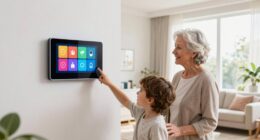
Creating a one-tap lockdown scene is essential for quick emergency response at home. You can set automation rules to instantly lock all doors, activate security alarms, flash or turn off lights, and notify you or authorities. Use smart devices like locks, sensors, and alarms that respond rapidly and integrate smoothly. By customizing and testing this scene regularly, you’ll guarantee your home’s best protection during urgent situations. Keep exploring to discover how to optimize your home’s safety system even further.
Key Takeaways
- Integrate smart locks, lights, alarms, and security cameras into a centralized automation scene for quick activation.
- Program a dedicated “Lockdown” scene in your home automation app, assigning all devices to lock doors, activate alarms, and secure windows.
- Enable voice commands or physical buttons for instant scene activation during emergencies.
- Ensure devices support fast response times and local automation to function without internet delays.
- Regularly test and update the scene to confirm seamless, immediate activation in real emergency situations.

Smart Door Handle Lock with Keypad, Yamiry Fingerprint Knob for Front Door
- Versatile Unlocking Methods: Fingerprint, app, passcode, key fob, keys, Alexa
- Easy 10-Minute Installation: Fits most standard doors without drilling
- Reversible Handle Design: Compatible with left and right-handed doors
As an affiliate, we earn on qualifying purchases.
As an affiliate, we earn on qualifying purchases.
Why Locking Down Your Home Quickly Matters in Emergencies

In emergencies, every second counts, and quickly locking down your home can make all the difference. Whether facing a home invasion or a sudden natural disaster, swift action helps protect you and your loved ones. Locking down prevents intruders from gaining entry and delays hazards like debris or floodwaters from penetrating your space. Time is vital; hesitating can leave you vulnerable to threats or worsen the situation. A quick lockdown ensures you have control over your environment, reducing panic and confusion. By acting fast, you create a safer zone, buying valuable moments to assess and respond. Having a plan in place to lock down instantly is an essential step toward maintaining safety during unpredictable emergencies. Understanding the importance of home automation and projector features like high contrast ratios and quick setup can also help in creating a secure and comfortable environment during crises. Leveraging energy-efficient cloud servers can support your home automation systems to operate reliably during emergencies, ensuring your safety measures are always ready. Additionally, integrating quick-access control systems can streamline your response time during critical moments. Implementing automatic locking mechanisms can further enhance your ability to secure your home instantly without manual intervention.
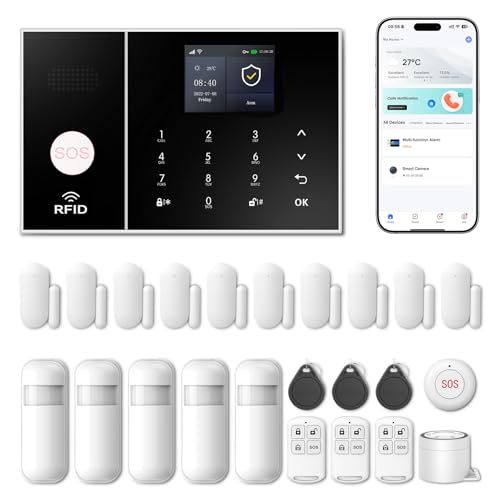
Wireless Alarm System for Home Security,24 Pcs Home Alarm System Wireless DIY Kit,WiFi+GSM/4G with Instant App Alerts NO MonthlyFees,SOS Button,App & Remote Control,Work with Alexa,for Apartment
- App Control & Customizable Sensors: Remotely control and expand system with sensors
- Voice Control & Color Screen: Supports voice commands and displays system info
- Tamper Protection & Multi-Alarm: Physical tamper-proof design with alerts and security code
As an affiliate, we earn on qualifying purchases.
As an affiliate, we earn on qualifying purchases.
Essential Features of an Effective Lockdown Scene

An effective lockdown scene relies on key features that guarantee rapid, secure containment. First, it should integrate home automation to instantly lock all entry points with a single tap. Second, clear security protocols are essential, guiding you step-by-step during emergencies. Third, the scene must include automatic alerts to notify you and authorities immediately. Fourth, it should seamlessly activate security cameras and sensors to monitor the situation in real-time. Additionally, incorporating local automation can ensure the scene activates even if internet connectivity is disrupted. This feature is crucial for maintaining reliable security during network outages. Incorporating emergency protocols can further streamline your response and ensure everyone understands their role during a crisis. These features work together to ensure your home responds swiftly and securely, minimizing risk. By combining automation with strict security protocols, you create a reliable, easy-to-activate lockdown that keeps everyone safe without delay. Implementing redundant communication systems can prevent loss of contact during outages, ensuring your response remains uninterrupted. This setup ensures you’re prepared to act instantly when every second counts.

Safety Technology International, Inc. STI-6400 Exit Stopper Multifunction Door Alarm, Helps Prevent Unauthorized Exits or Entries Through Emergency Doors
- Visible 'Stop Sign' Deterrent: Highly visible warning sign
- Durable Polycarbonate Housing: Virtually indestructible construction
- Detects Unauthorized Exits and Entries: Monitors both exits and entries
As an affiliate, we earn on qualifying purchases.
As an affiliate, we earn on qualifying purchases.
How to Choose Smart Devices for a Fast Home Lockdown

Choosing the right smart devices is vital for ensuring a rapid and reliable home lockdown. Start by selecting smart sensors that can detect motion, opening, or breaking glass, providing instant alerts and automated responses. These sensors should be integrated with your system for quick activation during emergencies. Voice commands are also essential; they let you trigger the lockdown scene hands-free, ensuring you can act swiftly without fumbling with devices. Look for devices compatible with your existing voice assistants like Alexa or Google Assistant. Prioritize devices with fast response times and easy setup. Combining smart sensors with voice command capabilities creates a seamless, efficient lockdown process, giving you peace of mind knowing your home can be secured instantly when needed. Additionally, understanding smart device integration can help ensure all components work together smoothly during an emergency. Gaining knowledge about Pinball Machine Weight can assist in planning your home setup for larger devices or security equipment, ensuring proper placement and safety. Learning about home automation systems can further enhance your ability to coordinate multiple devices for a coordinated lockdown response. For example, selecting reliable communication protocols can improve the overall responsiveness and security of your system. Understanding Gold IRA Markets can help diversify your financial security while safeguarding your assets for emergencies.

Blink Outdoor 4 – Wireless smart security camera, two-year battery life, 1080p HD day and infrared night live view, two-way talk. Sync Module Core included – 3 camera system
- Battery Life: Up to two years of battery life
- Video Quality: 1080p HD live view
- Night Vision: Infrared night vision
As an affiliate, we earn on qualifying purchases.
As an affiliate, we earn on qualifying purchases.
Set Up Your Lockdown Scene in Minutes

Setting up your lockdown scene is quick and straightforward when you follow a few simple steps. With home automation, you can create a scene that activates multiple devices instantly, enhancing your emergency preparedness. First, pick the essential devices you want to control, like smart locks, lights, and alarms. Then, assign each device to the lockdown scene within your automation app. Next, set the desired states—locking doors, turning on exterior lights, or sounding alarms. Finally, save your scene for instant activation. To make it even easier, consider:
- Automating lights to flash or turn off
- Locking all entry points simultaneously
- Activating security cameras
- Silencing distractions like smart speakers
- Understanding art care can help you protect valuable pieces during emergencies. Additionally, reviewing your home automation system’s capabilities ensures you can customize the scene to best suit your needs. Incorporating a power management plan helps prevent overloads during critical moments. Being familiar with your system’s fail-safe features can provide extra assurance in high-stress situations.
This setup allows you to react swiftly, ensuring safety with a single tap.
Test Your Lockdown System : Ensure Instant Activation

Have you tested your lockdown scene to confirm it activates instantly when needed? Regular lockdown drills are essential to guarantee your system responds promptly during an emergency. During testing, verify that all devices—locks, alarms, and lighting—trigger immediately. Confirm your emergency communication setup works seamlessly, alerting everyone in your home without delay. If activation isn’t instantaneous, troubleshoot the connectivity or automation settings. Practice these drills periodically to identify any glitches and make adjustments. A reliable lockdown system gives you peace of mind, knowing it will activate instantly during a real threat. Remember, the goal is seamless, fast response—so don’t skip this critical testing step. Consistent testing ensures your emergency plan is effective and your family is protected when it counts most.
Pro Tips to Boost Your Home’s Emergency Lockdown Readiness

To improve your home’s emergency lockdown readiness, start by reinforcing your entry points to make unauthorized access possible. Adding visible lockdown signs helps everyone recognize the procedures quickly, while conducting regular drills keeps your family prepared. These steps guarantee you’re ready to act swiftly when every second counts. Incorporating Free Floating techniques can also help create adaptable and effective lockdown strategies. Additionally, understanding safety habits for micromobility can inform broader security measures around your property. Developing a connected home fitness system can further enhance your overall safety preparedness by integrating emergency alerts with your wellness routines.
Reinforce Entry Points Effectively
Strengthening your home’s entry points is essential for an effective emergency lockdown. Proper entry reinforcement enhances home security and makes forced entry much harder. Start by installing solid core or metal doors with high-quality locks. Reinforce door frames with metal plates or strike plates to prevent kick-ins. Use security bars or braces for vulnerable windows and sliding doors. Consider adding deadbolt locks and reinforcing hinges to resist forced entry. These measures create a layered defense that deters intruders and keeps your family safe. Remember, the key is to make entry points as secure as possible without sacrificing accessibility during emergencies. Understanding the importance of reinforcement techniques can help you choose the most effective strategies for your home. Incorporating security hardware such as reinforced strike plates and high-security locks can further improve your home’s resilience. Additionally, being aware of home security best practices can significantly enhance your overall safety plan. By focusing on entry reinforcement, you considerably improve your home’s readiness for a quick, effective lockdown. Implementing proper reinforcement methods is crucial for establishing a robust safety protocol during emergencies.
Install Visible Lockdown Signs
Installing visible lockdown signs is a crucial step in ensuring everyone in your home knows how to respond quickly during an emergency. Well-placed visual signage helps communicate lockdown procedures clearly, reducing confusion and hesitation. Use high-contrast colors and bold fonts to maximize clear visibility, so signs can be easily read from different angles and distances. Position signs near entry points, hallways, and common areas where they’re most likely to be seen immediately. Keep the signs simple, using straightforward language or symbols to indicate lockdown actions. Regularly check that the signs remain unobstructed and legible. Proper signage not only guides your family during high-stress moments but also reinforces the importance of preparedness, making your home a safer, more responsive environment.
Conduct Regular Emergency Drills
Have you ever wondered if your family is truly prepared to respond during an emergency? Regular emergency drills are essential to improve your home safety and validate your emergency planning. These drills help everyone understand their roles, reduce panic, and identify potential issues. To make your drills effective, consider practicing:
- Lockdown procedures in different scenarios
- Evacuation routes and safe spots
- Communication plans with neighbors or authorities
- Use of safety equipment, like alarms and lockdown signs
Frequently Asked Questions
Can I Customize the Lockdown Scene for Different Emergency Types?
Yes, you can customize the lockdown scene for different emergency types. Many smart home systems offer customization options, allowing you to set emergency-specific settings. You can tailor lights, locks, and alarms for each situation, ensuring a quick, effective response. This flexibility helps you activate the most appropriate measures depending on whether it’s a fire, intruder, or other emergency, providing peace of mind and enhanced safety.
What Is the Average Response Time for Activating the Lockdown Scene?
Your response time to activate the lockdown scene is typically under a few seconds, depending on your system’s setup and internet speed. The activation speed is designed for quick emergency deployment, often taking less than 5 seconds once you tap the button. To improve response time, make certain your smart home devices are updated and connected reliably, so you can swiftly trigger the lockdown scene when needed.
Are There Any Safety Risks Associated With Quick-Lockdown Systems?
A quick-lockdown system is like a double-edged sword, offering swift safety but also posing risks. You might face security vulnerabilities if the system isn’t well-designed, or false alarms that cause panic. These risks mean you should carefully choose and regularly test your setup. Properly calibrated, it provides rapid protection, but poor implementation can lead to unintended consequences, making safety a delicate balance.
How Often Should I Test and Update My Lockdown Setup?
You should test your lockdown setup at least twice a year to ensure it works smoothly during emergencies. Incorporate security drills that include your lockdown system so everyone knows what to do. Regular system maintenance is essential; check for updates and fix any issues promptly. This proactive approach keeps your safety measures reliable, giving you peace of mind when every second counts.
Does This System Integrate With Existing Home Security Devices?
Yes, this system offers security integration and is compatible with many existing home security devices. You can connect it seamlessly with smart locks, cameras, and alarms, ensuring a unified response during emergencies. Just check the device compatibility list to confirm compatibility with your current setup. This way, you can activate your lockdown scene quickly and confidently, knowing all components work together smoothly when you need them most.
Conclusion
Think of your home as a fortress, and your lockdown scene as the mighty gate that shields you in a storm. By setting it up now, you hold the key to peace of mind in chaos. When seconds count, your swift response becomes the fortress’s strongest wall. Don’t wait for an emergency to realize the power of quick action—build your secure barrier today and keep danger at bay, just like a true guardian of your sanctuary.