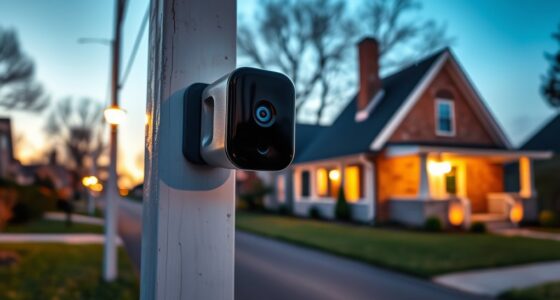
To fix your Ring camera’s night vision, adjust its angle so it faces well-lit areas or avoid pointing directly at bright lights, which can cause glare. Make sure the camera is positioned at an ideal height and facing key zones, like doorways or driveways. Keep the lens clean and consider adding ambient or motion-activated lighting nearby. If you want to discover more tips that can boost your camera’s night visibility, keep exploring the solution.

Get privacy and security gear delivered free — and shop member deals
- Fast, free delivery on millions of items
- Access to Prime Big Deal Days deals on October 6–7
- Prime Video, Amazon Music and more included
Key Takeaways
- Adjust the camera angle to face well-lit areas or ambient light sources to improve night visibility.
- Ensure the camera is mounted at an optimal height and tilt to minimize shadows and blind spots.
- Clear obstructions and reflective surfaces near the camera to prevent glare and IR interference.
- Add external or motion-activated lighting to enhance illumination in the camera’s field of view.
- Regularly clean the lens and check IR LED function for clear, detailed night footage.
Ring camera night vision enhancement
As an affiliate, we earn on qualifying purchases.
As an affiliate, we earn on qualifying purchases.
Why Your Ring Camera Doesn’t See Well at Night
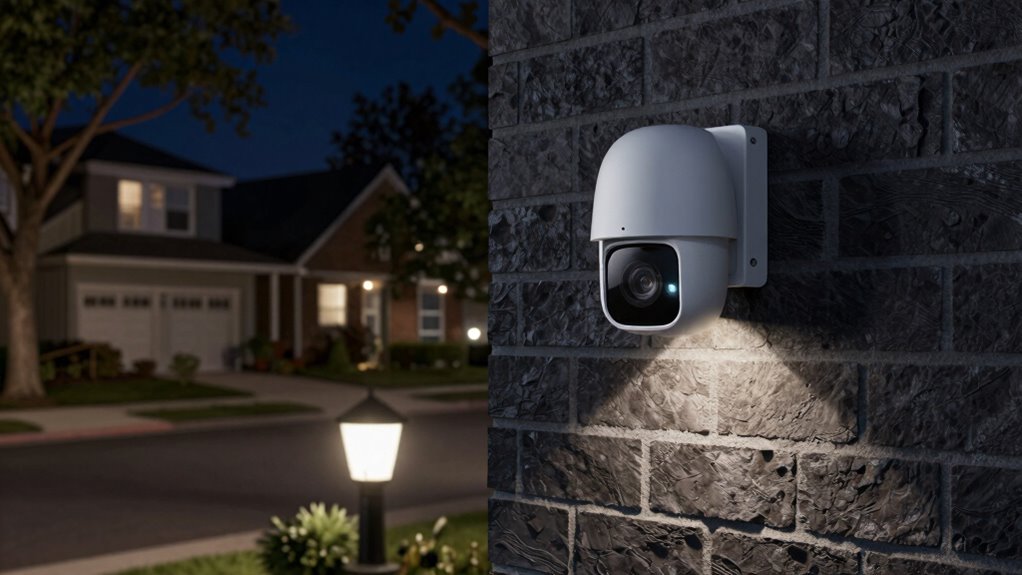
Nighttime visibility is a common issue with Ring cameras because their infrared LEDs can struggle to produce clear images in low-light conditions. One reason is that your camera’s sensor calibration may be off, causing poor night vision. Regularly checking and recalibrating the sensor ensures it responds correctly to low-light environments. Additionally, dirt, dust, or smudges on the lens can considerably reduce image clarity at night. Make a habit of cleaning the lens gently with a soft cloth to maintain ideal visibility. These simple steps—calibrating the sensor and keeping the lens clean—can greatly improve your camera’s night performance. To further enhance low-light image quality, consider exploring European cloud solutions that offer secure, energy-efficient cloud storage for your footage. Proper sensor maintenance is essential for consistent night-time performance. Don’t overlook these basic maintenance tasks; they’re essential for clear, reliable night footage. Regularly inspecting your camera’s infrared LEDs can also help ensure optimal night vision. Additionally, reviewing your camera’s night mode settings can optimize its ability to capture clearer images in darkness.
outdoor motion-activated security lighting
As an affiliate, we earn on qualifying purchases.
As an affiliate, we earn on qualifying purchases.
How to Adjust Your Camera’s Angle for Better Night Vision
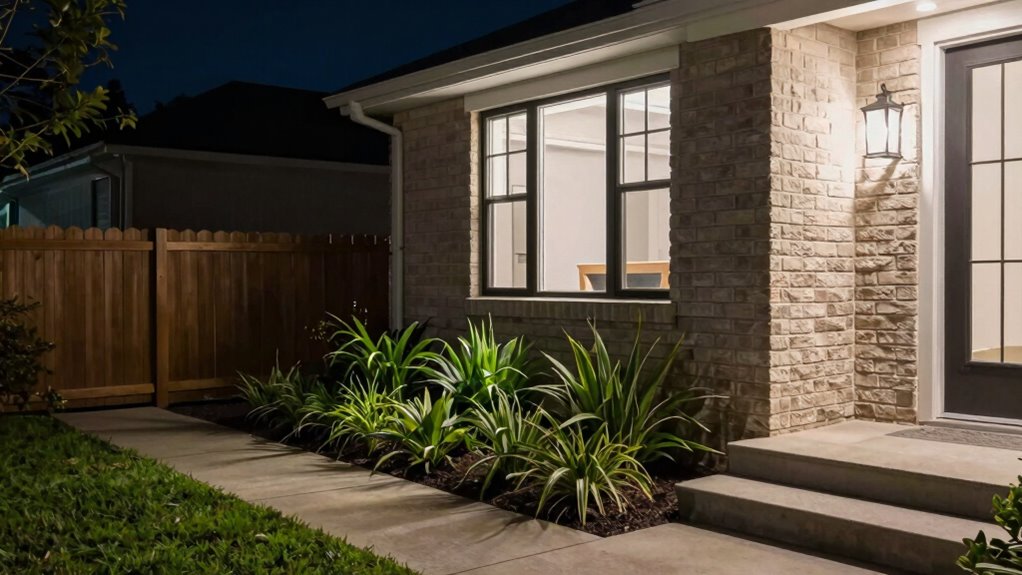
To improve your night vision, start by positioning your camera at the right angle to cover key areas clearly. Adjust the tilt and direction so that the camera captures the most relevant zone with minimal obstructions. Proper positioning makes a big difference in nighttime clarity and overall security. Incorporating smart automation can further optimize camera angles based on movement or time of day. Additionally, ensuring your camera has the appropriate ventilation considerations helps prevent fogging or condensation that can impair night vision. Regularly inspecting and maintaining your camera’s hardware components ensures optimal performance during nighttime hours. Understanding the evolving language of the internet can also assist you in better understanding security notifications or app alerts related to your camera’s performance. Recognizing the transition from Amish to modern fame can sometimes influence how you interpret updates or features of your security devices.
Optimal Camera Positioning
Ever wonder why your Ring Camera struggles to capture clear footage in low light? The key is ideal camera positioning. Start by focusing on lighting placement; guarantee there’s enough ambient light without creating glare or shadows. Good lighting helps the camera see better at night. Next, consider camera elevation—mount it at a height that covers the desired area without blind spots. Too low, and it might miss important details; too high, and it could overlook vital spots. Adjust the angle so the camera faces the area you want to monitor, avoiding obstructions like trees or fences. Fine-tuning both lighting placement and elevation will considerably improve night vision, making your footage clearer and more reliable. Proper positioning is essential for maximizing your camera’s effectiveness at night, especially when understanding the fundamentals of camera ergonomics. Additionally, using adaptive lighting features can enhance visibility in challenging conditions, particularly when combined with optimal camera placement.
Adjusting for Night Clarity
Once you’ve positioned your camera and lighting properly, the next step is adjusting the camera’s angle to optimize night vision. Start by checking the sensor calibration—ensure the camera is aligned correctly to capture clear images. Regular lens cleaning is essential; dust or smudges can reduce night clarity. Adjust the camera tilt so the lens faces the area you want to monitor directly, avoiding glare or reflections. Use this table as a guide:
| Tip | Explanation |
|---|---|
| Sensor Calibration | Ensure the sensor’s alignment for clarity |
| Lens Cleaning | Remove dust for sharper night images |
| Camera Angle | Face the subject directly for better vision |
| Avoid Glare | Keep lights out of lens view |
| Test & Adjust | Review footage and fine-tune the angle |
Proper thermal behavior understanding can further help in adjusting settings for optimal night vision. Additionally, understanding battery conservation techniques can extend the camera’s operational time during extended periods of use. Recognizing lighting conditions is crucial, as ambient light influences night vision performance. Maintaining optimal camera positioning is essential to prevent blind spots and ensure comprehensive coverage, especially at night. This approach enhances your camera’s night vision effectively.
As an affiliate, we earn on qualifying purchases.
Step-by-Step: Fix Your Ring Camera’s Nighttime Visibility

If your Ring camera struggles to capture clear footage at night, fixing its visibility is straightforward. Start by evaluating your camera placement—ensure it’s positioned at an ideal angle, away from obstructions and with a clear line of sight. Next, enhance the lighting around the area; adding outdoor lights or motion-activated lighting can dramatically improve night visibility. Avoid relying solely on the camera’s night vision, which can be limited. Instead, use ambient lighting to illuminate key areas. Adjust the camera’s angle slightly if needed, so it faces the well-lit zone directly. These simple steps—careful camera placement and lighting enhancement—can make a significant difference in nighttime footage quality. With these adjustments, you’ll see clearer, more useful recordings after sunset.
adjustable security camera mount
As an affiliate, we earn on qualifying purchases.
As an affiliate, we earn on qualifying purchases.
Tips to Position Your Ring Camera for Clear Night Footage
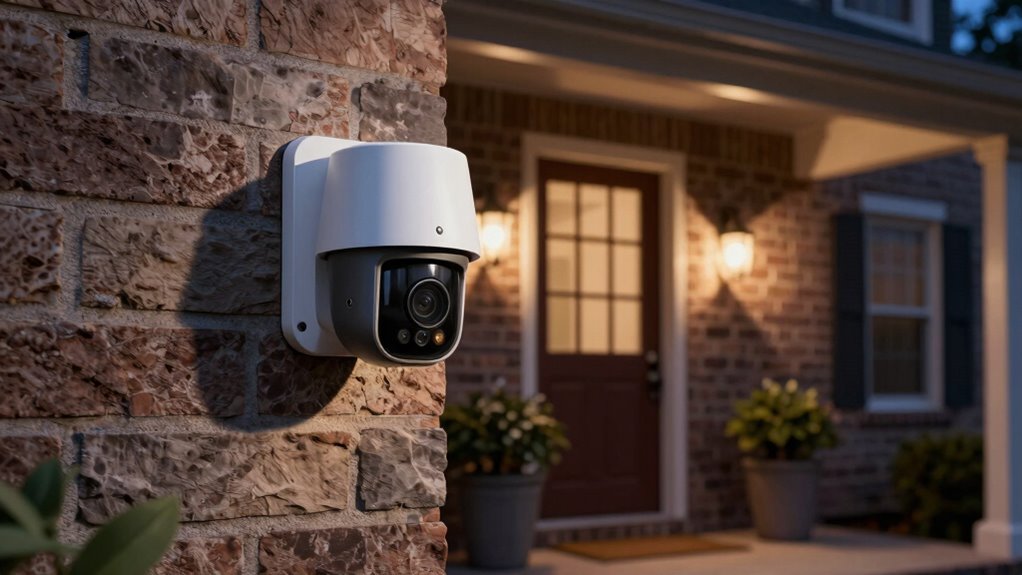
To get the clearest night footage, start by optimizing your camera angle to cover key areas without obstructions. Next, adjust the infrared settings to improve visibility in low light, ensuring the camera isn’t overwhelmed or underlit. Proper placement can also help minimize environmental factors like dust or fog that may impact image clarity and improve your air quality awareness. Additionally, considering load calculations during installation can ensure your circuit supports optimal camera operation without power issues. Incorporating knowledge about deep-sky imaging techniques can also help you understand how to better position your camera and adjust settings for optimal night vision, especially when considering how aerial imaging can benefit from advanced techniques to capture clearer images in low-light conditions.
Optimize Camera Angle
Positioning your Ring camera correctly is essential for capturing clear night footage. Lighting challenges, like shadows or poor illumination, can obscure details if the camera angle isn’t ideal. Focus on camera placement by angling it slightly downward to cover the desired area without glare or reflections. Avoid pointing directly at bright lights or reflective surfaces that cause glare, which can wash out footage. Consider the background and ensure the camera is directed at the most critical zone, such as doorways or driveways. Adjust the height and tilt to minimize blind spots and maximize visibility. Proper camera angle reduces shadows and enhances the camera’s ability to pick up details in low light, resulting in clearer, more useful footage at night. Additionally, understanding the lighting environment can help you choose the best position for optimal night vision performance. Being aware of the camera’s field of view can further improve coverage and reduce blind spots during nighttime recording. Paying attention to camera placement principles can significantly improve your night-time surveillance results. Ensuring your setup accounts for ambient light sources can also make a noticeable difference in image clarity during low-light conditions. Incorporating a strategic positioning approach can help ensure your camera captures the most important details when it matters most.
Adjust Infrared Settings
Adjusting your Ring camera’s infrared (IR) settings is essential for capturing sharp, clear footage at night. Proper infrared adjustment ensures the camera’s night mode activates effectively, providing excellent visibility in low light. Check your camera’s settings in the Ring app and enable night mode if it isn’t already. Some models let you customize IR sensitivity, which can improve image clarity without overexposing footage. Position your camera so that infrared LEDs have an unobstructed view of the area you want to monitor. Avoid placing objects or reflective surfaces near the IR LEDs, as they can interfere with infrared performance. Regularly test your infrared adjustment during nighttime to confirm it delivers clear, detailed footage, ensuring your Ring camera stays effective after dark.
Enhance Lighting Conditions
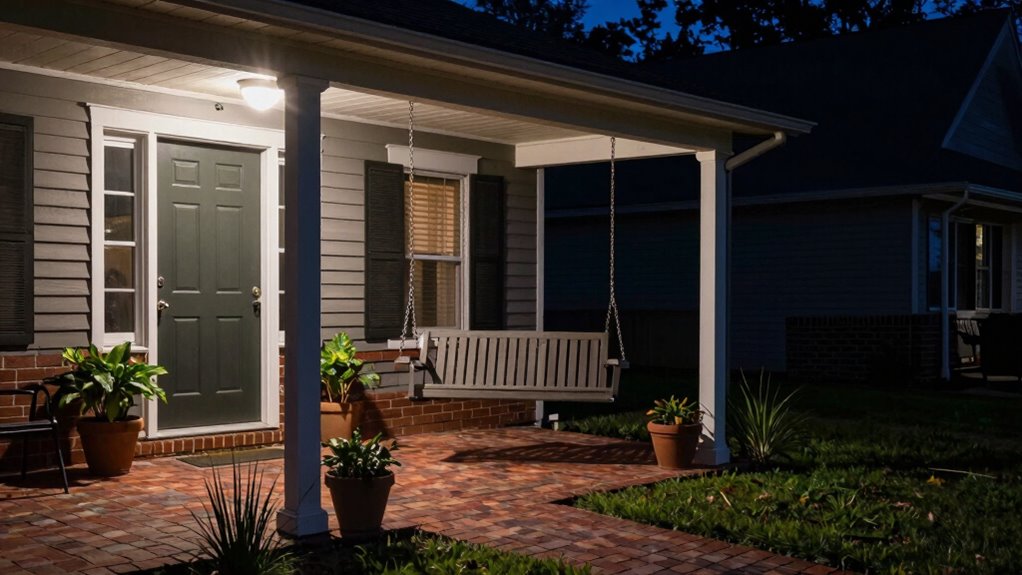
Proper placement of your Ring camera can considerably improve night footage quality. To enhance lighting conditions, focus on strategic camera placement and lighting techniques. First, position your camera where ambient light naturally occurs, such as near porch lights or street lamps, to reduce shadows and improve visibility. Second, avoid pointing the camera directly toward bright lights, which can cause glare and wash out footage. Third, consider adding motion-activated lights or landscape lighting around the area to give your camera better illumination without relying solely on infrared. These adjustments help your camera capture clearer, more detailed footage at night. Implementing effective lighting techniques and thoughtful camera placement guarantees you get the best possible night security footage with your Ring camera.
Troubleshooting Common Night Vision Problems

Night vision problems on your Ring Camera can be frustrating, but many issues have simple fixes. First, ensure your camera’s motion detection settings are optimized—sometimes, low sensitivity causes poor night vision. Check if solar panels are affecting the camera’s power, as inconsistent energy can reduce night mode performance. Dirt or obstructions on the lens also impair visibility, so clean it regularly. Adjust the camera angle to maximize the infrared light exposure.
| Issue | Solution | Notes |
|---|---|---|
| Poor night visibility | Clean lens, check IR lights | Dirt or obstructions block IR |
| Weak motion detection | Adjust sensitivity, check for obstructions | Proper placement improves detection |
| Power issues from solar panels | Ensure panels are clean and positioned correctly | Power stability affects night mode |
Extra Tips to Get Better Night Video From Your Ring Camera
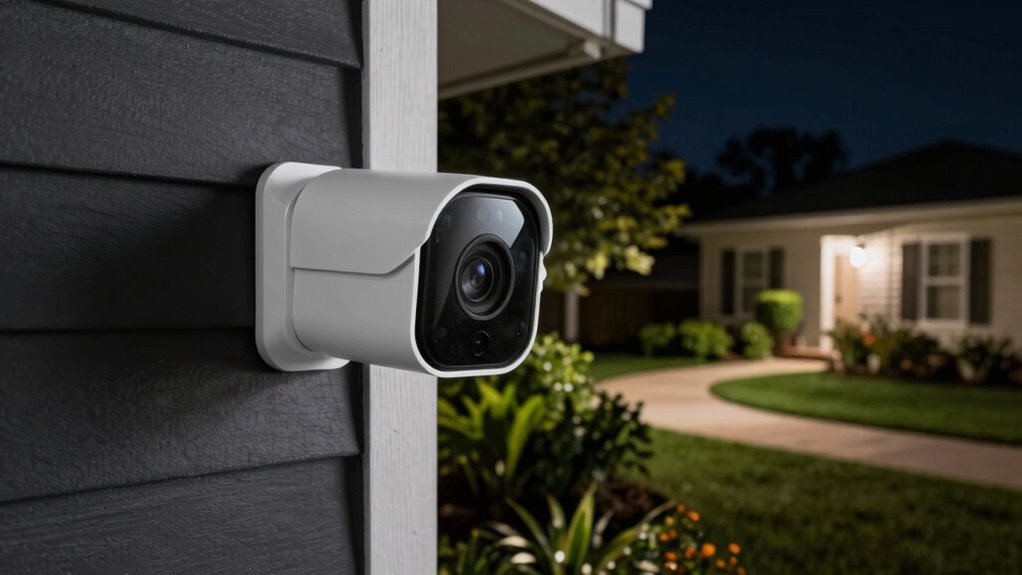
To capture clearer night videos with your Ring Camera, you should focus on optimizing its placement and settings. Proper lighting placement is key—add external lights or adjust existing ones to reduce shadows and improve visibility. Regular lens cleaning ensures no dirt or smudges blur the image at night. Consider the following tips:
- Position your camera where it has a clear line of sight, avoiding obstructions.
- Use strategic lighting placement to enhance illumination without overexposing.
- Routinely clean the lens with a soft cloth to maintain sharp, crisp footage.
These simple adjustments can considerably improve your night video quality, making sure your Ring Camera captures every detail even in low light.
Frequently Asked Questions
Can External Lights Improve My Ring Camera’s Night Vision?
Yes, external lights can improve your Ring camera’s night vision by addressing lighting issues. They enhance visibility, making it easier for the camera to detect motion and capture clear footage. Proper lighting reduces false alarms and guarantees your camera detects genuine activity. Just ensure the lights are positioned correctly to avoid glare or shadows. This simple fix boosts your camera’s performance and provides better security during nighttime hours.
Does Camera Placement Affect Infrared Effectiveness at Night?
Camera positioning crucially impacts infrared effectiveness at night. If you place your camera too high or too low, it may miss essential areas, and improper angles can create infrared limitations, reducing visibility. To improve night vision, adjust your camera to face the area you want monitored directly, ensuring it’s level and unobstructed. Correct camera positioning enhances infrared performance, giving you clearer night recordings and better security coverage.
How Often Should I Clean the Camera Lens for Clear Night Footage?
Think of your camera lens as the eye of a vigilant guardian—cleanliness keeps it sharp. You should clean your lens weekly or whenever dirt, smudges, or water spots appear. Stick to a consistent cleaning schedule, using soft cloths and gentle solutions to avoid scratches. Regular lens maintenance guarantees clear night footage, so your camera’s watchful eye remains unobstructed and ready to catch every detail in the dark.
Are There Specific Settings to Enhance Night Visibility on Ring Cameras?
To enhance night visibility on your Ring camera, enable night mode and adjust infrared settings if available. Night mode automatically switches your camera to low-light mode, improving clarity, while infrared settings help illuminate dark areas. Make certain your camera’s firmware is current for peak performance. Regularly clean the lens to prevent dirt from affecting image quality, and check your device’s settings to confirm night mode and infrared are activated for clearer nighttime footage.
Will Upgrading My Camera Model Improve Night Vision Performance?
Upgrading your camera model can definitely improve night vision performance. Newer models often feature higher camera resolution, which captures clearer images, and an extended infrared range, allowing better visibility in low light. You’ll notice sharper images and greater distance coverage at night. Additionally, advanced sensors and improved IR LEDs enhance overall night-time clarity, making your security more reliable and giving you peace of mind when monitoring your property after dark.
Conclusion
By adjusting your Ring camera’s angle and making a few simple tweaks, you can turn night into day when it comes to your footage. Think of it like shining a spotlight in the right direction—you’ll catch every detail without the darkness playing hide and seek. With these tips, your camera will see through the night’s shadows, giving you peace of mind and crystal-clear footage. Don’t let darkness win—shine a light on your security!
Evergreen bestsellers Picks
bestsellers
As an affiliate, we earn on qualifying purchases.