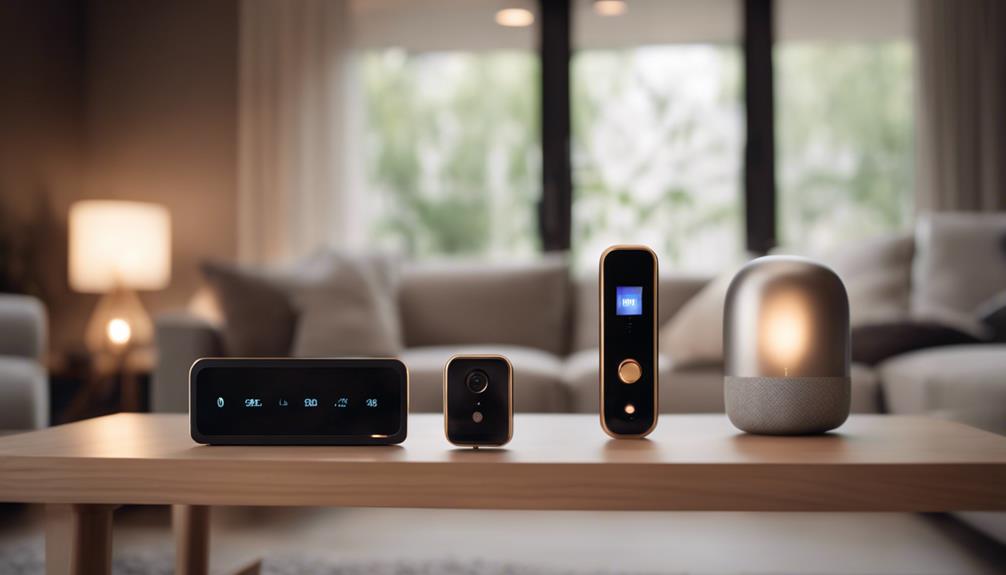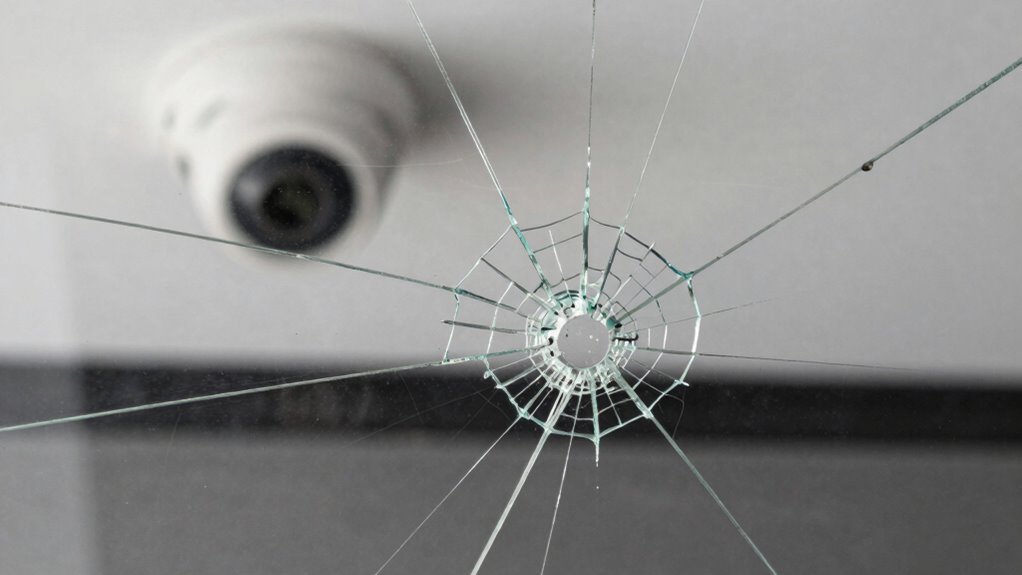

Glass-break sensors detect the sounds and vibrations caused by shattering glass, using microphones or vibration sensors tuned to specific frequencies. However, they can miss quiet or controlled break-ins where no noise or impact occurs. They also struggle with thicker or laminated glass, which may not produce detectable signals. Loud household noises can trigger false alarms, reducing their reliability. If you want to discover how to optimize their effectiveness and fill detection gaps, keep exploring the details.

Get privacy and security gear delivered free — and shop member deals
- Fast, free delivery on millions of items
- Access to Prime Big Deal Days deals on October 6–7
- Prime Video, Amazon Music and more included
Key Takeaways
- Detects the specific sound frequency and vibration patterns produced when glass shatters or impacts.
- Can miss silent or controlled break-ins that produce no noise or impact.
- May falsely trigger from loud household noises like slamming doors or thunderstorms.
- Less effective against thick, laminated, or reinforced glass that doesn’t produce typical signals.
- Often supplemented with other sensors to cover detection blind spots and improve security.

Glass-break sensors are widely used to safeguard homes and businesses by detecting the sound of shattered glass. These devices are designed to alert you immediately if someone tries to break a window or glass door, giving you a chance to respond quickly. When integrated with your security system, they provide an extra layer of protection, ensuring that any potential break-in doesn’t go unnoticed. However, it’s important to understand what these sensors can and cannot detect, as well as their limitations—especially when it comes to avoiding false alarms.
Most glass-break sensors rely on microphones or vibration sensors to pick up the specific sound or impact of glass shattering. They are tuned to detect the frequency and pattern typical of breaking glass, which means they can usually distinguish between normal household sounds and actual break-ins. Proper security system integration means these sensors work seamlessly with alarms, cameras, and monitoring services, giving you a thorough security setup. But this integration requires careful calibration; if not set up correctly, it can lead to sensor false alarms. For example, loud noises like slamming doors, dropping objects, or even thunderstorms can sometimes trigger these sensors, causing unnecessary alerts. Constant false alarms can desensitize you or your security provider, decreasing overall effectiveness.
While glass-break sensors are excellent at detecting true threats, they do have their blind spots. They often miss silent or very controlled break-ins where someone breaks the glass quietly or uses tools that don’t produce the typical sound pattern. Similarly, if the glass is thick or laminated, the sensor might not pick up the sound or vibration accurately. In these cases, relying solely on glass-break sensors isn’t enough. Complementing them with motion detectors, surveillance cameras, or door/window sensors can fill in the gaps, offering a more reliable security system. Additionally, advancements in security sensor technology have improved detection capabilities, but understanding their limitations remains crucial. Regular maintenance, sensor calibration, and staying informed about emerging detection methods are vital to ensure optimal performance over time. Incorporating proper installation practices can also significantly reduce false alarms and improve overall detection accuracy.
To further improve detection and reduce false alarms, some sensors now incorporate advanced sound recognition, which helps differentiate between harmless noises and actual threats. Furthermore, some sensors are more prone to false alarms than others, especially if they’re not properly installed or maintained. It’s essential to regularly test and calibrate your sensors, ensuring they respond accurately to genuine threats while ignoring benign sounds. When planning your security system, pay attention to how well the sensors integrate with other components to minimize false alarms and maximize detection accuracy. Proper security system integration not only enhances your protection but also helps prevent the frustration and potential costs associated with false alarms. Ultimately, understanding what glass-break sensors detect—and what they might miss—helps you make smarter decisions about your security setup, ensuring you stay protected without unnecessary disruptions.
glass break sensor with vibration detection
As an affiliate, we earn on qualifying purchases.
As an affiliate, we earn on qualifying purchases.
Frequently Asked Questions
Can Glass-Break Sensors Differentiate Between Real and Fake Glass Breaking?
Glass-break sensors can sometimes differentiate between real and fake glass breaking, but their accuracy varies. They mainly detect the sound frequency and vibrations of breaking glass, which can be mimicked by fake glass or other loud noises. To improve fake glass detection and sensor accuracy, look for advanced models with multiple detection methods. Keep in mind, no sensor is foolproof, so combining systems enhances security and reduces false alarms.
How Weather Conditions Affect Glass-Break Sensor Performance?
Weather interference can impact your glass-break sensor’s performance by causing false alarms or missed detections. Rain, wind, or hail can trigger sensor sensitivity, making it harder to distinguish real glass breaking from environmental noise. Cold or humid conditions might also dampen sensor accuracy. To guarantee peak performance, regularly test your sensors and consider weather-resistant models, especially if you live in areas with harsh weather.
Are Glass-Break Sensors Effective on All Types of Glass?
Imagine a symphony where each instrument plays its part—glass-break sensors work best when the glass’s material matches the sensor’s sensitivity. They’re effective on most standard glass types, like annealed or tempered, but struggle with specialty or laminated glass. Material compatibility is key; if the glass doesn’t produce the right acoustic signature, the sensor might miss the break. So, choose sensors suited to your glass for peak security coverage.
What Is the Typical Installation Process for Glass-Break Sensors?
You typically install glass-break sensors by placing them on walls near windows, ensuring ideal sensor placement to cover all vulnerable glass areas. You need to take into account installation challenges like avoiding obstructions and selecting an appropriate height for effective detection. Carefully follow the manufacturer’s instructions for mounting and testing the sensors, as proper placement is essential for reliable performance. Regularly check and adjust the sensors to maintain security.
How Often Do Glass-Break Sensors Require Maintenance or Calibration?
You should check your glass-break sensors’ sensor sensitivity and perform maintenance regularly, typically every 6 to 12 months. Adjust the sensitivity to avoid false alarms or missed detections. Maintenance includes cleaning the sensors and testing their response. If you notice any issues with sensitivity or alarm accuracy, recalibrate or replace the sensors promptly. Consistent maintenance guarantees dependable security and peak sensor performance.
home security system with glass break detection
As an affiliate, we earn on qualifying purchases.
As an affiliate, we earn on qualifying purchases.
Conclusion
So, next time you’re counting on glass-break sensors for security, remember they mainly detect the sound of breaking glass, not the act itself. While they’re helpful, they aren’t foolproof—loud noises or false alarms can throw them off. It’s worth combining these sensors with other security measures for better protection. Don’t rely solely on sound detection; understanding their limits helps you make smarter security choices and actually stay one step ahead of intruders.
motion and glass break alarm kit
As an affiliate, we earn on qualifying purchases.
As an affiliate, we earn on qualifying purchases.
advanced sound recognition security sensors
As an affiliate, we earn on qualifying purchases.
As an affiliate, we earn on qualifying purchases.
Fall Picks
fall essentials
As an affiliate, we earn on qualifying purchases.