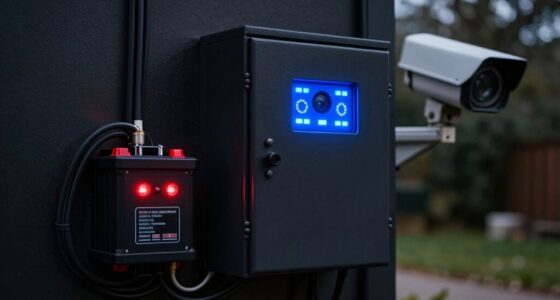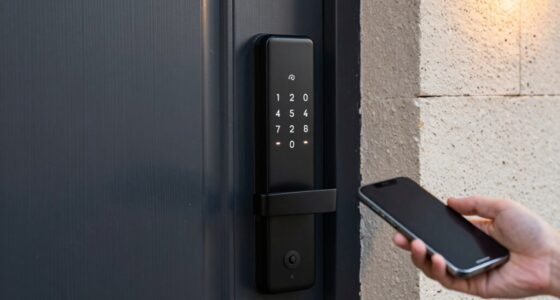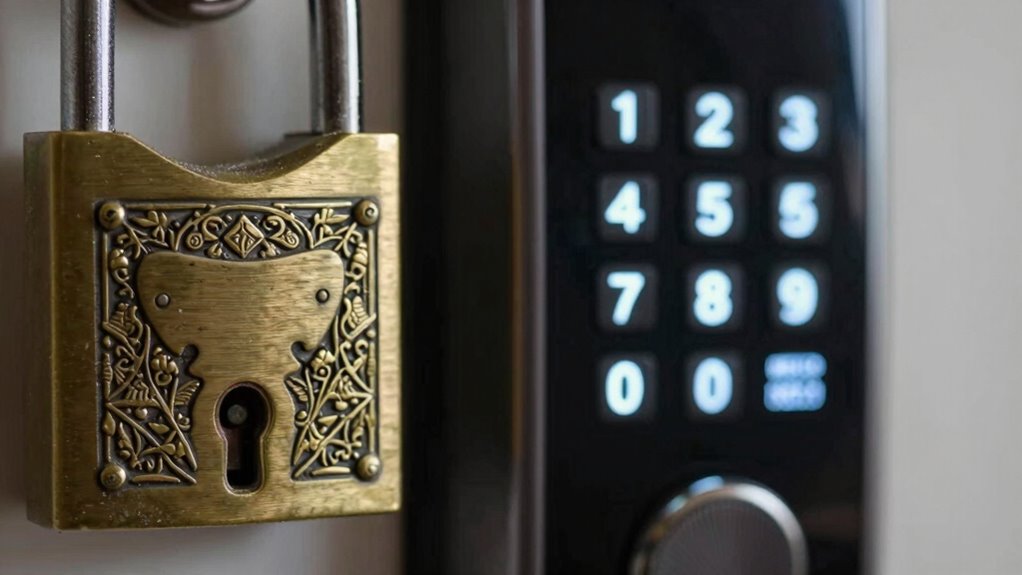

Mechanical locks can fail due to physical damage, wear, or forced entry, making them susceptible to picking and breakage. Electronic locks rely on power, batteries, and secure software, so issues like power outages, tampering, or hacking can disable them. Understanding these failure modes helps you prevent problems and choose the right lock for your needs. If you keep exploring, you’ll discover ways to enhance your lock’s security and longevity.
Key Takeaways
- Mechanical locks are vulnerable to physical impacts, lock picking, and forced entry, leading to misalignment or damage.
- Electronic locks can fail due to power issues, battery depletion, or wiring faults, causing operational malfunctions.
- Mechanical lock failures often result from corrosion, wear, or environmental damage affecting internal components.
- Electronic locks are susceptible to cybersecurity threats like hacking, signal jamming, and firmware vulnerabilities.
- Proper maintenance and understanding of specific failure modes enhance the reliability of both mechanical and electronic locks.
Mechanical Lock Failures From Physical Damage
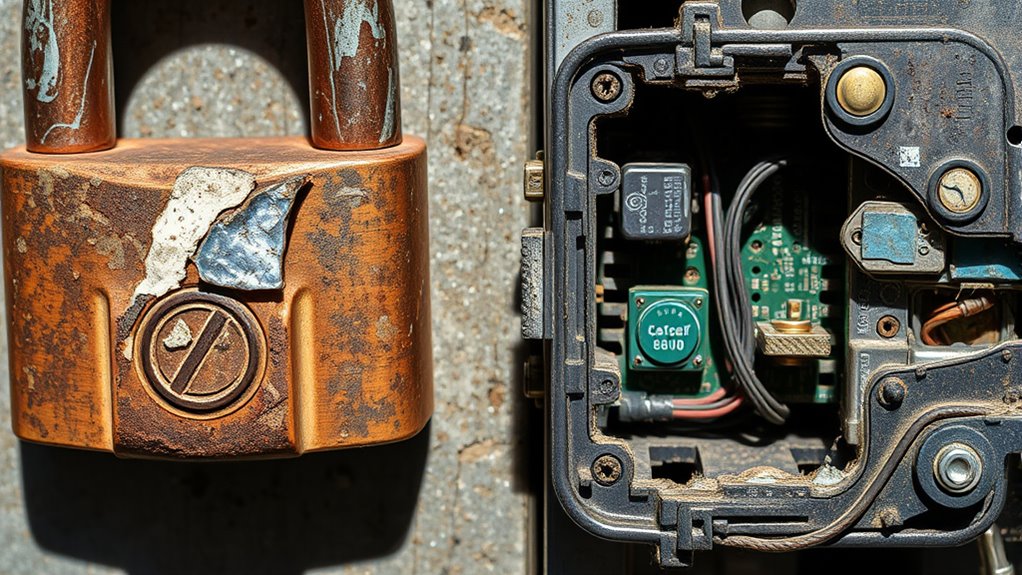
Mechanical locks are vulnerable to physical damage that can compromise their security. When a key component sustains damage from physical impact, the lock’s functionality can be severely affected. Dropping a lock or hitting it with a heavy object can bend or break internal parts like the cylinder or latch, making it impossible to operate smoothly. This damage often leads to key component failure, preventing you from disengaging or locking doors reliably. Even minor impacts can cause misalignment, jamming the mechanism or causing it to stick. Regular wear and tear from physical impact weaken the lock’s structural integrity over time. As a result, physical damage not only hampers usability but also creates potential security gaps, exposing your property to unauthorized access. Staying aware of damage prevention techniques can help prolong the lifespan and security of your locks. Additionally, understanding the failure modes helps in diagnosing issues early before complete lock failure occurs. Incorporating physical protection measures, such as protective casings or barriers, can further reduce the risk of damage. Proper maintenance and regular inspections also play a crucial role in identifying vulnerabilities before they lead to failure, especially when combined with preventative measures that mitigate impact risks.
Power and Battery Issues That Cause Electronic Lock Failures
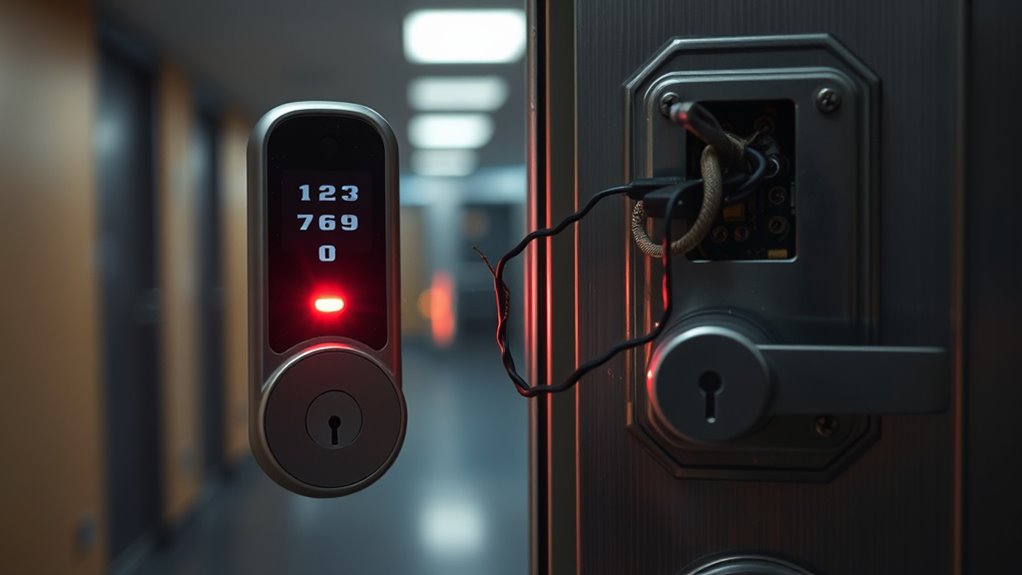
Electronic locks rely on power sources like batteries or electrical connections to function properly. If your power supply fails or the batteries run out, the lock won’t operate, leaving you locked out or vulnerable. Battery lifespan varies depending on usage, temperature, and quality; a weak or dead battery can cause the lock to malfunction without warning. Regularly checking and replacing batteries ensures consistent performance and avoids sudden failures. Some electronic locks feature low-battery indicators, but they aren’t foolproof and might give false alarms. Power supply issues, such as loose wiring or power outages, can also disable electronic locks. To prevent failures, maintain fresh batteries and guarantee your power connections are secure and reliable. Proper upkeep minimizes the risk of electronic lock failure due to power and battery issues. Additionally, understanding the technology behind electronic locks can help in choosing more reliable models that are less prone to failure. Being aware of common failure modes and diagnosing issues early can further assist in troubleshooting and maintaining your security system effectively. Regular inspections and preventative maintenance can significantly reduce the chances of unexpected lock malfunctions, especially when considering the dependence on electrical systems in electronic security devices.
How Electronic Locks Can Be Hacked or Tampered With
Because electronic locks rely on digital signals and software, they can be targeted by hackers or tampered with by malicious individuals. Cybersecurity vulnerabilities such as weak passwords, outdated firmware, or insecure communication protocols make these locks vulnerable to hacking attempts. Attackers might exploit software flaws or intercept signals to gain unauthorized access. To improve hacking prevention, you should regularly update firmware, use strong, unique passwords, and enable multi-factor authentication if available. Physical tampering, like signal jamming or device manipulation, can also compromise electronic locks. Understanding these risks helps you implement security measures that protect your electronic locking systems from cyber threats and tampering, ensuring you maintain control over access and avoid potentially costly breaches. Proper security practices are essential for safeguarding electronic locks from evolving cyber threats. Additionally, implementing encryption protocols can significantly reduce the risk of signal interception. Incorporating cybersecurity measures tailored specifically for connected devices enhances overall security and resilience against emerging threats, especially in the context of digital vulnerabilities.
Mechanical Lock Picking and Forced Entry Techniques
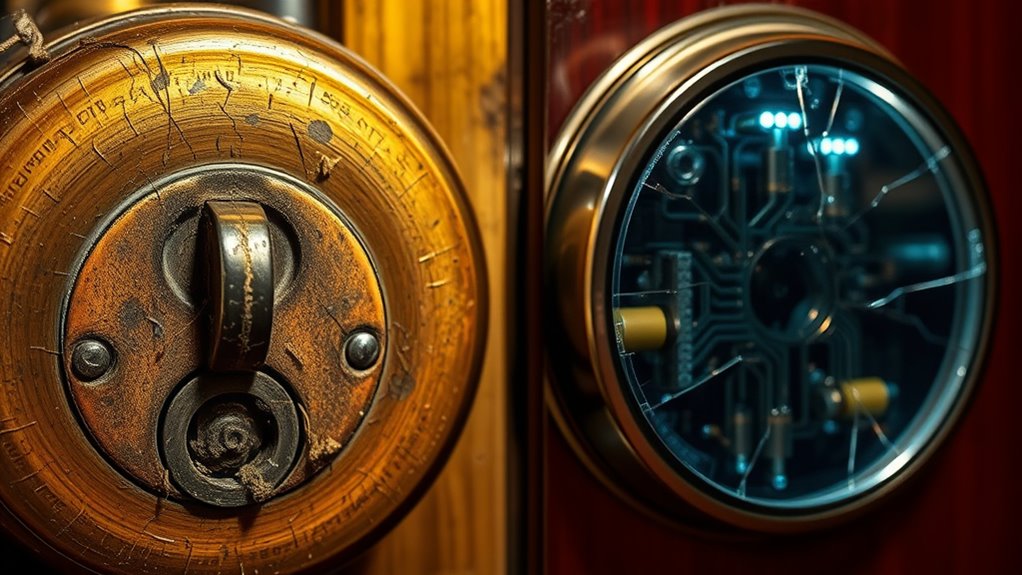
While mechanical locks are designed to resist unauthorized entry, skilled intruders can bypass them using lock picking and forced entry techniques. Lock picking involves manipulating the lock’s internal components, such as pins or wafers, to align them and unfasten it without a key. This method requires dexterity and the right tools, but it’s effective against many traditional locks. Forced entry, on the other hand, involves physically breaking or prying open the lock or lock mechanism, often using tools like crowbars or screwdrivers. Both techniques exploit vulnerabilities in mechanical lock designs, especially weaker or older models. Even high-security locks aren’t invulnerable—dedicated intruders can utilize these methods when necessary. Understanding these attack strategies highlights the importance of choosing locks with enhanced resistance to lock picking and forced entry. Additionally, lock security features continue to evolve, aiming to provide better protection against these common attack methods, as industry innovations focus on integrating advanced security measures to mitigate such vulnerabilities.
Environmental Factors That Damage Both Mechanical and Electronic Locks
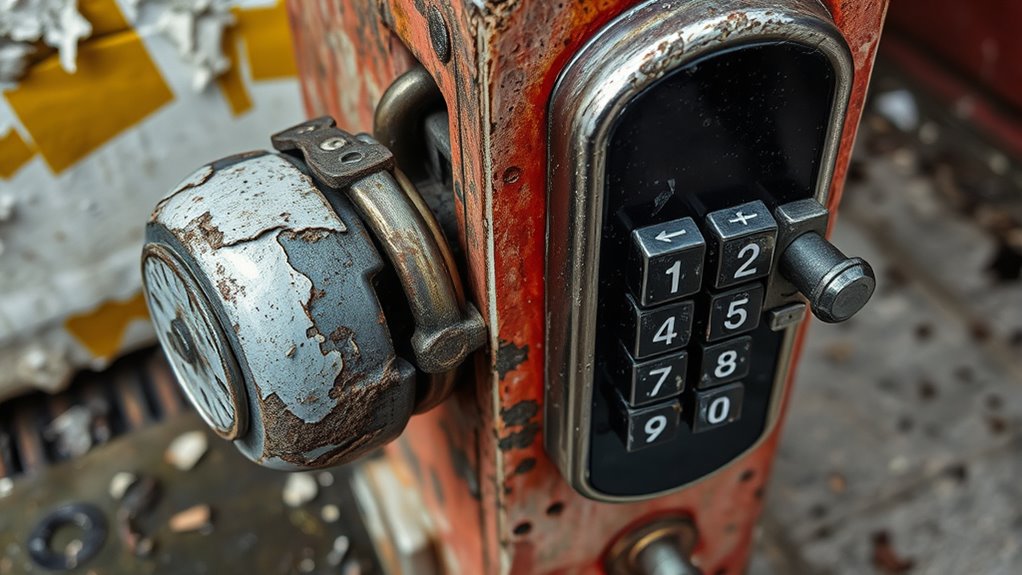
Environmental factors can considerably weaken both mechanical and electronic locks over time, making them more vulnerable to failure. Exposure to corrosion, moisture, and dirt can cause components to rust or seize, especially in harsh conditions. Corrosion and rust can accelerate deterioration of metal parts, leading to increased failure risk. Temperature extremes—hot summers or freezing winters—can affect lock materials, causing metal parts to expand, contract, or crack, impairing function. For electronic locks, heat or cold can damage internal circuits or batteries, reducing reliability. Additionally, dust and debris can clog moving parts or interfere with sensors. Environmental stressors can also lead to the development of microfractures within materials, further weakening their structural integrity. These microfractures can propagate over time, especially under repeated environmental stress, contributing to lock failure, and compounding the risk of lock failure.
How to Prevent Lock Failures and Troubleshoot Common Problems
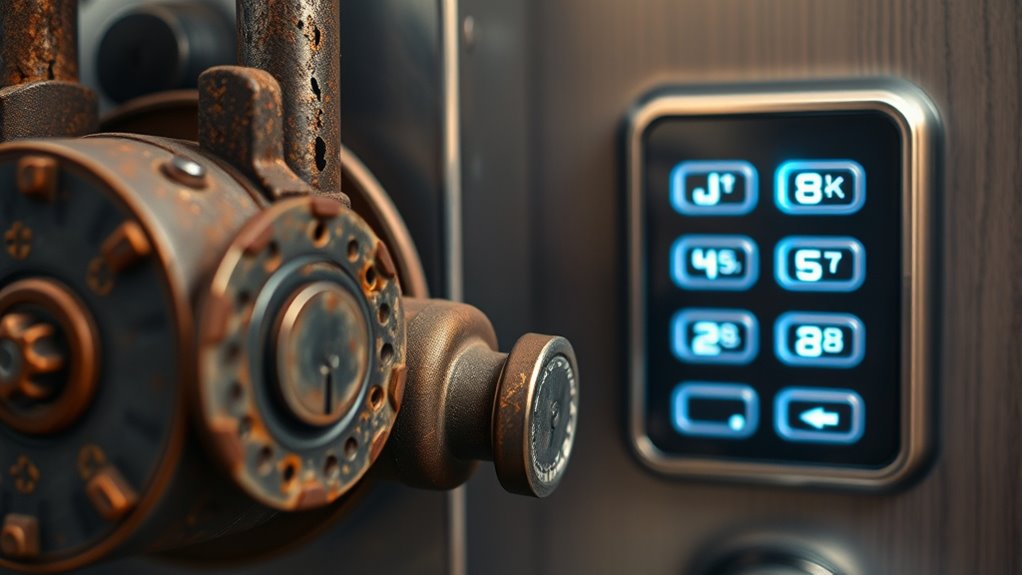
Preventing lock failures starts with regular maintenance and careful installation. Keep your locks clean and lubricated, especially mechanical parts, to prevent sticking or jamming. Check for worn keys or damaged keycuts, as poor key maintenance can cause difficulties unfastening or securing. Educate users on proper operation; for electronic locks, ensure batteries are replaced promptly and settings are correctly configured. Troubleshoot common problems like keys not turning or electronic locks not responding by inspecting for debris, loose components, or power issues. Regular inspections help identify potential failures early. Proper user education minimizes misuse, reducing damage and lockouts. Additionally, understanding lock failure modes can guide you in selecting the right preventive measures. Being familiar with common wear patterns allows for targeted maintenance and can prolong the lifespan of your locks. Recognizing failure modes specific to your lock type enables more precise troubleshooting and repairs. Staying aware of electromechanical vulnerabilities helps in implementing appropriate safeguards and maintenance routines. By staying proactive with key maintenance and informing users about correct operation, you can greatly extend your lock’s lifespan and prevent unexpected failures.
Frequently Asked Questions
What Are the Signs Indicating a Lock Is About to Fail?
If your lock shows signs like increased lock vibration or frequent key jamming, it’s a warning that failure may be imminent. You might also notice difficulty turning the key, unusual noises, or the lock feels loose. These issues indicate wear or buildup inside the mechanism. Addressing these signs early can prevent complete lock failure, so consider inspecting or replacing the lock before it completely stops functioning.
How Long Do Electronic Locks Typically Last Before Failure?
Imagine the quiet hum of your electronic lock, powered by batteries that usually last 1 to 3 years. As the days pass, battery life diminishes, and mechanical wear begins to take its toll. You may notice sluggish responses or failure to open. With proper maintenance and fresh batteries, you can extend its lifespan. But remember, electronic locks generally last around 3 to 5 years before failure, depending on usage and quality.
Can Environmental Factors Cause Immediate Lock Failure?
Environmental factors can cause immediate lock failure, especially if you overlook corrosion risks or temperature effects. Extreme heat or cold can damage electronic components or batteries, while moisture leads to corrosion that impairs the lock’s functionality. If you leave your lock exposed to harsh weather without proper protection, you risk sudden failure. Regular maintenance and choosing weather-resistant models help prevent these issues and ensure your lock stays reliable in tough conditions.
Are There Industry Standards for Lock Durability and Failure Rates?
Like a trusty knight’s armor, industry standards exist to guarantee your locks withstand the test of time. These standards set benchmarks for durability through rigorous lock testing, aiming for low failure rates. While some manufacturers adhere strictly to these guidelines, others may not. Always check if your lock complies with recognized industry standards to guarantee reliable performance and peace of mind, especially when facing unpredictable environmental challenges.
What Are the Best Practices for Performing Lock Maintenance and Inspections?
To keep your locks functioning well, perform regular maintenance by lubricating the lock components to prevent rust and sticking. Check key alignment during inspections to ensure smooth operation and avoid damage. Clean the keyhole and handle to remove debris. Test the lock’s operation periodically, and address any issues promptly. Following these best practices helps extend your lock’s lifespan and guarantees reliable security.
Conclusion
No matter which lock type you choose, failure can strike at any moment, turning your security into a complete disaster. Mechanical locks can shatter with a single blow, while electronic locks can be hacked in seconds by a determined thief. The truth is, both systems have their weaknesses—so you better stay vigilant! Regular maintenance, smart upgrades, and awareness are your only shields against a lock failure that could leave you locked out or, worse, vulnerable to crime.