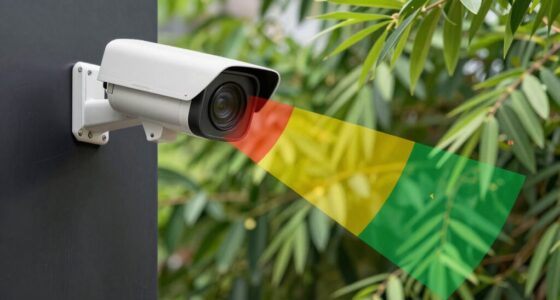
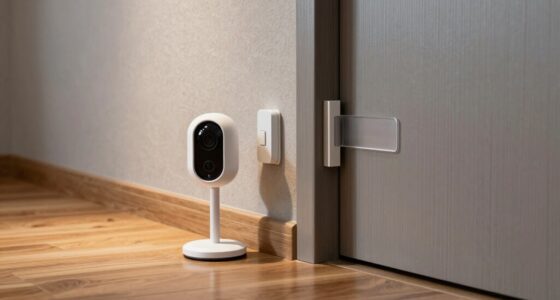
Alarm sensors detect specific threats like movement, glass breakage, smoke, and heat, but they don’t catch everything. Motion sensors can alert you to intruders but may miss threats outside their range or trigger false alarms from environmental factors. Glass break sensors detect the sound or vibrations of breaking glass but can be fooled by loud noises or nearby vibrations. Knowing how these sensors work and their limitations helps you improve your security—keep exploring for more insights.
Key Takeaways
- Sensors detect movement, sound (like glass break), vibrations, and temperature changes; they do not detect static threats or concealed intrusions.
- False positives can occur from environmental noise, pets, or weather, which sensors might mistakenly interpret as threats.
- Not all sensors detect every threat; for example, motion sensors miss threats outside their range or behind obstacles.
- Proper calibration, placement, and maintenance are essential for sensors to accurately detect real threats and minimize false alarms.
- Sensors primarily detect physical changes or activity; they do not identify threats like chemical hazards or digital intrusions without specialized equipment.
What Types of Sensors Detect Break-Ins?
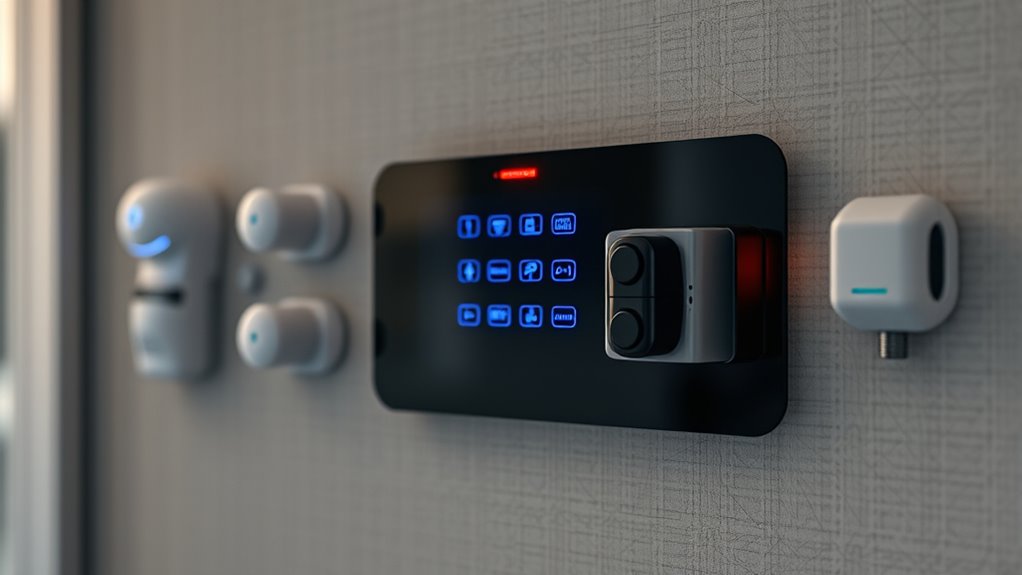
When it comes to detecting break-ins, several types of sensors work actively to alert you of unauthorized entry. Pet detectors are designed to recognize your pets and prevent false alarms, ensuring that small animals don’t trigger the system unnecessarily. Outdoor cameras also play a vital role; they monitor your property and send alerts if they detect movement or intrusion. These cameras often come with motion detection features, allowing you to see real-time footage of potential threats. Additionally, some sensors are sensitive to glass breakage or vibrations, providing further security layers. Together, pet detectors and outdoor cameras form a robust initial defense, helping you catch break-ins early and giving you peace of mind that your property is protected.
How Do Motion Sensors Work and What Threats Do They Detect?

Motion sensors detect movement within their designated areas, providing an active alert system that complements cameras and other security devices. To function effectively, they require proper sensor calibration, ensuring they react accurately to genuine threats and minimize false alarms. Calibration involves adjusting sensitivity settings so that minor movements or environmental changes, like passing shadows or pets, don’t trigger the alarm. When not calibrated correctly, sensors may become overly sensitive, causing frequent false alarms, which can undermine your system’s reliability. Conversely, if they’re set too conservatively, real threats might go unnoticed. Understanding how your motion sensors work and maintaining proper calibration helps you detect genuine threats, like intruders, while avoiding unnecessary disruptions caused by false alarms. Sensor calibration is essential for optimizing detection accuracy and reducing false positives.
Do Smoke and Fire Sensors Integrate With Your Security System?

Many security systems can integrate smoke and fire sensors, but compatibility varies. Understanding system compatibility helps you make sure your sensors work seamlessly with your setup. While integration offers quick alerts and centralized control, it also has limits you should consider.
System Compatibility Considerations
Integrating smoke and fire sensors with your security system requires careful consideration of compatibility. Alarm system compatibility is essential because not all sensors work seamlessly with every system. Check if your alarm panel supports the specific type of smoke or fire sensor you’re considering. Sensor calibration considerations are also important; sensors must be properly calibrated to detect hazards accurately without false alarms. Some systems may need software updates or additional modules to guarantee compatibility. Before purchasing, verify compatibility with your alarm provider or consult the manufacturer’s specifications. Failing to take these factors into account can lead to ineffective alerts or system malfunctions, compromising your safety. Properly matching sensors to your security system guarantees reliable detection and smooth operation.
Integration Benefits and Limits
Smoke and fire sensors can enhance your security system by providing immediate alerts to hazards, but their integration comes with both advantages and limitations. Proper alarm system integration guarantees quick response times, while sensor calibration maintains accurate detection. However, not all sensors seamlessly connect, and compatibility issues may arise. When integrated correctly, you’ll see benefits like:
- Real-time alerts on your smartphone
- Centralized control for all sensors
- Faster emergency response
- Reduced false alarms through calibration
- Enhanced overall safety
Despite these benefits, limitations include potential false alarms if sensors aren’t calibrated properly or incompatible systems that require additional equipment. Understanding these limits helps you optimize sensor placement and integration, ensuring your fire and smoke sensors work effectively within your security setup.
What Do Glass Break Sensors Detect and How Reliable Are They?

Glass break sensors detect the sound and vibration of breaking glass to alert you quickly. Their accuracy can vary, and environmental factors like loud noises or vibrations may cause false alarms or missed detections. Understanding how they work and their limitations helps you choose the right protection for your home. Additionally, high-quality sensors often incorporate advanced technology to better distinguish between actual glass breaking and other similar sounds. Proper calibration and placement are also crucial to ensure reliable detection and minimize false triggers, which is why testing and maintenance are essential parts of effective security systems. Moreover, knowledge of environmental influences, such as natural surroundings, can help optimize sensor placement for better detection accuracy. Recognizing the sensor technology used can further improve your home security setup. Being aware of environmental factors like nearby construction or heavy traffic can also help prevent false alarms and improve overall reliability.
How Glass Sensors Work
Glass break sensors detect the specific sound and vibration patterns produced when a window or glass door shatters. They use advanced sound detection to differentiate breaking glass from everyday noises. When a glass sensor picks up these distinct audio signatures, it triggers an alarm. Imagine hearing:
- The sharp crack of glass breaking suddenly
- Rapid, rhythmic vibrations traveling through the window frame
- High-pitched shattering sounds
- Sudden silence after the glass breaks
- The distinct frequency pattern unique to glass shattering
These sensors are tuned to recognize these cues, relying heavily on sound detection technology. While effective, they only activate during actual glass breakage, making them a specialized tool for catching intruders trying to smash through windows or doors. Effective detection methods are crucial for ensuring reliable security. Additionally, advanced sound analysis enhances the sensor’s ability to distinguish between true threats and false alarms. Incorporating noise filtering technology can further improve accuracy by minimizing false triggers caused by loud but harmless sounds. The effectiveness of glass sensors can also be influenced by the placement and environmental conditions, which should be carefully considered during installation.
Accuracy and Limitations
While glass break sensors are designed to accurately detect the specific sounds and vibrations caused by shattering glass, their reliability isn’t foolproof. Proper sensor calibration is essential; if not calibrated correctly, they may miss genuine break-ins or trigger false alarms. False alarms often occur from loud noises like slamming doors or thunderstorms, which can mimic glass breaking sounds. Regular calibration and testing help ensure the sensor responds accurately to real threats without unnecessary alerts. Keep in mind that environmental factors, while not the focus here, can also influence sensor performance. Ultimately, while these sensors are effective in many situations, their limitations mean they shouldn’t be solely relied upon for complete security. Combining them with other detection methods enhances overall protection and reduces false alarms.
Environmental Influences
Environmental factors can markedly impact the performance of glass break sensors, affecting both their ability to detect genuine threats and their susceptibility to false alarms. Weather interference, such as heavy rain, wind, or hail, can mimic glass breaking sounds or obscure real ones. Pets triggering the sensor is another common issue, especially if they jump onto windows or shatter nearby glass. Other influences include nearby construction noise, vibrations from traffic, and sudden temperature changes. Imagine:
- Strong gusts causing window rattling
- Heavy storms creating loud, unpredictable noises
- Pets pawing at glass surfaces
- Vibrations from passing vehicles
- Fluctuating temperatures causing glass expansion or contraction
All these factors can confuse sensors, reducing reliability and increasing false alarms. Proper placement and calibration help mitigate these environmental influences. Additionally, understanding the horsepower of electric dirt bikes can help in choosing quieter and less disruptive equipment to minimize vibration-based false triggers. Being aware of sensor sensitivity settings can further improve accuracy and reduce false alarms caused by environmental factors. Recognizing the importance of environmental conditions helps in optimizing sensor performance and reliability.
Why Do Some Sensors Miss Threats? Common Limitations Explained

Despite their advanced technology, some sensors still miss threats because of inherent limitations. One common issue is sensor blind spots, areas where the sensor cannot detect movement or intrusion, allowing threats to go unnoticed. Additionally, sensors can be prone to false alarm triggers caused by environmental factors or non-threatening movements, which can desensitize the system or cause it to ignore real threats. These blind spots and false alarms reduce the effectiveness of the system, making it easier for intruders to bypass detection. Sometimes, poor placement or design flaws contribute to these issues, limiting the sensor’s coverage. Proper sensor placement and regular maintenance are crucial for optimal performance. Furthermore, understanding the thermal behavior of sensors can help in selecting the right type and placement to maximize detection accuracy. Recognizing sensor limitations can guide users in implementing complementary security measures to bridge detection gaps and improve overall reliability. Additionally, selecting sensors with appropriate detection range and sensitivity settings can significantly enhance system performance. Incorporating multi-sensor systems can also help address coverage gaps and improve threat detection reliability.
How Environmental Factors Impact Sensor Performance

Environmental factors can markedly influence how well alarm sensors perform, sometimes causing them to miss threats or generate false alarms. Environmental interference from things like moving trees, heavy rain, or dust can trigger sensors unnecessarily. Dust accumulation can impair sensor clarity, reducing their effectiveness. Temperature fluctuations may affect sensor calibration, making them less accurate over time. Humidity can cause moisture buildup, interfering with sensor signals. Vibrations from nearby machinery or traffic can mimic movement, leading to false alarms. To maintain exemplary performance, you need to consider how these factors impact your sensors and regularly check their calibration. Additionally, ambient conditions such as pollen or airborne particles can further affect sensor sensitivity and accuracy. Incorporating sensor placement strategies that minimize environmental exposure can help mitigate these issues. By understanding these influences, you can better prevent false alarms and ensure your sensors detect genuine threats. Staying aware of environmental interference is key to reliable security. Incorporating smart sensor technology that adapts to environmental changes can further enhance detection accuracy and reduce false positives.
How to Combine Sensors Effectively to Cover All Blind Spots

To guarantee thorough security coverage, you need to strategically combine different types of sensors so they complement each other and eliminate blind spots. Proper sensor placement is key; position motion sensors where they can detect movement without being triggered by pets or environmental changes. Pair these with door/window sensors for entry points, ensuring no gaps remain. Use cameras in areas that require visual verification. This combination minimizes false alarms, which often occur when a single sensor type reacts to non-threats. Regularly review sensor placement to adapt to new blind spots or environmental factors. Understanding sensor detection capabilities helps in choosing the right mix for comprehensive coverage. By integrating multiple sensors thoughtfully, you create a layered security system that covers all angles, reduces false alarms, and assures reliable detection across your property.
Frequently Asked Questions
Can Alarm Sensors Detect Non-Physical Threats Like Cyber Attacks?
Alarm sensors don’t detect cyber attacks directly because they focus on physical threats. However, they can help alert you to cybersecurity vulnerabilities if integrated with security systems that monitor network activity or device behavior. Be aware that false alarm triggers might occur due to false signals or system glitches, so it’s vital to regularly update and maintain your alarm system to guarantee it effectively supports your cybersecurity measures.
Are There Sensors That Identify Intruders Through Sound?
Yes, there are sensors designed to detect intruders through sound. You might think they’d ignore the noise of a quiet sneaking intruder, but sound detection sensors pick up intruder noise, like footsteps or breaking glass. They actively listen for unusual sounds, alerting you before an intruder even reaches your door. So, if you’re counting on silence, think again—these sensors thrive on noise, proving silence isn’t always golden in security.
How Do Sensors Differentiate Between Pets and Humans?
You set your pet motion sensors to distinguish between animals and humans by using animal detection features. These sensors analyze movement patterns, size, and heat signatures, allowing them to ignore small pets and focus on human intruders. When pet motion triggers the sensor, it often ignores the movement. This way, your alarm system prevents false alerts while still alerting you to genuine threats, ensuring reliable security with minimal false alarms.
Do Sensors Alert Homeowners to Tampering or Disabling Attempts?
Think of your alarm system as a vigilant guardian, always watching for trouble. Yes, many sensors send tampering alerts if someone tries to disable or bypass them, sounding the alarm like a alarm bell ringing through the night. These tampering alerts act as your home’s early warning system, ensuring you get notified immediately of sensor disabling attempts. This way, you can respond swiftly before any damage or intrusion occurs.
Can Sensors Detect Threats Outside the Typical Detection Range?
Sensor limitations mean they might not detect threats outside their typical detection range, creating detection gaps. You should know that sensors are designed for specific areas or movements, so if an intruder approaches from an unexpected angle or outside the range, your alarm system might not alert you. To minimize these gaps, consider adding extra sensors or upgrading to advanced models with broader detection capabilities.
Conclusion
Understanding what alarm sensors can and can’t detect helps you better protect your home. Did you know that motion sensors can miss intruders if they’re too small or move slowly? By combining different sensors effectively, you cover more blind spots and reduce false alarms. Investing in a well-rounded system increases your security by up to 50%, giving you peace of mind. Stay informed, and choose sensors wisely to keep your home safe and secure.