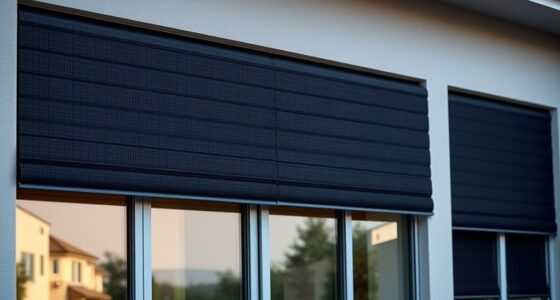
To secure your sliding doors and windows against forced entry, focus on installing sturdy, tamper-proof locks and reinforcing tracks with security bars or dowels. Add security film to glass to prevent shattering and consider visible deterrents like cameras and warning stickers. Regularly inspect and maintain locks, sensors, and physical barriers to guarantee they’re in top condition. Exploring these options further can help you create a more secure home environment.
Key Takeaways
- Install high-quality, tamper-proof locks and reinforce sliding door tracks with specialized locks to prevent lifting and forced entry.
- Use security film on glass and reinforce locks to make breakage and tampering more difficult.
- Add physical barriers like security bars or dowels in door tracks to deter intruders.
- Install security sensors, cameras, and display alarm stickers to act as deterrents and alert you to potential threats.
- Regularly inspect and maintain locks, sensors, and physical barriers to ensure ongoing security effectiveness.
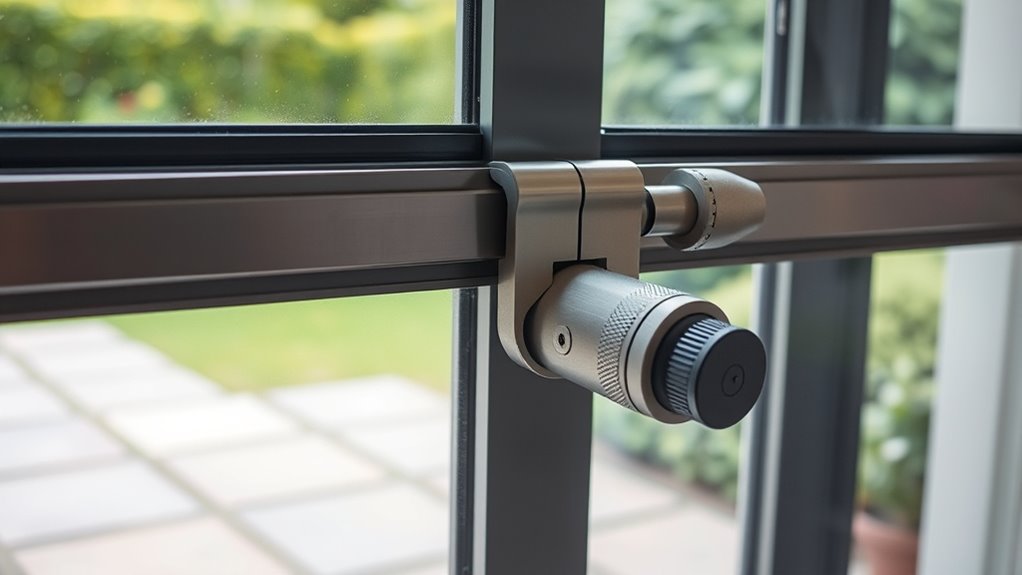
Sliding doors and windows add convenience and aesthetic appeal to your home, but they can also be vulnerable entry points for intruders. That’s why securing them properly is vital. One of the most effective ways to boost your home’s security is by installing a reliable alarm system. Modern alarm systems not only alert you instantly if someone tries to force their way in but can also notify authorities automatically. When combined with window locks, alarms create a layered defense, making it much harder for intruders to succeed. You might consider window sensors that trigger the alarm if a window is opened or broken. These sensors are easy to install and provide an immediate alert, giving you precious seconds to react.
Secure sliding doors and windows with alarms and locks for layered home protection.
Window locks are your first line of defense against forced entry. Standard locks can sometimes be bypassed or forced open, so upgrading to high-quality, tamper-proof locks makes a big difference. For sliding doors, consider using a security bar or a dowel placed inside the track to prevent the door from being forced open. This simple addition acts as a physical barrier, even if the lock is compromised. For windows, consider locks that are resistant to prying or picking. Installing multiple locks on large sliding windows adds extra security and discourages intruders from attempting entry. Always ensure that your window locks are in good condition and replace them if they show signs of wear or damage.
Another effective method is installing security film on your glass. This film holds the glass together in case of breakage, making it harder for intruders to shatter the window and gain access. Combining this with reinforced locks and alarm systems creates a thorough security setup. Remember, security isn’t just about preventing break-ins; it’s also about deterring them. Visible security measures, like alarm stickers and security cameras, send a clear message to potential intruders that your home is protected. Additionally, consider reinforcing sliding door tracks with locks designed specifically for that purpose. These locks prevent the door from being lifted off its track, a common method intruders use to gain entry. Incorporating personal development strategies, such as mindfulness and awareness, can also help you stay alert to suspicious activity around your home.
Lastly, regular maintenance is vital. Check your locks, alarm system, and any physical barriers frequently. Ensure batteries are fresh, sensors are functioning, and locks are secure. By taking these steps, you substantially reduce the risk of forced entry through your sliding doors and windows, giving you peace of mind and protecting your home and loved ones.
Frequently Asked Questions
Are There Budget-Friendly Security Options for Sliding Doors and Windows?
Yes, you can find budget-friendly security options for sliding doors and windows. DIY enhancements like adding security bars or dowels in the track can prevent forced entry. You might also consider smart lock integration for keyless access and remote control. These solutions are affordable and easy to install, giving you peace of mind without breaking the bank. Regularly checking and maintaining these upgrades keeps your home safer and more secure.
How Often Should Sliding Door and Window Locks Be Inspected or Replaced?
You should inspect your sliding door and window locks every six months to make certain lock maintenance is up to date. Over time, exposure to the elements can cause wear, making locks less effective. If you notice any difficulty turning the key, loose components, or rust, it’s time for replacement. Regularly checking and replacing locks maintain your home’s safety, like a vigilant gatekeeper guarding your sanctuary against forced entry.
Can Security Films Effectively Prevent Forced Entry?
Security films can considerably improve impact resistance, making forced entry much more difficult. They help hold glass together if shattered, delaying intruders and providing extra time for you to react. Some films come with tamper alert features, notifying you if someone tries to tamper with your windows or doors. While they don’t guarantee complete security, they’re a valuable deterrent that enhances your home’s overall safety against forced entry.
What Are the Signs of a Compromised Sliding Door or Window Lock?
You’ll notice signs of a compromised lock mechanism if it’s difficult to operate, feels loose, or shows visible damage. Check hinge integrity—if the hinges are bent, loose, or misaligned, it’s a red flag. You might also see gaps between the frame and the door or window, or evidence of forced entry like scratches or pry marks. Regular inspections help catch these issues early, keeping your home secure.
Are There Specific Security Measures for High-Crime Areas?
In high-crime areas, you should definitely upgrade your security. Think like a knight, but with modern gear—install alarm systems and reinforce sliding doors and windows. Joining a neighborhood watch can also be a game-changer, keeping everyone vigilant. These measures act as a powerful deterrent, making it clear you’re serious about your safety. Combining technology and community efforts gives you the best defense against potential threats.
Conclusion
Securing your sliding doors and windows is essential to prevent break-ins. Did you know that approximately 23% of burglars enter through unlocked doors or windows? By installing quality locks, adding security bars, and regularly inspecting your entries, you can dramatically reduce your risk. Don’t wait until it’s too late—take proactive steps today to protect your home and loved ones. A little effort now can make a big difference in keeping your home safe.