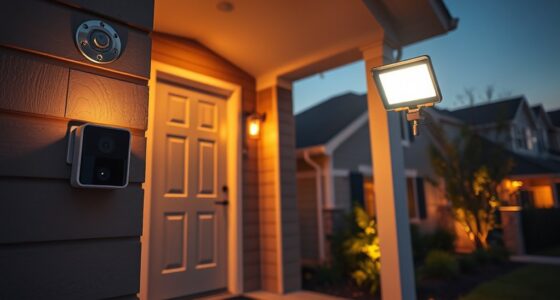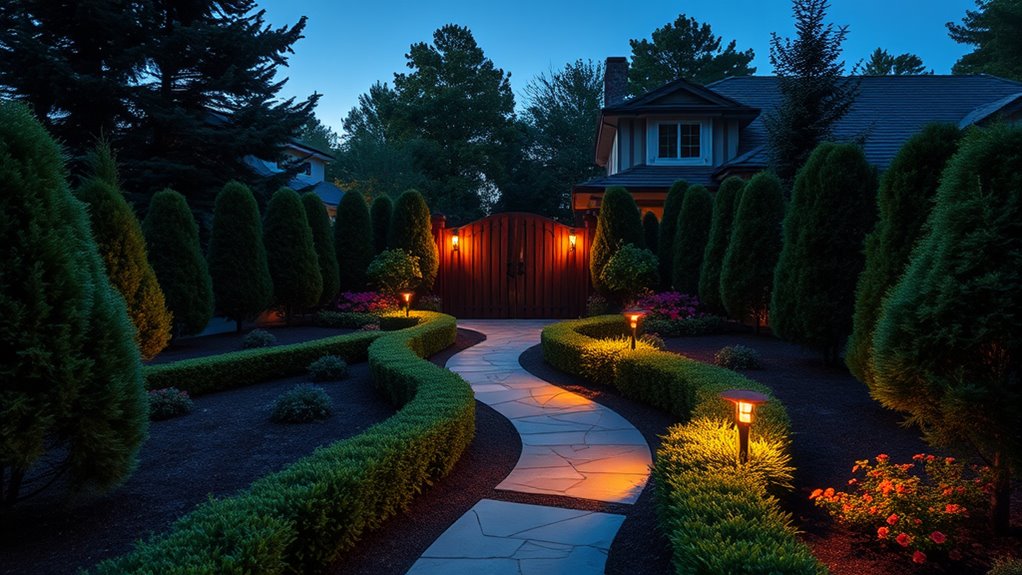

To use landscaping for home security, start by trimming overgrown shrubs near windows and entrances to eliminate hiding spots. Plant low, well-maintained bushes in front of windows to serve as barriers without blocking views. Strategically place lighting along pathways, entrances, and dark corners to increase visibility and deter intruders, considering motion-activated and solar options for efficiency. Combining thoughtful plant placement with proper lighting maximizes safety. Keep exploring to discover more ways to enhance your home’s security through landscaping.
Key Takeaways
- Design landscaping to eliminate hiding spots by trimming dense shrubs and maintaining clear sightlines around the property.
- Use strategic lighting, such as motion-activated and pathway lights, to illuminate dark areas and deter intruders.
- Plant low, well-maintained shrubs near windows and doors to act as natural barriers without obstructing visibility.
- Position lighting and plants to enhance visibility of entry points and pathways, reducing blind spots.
- Regularly assess and adjust landscaping features to improve security, combining aesthetic appeal with safety considerations.
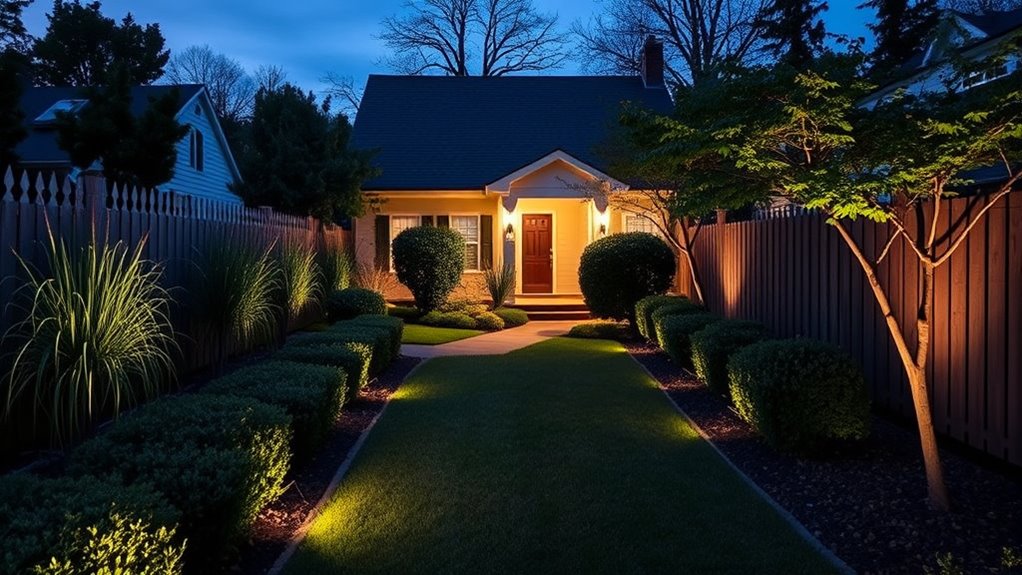
Have you ever considered how your landscaping choices can boost your home’s security? It’s true—smart landscaping isn’t just about curb appeal; it’s a powerful tool to deter intruders and keep your family safe. One of the most effective strategies involves thoughtful lighting design. Proper lighting around your property ensures that dark corners and entry points are illuminated, reducing hiding spots for potential intruders. Installing motion-activated lights along pathways, near garage doors, and around windows can startle intruders and alert you to any unusual activity. Avoid placing lights in areas where they might create glare or blind spots, and aim for even coverage that leaves no dark patches. When planning your lighting design, consider solar-powered options for ease of installation and energy efficiency, but make sure they’re bright enough to serve their purpose. Additionally, avoiding shrub placement issues by trimming or relocating large, dense plants can prevent providing hiding spots for intruders. Another vital aspect is shrub placement. Overgrown or strategically positioned shrubs can either serve as a barrier or a hiding place for intruders. You want to prune shrubs regularly to keep them at a manageable height, ensuring they don’t provide cover for someone lurking near windows or doors. Low, well-maintained shrubs in front of windows act as a natural barrier, making it harder for someone to approach unnoticed. Conversely, large or dense shrubs directly outside entry points can give burglars a place to hide, so it’s best to keep them trimmed or move them away from vulnerable areas. When planting shrubs, think about visibility; you want to create a landscape that allows you to see who’s approaching your home without obstruction. Proper shrub placement not only discourages trespassers but also enhances your ability to observe activity outside.

Tuffenough Solar Outdoor Lights 2500LM 210 LED Security Lights with Remote Control,3 Heads Motion Sensor Lights, IP65 Waterproof,270° Wide Angle Flood Wall Lights with 3 Modes(2 Packs)
【Remote Control & 3 Lighting Modes】:Each solar motion sensor light is equipped with wireless remote control.You can choose…
As an affiliate, we earn on qualifying purchases.
As an affiliate, we earn on qualifying purchases.
Frequently Asked Questions
How Can Landscaping Deter Potential Intruders Effectively?
You can deter intruders by strategically placing security cameras near fencing strategies and entry points, making it harder for them to approach unnoticed. Trim bushes and trees to eliminate hiding spots, and use fencing to create clear boundaries. Well-maintained landscaping with thorny plants along fences or windows also discourages trespassers, while visible cameras signal security, reinforcing your home’s defenses effectively.
What Plants Are Best for Natural Surveillance?
Think of your home garden as a watchful guardian. Opt for plants with dense foliage like boxwoods, holly, or spiky bushes such as Berberis. These naturally deter intruders by blocking views and creating barriers. When selecting plants, prioritize those with good visibility and low maintenance. This strategic plant selection enhances natural surveillance, making your home less appealing to trespassers while adding beauty and privacy to your landscape.
How Do Lighting Choices Impact Landscaping Security?
Lighting choices greatly impact your landscaping security by deterring intruders and increasing visibility. You should install sensor lighting with motion detection, which activates only when needed, saving energy and alerting you to movement. Properly placed lights along pathways, entry points, and dark corners create a well-lit environment that discourages unwanted visitors. This strategic lighting enhances your home’s security while maintaining an inviting and aesthetically pleasing landscape.
Are There Specific Trees or Shrubs That Obscure Visibility?
You should avoid planting large trees or dense shrubs like privacy hedges and thorny bushes directly in front of windows or entrances. These can create charming privacy but also obscure visibility, giving intruders cover. Instead, opt for low-growing plants or strategically placed greenery that maintains sightlines. This way, you enjoy both privacy and security, ensuring your home remains a welcoming yet protected space.
How Often Should I Maintain My Landscaping for Security?
You should maintain your landscaping at least every 4-6 weeks to keep your home secure. Regularly trim bushes and trees near garden pathways and outdoor furniture to prevent hiding spots for intruders. Clear away overgrown plants that block visibility, and make certain outdoor lighting is functioning properly. Keeping your landscape well-maintained not only enhances curb appeal but also makes it easier to spot suspicious activity, boosting your home’s security effectively.

Mancra Solar Pathway Lights, 8 Pack LED Solar Lights Outdoor Waterproof, Glass Metal Garden Lighting for Yard Path Landscape Lawn Walkway Driveway, 3000K
【3000K Warm White Light & Solar Lights】U.S. PATENTS INTELLECTUAL PROPERTY PROTECTION. Our upgraded LED filament bulb emits a…
As an affiliate, we earn on qualifying purchases.
As an affiliate, we earn on qualifying purchases.
Conclusion
By strategically using landscaping, you can markedly boost your home’s security. Well-placed shrubs, lighting, and fencing not only beautify your property but also deter intruders. Did you know that 60% of burglars avoid homes with clear visibility and secure landscaping? So, take the time to plan your yard thoughtfully. A few simple adjustments can make a big difference, giving you peace of mind and a safer home.

YRTSH Loppers Hedge Shears & Pruners Combo Set 3-Piece Hedge Clippers, Heavy Duty Tree & Shrub Care Kit for Yard, Lawn & Garden, Professional Branch Cutter Tree Trimmer for Indoor & Outdoor Gardening
Yard Tools set including 1pc 26" compound action loppers, 1pc 23" hedge shears, 1pc 8" professional pruning shears,…
As an affiliate, we earn on qualifying purchases.
As an affiliate, we earn on qualifying purchases.

Cinnado Security Cameras Wireless Outdoor – Home Security Cameras Solar & Battery Powered with 2K Color Night Vision, 2-Way Talk & Spotlight, Continuous Power, 2.4 GHz Wi-Fi, Easy Set Up, S1 4 Pack
Go 100% Wireless-Solar Power Meets Simple Setup: Step into the future of smart home security with the truly…
As an affiliate, we earn on qualifying purchases.
As an affiliate, we earn on qualifying purchases.