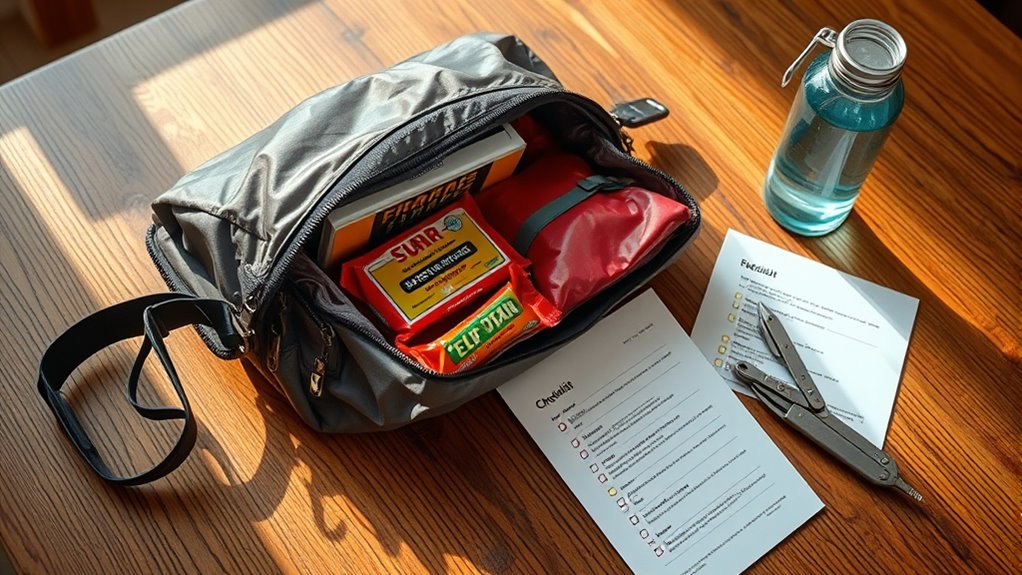

To build a family emergency go bag, pack essentials like water, non-perishable food, and a basic first aid kit. Include important documents in waterproof containers, along with cash in small bills. Don’t forget pet supplies, extra clothing, and comforts for everyone. Carry tools, batteries, and communication devices for safety. Consider specific needs like mobility or hearing aids. Keep your go bag ready and organized—there’s more to learn if you keep going.
Key Takeaways
- Include pet supplies, medications, and comfort items to ensure pet safety and reduce chaos during emergencies.
- Carry essential documents, cash, and vital financial info in waterproof containers for quick verification and access.
- Pack a basic first aid kit, hygiene supplies, flashlight, batteries, and tools to handle minor injuries and maintain safety.
- Prepare enough water and non-perishable, ready-to-eat food for at least 72 hours for all family members.
- Include extra clothing, sturdy shoes, blankets, and items tailored to specific needs to ensure comfort and safety during evacuation.

Preparing a family emergency go bag is an essential step to make sure you’re ready for unexpected disasters. When emergencies strike, quick action can make all the difference, and having a well-packed bag ensures you’re prepared to face the unknown. A thorough go bag isn’t just about your own needs; it also needs to account for your pets and your financial preparedness. Pets are family, and their safety should be a priority. Include pet food, water, essential medications, and any necessary supplies like a leash, carrier, and blankets to keep them comfortable and secure. Remember, during stressful situations, keeping your pets safe and calm can help everyone stay focused and avoid additional chaos.
Financial preparedness is equally crucial. Include cash in small denominations, as ATMs or card systems might be down during a disaster. Keep copies of important documents like identification, insurance papers, and bank information in a waterproof container. These documents can be lifesavers if you need to verify your identity or access funds when electronic systems are disrupted. Additionally, consider including a small first aid kit, hygiene supplies, and basic tools such as a flashlight, batteries, and a multi-tool, so you’re ready for minor injuries or inconveniences. Proper planning for backup power sources and communication devices can help you stay connected and safe in an emergency.
When packing your go bag, think about the essentials you’ll need for at least 72 hours. Water is critical—aim for a gallon per person per day—and don’t forget enough food that doesn’t require refrigeration or cooking. Include comfort items for children or elderly family members, and consider their specific needs, such as hearing aids or mobility aids. Having extra clothing, sturdy shoes, and blankets can help you stay warm and comfortable if you’re stranded or have to evacuate quickly.
Frequently Asked Questions
How Often Should I Update My Emergency Go Bag?
You should review your emergency go bag at least every six months to make sure everything’s in good condition and up-to-date. Check the storage frequency of items like food, water, and medications, replacing expired supplies regularly. Set a review schedule to remind yourself to inspect your bag, especially after changes in family needs or seasonal shifts. Keeping it current ensures you’re always prepared for unexpected emergencies.
What Items Are Essential for Infants or Elderly Family Members?
Did you know that over 10% of emergency-related injuries involve infants or the elderly? You should include infant nutrition supplies like formula, bottles, and baby food, along with any necessary comfort items. For the elderly, pack essential medication, hearing aids, and mobility aids. Remember, keeping these items accessible guarantees their safety and well-being during an emergency. Regularly check and update these supplies to stay prepared.
How Do I Personalize My Go Bag for Specific Emergencies?
To personalize your go bag for specific emergencies, include personalized safety items like custom medical alerts or communication devices tailored to your needs. Add special needs supplies, such as mobility aids or medications, to guarantee comfort and safety. Think about potential scenarios—like earthquakes or floods—and pack relevant items. Regularly update your bag with these personalized safety items and special needs supplies, so you’re always prepared for your unique emergency situations.
Should I Include Copies of Important Documents in My Bag?
Including copies of important documents in your go bag is crucial, as 60% of identity theft occurs during emergencies. You should keep physical copies for document security, but also consider digital backups stored securely offline. This way, you can access essential information like IDs, insurance, and medical records quickly, even if originals are lost or inaccessible. Having both physical and digital copies ensures you’re prepared for any situation.
What Is the Best Way to Organize and Label Items in the Bag?
You should use a color coding system and clear item categorization to organize your emergency go bag. Assign specific colors to different categories like medical supplies, food, and documents, then label each container or section accordingly. This way, you can quickly find what you need during an emergency. Keep labels visible and consistent, ensuring everyone in your family understands the system for faster, more efficient access when it counts most.
Conclusion
By packing a well-stocked emergency go bag, you’re creating a safety net that catches your family in times of crisis. Think of it as your personal lifeboat, ready to keep you afloat when storms hit unexpectedly. Stay prepared, stay calm, and remember that a little planning now can make all the difference later. With each item you pack, you’re weaving a safety blanket that offers comfort and confidence, no matter what challenges come your way.