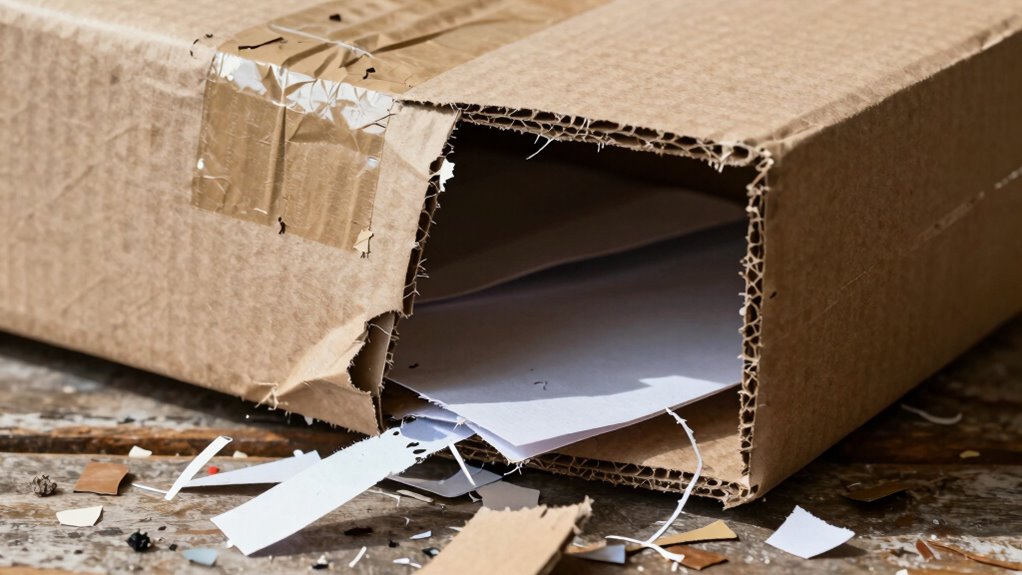

The “Broken-Box” mistake happens when you assume all packaging is recyclable simply because of symbols or myths, which can lead to contamination and waste. Many plastics and materials are incompatible or difficult to process, especially when contaminated or combined with non-recyclables. Recycling centers struggle with broken or mixed packaging, risking rejection or environmental harm. To avoid this, it’s essential to properly identify, clean, and sort your packaging—stay tuned to learn how to do it right.

Get privacy and security gear delivered free — and shop member deals
- Fast, free delivery on millions of items
- Access to Prime Big Deal Days deals on October 6–7
- Prime Video, Amazon Music and more included
Key Takeaways
- Recycling broken or damaged packaging can introduce contaminants, reducing the quality of recycled materials.
- Damaged boxes often contain residual food or liquids, increasing contamination risks in recycling streams.
- Broken packaging may not meet sorting requirements, leading to rejection or processing complications.
- Fragile or incomplete packaging can cause equipment jams and inefficiencies at recycling facilities.
- Recycling damaged packaging without proper cleaning or sorting can spread germs and compromise safety.
recycling bin with sorting compartments
As an affiliate, we earn on qualifying purchases.
As an affiliate, we earn on qualifying purchases.
Is Your Packaging Safe to Recycle?
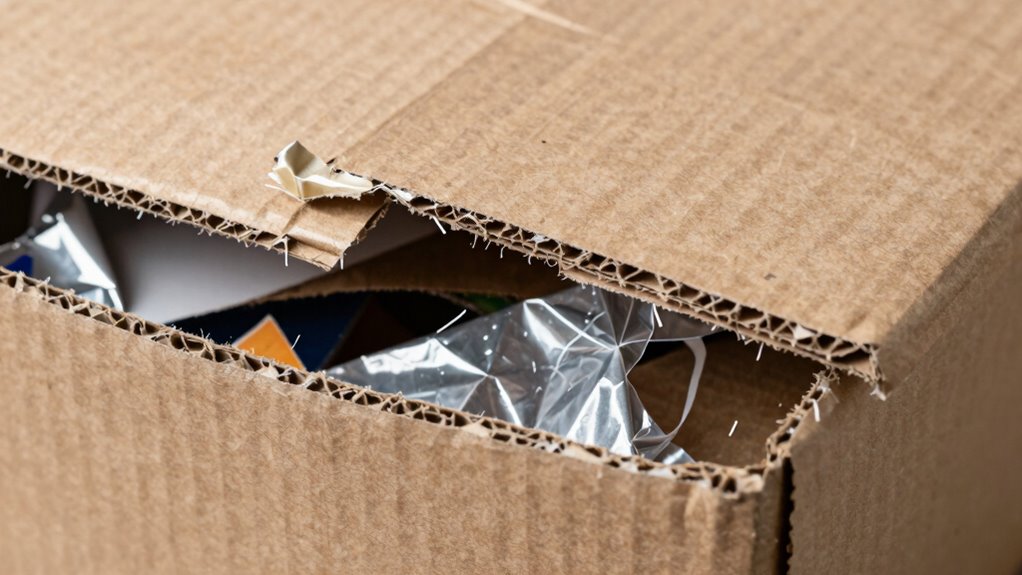
Before tossing your packaging into the recycling bin, it’s important to check if it’s actually safe to recycle. Many people believe that all plastics are recyclable, but this is a common recycling myth. Not all materials contribute equally to plastic pollution, and some can cause contamination in recycling centers. Relying solely on the recycling symbol might mislead you—certain plastics, like plastic bags or foam containers, often aren’t accepted in curbside programs. Recycling myths can lead you to discard non-recyclable packaging, which then ends up in landfills or pollutes our environment. To avoid this, always verify local recycling guidelines and separate recyclable from non-recyclable packaging. Understanding material types helps ensure your recycling efforts are effective and environmentally responsible. For example, some plastics may degrade during processing, making material quality an important factor to consider. Recognizing the recycling process can help you make more sustainable choices. Being aware of auditory processing challenges can also improve how you interpret and follow recycling instructions, ensuring you make the best choices for the environment. Additionally, understanding waste sorting can further enhance the accuracy of your recycling practices, reducing contamination. Making informed choices helps reduce plastic pollution and ensures your efforts truly help the environment.
reusable food container cleaning brushes
As an affiliate, we earn on qualifying purchases.
As an affiliate, we earn on qualifying purchases.
Which Types of Packaging Should You Avoid Recycling?
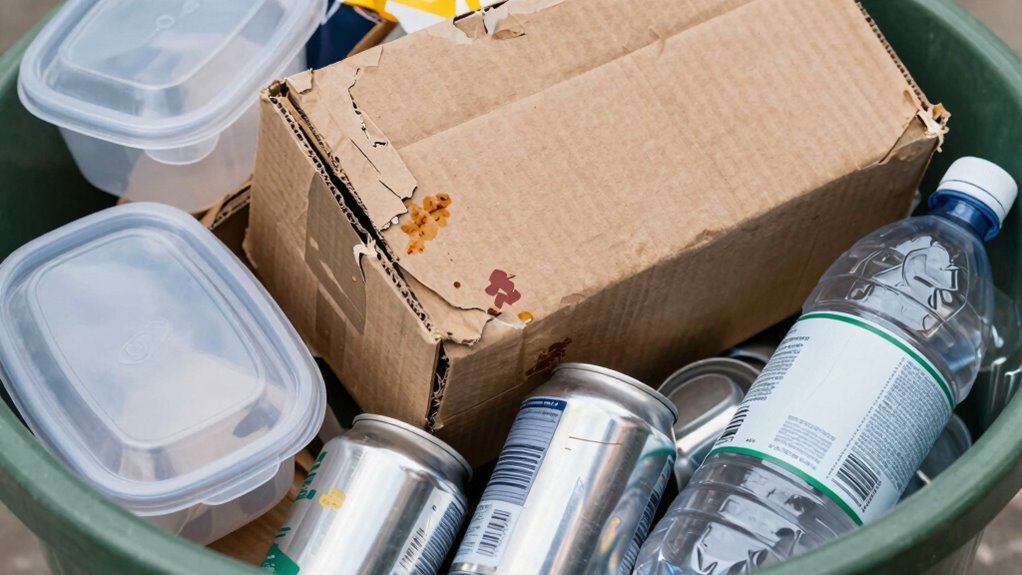
You should avoid recycling contaminated food containers because leftover food can spoil the entire batch. Multi-material packaging, like plastic and aluminum combined, often can’t be separated easily and ends up in landfills. Identifying these problematic types helps guarantee your recycling efforts are effective and environmentally responsible.
Contaminated Food Containers
Ever wonder which food containers can actually be recycled without causing problems? Contaminated food containers are a major concern because they threaten food safety and disrupt recycling processes. When packaging isn’t thoroughly cleaned, leftover food or grease can contaminate entire batches, making recycling unsafe and inefficient. Packaging design plays a vital role here; containers with tight seals or complex shapes are harder to clean properly, increasing contamination risk. Avoid recycling food containers that are heavily soiled or have residues that can’t be rinsed away easily. Items like greasy pizza boxes or meat trays often harbor enough residue to compromise the recycling stream. To protect food safety and guarantee your recycling efforts are effective, always rinse containers thoroughly and avoid recycling anything that’s visibly contaminated or difficult to clean. Using appropriate recycling practices can help prevent contamination and improve overall recycling efficiency.
Multi-Material Packaging
Many packaging items combine different materials to enhance durability or functionality, but this multi-material design often complicates recycling efforts. These multi material challenges make it difficult for recycling facilities to separate components efficiently, leading to increased contamination and processing issues. As a result, recycling limitations become more apparent, and these packages are often rejected or sent to landfills instead of being properly recycled. Items like plastic-coated paper, composite containers, and certain flexible packaging contain layers of incompatible materials that can’t be easily separated. You should avoid recycling these multi-material packs, as they pose risks of contaminating the recycling stream and can damage equipment. Additionally, understanding recycling compatibility can help you identify which items are suitable for recycling and which are not. Instead, look for packaging made from single, easily recyclable materials to support effective waste management.
As an affiliate, we earn on qualifying purchases.
How Do Contamination and Waste Occur in Recycling Centers?
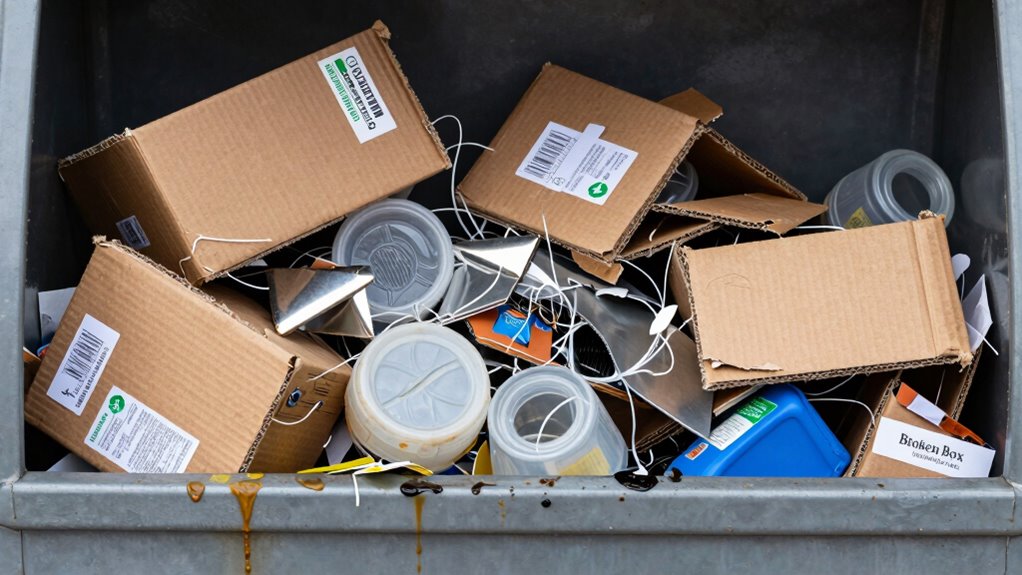
You might unknowingly cause contamination if sorting practices aren’t correct at recycling centers. Cross-contamination risks increase when different materials mix or aren’t cleaned properly. Handling contaminated items improperly can lead to waste and reduce the quality of recycled materials. Implementing proper hygiene practices at collection points can significantly reduce the risk of contamination. Additionally, implementing effective storytelling in public awareness campaigns can help educate consumers about proper recycling practices and reduce contamination issues. Incorporating advanced sorting technology, such as automated systems, can further improve the separation process and minimize contamination. Understanding material contamination can help improve recycling outcomes and protect environmental health.
Improper Sorting Practices
Improper sorting practices are a leading cause of contamination and waste in recycling centers. When you don’t sort correctly, sorting errors happen, and recyclable materials get mixed with non-recyclables. This increases the risk of contamination, which can ruin entire batches of recyclables. To prevent this, it’s essential to follow contamination prevention guidelines, such as rinsing containers and removing lids. Common mistakes include tossing plastics with different types or including food-contaminated items. These errors make it harder for recycling facilities to process materials efficiently.
You can avoid these issues by:
- Carefully separating plastics, metals, and paper
- Removing food residue and contaminants before recycling
- Staying informed about local sorting rules to prevent errors and waste
Cross-Contamination Risks
How does contamination and waste spread within recycling centers? When contaminated materials enter the process, they can easily transfer germs, chemicals, or residues to other recyclables. Food safety becomes a concern if leftovers or organic waste mix with clean plastics or paper, risking bacterial growth. Chemical contamination also spreads if hazardous substances, like cleaning agents or pesticides, are present on packaging. These contaminants can compromise the quality of recycled materials, making them unsafe for new products or even dangerous for workers. Cross-contamination occurs during sorting, handling, or processing when different materials come into contact. Without strict controls, contamination can propagate throughout the recycling stream, increasing waste and the potential for health hazards. Proper sorting and contamination prevention measures are essential at every stage to minimize risks and ensure safe recycling practices.
Contaminated Material Handling
Contamination and waste in recycling centers often stem from how materials are handled and processed. When recyclable materials aren’t properly sorted or cleaned, hazardous waste and electronic waste can contaminate batches, making them unsafe and harder to recycle. This can lead to entire loads being rejected or sent to landfills. You might encounter issues like:
- Mixing hazardous waste, such as chemicals or batteries, with regular recyclables
- Handling electronic waste improperly, spreading toxic substances
- Failing to remove contaminants like food, grease, or non-recyclables, which compromise the quality of the recycled material
These mistakes increase contamination risks, reduce recycling efficiency, and pose safety hazards for workers. Proper handling and strict protocols are essential to minimize waste and prevent dangerous contamination in the recycling process.
As an affiliate, we earn on qualifying purchases.
How Can You Tell if Packaging Is Recyclable?

Wondering whether a packaging item is recyclable? Start by checking the material identification on the label. Most recyclables display recycling symbols, which are standardized icons that indicate if the material can be processed again. Look for the chasing arrows symbol, often accompanied by a number that specifies the type of plastic or material. For example, numbers 1 and 2 usually mean the item is recyclable, while others might not be accepted in your local program. Keep in mind that recycling symbols alone don’t guarantee recyclability—always verify with your local waste management guidelines. Additionally, understanding the cruise industry can help you stay informed about sustainable practices. By paying attention to material identification and recycling symbols, you can confidently determine if your packaging is suitable for recycling, reducing contamination and supporting effective waste processing.
Common Recycling Mistakes That Lead to Contamination
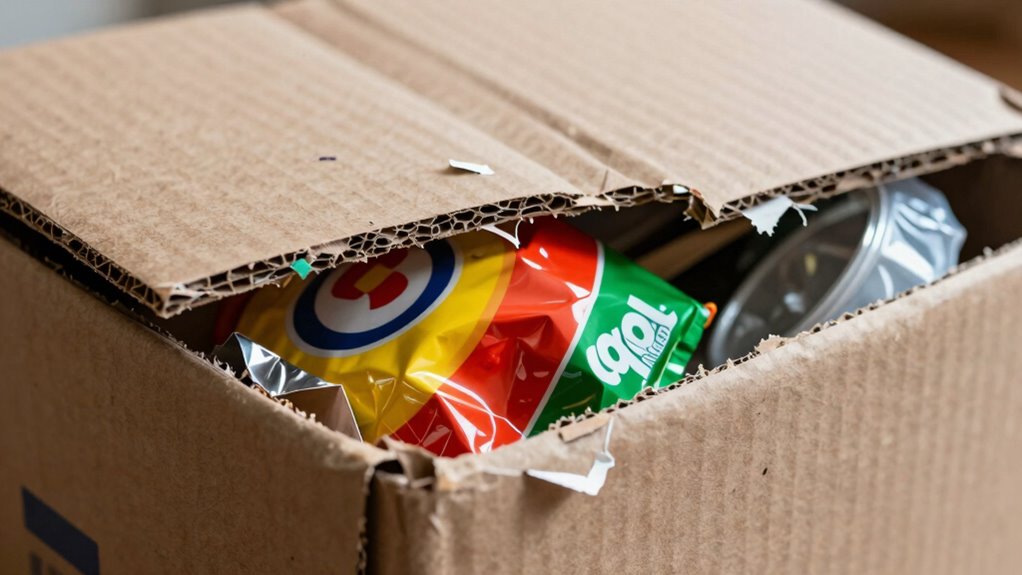
One of the most common recycling mistakes is including non-recyclable items in your bin, which can easily contaminate an entire load. Many people fall for recycling myths that certain packaging design tricks make items recyclable when they’re not. This leads to contaminated batches that waste processing resources. To avoid this, skip items like plastic bags, foam containers, and greasy pizza boxes. These are often mistaken for recyclable materials, but their packaging design makes them incompatible with standard recycling streams. Mixing these with proper recyclables can cause entire loads to be rejected, increasing waste. Remember, not everything clean and empty belongs in the recycling bin. Being aware of recycling myths and understanding packaging design helps guarantee your efforts don’t backfire, keeping recycling effective and contamination-free. Additionally, media literacy can help you better identify which items are truly recyclable versus those that are not. Developing recycling awareness is essential for making informed decisions and avoiding these common pitfalls that compromise recycling quality. Recognizing the importance of material identification can further improve the accuracy of sorting recyclable items and prevent contamination. Proper education on recyclable materials ensures your recycling efforts are both efficient and environmentally responsible. Moreover, many people are unaware that wave and wind can affect how recyclable materials are transported and processed, emphasizing the need for careful sorting and packaging.
Smarter Alternatives to Recycling Every Package
Instead, focus on supporting packaging innovations that minimize material use or make products more sustainable from the start. For example, choose brands that use biodegradable or compostable packaging, or opt for products with minimal packaging altogether. These innovations help cut down on waste before it even reaches the recycling bin. Incorporating sustainable packaging options can further enhance your eco-friendly efforts. Additionally, understanding the recycling myths surrounding packaging can help you make more informed decisions. This knowledge can prevent you from engaging in ineffective recycling practices that may do more harm than good. This proactive approach aligns your habits with genuine sustainability efforts.
Tips for Proper Packaging Disposal and Reducing Waste
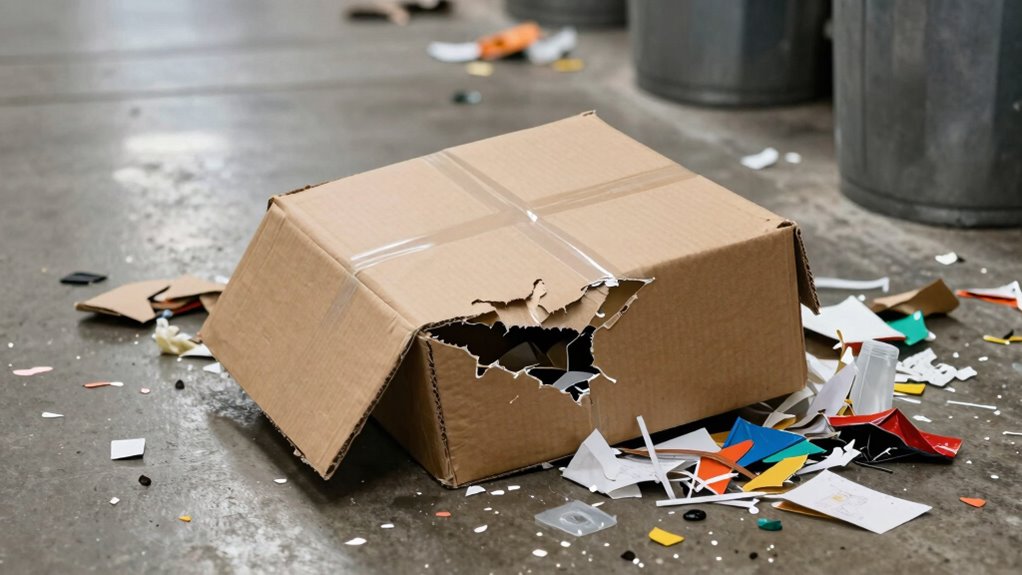
To effectively reduce waste and guarantee proper packaging disposal, it’s vital to understand how to sort materials correctly and follow local recycling guidelines. Avoid falling for recycling myths that can lead to contamination or improper disposal. Stay informed about packaging innovations that make recycling easier and more efficient. Additionally, understanding proper material sorting can significantly improve recycling outcomes. For example, recycling contamination occurs when non-recyclable materials are mixed with recyclables, leading to processing issues and increased waste. Properly sorting recyclables ensures that materials are processed efficiently and reduces the likelihood of contamination. Here are some tips to help you minimize waste:
- Rinse containers thoroughly to prevent contamination and ensure they’re accepted in recycling programs.
- Stay updated on local guidelines, as they vary by area and can change over time.
- Educate yourself on recycling myths to avoid discarding recyclable materials improperly, which can do more harm than good.
Frequently Asked Questions
Are Recycled Packaging Materials Always Environmentally Friendly?
Recycled packaging isn’t always environmentally friendly because some materials, like certain biodegradable plastics, may not break down fully or safely. Plus, chemical leaching can occur if recycled plastics contain residual contaminants, risking health and pollution. You should be cautious and consider the type of material used and how it’s processed. Recycling helps, but it’s not a perfect solution for all packaging, and some risks still exist.
Can Packaging Be Recycled Multiple Times Without Degradation?
You can’t recycle packaging multiple times without degradation due to design limitations and material degradation. Every recycling process slightly weakens materials, reducing their strength and quality. Over time, recycled packaging becomes less durable, making it unsuitable for reuse. To keep packaging effective, manufacturers need to think about these limitations in design, but ultimately, repeated recycling isn’t sustainable without compromising the packaging’s integrity.
How Do Recycling Facilities Handle Non-Recyclable Packaging?
You might think recycling handles everything, but non-recyclable packaging creates real problems. Recycling facilities often face contamination issues and separation challenges, which can ruin entire batches. Instead of eco-friendly processing, non-recyclable materials end up in landfills or incinerators. This mishandling not only wastes resources but also harms the environment, making it clear that proper sorting and avoiding non-recyclable packaging are vital steps toward sustainable waste management.
What Are the Health Risks Associated With Recycling Contaminated Packaging?
You face health risks from recycling contaminated packaging because chemical contamination can leach toxins into the recycled materials, potentially exposing you to harmful substances. Microbial hazards also pose a threat, as bacteria and other pathogens may survive if the packaging isn’t properly cleaned, leading to possible infections. Always verify packaging is thoroughly rinsed, and be cautious about recycling items that might carry hazardous residues to protect your health.
Are There Legal Regulations Regarding the Disposal of Certain Packaging Types?
Yes, you must follow legal compliance and packaging regulations when disposing of certain packaging types. Regulations vary by region and specify how to handle hazardous or specialized materials, such as medical or chemical packaging. You’re responsible for understanding these rules to avoid fines or environmental harm. Always check local laws and industry standards before disposal, ensuring your actions align with packaging regulations and promote responsible waste management.
Conclusion
Think of recycling as tending a delicate garden—you need to choose the right seeds and remove weeds carefully. By avoiding risky packaging and following proper disposal tips, you’re nurturing a healthy cycle that blooms instead of withers. When you’re mindful, your efforts become a vibrant mosaic, each piece working together to sustain our environment. So, handle your packaging like treasured soil—clean, clear, and ready to grow a greener future.
Fall Picks
fall essentials
As an affiliate, we earn on qualifying purchases.