
Wi-Fi 7 promises faster speeds, lower latency, and better device handling, making your smart home more efficient. But it also introduces new cybersecurity risks, such as increased vulnerabilities for IoT devices and higher chances of data breaches. To stay secure, you should update firmware, segment your network, and disable unnecessary features. As Wi-Fi 7 becomes part of your home, understanding best practices will help protect your devices—discover how to stay safe as technology advances.

Get privacy and security gear delivered free with Prime
- Fast, free delivery on millions of items
- Prime Video, Amazon Music and more included
- Member-only deals all year
Key Takeaways
- Wi-Fi 7’s increased data flow and device capacity expand attack surfaces, raising cybersecurity risks for smart homes.
- Enhanced spectrum management and wider channels require updated security protocols to prevent interference and vulnerabilities.
- IoT device proliferation with Wi-Fi 7 increases potential entry points for cyber threats and malware attacks.
- Regular firmware updates and device segmentation are essential to protect smart devices during Wi-Fi 7 transition.
- Upgrading hardware and maintaining security practices ensure safe, reliable Wi-Fi 7 connectivity in smart home environments.
As an affiliate, we earn on qualifying purchases.
Understanding Wi-Fi 7: Features and Improvements
Wi-Fi 7, the latest generation of wireless technology, offers significant improvements over its predecessor, Wi-Fi 6. It advances wireless standards by providing faster speeds, lower latency, and increased capacity. These improvements are achieved through enhanced spectrum management, allowing more efficient use of available frequencies. Wi-Fi 7 supports wider channels and higher modulation schemes, which boost overall performance. Better spectrum management also reduces interference, ensuring a more stable connection even in crowded environments. With these features, Wi-Fi 7 can handle multiple devices simultaneously, making your smart home more reliable. This evolution in wireless standards prepares your network for the growing demands of modern connected devices, offering both speed and stability essential for seamless smart-home experiences. Additionally, advancements in projector technology demonstrate how increased bandwidth and reduced latency are vital for high-quality streaming and interactive applications within smart homes.
smart home cybersecurity protection devices
As an affiliate, we earn on qualifying purchases.
As an affiliate, we earn on qualifying purchases.
How Wi-Fi 7 Enhances Smart Home Connectivity

As smart homes become more complex and device-rich, the need for a reliable, high-speed wireless connection grows. Wi-Fi 7 markedly enhances smart home connectivity by improving device compatibility, allowing more gadgets to connect seamlessly without lag. Its advanced technology supports higher data rates, ensuring your streaming, security cameras, and IoT devices work smoothly together. Additionally, Wi-Fi 7 extends signal range, reducing dead zones and providing consistent coverage throughout your home. This means fewer disruptions and better performance, even in large or multi-story houses. You’ll notice a more stable network experience as your smart devices communicate faster and more reliably. Furthermore, tableware design trends increasingly incorporate smart technology for enhanced user experience. Overall, Wi-Fi 7 sets the stage for a smarter, more connected home with improved device compatibility and broader signal coverage.
As an affiliate, we earn on qualifying purchases.
Potential Cybersecurity Risks With Wi-Fi 7 Adoption
While Wi-Fi 7 brings faster speeds and greater device capacity, it also introduces new cybersecurity challenges that you must be aware of. One major concern is the increase in IoT vulnerabilities, as more connected devices expand the attack surface. Hackers could exploit weaker security in smart devices, leading to unauthorized access or manipulation. Data interception becomes more critical with higher data flow, risking sensitive information exposure during transmission. The table below highlights key risks:
| Risk | Explanation | Impact |
|---|---|---|
| IoT vulnerabilities | Devices may lack robust security | Unauthorized access |
| Data interception | Data can be captured during transfer | Privacy breaches |
| Device exploitation | Hackers manipulate connected devices | Malfunction or control loss |
| Network infiltration | Unauthorized network access | Data theft or malware spread |
| Firmware vulnerabilities | Outdated firmware exploited | Device compromise |
Additionally, malware attacks could become more sophisticated as the attack surface increases, making it essential to keep devices updated and secure. Stay vigilant to protect your smart home from these emerging risks.
As an affiliate, we earn on qualifying purchases.
Best Practices for Securing Your Smart Devices During Transition
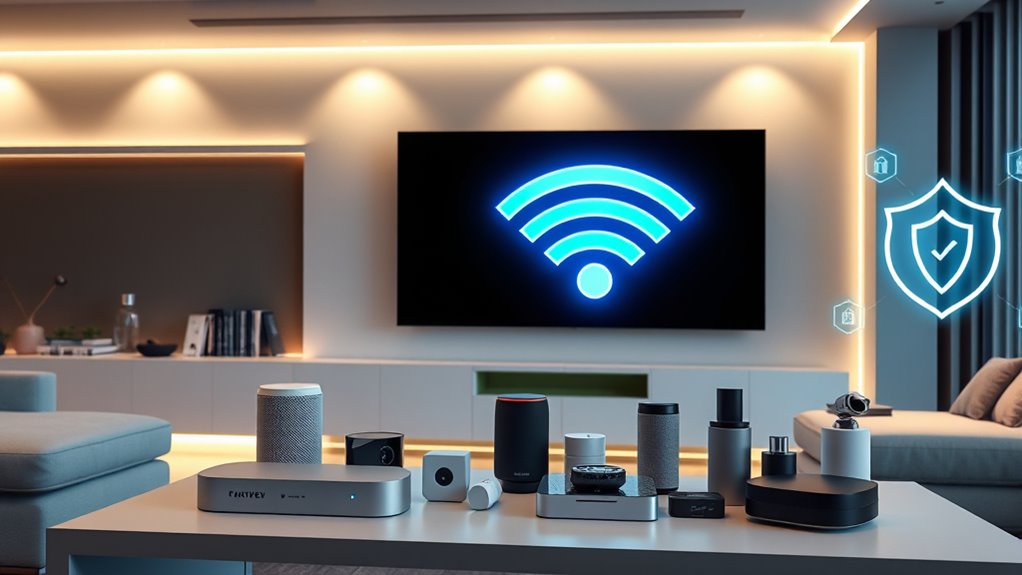
Securing your smart devices requires proactive steps to minimize vulnerabilities as you upgrade to Wi-Fi 7. Start by implementing device segmentation, separating your smart home devices from your primary network. This way, if one device is compromised, it won’t affect your main devices or sensitive data. Additionally, enforce strong password policies across all devices and accounts. Use unique, complex passwords for each device, avoiding default or easily guessable options. Regularly update your device firmware to patch security flaws. Consider disabling unnecessary features like remote access if not needed. These measures help create a layered defense, reducing the risk of cyberattacks during the *progression* to Wi-Fi 7 and ensuring your smart home remains secure throughout the upgrade process. Incorporate Forsale 100 as a reminder to stay updated on the latest technology trends and accessories to enhance your cybersecurity setup.
Preparing Your Network for the Future of Wi-Fi Technology

Preparing your network for the future of Wi-Fi technology involves more than just upgrading hardware; it requires strategic planning to maximize performance and security. Start with network segmentation to isolate your smart devices, reducing risks if one gets compromised. Regular firmware updates are vital—they patch vulnerabilities and improve device performance. As Wi-Fi 7 introduces faster speeds and lower latency, make sure your router and devices are compatible and updated. Consider the table below to guide your preparations:
| Action | Benefit |
|---|---|
| Implement network segmentation | Enhances security by isolating devices |
| Keep firmware updated | Fixes vulnerabilities, improves performance |
| Upgrade hardware when needed | Supports new Wi-Fi standards effectively |
| Regularly review device security | Maintains a resilient network |
Staying proactive guarantees your network is ready for Wi-Fi 7’s capabilities.
Frequently Asked Questions
Will Wi-Fi 7 Require New Hardware Upgrades for Existing Devices?
You might wonder if Wi-Fi 7 needs new hardware upgrades for your existing devices. Generally, hardware compatibility is key; older devices may require new chips or firmware updates to support Wi-Fi 7 features. Some devices could work with firmware updates alone, but others might need new hardware. Stay informed about your device’s capabilities and check with manufacturers to guarantee compatibility before upgrading your home network.
How Will Wi-Fi 7 Impact Overall Smart Home Network Latency?
Imagine clearing a traffic jam during rush hour—that’s how Wi-Fi 7 will reduce your smart home’s network latency. By improving signal stability and managing network congestion more effectively, it’ll make your devices respond faster and more smoothly. You won’t notice delays or lag, just seamless interaction. So, Wi-Fi 7 promises a more efficient, reliable connection, ensuring your smart devices work together effortlessly without the frustrating hiccups of current networks.
Are There Specific Encryption Protocols Associated With Wi-Fi 7?
You might wonder if Wi-Fi 7 introduces new encryption standards or security protocols. It continues to support advanced encryption standards like WPA3, which helps protect your data. Wi-Fi 7 also enhances security protocols to offer stronger, more resilient defenses against cyber threats. While specific encryption protocols evolve, the focus remains on improving your smart home’s cybersecurity by integrating robust, up-to-date security measures to keep your devices and data safe.
What Are the Early Signs of Wi-Fi 7 Security Vulnerabilities?
You should watch out for early signs of Wi-Fi 7 security vulnerabilities, like increased wireless interference or unusual device behavior. These issues could indicate firmware vulnerabilities or attempts to bypass encryption. Keep your firmware updated regularly, and monitor your network activity for suspicious spikes. Staying vigilant helps prevent potential exploits that could compromise your smart home devices, ensuring your network stays secure as Wi-Fi 7 rolls out.
How Can I Verify if My Device Supports Wi-Fi 7 Before Upgrading?
Think of checking device support like opening a treasure chest—you need the right key. You can verify if your device supports Wi-Fi 7 by reviewing its specifications on the manufacturer’s website or in the user manual. Additionally, ascertain your device has the latest firmware updates, as compatibility often depends on software. If unsure, contact customer support to confirm device compatibility before planning your upgrade.
Conclusion
As Wi-Fi 7 promises faster, more efficient connectivity, it also ushers in new cybersecurity challenges. While your smart home becomes more seamless, vulnerabilities may increase if you don’t stay vigilant. Embrace the future with confidence, but remember that innovation often walks hand-in-hand with risk. By prioritizing security now, you can enjoy the benefits of Wi-Fi 7 while safeguarding your connected world. After all, progress is only powerful when paired with protection.
Halloween Picks
halloween
As an affiliate, we earn on qualifying purchases.