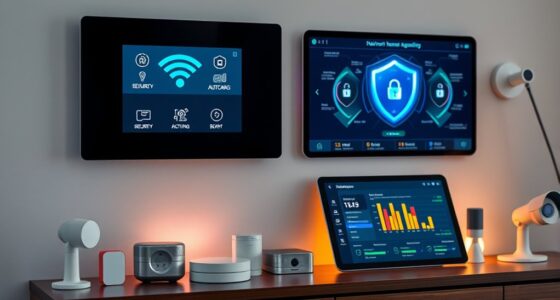
To reduce smart home risks, focus on simplicity and manageability by choosing a few core devices that work with centralized control apps. Prioritize compatibility with common standards like Z-Wave or Zigbee, and guarantee your network is secure and reliable. Regularly update firmware and use strong passwords to protect your devices. Keeping your setup straightforward minimizes vulnerabilities and boosts usability. If you want to learn more about creating a safe, scalable smart home, keep exploring these strategies.

Get privacy and security gear delivered free — and shop member deals
- Fast, free delivery on millions of items
- Access to Prime Big Deal Days deals on October 6–7
- Prime Video, Amazon Music and more included
Key Takeaways
- Limit devices to essential functions and prioritize compatibility with standardized protocols like Z-Wave or Zigbee.
- Use a centralized control platform or hub to manage multiple devices through a single app.
- Ensure a robust, secure network with regular updates and reliable hardware to prevent connectivity issues.
- Implement strong, unique passwords and enable two-factor authentication for all devices.
- Regularly review and update device firmware to maintain security and simplify system management.

As smart home technology becomes more advanced, it can also feel more overwhelming. With so many devices, brands, and features, it’s easy to get lost in the options and lose sight of what really matters. The key to reducing this complexity is to focus on simplicity and guarantee your setup is manageable and secure. One of the first things you should consider is voice control. When properly integrated, voice control allows you to operate multiple devices with simple commands, reducing the need to juggle different apps or interfaces. However, to truly benefit from voice control, you need to prioritize device compatibility. Stick with brands and products that work well together and support common standards, like Z-Wave or Zigbee. This way, you avoid the frustration of incompatible devices that don’t respond consistently or require separate hubs.
Thinking ahead about device compatibility also means doing your research before buying. Check whether new gadgets can connect seamlessly with your existing setup. Compatibility issues can quickly turn into headaches, making your smart home feel more like a hassle than a convenience. When you choose compatible devices, you create a cohesive ecosystem where everything works harmoniously. This not only simplifies daily use but also minimizes the risk of security vulnerabilities caused by poorly integrated or outdated components. Additionally, understanding standards like Z-Wave or Zigbee can help you make informed decisions and ensure your devices work smoothly together. Knowing about interoperability can also help you avoid vendor lock-in and maintain flexibility as your smart home evolves. Investing in compatible technology can save you time and money in the long run by reducing troubleshooting efforts. Furthermore, selecting devices with standardized protocols can streamline future upgrades and integrations, making your smart home more adaptable over time. Recognizing the importance of proper network setup can also prevent connectivity issues that often plague complex smart homes.
Choose compatible devices to ensure seamless integration, simplify daily routines, and strengthen your smart home’s security and harmony.
Another way to cut down on complexity is to limit the number of apps you use. Instead of managing each device through its own app, look for platforms or hubs that unify control. Many smart home systems offer centralized apps that let you manage multiple devices from different manufacturers in one place. This reduces clutter on your phone and makes it easier to automate routines. Focus on core functionalities that improve your daily life rather than overloading your setup with every new gadget. Keep it simple, functional, and scalable.
Lastly, don’t forget to prioritize security. As your smart home becomes more elaborate, so does the potential attack surface for cyber threats. Use strong, unique passwords for each device and update firmware regularly. Enable two-factor authentication where available. By maintaining good security habits, you prevent vulnerabilities that could compromise your privacy and safety. Simplifying your setup isn’t just about convenience; it’s also about making sure your smart home remains a safe and reliable space. With deliberate choices around voice control, device compatibility, and security, you can enjoy the benefits of your smart home without feeling overwhelmed or at risk.
As an affiliate, we earn on qualifying purchases.
Frequently Asked Questions
How Can I Secure My Smart Home From Cyber Threats?
To secure your smart home from cyber threats, start by enabling strong, unique passwords for all devices and accounts. Use voice control cautiously, and disable it when not needed to prevent unauthorized access. Keep your devices updated regularly to patch security vulnerabilities. Prioritize cloud security by choosing reputable providers with robust encryption and privacy policies. These steps help protect your smart home from potential breaches and maintain your privacy.
What Are the Best Tools for Managing Multiple Smart Devices?
You should use smart home management tools like Google Home or Apple HomeKit, which excel at device grouping for easier control. These platforms also allow you to set user permissions, ensuring only trusted individuals access certain devices. By organizing devices logically and managing permissions carefully, you reduce complexity and enhance security. This keeps your smart home streamlined and safer from potential cyber threats, making management simpler and more secure.
How Do I Troubleshoot Connectivity Issues in a Smart Home Setup?
When troubleshooting connectivity issues, think of your smart home as a busy highway—traffic jams slow everything down. Start with network diagnostics to pinpoint problems, then prioritize devices that are most critical. Restart your router and devices, verify firmware is updated, and check Wi-Fi signals. By focusing on these steps, you clear the path for smoother communication, helping your smart home run seamlessly without disruptions.
Can I Integrate New Devices Without Increasing Complexity?
Yes, you can integrate new devices without increasing complexity. Focus on choosing devices with compatible standards like Zigbee or Z-Wave, which guarantee seamless integration. Use a unified user interface or hub to manage all devices from one app, simplifying control. Before adding new gadgets, verify their device compatibility with your existing setup to prevent conflicts. This approach keeps your smart home manageable and reduces unnecessary complexity.
What Privacy Measures Should I Consider for Smart Home Security?
You should definitely read privacy policies—because who doesn’t love legal jargon? Prioritize data encryption to keep your secrets safe from sneaky hackers. Enable two-factor authentication, if possible, to add an extra layer of security. Regularly update your devices’ firmware because outdated tech is basically an open invitation for cybercriminals. And remember, the less your smart home knows about you, the happier you’ll be—privacy is your best defense!
As an affiliate, we earn on qualifying purchases.
Conclusion
By simplifying your smart home setup, you lower the risk of security breaches and tech failures. Did you know that over 30% of smart device owners experience some form of security concern? Keeping your system streamlined and well-maintained isn’t just easier—it’s safer. Focus on essential devices, update software regularly, and avoid unnecessary integrations. This way, you enjoy the convenience of smart living without the stress or vulnerability, making your home both smarter and safer.
As an affiliate, we earn on qualifying purchases.
centralized smart home control app
As an affiliate, we earn on qualifying purchases.
As an affiliate, we earn on qualifying purchases.
Fall Picks
fall essentials
As an affiliate, we earn on qualifying purchases.