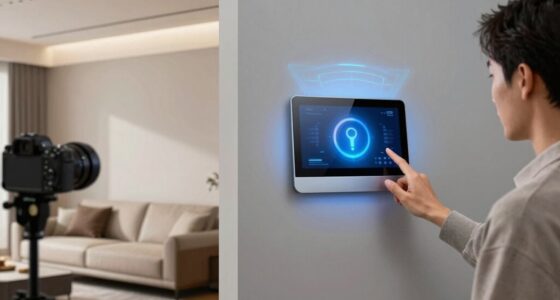
Blockchain can enhance your smart home’s security and privacy by distributing data across multiple nodes, making tampering difficult, and using cryptographic keys for device authentication. It offers transparent records, smart contracts for automation, and reduces reliance on third-party services. However, it’s not a magic fix—proper key management and integration with other security measures matter. To uncover how blockchain truly impacts smart homes, keep exploring the facts behind the myths.

Get privacy and security gear delivered free — and shop member deals
- Fast, free delivery on millions of items
- Access to Prime Big Deal Days deals on October 6–7
- Prime Video, Amazon Music and more included
Key Takeaways
- Blockchain enhances smart home security by decentralizing data storage and ensuring tamper-proof, traceable transaction records.
- While improving privacy and transparency, blockchain is not a complete security solution and requires proper key management.
- Smart contracts automate device interactions securely, reducing reliance on third-party services and increasing automation trustworthiness.
- Blockchain’s transparency allows users to track data origin and device commands, but implementation challenges and vulnerabilities exist.
- The technology’s potential to create more secure, private, and autonomous smart homes is promising but still evolving with some misconceptions.
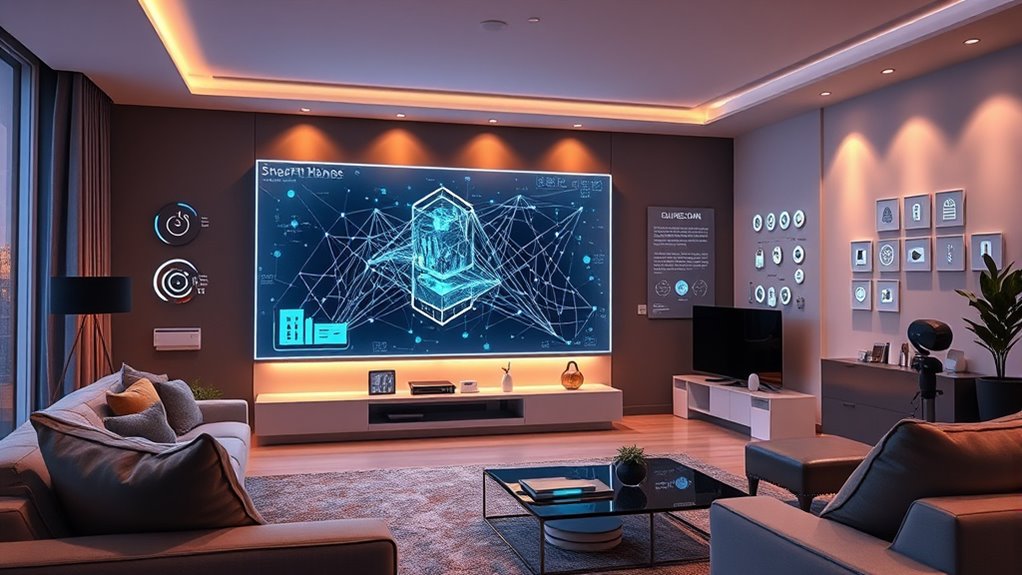
Blockchain technology is revolutionizing the way smart homes operate by providing a secure, transparent, and decentralized way to manage devices and data. When you integrate blockchain into your smart home system, you’re taking a remarkable step toward enhancing digital security and protecting data privacy. Unlike traditional centralized systems, where data is stored on a single server vulnerable to hacking, blockchain distributes information across a network of nodes. This decentralization means that tampering with data becomes exponentially more difficult, giving you peace of mind that your personal information and device commands remain safe from unauthorized access.
With blockchain, every transaction or command within your smart home is recorded on an immutable ledger. This transparency ensures that you can trace the origin of any data or device interaction, which is especially important when it comes to sensitive information like security footage, door lock statuses, or voice command logs. You don’t have to worry about malicious actors manipulating your data because once recorded, these entries can’t be altered or deleted without consensus from the network. This feature strengthens data privacy, making it harder for hackers to intercept or manipulate your information without detection.
Moreover, blockchain enables secure device authentication. Instead of relying on weak passwords or unsecured Wi-Fi networks, your smart devices can use cryptographic keys to verify each other’s identities. This process considerably reduces the risk of unauthorized devices gaining access to your home network or controlling your appliances. You retain control over who can interact with your smart home ecosystem, and any attempts at unauthorized access are logged and flagged for your review.
Another benefit is the potential for smart contracts—self-executing agreements that automatically enforce rules. For example, you could set a smart contract that unlocks your front door only when certain conditions are met, such as a verified user arriving home at a specific time. These contracts operate transparently on the blockchain, ensuring that your privacy preferences are maintained without relying on third-party servers or intermediaries. This approach not only enhances security but also gives you greater autonomy over your data and device interactions.
While blockchain offers promising solutions for digital security and data privacy in smart homes, it’s important to recognize that it isn’t a magic bullet. Implementing blockchain requires careful planning, proper management of cryptographic keys, and understanding of the technology’s limitations. Additionally, the security of eSIM technology can further enhance device authentication and reduce vulnerabilities associated with traditional SIM cards. However, for those willing to embrace its potential, blockchain can transform your smart home into a more secure, private, and trustworthy environment—where your data remains yours, and your home functions seamlessly and safely.
smart home blockchain security device
As an affiliate, we earn on qualifying purchases.
As an affiliate, we earn on qualifying purchases.
Frequently Asked Questions
How Secure Is Blockchain for Smart Home Data?
Blockchain generally offers strong security for your smart home data through encrypted communication and data integrity. It makes it difficult for hackers to tamper with or access your information, thanks to its decentralized and transparent nature. However, no system is completely foolproof. You should still keep your devices updated and use strong passwords to guarantee maximum security, as vulnerabilities can sometimes stem from user practices or device flaws.
Can Blockchain Technology Reduce Smart Home Hacking Risks?
Yes, blockchain technology can reduce smart home hacking risks by enabling cryptocurrency integration and decentralized control. You benefit from enhanced security because data is stored across a distributed network, making it harder for hackers to compromise. With decentralized control, no single point of failure exists, which further protects your smart home devices. Embracing blockchain helps keep your connected home safer by providing transparent, tamper-proof security measures.
What Are the Costs of Implementing Blockchain in Smart Homes?
Implementing blockchain in smart homes can cost between $1,000 and $5,000, depending on your system’s complexity. A thorough cost analysis reveals expenses for hardware, software, and ongoing maintenance. You might face installation challenges, like integrating blockchain with existing devices or ensuring network security. While the upfront costs are significant, long-term benefits include enhanced security and data integrity, making it a worthwhile investment if you prioritize privacy.
How User-Friendly Is Blockchain for Non-Technical Homeowners?
Blockchain can be quite user-friendly for non-technical homeowners, especially with good user education and intuitive interface design. Developers focus on simplifying complex processes, so you don’t need to understand every technical detail. Instead, you’ll find clear instructions and easy-to-navigate apps that make managing your smart home secure and seamless. With proper guidance, blockchain becomes accessible, helping you enjoy the benefits without feeling overwhelmed by technology.
Will Blockchain Make Smart Homes More Energy-Efficient?
Think of blockchain as the key to unlocking smarter energy use in your home. It can enhance energy savings by enabling seamless device interoperability, making your smart devices work together more efficiently. With blockchain, you can better monitor and control energy consumption, reducing waste and lowering bills. While it’s not a silver bullet, it’s a promising tool that helps your smart home become more energy-efficient, one block at a time.
smart home smart contract automation system
As an affiliate, we earn on qualifying purchases.
As an affiliate, we earn on qualifying purchases.
Conclusion
While blockchain promises to revolutionize your smart home experience, don’t let myths blind you to reality. It’s not a miracle cure, but a tool that, if used wisely, can bring you closer to control and security. Remember, technology is only as strong as the trust you place in it. So, as you navigate this digital landscape, ask yourself: are you embracing the future or chasing shadows? The choice is yours—make it wisely.
decentralized smart home security system
As an affiliate, we earn on qualifying purchases.
As an affiliate, we earn on qualifying purchases.
cryptographic key management for smart homes
As an affiliate, we earn on qualifying purchases.
As an affiliate, we earn on qualifying purchases.
Fall Picks
fall essentials
As an affiliate, we earn on qualifying purchases.