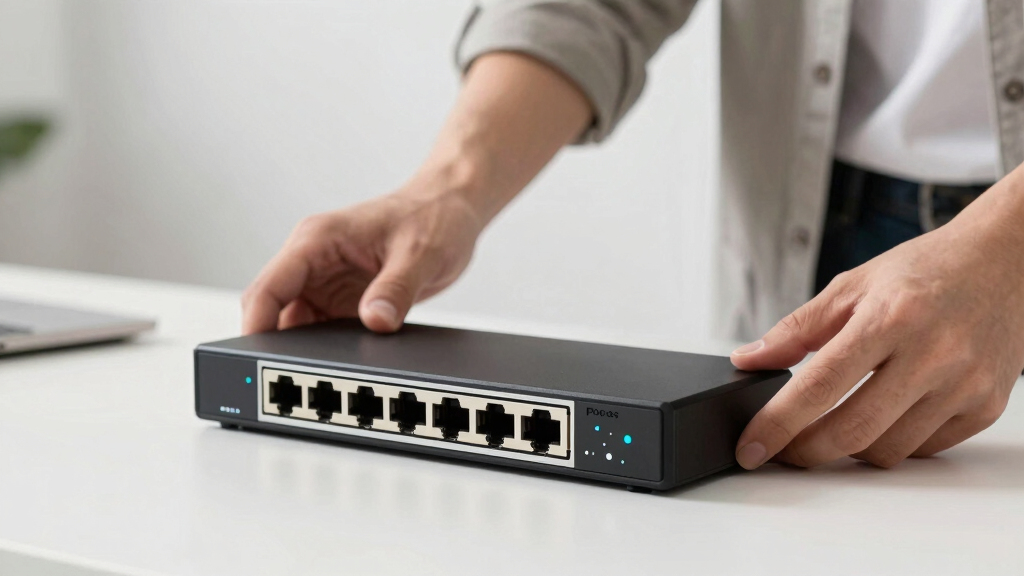

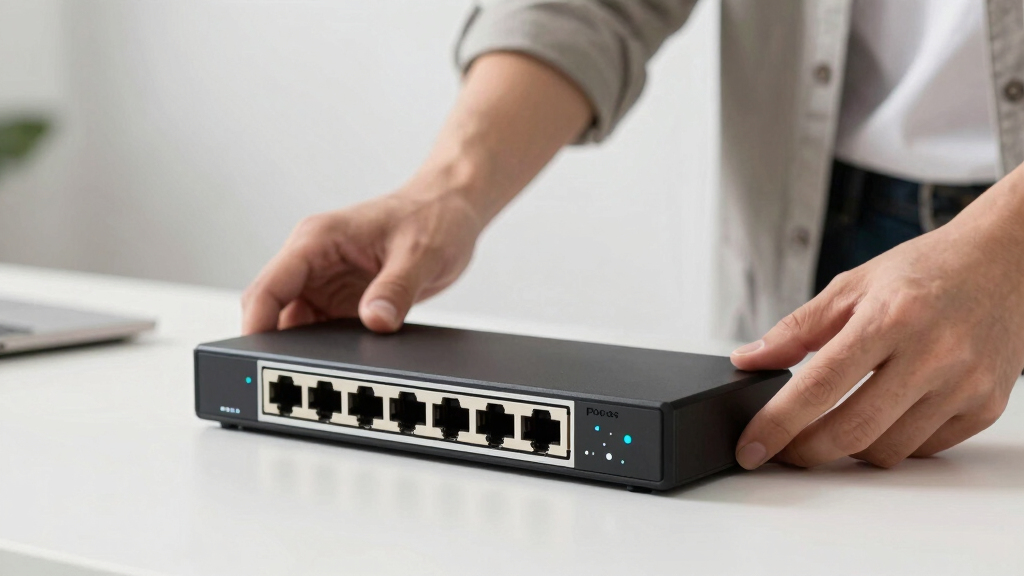
When selecting the best PoE network switch for security cameras, the key factors are power delivery, port count, and management options. The 16 Port PoE Switch with 16 PoE+ ports stands out as the best overall for its balance of power, ports, and reliability. For those on a budget, the TP-Link TL-SF1005P 5-Port Fast Ethernet PoE Switch offers solid basic performance. Meanwhile, the TP-Link TL-SG1218MP provides advanced features for more complex setups. Choosing the right switch involves tradeoffs like port quantity versus management features and budget constraints. Continue reading for a detailed breakdown of these options, their strengths, and their limitations.
Key Takeaways
- Higher port counts generally support larger camera setups but come with increased complexity and cost.
- Managed switches offer better control and security but are more expensive and harder to configure for beginners.
- Power budget per port is critical—more PoE+ ports require a higher total wattage capacity.
- Build quality and fanless designs contribute to quieter operation, especially in indoor environments.
- Budget switches can suffice for small, simple camera arrays but may lack features needed for larger or more secure installations.
| 16 Port PoE Switch, 16 PoE+ 100Mbps Ports with 2 Gigabit Uplink, 300W Power, Fanless, Rack Mount, Unmanaged |  | Best Overall for Large Surveillance Setups | Number of Ports: 16 PoE+ ports, 2 Gigabit uplink ports | Port Speed: 100Mbps for PoE ports, 1Gbps for uplink | Total Power Output: 300W | VIEW LATEST PRICE | See Our Full Breakdown |
| TP-Link TL-SF1005P 5-Port Fast Ethernet PoE Switch |  | Best Budget-Friendly Compact PoE Switch | Number of Ports: 5 | PoE Ports: 4 PoE+ | Port Speed: 10/100 Mbps | VIEW LATEST PRICE | See Our Full Breakdown |
| REOLINK PoE Switch with 8 PoE and 2 Gigabit Uplink Ports |  | Best for Balanced Power and Speed for Medium Networks | Number of Ports: 10 | PoE Ports: 8 | Gigabit Uplink Ports: 2 | VIEW LATEST PRICE | See Our Full Breakdown |
| 8 Ports PoE+ Ethernet Switch with 2 Uplink Ports, 120W Power, 100Mbps, Unmanaged, Suitable for IP Cameras and Office Use |  | Best for Small to Medium Business Security Needs | Number of Ports: 8 | Uplink Ports: 2 | Data Transfer Rate: 100 Mbps | VIEW LATEST PRICE | See Our Full Breakdown |
| NETGEAR 5-Port PoE Gigabit Ethernet Unmanaged Switch (GS305P) |  | Best for Small, Noise-Sensitive Environments | Number of Ports: 5 | PoE+ Ports: 4 | Total Power Budget: 63W | VIEW LATEST PRICE | See Our Full Breakdown |
| TP-Link TL-SG1218MP 16-Port Gigabit PoE Switch with 2 Uplink Ports and SFP Slots |  | Best for Medium-Scale, Power-Intensive Deployments | Number of Ports: 16 | PoE Power Budget: 250W | PoE Standards: 802.3at/af | VIEW LATEST PRICE | See Our Full Breakdown |
| NETGEAR 8 Port PoE Gigabit Ethernet Easy Smart Managed Switch (GS308EP) |  | Best Managed Compact Switch for Small to Medium Installations | Number of Ports: 8 | PoE+ Ports: 8 | Total Power Budget: 62W | VIEW LATEST PRICE | See Our Full Breakdown |
| Reolink 4+1 Port PoE Switch for Home & Business |  | Best for Extended-Range, Silent Home & Small Business Use | Ports: 4 downlink, 1 uplink | Transmission Speeds: 10/100/1000 Mbps | PoE Standards: IEEE 802.3af/at | VIEW LATEST PRICE | See Our Full Breakdown |
| NETGEAR 24-Port PoE Unmanaged Switch (GS324P) |  | Best for Large-Scale, High-Power Security Camera Networks | Number of Ports: 24 | PoE+ Ports: 16 | Total Power Budget: 190W | VIEW LATEST PRICE | See Our Full Breakdown |
| UGREEN 10-Port PoE Ethernet Switch with 8 PoE+ Ports and 2 Gigabit Uplink Ports |  | Best Overall for Flexibility and Long-Distance Power Delivery | Number of Ports: 10 | PoE+ Ports: 8 | Uplink Ports: 2 Gigabit | VIEW LATEST PRICE | See Our Full Breakdown |
| TP-Link LS108GP 8-Port PoE Gigabit Ethernet Switch |  | Best for Silent Home or Office Installations | Number of Ports: 8 | PoE Support: Yes, PoE+ | PoE Power Budget: 65W | VIEW LATEST PRICE | See Our Full Breakdown |
| TP-Link 8 Port Gigabit PoE Switch TL-SG1008MP |  | Best for Larger Networks Requiring Higher Power Budget | Number of Ports: 8 | PoE Standard: 802.3at/af | Max Power per Port: 30W | VIEW LATEST PRICE | See Our Full Breakdown |
More Details on Our Top Picks
16 Port PoE Switch, 16 PoE+ 100Mbps Ports with 2 Gigabit Uplink, 300W Power, Fanless, Rack Mount, Unmanaged
This unmanaged switch stands out for its high port count and reliable power output, making it an excellent choice for extensive security camera networks. Compared with the REOLINK PoE Switch, it offers more ports and higher power capacity, suitable for larger installations. Its fanless design ensures silent operation, perfect for office or home environments where noise matters. However, its maximum speed of 100Mbps per port limits data transfer rates, which could bottleneck high-resolution cameras. The inclusion of VLAN support adds network flexibility, but the lack of gigabit ports means potential future upgrades might require additional switches. Overall, this model is ideal for users needing a scalable, silent switch with ample PoE power for multiple cameras.
Pros:- High port density for extensive camera networks
- Silent, fanless operation
- Supports VLAN for network segmentation
- Rack mountable for professional setups
Cons:- Limited to 100Mbps per port, which could slow high-res streams
- Not compatible with passive 24V PoE devices
- No gigabit ports for faster data transfer
Best for: Large surveillance projects where multiple cameras need power and reliable network segmentation
Not ideal for: Small setups or users needing gigabit speeds for high-bandwidth cameras
- Number of Ports:16 PoE+ ports, 2 Gigabit uplink ports
- Port Speed:100Mbps for PoE ports, 1Gbps for uplink
- Total Power Output:300W
- Standards Supported:IEEE 802.3af/at
- Extend Mode Range:250 meters at 10Mbps
- Housing Material:Metal
Bottom line: Ideal for large-scale security systems prioritizing power and silence over raw speed.
TP-Link TL-SF1005P 5-Port Fast Ethernet PoE Switch
This lightweight, fanless switch is perfect for small, simple security setups requiring PoE power on a budget. Compared with the REOLINK PoE Switch, it offers fewer ports but maintains a straightforward, plug-and-play experience for small camera deployments. Its 10/100 Mbps speeds are a limitation if you need faster data transfer, especially for higher-resolution cameras, but this makes it an affordable option for basic surveillance. The durable metal case ensures longevity, and the 3-year warranty adds peace of mind. However, the limited speed and PoE power might restrict use in growing or higher-bandwidth environments. It’s best suited for basic applications where simplicity and affordability are priorities.
Pros:- Easy plug-and-play setup
- Durable metal case
- Supports PoE auto recovery and priority modes
- Extended range up to 250m
Cons:- Limited to 10/100 Mbps speeds
- PoE power limited to 67W total
- Speed drops to 10 Mbps in Extend Mode
Best for: Small home or retail setups needing a compact, inexpensive PoE switch
Not ideal for: High-bandwidth or large-scale surveillance systems requiring gigabit speeds
- Number of Ports:5
- PoE Ports:4 PoE+
- Port Speed:10/100 Mbps
- PoE Power Budget:67W
- Extend Mode Range:up to 250m
- Housing Material:Metal
Bottom line: Best for small-scale, budget-conscious security installations with basic speed needs.
REOLINK PoE Switch with 8 PoE and 2 Gigabit Uplink Ports
The REOLINK switch provides a practical balance of power and data transfer, with 8 PoE ports and 2 gigabit uplinks. Compared to the TP-Link TL-SF1005P, it offers gigabit uplink ports, making it more suitable for medium-sized security networks. Its 120W total power supports high-power devices, with support for IEEE 802.3af/at standards. The switch’s intelligent power management and metal case ensure durability and efficiency. However, the PoE ports operate at 10/100 Mbps, which may slow down high-bandwidth camera feeds, similar to the TP-Link model, but the gigabit uplinks compensate somewhat. This makes it a better choice for setups that require gigabit backbone connections without sacrificing PoE power.
Pros:- Supports high power output up to 30W per port
- Gigabit uplink ports for faster data backhaul
- Easy plug-and-play setup
- Durable metal casing
Cons:- PoE ports limited to 10/100 Mbps
- Requires compatible NVR or network for full performance
Best for: Mid-sized security camera networks needing gigabit uplinks and reliable power
Not ideal for: Very large systems or users needing gigabit PoE ports on every device
- Number of Ports:10
- PoE Ports:8
- Gigabit Uplink Ports:2
- Maximum Power:120W
- Data Transfer Rate:1000 Mbps
- Platform:Metal
Bottom line: Suitable for medium-sized surveillance networks that need gigabit uplinks without sacrificing port power.
8 Ports PoE+ Ethernet Switch with 2 Uplink Ports, 120W Power, 100Mbps, Unmanaged, Suitable for IP Cameras and Office Use
This unmanaged switch offers a practical solution for small to medium businesses, with 8 PoE+ ports and 2 uplinks. Compared with the larger 16 Port PoE Switch, it provides less expansion but maintains simplicity and affordability. Its 120W power budget supports multiple high-power cameras, though all ports operate at 100Mbps, which could be limiting for high-resolution feeds. The plug-and-play setup and durable metal case make it accessible for non-technical users. However, the lack of gigabit ports and management features means it might not scale well for future needs or high-bandwidth applications. It’s a reliable, straightforward choice for smaller security networks where speed is secondary to power and ease of use.
Pros:- Supports up to 120W total power
- Simple plug-and-play setup
- Durable metal case
- Ideal for IP cameras and small networks
Cons:- Limited to 100Mbps speeds
- No management features
- Power per port capped at 30W
Best for: Small businesses or home offices needing easy, reliable PoE for IP cameras
Not ideal for: Environments requiring gigabit speeds or advanced network management
- Number of Ports:8
- Uplink Ports:2
- Data Transfer Rate:100 Mbps
- Total Power:120W
- Power per Port:up to 30W
- Housing Material:Metal
Bottom line: Best suited for small-scale security setups prioritizing ease and power over speed.
NETGEAR 5-Port PoE Gigabit Ethernet Unmanaged Switch (GS305P)
The NETGEAR GS305P stands out as an ideal choice for small setups requiring silent operation and straightforward deployment. Its unmanaged design means zero configuration hassles, making it perfect for users who want reliable plug-and-play functionality. Compared with larger switches like the NETGEAR GS324P, it offers fewer ports and a lower total power budget, limiting scalability but simplifying use. The 63W power budget supports a handful of PoE+ devices, suitable for small security camera setups. Its silent, energy-efficient operation makes it well-suited for quiet office or home environments. However, its limited port count and lack of management features mean it isn’t ideal for larger or more complex networks.
Pros:- Easy plug-and-play setup without configuration
- Supports PoE+ for powering devices
- Silent operation ideal for quiet environments
- Supports wall or desktop mounting
Cons:- Limited to U.S. & Canada markets
- No advanced management or monitoring features
Best for: Small business owners or homeowners setting up a few security cameras in noise-sensitive spaces
Not ideal for: Larger networks needing extensive management, or setups with many high-power PoE devices
- Number of Ports:5
- PoE+ Ports:4
- Total Power Budget:63W
- Mounting Options:Desktop or Wall Mount
- Warranty:3-year limited hardware
- Energy Efficiency:IEEE802.3az compliant
Bottom line: This switch is perfect for small-scale, quiet security camera setups where simplicity and silence matter most.
TP-Link TL-SG1218MP 16-Port Gigabit PoE Switch with 2 Uplink Ports and SFP Slots
The TP-Link TL-SG1218MP offers a substantial 16 ports and a 250W PoE budget, making it suitable for larger security camera networks with multiple devices. Its plug-and-play setup rivals smaller switches like the NETGEAR GS305P but supports more devices simultaneously and provides advanced features such as QoS and IGMP Snooping for traffic management. The durable metal construction ensures reliability in various environments. Compared to the NETGEAR GS324P, its higher port count and PoE budget allow for scaling, but it lacks management complexity—it’s more straightforward than enterprise switches. The main tradeoff is its higher cost and the fixed 250W power budget, which may limit future expansions.
Pros:- High port count for scalable deployments
- Supports high power PoE+ devices
- Durable metal build for varied environments
- Advanced traffic management features
Cons:- Limited to 250W PoE power budget, restricting device count
- No mention of management interface complexity or cloud support
Best for: Medium-sized business networks or security installations requiring high device density and traffic control
Not ideal for: Small setups with fewer devices or users needing unmanaged, simple switches
- Number of Ports:16
- PoE Power Budget:250W
- PoE Standards:802.3at/af
- Data Transfer Speed:10/100/1000 Mbps
- Build Material:Metal
- Warranty:3 years
Bottom line: This switch makes the most sense for growing security systems needing high capacity and traffic control without enterprise management complexity.
NETGEAR 8 Port PoE Gigabit Ethernet Easy Smart Managed Switch (GS308EP)
The NETGEAR GS308EP offers a balance of managed features within a compact 8-port design, supporting PoE+ with a 62W budget. Its management capabilities are more suited for users who want some control over traffic and device prioritization without the complexity of larger enterprise switches. Compared with the unmanaged GS305P, it provides basic traffic management, which can be vital for security camera networks to ensure video quality. Its small form factor and easy mounting options make it ideal for discreet deployments. However, the limited power budget and fewer ports restrict its use in larger, high-demand camera setups, and its management features are basic rather than comprehensive.
Pros:- Supports PoE+ for multiple devices
- Managed with basic traffic prioritization
- Compact, desktop or wall mounting
- Industry-leading 3-year warranty
Cons:- Limited power budget at 62W
- Fewer ports than larger switches, restricting scalability
Best for: Small to medium-sized security camera setups requiring simple management and reliable PoE power
Not ideal for: Large-scale or high-power deployments needing extensive management or more ports
- Number of Ports:8
- PoE+ Ports:8
- Total Power Budget:62W
- Switch Type:PoE Managed
- Data Transfer Rate:16 Gbps
- Warranty:3 years
Bottom line: This switch is well-suited for small security networks where basic management and space-saving design are priorities.
Reolink 4+1 Port PoE Switch for Home & Business
The Reolink 4+1 Port PoE Switch offers a streamlined, fanless design with extend mode for long-distance transmission, making it excellent for remote security camera setups. Its 65W max power and support for IEEE 802.3af/at standards are comparable to the NETGEAR GS305P, but with added flexibility for longer cable runs—up to 820 feet. Its silent operation and durable metal housing suit residential or small business environments. Compared to larger switches like the TP-Link TL-SG1218MP, it sacrifices some scalability and power, but provides a cost-effective, simple solution. The main limitation is its lower power budget, making it less suitable for high-power devices or larger camera arrays.
Pros:- Supports high-speed data and PoE for multiple devices
- Extend Mode for long-distance cable runs
- Fanless, silent operation
- Metal housing for durability
Cons:- Maximum power limited to 65W
- Requires Cat5E or higher for extended range
- No advanced management features
Best for: Homeowners or small business owners needing reliable long-distance PoE for cameras in remote locations
Not ideal for: High-demand, high-power camera setups or larger networks requiring advanced features
- Ports:4 downlink, 1 uplink
- Transmission Speeds:10/100/1000 Mbps
- PoE Standards:IEEE 802.3af/at
- Max Power:65W
- Extend Mode Distance:up to 820 ft (250 meters)
- Housing Material:Metal
Bottom line: This switch offers a quiet, reliable solution for remote security cameras with long-distance requirements, but isn’t suited for high-power or large networks.
NETGEAR 24-Port PoE Unmanaged Switch (GS324P)
The NETGEAR GS324P offers extensive port capacity with 24 ports and 16 PoE+ support, making it suitable for large security systems or multi-camera environments. Its unmanaged design means quick setup but less control over traffic prioritization, which could be a downside for critical video streams. With a 190W power budget, it supports multiple high-power PoE devices, outperforming smaller switches like the NETGEAR GS305P in capacity and scalability. Compared to managed switches like the NETGEAR GS308EP, it lacks traffic management but compensates with sheer port count and power. Its unmanaged setup is ideal for users who want plug-and-play simplicity without complex configurations, but it’s less suited for networks requiring detailed control or expandability beyond the existing ports.
Pros:- Many ports for extensive device deployment
- Supports IEEE 802.3at PoE+ devices
- Plug-and-play, easy to deploy
- Energy-efficient and quiet operation
Cons:- Lacks management or monitoring capabilities
- Unmanaged switch limits traffic control and troubleshooting
Best for: Small to medium businesses needing many PoE cameras with straightforward setup
Not ideal for: Large enterprise environments requiring management and detailed traffic control
- Number of Ports:24
- PoE+ Ports:16
- Total Power Budget:190W
- Switch Type:Unmanaged
- Gigabit Speed:Yes
- Deployment Options:Desktop or Rackmount
Bottom line: This switch is best for large camera deployments where ease of use and high port count outweigh management needs.
UGREEN 10-Port PoE Ethernet Switch with 8 PoE+ Ports and 2 Gigabit Uplink Ports
The UGREEN 10-Port PoE Ethernet Switch stands out for its combination of high-power PoE+ support and extended reach, supporting up to 820 feet with extend mode. Compared with the TP-Link LS108GP, it offers more operation modes, including VLAN, which benefits users needing network segmentation. Its 60W power budget limits high-power device support, making it less suitable for larger camera arrays. The auto-recovery feature ensures continuous operation, and the switch’s flexibility with multiple modes makes it ideal for varied security setups. However, with only unmanaged features and a modest power budget, it’s best suited for small to medium deployments where advanced management isn’t required.
Pros:- Supports high-power PoE+ devices with auto power management
- Long-distance PoE extension up to 820 ft
- Multiple operation modes including VLAN and extend mode
Cons:- Limited total power budget of 60W may restrict high-power devices
- Unmanaged switch lacks advanced configuration options
Best for: Small to medium-sized security camera systems needing long-distance PoE extension and flexible operation modes
Not ideal for: Large-scale installations with many high-power devices or requiring detailed network management
- Number of Ports:10
- PoE+ Ports:8
- Uplink Ports:2 Gigabit
- Total Power Budget:60W
- PoE Power per Port:Up to 30W
- Extend Mode Range:up to 820 ft
Bottom line: This switch is best for users who need flexible deployment options and long-distance PoE for small to medium camera networks.
TP-Link LS108GP 8-Port PoE Gigabit Ethernet Switch
The TP-Link LS108GP is an excellent choice for those seeking a straightforward, silent PoE switch for smaller setups. Its fanless design ensures quiet operation, making it ideal for home or office environments. Supporting 8 PoE+ ports with up to 30W each and a total budget of 65W, it provides sufficient power for most security cameras, especially when paired with fewer high-demand devices. Its extend mode allows transmission up to 820 feet, similar to other options like the UGREEN. However, being an unmanaged switch, it lacks advanced management features, which may limit scalability for larger or more complex networks. It’s a practical pick for users prioritizing simplicity and quiet operation over extensive configuration.
Pros:- Supports 8 PoE+ ports with up to 30W per port
- Fanless design ensures silent operation
- Extend mode for long-distance PoE transmission
Cons:- Limited to unmanaged switch features
- PoE power budget may be insufficient for larger setups
Best for: Home users or small office setups needing reliable, silent PoE power for a handful of cameras
Not ideal for: Large enterprise environments or systems requiring detailed network management
- Number of Ports:8
- PoE Support:Yes, PoE+
- PoE Power Budget:65W
- Data Transfer Rate:16 Gbps
- Switch Type:Unmanaged
- Extend Mode Range:up to 820 ft
Bottom line: This switch suits users seeking a quiet, plug-and-play solution for small-scale security camera systems.
TP-Link 8 Port Gigabit PoE Switch TL-SG1008MP
The TP-Link TL-SG1008MP offers a high 153W total PoE power budget, making it suitable for larger camera deployments or multiple devices. Its metal case and simple plug-and-play operation appeal to users who want durability and ease of use. Compared to the UGREEN and LS108GP, this model provides more power and flexibility for larger setups, but it still remains unmanaged, limiting detailed control over traffic or device prioritization. The 8 ports support up to 30W each, which is adequate for most security cameras, but in very high-demand installations, the power budget might still be tight. This makes it a good middle-ground option for expanding networks without complexity.
Pros:- High total PoE budget of 153W supports multiple cameras
- Plug-and-play with no software needed
- Durable metal case suitable for various environments
Cons:- Limited to 8 ports, not ideal for very large systems
- No advanced management features
Best for: Growing security systems needing higher PoE power and straightforward setup
Not ideal for: Very large networks or users demanding advanced network management features
- Number of Ports:8
- PoE Standard:802.3at/af
- Max Power per Port:30W
- Total PoE Power Budget:153W
- Data Transfer Speed:10/100/1000 Mbps
- Case Material:Metal
Bottom line: This switch is ideal for expanding security camera networks where higher power capacity and simplicity are priorities.
How We Picked
I evaluated these PoE switches based on several key criteria: power delivery capacity, number of ports, ease of installation, build quality, and management features. Reliability and brand reputation also played a role, especially for security-critical applications like surveillance. The ranking reflects a balance between performance for security camera setups and affordability, prioritizing models that can support multiple cameras with stable power and network connection. Managed options are included for users needing enhanced control, while unmanaged models are suited for straightforward installations. The goal was to identify products that deliver consistent power, reliable connectivity, and value for different levels of security system complexity.Factors to Consider When Choosing Best Poe Network Switch For Security Cameras
Choosing the right PoE network switch for security cameras involves understanding several important factors. It’s not just about port count; you also need to consider power capacity, management features, and overall build quality. Making the wrong choice can lead to insufficient power, network instability, or future upgrade limitations. This guide highlights key aspects to help you make a well-informed decision that matches your current and future security needs.Power Budget and PoE+ Support
Ensure the switch provides enough wattage to power all connected cameras, especially if they require PoE+ (30W per port). A higher power budget prevents issues like cameras going offline due to insufficient power. If you’re planning a large setup, opt for switches with a total capacity that exceeds the sum of your camera power needs, allowing headroom for future expansion. Remember, a switch with limited wattage may work initially but can become a bottleneck as your security system grows.
Number of Ports and Scalability
Consider your current camera count and potential growth. A switch with more ports than you currently need can save money and hassle later. For small installations, 5 to 8 ports might suffice, but larger setups benefit from 16 or more ports. Keep in mind that increasing port count often increases cost and complexity, so balance your immediate needs with future plans to avoid unnecessary expenses or limitations.
Management Features
Managed switches offer advanced control, such as VLAN setup, network security, and remote management, which can be vital for security-sensitive environments. However, they are typically more expensive and require some network knowledge. Unmanaged switches are simpler and easier to set up, making them suitable for smaller or less complex systems. Think about your technical comfort level and security requirements when choosing between managed and unmanaged options.
Build Quality and Noise Level
Investing in a well-built switch ensures longevity and reliable performance, especially in environments where cameras are operational 24/7. Fanless designs minimize noise, making them ideal for indoor settings like homes or offices. Conversely, switches with active cooling may be more suitable for hotter environments or larger installations where heat dissipation is critical. Balance your environment’s needs with your budget to select a durable, quiet device.
Ease of Installation and Future Proofing
Simpler, plug-and-play models save time during initial setup but may lack flexibility for future upgrades. If you anticipate expanding your camera network or upgrading features, consider switches with SFP slots or higher management capabilities. Proper cable management and clear port labeling can also streamline ongoing maintenance. Planning ahead reduces the risk of needing a costly replacement or reconfiguration later on.
Frequently Asked Questions
How many cameras can a 16-port PoE switch support?
The number of cameras a switch can support depends on each camera’s power and bandwidth demands. For standard IP cameras that consume around 5W each, a 16-port switch with a 300W power budget can theoretically power up to 16 cameras, assuming each is PoE+ and the total power limit isn’t exceeded. However, real-world limits often come from network bandwidth and management considerations, so it’s wise to leave some capacity for future growth and other network devices.
Should I choose a managed or unmanaged PoE switch for my security system?
Managed switches provide advanced control features like VLAN segmentation, security settings, and remote management, making them better suited for larger or more security-sensitive installations. Unmanaged switches are simpler, easier to install, and often more affordable—perfect for small setups or when you want a plug-and-play solution. Consider your technical expertise and future needs before deciding, as unmanaged models may limit expandability and security controls later on.
What is the most important feature to look for in a PoE switch for security cameras?
The most critical feature is a sufficient power budget to support all connected cameras, especially if they require PoE+. Check that the total wattage capacity exceeds your current and future camera power needs. Also, ensure the switch has enough ports for your setup and reliable build quality. Neglecting power capacity can result in cameras losing connectivity, compromising your security system’s effectiveness.
Can I use a regular network switch for my security cameras?
While you technically can, a regular switch without PoE support will require separate power adapters for each camera, complicating wiring and increasing costs. PoE switches simplify installation by delivering both data and power over a single cable, reducing clutter and points of failure. For a clean, scalable setup, especially with multiple cameras, a PoE switch is generally the better choice.
How does a managed PoE switch improve security over an unmanaged one?
A managed switch allows for network segmentation through VLANs, which isolates camera traffic from other devices, reducing security risks. It also offers features like port security, access controls, and monitoring, helping detect and prevent unauthorized access or failures. These controls are vital in environments where maintaining the integrity and security of your camera network is a priority, though they come with increased complexity and cost.
Conclusion
The best overall pick, like the 16 Port PoE Switch with 16 PoE+, suits users seeking a reliable, scalable, and straightforward solution. For budget-conscious setups, the TP-Link TL-SF1005P offers great value with essential features. The TP-Link TL-SG1218MP makes sense for those needing advanced management and future-proofing. Beginners or small-scale users will benefit from plug-and-play options, while larger enterprises should consider managed switches with higher power budgets and security features. Ultimately, choosing the right switch depends on your current setup, future plans, and security priorities.