Finding the best hardware firewall router with intrusion prevention means balancing robust security features with ease of use and performance. The SonicWall TZ570 Gen7 stands out as the overall best, thanks to its comprehensive threat protection and high throughput. For smaller setups, the FortiGate-40F offers excellent value, while the SonicWall TZ680 caters to high-end SMB needs with top-tier speeds. Each option involves tradeoffs: higher performance models come with increased complexity and cost, whereas more affordable units may lack advanced features. Continue reading for a detailed breakdown to match your specific security and budget requirements.
Open a free Amazon Business account
Business pricing, bulk buying and tax-exempt orders.
Create a free accountAs an affiliate, we earn on qualifying purchases.
Key Takeaways
- The highest throughput models like the SonicWall TZ680 excel in demanding environments but are more expensive and complex.
- Affordable options such as the FortiGate-40F provide solid intrusion prevention for small businesses without overwhelming setup needs.
- Wireless capabilities and ports vary widely; consider future growth when choosing a model.
- Higher-tier products tend to include advanced security features, but simpler models often suffice for small-scale needs.
- Performance consistency and ease of management can be deciding factors for different buyer types.
| SonicWall TZ570 Gen7 Firewall |  | Best Overall for High-Performance Enterprise Security | Model: TZ570 | Generation: 7th | Interfaces: 10 GbE / Multi-Gig | VIEW LATEST PRICE | See Our Full Breakdown |
| SonicWall TZ370 Gen7 Firewall |  | Best for Growing SMBs with Advanced Threat Defense | Interfaces: Multi-Gigabit (2.5/5 G) | Security Features: DPI-SSL inspection, IPS, anti-malware, Capture ATP, RTDMI | Supports: Up to 1,000,000 concurrent connections | VIEW LATEST PRICE | See Our Full Breakdown |
| SonicWall TZ280 2.5 Gbps Next-Gen Firewall Appliance |  | Best for Small Businesses Needing Reliable Security | Throughput: Up to 2.5 Gbps | Threat Prevention: 1 Gbps | IPSec VPN: 1.2 Gbps | VIEW LATEST PRICE | See Our Full Breakdown |
| SonicWall TZ270W Wireless Gen7 Firewall |  | Best Compact Solution with Built-in Wi-Fi for Small Offices | Firewall Speed: 2 Gbps | Wireless: 802.11ac Wave 2 | Concurrent Connections: 750,000 | VIEW LATEST PRICE | See Our Full Breakdown |
| WatchGuard Firebox T125-W with 3-Year Basic Security Suite |  | Best for Remote and Branch Offices with Wi-Fi 7 | Wi-Fi: Wi-Fi 7 | Ethernet Ports: 1x 2.5Gb + 4x 1Gb | UTM Throughput: 510 Mbps | VIEW LATEST PRICE | See Our Full Breakdown |
| SonicWall TZ380 3.5 Gbps Next-Gen Firewall Appliance | 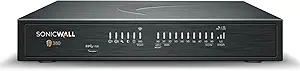 | Best Value for Small Businesses | Performance: Up to 3.5 Gbps inspection | Threat Prevention Throughput: 1.5 Gbps | IPSec VPN Throughput: 1.6 Gbps | VIEW LATEST PRICE | See Our Full Breakdown |
| SonicWall TZ680 5 Gbps Next-Gen Firewall Appliance, Hardware Only – High-End SMB |  | Best for SMBs Needing Top Throughput and Security | Performance: Up to 5 Gbps inspection | Threat Prevention Throughput: 2.5 Gbps | IPSec VPN Throughput: 2.5 Gbps | VIEW LATEST PRICE | See Our Full Breakdown |
| SonicWall TZ670 TotalSecure 1-Year Essential Edition Firewall |  | Best for Small to Mid-Sized Businesses Needing Out-of-the-Box Security | Firewall Throughput: 5 Gbps | Threat Prevention: 2.5 Gbps | Concurrent Connections: 1.5 million | VIEW LATEST PRICE | See Our Full Breakdown |
| FortiGate-40F Firewall Appliance – 5 Gigabit Ethernet RJ45 Ports, Small Business Security |  | Best Compact Firewall for Small Offices | Ports: 5 Gigabit Ethernet RJ45 | WAN Ports: 1 | Internal Ports: 4 | VIEW LATEST PRICE | See Our Full Breakdown |
| SonicWall TZ280W 2.5 Gbps Next-Gen Firewall Appliance |  | Best Wi-Fi Enabled Firewall for Branch Offices | Performance: Up to 2.5 Gbps firewall inspection | Threat Prevention: 1 Gbps | IPSec VPN Throughput: 1.2 Gbps | VIEW LATEST PRICE | See Our Full Breakdown |
| Netgate 2100 Base pfSense+ Security Gateway – Firewall, Router, VPN |  | Best for Small Business with Advanced Networking Needs | Processor: 1.2 GHz ARM Cortex-A53 | Throughput: 2.20 Gbps routing, 964 Mbps firewall | Warranty: 1 year hardware | VIEW LATEST PRICE | See Our Full Breakdown |
| Netgate 6100 Base pfSense+ Security Gateway – Firewall, Router, VPN |  | Best High-Performance Edge Gateway for Growing Businesses | Processor: 2.2 GHz Quad Core Atom | Memory: 8 GB DDR4 | Connectivity: 10 GbE ports, dual USB / RJ45 serial | VIEW LATEST PRICE | See Our Full Breakdown |
More Details on Our Top Picks
SonicWall TZ570 Gen7 Firewall
The SonicWall TZ570 Gen7 stands out for its impressive up to 4 Gbps firewall throughput, making it ideal for demanding SMBs or branch offices with high traffic needs. Its advanced threat protections like RTDMI and DPI-SSL, combined with features such as VLAN segmentation and secure SD-WAN, position it as a comprehensive security hub. Compared to the TZ370, the TZ570 offers significantly higher throughput and more robust features, but this comes with a higher price tag and a steeper learning curve. While it excels in performance and security, its complex setup and lack of included service subscriptions mean it’s best suited for organizations with dedicated IT staff or those willing to invest in professional deployment.
Pros:- High firewall throughput up to 4 Gbps suitable for demanding environments
- Advanced threat protection including RTDMI and DPI-SSL
- Secure SD-WAN and VLAN support for flexible network segmentation
- Centralized management for consistent policy enforcement
Cons:- No included service subscription, adding ongoing costs
- Potentially complex setup for users without specialized networking knowledge
Best for: Large SMBs or branch offices requiring high throughput and advanced threat protection.
Not ideal for: Small teams or offices seeking a simple, plug-and-play solution with included services.
- Model:TZ570
- Generation:7th
- Interfaces:10 GbE / Multi-Gig
- Firewall Throughput:up to 4 Gbps
- Concurrent Connections:1.25 million
- Threat Protection:RTDMI, DPI-SSL, IPS, Capture ATP
- Features:VLAN segmentation, secure SD-WAN, high-performance VPN
- Management:NSM
Our verdict“This device is best for organizations needing top-tier performance and security, with IT resources to handle its complexity.”
SonicWall TZ370 Gen7 Firewall
The SonicWall TZ370 Gen7 is tailored for SMBs experiencing growth, offering multi-gigabit performance and integrated security features like DPI-SSL inspection and RTDMI. It balances performance and ease of deployment more than the TZ570, making it suitable for organizations needing solid security without the complexity of high-end hardware. Compared to the TZ280, the TZ370 provides higher throughput and more advanced threat detection, though it still requires technical expertise to optimize its features. Its lack of included subscription services is a consideration, as security is only as good as the licenses purchased. This pick makes sense for SMBs wanting a future-proof device that can scale with their security needs.
Pros:- High-performance multi-gigabit firewall suitable for expanding environments
- Comprehensive security features including DPI-SSL and RTDMI
- Easy deployment via SonicExpress onboarding
- Supports up to 1,000,000 concurrent connections
Cons:- No included security service subscription, leading to additional costs
- Requires technical expertise for optimal setup and management
Best for: Growing SMBs needing scalable security with easy management.
Not ideal for: Small offices or less technical users who prefer fully managed solutions with included subscriptions.
- Interfaces:Multi-Gigabit (2.5/5 G)
- Security Features:DPI-SSL inspection, IPS, anti-malware, Capture ATP, RTDMI
- Supports:Up to 1,000,000 concurrent connections
- Deployment:Zero-Touch, SonicExpress onboarding
Our verdict“Ideal for SMBs seeking scalable, advanced threat defense with straightforward deployment, provided they can manage licensing costs.”
SonicWall TZ280 2.5 Gbps Next-Gen Firewall Appliance
The SonicWall TZ280 offers a robust 2.5 Gbps throughput for small businesses and branch offices, delivering intrusion prevention, threat mitigation, and VPN connectivity with solid performance. Its flexible connectivity with multiple Ethernet and SFP ports makes it adaptable for various network setups. However, like other SonicWall units, it is sold without a service subscription, meaning that full security features depend on additional purchases, which could lead to unexpected costs. Compared to the TZ370, it provides slightly lower throughput but remains a dependable choice for smaller environments that require strong security without the bulk of enterprise-grade hardware. Its management can be straightforward but may require familiarity with SonicWall’s platform.
Pros:- High-performance firewall with 2.5 Gbps throughput
- Flexible connectivity options with multiple ports
- Supports SD-WAN and Zero-Trust security features
- Suitable for small to medium-sized deployments
Cons:- Hardware is sold without included security service subscriptions
- Requires additional investment for full feature set
Best for: Small businesses or branch offices needing reliable security with moderate throughput.
Not ideal for: Environments that require integrated Wi-Fi or advanced, all-in-one solutions; users without SonicWall management experience.
- Throughput:Up to 2.5 Gbps
- Threat Prevention:1 Gbps
- IPSec VPN:1.2 Gbps
- Connectivity:8x1GbE + 2x1G SFP
- Form Factor:Desktop
Our verdict“A solid choice for small-scale deployments needing dependable security and flexible connectivity, assuming licensing costs are managed.”
SonicWall TZ270W Wireless Gen7 Firewall
The SonicWall TZ270W combines enterprise-grade firewalling with integrated 802.11ac Wave 2 Wi-Fi, making it a practical choice for small offices or clinics with limited space. It delivers gigabit performance and layered threat protections, including sandboxing, all in a single device. While it simplifies deployment by combining networking and security, the absence of an included service subscription means ongoing costs for full security coverage. Its limited size restricts its suitability to small environments, and setup can be somewhat complex for users unfamiliar with SonicWall’s interface. Compared with the TZ280, the TZ270W offers wireless capabilities that add flexibility but at the expense of some raw throughput.
Pros:- Combines firewall and Wi-Fi in a single, space-saving device
- Gigabit performance suitable for small office needs
- Layered security features including sandboxing
- Easy to deploy for small-scale environments
Cons:- No included service subscription for full security features
- Limited to small office and clinic environments, not ideal for larger networks
Best for: Small offices or clinics seeking a combined wireless and security solution in a compact form.
Not ideal for: Large offices or environments requiring high throughput or extensive wireless capabilities.
- Firewall Speed:2 Gbps
- Wireless:802.11ac Wave 2
- Concurrent Connections:750,000
- Includes:Appliance only, no service subscription
Our verdict“A convenient all-in-one device for small offices prioritizing space-saving wireless security, provided licensing costs are planned for.”
WatchGuard Firebox T125-W with 3-Year Basic Security Suite
The WatchGuard Firebox T125-W offers a compact design with Wi-Fi 7 capabilities, making it highly suitable for remote or small branch offices needing high-speed wireless connectivity. Its security features include intrusion prevention, gateway antivirus, URL filtering, and spam blocking, all managed through WatchGuard Cloud for ease of use. The included 3-year Basic Security Suite simplifies initial deployment, offering essential protections without overwhelming complexity. However, its performance ceiling at around 510 Mbps may be limiting for high-traffic environments or larger branches. Compared to SonicWall’s options, it emphasizes wireless integration more than raw throughput, making it ideal for connectivity-focused deployments.
Pros:- High-speed Wi-Fi 7 connectivity for modern devices
- Compact, easy-to-deploy form factor
- Includes a 3-year Basic Security Suite license
- Managed via WatchGuard Cloud for simplicity
Cons:- Limited to 510 Mbps throughput, not suitable for high-bandwidth needs
- Basic security features may require upgrades for advanced protection
Best for: Remote or branch offices needing reliable Wi-Fi 7 and essential security with minimal management fuss.
Not ideal for: High-traffic networks or environments requiring extensive security features beyond the basic suite.
- Wi-Fi:Wi-Fi 7
- Ethernet Ports:1x 2.5Gb + 4x 1Gb
- UTM Throughput:510 Mbps
- Security Suite:3-year Basic Security
- Designed For:Remote and branch offices
Our verdict“Perfect for small remote offices needing reliable Wi-Fi 7 and straightforward security, assuming bandwidth needs are modest.”
SonicWall TZ380 3.5 Gbps Next-Gen Firewall Appliance
The SonicWall TZ380 stands out for offering a high firewall inspection speed of up to 3.5 Gbps, making it suitable for small businesses with growing network needs. Compared to the TZ670, it lacks included security services, meaning you’ll need to budget for subscriptions to unlock full threat prevention, which could be a drawback for cost-conscious buyers. Its multiple connectivity options, including SFP ports, allow flexible deployment, but the absence of pre-installed security features means additional setup time and expense. This model is ideal for small firms that want performance without the premium price of bundled security services.
Pros:- High-performance firewall inspection speeds up to 3.5 Gbps
- Multiple connectivity options including SFP ports
- Supports advanced security features like intrusion prevention and sandboxing
- Designed for small business growth with SD-WAN and VPN capabilities
Cons:- Hardware sold without security services or support, increasing total cost
- Requires additional purchases for full threat protection and firmware updates
Best for: Small businesses seeking high-speed inspection and flexible connectivity without initial security subscriptions
Not ideal for: Organizations needing an all-in-one, fully supported security solution with included threat prevention
- Performance:Up to 3.5 Gbps inspection
- Threat Prevention Throughput:1.5 Gbps
- IPSec VPN Throughput:1.6 Gbps
- Connectivity:8x1GbE + 2x1G SFP
- Form Factor:Desktop
Our verdict“This pick makes the most sense for small businesses that need performance and flexibility but are prepared to handle security subscriptions separately.”
SonicWall TZ680 5 Gbps Next-Gen Firewall Appliance, Hardware Only – High-End SMB
The SonicWall TZ680 offers a substantial upgrade over the TZ380, with up to 5 Gbps inspection speeds and a broader range of security features such as anti-malware, content filtering, and sandboxing. It’s designed for SMBs with demanding security needs, and its multiple high-speed SFP+ and 10G ports enable robust network connectivity. Unlike the TZ380, it includes a more advanced hardware platform but still requires separate security subscriptions, which could be a hurdle for budgets. Its complex setup might be daunting for users new to enterprise-grade firewalls, but it delivers high throughput and security for those who can manage it.
Pros:- High throughput of up to 5 Gbps suitable for busy SMB networks
- Multiple high-speed connectivity options including 10G ports
- Advanced security features like intrusion prevention, anti-malware, and sandboxing
- Supports secure SD-WAN and Zero-Trust Network Access
Cons:- Hardware sold without security services or ongoing support
- Requires multiple separate subscriptions for full security and management features
- Setup complexity may be overwhelming for beginners
Best for: SMBs needing high throughput combined with comprehensive security, willing to handle complex setup
Not ideal for: Small offices or startups with limited technical expertise and tight budgets for security subscriptions
- Performance:Up to 5 Gbps inspection
- Threat Prevention Throughput:2.5 Gbps
- IPSec VPN Throughput:2.5 Gbps
- Connectivity:8x1GbE, 2x5G SFP+, 2x10G SFP
- Security Features:Intrusion prevention, anti-malware, sandboxing
Our verdict“Ideal for SMBs seeking enterprise-level throughput and security but prepared for a higher initial setup complexity and ongoing costs.”
SonicWall TZ670 TotalSecure 1-Year Essential Edition Firewall
The SonicWall TZ670 with the TotalSecure 1-Year Essential Edition combines solid firewall performance at 5 Gbps with pre-included security services, making it a well-rounded choice for small to mid-sized organizations. Unlike the TZ380 or TZ680, it includes a year of security updates for malware, intrusion prevention, and more, simplifying initial deployment. However, ongoing renewal costs can add up, and its configuration may challenge users unfamiliar with enterprise firewalls. This device is best for those who want security right out of the box without piecing together subscriptions.
Pros:- High-performance firewall with 5 Gbps throughput
- Includes 1-year of comprehensive security services
- Supports advanced threat prevention like intrusion detection and anti-malware
- Suitable for distributed enterprise environments
Cons:- Ongoing renewal required to maintain security coverage
- Potential complexity in configuration for less experienced users
- Limited to one-year included support without renewal
Best for: SMBs or distributed enterprises wanting a secure, ready-to-go solution with included threat protection
Not ideal for: Organizations that prefer a pay-as-you-go model or have very tight budgets for recurring security costs
- Firewall Throughput:5 Gbps
- Threat Prevention:2.5 Gbps
- Concurrent Connections:1.5 million
- Protection Service:1 Year Essential Edition
Our verdict“This model is perfect for small to mid-sized businesses wanting a complete, supported security package upfront, with renewal costs in mind.”
FortiGate-40F Firewall Appliance – 5 Gigabit Ethernet RJ45 Ports, Small Business Security
The FortiGate 40F offers a compact, fanless design combined with high security throughput, making it ideal for small offices or branch locations. Its five Gigabit Ethernet ports simplify deployment without sacrificing security performance, with up to 1 Gbps IPS and 600 Mbps threat protection. It’s easier to manage compared to larger enterprise appliances like the SonicWall TZ680, but the lack of included subscription services means ongoing costs for comprehensive threat prevention. This model prioritizes simplicity and quiet operation, making it suitable for small environments where space and noise are considerations.
Pros:- Compact, fanless design for quiet operation
- High security throughput with industry-leading performance
- Easy deployment and management with integrated console
- Multiple Gigabit Ethernet ports for flexible connectivity
Cons:- No included subscription services for threat prevention
- Limited to small to mid-sized environments without advanced features
- No support for advanced cloud management or multi-site complexity
Best for: Small offices or branch locations needing reliable security in a space-saving form factor
Not ideal for: Growing organizations requiring extensive security features or advanced management options
- Ports:5 Gigabit Ethernet RJ45
- WAN Ports:1
- Internal Ports:4
- Throughput:1 Gbps IPS, 600 Mbps threat protection
Our verdict“This device makes sense for small offices seeking a quiet, space-efficient firewall with strong security performance, but without the need for ongoing subscriptions.”
SonicWall TZ280W 2.5 Gbps Next-Gen Firewall Appliance
The SonicWall TZ280W offers a balanced mix of performance and wireless integration, with up to 2.5 Gbps firewall inspection and Wi-Fi 6 support. Compared to the TZ380, it’s better suited for branch offices or small setups needing wireless connectivity embedded alongside security. However, like other SonicWall appliances, it is sold without security services, which must be purchased separately, adding to the total cost. The hardware’s basic features focus on providing a straightforward security solution with wireless connectivity, but without included subscriptions, full protection depends on additional investment.
Pros:- High-performance firewall inspection up to 2.5 Gbps
- Built-in Wi-Fi 6 support for fast wireless connectivity
- Designed for small business and branch office security
- Multiple connectivity options including SFP ports
Cons:- Hardware sold without security subscriptions or support
- Requires separate purchase of security services for full threat protection
- Limited to hardware features without included software services
Best for: Branch offices or small businesses needing high-performance firewall and Wi-Fi 6 in a single device
Not ideal for: Organizations seeking an all-in-one security package with included threat prevention or those on very tight budgets for subscriptions
- Performance:Up to 2.5 Gbps firewall inspection
- Threat Prevention:1 Gbps
- IPSec VPN Throughput:1.2 Gbps
- Connectivity:8x1GbE, 2x1G SFP, Wi-Fi 6
- Form Factor:Desktop
Our verdict“This pick makes sense for small branch offices wanting integrated wireless and high-speed security but prepared for ongoing security costs.”
Netgate 2100 Base pfSense+ Security Gateway – Firewall, Router, VPN
The Netgate 2100 stands out for providing an enterprise-grade firewall and routing solution in a compact, passively cooled package. Its pre-loaded pfSense+ software makes it accessible for skilled users who want control over their network security without the need for additional setup. Compared with the Netgate 6100, the 2100 offers slightly lower throughput (2.20 Gbps routing, 964 Mbps firewall) but remains highly capable for small business environments. Its passive cooling ensures silent operation, which is ideal for office spaces. However, its setup complexity may be daunting for users unfamiliar with network configurations, and the requirement for adult signature upon delivery adds a logistical hurdle. This device makes the most sense for small business owners with technical expertise who need reliable, customizable security without noise or excess bulk.
Pros:- Pre-loaded with pfSense+ software for quick and flexible configuration
- High-performance routing and firewall throughput suitable for SMBs
- Enterprise-grade VPN support with IPsec, OpenVPN, and WireGuard
- Passive cooling ensures silent operation
Cons:- Requires substantial network knowledge to configure effectively
- Delivery requires an adult signature, which could delay installation
Best for: Small business owners with technical skills needing a customizable firewall and VPN solution
Not ideal for: Home users or small offices seeking plug-and-play simplicity, as setup can be complex
- Processor:1.2 GHz ARM Cortex-A53
- Throughput:2.20 Gbps routing, 964 Mbps firewall
- Warranty:1 year hardware
- Cooling:Passive cooling
- VPN Protocols:IPsec, OpenVPN, WireGuard
Our verdict“This pick suits technically skilled small business users seeking robust, customizable network security in a silent, compact form.”
Netgate 6100 Base pfSense+ Security Gateway – Firewall, Router, VPN
The Netgate 6100 offers a significant step up in both processing power and connectivity, making it ideal for expanding networks or edge deployments that demand higher throughput. Its 2.2 GHz quad-core Atom CPU and 8 GB DDR4 RAM provide a robust foundation for handling complex routing, VPN, and security tasks simultaneously. Compared to the Netgate 2100, the 6100’s hardware is more suited for demanding environments where speed and reliability are essential, though its higher cost and larger size make it less suitable for small or home setups. Its fanless design guarantees silent operation, and the inclusion of technical support is a plus for businesses that require dependable maintenance. However, its delivery requires an adult signature, which could cause delays, and it’s overkill for simple home use. This device makes the most sense for organizations needing a powerful, quiet, and expandable network security gateway at the network edge.
Pros:- Powerful 2.2 GHz quad-core CPU with 8 GB DDR4 RAM for high throughput
- Versatile connectivity with 10 GbE ports and additional serial/USB options
- Fanless design for silent operation and low power consumption
- Pre-loaded pfSense+ with included professional support
Cons:- Requires adult signature for delivery, possibly delaying setup
- Overly robust for small home networks, leading to unnecessary cost
Best for: Growing businesses or network administrators managing high traffic and complex security needs at the network edge
Not ideal for: Home users or small offices with limited technical expertise and lower throughput requirements
- Processor:2.2 GHz Quad Core Atom
- Memory:8 GB DDR4
- Connectivity:10 GbE ports, dual USB / RJ45 serial
- Form Factor:Desktop, wall-mountable
- Power:Low power, silent operation
Our verdict“This model best serves expanding networks or edge environments demanding high throughput and reliable, quiet operation.”

How We Picked
These products were selected based on their security capabilities, throughput, ease of management, and physical build quality. We prioritized models that offer enterprise-grade intrusion prevention while remaining accessible to different business sizes. Performance benchmarks and user interface considerations also influenced the rankings, ensuring each option provides a balance of security, usability, and value. This approach helps buyers identify choices that genuinely meet their specific needs, from small offices to high-demand environments.Factors to Consider When Choosing Best Hardware Firewall Router With Intrusion Prevention
Choosing the best hardware firewall router with intrusion prevention involves evaluating several key factors beyond raw specifications. Understanding your network size, expected traffic, and security needs helps determine the right feature set. Budget constraints also influence whether you opt for enterprise-class appliances or more streamlined solutions. This guide highlights critical considerations to help you avoid common pitfalls and make a confident purchase.Performance and Throughput
Performance metrics like throughput and concurrent connections directly impact how well your network can handle traffic while maintaining security. Higher throughput is essential for larger networks or high-bandwidth applications, but it often comes with increased costs. Matching the device’s capabilities to your network size prevents bottlenecks and ensures smooth operation during peak usage times.
Security Features and Intrusion Prevention
Not all intrusion prevention systems are created equal. Look for appliances that include real-time threat detection, deep packet inspection, and automatic updates. The complexity of these features can vary, so consider your team’s ability to manage advanced security tools. Overly complex systems may offer more protection but require dedicated staff, whereas simpler setups might be more suitable for small teams or less frequent management.
Ease of Management and User Interface
A user-friendly interface reduces setup time and ongoing maintenance. Some models offer cloud-based management, which simplifies remote configuration and monitoring. If your team lacks dedicated IT staff, prioritize solutions with intuitive controls and clear alerts to avoid misconfigurations that could leave vulnerabilities open.
Expandability and Ports
Assess your current and future connectivity needs—consider the number of ports, wireless options, and support for additional modules. Overlooking this can lead to costly upgrades or network bottlenecks down the line. Select a device that provides room for growth without sacrificing performance or security features.
Price and Total Cost of Ownership
Initial costs are just part of the story. Consider licensing fees, subscription services, and maintenance costs when evaluating options. While higher-priced models often include more features, they also demand more in ongoing expenses, so weigh these factors against your actual security needs and budget constraints.
Frequently Asked Questions
Is it better to buy a dedicated hardware firewall or a combined router with intrusion prevention?
Choosing between a dedicated hardware firewall and a combined router depends on your network’s complexity and security needs. Dedicated firewalls typically offer more advanced intrusion prevention and higher performance, making them suitable for larger or more sensitive environments. On the other hand, combined devices are often easier to manage and more cost-effective for small businesses or home use, but they may lack some of the more sophisticated security features found in dedicated units.How important is throughput when selecting a firewall with intrusion prevention?
Throughput determines how much data the device can process without slowing down your network. If you have a high-bandwidth environment, such as a busy office or data center, choosing a firewall with high throughput ensures security does not become a bottleneck. For smaller networks, moderate throughput levels may suffice, but always aim for a device that can handle your peak traffic to prevent performance issues.Can I upgrade my firewall’s intrusion prevention features later?
Many modern firewalls offer firmware updates and subscription-based security services that enhance intrusion prevention over time. However, hardware limitations can restrict future upgrades, especially in lower-end models. It’s wise to choose a device that either includes comprehensive features from the start or supports upgrades through firmware and licensing options, ensuring your investment remains relevant as threats evolve.Is wireless capability necessary for a security firewall router?
Wireless capabilities can be convenient, but they also introduce additional security considerations. If your network requires Wi-Fi, select a model with robust encryption, separate guest networks, and strong intrusion prevention for wireless traffic. For strictly wired environments, opting for a wired-only device can reduce attack vectors and simplify security management.How do I balance security features with ease of use?
The most secure devices can sometimes be complex to configure, which may lead to misconfigurations if not managed carefully. Conversely, user-friendly interfaces often simplify setup but might lack advanced options. Aim for a device that strikes a good balance by offering intuitive management tools alongside strong security features, or consider professional support if your network demands high security without sacrificing manageability.Conclusion
For most small to medium-sized businesses seeking a reliable, all-around solution, the SonicWall TZ570 Gen7 offers comprehensive protection with manageable complexity. Those prioritizing value and simplicity may prefer the FortiGate-40F, which covers essential intrusion prevention without breaking the bank. High-demand environments requiring maximum throughput and advanced features will benefit from the SonicWall TZ680. Beginners should look for models with straightforward setup, while larger organizations with intensive security needs should consider enterprise-grade appliances. Tailor your choice based on your network size, security requirements, and budget to find the best fit.Flea & tick season Picks
flea and tick prevention
As an affiliate, we earn on qualifying purchases.