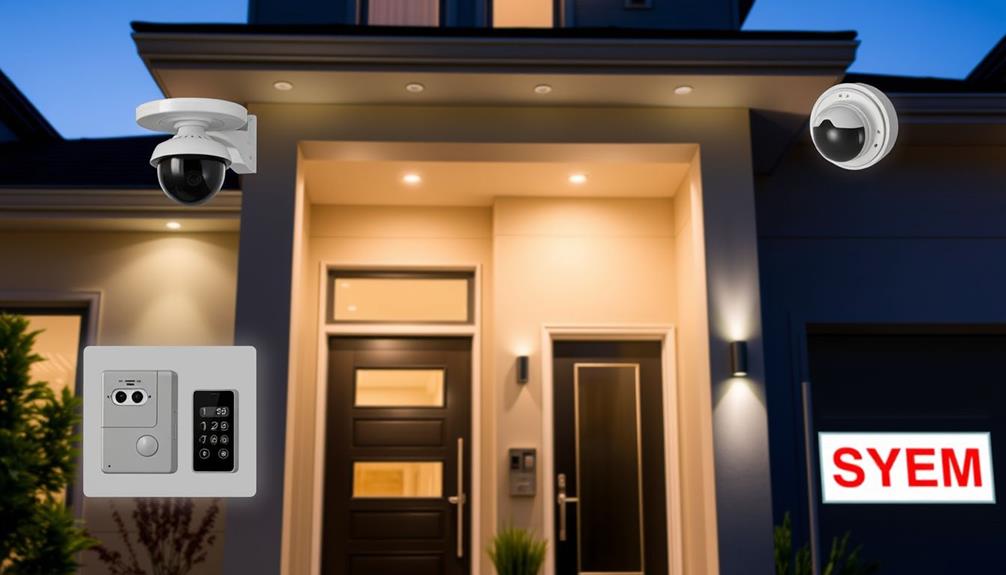
To spot blind areas in your home alarm setup, walk through your space and analyze camera coverage, ensuring all entry points, hallways, and common areas are covered without obstructions. Check sensor placement and calibration, adjusting for false alarms or shadows. Regularly review your system’s performance and make small tweaks like changing camera angles or repositioning sensors. If you continue exploring, you’ll discover more ways to strengthen your home’s security and eliminate hidden vulnerabilities.
Key Takeaways
- Conduct a walkthrough of your home as if an intruder to identify unmonitored areas.
- Regularly review camera angles and sensor placements to detect potential blind spots.
- Analyze common intrusion points and assess if they are adequately covered by sensors and cameras.
- Test the entire security system periodically to ensure all areas are responsive and monitored.
- Adjust camera positions and sensor sensitivities based on changes in furniture or home layout.
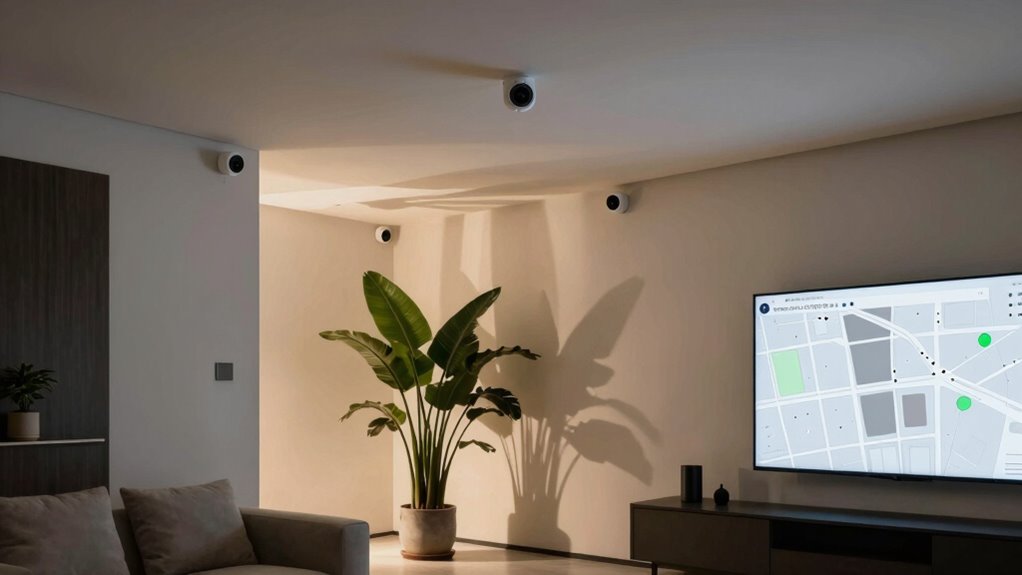
A whole-home alarm system can provide peace of mind, but if you don’t identify and address blind spots, your security might have gaps. The key to closing these gaps is understanding where vulnerabilities might exist and taking steps to cover them. One of the most effective ways to do this is by carefully analyzing your security camera placement. You want to guarantee cameras are positioned to cover every entry point, hallway, and common area without obstructions. Avoid placing cameras where they might be blocked by furniture, plants, or architectural features. Instead, aim for high, strategic locations that maximize coverage while maintaining clear lines of sight. Regularly review your camera angles and adjust them as your home layout or furniture changes, so no blind spot goes unnoticed. Additionally, understanding security vulnerabilities can help you anticipate potential weak points in your system and strengthen them proactively. Recognizing common intrusion methods can further enhance your ability to identify and mitigate blind spots before an intruder exploits them. Conducting ongoing system assessments can also help identify new blind spots as your home environment evolves. Incorporating technological advancements in alarm systems can provide additional layers of protection and help detect blind spots more effectively. Regularly updating your system with the latest security features can also help in addressing unforeseen gaps.
Another critical aspect is sensor sensitivity adjustment. Motion detectors and glass-break sensors need to be fine-tuned to your environment to prevent false alarms and ensure they activate when necessary. If a sensor is too sensitive, it might trigger false alarms from pet movement, passing cars, or even shadows. Conversely, it’s essential to calibrate sensors correctly to avoid missing actual threats. Take the time to calibrate your sensors properly, testing them in different conditions, and adjusting their sensitivity settings accordingly. Many systems allow you to set zones or areas where sensors are more or less sensitive, helping tailor protection to your home’s specific needs.
Walking through your home as if you’re an intruder can help you spot blind spots. Think about which areas might be less visible or less protected. For example, a backyard shed, a basement window, or a side entryway might be overlooked during initial setup. Check if your cameras and sensors cover these spots. If not, consider adding additional devices or repositioning existing ones to eliminate these vulnerabilities. Sometimes, small adjustments, like changing camera angles or repositioning motion sensors, can make a notable difference in coverage. Regularly updating your security plan and reassessing your system’s layout is vital as your household or property changes over time. Incorporating home security audits can further aid in systematically identifying and addressing vulnerabilities.
You should also routinely test your system’s responsiveness. Use your alarm’s testing mode to walk through different areas and verify whether the sensors detect movement or if the cameras capture footage where needed. This proactive approach helps you identify and address blind spots before an actual security breach occurs. By paying close attention to camera placement and sensor sensitivity adjustments, you can considerably improve your home’s security, ensuring that no area remains vulnerable and that your entire property is protected effectively.

Blink Outdoor 4 – Wireless smart security camera, two-year battery life, 1080p HD day and infrared night live view, two-way talk. Sync Module Core included – 5 camera system
Outdoor 4 is our most affordable wireless smart security camera yet, offering up to two-year battery life for…
As an affiliate, we earn on qualifying purchases.
As an affiliate, we earn on qualifying purchases.
Frequently Asked Questions
Can Blind Spots Be Completely Eliminated in a Home Security System?
Blind spots can’t be completely eliminated in a home security system, but you can minimize them through strategic sensor placement and defining clear alarm zones. By carefully positioning sensors around entry points, corners, and potential hiding spots, you improve coverage. Regularly reviewing and adjusting these zones ensures better detection. While no system is infallible, thoughtful setup considerably reduces blind spots, making your home safer and more secure.
How Often Should I Review My Alarm System for Blind Spots?
You should review your alarm system at least twice a year to stay ahead of blind spots. Regularly check sensor placement and guarantee system updates are current, as technology evolves. Think of it as tightening the screws—staying vigilant keeps your home secure. By doing this, you catch potential blind spots early, preventing surprises. Consistent reviews help your system work seamlessly, giving you peace of mind knowing your home’s protected.
Do Professional Security Assessments Identify All Blind Spots?
Professional security assessments do a good job identifying most security gaps, including blind spots, but they might not catch every single one. They analyze your home’s layout, sensor placement, and potential vulnerabilities, reducing false alarms and improving coverage. However, it’s wise to stay proactive—regularly review your system yourself and update sensors if needed. This ongoing vigilance helps guarantee you cover blind spots and minimize false alarms effectively.
Are There Specific Areas More Prone to Blind Spots?
Think of your alarm system like a spotlight—certain spots naturally fall into shadows. You’re more prone to blind spots near large furniture, doorways, or windows with thick frames. Proper sensor placement is essential; gaps often occur in corners or behind obstructions, creating coverage gaps. Regularly review your setup, just as a photographer checks their shot, to make certain no area remains in the dark.
What Is the Cost of Upgrading to Cover All Blind Spots?
Upgrading to cover all blind spots can cost between $500 and $2,000, depending on your home’s size and existing system. Cost considerations include adding extra sensors, cameras, or advanced zones. Upgrade options vary from simple sensor additions to complete system overhauls with smart technology. To get the best value, compare different providers and choose solutions tailored to your home’s layout and security needs, ensuring full coverage without overspending.

Wireless Motion Sensor LED Light – Motion Detector Alarm Chimes Door Sensor with 500 FT Range Security Alert Monitor System for Home, Business, Store, Office, School
【58 RINGTONES & 5 VOLUME LEVELS】 Security Alarms Detection Chime has 58 ringtones and 5 adjustable volume levels…
As an affiliate, we earn on qualifying purchases.
As an affiliate, we earn on qualifying purchases.
Conclusion
By regularly checking your alarm system and understanding common blind spots, you can guarantee every corner of your home is protected. Imagine your system like a flashlight; if you don’t shine light into every nook and cranny, some areas remain dark and vulnerable. So, take the time to test and adjust your sensors—think of it as turning on all the lights in a room to make sure nothing’s hidden in the shadows. Your peace of mind depends on it.

EVA LOGIK Modern Ultra-Thin Window Alarm with Loud 120dB Sound and Vibration Sensors Compatible with Virtually Any Window, Glass Break Alarm Perfect for Home, Office, Dorm Room- 8 Pack
Vibration Window Alarm: Built-in vibration sensor that activates a loud alarm when vibrations are detected, offering reliable security…
As an affiliate, we earn on qualifying purchases.
As an affiliate, we earn on qualifying purchases.

SimplyTest SecuriTEST IP CCTV Tester, Digital/IP, HD Coax & Analog Camera Support – Camera Power, Quick Login, Proof of Install, Setup Tool – ST-171000
Multi-Format Compatibility – Supports digital/IP, HD coax, and analog CCTV systems for broad testing and installation flexibility
As an affiliate, we earn on qualifying purchases.
As an affiliate, we earn on qualifying purchases.