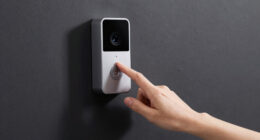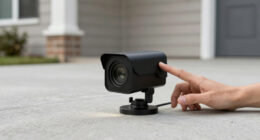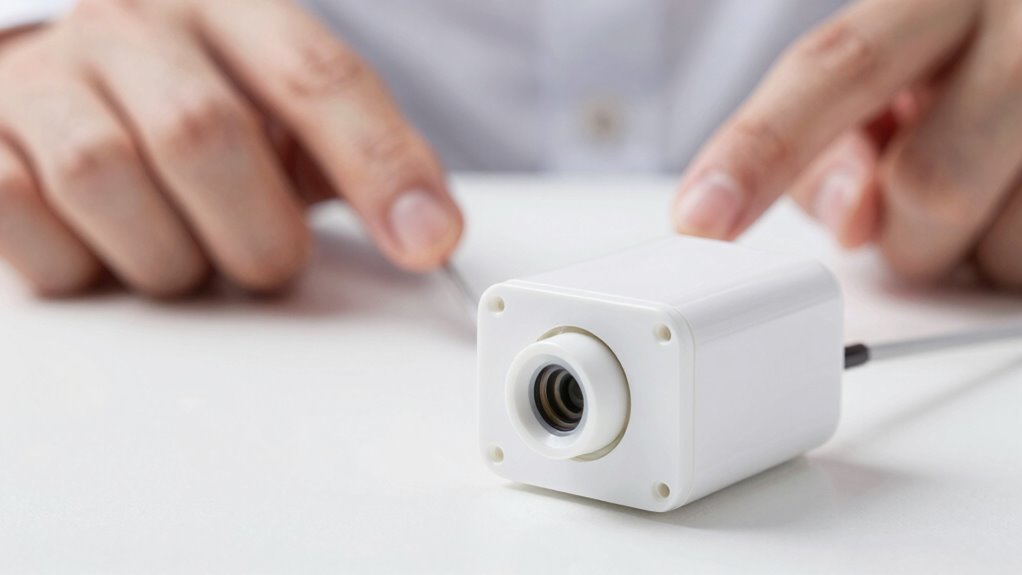

If you place sensors near heat sources, drafts, or uneven surfaces, you risk creating false confidence in your data. Faulty placement causes distorted readings, making you believe conditions are stable when they’re not. This misjudgment can lead to unnecessary actions or overlooked issues. To avoid this, make sure sensors are correctly positioned in representative, stable spots. Keep exploring so you can learn how to improve your setup and get accurate, reliable data every time.

Get privacy and security gear delivered free — and shop member deals
- Fast, free delivery on millions of items
- Access to Prime Big Deal Days deals on October 6–7
- Prime Video, Amazon Music and more included
Key Takeaways
- Placing sensors near heat sources or drafts leads to inaccurate readings, creating false confidence in environmental conditions.
- Incorrect sensor positioning can mask true variations, causing reliance on misleading data.
- Faulty placement increases calibration errors, making it seem like sensors are working correctly when they are not.
- Sensors on uneven surfaces or near machinery generate false signals, resulting in unwarranted trust in data accuracy.
- Poor initial placement reduces the effectiveness of ongoing calibration, sustaining false confidence over time.

Have you ever wondered why your sensor readings seem off or inconsistent? Often, the culprit isn’t just faulty equipment but a simple mistake in sensor placement. When sensors aren’t positioned correctly, you may fall into the trap of calibration errors, which can distort your data interpretation. These errors happen because the sensor isn’t measuring the true conditions accurately, leading you to trust misleading readings. As a result, you might make decisions based on false confidence, unaware that your data is compromised from the start.
Incorrect sensor placement can cause calibration errors and misleading data, leading to poor decisions and costly mistakes.
Proper sensor placement is essential because it directly affects the quality of your data. If a sensor is positioned too close to heat sources, drafts, or uneven surfaces, it won’t provide an accurate picture of the overall environment. For example, placing a temperature sensor near a vent or window could cause readings to fluctuate wildly, making it seem like the environment is unstable when, in reality, the sensor’s location is skewing the data. Similarly, in industrial settings, sensors placed on an uneven surface or too close to machinery might pick up false signals, leading you to believe certain conditions are present when they’re not. Ensuring the sensor is placed in a stable environment is crucial for reliable readings.
When calibration errors happen because of poor placement, they become even harder to detect. You might think your sensor has drifted or that it needs recalibration, but often the real issue is where it’s installed. Misplaced sensors give you a distorted view of the environment, which complicates data interpretation. You may see spikes or drops that aren’t representative of the actual conditions, causing you to take unnecessary or ineffective actions. Over time, this false confidence can lead to costly mistakes, such as over- or under-activating systems or misdiagnosing problems. Additionally, improper placement can result in measurement inaccuracies that undermine your entire monitoring system.
To avoid this, you need to prioritize correct sensor placement from the beginning. Think about the environment and identify stable, representative locations where the sensor can accurately monitor the parameters you’re interested in. Consider factors like airflow, heat sources, vibrations, and accessibility. Once you’ve positioned your sensor properly, verify it’s calibrated correctly and periodically checked to confirm it remains in the right spot. This combination of correct placement and ongoing calibration helps you interpret data more reliably, reducing the risk of false confidence based on skewed readings.
Additionally, understanding the importance of sensor placement in relation to environmental factors can help you optimize your setup for more accurate data. In the end, understanding that sensor placement plays a critical role in data accuracy can save you from unnecessary troubleshooting and costly errors. It’s a simple step with significant consequences. Proper placement not only minimizes calibration errors but also ensures your data truly reflects the environment, allowing for more confident, informed decisions.
environmental sensor placement kit
As an affiliate, we earn on qualifying purchases.
As an affiliate, we earn on qualifying purchases.
Frequently Asked Questions
How Can Sensor Placement Affect Overall System Accuracy?
Sensor placement directly impacts your system’s accuracy because poorly positioned sensors can lead to inaccurate readings, even if calibration is correct. When sensors are placed ideally, data integration becomes more reliable, ensuring your system functions as intended. Conversely, incorrect placement causes data discrepancies, forcing you to recalibrate often and risking false confidence. Proper placement enhances overall precision, making calibration and data integration more effective and trustworthy.
What Are Common Signs of Incorrect Sensor Placement?
You’ll notice incorrect sensor placement through inconsistent readings or sudden data spikes, which often indicate misalignment. If your sensor isn’t properly calibrated or doesn’t follow placement guidelines, it can give false confidence in your system’s accuracy. Keep an eye on calibration errors and confirm proper placement according to guidelines; these signs help you identify and correct issues before they compromise your data integrity.
Are There Specific Environments That Are More Prone to Placement Errors?
In bustling, blustery environments, placement challenges amplify, making errors more likely. You’re more prone to mistake environmental factors like temperature swings, humidity, or interference for sensor signals. Industrial zones, outdoor areas, or crowded spaces pose persistent problems, where environmental influences distort data. In such settings, you must meticulously monitor and modify sensor placements, ensuring accuracy despite chaotic conditions, and avoid the false confidence that comes from overlooking these tricky, turbulent factors.
How Often Should Sensor Positions Be Reviewed or Adjusted?
You should review and adjust sensor positions regularly, ideally during scheduled maintenance or after any environmental changes. Follow clear placement guidelines to guarantee accuracy, and perform sensor calibration periodically to maintain reliability. Frequently checking sensor placement helps catch potential errors early, preventing false confidence. Adjustments might be needed if you notice inconsistent readings or if conditions change, ensuring your sensors continue providing precise data over time.
What Tools Help Verify Optimal Sensor Placement?
Did you know proper sensor placement can improve data accuracy by up to 30%? To verify ideal placement, you should use calibration techniques like zero and span checks regularly. Additionally, following precise placement guidelines ensures consistency. Tools like handheld calibration devices, alignment jigs, and software-based sensors help confirm correct positioning. These tools and techniques make it easier to avoid false confidence and ensure your sensors deliver reliable, high-quality readings.
temperature and humidity sensor for indoor use
As an affiliate, we earn on qualifying purchases.
As an affiliate, we earn on qualifying purchases.
Conclusion
So, next time you proudly place your sensor, remember: a tiny mistake can turn your confidence into chaos. It’s like trusting a compass that points everywhere but north—sure to lead you astray. Don’t let poor placement be the villain in your high-tech story. After all, a little attention now saves you from a big mess later. Because nothing screams “smarter” than realizing your sensor’s just a fancy paperweight. Happy sensing!
industrial sensor mounting bracket
As an affiliate, we earn on qualifying purchases.
As an affiliate, we earn on qualifying purchases.
air quality sensor calibration tools
As an affiliate, we earn on qualifying purchases.
As an affiliate, we earn on qualifying purchases.
Evergreen bestsellers Picks
bestsellers
As an affiliate, we earn on qualifying purchases.