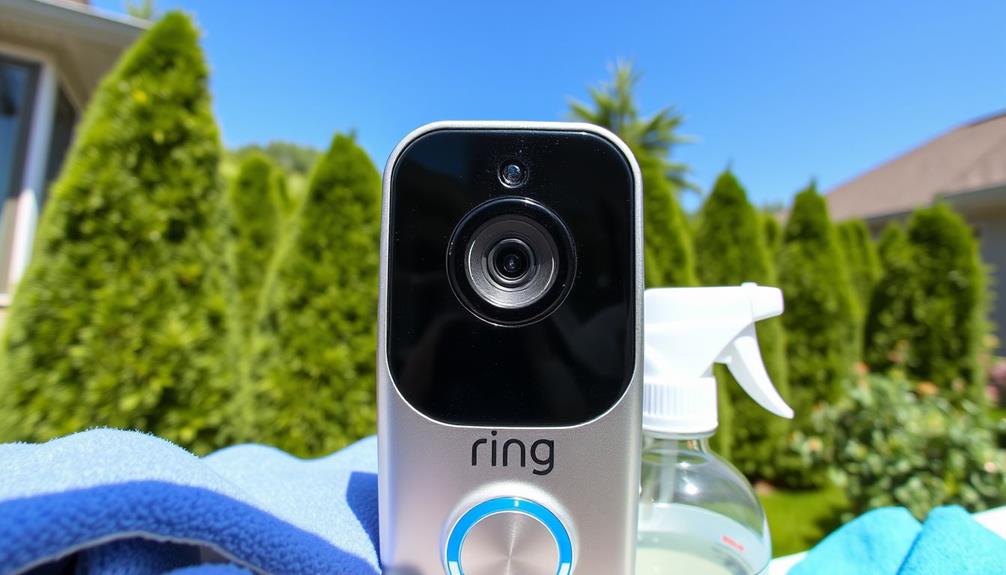
Motion frequency controls how often your Ring camera checks for movement, while sensitivity determines how small or subtle motions trigger alerts. Increasing sensitivity helps detect minor movements, but may cause false alarms, whereas lowering it reduces false alerts but might miss some activity. Adjusting both settings based on your environment optimizes detection and minimizes unnecessary notifications. To find the best balance, understanding these settings is key—more details ahead will guide you through the process.

Get privacy and security gear delivered free with Prime
- Fast, free delivery on millions of items
- Prime Video, Amazon Music and more included
- Member-only deals all year
Key Takeaways
- Sensitivity controls how small or distant movements trigger alerts; higher sensitivity detects more activity but may cause false alarms.
- Motion frequency determines how often the camera checks for movement, affecting detection speed and alert frequency.
- Increasing sensitivity makes the camera more responsive to minor motions, while decreasing it reduces false positives.
- Adjusting motion frequency influences how quickly the system responds to ongoing or rapid movements.
- Proper balance between sensitivity and frequency ensures reliable detection without excessive false alerts or missed events.
Ring camera motion sensitivity adjustment
As an affiliate, we earn on qualifying purchases.
As an affiliate, we earn on qualifying purchases.
What Are Ring Motion Frequency and Sensitivity Settings?

Ring motion frequency and sensitivity settings determine how your camera detects movement. These settings control the responsiveness of your device to motion detection, directly impacting security alerts. Higher sensitivity means your camera will pick up even small movements, potentially generating more alerts. Conversely, lower sensitivity reduces false alarms caused by minor or irrelevant motion, like trees swaying. Motion frequency determines how often your camera checks for movement within a set period, affecting detection accuracy and alert frequency. Adjusting these settings helps balance security needs with minimizing unnecessary alerts. Properly configured, they ensure your camera responds promptly to genuine threats without overwhelming you with false alarms. Understanding these settings allows you to customize your security system for excellent performance and peace of mind. Knowing how these settings influence your security enables you to optimize your camera’s performance effectively, especially when considering smart detection technologies. Additionally, understanding motion detection sensitivity can help prevent missing critical events or creating false positives, while adjusting motion frequency can further refine how often your system actively monitors for activity.
Ring camera motion frequency settings
As an affiliate, we earn on qualifying purchases.
As an affiliate, we earn on qualifying purchases.
How Do Adjusting Motion Frequency and Sensitivity Change Detection?

Adjusting motion frequency and sensitivity directly impacts how your camera detects movement, shaping both the accuracy and relevance of alerts you receive. Higher sensitivity makes your camera more responsive to smaller or distant movements, but it can also increase false alerts, raising privacy concerns if it captures unnecessary activity. Increasing motion frequency means your device checks for motion more often, improving detection of quick or subtle movements. Additionally, proper configuration can help avoid over-alerting and conserve energy, making your security setup more efficient. Properly setting these parameters also affects the performance of the detection system, ensuring it functions as intended. However, this can lead to higher energy consumption, reducing battery life or increasing power use. Conversely, lowering these settings reduces false alarms and energy use but might miss important activity. Finding the right balance ensures reliable detection without compromising privacy or draining power unnecessarily. Properly configuring these settings can also enhance overall security by ensuring alerts are timely and pertinent. Optimal settings should be tailored to your specific environment and security needs to maximize effectiveness. Modifications should reflect your specific needs to optimize both detection and privacy. Additionally, understanding the impact on battery life can help you make more informed decisions when adjusting these parameters.
security camera false alarm reduction
As an affiliate, we earn on qualifying purchases.
As an affiliate, we earn on qualifying purchases.
When Should You Increase or Decrease Motion Settings?
Knowing when to increase or decrease your motion settings depends on your specific surveillance needs and living environment. If lighting conditions are poor or inconsistent, you might want to lower sensitivity to prevent false alerts caused by shadows or passing cars. Conversely, in well-lit areas or high-traffic zones, increasing motion settings can help catch more activity. Your camera placement also plays a role; cameras positioned at busy entrances or large open spaces may require different adjustments than those in quiet corners. Consider testing different settings based on these factors. If you notice frequent false alarms or missed motion events, tweak the sensitivity and frequency accordingly. Regularly evaluate your surveillance footage to find the right balance that maximizes detection while minimizing false alerts. Additionally, understanding the motion frequency can help you fine-tune your system for optimal performance. Adjusting sensitivity levels appropriately can further improve detection accuracy in various environments. Maintaining awareness of your environmental conditions is essential for optimal surveillance results. Monitoring lighting variability can also assist in adjusting your settings for different times of day or weather conditions. Being mindful of sensor placement can make a significant difference in achieving reliable motion detection.
smart home security camera accessories
As an affiliate, we earn on qualifying purchases.
As an affiliate, we earn on qualifying purchases.
How to Find the Best Motion Settings for Your Home
Finding the right motion settings for your home involves a balance between sensitivity and frequency that matches your environment. To optimize your security camera or alarm system, adjust sensitivity so it detects genuine movement without false alarms. Consider the typical activity level and layout of your property. Use the table below to help determine ideal settings:
| Environment | Recommended Sensitivity | Frequency Adjustment |
|---|---|---|
| Quiet Night Hours | Lower | Less frequent checks |
| Busy Streets | Higher | More frequent checks |
| Small Indoor Area | Moderate | Balanced checks |
| Large Outdoor Space | High | Frequent checks |
Matching these settings ensures your security camera responds appropriately, reducing false alarms and enhancing your home’s safety. Proper calibration of motion sensitivity can significantly improve your system’s effectiveness. Additionally, understanding the frequency of checks helps tailor your system to different environments for optimal performance. Recognizing the environmental conditions is essential for fine-tuning these settings effectively, especially since Auto-Detection features can vary between device models. Moreover, consulting installation guidelines can help you achieve more accurate detection results.
Troubleshooting Common Ring Motion Detection Issues
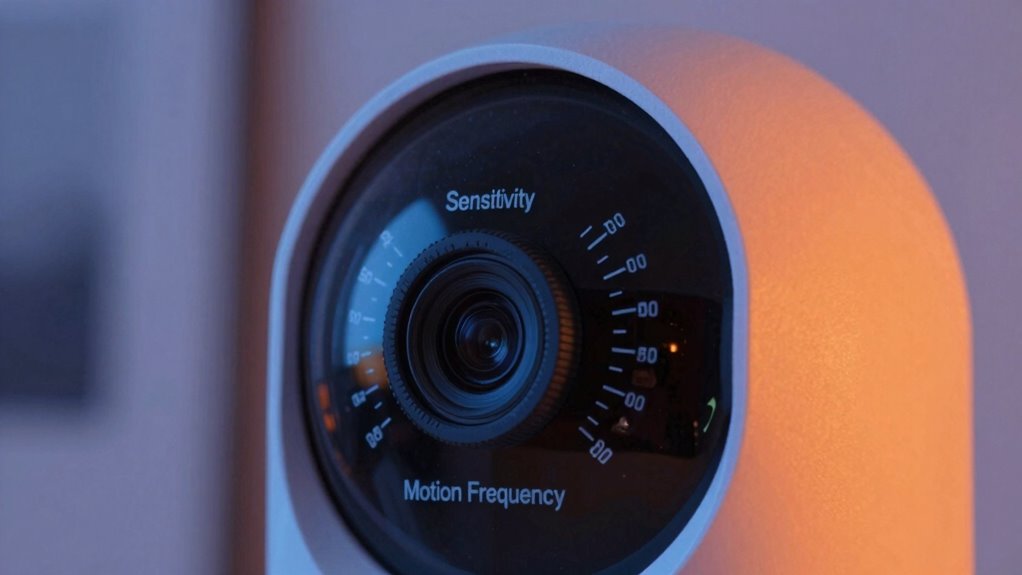
If your Ring camera isn’t detecting motion properly, start by adjusting the motion sensitivity settings to find the right balance. Next, verify your motion zones cover the areas you want monitored without unnecessary overlaps. Finally, check your motion frequency settings to prevent alerts from triggering too often or missing activity. Additionally, understanding air quality factors can help you optimize your indoor environment, which may also influence how well motion sensors function in certain conditions. Improving air circulation can reduce false alerts caused by air movement, ensuring more accurate detection. Proper device placement can significantly enhance sensor performance by minimizing obstructions and environmental interference. Considering environmental conditions like humidity and temperature can also impact sensor responsiveness and help you fine-tune your setup.
Adjust Motion Sensitivity Settings
Adjusting your Ring camera’s motion sensitivity settings can substantially improve detection accuracy. If your alerts are too frequent or missed entirely, tweaking sensitivity helps. Consider how camera placement and lighting conditions affect detection—placing the camera at eye level and avoiding direct sunlight reduces false alarms. Increasing sensitivity captures smaller movements but may cause false alerts, while lowering it filters out minor motions but might miss important activity. Use this table to choose the right setting:
| Sensitivity Level | Ideal for | Potential Issue |
|---|---|---|
| Low | Bright, stable lighting | Misses slow movements |
| Medium | Moderate activity | Occasional false alerts |
| High | Low-light, high activity | False alarms from small motions |
| Max | Very active areas | Increased false alerts |
Additionally, understanding motion frequency and sensitivity helps tailor your settings effectively.
Optimize Motion Zone Coverage
Optimizing your motion zone coverage helps guarantee your Ring camera detects activity accurately without generating unnecessary alerts. Properly adjusting your motion zones ensures the camera focuses on relevant areas, reducing false alarms caused by irrelevant motion outside the zone. Pay attention to night detection settings, as low-light conditions can cause cameras to misinterpret shadows or movement, leading to false alarms. Fine-tuning your zones to exclude busy or cluttered areas minimizes these issues. Clear, well-defined zones improve your camera’s ability to distinguish between real activity and background movement. Regularly review and adjust your zones based on changing surroundings or seasons to maintain peak performance. This targeted approach enhances detection accuracy, reduces false alarms, and ensures you’re promptly notified of genuine activity.
Check Motion Frequency Settings
Checking your motion frequency settings is a crucial step when troubleshooting motion detection issues on your Ring camera. If your camera isn’t detecting motion reliably, consider how your camera placement impacts detection. For example, placing it too close to busy areas or reflective surfaces can cause false triggers or missed events. Additionally, lighting conditions play a significant role; poor or inconsistent lighting can affect how the camera perceives motion. Adjusting the motion frequency setting can help reduce false alerts caused by repetitive motion in high-traffic zones. Make sure your Ring app’s settings align with your environment, and test different configurations to find the best balance. Proper camera placement and lighting considerations, combined with correct motion frequency, ensure your device detects motion accurately.
Tips to Test and Optimize Your Ring Motion Settings

To guarantee your Ring camera is working at its best, start by conducting routine motion tests to see how it responds. When adjusting the settings, make small changes to sensitivity and observe the results before making further tweaks. This approach helps you find the right balance for reliable detection without false alarms.
Conduct Routine Motion Tests
Have you ever wondered whether your Ring’s motion settings are working at their best? Conducting routine motion tests helps you verify this. Start by observing how your camera captures motion during different lighting conditions—bright daylight versus low light—and note any missed detections or false alerts. Adjust your camera angle if necessary, confirming it covers key entry points without obstructions. Test movement at various distances and speeds to see how your Ring responds. Use clear, deliberate motions to assess sensitivity accuracy. Record your results, paying attention to areas where motion detection falters. Regular testing helps you identify patterns or inconsistencies, allowing you to fine-tune your settings for peak performance. Consistent checks ensure your Ring stays reliable, no matter the lighting or camera positioning.
Adjust Sensitivity Gradually
Adjusting your Ring’s motion sensitivity gradually allows you to find the most suitable setting without causing false alerts or missed detections. Start with a moderate sensitivity level and perform a motion calibration test by walking through your camera’s view. Observe whether it detects your movement accurately or triggers false alarms. Make small adjustments, increasing or decreasing sensitivity step-by-step. After each change, test again to see how well the camera responds. This incremental sensitivity adjustment helps you pinpoint the ideal setting for your environment. Remember, setting sensitivity too high may cause false alerts, while too low might miss important motion. Patience during this process ensures your Ring camera detects what matters most while minimizing unnecessary notifications.
Frequently Asked Questions
Can Motion Settings Affect Battery Life on My Ring Device?
Yes, motion settings can impact your Ring device’s battery life. When you increase motion detection sensitivity or set a higher motion frequency, your device works more often and for longer periods, draining the battery faster. Proper device calibration helps optimize motion detection, reducing unnecessary alerts and conserving power. Adjusting these settings to balance detection accuracy and battery conservation ensures your device stays active without quickly depleting its battery.
Do Different Ring Models Have Varying Motion Sensitivity Options?
Think of your Ring device as a musical instrument—different models have unique tuning options. Yes, various Ring models offer different motion sensitivity settings, allowing you to customize zones for better alerts. Compatibility varies, so check your specific model to see what options it supports. This way, you control what triggers notifications, making your security setup more precise and tailored to your needs.
How Do Outdoor Lighting Conditions Impact Motion Detection Accuracy?
Outdoor lighting conditions can markedly affect your motion detection accuracy. When there’s light pollution, your camera might get false alerts from ambient lights. Similarly, weather interference like rain, fog, or snow can obscure motion signals, reducing detection reliability. To improve performance, adjust your sensitivity settings accordingly and consider using features like infrared or spotlight activation to compensate for challenging conditions, ensuring you catch genuine activity without false alarms.
Are There Security Risks Associated With High Motion Sensitivity?
Think of high motion sensitivity like a guard dog barking at every passing car—while it’s alert, it can also cause false alarms. Yes, there are privacy implications, as increased sensitivity may lead to more false alarms and unwarranted recordings, potentially exposing sensitive information. You risk security breaches or missing real threats if the system is overwhelmed by minor movements. Adjust sensitivity to balance security and privacy effectively.
Can I Set Different Motion Parameters for Specific Zones?
Yes, you can set different motion parameters for specific zones through zone customization. This allows you to tailor individual settings for each zone, adjusting motion frequency and sensitivity based on your needs. By customizing zones, you prevent false alerts and focus on important areas. Simply select the zone you want to modify in your app, then adjust the motion parameters to optimize security and reduce unwanted notifications.
Conclusion
Now that you understand how motion frequency and sensitivity work, you’re unstoppable! With the right settings, your Ring camera will detect every squirrel, breeze, or shadow—no matter how sneaky or tiny—like a superhero with laser vision. Say goodbye to missed alerts or false alarms forever. Adjust, test, and perfect your setup until your home is so secure, even Sherlock Holmes would be jealous. Get ready to become the ultimate motion-detecting legend!
Fall Picks
fall essentials
As an affiliate, we earn on qualifying purchases.