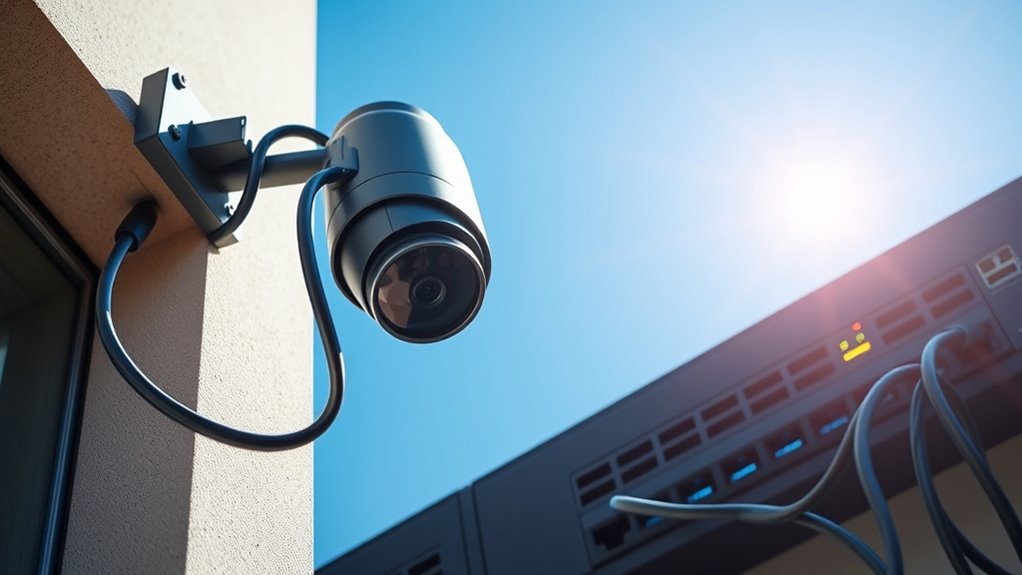

Using Power over Ethernet for security devices lets you simplify setup by combining power and data with a single cable, making installation easier and more flexible. It also allows remote management, updates, and expansion without re-wiring. However, you might face compatibility issues, power limitations, or placement restrictions due to infrastructure or cable length. Understanding these pros and cons can help you optimize your system—more insights await if you explore further.

Get privacy and security gear delivered free with Prime
- Fast, free delivery on millions of items
- Prime Video, Amazon Music and more included
- Member-only deals all year
Key Takeaways
- PoE simplifies security device installation by combining power and data delivery through a single cable.
- It enables remote management, updates, and troubleshooting, enhancing system flexibility.
- Compatibility issues and power limitations may require additional hardware upgrades.
- Proper cable management and planning are essential to avoid damage and ensure reliable operation.
- PoE supports scalable security systems, but initial setup and infrastructure evaluation are crucial for optimal benefits.
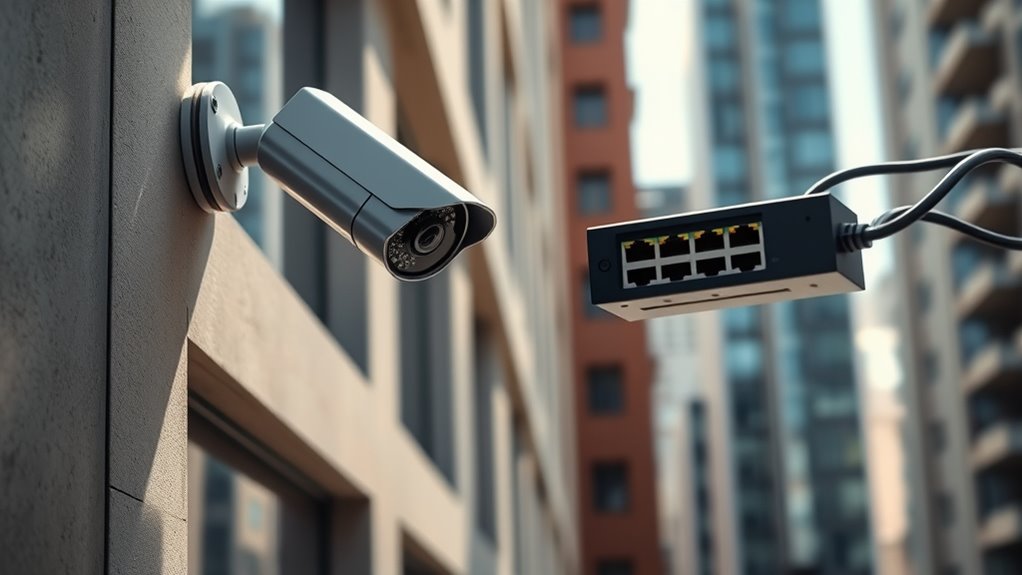
Power over Ethernet (PoE) simplifies the installation and management of security devices by delivering both power and data through a single Ethernet cable. This integration makes deploying cameras, access points, and sensors much more straightforward, especially in locations where running separate power lines would be complicated or costly. One of the biggest advantages of PoE is remote management. With PoE-enabled devices, you can control, update, and troubleshoot security systems from anywhere on your network. This capability saves you time and effort, reducing the need for physical access to each device. Instead, you can make adjustments remotely, monitor performance, and address issues promptly, which is especially useful for large or hard-to-reach installations.
However, integrating PoE into your security setup isn’t without its challenges. Installation challenges can arise, particularly if your existing infrastructure isn’t compatible with PoE or if the power requirements of your devices are higher than the available PoE standard. For example, some older switches or network equipment may not support PoE at all, forcing you to invest in new hardware. Additionally, the placement of devices becomes more critical, as you need to ensure they are close enough to PoE switches or injectors to receive adequate power. This can limit your options for positioning cameras or sensors, especially in spaces where power outlets are scarce or inconveniently located.
Another installation challenge involves cable management. While PoE reduces the number of cables needed, it still requires careful planning to avoid clutter and ensure reliable connections. Poorly managed cables can lead to connectivity issues or damage over time. Furthermore, power limitations can be a concern if you’re deploying multiple high-power devices. Not all PoE switches deliver the same amount of power, so you must evaluate your system’s power budget carefully to avoid overloading your network hardware.
Utilizing electric dirt bikes as an analogy, understanding the power capacity and limitations of your PoE setup is crucial for optimal security device performance. Despite these hurdles, the benefits of remote management and simplified installation often outweigh the drawbacks. PoE makes it easier to expand and upgrade your security system without extensive rewiring or complex power setups. You gain centralized control, which enhances your ability to monitor and maintain your security devices efficiently. Just be prepared to address potential installation challenges upfront, by evaluating your existing network infrastructure, planning cable routes carefully, and choosing hardware capable of supporting your device’s power needs. In doing so, you’ll leverage PoE’s full potential, making your security system more flexible, manageable, and cost-effective in the long run.
As an affiliate, we earn on qualifying purchases.
Frequently Asked Questions
Can Poe Supply Enough Power for High-Definition Security Cameras?
Yes, PoE can supply enough power for high-definition security cameras, but it depends on the camera’s resolution and power requirements. Higher-resolution cameras, like 4K, typically need more power, so you must verify your PoE switch or injector provides sufficient wattage. Check your camera’s specifications and match them with your PoE setup. If correctly matched, you’ll get reliable power and high-quality footage without extra wiring.
What Are the Long-Term Cost Implications of Using Poe?
You’ll find that PoE’s long-term costs are manageable, but installation challenges can cause some initial inconveniences. While you save on separate power supplies, ongoing maintenance costs may accrue if equipment or cabling needs repairs. Over time, these costs can impact your budget, but the streamlined setup and reduced energy expenses often outweigh the expenses. Careful planning and quality components help minimize maintenance costs, making PoE a cost-effective choice long-term.
How Does Poe Impact Network Security for Security Devices?
You might worry about network security with PoE, but it can be secure if you implement network segmentation to isolate security devices. Using data encryption adds an extra layer of protection, preventing unauthorized access over the network. PoE itself doesn’t weaken security; it’s up to you to configure your network properly, ensuring secure connections and minimizing vulnerabilities for your security devices.
Are There Compatibility Issues With Existing Security Equipment?
You might face compatibility issues with existing security equipment when implementing PoE, especially if you have legacy equipment that doesn’t support PoE standards. Retrofit challenges can arise, requiring you to upgrade or replace older devices to guarantee seamless power and data transfer. To avoid disruptions, it’s crucial to assess your current infrastructure and plan for possible upgrades, making sure all security devices are compatible with PoE before deployment.
What Are the Best Practices for Troubleshooting Poe-Powered Security Systems?
Think of troubleshooting your PoE security system like tuning a musical instrument. First, check the cabling quality—damaged or poor cables cause dissonance. Next, ensure firmware updates are current; outdated firmware can cause miscommunication. Power cycle devices to reset the system. If issues persist, verify PoE switch settings and connections. Regularly inspecting these elements maintains your security system harmonized and functioning smoothly, avoiding static and ensuring clear, reliable operation.
Power over Ethernet network switch
As an affiliate, we earn on qualifying purchases.
As an affiliate, we earn on qualifying purchases.
Conclusion
While Power over Ethernet simplifies your security setup, offering a sleek, single-cable solution, it also presents risks like potential power outages that can leave your devices vulnerable. Imagine a security camera standing tall and connected, yet suddenly powerless during a storm. Balancing convenience with reliability means understanding both the benefits of streamlined wiring and the importance of backup plans. Ultimately, choosing POE means weighing seamless installation against the need for resilient, uninterrupted security.
PoE injector for security devices
As an affiliate, we earn on qualifying purchases.
As an affiliate, we earn on qualifying purchases.
PoE cable management accessories
As an affiliate, we earn on qualifying purchases.
As an affiliate, we earn on qualifying purchases.
Halloween Picks
halloween
As an affiliate, we earn on qualifying purchases.