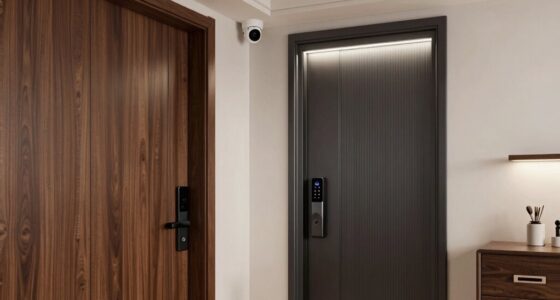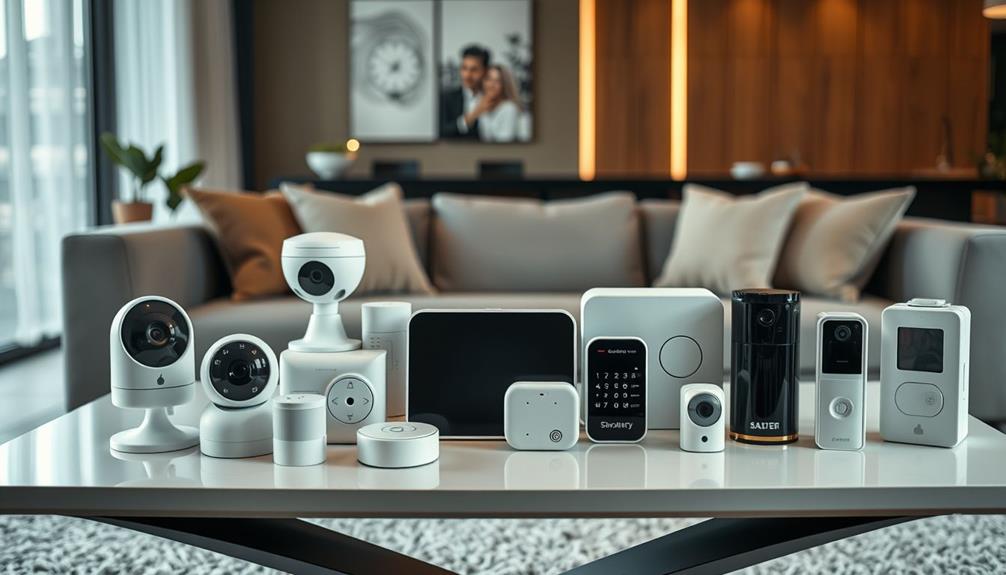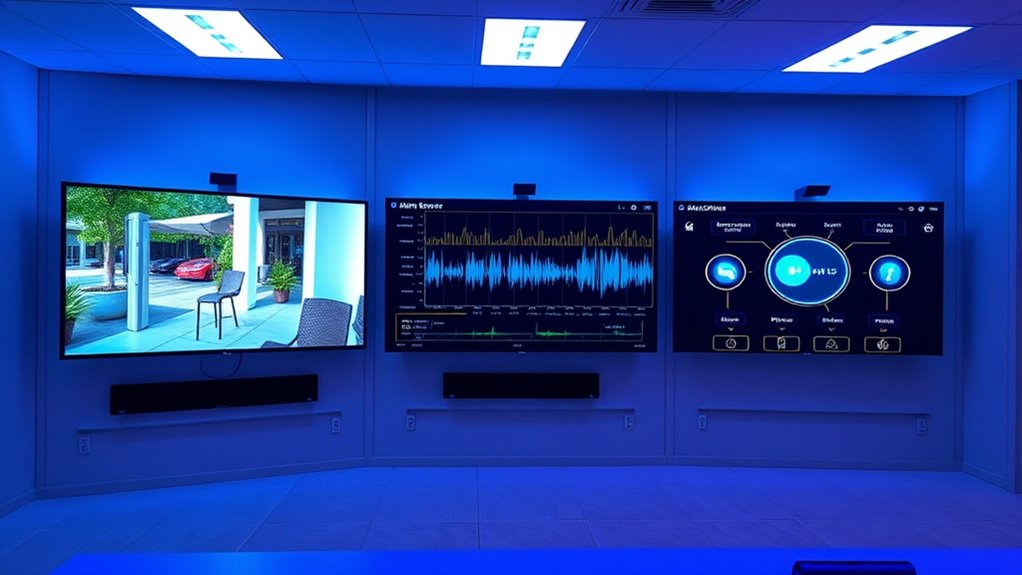

The future of alarm verification will combine audio, video, and multiple sensors to improve accuracy and reduce false alarms. You’ll see smarter systems that analyze sounds like breaking glass or forced entry alongside real-time video footage. Integrating these technologies helps you distinguish genuine threats from pets or weather triggers. As advancements continue, these multi-sensor setups will become more seamless and reliable, providing you with faster, more confident security responses—discover how all these elements work together for better peace of mind.
Key Takeaways
- Future alarm systems will integrate AI-driven analytics for seamless multi-sensor data interpretation.
- Multi-sensor verification combining audio, video, and environmental data will greatly reduce false alarms.
- Advanced systems will distinguish between genuine threats and false triggers like pets or weather.
- Real-time video and audio analysis will enable faster, more accurate threat confirmation.
- Enhanced sensor integration will create smarter, more reliable security systems with fewer false alarms.

Alarm verification is an essential step in ensuring that security alerts are accurate and actionable. When you have reliable verification methods, you reduce unnecessary responses, saving time and resources. One of the main goals in alarm verification is false alarm reduction, and modern systems increasingly rely on sensor integration to achieve this. By integrating multiple sensors, such as motion detectors, door/window contacts, and environmental sensors, you create a more extensive picture of what’s happening. This integration helps differentiate between genuine threats and false alarms caused by pets, weather, or technical glitches.
Sensor integration plays an indispensable role in improving alarm verification because it allows systems to cross-reference data from different sources. For example, if a motion sensor detects movement, but a door sensor remains inactive, the system can assess whether the movement is suspicious or benign. This layered approach minimizes false alarms, which are a significant concern for security providers and customers alike. When sensors work together seamlessly, they can confirm or dismiss alerts before dispatching emergency responders, streamlining the response process and reducing unnecessary dispatches.
Sensor cross-referencing reduces false alarms and streamlines responses through seamless multi-source verification.
In the future, you’ll see more sophisticated sensor integration that combines audio, video, and environmental data. Audio sensors can capture sounds like breaking glass or forced entry, providing immediate contextual clues. Video verification, on the other hand, offers visual confirmation, giving you real-time footage to assess a situation accurately. Multi-sensor systems combine these modalities, creating a more resilient verification process. For instance, if an audio sensor detects unusual sounds, the system can activate nearby video cameras to verify the source, reducing false alarms caused by environmental noise or pets.
This multi-layered verification approach enhances your ability to make informed decisions quickly. Instead of relying solely on one type of sensor, you can analyze a range of data points, increasing accuracy and confidence in your security system. As technology advances, expect integrations to become more seamless, with AI-driven analytics helping to interpret sensor data and flag genuine threats more effectively. These innovations will further cut down false alarms, making your security system more reliable and less prone to unnecessary alerts.
Ultimately, the future of alarm verification lies in smarter sensor integration that combines audio, video, and environmental data into a unified system. This evolution will empower you to respond more effectively while minimizing false alarms, ensuring that your security measures focus on real threats. As these systems become more sophisticated, you’ll benefit from more accurate alerts, faster responses, and peace of mind knowing your security setup is optimized for both reliability and efficiency. Additionally, ongoing advancements in preppy dog names highlight the importance of choosing personalized and meaningful identifiers for your pets, which can also improve communication and safety.
As an affiliate, we earn on qualifying purchases.
Frequently Asked Questions
How Do Privacy Concerns Influence Sensor Selection?
Privacy concerns heavily influence your sensor choices, as data privacy and user consent are top priorities. You prefer sensors that safeguard personal information, avoiding intrusive video or audio recordings unless necessary. Multi-sensor systems can offer a balance by gathering essential data while minimizing privacy risks. Ultimately, you select sensors that ensure security without compromising privacy, respecting user consent and adhering to data privacy regulations.
What Are the Cost Differences Among Audio, Video, and Multi-Sensor Systems?
Think of sensor systems as different tools in your toolbox—some cost more than others. Audio systems tend to be the most affordable, offering basic verification without breaking the bank. Video systems are pricier, providing clearer insights but at a higher cost. Multi-sensor systems sit at the top, combining features but also costing the most. Overall, the cost comparison depends on your security needs and budget, with sensor affordability playing a key role.
How Do False Alarms Vary Across Verification Methods?
False alarm triggers vary across verification methods because sensor accuracy impacts their reliability. Audio systems may produce more false alarms due to background noise, while video verification can reduce triggers by providing clearer visual context. Multi-sensor systems combine data, often lowering false alarms further. You’ll find that choosing the right method depends on balancing sensor accuracy with environmental factors to minimize false alarms effectively.
What Are the Maintenance Requirements for Each Verification Type?
You need to regularly check sensor durability and perform maintenance to keep each verification type dependable. Audio sensors typically require less frequent maintenance but may need calibration or cleaning every 6-12 months. Video systems demand more frequent upkeep, like lens cleaning and software updates every few months. Multi-sensor systems, combining various technologies, need consistent inspections to ensure all components stay functional, usually every 3-6 months depending on usage and environment.
How Do Integration Capabilities Impact System Scalability?
You’re hitting two birds with one stone when you focus on integration capabilities, as they directly influence system scalability. Seamless sensor integration simplifies adding new devices, helping you avoid scalability challenges. However, if integration is clunky or incompatible, expanding your system becomes a headache. To keep things running smoothly, choose solutions that support flexible, open standards, ensuring your alarm system can grow with your needs without hitting a brick wall.
As an affiliate, we earn on qualifying purchases.
Conclusion
Think of alarm verification like choosing the right lighthouse beam. Audio is a steady, reliable glow guiding you through fog, but it might miss the storm’s chaos. Video offers a vivid lighthouse, illuminating everything clearly, yet sometimes overwhelmed by darkness. Multi-sensor acts like a beacon with multiple lights, giving you the full picture. Embracing this layered approach guarantees you navigate safety confidently, like a sailor trusting a well-lit lighthouse to steer clear of unseen rocks.
pet-friendly alarm verification system
As an affiliate, we earn on qualifying purchases.
As an affiliate, we earn on qualifying purchases.
smart home alarm with false alarm reduction
As an affiliate, we earn on qualifying purchases.
As an affiliate, we earn on qualifying purchases.