For a wall-mount server cabinet for a home network, my best overall pick is the Tecmojo 6U cabinet with a cooling fan and 17.7-inch depth, which balances enclosed storage, airflow, and room for deeper equipment. The VEVOR 9U is a flexible alternative for a growing setup, while the Tecmojo 12U open-frame rack with two shelves suits buyers who prioritize access over a lockable enclosure. The main tradeoffs are usable depth, cabinet weight and wall support, cooling, and whether you need secure doors or open access. Smaller cabinets save space but can limit equipment choices; larger, deeper models offer more room but place greater demands on the mounting surface. Read on for the full comparison, selection criteria, and guidance on matching cabinet size to your network gear.

Get privacy and security gear delivered free with Prime
- Fast, free delivery on millions of items
- Prime Video, Amazon Music and more included
- Member-only deals all year
Key Takeaways
- The Tecmojo 6U with a fan and 17.7-inch depth stands out overall because it pairs a compact footprint with more depth and active cooling than the other 6U enclosed options.
- Depth matters as much as rack-unit capacity. The VEVOR 22U and Sysracks 18U offer room for larger equipment, but their 24-inch-class depth and greater load call for careful wall and clearance checks.
- Small 6U cabinets serve different needs. The Tecmojo 10-inch model favors compact gear, while the VEVOR 14.8-inch, SAIPWELL 450 mm, and Tecmojo 17.7-inch models offer different depth choices.
- Lockable glass doors suit tidy, protected home installations, while the Tecmojo 12U open-frame rack favors quick access and shelf flexibility at the cost of an enclosed cabinet.
- Capacity and support are separate questions. A stated cabinet load figure does not prove that a home wall, studs, fasteners, or mounting method can safely support a fully equipped rack.
| Tecmojo 6U 10-Inch Wall-Mount Network Cabinet |  | Best Compact Pick for 10-Inch Gear | Rack capacity: 6U, 10-inch | Dimensions: 12.3 × 13 × 11.8 inches (W × D × H) | Maximum mounting depth: 251 mm | VIEW ON AMAZON | See Our Full Breakdown |
| QYXJAEO 12U Wall-Mount Server Rack Cabinet |  | Best for Growing Standard 19-Inch Setups | Capacity: 12U | Compatible equipment: 19-inch IT and A/V equipment | Dimensions: 24.3 × 21.7 × 17.7 inches (H × W × D) | VIEW ON AMAZON | See Our Full Breakdown |
| VEVOR 22U Wall-Mount Network Cabinet, 23.6-Inch Depth, 300 lb Capacity |  | Best for High-Capacity, Heavy Equipment | Capacity: 22U | Dimensions: 23.6 × 23.6 × 45.87 inches (D × W × H) | Weight: 66.1 lbs | VIEW ON AMAZON | See Our Full Breakdown |
| VEVOR 9U Wall-Mount Network Server Cabinet, 15.5-Inch Deep |  | Best Mid-Size Wall-Mount Choice | Rack size: 9U | Dimensions: 15.5 × 15.5 × 15.5 inches (D × W × H) | Maximum depth: 14.8 inches | VIEW ON AMAZON | See Our Full Breakdown |
| VEVOR 6U Wall-Mount Network Server Cabinet, 14.8-Inch Deep |  | Best for a Compact Standard-Width Rack | Rack size: 6U | Dimensions: 17.8 × 23.6 × 13.8 inches (D × W × H) | Maximum depth: 14.8 inches | VIEW ON AMAZON | See Our Full Breakdown |
| SAIPWELL 6U Wall-Mount Server Rack Cabinet, 450 mm Deep |  | Best for Higher Wall-Mount Load Capacity | VIEW ON AMAZON | See Our Full Breakdown | |||
| Tecmojo 6U Wall-Mount Server Cabinet with Lockable Glass Door |  | Best for Adjustable, Straightforward Rack Setup | VIEW ON AMAZON | See Our Full Breakdown | |||
| Tecmojo 9U Wall-Mount Server Cabinet with Lockable Glass Door |  | Best for Extra Rack Space in a Compact Cabinet | VIEW ON AMAZON | See Our Full Breakdown | |||
| Tecmojo 6U Wall-Mount Network Cabinet with Lockable Glass Door, Cooling Fan, and 17.7-Inch Depth |  | Best 6U Pick for Active Cooling | VIEW ON AMAZON | See Our Full Breakdown | |||
| Tecmojo 18U Wall-Mount Network Cabinet for 19-Inch Equipment |  | Best for a Large Wall-Mounted Home Network | VIEW ON AMAZON | See Our Full Breakdown | |||
| QYXJAEO 6U Wall-Mount Server Rack Cabinet |  | Best Compact Enclosed Pick | Rack capacity: 6U | Compatible equipment: 19-inch IT and AV equipment | Dimensions: 13.8 × 21.7 × 17.7 inches (H × W × D) | VIEW ON AMAZON | See Our Full Breakdown |
| Tecmojo 12U Open Frame Network Rack with Two Shelves | 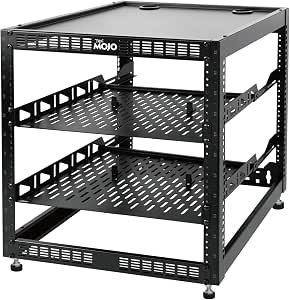 | Best Flexible Open-Frame Value | Rack capacity: 12U | Dimensions: 20.15 in D × 20.47 in W × 21.02 in H | Item weight: 28.6 lb | VIEW ON AMAZON | See Our Full Breakdown |
| Sysracks 18U Wall-Mount Server Rack Cabinet, 24-Inch Deep |  | Best for Expanding Home Labs | Rack capacity: 18U | Overall dimensions: 24 × 24 × 37 inches (W × D × H) | Usable mounting depth: 20 inches | VIEW ON AMAZON | See Our Full Breakdown |
| Tecmojo 12U Wall-Mount Server Cabinet with Lockable Glass Door |  | Best 12U Enclosed Home-Network Pick | Rack capacity: 12U | Dimensions: 24.25 in H × 21.65 in W × 17.72 in D | Maximum mounting depth: 14.2 inches | VIEW ON AMAZON | See Our Full Breakdown |
| VEVOR 12U Wall-Mount Network Cabinet, 14.8″ Deep, 200 lb Ground Load Capacity, Locking Glass Door |  | Best Dual-Mounting Flexibility | Rack capacity: 12U | Dimensions: 17.7 × 25.2 × 23.6 inches (D × W × H) | Item weight: 46 lb | VIEW ON AMAZON | See Our Full Breakdown |
| wall mount server cabinet for home network | Dimensions | Material |
|---|---|---|
| Tecmojo 6U 10-Inch Wall-Mount | 12.3 × 13 × 11.8 inches (W × D × H) | Alloy steel |
| QYXJAEO 12U Wall-Mount Server | 24.3 × 21.7 × 17.7 inches (H × W × D) | Cold-rolled steel |
| VEVOR 22U Wall-Mount Network C | 23.6 × 23.6 × 45.87 inches (D × W × H) | Alloy steel |
| VEVOR 9U Wall-Mount Network Se | 15.5 × 15.5 × 15.5 inches (D × W × H) | Alloy steel |
| VEVOR 6U Wall-Mount Network Se | 17.8 × 23.6 × 13.8 inches (D × W × H) | Alloy steel |
| SAIPWELL 6U Wall-Mount Server | — | — |
| Tecmojo 6U Wall-Mount Server C | — | — |
| Tecmojo 9U Wall-Mount Server C | — | — |
| Tecmojo 6U Wall-Mount Network | — | — |
| Tecmojo 18U Wall-Mount Network | — | — |
| QYXJAEO 6U Wall-Mount Server R | 13.8 × 21.7 × 17.7 inches (H × W × D) | Cold-rolled steel |
| Tecmojo 12U Open Frame Network | 20.15 in D × 20.47 in W × 21.02 in H | Cold-rolled steel |
| Sysracks 18U Wall-Mount Server | — | Alloy steel |
| Tecmojo 12U Wall-Mount Server | 24.25 in H × 21.65 in W × 17.72 in D | Cold-rolled steel |
| VEVOR 12U Wall-Mount Network C | 17.7 × 25.2 × 23.6 inches (D × W × H) | — |
More Details on Our Top Picks
Tecmojo 6U 10-Inch Wall-Mount Network Cabinet
For a home network built around 10-inch equipment, this Tecmojo keeps the footprint small without giving up a lockable enclosure. Its 6U capacity suits a compact switch, patch panel, or similarly sized gear, while the reversible tempered-glass door lets the cabinet work with different room layouts. Vented sides and included cable-management accessories help keep a tidy installation practical. Compared with the VEVOR 9U Wall-Mount Network Server Cabinet, this model takes up less space, but that compactness comes with a sharper compatibility limit: it accepts only 10-inch equipment and has a maximum mounting depth of 251 mm. I would choose it for a small, purpose-built network setup, not as a flexible home for standard 19-inch rack gear or deeper equipment.
Pros:- Compact 12.3 × 13 × 11.8-inch enclosure fits spaces where larger cabinets may not.
- Reversible, lockable tempered-glass door supports flexible placement and limits casual access.
- Vented sides support airflow around installed equipment.
- Cable-management accessories and installation hardware are included.
Cons:- The 10-inch rack format excludes standard 19-inch network equipment.
- 251 mm maximum mounting depth rules out many deeper devices.
Best for: Home network owners with a few 10-inch devices who need a compact, lockable cabinet for a tight closet or utility area.
Not ideal for: Buyers with standard 19-inch rack equipment or devices deeper than 251 mm; the format and depth restrict what will fit.
- Rack capacity:6U, 10-inch
- Dimensions:12.3 × 13 × 11.8 inches (W × D × H)
- Maximum mounting depth:251 mm
- Load capacity:110 lbs (50 kg)
- Material:Alloy steel
- Door:Reversible, lockable tempered glass
- Cooling:Vented side slots
- Warranty:3 years
Our verdict“Choose this Tecmojo for a small, shallow 10-inch home network setup; skip it if you need standard-width or deeper rack gear.”
QYXJAEO 12U Wall-Mount Server Rack Cabinet
This QYXJAEO gives a home network room to grow: its 12U, 19-inch format accommodates standard rack equipment, and adjustable rails help position devices with different mounting needs. Numbered U positions make planning and installation easier, particularly for buyers assembling a cabinet for the first time. The lockable glass door and side panels enclose the equipment, while a built-in fan and top-and-bottom cable ports address cooling and cable routing. Compared with the compact Tecmojo 6U, it offers far more rack space and standard-width compatibility, but it also occupies a larger wall area. Its 14.2-inch maximum mounting depth remains a constraint, so I would check device depth and cable clearance before choosing it. The 110-pound capacity is useful, but the wall and mounting hardware must be suited to the installed load.
Pros:- 12U capacity and standard 19-inch compatibility allow a more expandable setup than compact 6U cabinets.
- Adjustable rails and numbered U positions simplify equipment placement.
- Lockable glass door and side panels enclose the installed gear.
- Built-in cooling fan and cable ports support airflow and organized routing.
Cons:- Maximum mounting depth of 14.2 inches limits compatibility with deeper devices.
- Its 24.3 × 21.7-inch height-and-width footprint needs more wall space than compact options.
- A wall installation carrying up to 110 lbs requires suitable structure and secure mounting.
Best for: Home users building a standard 19-inch rack with several network or AV components and room to add equipment later.
Not ideal for: Owners of deep servers or anyone with a narrow wall location; the cabinet is relatively large and limits mounting depth to 14.2 inches.
- Capacity:12U
- Compatible equipment:19-inch IT and A/V equipment
- Dimensions:24.3 × 21.7 × 17.7 inches (H × W × D)
- Maximum mounting depth:14.2 inches
- Weight capacity:110 lbs
- Material:Cold-rolled steel
- Security:Lockable glass door and side panels
- Cooling and cable access:Built-in fan; top and bottom cable ports
Our verdict“Pick this cabinet for a growing standard 19-inch home rack if your equipment fits within its 14.2-inch depth limit.”
VEVOR 22U Wall-Mount Network Cabinet, 23.6-Inch Depth, 300 lb Capacity
With 22U of space and a 300-pound capacity, this VEVOR is the heavy-duty choice in this group, better suited to a substantial home lab than a simple router-and-switch installation. The welded alloy-steel frame, locking glass door, and side panels offer an enclosed layout, while adjustable rails and multiple cable-routing holes help manage a denser build. Ventilation openings provide airflow, though they are not a substitute for checking heat needs in a cabinet loaded with power-hungry equipment. Compared with the VEVOR 9U Wall-Mount Network Server Cabinet, it offers much more room and load capacity, but its 66.1-pound cabinet weight and 23.6-inch depth make wall installation a more demanding project. It can also be floor-mounted, which may be the more practical route when the wall cannot safely support the cabinet and its contents.
Pros:- 22U capacity accommodates a much larger system than the 6U and 9U cabinets in this group.
- 300-pound stated capacity suits heavier equipment loads.
- Adjustable rails and multiple cable-routing holes support a dense installation.
- Can be mounted on a wall or used as a floor cabinet.
Cons:- The 66.1-pound cabinet is cumbersome to position and install.
- Its 23.6-inch depth may not fit shallow rooms or closets.
- The large capacity can be unnecessary for a basic home network and needs a carefully planned location.
Best for: Home-lab owners with many rack devices or heavier equipment who have a suitable mounting structure or plan to use floor mounting.
Not ideal for: Buyers seeking a light, shallow cabinet for a few network devices; this model is heavy, deep, and likely more cabinet than a basic home network needs.
- Capacity:22U
- Dimensions:23.6 × 23.6 × 45.87 inches (D × W × H)
- Weight:66.1 lbs
- Weight capacity:300 lbs (136 kg)
- Mounting type:Wall mount or floor mount
- Material:Alloy steel
- Door:Locking tempered glass
- Warranty:1 year
Our verdict“Choose this VEVOR for a large, heavy home lab only if you have the space and mounting support its size and weight demand.”
VEVOR 9U Wall-Mount Network Server Cabinet, 15.5-Inch Deep
This 9U VEVOR occupies a useful middle ground: it gives a small home network more room than a 6U cabinet without the scale of the 22U VEVOR. Its locking glass door, ventilated panels, adjustable rails, and cable-routing openings make it a practical enclosed home for switches, patch panels, and compatible AV equipment. At 14.5 pounds, the cabinet itself is lighter than the 32-pound VEVOR 6U Wall-Mount Network Server Cabinet, though its stated wall-mounted capacity is still capped at 100 pounds. The stated maximum depth of 14.8 inches is the key fit check: equipment and connected cables need to clear the rails and door. The listed dimensions are 15.5 inches on each side, so buyers should confirm the actual space and installation orientation before committing. This is a sensible step up in rack space, not a deep-equipment solution.
Pros:- 9U capacity offers a middle option between compact 6U cabinets and larger racks.
- Locking glass door and ventilated panels provide an enclosed, airflow-conscious setup.
- Adjustable rails and cable-routing openings ease equipment layout and wiring.
- At 14.5 pounds, the cabinet is lighter than the VEVOR 6U listed here.
Cons:- 14.8-inch maximum depth may exclude deeper equipment or leave limited cable clearance.
- Wall-mounted load capacity is 100 lbs, below the 300-pound capacity of the 22U VEVOR.
- The listed 15.5-inch dimensions on all sides merit a space check before installation.
Best for: Home network owners who need more than 6U for standard rack gear but want a smaller wall cabinet than a 12U or 22U enclosure.
Not ideal for: People with deep equipment, a wall that cannot support the installed load, or a need for more than 9U of rack space.
- Rack size:9U
- Dimensions:15.5 × 15.5 × 15.5 inches (D × W × H)
- Maximum depth:14.8 inches
- Item weight:14.5 lbs
- Wall-mounted load capacity:100 lbs
- Ground-mounted load capacity:200 lbs
- Material:Alloy steel
- Door:Locking glass
Our verdict“Choose this 9U VEVOR when you need a moderate amount of rack space and your equipment fits within its 14.8-inch depth limit.”
VEVOR 6U Wall-Mount Network Server Cabinet, 14.8-Inch Deep
This VEVOR suits buyers who want a 6U enclosed rack for standard home network equipment without moving up to a taller cabinet. The locking glass door and side panels help keep gear enclosed, while ventilation openings, adjustable rails, and cable-routing holes support a more orderly installation. Unlike the Tecmojo 6U 10-inch cabinet, this model is not described as limited to 10-inch equipment, making it the more relevant choice for standard-width rack gear. The tradeoff is its 32-pound cabinet weight and 100-pound wall-mounted capacity, so mounting it safely takes more planning than the lighter Tecmojo. Its 14.8-inch maximum depth also restricts equipment choices, much like the 9U VEVOR. Floor mounting is supported, but a compact home network buyer may not need that flexibility.
Pros:- 6U format keeps the rack smaller than the 9U and 22U VEVOR cabinets.
- Locking glass door and side panels enclose the equipment.
- Ventilation openings, adjustable rails, and cable-routing holes support a tidy installation.
- Supports either wall or floor mounting.
Cons:- Maximum depth of 14.8 inches limits compatibility with deeper devices.
- At 32 pounds, the cabinet is heavier to handle than the 14.5-pound VEVOR 9U.
- Wall-mounted load capacity is limited to 100 pounds.
Best for: Home users with a handful of standard-width rack devices who want a lockable 6U cabinet and can verify wall support or use a floor placement.
Not ideal for: Owners of deep equipment or anyone seeking the lightest cabinet for an easy wall installation; the 32-pound enclosure and 14.8-inch depth limit are notable constraints.
- Rack size:6U
- Dimensions:17.8 × 23.6 × 13.8 inches (D × W × H)
- Maximum depth:14.8 inches
- Item weight:32 lbs
- Wall-mounted load capacity:100 lbs
- Ground-mounted load capacity:200 lbs
- Material:Alloy steel
- Mounting type:Floor mount or wall mount
Our verdict“Pick this VEVOR for a compact 6U standard-rack installation if your equipment is shallow and the mounting surface can support the cabinet and load.”
SAIPWELL 6U Wall-Mount Server Rack Cabinet, 450 mm Deep
For a home network with heavier equipment, the SAIPWELL stands out from the Tecmojo 6U cabinets with a stated 200-pound wall-mount capacity, rather than 110 pounds. Its 17.73-inch depth also gives it more room than the Tecmojo 6U’s 14.2-inch maximum mounting depth, though buyers should check the actual rail-to-door clearance for their gear. The lockable glass door, removable side panels, ventilation, and cable openings make access and routine wiring easier, while the included removable tray offers another way to support smaller components. The tradeoff is practical: at 34 pounds before equipment, this cabinet needs a suitably strong mounting surface, and it arrives flat-packed for assembly. I’d choose it over the smaller-capacity Tecmojo 6U when load headroom and deeper equipment matter more than quick setup.
Pros:- Stated 200-pound wall-mount capacity exceeds the 110-pound rating of the listed Tecmojo cabinets.
- 17.73-inch depth offers more room than the Tecmojo 6U’s 14.2-inch maximum mounting depth.
- Lockable glass door and removable side panels provide visibility and access.
- Includes ventilation, cable openings, a removable tray, and assembly hardware.
Cons:- Ships flat-packed and requires assembly before installation.
- The 34-pound cabinet plus equipment calls for a properly supported wall mount.
- The 200-pound wall-mounted limit still rules out heavier rack builds.
Best for: Home-network builders mounting several heavier 19-inch devices who want more stated wall-load capacity and greater depth than the compact Tecmojo 6U.
Not ideal for: Buyers who need a preassembled cabinet, have a weak or uncertain mounting surface, or plan to install equipment near or above its 200-pound wall-mounted limit.
Our verdict“Choose the SAIPWELL if your home network needs a deeper 6U enclosure with more wall-load headroom than the listed Tecmojo 6U models.”
Tecmojo 6U Wall-Mount Server Cabinet with Lockable Glass Door
The Tecmojo 6U is a practical pick for a compact home network where numbered, adjustable rails can make rack positioning less fiddly. Its lockable glass door and side panels keep equipment enclosed while leaving the front visible, and the door can be reversed to suit the room layout. Compared with the SAIPWELL 6U, this cabinet has a lower 110-pound capacity and a shorter 14.2-inch maximum mounting depth, so it is a better fit for lighter, shallower gear than bulky equipment or a loaded rack. The 6U format also leaves less room to grow than the Tecmojo 9U. Assembly is required, and the stated depth is not a promise that every device will fit; check equipment depth and cabling clearance before choosing it.
Pros:- Numbered, adjustable rails help with repeatable equipment placement.
- Reversible glass door can suit different wall and room layouts.
- Lockable side panels and front door enclose the equipment.
- Compact 6U wall-mount design keeps rack gear off the floor.
Cons:- Maximum mounting depth is only 14.2 inches, limiting equipment fit.
- 110-pound capacity is lower than the SAIPWELL 6U’s stated 200-pound wall capacity.
- Requires assembly before installation.
Best for: Home-network beginners installing a router, switch, patch panel, or other shallow 19-inch equipment who value numbered rails and a reversible door.
Not ideal for: Buyers with deep servers, a rack expected to exceed 110 pounds, or plans to add several rack units later.
Our verdict“Pick this Tecmojo 6U for a modest, shallow home rack where adjustable numbered rails matter more than depth or expansion space.”
Tecmojo 9U Wall-Mount Server Cabinet with Lockable Glass Door
The Tecmojo 9U adds three rack units over the Tecmojo 6U while keeping the same stated 14.2-inch maximum mounting depth and 110-pound capacity. That makes it a sensible step up for a home network adding a patch panel, switch, and other shallow devices, without moving to a much taller enclosure such as Tecmojo’s 18U cabinet. Numbered adjustable rails help organize the extra space, and top and bottom cable-access panels give wiring more than one route. Lockable glass and side panels keep equipment enclosed, but the shallow mounting limit is the defining constraint: the SAIPWELL 6U offers more depth and a higher stated wall capacity, despite having less rack space. Assembly is also required, so this is best for planned installations rather than a quick, out-of-box setup.
Pros:- 9U capacity provides three more rack units than the Tecmojo 6U.
- Numbered, adjustable rails simplify equipment positioning.
- Top and bottom cable-access panels allow flexible cable routing.
- Lockable glass door and side panels help secure the rack.
Cons:- 14.2-inch maximum mounting depth restricts equipment compatibility.
- 110-pound capacity is below the SAIPWELL 6U’s stated wall-mount limit.
- Assembly is required.
Best for: Home-network owners who need more rack units than a 6U cabinet provides but are installing shallow equipment and want a closed enclosure.
Not ideal for: Buyers with deep devices, heavy equipment, or a need for a cabinet that arrives assembled.
Our verdict“Choose the Tecmojo 9U when you need more room for shallow rack gear but do not need the extra depth or load capacity of the SAIPWELL.”
Tecmojo 6U Wall-Mount Network Cabinet with Lockable Glass Door, Cooling Fan, and 17.7-Inch Depth
A built-in top fan gives this Tecmojo 6U a clear purpose among the smaller cabinets: it suits a home network where several enclosed devices may benefit from added airflow. The lockable tempered-glass door and side panels, adjustable rails, and removable cable-access panels make it more fully equipped for installation than the basic Tecmojo 6U, which lacks a listed built-in fan. Its stated 14.2-inch inner mounting depth, however, is much less than the 17.7-inch exterior depth, so buyers should measure equipment and connector clearance rather than rely on the outside dimensions. The 110-pound capacity also trails the SAIPWELL 6U’s 200-pound wall rating. This model is a focused cooling choice, not a deeper or higher-capacity alternative; it also requires a suitable wall location and assembly.
Pros:- Built-in top fan adds active airflow to the ventilated enclosure.
- Lockable tempered-glass door and side panels secure equipment while keeping the front visible.
- Adjustable rails and removable cable-access panels support flexible setup.
- Reversible front door accommodates different installation orientations.
Cons:- 14.2-inch inner mounting depth limits fit despite the 17.7-inch exterior depth.
- 110-pound weight capacity is well below the SAIPWELL 6U’s stated 200-pound wall rating.
- Wall mounting and assembly require planning and suitable support.
Best for: Home-network owners placing heat-producing routers, switches, or compact 19-inch devices in a closed 6U cabinet who want a built-in fan.
Not ideal for: Buyers with deep equipment, heavier rack loads, or a preference for a lighter-colored or non-fan cabinet.
Our verdict“Choose this Tecmojo 6U if active cooling is your priority and your equipment fits within its 14.2-inch mounting depth.”
Tecmojo 18U Wall-Mount Network Cabinet for 19-Inch Equipment
With 18U of rack space, this Tecmojo is the roomiest option in this batch for a home network that may grow beyond a router, switch, and patch panel. Numbered adjustable rails, top and bottom cable access, removable panels, and a built-in fan support a more involved installation, while lockable tempered-glass panels keep the rack enclosed. Compared with the Tecmojo 9U, it offers twice the rack capacity, but its 14.2-inch inner depth remains the same; extra height does not make it suitable for deeper equipment. The 110-pound equipment limit is also modest for a cabinet this tall, so a densely packed or heavy build may call for a different design. At 34.8 inches high, it needs a carefully chosen mounting location and secure wall support.
Pros:- 18U capacity offers substantially more expansion room than the Tecmojo 9U.
- Built-in top fan and flow-through ventilation support airflow in an enclosed rack.
- Numbered adjustable rails and top-and-bottom cable access aid installation and wiring.
- Lockable tempered-glass door and side panels enclose the equipment.
Cons:- 14.2-inch inner mounting depth limits fit despite the cabinet’s tall format.
- 110-pound equipment capacity may constrain a densely populated 18U rack.
- Tall wall-mounted dimensions require substantial wall space and secure support.
Best for: Home-lab owners building a larger wall-mounted rack with many shallow 19-inch devices and a need for room to add equipment.
Not ideal for: Buyers with deep or heavy equipment, limited wall space, or a mounting surface not suited to a tall cabinet and its installed load.
Our verdict“Choose the Tecmojo 18U if you need extensive rack space for shallow gear and have a wall that can safely support a tall, loaded cabinet.”
QYXJAEO 6U Wall-Mount Server Rack Cabinet
For a home network that needs a secure, enclosed 6U rack without taking much wall space, this QYXJAEO is a sensible fit. Its lockable glass door and side panels keep equipment covered while leaving the front visible, and the included fan gives it an airflow advantage over open-frame options such as the Tecmojo 12U Open Frame Network Rack. Adjustable, numbered rails and cable ports also make a small installation easier to organize. The main constraint is 14.2 inches of maximum mounting depth, which rules out many deeper servers and equipment with long plugs. Compared with the 12U Tecmojo wall cabinet in this lineup, this model gives up capacity for a smaller footprint. I would choose it for a compact modem, switch, patch panel, or shallow AV setup—not for a growing lab.
Pros:- Lockable glass door and side panels enclose equipment while keeping the front visible.
- Built-in cooling fan supports airflow in a closed cabinet.
- Adjustable rails and numbered U positions help simplify equipment placement.
- Top and bottom cable ports offer flexible cable routing.
Cons:- Maximum mounting depth of 14.2 inches excludes many deeper devices.
- Six rack units leave less room to expand than the 12U Tecmojo cabinet.
- The provided product data does not specify a fan speed or noise level.
Best for: Home network owners fitting a small switch, patch panel, and shallow equipment who want a lockable enclosure and built-in fan.
Not ideal for: Buyers with deep servers, long power connections, or plans to add more than six rack units; the 14.2-inch mounting depth and 6U capacity limit expansion.
- Rack capacity:6U
- Compatible equipment:19-inch IT and AV equipment
- Dimensions:13.8 × 21.7 × 17.7 inches (H × W × D)
- Maximum mounting depth:14.2 inches
- Weight capacity:110 lbs
- Material:Cold-rolled steel
- Features:Lockable glass door and side panels, cooling fan, adjustable rails, top and bottom cable ports
- Mounting type:Wall mount
Our verdict“Choose this QYXJAEO for a shallow, secured home network with modest rack-space needs, but skip it if your equipment is deep or your setup is likely to grow.”
Tecmojo 12U Open Frame Network Rack with Two Shelves
This Tecmojo is the most adaptable pick here if your home network does not need a closed cabinet. Its 12U open frame provides easier access and airflow than the enclosed Sysracks 18U cabinet, while the two ventilated shelves let you place non-rack gear such as a modem or small desktop device. It can also stand on the floor, a useful fallback if a suitable wall location is unavailable. The tradeoff is protection: there is no door or side enclosure to deter tampering, contain cables, or shield equipment from dust. Wall-mounted capacity is 130 lb, lower than its floor-standing limit, so the mounting surface and installation need to match the load. I would favor it for an accessible utility room or home lab, not a visible shared space where equipment security matters.
Pros:- Can be wall mounted or used as a floor-standing rack.
- Includes two ventilated shelves for non-rack equipment.
- Open sides make equipment access and airflow straightforward.
- Includes shelf stops, Velcro straps, mounting screws, and a drilling template.
Cons:- Open construction offers little protection from dust, accidental contact, or tampering.
- Wall-mounted load capacity is 130 lb, well below the 260 lb floor-standing capacity.
- Does not provide the cable concealment or enclosed appearance of the Sysracks 18U cabinet.
Best for: Home-lab owners who want 12U of accessible rack space, room for shelf-based gear, and the option to mount it on a wall or set it on the floor.
Not ideal for: Households with children, pets, or equipment in a public-facing area that needs a lockable enclosure; this rack is open frame.
- Rack capacity:12U
- Dimensions:20.15 in D × 20.47 in W × 21.02 in H
- Item weight:28.6 lb
- Wall-mounted load capacity:130 lb
- Floor-standing load capacity:260 lb
- Material:Cold-rolled steel
- Mounting options:Wall mount or floor standing
- Included accessories:Two ventilated shelves, four shelf stops, four Velcro straps, mounting screws, manual, drilling template
Our verdict“Pick the Tecmojo open frame for a flexible, accessible home lab with shelf-based devices, but choose an enclosed cabinet if security and dust protection matter.”
Sysracks 18U Wall-Mount Server Rack Cabinet, 24-Inch Deep
Among these five, the Sysracks is the strongest fit for a home network that is already growing beyond a router-and-switch setup. Its 18U capacity and 20-inch usable depth offer more space for rack equipment than the 6U QYXJAEO, while the included PDU, two shelves, fan, and brush cable-entry panels help reduce the need to source basics separately. A locking tempered-glass door and removable side panels balance visibility with access for maintenance. The tradeoff is substantial: at 75 lb before equipment, this cabinet needs a solid wall, and its stated 133 lb load limit leaves less room than a floor-supported rack for heavy gear. The depth can still be restrictive for longer devices. I would choose it for a carefully planned, expanding network—not a lightweight wall or a shallow closet.
Pros:- 18U capacity provides more room for expansion than the 6U QYXJAEO.
- Includes a fan, PDU, two shelves, brush cable panels, and mounting hardware.
- Locking glass door and removable side panels support visibility and service access.
- 20 inches of usable depth accommodates more equipment than shallow cabinets in this roundup.
Cons:- The cabinet itself weighs 75 lb and calls for secure mounting to a solid wall.
- The 133 lb load limit requires careful attention to total cabinet and equipment weight.
- 20 inches of usable depth may not fit longer server hardware.
Best for: Home-lab builders with multiple rack-mounted devices who need 18U, supplied accessories, and a securely mounted solid wall.
Not ideal for: Renters or buyers with lightweight or uncertain wall structures, deep servers beyond the usable depth, or a small setup that would leave most of the cabinet unused.
- Rack capacity:18U
- Overall dimensions:24 × 24 × 37 inches (W × D × H)
- Usable mounting depth:20 inches
- Item weight:75 lb
- Load capacity:133 lb when securely mounted to a solid wall
- Material:Alloy steel
- Door:Locking tempered glass
- Included accessories:Top fan, two fixed shelves, PDU, brush cable-entry panels, mounting hardware
- Warranty:2 years
Our verdict“Choose the Sysracks for a well-supported, expanding home lab that needs 18U and bundled accessories, but not for a light-duty wall or a compact starter network.”
Tecmojo 12U Wall-Mount Server Cabinet with Lockable Glass Door
The Tecmojo 12U cabinet is a good middle ground for buyers who want more space than the 6U QYXJAEO without moving to the larger, heavier Sysracks 18U. Its lockable glass door and side panels keep a home network enclosed, while adjustable rails with numbered positions make it easier to lay out a switch, patch panel, and other rack gear. Reversible door installation gives more flexibility when the cabinet has to fit a specific wall location. The main limitation is the 14.2-inch maximum mounting depth: its 12U capacity does not mean it can accept deep servers. It also requires assembly, and the supplied details do not list a built-in fan. I would pick it for a tidy, lockable network cabinet built around shallow equipment, rather than for a hot or deep home lab.
Pros:- 12U capacity offers more room than the 6U QYXJAEO while staying smaller than the Sysracks 18U.
- Lockable glass door and side panels help protect equipment.
- Fully adjustable rails with numbered U positions simplify layout.
- Top and bottom cable-access panels and reversible door installation help with placement.
Cons:- Maximum mounting depth is limited to 14.2 inches.
- Assembly is required before installation.
- The provided product data does not list a built-in cooling fan.
Best for: Home network owners who need 12U of enclosed rack space for shallow equipment and value adjustable rails, cable access, and a reversible door.
Not ideal for: Buyers installing deep servers or equipment that needs more than 14.2 inches of mounting depth, or anyone seeking a fan-equipped cabinet out of the box.
- Rack capacity:12U
- Dimensions:24.25 in H × 21.65 in W × 17.72 in D
- Maximum mounting depth:14.2 inches
- Load capacity:110 lb (50 kg)
- Material:Cold-rolled steel
- Door and side panels:Lockable glass door with reversible installation; lockable side panels
- Mounting rails:Fully adjustable, numbered U positions, square holes
- Cable access:Top and bottom punchout panels
- Assembly:Required
Our verdict“Choose this Tecmojo when you need a lockable 12U enclosure for shallow home-network gear, but look elsewhere for deep equipment or included active cooling.”
VEVOR 12U Wall-Mount Network Cabinet, 14.8″ Deep, 200 lb Ground Load Capacity, Locking Glass Door
The VEVOR stands apart from the all-wall-mounted cabinets here because it can also be used on the floor. That dual mounting option gives a homeowner a fallback if a suitable wall cannot support a cabinet and its equipment; the listed ground capacity is 200 lb, compared with 100 lb on the wall. Its welded alloy-steel frame, locking glass door, and ventilation openings across the top, bottom, and rear suit a compact network or AV setup. This is not the deep alternative to the Sysracks 18U: the VEVOR’s stated 14.8-inch depth limits device fit, and its wall capacity is the lowest of the enclosed cabinets in this group. I would choose it when installation flexibility and a ventilated enclosure matter more than deep hardware or heavy wall loads.
Pros:- Can be installed on a wall or used as a floor-standing cabinet.
- Floor-standing load capacity of 200 lb exceeds its 100 lb wall-mounted limit.
- Top, bottom, and rear ventilation openings support airflow.
- Welded alloy-steel frame and locking glass door suit an enclosed home network.
Cons:- Wall-mounted capacity is limited to 100 lb, the lowest listed among these enclosed options.
- The 14.8-inch stated depth restricts the size of equipment that can fit.
- At 46 lb, the empty cabinet adds meaningful weight before wall-mounted equipment is added.
Best for: Home network owners who want a 12U enclosed cabinet with both wall and floor placement options for shallow equipment.
Not ideal for: Buyers with deep servers or heavy equipment intended for wall mounting; the depth is limited and the wall capacity is 100 lb.
- Rack capacity:12U
- Dimensions:17.7 × 25.2 × 23.6 inches (D × W × H)
- Item weight:46 lb
- Wall-mounted load capacity:100 lb
- Floor-standing load capacity:200 lb
- Enclosure material:Alloy steel
- Mounting type:Floor mount or wall mount
- Ventilation:Openings on top, bottom, and rear panels
- Door:Locking glass door
Our verdict“Choose the VEVOR if you want a ventilated 12U cabinet that can move from wall to floor placement, but avoid it for deep gear or a heavy wall-mounted build.”

How We Picked
I compared these cabinets as home-network enclosures, focusing on the factors that affect fit and everyday use: rack-unit capacity, usable depth, mounting demands, access, cooling, and enclosure style. I also looked at the differences that are explicit in the product listings, such as a lockable glass door, included fan, open-frame construction, shelves, and stated load capacity. Those details matter because a cabinet for a modem, switch, and patch panel has different needs from one intended to hold deeper or heavier equipment.
The ranking gives priority to useful flexibility without unnecessary installation demands. The leading pick offers a combination of depth and cooling in a compact enclosed format; larger models rank well for expansion but require more space and stronger mounting support. Compact and value-oriented choices follow when their smaller capacity or limited depth makes them less adaptable. I do not treat a load rating as a guarantee for a particular wall installation, and buyers should verify dimensions, hardware, and equipment compatibility before ordering.
| wall mount server cabinet for home network | Material |
|---|---|
| Tecmojo 6U 10-Inch Wall-Mount | Alloy steel |
| QYXJAEO 12U Wall-Mount Server | Cold-rolled steel |
| VEVOR 22U Wall-Mount Network C | Alloy steel |
| VEVOR 9U Wall-Mount Network Se | Alloy steel |
| VEVOR 6U Wall-Mount Network Se | Alloy steel |
| SAIPWELL 6U Wall-Mount Server | — |
| Tecmojo 6U Wall-Mount Server C | — |
| Tecmojo 9U Wall-Mount Server C | — |
| Tecmojo 6U Wall-Mount Network | — |
| Tecmojo 18U Wall-Mount Network | — |
| QYXJAEO 6U Wall-Mount Server R | Cold-rolled steel |
| Tecmojo 12U Open Frame Network | Cold-rolled steel |
| Sysracks 18U Wall-Mount Server | Alloy steel |
| Tecmojo 12U Wall-Mount Server | Cold-rolled steel |
| VEVOR 12U Wall-Mount Network C | — |
Factors to Consider When Choosing Wall Mount Server Cabinet For Home Network
Choosing a cabinet starts with the equipment and the place it will hang, not with the biggest U-number. I recommend checking the full installation path—from device dimensions and cable bends to wall structure and ventilation—before deciding which format fits.
Measure usable depth, not just the cabinet’s outside dimensions
Network switches and patch panels are often shallow, but a home server, UPS, or device with rear connectors can need much more room. Measure the equipment from its front mounting ears to the rearmost connector, then add space for plugs, cable bends, and airflow. A cabinet’s advertised depth may refer to its exterior, so check the usable rail-to-door clearance in the specifications or with the manufacturer. Avoid choosing a shallow model based only on the rack units your devices occupy; a short cabinet can still leave a deep device protruding. If equipment plans may change, a deeper model offers flexibility, but it also projects farther from the wall and increases leverage on the mounting points.
Plan wall support around the loaded cabinet
A cabinet’s capacity figure describes the product, not the strength of the wall where it will be installed. Add the cabinet’s weight to the combined weight of equipment, shelves, power gear, and cables, then check how the load transfers to studs or another suitable structure. Drywall anchors alone are not a substitute for a properly supported mounting plan, especially for a deep cabinet that pulls outward from the wall. Confirm the mounting-hole layout and whether the cabinet can be safely installed by the people and tools available. When the wall material or load path is uncertain, get qualified help before mounting rather than treating a published capacity as a site-specific guarantee.
Choose enclosure style around access and household exposure
A locking glass door can keep hands and loose objects away from equipment while letting status lights remain visible, which can suit a shared room or hallway. It does not replace a secure, controlled space, and glass doors still need clearance to swing open. An open-frame rack makes cabling and maintenance easier, but leaves gear exposed to dust, accidental contact, and pets or children. Think about where the cabinet will sit and how often you expect to add or troubleshoot devices. For a utility room with limited access concerns, easy service may matter more than a lock; for a visible living area, a closed cabinet may be worth the added enclosure.
Treat ventilation as a system, not a fan checkbox
Heat depends on the equipment’s power draw, room temperature, cabinet openings, and how tightly devices are packed. A fan can help move warm air, but it cannot compensate for blocked vents or poor airflow around the devices themselves. Check whether the cabinet’s fan arrangement, vent placement, and cable openings suit the intended layout, and leave space around equipment where its manufacturer calls for it. Passive ventilation may be adequate for a low-power router and switch, while a denser or warmer setup may call for active airflow. Also think about fan noise if the rack will be near a desk or bedroom.
Pick rack units with room for the installation, not only the devices
Rack-unit capacity counts vertical mounting space, but the installation also needs room for cable management, shelves, and access to connectors. List the devices you plan to mount now, then account for any shelf-mounted items and likely additions rather than filling every unit on paper. A compact 6U cabinet can be a sensible choice for a defined modem-and-switch setup, while a larger cabinet is easier to expand but heavier and more demanding to mount. Do not assume every device is rack-mountable; consumer routers, power adapters, and small appliances may need a shelf. Confirm that the included or separately purchased shelves fit the cabinet and can support the intended equipment.
Check door swing, cable routes, and service access before installation
A cabinet can fit the wall and still be awkward to use if the door hits furniture or cables must make a tight turn at the back. Measure the open-door footprint, the space needed to reach side panels, and the route from the cabinet to power and network drops. Leave enough slack to pull out equipment or work on patch cords without putting strain on connectors. Decide where power supplies and excess cable will go so they do not block vents or crowd the cabinet. A quick full-size layout on the wall can reveal access problems before drilling holes or committing to a location.
Frequently Asked Questions
Can I mount a deep server cabinet on a standard home wall?
It depends on the wall construction, mounting layout, cabinet weight, and fully loaded equipment weight. A deep cabinet creates more leverage than a shallow one, so the load at the wall can be a greater concern than the headline capacity suggests. Locate suitable structural support and follow the cabinet maker’s mounting instructions; do not rely on drywall alone for a heavy installation. If the rack will hold a server or UPS, calculate the total load before choosing a location. When you cannot confirm the wall’s capacity or the correct fastening method, ask a qualified installer.
How do I know whether a 6U cabinet has enough space for my network equipment?
Count the rack units used by rack-mount devices, then add room for any shelf-mounted gear and future additions. Check each device’s depth and weight as well as its height, since a unit may fit vertically but not clear the rear of a shallow cabinet. Allow room to connect cables and maintain airflow rather than planning to fill every available space. If you have several non-rack devices, confirm how many shelves fit and whether their dimensions work for those devices. A small cabinet is a better fit when the equipment list is stable and compact.
Is an open-frame rack a poor choice for a home network?
Not necessarily: an open frame can make installation, cable changes, and troubleshooting easier, especially in a utility room or dedicated workspace. Its main tradeoff is exposure to dust, accidental contact, and household activity, rather than a lack of basic rack organization. A lockable enclosed cabinet may suit a shared or visible area better, though it can make access less immediate. Compare the room’s conditions and who can reach the equipment before choosing. If you need protection from casual handling, an open rack is likely the wrong format.
Do I need a fan in a wall-mounted network cabinet?
That depends on how much heat the equipment produces and how well the cabinet can exchange air. A low-power router and switch in a ventilated enclosure may not need active cooling, while tightly packed or higher-power gear can run warmer. Check the devices’ operating requirements and avoid blocking cabinet vents with cables or shelves. A fan can improve airflow, but its placement and noise level matter, especially in a living space. If temperatures are uncertain, monitor the equipment during normal use before adding more heat-producing devices.
Should I choose more rack units now to avoid replacing the cabinet later?
Extra capacity can help if you expect to add a switch, patch panel, recorder, or other rack-mounted gear, but a larger cabinet is not automatically the safer choice. More height and depth can increase weight, wall demands, visual bulk, and the space needed for access. Make a realistic device list and include shelves, cable management, and breathing room before sizing up. If future additions are likely but uncertain, a moderate step up can be more practical than jumping to the largest cabinet in this lineup. For a fixed, small setup, a compact cabinet avoids paying in space and installation complexity for unused capacity.
Conclusion
My best overall choice is the Tecmojo 6U cabinet with a cooling fan and 17.7-inch depth for buyers who want an enclosed, compact setup with more room than a shallow 6U option. For best value, I’d start with the VEVOR 6U at 14.8 inches deep if the equipment list is modest and fits its dimensions. The best premium direction is the Sysracks 18U, 24-inch-deep cabinet for buyers who need expansion room and have a suitable mounting location. Beginners with a small, clearly defined network can look at a compact 6U enclosed cabinet, then confirm device depth and wall support before buying. For specific needs, choose the Tecmojo 12U open-frame rack for easy access and shelves, or the VEVOR 22U for substantial capacity—provided the wall and available space can handle the installation.