A security camera system with smart home integration should fit the way you already manage your home, not just capture video. I name the eufy Security NVR System E50 best overall for its multi-camera 4K setup and local storage; the SimpliSafe 7-Piece System stands out for buyers who want cameras tied to a broader monitored security service, while the Aqara Y100 Kit suits smaller smart-home setups built around sensors and a camera hub. The main tradeoffs are wired reliability versus wireless convenience, local recording versus service-dependent features, and a full camera system versus integration with a wider security platform. Compatibility can also vary by device and feature, so check the exact smart-home functions you need before choosing. Read on for the full comparison and recommendations by buyer type.

Get privacy and security gear delivered free with Prime
- Fast, free delivery on millions of items
- Prime Video, Amazon Music and more included
- Member-only deals all year
Key Takeaways
- The eufy E50 is the strongest all-around camera-first choice in this lineup: its eight-camera 4K NVR kit and 4TB drive suit buyers who want broad coverage with local recording.
- ANNKE’s 16-channel 4K PoE system has the clearest path to expanding a wired setup, but PoE installation takes more planning than wireless or solar kits.
- Solar models trade outlet access for placement flexibility: aosu and ELYSOO can suit outdoor locations where power is inconvenient, but sun exposure and mounting position affect practicality.
- SimpliSafe and Aqara serve different smart-home priorities: SimpliSafe connects cameras to a broader monitored security service, while Aqara combines a 2K camera hub with three sensors for a compact setup.
- A monitor, a recorder, and a smart-home hub solve different problems: VTimes emphasizes local viewing, NVR and DVR kits focus on recording, and Aqara’s hub-and-sensor approach favors connected routines.
| eufy Security NVR System E50, 8-Cam Kit, 4K Dual-Lens Bullet-PTZ, 4TB HDD |  | Best for Local AI and Active Tracking | Included cameras: 8 hybrid bullet-PTZ dual-lens cameras | Maximum channels: 16 | Video resolution: 4K PTZ lens; fixed 2K lens | VIEW ON AMAZON | See Our Full Breakdown |
| aosu D1 Classic 4-Camera Wireless Outdoor Security Camera Kit with Solar Power | 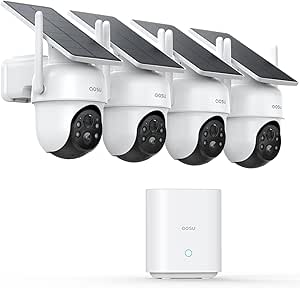 | Best for Alexa, Google Assistant, and SmartThings | Camera count: 4 | Resolution: 2K (3MP) | Storage: 32GB local storage | VIEW ON AMAZON | See Our Full Breakdown |
| VTimes Wireless Outdoor Security Camera System with 10.1-Inch Monitor |  | Best for a Dedicated Local Monitor | Channels: 4 | Video resolution: HD | Monitor: 10.1-inch IPS display | VIEW ON AMAZON | See Our Full Breakdown |
| ELYSOO 4-Camera 2K/4MP Solar Security Camera System |  | Best Solar Pick for Larger Local Storage | Cameras: 4 | Video resolution: 2K/4MP | Wi-Fi: 2.4GHz and 5GHz | VIEW ON AMAZON | See Our Full Breakdown |
| ANNKE 16-Channel 4K PoE Security Camera System with 4TB HDD |  | Best for High-Frame-Rate 4K Coverage | Channels: 16 | Included cameras: 8 | Camera and video resolution: 8MP cameras; 4K (3840 × 2160) | VIEW ON AMAZON | See Our Full Breakdown |
| ANNKE 3K Lite 8-Channel Wired Security Camera System with 8 Cameras and 1TB HDD |  | Best for Continuous Wired Coverage | Camera count: 8 | DVR channels: 8 | Included storage: 1TB HDD | VIEW ON AMAZON | See Our Full Breakdown |
| SimpliSafe 7-Piece Wireless Outdoor Camera Home Security System – Optional 24/7 Professional Monitoring – No Contract – Alexa & Google Assistant Compatible |  | Best for Monitored Home Protection | Bundle size: 7 pieces | Outdoor camera resolution: 1080p HD | Field of view: 140 degrees | VIEW ON AMAZON | See Our Full Breakdown |
| Aqara Y100 Wireless Home Security Kit with 2K Camera Hub and 3 Sensors |  | Best for Smart-Home Integration | Included components: Camera Hub G3 and 3 smart sensors | Video resolution: 2560 × 1440 (2K) | Connectivity: Wireless | VIEW ON AMAZON | See Our Full Breakdown |
| security camera system with smart home integration | Video resolution | Storage | Night vision |
|---|---|---|---|
| eufy Security NVR System E50 | 4K PTZ lens; fixed 2K lens | 4TB HDD, expandable to 16TB | — |
| aosu D1 Classic 4-Camera Wirel | — | 32GB local storage | Full-color and infrared |
| VTimes Wireless Outdoor Securi | HD | SD card up to 128GB (not included); cloud storage available | — |
| ELYSOO 4-Camera 2K/4MP Solar S | 2K/4MP | — | Color night vision |
| ANNKE 16-Channel 4K PoE Securi | — | 4TB HDD; maximum capacity 16TB | Color and infrared; up to 100 feet |
| ANNKE 3K Lite 8-Channel Wired | 1080p | — | — |
| SimpliSafe 7-Piece Wireless Ou | — | — | Color |
| Aqara Y100 Wireless Home Secur | 2560 × 1440 (2K) | — | — |
More Details on Our Top Picks
eufy Security NVR System E50, 8-Cam Kit, 4K Dual-Lens Bullet-PTZ, 4TB HDD
The E50 is my pick for buyers who want a wired camera system that does more than record fixed views. Each camera pairs a 2K wide-angle lens with a 4K PTZ lens, so a broad scene can stay in view while the second lens follows activity. Its local facial recognition, smart search, and cross-camera tracking add useful smart-home-style control without sending AI processing to the cloud or requiring a subscription. Compared with the ANNKE 16-Channel 4K, the E50 emphasizes dual-lens tracking and on-device intelligence, while ANNKE offers 30 fps and color night vision. The E50’s 4TB drive can expand to 16TB, but setup needs PoE networking, and its 15 fps recording is less smooth than ANNKE’s. It suits privacy-minded owners willing to run cables.
Pros:- Local facial recognition, smart search, and cross-camera tracking avoid subscription-based cloud processing.
- Dual lenses combine a fixed wide view with 4K PTZ tracking.
- Includes a 4TB HDD, expandable to 16TB, for continuous recording.
- Supports up to 16 channels, leaving room to add cameras.
Cons:- PoE installation requires wired Ethernet and a PoE switch.
- 15 fps footage may look less smooth than the ANNKE system’s 30 fps recording.
Best for: Homeowners who want local AI search and tracking across a wired, multi-camera property without cloud subscriptions.
Not ideal for: Renters or buyers who cannot run PoE cabling, and anyone prioritizing smoother 30 fps footage over on-device AI features.
- Included cameras:8 hybrid bullet-PTZ dual-lens cameras
- Maximum channels:16
- Video resolution:4K PTZ lens; fixed 2K lens
- Fixed-lens viewing angle:115 degrees
- PTZ zoom:5× digital
- Storage:4TB HDD, expandable to 16TB
- Connection and power:Wired Ethernet via PoE
- Frame rate:15 fps
- Supported platforms:Android, iOS, Web, Windows, macOS
Our verdict“Choose the E50 if local AI and dual-lens tracking matter more to you than wireless installation or higher frame rates.”
aosu D1 Classic 4-Camera Wireless Outdoor Security Camera Kit with Solar Power
The aosu D1 is the clearest fit here for buyers who want outdoor cameras to join a named smart-home ecosystem: it lists compatibility with Alexa, Google Assistant, and SmartThings. Four wireless 2K cameras pan, tilt, and track movement, while integrated solar panels can reduce routine charging when the cameras receive direct sun. Event clips save to the included 32GB aosuBase, so ongoing use does not depend on a subscription. Compared with the ELYSOO 4-Camera 2K/4MP Solar System, aosu names more smart-home platforms, while ELYSOO includes twice the local storage and supports dual-band Wi-Fi. The tradeoff is dependence on sunlight and a base that connects to the router by Ethernet; live multi-camera viewing is app-only, and the cameras rely on the included base. It makes sense for sunny properties already using compatible assistants.
Pros:- Lists compatibility with Alexa, Google Assistant, and SmartThings.
- Integrated solar panels can reduce charging work in direct sunlight.
- Includes 32GB local storage for event-based recording without a subscription.
- Pan, tilt, motion tracking, and color or infrared night vision cover varied outdoor scenes.
Cons:- Solar charging depends on receiving about three hours of direct sunlight daily.
- The base connects to the router by Ethernet, and the cameras are designed to work with that base.
- Multi-camera live viewing is available only in the app; the base has no HDMI or TV output.
Best for: Households using Alexa, Google Assistant, or SmartThings that want four outdoor cameras with solar-assisted charging and local event storage.
Not ideal for: Homes with shaded camera locations, or buyers who need a TV-connected monitor or cameras that work independently of the included base.
- Camera count:4
- Resolution:2K (3MP)
- Storage:32GB local storage
- Recording:Event-based; loop recording holds about 120 days
- Power:Integrated solar panels; about 3 hours of direct sunlight daily helps maintain charge
- Coverage and zoom:360° field of view; 105° viewing angle; 6× digital zoom
- Night vision:Full-color and infrared
- Weather resistance:IP65
- Smart-home compatibility:Amazon Alexa, Google Assistant, SmartThings
Our verdict“Pick the aosu D1 if assistant compatibility and solar-assisted wireless coverage outweigh the need for a dedicated display or flexible camera pairing.”
VTimes Wireless Outdoor Security Camera System with 10.1-Inch Monitor
VTimes stands apart from the app-centered kits with its included 10.1-inch IPS monitor and local viewing that works without Wi-Fi. That can suit a household member who wants to check cameras on a screen without relying on a phone or internet connection. When Wi-Fi is available, the system also offers remote app access, AI human detection, and two-way audio. Compared with the aosu D1 Classic, VTimes gives you a dedicated display rather than solar-powered cameras and named smart-home assistant compatibility; compared with the ANNKE 16-Channel 4K, its HD video and four channels are a more modest setup. Its cameras need continuous wired power, and storage requires a separately supplied SD card or optional cloud service. Remote phone viewing also depends on Wi-Fi and the powered monitor, which narrows its fit for always-on smart-home access.
Pros:- Includes a 10.1-inch IPS monitor for direct local viewing.
- Local viewing works without Wi-Fi.
- AI human detection can filter alerts triggered by non-human movement.
- Supports two-way audio and continuous recording.
Cons:- Cameras require continuous wired power, limiting placement options.
- SD card storage is not included; cloud storage is optional.
- Remote app access requires Wi-Fi and the monitor to remain powered on.
Best for: Households that want a shared, dedicated screen for local camera viewing and can provide continuous power to each camera.
Not ideal for: Buyers seeking 4K detail, solar-powered flexibility, broad assistant integration, or remote phone access independent of the monitor.
- Channels:4
- Video resolution:HD
- Monitor:10.1-inch IPS display
- Frame rate:30 fps
- Connectivity:2.4GHz FHSS; app access over 2.4GHz or 5GHz Wi-Fi
- Storage:SD card up to 128GB (not included); cloud storage available
- Camera power:Continuous wired power
- Night vision range:5 meters
- Weather resistance:IPX6
Our verdict“Choose VTimes if a dedicated local screen matters more than 4K footage, cordless camera placement, or independent remote access.”
ELYSOO 4-Camera 2K/4MP Solar Security Camera System
ELYSOO is a practical choice for buyers who want solar-powered cameras and more included local capacity than the aosu kit provides. Its four 2K/4MP cameras come with 64GB storage, and the system supports cards up to 256GB; loop recording means footage can be retained locally without a required monthly plan. A 350° pan and 90° tilt range lets each camera cover more than one fixed direction, while human detection and customizable alerts help focus notifications. Compared with the aosu D1 Classic, ELYSOO doubles the included storage and adds 5GHz Wi-Fi, but the supplied data does not list the same named Alexa, Google Assistant, and SmartThings compatibility. Solar operation is still conditional: the stated performance calls for about two hours of sunlight daily. This is a stronger match for storage-minded buyers than for anyone prioritizing explicit smart-assistant control.
Pros:- Includes 64GB local storage and supports expansion up to 256GB.
- Solar-powered rechargeable cameras reduce the need for routine charging.
- 350° pan and 90° tilt provide broad adjustable coverage.
- Dual-band Wi-Fi, human detection, and customizable alerts support flexible monitoring.
Cons:- Stated solar operation depends on about two hours of sunlight per day.
- Cloud storage is optional and may involve an additional cost.
- Named smart-home assistant compatibility is not specified in the supplied product details.
Best for: Homeowners who want four solar-powered cameras, included local storage, and broad pan-and-tilt coverage without required cloud storage.
Not ideal for: Buyers who need clearly specified Alexa, Google Assistant, or SmartThings integration, or whose camera locations receive little sunlight.
- Cameras:4
- Video resolution:2K/4MP
- Wi-Fi:2.4GHz and 5GHz
- Included storage:64GB; supports up to 256GB
- Power:Solar-powered rechargeable battery
- Pan and tilt:350° pan, 90° tilt
- Night vision:Color night vision
- Detection:PIR human detection
- Weather resistance and operating range:IP65; -4°F to 122°F
Our verdict“Choose ELYSOO for solar coverage and larger included local storage, but look elsewhere if named smart-assistant integration is a must.”
ANNKE 16-Channel 4K PoE Security Camera System with 4TB HDD
For buyers who value detailed, continuous footage across a larger wired property, the ANNKE offers a straightforward case: eight 8MP cameras, a 16-channel NVR, and a 4TB drive support a substantial recording setup with room to expand. Its 30 fps 4K video is a practical advantage over the eufy E50’s 15 fps, particularly when reviewing movement. AI detection identifies people and vehicles, while color and infrared night vision and built-in one-way audio add useful context to recordings. Remote app access provides a smart-home connection, though the supplied details do not list Alexa, Google Assistant, or SmartThings support. Unlike the wireless solar ELYSOO system, ANNKE needs PoE cabling and a corded power setup, but it is better suited to continuous recording than event-focused, battery-powered cameras. Its 83° field of view is relatively narrow, so placement matters.
Pros:- Eight 8MP cameras provide 4K recording at 30 fps.
- Includes a 4TB HDD and supports expansion up to 16TB.
- AI detection identifies people and vehicles, helping sort relevant events.
- Color and infrared night vision reach up to 100 feet.
Cons:- PoE wiring and corded power make installation less flexible than the aosu or ELYSOO solar kits.
- The 83° field of view is narrower than broad-coverage pan-and-tilt cameras.
- Audio recording is one-way, and named smart-assistant compatibility is not specified.
Best for: Property owners who can install PoE cabling and want 4K continuous recording, 30 fps footage, and room to grow to 16 channels.
Not ideal for: Renters, buyers seeking solar-powered wireless installation, or households requiring explicitly listed Alexa, Google Assistant, or SmartThings integration.
- Channels:16
- Included cameras:8
- Camera and video resolution:8MP cameras; 4K (3840 × 2160)
- Storage:4TB HDD; maximum capacity 16TB
- Connection and power:Wired Ethernet via PoE; corded electric
- Frame rate:30 fps
- Field of view:83°
- Night vision:Color and infrared; up to 100 feet
- Recording modes and audio:Continuous or motion-triggered recording; one-way audio recording
Our verdict“Pick ANNKE if wired 4K recording at 30 fps and expandable NVR capacity matter more than solar placement or explicit assistant support.”
ANNKE 3K Lite 8-Channel Wired Security Camera System with 8 Cameras and 1TB HDD
I’d choose the ANNKE 3K Lite when uninterrupted recording across a larger property matters more than wireless convenience. Eight cameras, an included 1TB hard drive, and 24/7 recording provide a ready-made surveillance foundation, while human and vehicle detection can make alerts more relevant than motion-only notifications. Its IP67 cameras suit outdoor placement, and infrared or color night vision gives you options for low-light scenes. Compared with the Aqara Y100, ANNKE is built around dedicated multi-camera recording rather than a smart-home hub and sensors; Aqara offers broader smart-home integration but fewer cameras in its kit. The tradeoff is installation: this is a wired, corded system, and recording runs at 15fps despite 30fps live viewing. I’d pick it for coverage and recording continuity, not for the most connected smart-home experience.
Pros:- Eight cameras and a 1TB hard drive are included for multi-area coverage and local recording.
- Human and vehicle detection with smart search can help filter and review relevant events.
- IP67 weather resistance and infrared or full-color night vision support outdoor monitoring.
- Supports continuous, event-based, and scheduled recording.
Cons:- Wired cameras and corded DVR require more installation planning than wireless kits such as the Aqara Y100.
- Recording is limited to 1080p at 15fps, even though live viewing supports 30fps.
- Its supplied details emphasize remote phone alerts rather than broad smart-home integrations.
Best for: Homeowners who want eight outdoor-capable cameras, continuous local recording, and person or vehicle alerts from a dedicated DVR system.
Not ideal for: Renters or smart-home-first buyers who want quick wireless setup, broad assistant integrations, or higher recording frame rates.
- Camera count:8
- DVR channels:8
- Included storage:1TB HDD
- Maximum supported HDD:10TB
- Video resolution:1080p
- Recording rate:1080p at 15fps
- Night vision range:Up to 100 feet infrared; up to 66 feet full color
- Weather resistance:IP67
Our verdict“Choose the ANNKE if you prioritize eight-camera wired coverage and continuous DVR recording over easy installation and richer smart-home control.”
SimpliSafe 7-Piece Wireless Outdoor Camera Home Security System – Optional 24/7 Professional Monitoring – No Contract – Alexa & Google Assistant Compatible
The SimpliSafe 7-piece system is the strongest fit here for buyers who want cameras tied to a wider home-security setup, not just a recording system. The bundle pairs outdoor cameras with entry sensors, a base station, keypad, and key fob, with optional 24/7 professional monitoring and Alexa or Google Assistant compatibility. Its wireless installation can be simpler than the wired ANNKE 3K Lite, while the 140-degree field of view covers a broad outdoor area from each camera. Color night vision and AI-driven threat detection add useful context to alerts, though access to full AI features depends on a paid monitoring plan. Active Guard outdoor protection also requires wired camera power, which narrows the appeal for buyers expecting a fully battery-operated setup. I’d favor SimpliSafe for monitored response and whole-home sensors; the Aqara Y100 is more compelling for smart-home platform flexibility and local camera storage.
Pros:- Combines outdoor cameras with entry sensors, a base station, keypad, and key fob.
- Optional 24/7 professional monitoring is available without a long-term contract.
- Alexa and Google Assistant compatibility adds voice-assistant control.
- Wireless setup, 140-degree camera view, and color night vision support flexible outdoor placement.
Cons:- Full AI features require a paid monitoring plan.
- Active Guard outdoor protection requires the camera to be wired.
- The system is sold only for use in the United States.
Best for: U.S. households that want a DIY-installed camera and entry-sensor bundle with the option of professional monitoring and Alexa or Google Assistant support.
Not ideal for: Buyers outside the United States, or those who want all AI features without a monitoring plan or need Active Guard with battery-only camera placement.
- Bundle size:7 pieces
- Outdoor camera resolution:1080p HD
- Field of view:140 degrees
- Night vision:Color
- Base station battery life:Up to 24 hours
- Siren volume:100 dB
- Key fob range:30 feet
- Compatibility:Alexa and Google Assistant
Our verdict“Pick SimpliSafe if you want cameras and entry sensors backed by optional professional monitoring, and can accept plan-dependent AI features.”
Aqara Y100 Wireless Home Security Kit with 2K Camera Hub and 3 Sensors
For a buyer choosing primarily on smart-home integration, I’d put the Aqara Y100 ahead of the camera-heavy systems. Its Camera Hub G3 records at 2K resolution and works with Apple Home, Alexa, Google Home, and third-party devices; Matter bridging and HomeKit Secure Video give it a broader connected-home role than the ANNKE 3K Lite, which centers on a dedicated DVR. Three included sensors can trigger household automations, and local microSD recording offers an alternative to relying only on cloud storage. The tradeoff is scale: this kit has one camera hub rather than ANNKE’s eight cameras or SimpliSafe’s monitored security bundle. The camera also needs USB-C power, and the adapter and microSD card are not included. Some event tagging and sensor-triggered recording require Aqara’s app, so this suits buyers willing to configure a smart-home ecosystem.
Pros:- 2K camera hub and three sensors bring video monitoring and household automation into one kit.
- Supports Apple Home, Alexa, Google Home, HomeKit Secure Video, and Matter bridging.
- Local microSD recording and up to seven days of included cloud storage offer recording choices.
- Battery-powered sensors are rated for up to five years of battery life.
Cons:- USB-C power adapter and microSD card are not included.
- Some event tagging and sensor-triggered recording features require the Aqara Home app.
- One camera hub provides less camera coverage than the eight-camera ANNKE system or the SimpliSafe security bundle.
Best for: Smart-home owners, especially Apple Home or Matter users, who want one 2K camera hub to connect sensors and trigger automations across compatible devices.
Not ideal for: Buyers who need many cameras for property-wide coverage, a turnkey wired DVR, or sensor-triggered recording without using the Aqara Home app.
- Included components:Camera Hub G3 and 3 smart sensors
- Video resolution:2560 × 1440 (2K)
- Connectivity:Wireless
- Smart-home compatibility:Apple Home, Alexa, Google Home, and third-party devices
- Hub capacity:Up to 128 Aqara Zigbee child devices
- Sensor battery life:Up to 5 years
- Local storage:microSD card supported; card not included
- Cloud storage:Up to 7 days included
Our verdict“Choose the Aqara Y100 if smart-home compatibility and sensor-based automations matter more than multi-camera coverage or a dedicated security monitoring service.”
How We Picked
I compared the eight systems by how well they balance camera coverage, recording approach, installation demands, and smart-home usefulness. I also looked at the practical differences between wired PoE or DVR kits, wireless systems, solar-powered cameras, and kits that link video with sensors or professional monitoring. A product’s stated compatibility matters only if it supports the features a buyer wants, so I treated broad smart-home claims cautiously and prioritized clear distinctions in the listed system design.
The ranking favors systems that offer a convincing mix of security coverage and useful integration, rather than treating resolution alone as the deciding factor. That puts the eufy NVR kit first for its combination of multi-camera coverage and local storage, while SimpliSafe ranks for buyers who value a wider monitored-security setup and Aqara for a smaller sensor-led smart-home system. ANNKE’s 16-channel kit earns a place for expandable wired coverage; the other ANNKE model and the solar kits suit more specific installation or coverage needs. VTimes’ included monitor is useful for direct viewing, though a dedicated display is not the same as broad smart-home integration.
| security camera system with smart home integration | Night vision |
|---|---|
| eufy Security NVR System E50 | — |
| aosu D1 Classic 4-Camera Wirel | Full-color and infrared |
| VTimes Wireless Outdoor Securi | — |
| ELYSOO 4-Camera 2K/4MP Solar S | Color night vision |
| ANNKE 16-Channel 4K PoE Securi | Color and infrared; up to 100 feet |
| ANNKE 3K Lite 8-Channel Wired | — |
| SimpliSafe 7-Piece Wireless Ou | Color |
| Aqara Y100 Wireless Home Secur | — |
Factors to Consider When Choosing Security Camera System With Smart Home Integration
Before choosing a system, decide how you want it to fit into daily home routines. The right match depends on more than camera count: power, recording, integration depth, and future expansion can shape whether the system remains convenient after installation.
Check what smart-home integration actually controls
Compatibility labels can hide meaningful differences: one system may let you view a camera feed by voice, while another may connect alerts or sensors to broader routines. List the actions you expect, such as checking a live feed, receiving motion alerts, or linking a sensor event with another device. Then verify those exact actions for your preferred ecosystem and devices. Do not assume that a camera works with every feature of a platform just because the platform name appears in a listing. If you mainly want a camera system with dependable recording, a recorder-led setup may matter more than voice control. If you want security events to trigger other devices, prioritize a system whose hub or service supports those links.
Choose recording and service needs before camera resolution
Local storage and professional monitoring address different needs. A recorder with a hard drive can keep footage on-site, while a monitored service can add a human response layer depending on the plan and setup. Check whether remote viewing, alerts, and saved clips rely on an account or ongoing service before committing. Also think about who will review footage and how long it needs to remain available; capacity and camera count affect how quickly storage fills. A higher-resolution camera can capture more detail, but it can also use more storage and network capacity. Match image quality to the distances and areas you need to cover rather than choosing the largest number by default.
Plan power, network, and installation as one decision
Wired PoE systems can deliver a stable connection and power over one cable, but they require cable routes between cameras and the recorder or network equipment. Wireless systems avoid those runs, yet still depend on suitable Wi-Fi coverage and a plan for recharging or solar exposure. Solar panels reduce routine charging only when their mounting location gets enough usable daylight. Before ordering, map camera positions and check signal strength, access to power, and whether the mounting surface can support the installation. A common mistake is selecting a camera location for its view without checking how it will be powered or connected. Installation effort is part of the system’s real cost in time and flexibility, even when no service fee applies.
Buy coverage for the property, not a camera-count headline
More cameras do not automatically produce better security; placement and overlap matter. Start with entry points, driveways, and other areas where a clear view could answer a specific question. Consider whether you need wide views, close detail, or a camera that can move to follow activity, since different designs handle those jobs differently. Avoid pointing cameras through windows or toward strong light sources where glare can reduce useful footage. A kit with spare channels or room for additional cameras may suit a growing property, while a smaller system can be simpler for a flat or limited set of entry points. Revisit coverage after installation so blind spots do not persist just because every included camera has been mounted.
Separate a camera display from smart-home control
An included monitor can make it quick to check cameras without opening a phone app, which is useful for a household that wants a fixed viewing point. A hub, by contrast, may connect cameras with sensors and other smart-home devices. These are not interchangeable benefits. Decide whether the people in your home are more likely to use a dedicated screen, phone notifications, voice access, or automated sensor routines. Check how many household members can access the system and whether they can manage alerts independently. A system can be easy to view yet limited as a smart-home controller, or rich in connected-device features without offering a dedicated display.
Frequently Asked Questions
Will any of these systems work with both Alexa and Google Assistant?
No single compatibility claim should be taken to mean every camera, alert, or control works across both platforms. The listed SimpliSafe system specifically names Alexa and Google Assistant compatibility, while the other products have different integration approaches or details that need checking. Confirm the exact functions supported, such as voice live view or arming controls, before purchase. Also check whether those functions need an account, hub, or service plan. If you rely on one ecosystem, choose based on verified actions within that ecosystem rather than the general phrase “smart home compatible.”
Should I choose local recording or professional monitoring?
Choose local recording when keeping footage on a recorder at home is your main priority and you are comfortable reviewing alerts yourself. Professional monitoring makes more sense if you want a security service to be part of the response process, subject to the service terms and any plan requirements. These options are not direct substitutes: stored video helps you review an event, while monitoring may add a response layer. Some households prefer one, some want both, and others may not need either feature. Check service conditions and what remains available without a subscription before deciding.
Are solar-powered cameras a good choice for a shaded yard?
They may be less convenient in a shaded location because solar charging depends on the panel receiving usable daylight. Before choosing a solar kit, check whether the panel can be mounted in a sunnier spot while the camera still covers the required area. A longer cable between panel and camera may help in some installations, but confirm what the kit supports. If the mounting area stays shaded or the camera must operate through long periods of poor light, compare a wired system or plan for manual charging. Solar can reduce routine power upkeep, but it does not remove the need to plan placement.
Is a wired PoE system worth the installation effort for a home?
A PoE setup can be a good fit when you want fixed cameras connected to a recorder and can route cables to their locations. The wired connection avoids relying on each camera’s Wi-Fi link and can suit larger properties or permanent coverage plans. The tradeoff is installation: cable paths, drilling, and recorder placement need attention before buying. If you rent, expect to move cameras, or do not want cable work, a wireless system may be easier to live with. Compare the work required for the whole property, not just the number of cameras in the kit.
Do I need a dedicated monitor if I already use a phone for smart-home control?
Not necessarily. A phone is more flexible for remote checks and alerts, while a dedicated monitor can make live viewing quicker for people who prefer a fixed screen at home. A monitor does not automatically add smart-home routines, sensor links, or monitoring features. Think about who needs to check the cameras and where they will be when doing it. If everyone is comfortable with an app, a monitor may add little; if a household wants an always-available local view, it can be a useful convenience. Keep display preference separate from compatibility and recording decisions.
Conclusion
My best overall pick is the eufy Security NVR System E50 for buyers seeking extensive camera coverage with local recording. For best value in a wired, expandable setup, I would look at the ANNKE 16-channel 4K PoE system, provided cable installation suits the property; for a premium-leaning camera-first build with room to grow, it is also the strongest fit here. Best for beginners is the aosu solar kit for buyers who want to avoid running outdoor power cables, as long as the locations receive suitable sunlight. Choose SimpliSafe if a broader security service and named Alexa and Google Assistant compatibility matter more than a recorder-centered setup. For specific needs, pick Aqara for a compact camera-and-sensor system, VTimes for an included monitor, ELYSOO for a solar 2K/4MP setup, or ANNKE 3K Lite for a wired eight-camera DVR kit. The best choice is the one whose installation, recording, and smart-home functions match how you plan to use it.