When searching for a router with builtin vpn server, the GL.iNet GL-MT3000 Beryl AX stands out as the best overall choice for most users, offering a perfect balance of Wi-Fi 6 speed, OpenWrt flexibility, and robust security without requiring a subscription. For those prioritizing raw performance and future-proofing, the GL.iNet GL-BE9300 Flint 3 delivers Wi-Fi 7 speeds and multiple 2.5G ports, while the TP-Link ER605 remains the go-to for small offices needing stable wired connections. The main tradeoff in this category lies between ease of use and configurability; consumer routers offer simplicity but limited VPN protocols, whereas prosumer and enterprise models provide advanced OpenVPN or WireGuard support but demand more technical knowledge. This guide breaks down the specific strengths and weaknesses of each model to help you select the right hardware for your security needs.

Get privacy and security gear delivered free with Prime
- Fast, free delivery on millions of items
- Prime Video, Amazon Music and more included
- Member-only deals all year
Key Takeaways
- GL.iNet dominates the mid-range market by offering built-in WireGuard and OpenVPN servers with user-friendly interfaces, removing the need for complex manual configuration common in stock firmware.
- Enterprise-grade routers like the TP-Link Omada series offer superior stability for wired VPN connections but lack integrated Wi-Fi, requiring a separate access point for wireless coverage.
- Travel routers such as the GL.iNet Beryl AX and Slate 7 are uniquely suited for digital nomads because they can act as both a VPN client and server, securing connections on public networks while allowing remote access to home devices.
- Consumer-focused routers from ASUS and NETGEAR prioritize Wi-Fi performance and ease of setup over advanced VPN server capabilities, often limiting users to proprietary protocols or basic PPTP/L2TP support.
- The emergence of Wi-Fi 7 routers like the GL.iNet Flint 3 indicates that high-speed wired backhauls (2.5G and 10G ports) are becoming the new standard for handling VPN encryption overhead without bottlenecking internet speeds.
| GL.iNet GL-MT6000 Flint 2 Wi-Fi 6 Gaming Router |  | Best Overall for Power Users | Wi-Fi Standard: Wi-Fi 6 (802.11ax) | Max Speed: 6 Gbps | Ports: 2 x 2.5G LAN/WAN, 4 x 1G LAN | VIEW ON AMAZON | See Our Full Breakdown |
| NETGEAR Nighthawk WiFi 6 Router (RAX36) |  | Best for Ease of Use | Model: RAX36 | WiFi Standard: WiFi 6 (802.11ax) | Max Speed: 3 Gbps (AX3000) | VIEW ON AMAZON | See Our Full Breakdown |
| GL.iNet Brume 2 Wired VPN Security Gateway |  | Best for Wired Network Security | Model: GL-MT2500A (Brume 2) | Connectivity: Wired Ethernet (2.5G WAN, 1G LAN, USB 3.0) | VPN Support: OpenVPN, WireGuard | VIEW ON AMAZON | See Our Full Breakdown |
| GL.iNet GL-MT3000 Beryl AX Wi-Fi 6 Travel Router | 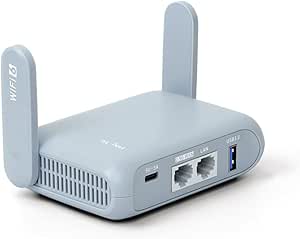 | Best for Travelers | Wi-Fi Generation: Wi-Fi 6 | Max Speed: 3000 Mbps (AX3000) | Ports: 1 x 2.5G WAN, 1 x 1G LAN, 1 x USB 3.0 | VIEW ON AMAZON | See Our Full Breakdown |
| ASUS RT-AX3000S Dual-Band WiFi 6 Router |  | Best for Mesh Expansion | Model: RT-AX3000S | WiFi Standard: WiFi 6 (802.11ax) | Max Data Rate: 3000 Mbps | VIEW ON AMAZON | See Our Full Breakdown |
| GL.iNet GL-SFT1200 Opal Travel Router, AC1200 Dual-Band Wi-Fi | 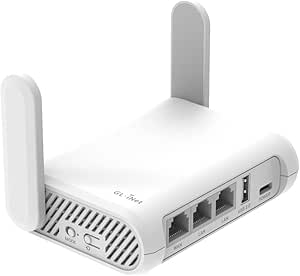 | Best for Travelers | Wi-Fi Standard: Wi-Fi 5 (802.11ac) | Speed: AC1200 (300 Mbps 2.4GHz + 867 Mbps 5GHz) | Ports: 2 Gigabit LAN, 1 Gigabit WAN | VIEW ON AMAZON | See Our Full Breakdown |
| TP-Link Omada ER8411 Enterprise 10G Wired VPN Router |  | Best for Enterprise Multi-WAN | WAN/LAN Ports: 1 10G SFP+ WAN/LAN, 1 10G SFP+ WAN, 1 Gigabit SFP WAN/LAN, 8 Gigabit RJ45 WAN/LAN | USB Ports: 2 USB 3.0 | Max Concurrent Sessions: 2,300,000 | VIEW ON AMAZON | See Our Full Breakdown |
| TP-Link ER605, Wired Gigabit VPN Router |  | Best Value Wired VPN | Ports: 1 Gigabit WAN, 2 Gigabit WAN/LAN, 2 Gigabit LAN | USB Port: 1 USB 2.0 for LTE backup | VPN Connections: 20x IPsec, 16x OpenVPN, 16x L2TP, 16x PPTP | VIEW ON AMAZON | See Our Full Breakdown |
| GL.iNet GL-BE9300 Flint 3 Tri-Band Wi-Fi 7 Router 5 x 2.5G VPN Router |  | Best Premium Home Router | Wi-Fi Standard: Wi-Fi 7 (802.11be) | Speed: Up to 9 Gbps combined | Ports: 5 x 2.5G Ethernet | VIEW ON AMAZON | See Our Full Breakdown |
| ASUS RT-AX1800S Dual Band WiFi 6 Extendable Router |  | Best for Family Ease of Use | Wi-Fi Standard: Wi-Fi 6 (802.11ax) | Speed: AX1800 (574 Mbps 2.4GHz + 1201 Mbps 5GHz) | Ports: 1 Gigabit WAN, 4 Gigabit LAN | VIEW ON AMAZON | See Our Full Breakdown |
| GL.iNet GL-BE3600 Slate 7 Wi-Fi 7 Travel Router with Touchscreen and 2.5G Ports |  | Best Premium Travel Router | Model: GL-BE3600 (Slate 7) | Wi-Fi Standard: Wi-Fi 7 (802.11be) | Wireless Speed: 688 Mbps (2.4GHz) + 2882 Mbps (5GHz) | VIEW ON AMAZON | See Our Full Breakdown |
| TP-Link Omada ER707-M2 Multi-Gigabit VPN Router |  | Best for Small Business & Wired Networks | Brand: TP-Link | Model: ER707-M2 | WAN/LAN ports: 2x 2.5G, 4x Gigabit, 1x SFP | VIEW ON AMAZON | See Our Full Breakdown |
| router with builtin vpn server | Ports | RAM |
|---|---|---|
| GL.iNet GL-MT6000 Flint 2 Wi-F | 2 x 2.5G LAN/WAN, 4 x 1G LAN | 1 GB DDR4 |
| NETGEAR Nighthawk WiFi 6 Route | 4 x 1G Ethernet, 1 x USB 3.0 | — |
| GL.iNet Brume 2 Wired VPN Secu | — | 8 GB |
| GL.iNet GL-MT3000 Beryl AX Wi- | 1 x 2.5G WAN, 1 x 1G LAN, 1 x USB 3.0 | — |
| ASUS RT-AX3000S Dual-Band WiFi | — | — |
| GL.iNet GL-SFT1200 Opal Travel | 2 Gigabit LAN, 1 Gigabit WAN | 128 MB |
| TP-Link Omada ER8411 Enterpris | — | 1 GB |
| TP-Link ER605 | 1 Gigabit WAN, 2 Gigabit WAN/LAN, 2 Gigabit LAN | — |
| GL.iNet GL-BE9300 Flint 3 Tri- | 5 x 2.5G Ethernet | 1 GB DDR4 |
| ASUS RT-AX1800S Dual Band WiFi | 1 Gigabit WAN, 4 Gigabit LAN | 256 MB |
| GL.iNet GL-BE3600 Slate 7 Wi-F | 2x 2.5G Ethernet, 1x USB 3.0 | 2 GB |
| TP-Link Omada ER707-M2 Multi-G | — | — |
More Details on Our Top Picks
GL.iNet GL-MT6000 Flint 2 Wi-Fi 6 Gaming Router
This router stands out as the most capable all-around choice for serious home networkers. Unlike the NETGEAR Nighthawk RAX36, which locks users into a proprietary interface, the Flint 2 ships with OpenWrt, offering unparalleled control over traffic shaping, DNS, and VPN routing. Its dual 2.5G ports are a massive advantage for multi-gig internet plans, whereas most competitors in this bracket stick to 1G. The pre-installed AdGuard Home provides network-wide ad blocking without needing extra hardware, a feature the ASUS RT-AX3000S lacks natively. However, the complex OpenWrt interface can be intimidating for beginners who just want a plug-and-play setup. While the GL.iNet Beryl AX is better for travel, the Flint 2’s raw throughput and customization make it the superior choice for a fixed home location.Pros:- Dual 2.5G ports support multi-gigabit internet plans
- Pre-installed OpenWrt allows extensive customization
- Built-in AdGuard Home blocks ads network-wide
- High-speed WireGuard VPN performance up to 900Mbps
Cons:- OpenWrt interface can be difficult for beginners
- Requires firmware updates for optimal performance
- Lacks the polished consumer UI of NETGEAR or ASUS
Best for: Tech-savvy users with multi-gigabit internet who want full control over their network traffic and ad-blocking.
Not ideal for: Beginners who find command-line interfaces or complex configuration menus overwhelming.
- Wi-Fi Standard:Wi-Fi 6 (802.11ax)
- Max Speed:6 Gbps
- Ports:2 x 2.5G LAN/WAN, 4 x 1G LAN
- RAM:1 GB DDR4
- Storage:8 GB eMMC
- Operating System:OpenWrt (Linux)
- Security Protocol:WPA3
- Frequency Band:Dual-Band (2.4 GHz / 5 GHz)
Our verdict“The best choice for power users who want maximum performance and customization without vendor lock-in.”
NETGEAR Nighthawk WiFi 6 Router (RAX36)
If you prioritize a simple setup over endless customization, the Nighthawk RAX36 is a strong contender. Its 1.7 GHz quad-core processor handles multiple streams smoothly, comparable to the ASUS RT-AX3000S in raw speed, but with a more intuitive app-based management system. The 2,000 sq. ft. coverage is sufficient for most apartments or small homes, though the internal antennas limit signal directionality compared to external-antenna models. Unlike the GL.iNet Flint 2, you cannot install third-party plugins or tweak low-level network settings easily. It requires a separate cable modem, which adds to the initial cost and clutter. This router is ideal for those who want reliable WiFi 6 speeds without the steep learning curve of Linux-based firmware.Pros:- User-friendly app and web interface
- Strong coverage for single-floor homes
- Reliable performance for streaming and gaming
- Includes USB 3.0 port for basic file sharing
Cons:- Requires a separate cable modem
- Internal antennas limit coverage flexibility
- Limited customization compared to OpenWrt routers
Best for: Average consumers who want reliable WiFi 6 performance with a user-friendly app interface.
Not ideal for: Users who need multi-gigabit ports or advanced network customization via OpenWrt.
- Model:RAX36
- WiFi Standard:WiFi 6 (802.11ax)
- Max Speed:3 Gbps (AX3000)
- Coverage Area:2,000 sq. ft.
- Device Capacity:Up to 25 devices
- Processor:1.7 GHz Quad-Core
- Ports:4 x 1G Ethernet, 1 x USB 3.0
- Security Protocol:WPA3
Our verdict“A solid, easy-to-use router for standard households that don’t need advanced networking features.”
GL.iNet Brume 2 Wired VPN Security Gateway
This device is unique because it is wired-only, making it an excellent security gateway for homes that already have a WiFi access point. Unlike the GL.iNet Flint 2, which tries to do everything, the Brume 2 focuses strictly on routing and VPN termination. Its 2.5G WAN port ensures you won’t bottleneck high-speed fiber connections, a feature lacking in the NETGEAR RAX36. The 8GB of EMMC storage allows for local file sharing and Docker containers, offering utility beyond just internet access. However, the lack of built-in WiFi means you must pair it with a separate access point, increasing complexity and cost. It is best suited for users who want to segment their network or run a dedicated VPN server without the overhead of wireless management.Pros:- Dedicated wired security gateway architecture
- 2.5G WAN port supports multi-gig internet
- Simultaneous VPN server and client modes
- 8GB storage for local services and files
Cons:- No built-in WiFi functionality
- Requires separate access point for wireless coverage
- Advanced configuration requires technical knowledge
Best for: Users who already have a WiFi mesh system and want a dedicated, high-speed wired security gateway.
Not ideal for: Those looking for an all-in-one wireless router solution without extra hardware.
- Model:GL-MT2500A (Brume 2)
- Connectivity:Wired Ethernet (2.5G WAN, 1G LAN, USB 3.0)
- VPN Support:OpenVPN, WireGuard
- Storage:8 GB EMMC
- RAM:8 GB
- Operating System:Linux
- Security Protocol:WPA3, IPv6, Cloudflare Encryption
- Warranty:2 Years
Our verdict“The ideal choice for tech enthusiasts who want to separate their security routing from their wireless distribution.”
GL.iNet GL-MT3000 Beryl AX Wi-Fi 6 Travel Router
The Beryl AX is designed for portability, fitting easily into a carry-on bag. Unlike the bulky NETGEAR RAX36 or the desktop-sized Flint 2, this device creates a secure WiFi network on top of existing public hotspots. Its 2.5G WAN port is rare in travel routers, allowing it to keep up with high-speed hotel or conference center internet. The physical toggle switch for AdGuard or VPN modes is a practical feature for quick security adjustments on the go. While it lacks the raw throughput of the ASUS RT-AX3000S for a whole home, it excels at securing a single user’s devices in untrusted environments. The OpenWrt firmware offers flexibility, but the small form factor means limited antenna power for large spaces.Pros:- Compact, pocket-sized design for travel
- 2.5G WAN port for high-speed public networks
- Physical toggle switch for quick VPN/Ad-block activation
- Wi-Fi 6 support for faster local connections
Cons:- Limited range for home use
- Fewer LAN ports (only one 1G)
- Small antennas reduce coverage compared to desktop routers
Best for: Frequent travelers who need a secure, portable WiFi 6 network for public hotspots.
Not ideal for: Users looking to replace their primary home router for whole-house coverage.
- Wi-Fi Generation:Wi-Fi 6
- Max Speed:3000 Mbps (AX3000)
- Ports:1 x 2.5G WAN, 1 x 1G LAN, 1 x USB 3.0
- VPN Support:OpenVPN, WireGuard
- Operating System:OpenWrt 21.02
- Security Protocol:WPA2-PSK, WPA3
- Antenna Type:Internal/Retractable
- Power Input:5V USB
Our verdict“The best portable option for securing your data while traveling, with modern Wi-Fi 6 speeds.”
ASUS RT-AX3000S Dual-Band WiFi 6 Router
This router is a solid choice for users already invested in the ASUS ecosystem. Its AiMesh compatibility allows seamless expansion with other ASUS routers, a feature that makes it more flexible for large homes than the standalone NETGEAR RAX36. The built-in AiProtection provides robust security features, including parental controls and malware blocking, without a subscription. However, its VPN performance is generally lower than the GL.iNet Flint 2 due to less efficient hardware acceleration for WireGuard. The interface is polished and easy to navigate, similar to NETGEAR but with more granular control options. It’s a great middle-ground option for families who want ease of use, good security, and the ability to expand their network later without switching brands.Pros:- AiMesh compatibility for easy network expansion
- Built-in AiProtection security suite
- User-friendly ASUSWRT interface
- 3-year warranty coverage
Cons:- VPN speeds lower than GL.iNet alternatives
- No multi-gigabit ports
- Limited customization compared to OpenWrt
Best for: Users who want a reliable router with strong security features and the option to expand to a mesh system later.
Not ideal for: Power users who need maximum VPN throughput or open-source firmware flexibility.
- Model:RT-AX3000S
- WiFi Standard:WiFi 6 (802.11ax)
- Max Data Rate:3000 Mbps
- LAN Port Bandwidth:1000 Mbps
- Coverage:2250 square feet
- Security:AiProtection, WPA3
- Network Modes:Router, AP, AiMesh Node, Repeater
- Warranty:3 Years
Our verdict“A reliable, secure router that scales easily with mesh expansion, ideal for average to advanced home users.”
GL.iNet GL-SFT1200 Opal Travel Router, AC1200 Dual-Band Wi-Fi
The GL.iNet Opal is designed for the privacy-conscious nomad, packing OpenVPN and WireGuard support into a pocket-sized chassis. Unlike the bulkier GL.iNet Flint 3, this unit prioritizes portability over raw throughput, making it ideal for securing public Wi-Fi in hotels or cafes. Its OpenWrt foundation allows for deep customization, though the 128 MB RAM limits heavy plugin usage. The physical toggle switch simplifies switching between modes, a feature missing in many competitors. However, the lack of EasyTethering means you cannot use it to share a mobile connection without additional setup. It serves as a secure gateway rather than a primary home router, offering gigabit ports for wired devices while maintaining a lightweight 145g profile.Pros:- Extremely compact and lightweight for travel
- Pre-installed OpenVPN and WireGuard for immediate privacy
- Full gigabit ports for fast wired connections
- OpenWrt base offers extensive customization options
Cons:- No EasyTethering support for mobile data sharing
- Low RAM limits advanced plugin functionality
- Physical toggle requires manual configuration to be useful
Best for: Frequent travelers who need a portable, secure gateway for public Wi-Fi.
Not ideal for: Users seeking high-speed home networking or mobile hotspot tethering capabilities.
- Wi-Fi Standard:Wi-Fi 5 (802.11ac)
- Speed:AC1200 (300 Mbps 2.4GHz + 867 Mbps 5GHz)
- Ports:2 Gigabit LAN, 1 Gigabit WAN
- Weight:145g
- Operating System:OpenWrt
- Security Protocols:OpenVPN, WireGuard, WPA2-PSK, WPA3
- RAM:128 MB
Our verdict“This is the ideal companion for securing your data on the go, though it lacks the power for heavy home use.”
TP-Link Omada ER8411 Enterprise 10G Wired VPN Router
The TP-Link ER8411 targets businesses needing robust redundancy and high-speed wired throughput. With 10G SFP+ ports and support for up to 10 WAN connections, it offers load balancing capabilities far exceeding consumer options like the ASUS RT-AX1800S. Its integration with Omada SDN allows for centralized management across multiple sites, a significant advantage for IT administrators. However, this is strictly a wired router with no built-in Wi-Fi, requiring separate access points. The 1 GB RAM and support for over 2.3 million concurrent sessions make it suitable for high-density environments. While powerful, the complexity of the Omada controller setup may overwhelm small office users who do not need such granular control or multi-WAN failover.Pros:- Supports up to 10 WAN connections for redundancy
- 10G SFP+ ports for high-speed backbone connectivity
- Omada SDN integration for centralized management
- High concurrency support for dense networks
Cons:- No built-in Wi-Fi functionality
- Complex setup requires Omada controller knowledge
- Overkill for simple single-WAN home networks
Best for: Small to medium businesses requiring multi-WAN load balancing and centralized management.
Not ideal for: Home users or small offices needing integrated Wi-Fi and simple setup.
- WAN/LAN Ports:1 10G SFP+ WAN/LAN, 1 10G SFP+ WAN, 1 Gigabit SFP WAN/LAN, 8 Gigabit RJ45 WAN/LAN
- USB Ports:2 USB 3.0
- Max Concurrent Sessions:2,300,000
- Max Clients:1,000+
- Max WAN Connections:10
- LAN Port Bandwidth:10G
- RAM:1 GB
- VPN Protocols:SSL, IPSec, OpenVPN, PPTP, L2TP
Our verdict“A powerful wired backbone for businesses that need failover and speed, but irrelevant for home Wi-Fi needs.”
TP-Link ER605, Wired Gigabit VPN Router
The TP-Link ER605 offers an affordable entry into multi-WAN routing and VPN functionality for small offices. It supports up to 3 WAN ports and includes a USB port for 4G/3G backup, a feature often reserved for pricier models. Compared to the TP-Link ER8411, it lacks 10G speeds but provides sufficient gigabit throughput for most SMBs. The device supports multiple concurrent VPN connections (IPsec, OpenVPN, L2TP), making it versatile for remote access. However, like its bigger sibling, it has no wireless capabilities, necessitating an access point. Its basic hardware controller interface is straightforward, but the lack of advanced traffic shaping or deep packet inspection means it serves as a reliable but basic gateway rather than a sophisticated security appliance.Pros:- Affordable multi-WAN support with USB LTE backup
- Supports multiple concurrent VPN protocols
- Omada SDN compatible for future scalability
- Simple setup for basic routing needs
Cons:- No built-in Wi-Fi
- Limited to Gigabit speeds
- Basic feature set compared to enterprise models
Best for: Small businesses needing basic multi-WAN failover and VPN without high-end features.
Not ideal for: Users needing Wi-Fi, high-speed multi-gigabit ports, or advanced traffic management.
- Ports:1 Gigabit WAN, 2 Gigabit WAN/LAN, 2 Gigabit LAN
- USB Port:1 USB 2.0 for LTE backup
- VPN Connections:20x IPsec, 16x OpenVPN, 16x L2TP, 16x PPTP
- Management:Omada SDN
- Security:SPI Firewall, DoS Defense
- Voltage:100-240V
Our verdict“A cost-effective wired router for small offices that need VPN and backup connectivity without breaking the budget.”
GL.iNet GL-BE9300 Flint 3 Tri-Band Wi-Fi 7 Router 5 x 2.5G VPN Router
The GL.iNet Flint 3 represents the cutting edge of home networking, combining Wi-Fi 7 speeds with robust VPN performance. Its 2.5G Ethernet ports and 1 GB RAM allow for WireGuard throughput up to 680 Mbps, significantly outpacing the ASUS RT-AX1800S. The inclusion of AdGuard Home and Bark integration provides built-in privacy and parental controls without extra hardware. While the MLO technology promises lower latency, the real-world benefit depends on client device support. This router is designed for power users who want to run Docker containers or custom plugins, thanks to its generous storage and processing power. However, its complexity and price point make it overkill for users with basic streaming needs who do not require multi-gigabit wired connections or advanced DNS filtering.Pros:- High-speed WireGuard and OpenVPN performance
- Built-in AdGuard Home and Bark parental controls
- Five 2.5G Ethernet ports for future-proofing
- Wi-Fi 7 with MLO for low latency
Cons:- Complex setup for non-technical users
- Premium price point
- Wi-Fi 7 benefits require compatible client devices
Best for: Power users and families with multi-gigabit internet who want Wi-Fi 7 and built-in ad blocking.
Not ideal for: Casual users with slow internet or those who prefer a simple, app-based setup.
- Wi-Fi Standard:Wi-Fi 7 (802.11be)
- Speed:Up to 9 Gbps combined
- Ports:5 x 2.5G Ethernet
- RAM:1 GB DDR4
- Storage:8 GB eMMC
- VPN Speed:Up to 680 Mbps (WireGuard/OpenVPN)
- Coverage:Up to 2,000 sq ft
- Security Features:AdGuard Home, Bark Integration
Our verdict“The ultimate choice for tech enthusiasts who want maximum speed, privacy, and customization in one device.”
ASUS RT-AX1800S Dual Band WiFi 6 Extendable Router
The ASUS RT-AX1800S balances Wi-Fi 6 performance with user-friendly features like Instant Guard VPN and subscription-free AiProtection. Unlike the complex GL.iNet Flint 3, this router offers a polished app interface and easy mesh expansion via AiMesh, making it accessible for non-technical households. It supports 1024-QAM for faster connections and includes parental controls that are intuitive to set up. However, its 2×2 antenna configuration and 1800 Mbps total speed cap its potential compared to tri-band or higher-end models. The VPN implementation is simplified for remote access rather than heavy tunneling. It is an excellent choice for families who prioritize security and simplicity over raw throughput, though power users may find the customization options limited compared to OpenWrt-based alternatives.Pros:- Subscription-free AiProtection and parental controls
- Easy one-click Instant Guard VPN for remote access
- Seamless AiMesh compatibility for whole-home coverage
- User-friendly mobile app management
Cons:- Dual-band limits total throughput
- Limited customization compared to OpenWrt routers
- VPN features are simplified for basic use
Best for: Families seeking a secure, easy-to-manage Wi-Fi 6 network with built-in protection.
Not ideal for: Network enthusiasts needing deep customization or multi-gigabit throughput.
- Wi-Fi Standard:Wi-Fi 6 (802.11ax)
- Speed:AX1800 (574 Mbps 2.4GHz + 1201 Mbps 5GHz)
- Ports:1 Gigabit WAN, 4 Gigabit LAN
- Processor:Dual-core (4 VPE)
- RAM:256 MB
- Security:AiProtection Classic, Instant Guard VPN
- Mesh Support:AiMesh
Our verdict“A reliable, secure, and simple Wi-Fi 6 router perfect for families who want protection without complexity.”
GL.iNet GL-BE3600 Slate 7 Wi-Fi 7 Travel Router with Touchscreen and 2.5G Ports
This model stands out for its Wi-Fi 7 capabilities and touchscreen interface, making it a powerful choice for travelers who need speed and ease of use. Unlike the GL.iNet GL-MT3000 Beryl AX, which is a solid mid-range option, the Slate 7 offers 2.5G Ethernet ports and higher throughput, reducing bottlenecks when connecting to fast hotel or conference center networks. The OpenWrt 23.05 firmware provides extensive customization, though it may overwhelm users seeking a simple plug-and-play experience. While WireGuard support delivers impressive VPN speeds, the 540 Mbps maximum is still lower than what a wired desktop connection might achieve. This device is ideal for tech-savvy travelers who prioritize network control and future-proof wireless standards over simplicity.
Pros:- Next-generation Wi-Fi 7 speeds with dual-band support
- Intuitive touchscreen and app control for easy monitoring
- Highly customizable OpenWrt firmware with extensive plugin support
- Fast WireGuard VPN server performance up to 540 Mbps
Cons:- Requires third-party VPN subscriptions for most services
- Real-world VPN speeds vary based on server location and load
- Advanced features require manual configuration to unlock full potential
Best for: Tech-savvy travelers who want Wi-Fi 7 speeds, touchscreen management, and deep OpenWrt customization.
Not ideal for: Casual users who prefer a simple, set-and-forget setup without learning new firmware interfaces.
- Model:GL-BE3600 (Slate 7)
- Wi-Fi Standard:Wi-Fi 7 (802.11be)
- Wireless Speed:688 Mbps (2.4GHz) + 2882 Mbps (5GHz)
- Ports:2x 2.5G Ethernet, 1x USB 3.0
- RAM:2 GB
- Operating System:OpenWrt 23.05
- Max VPN Speed:540 Mbps (WireGuard)
Our verdict“Choose this if you need a compact, high-performance travel router with modern Wi-Fi 7 tech and granular control.”
TP-Link Omada ER707-M2 Multi-Gigabit VPN Router
This router targets a different audience than the GL.iNet GL-BE9300 Flint 3, which combines home Wi-Fi with VPN features. The ER707-M2 is strictly a wired device, lacking any wireless radio, which makes it ideal for offices where stability and port flexibility matter more than convenience. Its multi-gigabit WAN/LAN ports and SFP slot allow for complex network topologies that consumer routers cannot handle. With support for 100 IPsec and 66 OpenVPN connections, it scales better than the TP-Link ER605, making it suitable for growing teams. However, the lack of built-in Wi-Fi means you must pair it with access points, adding to the overall cost and setup complexity. This is a professional-grade tool for users who understand network segmentation and centralized management.
Pros:- Flexible multi-gigabit port configuration with SFP support
- High session capacity supports up to 500,000 concurrent connections
- Extensive VPN protocol support including IPsec, OpenVPN, and L2TP
- Centralized cloud management via the Omada ecosystem
Cons:- No built-in Wi-Fi; requires separate access points for wireless
- LTE backup functionality requires a separate compatible dongle
Best for: Small businesses or home offices needing a robust wired core with multiple VPN tunnels and SFP support.
Not ideal for: Home users who expect a single device to provide both Wi-Fi and routing without additional hardware.
- Brand:TP-Link
- Model:ER707-M2
- WAN/LAN ports:2x 2.5G, 4x Gigabit, 1x SFP
- Maximum concurrent sessions:500,000
- VPN capacity:100 IPsec, 66 OpenVPN, 60 L2TP
- Data transfer rate:2,500 Mbps
- Warranty:5 years
Our verdict“Select this for a professional wired network core that demands high session capacity and flexible port options.”

How We Picked
I evaluated these routers based on their native support for industry-standard VPN protocols, specifically looking for built-in OpenVPN and WireGuard server capabilities that do not require third-party firmware installation. Performance metrics were assessed by examining hardware specs, particularly CPU power and RAM, which are critical for handling encryption and decryption tasks without slowing down network throughput. I also considered the user interface complexity, favoring options that provide clear setup wizards for remote access while still allowing advanced users to tweak settings via SSH or web-based consoles.
Value was determined by comparing the cost against the feature set, especially the presence of multiple Ethernet ports, Wi-Fi standards, and subscription-free security features. I excluded models that only support VPN client functionality or require paid subscriptions for server access, as the core intent of this search is to find hardware with native server capabilities. The ranking reflects a balance between ease of use for general consumers and the configurability required by tech-savvy users and small business owners.
Factors to Consider When Choosing Router With Builtin Vpn Server
Selecting the right hardware requires looking beyond marketing terms like ‘secure’ or ‘private’ to understand how the router handles encryption and connectivity in your specific environment.VPN Protocol Support and Flexibility
Not all built-in VPN servers are created equal. Many consumer routers only support older protocols like PPTP or L2TP/IPSec, which are less secure and slower than modern standards. OpenVPN remains the most versatile choice for compatibility across devices, while WireGuard offers significantly faster speeds and better battery life on mobile devices but requires newer client software. If you plan to connect from various devices, prioritize routers that natively support both protocols. I found that prosumer brands like GL.iNet often include both, whereas budget consumer models may stick to the basics. Check if the router allows you to import configurations easily, as this saves hours of troubleshooting when setting up connections on phones or laptops.
Hardware Performance and Encryption Overhead
Running a VPN server adds computational load to the router’s CPU because every packet sent through the tunnel must be encrypted and decrypted. A weak processor can bottleneck your internet speed, even if your broadband plan is fast. Quad-core processors with at least 512MB of RAM are recommended for handling multiple simultaneous connections without lag. For high-speed internet plans over 500Mbps, look for routers with hardware acceleration or dedicated crypto engines. I noticed that enterprise models often use specialized chips to offload this work, keeping the main CPU free for routing tasks. If you frequently access large files remotely, underestimating the CPU requirement will result in frustratingly slow transfer speeds.
Network Interface and Port Requirements
Consider how you will connect devices to the router. Wired connections are more stable for VPN servers than Wi-Fi, so the number and type of Ethernet ports matter. 2.5G Ethernet ports are becoming common in newer models, offering a cost-effective upgrade from standard Gigabit ports for local network transfers. If you choose an enterprise router like the TP-Link Omada series, remember that many are wired-only and require a separate wireless access point. This adds complexity and cost but provides superior coverage and management for larger spaces. For home users, an all-in-one wireless router is usually sufficient, but ensure it has enough LAN ports for your desktop, console, and smart home hubs.
Ease of Setup and Dynamic DNS Integration
Accessing your home network from outside requires a way to find it on the internet. Most ISPs assign dynamic IP addresses that change periodically, breaking static connections. Dynamic DNS (DDNS) services resolve this by mapping a domain name to your changing IP. Look for routers that include built-in DDNS clients for popular providers like No-IP or DuckDNS, or better yet, have their own proprietary DDNS service. I found that brands like ASUS and GL.iNet integrate this seamlessly, often allowing you to set up remote access in minutes. Routers without this feature require you to manually configure external services or use a static IP, which is often expensive or unavailable for residential plans. Ease of setup is a major differentiator between hobbyist-friendly and enterprise-grade devices.
Firmware Support and Community Longevity
Security vulnerabilities are discovered regularly, and your router needs updates to stay safe. Open-source firmware support, such as OpenWrt or DD-WRT, extends the life of a router by allowing the community to patch security holes long after the manufacturer stops support. GL.iNet devices are highly regarded here because they ship with modified OpenWrt, giving you access to a vast library of plugins and scripts. In contrast, proprietary firmware from major consumer brands may have a shorter support window or limited customization. If you plan to use this router for several years, choosing a model with active community development ensures you can add features or fix issues independently. This is particularly important for VPN servers, which are a primary attack vector if not properly maintained.
Frequently Asked Questions
Do I need a static IP address to use a router with a built-in VPN server?
No, you do not need a static IP address. Most modern routers with built-in VPN servers include support for Dynamic DNS (DDNS) services, which allow you to use a consistent domain name even if your public IP address changes. This is a standard feature in many prosumer and consumer routers, eliminating the need to pay your ISP for a static IP. When setting up your server, you will typically register with a DDNS provider or use the router manufacturer’s free service to create a hostname that always points to your current IP. This makes remote access straightforward for most residential users.
Is WireGuard better than OpenVPN for a home router server?
WireGuard is generally faster and more efficient than OpenVPN due to its simpler codebase and modern cryptography. It establishes connections more quickly and consumes less battery power on mobile devices, making it ideal for users who prioritize speed and performance. However, OpenVPN has broader compatibility with older devices and operating systems that may not yet support WireGuard drivers. If your primary devices are modern smartphones, laptops, and tablets, WireGuard is the superior choice. If you need to connect legacy systems or industrial equipment, OpenVPN remains the more reliable option for universal compatibility.
Can I use a router with a built-in VPN server as a firewall?
Yes, the router acts as a primary firewall for your local network, but its VPN server function adds an additional layer of security for external access. The router filters incoming traffic from the internet, only allowing established connections or specific ports defined in your firewall rules. When you use the VPN server, your traffic is encrypted before it leaves the public internet, preventing eavesdropping. However, the router does not inspect the content of encrypted traffic from the internet side unless you configure deep packet inspection, which is rare on consumer hardware. It effectively secures the tunnel between you and your home network, protecting your data from local network snooping on public Wi-Fi.
What is the difference between a VPN server and a VPN client on a router?
A VPN server allows remote users to connect into your home network securely, giving them access to local files, printers, and devices as if they were physically present. A VPN client, on the other hand, routes your local network’s traffic out to a remote VPN provider, masking your IP address and encrypting your internet activity from your ISP. Many routers support both functions simultaneously, but they serve different purposes. If you want to access your home NAS from work, you need a server. If you want to browse anonymously from your home couch, you need a client. Understanding which feature you need prevents buying the wrong device for your use case.
Do enterprise routers like the TP-Link Omada series require a separate access point?
Yes, most enterprise-grade routers, including the TP-Link Omada ER series, are wired-only devices and do not have built-in Wi-Fi radios. They are designed to be paired with dedicated wireless access points (APs) that connect to the router via Ethernet. This separation allows for more flexible placement of APs to optimize coverage and uses more powerful hardware for routing and VPN tasks. While this setup is more complex and expensive than a single consumer router, it provides superior performance and manageability for larger homes or offices. You must budget for both the router and the necessary APs to achieve wireless connectivity.
Conclusion
Choosing the right router with builtin vpn server depends largely on your technical comfort level and specific use case. For most home users seeking a balance of ease and functionality, the GL.iNet GL-MT3000 Beryl AX is the best overall pick, offering Wi-Fi 6 speeds and seamless WireGuard/OpenVPN support. If you are a tech enthusiast wanting future-proofing and raw power, the GL.iNet GL-BE9300 Flint 3 with Wi-Fi 7 and 2.5G ports is the premium choice. Small businesses or advanced users who prefer wired stability should look at the TP-Link ER605 as a best value enterprise option, provided they also invest in wireless access points. For travelers, the GL.iNet GL-SFT1200 Opal remains a solid budget-friendly travel companion, though the Beryl AX offers better speed. Ultimately, prioritize hardware performance and protocol support over marketing claims to secure your network effectively.