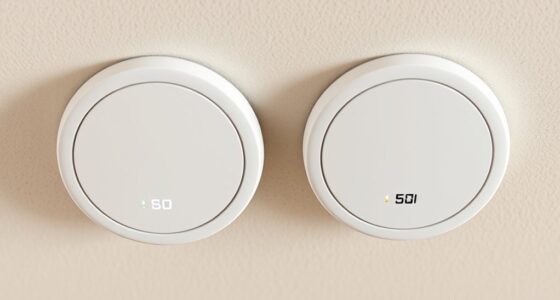
For a natural gas leak detector for home safety, I’d choose the TOPTES PT760 as my best overall pick for checking multiple locations with its rechargeable design and telescopic probe. The Kidde Plug-In Carbon Monoxide and Explosive Gas Alarm stands out for fixed, everyday coverage with battery backup, while the Protect My Home detector suits buyers who want a sealed long-life battery. The main choice is between a portable detector for targeted checks and a stationary alarm for ongoing monitoring; probe reach, power, and gas coverage also matter. No detector replaces evacuation and a call to emergency services if you suspect a leak. Read on for the full breakdown and help matching a detector to your home.

Get privacy and security gear delivered free with Prime
- Fast, free delivery on millions of items
- Prime Video, Amazon Music and more included
- Member-only deals all year
Key Takeaways
- Portable and plug-in models serve different jobs: the PT760, PT520A, and other probe-style picks are for locating possible leaks, while plug-in alarms are designed to stay in one place and monitor an area.
- Probe reach separates the portable options: the PT520A’s 17-inch gooseneck offers more reach than the PT210S’s 4-inch probe, which can matter around hard-to-access fittings.
- Power choices shape upkeep: the Protect My Home and VIGAS models use sealed 10-year batteries, while rechargeable and replaceable-battery designs call for different charging or replacement habits.
- Gas coverage is not uniform: several plug-in models list both natural gas and propane, while others focus on natural gas; match the detector’s stated coverage to the fuel used in your home.
- Added displays and backup features have a purpose: numeric readouts can help with interpreting readings, while the Kidde’s battery backup addresses power interruptions; neither feature changes the need to leave and seek help when an alarm signals danger.
| TOPTES PT760 Rechargeable Gas Leak Detector with 12-Inch Telescopic Probe |  | Best Rechargeable Inspection Tool | Brand and model: TOPTES PT760 | Detection range: 1–20% LEL (100–10,000 ppm) | Probe length: 12 inches | VIEW ON AMAZON | See Our Full Breakdown |
| TopTes PT177 Portable Natural Gas Detector |  | Best Simple Battery-Powered Pick | Brand and model: TOPTES PT177 | Detected gases: LPG, methane, ethane, propane, butane, natural gas, and coal gas | Alarm: Five red LEDs and 75 dB audible alarm | VIEW ON AMAZON | See Our Full Breakdown |
| TopTes PT210S Portable Gas Leak Detector with 4-Inch Probe |  | Best Compact Probe Detector | Brand and model: TOPTES PT210S | Detection gases: Propane, natural gas, methane, and butane | Detection range: 100–5,000 ppm (1–10% LEL) | VIEW ON AMAZON | See Our Full Breakdown |
| Protect My Home Natural Gas Detector with 10-Year Battery |  | Best for Continuous Backup-Powered Monitoring | Brand and model: Protect My Home MW-PMH-AJ-986-2 | Power source: Built-in DC 3V lithium battery | Battery life: 10 years | VIEW ON AMAZON | See Our Full Breakdown |
| EG Portable Gas Leak Detector with 12-Inch Flexible Probe |  | Best for Flexible, Multi-Gas Spot Checks | Brand and model: EG EGD-YZ1 | Detected gases: Methane, natural gas, propane, butane, gasoline, kerosene, and sewer gas | Probe length: 12 inches | VIEW ON AMAZON | See Our Full Breakdown |
| VIGAS Natural Gas (Methane) Alarm with 10-Year Sealed Battery |  | Best for Long-Term, Wire-Free Home Monitoring | Gas detected: Methane (natural gas) | Alarm threshold: 10% LEL | Alarm volume: 85 dB at 10 ft (3 m) | VIEW ON AMAZON | See Our Full Breakdown |
| Plug-In Natural Gas and Combustible Gas Detector with Digital Display |  | Best for Multi-Gas Display Readouts | Gas detection: Natural gas, methane, propane, LPG, and other common combustible gases | Power: Standard wall outlet | Display readings: Gas concentration (PPM), temperature, and humidity | VIEW ON AMAZON | See Our Full Breakdown |
| Vancart Plug-In Natural Gas and Propane Detector with LED Display |  | Best for a Low Stated Alarm Threshold | Detected gases: Natural gas, propane, LPG, LNG | Detection threshold: 3% LEL | Alarm: 85 dB audible alarm with red flashing lights | VIEW ON AMAZON | See Our Full Breakdown |
| FORENSICS FD-91-RED Gas Leak Detector |  | Best for Portable Leak Checks | Sensor: Japan-made catalytic sensor, methane calibrated | Gas detection: Natural gas, methane, propane, butane, and other combustible gases and vapors | Power source: Three AAA batteries; included | VIEW ON AMAZON | See Our Full Breakdown |
| Wurapl WA886 Plug-In Natural Gas Detector |  | Best for Simple Natural-Gas-Only Placement | Gas detected: Natural gas | Sensor type: Electrochemical | Power source: Plug-in | VIEW ON AMAZON | See Our Full Breakdown |
| BIXTEK Plug-In Natural Gas and Propane Detector with Numeric LED Display | | Best for At-a-Glance Home Monitoring | Brand: BIXTEK | Model: BIX-302-0902 | Detected gases: Natural gas and propane | VIEW ON AMAZON | See Our Full Breakdown |
| Kidde Plug-In Carbon Monoxide and Explosive Gas Alarm with Battery Backup |  | Best for Combined Gas and CO Coverage | Brand: Kidde | Model: KN-COEG-3 | Power: 120V AC plug-in with 9V battery backup | VIEW ON AMAZON | See Our Full Breakdown |
| TopTes PT199 Portable Natural Gas Leak Detector with Audible and Visual Alarm |  | Best Compact Portable Pick | Brand: TopTes | Model: PT199 | Detected gases: Natural gas, methane, propane, butane, LPG, and other combustible gases | VIEW ON AMAZON | See Our Full Breakdown |
| TOPTES PT520A Natural Gas Leak Detector with 17-Inch Flexible Gooseneck |  | Best for Hard-to-Reach Leak Checks | Brand: TOPTES | Model: PT520A | Detected gases: Methane, propane, natural gas, LPG, butane, and more | VIEW ON AMAZON | See Our Full Breakdown |
| INSTRODOTS CGD05A Rechargeable Gas Leak Detector |  | Best Rechargeable Display Pick | Brand: Instrodots | Model: CGD05A | Gas detection range: 50–50,000 ppm / 0–100% LEL, based on methane | VIEW ON AMAZON | See Our Full Breakdown |
| natural gas leak detector for home safety | Power source |
|---|---|
| TOPTES PT760 Rechargeable Gas | — |
| TopTes PT177 Portable Natural | Two AAA batteries |
| TopTes PT210S Portable Gas Lea | Two AAA batteries |
| Protect My Home Natural Gas De | Built-in DC 3V lithium battery |
| EG Portable Gas Leak Detector | Battery powered; battery details not specified |
| VIGAS Natural Gas | Sealed lithium battery |
| Plug-In Natural Gas and Combus | — |
| Vancart Plug-In Natural Gas an | AC power |
| FORENSICS FD-91-RED Gas Leak D | Three AAA batteries; included |
| Wurapl WA886 Plug-In Natural G | Plug-in |
| BIXTEK Plug-In Natural Gas and | — |
| Kidde Plug-In Carbon Monoxide | — |
| TopTes PT199 Portable Natural | — |
| TOPTES PT520A Natural Gas Leak | — |
| INSTRODOTS CGD05A Rechargeable | — |
More Details on Our Top Picks
TOPTES PT760 Rechargeable Gas Leak Detector with 12-Inch Telescopic Probe
I’d choose the PT760 for homeowners who want a portable tool for checking suspected leak points without relying on disposable batteries. Its 12-inch telescopic probe reaches behind appliances and into tight spaces, while the display gives a 1–20% LEL reading instead of relying only on an alarm. It detects several combustible gases, including natural gas, and adds a flashlight for dim inspection areas. Compared with the battery-powered TopTes PT177, the PT760 offers a numeric LEL display and USB-C charging, but it costs the buyer a 30-second preheat and still requires close, point-by-point scanning. I’d treat it as a supplementary inspection device, not a replacement for a fixed home alarm that monitors continuously.
Pros:- Detects natural gas, methane, propane, butane, and other combustible gases
- Telescopic 12-inch probe reaches tight or recessed spots
- Displays readings from 1–20% LEL and provides audible and visual alerts
- Rechargeable by USB-C and includes a built-in flashlight and protective case
Cons:- Requires a 30-second preheat before inspection
- Must be positioned about 1–5 cm from a suspected leak
- Does not provide continuous unattended room monitoring
Best for: Homeowners who want a rechargeable detector with a long reach and visible LEL readings for checking appliances, fittings, and confined spaces
Not ideal for: People seeking continuous room monitoring or a hands-off alarm; this is a handheld point-to-point detector that must be brought close to suspected leaks
- Brand and model:TOPTES PT760
- Detection range:1–20% LEL (100–10,000 ppm)
- Probe length:12 inches
- Charging port:USB-C
- Preheat time:30 seconds
- Alarm response:Within 0.5 seconds
- Weight:0.13 kg
- Dimensions:6.3 × 2.95 × 1.57 inches
Our verdict“Choose the PT760 for rechargeable, close-range leak checks with a numeric reading, but pair it with a fixed alarm for ongoing home protection.”
TopTes PT177 Portable Natural Gas Detector
The PT177 suits buyers who want a straightforward portable checker without charging cables or a numeric display to interpret. It detects natural gas alongside methane, propane, butane, and other listed combustible gases; its five LEDs and 75 dB alarm intensify as concentration rises, giving a clear warning during a close inspection. Two AAA batteries are included, and the pocket clip and storage bag make it easy to keep with household maintenance supplies. Compared with the rechargeable TOPTES PT760, this model is simpler and lighter on charging logistics, but it lacks the PT760’s LEL readout and telescopic probe. Its 30-second warm-up and five-minute inactivity shutoff also mean it is best for deliberate checks, not continuous unattended protection.
Pros:- Detects natural gas and several other combustible gases
- Escalating LED and audible alarms communicate rising gas concentration
- Includes two AAA batteries, a pocket clip, and a storage bag
- Portable design weighs 0.12 kg
Cons:- Needs a 30-second warm-up in a clean, gas-free environment
- Automatically shuts off after five minutes without activity
- Provides alarm signals rather than a numeric LEL reading
Best for: Homeowners who want an uncomplicated, battery-powered handheld detector for occasional checks around gas appliances and connections
Not ideal for: Buyers who need a numeric concentration readout, extended reach, or a detector that stays on for ongoing room monitoring
- Brand and model:TOPTES PT177
- Detected gases:LPG, methane, ethane, propane, butane, natural gas, and coal gas
- Alarm:Five red LEDs and 75 dB audible alarm
- Warm-up time:30 seconds
- Detection response:0.5–3 seconds
- Power source:Two AAA batteries
- Auto shutoff:After 5 minutes of inactivity
- Warranty:3 years
Our verdict“Pick the PT177 for simple, portable spot checks on included AAA batteries, rather than for continuous monitoring or detailed readings.”
TopTes PT210S Portable Gas Leak Detector with 4-Inch Probe
The PT210S is the compact choice for buyers who value a small, light tool for targeted checks more than a long reach. At 66.7 g, it is easier to carry than the TOPTES PT760, and its 4-inch probe can help reach into confined spots near fittings. It detects natural gas, methane, propane, and butane, with a 100–5,000 ppm (1–10% LEL) range and audible and visual alerts. Dual sensitivity modes give users some flexibility when checking different areas. The tradeoff is reach and scope: its probe is much shorter than the PT760’s 12 inches, and it runs on AAA batteries rather than USB-C charging. Like the PT177, it also shuts off after five minutes idle, so it is a spot-checking tool rather than a permanent alarm.
Pros:- Lightweight at 66.7 g for easy carrying
- Detects natural gas, methane, propane, and butane
- Offers a 100–5,000 ppm (1–10% LEL) detection range
- Provides audible and visual alerts with dual sensitivity modes
Cons:- Four-inch probe has less reach than the PT760’s 12-inch telescopic probe
- Requires two AAA batteries
- Turns off after five minutes of inactivity
Best for: DIY homeowners who want a lightweight handheld detector for occasional checks near accessible gas connections and appliances
Not ideal for: People inspecting recessed or hard-to-reach areas, or those who prefer rechargeable power and a longer probe
- Brand and model:TOPTES PT210S
- Detection gases:Propane, natural gas, methane, and butane
- Detection range:100–5,000 ppm (1–10% LEL)
- Probe length:4 inches
- Alarm:75 dB audible and visual
- Power source:Two AAA batteries
- Weight:66.7 g
- Warranty:36 months
Our verdict“Choose the PT210S if compact size matters more than long reach or rechargeable power for occasional close-range checks.”
Protect My Home Natural Gas Detector with 10-Year Battery
For buyers who want an alarm left in place, the Protect My Home detector fills a different safety role from the handheld TOPTES models. Its built-in 10-year lithium battery keeps indoor monitoring active through power outages, avoiding the charging and warm-up steps required by portable checkers such as the PT760. Wall or pipe mounting gives it a fixed position, while the audible alarm and LED indicators report leaks and device conditions. ETL certification is another useful qualification in this lineup. The tradeoff is a narrower feature set: there is no listed display or connectivity, and unlike a handheld detector, it cannot be carried around to scan individual joints. I’d pick it for ongoing room monitoring, then use a portable detector separately if I need to locate a suspected leak.
Pros:- Built-in 10-year lithium battery avoids routine battery replacement
- Continues operating during power outages
- Can be mounted on a wall or pipe
- ETL-certified, with LED status indicators and an audible alarm
Cons:- No display or connectivity features are listed
- Fixed mounting does not allow point-to-point leak searching
- The listed information does not specify a numeric detection range
Best for: Households seeking a fixed natural gas alarm that can continue monitoring during outages without routine battery changes
Not ideal for: Buyers who want portable leak localization, numeric readings, app connectivity, or detailed information about gas concentration
- Brand and model:Protect My Home MW-PMH-AJ-986-2
- Power source:Built-in DC 3V lithium battery
- Battery life:10 years
- Alarm and indicators:Audible speaker and LED indicators
- Mounting:Wall or pipe
- Certification:ETL
- Dimensions:1.5 in D × 3.5 in W × 4.25 in H
- Included items:Alarm, user manual, and mounting hardware
Our verdict“Choose this fixed detector for long-term, outage-ready room monitoring, and choose a handheld model such as the PT760 to investigate leak locations.”
EG Portable Gas Leak Detector with 12-Inch Flexible Probe
The EG portable detector is a good fit for buyers who need a probe that can bend around obstructions while checking more than natural gas. Its 12-inch flexible probe reaches confined spaces, and detection listings include methane, natural gas, propane, butane, gasoline, kerosene, and sewer gas. Adjustable sensitivity, six LED indicators, and an 85 dB alarm help users scan suspected areas and notice alerts without relying on a display. Compared with the TOPTES PT760, the EG offers a flexible rather than telescopic probe and lists a broader range of detectable gases, but it does not provide a stated detection range or accuracy figure. Battery details are also absent, making power planning less clear. I’d favor it for flexible inspection access, not for buyers who need quantified readings.
Pros:- Flexible 12-inch probe reaches around obstructions and into confined spaces
- Detects a broad selection of combustible gases, including natural gas
- Adjustable sensitivity supports different inspection conditions
- 85 dB audible alarm, six LED indicators, and lifetime replacement warranty
Cons:- No detection range or accuracy figures are specified
- Battery type and battery details are not provided
- Does not list a numeric gas concentration display
Best for: Homeowners and maintenance-minded buyers who need a bendable probe to check awkward spaces for several types of combustible gas
Not ideal for: Buyers who need a specified detection range, accuracy information, or clear battery and charging details
- Brand and model:EG EGD-YZ1
- Detected gases:Methane, natural gas, propane, butane, gasoline, kerosene, and sewer gas
- Probe length:12 inches
- Alarm:85 dB audible alarm and visual indicators
- Indicators:Six LED indicators
- Power source:Battery powered; battery details not specified
- Operating humidity:Up to 95 percent
- Warranty:Lifetime support and replacement warranty
Our verdict“Choose the EG for flexible access and broad gas coverage, but select the PT760 instead if a stated LEL range and USB-C charging matter more.”
VIGAS Natural Gas (Methane) Alarm with 10-Year Sealed Battery
The VIGAS is the clearest fit here for buyers who want a fixed natural-gas alarm without an outlet or routine battery changes. Its sealed battery is designed to power the unit for its 10-year service life, while continuous methane monitoring and an 85 dB alarm provide a straightforward home-safety setup. The listed 10% LEL threshold gives buyers a specified alarm point, unlike the Adorelf plug-in detector, whose supplied details do not state a threshold or alarm volume. VIGAS is narrower in scope: it detects indoor methane, not a broad range of combustible gases, and its battery cannot be replaced. That makes it less flexible than the Adorelf for homes or RVs where propane detection matters, but more self-contained for a fixed methane-safety location.
Pros:- Continuously monitors indoor methane and provides audible and LED alerts
- Sealed battery is designed for the alarm’s 10-year service life
- Does not require an outlet or household wiring
- Front-facing Test/Hush button supports convenient checks and silencing
Cons:- Detects methane only, limiting use where propane or other combustible gases are a concern
- Sealed battery cannot be replaced during the unit’s service life
- Designed for indoor residential use rather than portable checks
Best for: Homeowners who want a dedicated methane alarm near natural-gas appliances without relying on an outlet or replacing batteries.
Not ideal for: People who need propane or LPG monitoring, want a portable detector, or prefer to replace batteries rather than replace a sealed-battery unit.
- Gas detected:Methane (natural gas)
- Alarm threshold:10% LEL
- Alarm volume:85 dB at 10 ft (3 m)
- Power source:Sealed lithium battery
- Battery life:Designed for 10 years
- Certification:ETL Listed; conforms to UL 1484
- Dimensions:1.37 × 3.46 × 4.25 in (D × W × H)
- Weight:7.04 oz
Our verdict“Choose the VIGAS for a fixed, wire-free methane alarm with a stated threshold and long-life sealed battery, but skip it if you need multi-gas coverage.”
Plug-In Natural Gas and Combustible Gas Detector with Digital Display
The Adorelf stands apart from the methane-only VIGAS by monitoring natural gas, methane, propane, LPG, and other common combustible gases. Its screen adds gas concentration in PPM, temperature, and humidity, which gives occupants more information than a basic alarm light or sound alone. That display may suit a garage, kitchen, or RV where gas types and conditions vary, and plug-in operation avoids battery upkeep. The tradeoff is that the product details do not specify either a detection threshold or alarm volume, making it harder to judge when it will alert or how readily it can be heard. Vancart provides a stated 3% LEL threshold and 85 dB alarm, so buyers who prioritize defined alert behavior may prefer it. Adorelf is the better match for readouts and broad stated gas coverage, provided an outlet is available.
Pros:- Lists natural gas, methane, propane, LPG, and other common combustible gases
- Displays gas concentration in PPM, temperature, and humidity
- Plug-in operation avoids battery replacement and recharging
- Intended for homes, garages, campers, and RVs
Cons:- Requires a wall outlet, restricting placement and backup options during power loss
- Supplied details do not state a gas detection threshold
- Supplied details do not state an alarm volume
Best for: RV, camper, and home users who want a plug-in unit that lists multiple combustible gases and shows concentration, temperature, and humidity.
Not ideal for: Buyers who need a stated alarm threshold or sound level, or who need monitoring where no wall outlet is available.
- Gas detection:Natural gas, methane, propane, LPG, and other common combustible gases
- Power:Standard wall outlet
- Display readings:Gas concentration (PPM), temperature, and humidity
- Setup:Plug-and-play; no complex wiring
- Intended use:Homes, kitchens, apartments, garages, campers, and RVs
- Manufacturer:YXKJ
- Model number:YXKJ-202-0831
Our verdict“Pick Adorelf when multi-gas coverage and on-screen readings matter more than a published alarm threshold or sound level.”
Vancart Plug-In Natural Gas and Propane Detector with LED Display
Vancart makes the strongest case for buyers who want a plug-in alarm with a clearly stated trip point: it signals at 3% LEL with an 85 dB sounder and flashing red lights. That published threshold and paired visual-audible alert make its behavior easier to compare with the VIGAS, which is specified at 10% LEL but runs on a sealed battery and detects methane only. Vancart covers natural gas, propane, LPG, and LNG, so it offers broader stated gas coverage than the Wurapl WA886. It does, however, depend on AC power and needs a 2–3 minute warm-up before monitoring begins. Buyers should account for that delay after plugging it in and choose a location with a suitable outlet; this is an indoor alarm, not a portable leak-finding tool.
Pros:- States a 3% LEL detection threshold
- Detects natural gas, propane, LPG, and LNG
- Combines an 85 dB audible alarm with flashing red lights
- Plug-in setup supports continuous indoor monitoring after warm-up
Cons:- Requires AC power and cannot monitor during an outage without another power source
- Takes 2–3 minutes to warm up before operation
- Designed for indoor use rather than portable inspection
Best for: Households with natural-gas or propane appliances that want a plug-in alarm with a published low LEL threshold and both sound and flashing-light alerts.
Not ideal for: People who need battery-backed monitoring, portability, or an alarm that begins monitoring immediately after power-up.
- Detected gases:Natural gas, propane, LPG, LNG
- Detection threshold:3% LEL
- Alarm:85 dB audible alarm with red flashing lights
- Power source:AC power
- Voltage:110V–220V AC
- Warm-up time:2–3 minutes
- Dimensions:1.8 × 3.54 × 3.35 in
- Weight:4 oz
Our verdict“Choose Vancart if a stated 3% LEL threshold and multi-gas alerting matter more than battery backup or immediate startup.”
FORENSICS FD-91-RED Gas Leak Detector
Unlike the fixed alarms in this group, the FORENSICS FD-91-RED is a battery-powered handheld detector for checking possible leaks around appliances, fittings, and other locations. Its methane-calibrated catalytic sensor is specified for natural gas, methane, propane, butane, and other combustible gases and vapors, while a color LCD also displays temperature. The included AAA batteries and cloth case make it ready to carry, and the housing is listed as tested for a 10-foot drop. That portability comes with a different safety role: it is not the same always-on room alarm as VIGAS or Vancart, so it suits spot checks rather than unattended home monitoring. Its 7-year sensor life and one-year limited warranty also give it a shorter stated sensor horizon than VIGAS’s 10-year sealed-battery alarm.
Pros:- Portable, battery-powered design for checking different locations
- Methane-calibrated catalytic sensor is specified for several combustible gases and vapors
- Color LCD includes a temperature display
- Includes three AAA batteries and a cloth case; housing is tested for a 10-foot drop
Cons:- Requires three AAA batteries
- Does not replace a fixed continuous alarm such as Vancart or VIGAS
- Listed sensor life is 7 years and warranty is limited to 1 year
Best for: Homeowners or maintenance-minded users who need a portable instrument for checking suspected leaks around multiple gas appliances and fittings.
Not ideal for: Households seeking a permanently installed, continuous alarm that can alert occupants while they are away from the detector.
- Sensor:Japan-made catalytic sensor, methane calibrated
- Gas detection:Natural gas, methane, propane, butane, and other combustible gases and vapors
- Power source:Three AAA batteries; included
- Display:Color LCD with temperature
- Enclosure material:ABS
- Drop test:Tested for a 10-foot drop
- Sensor life:7 years
- Warranty:1-year limited
- Dimensions and weight:1.2 × 2.4 × 6 in; 11.2 oz
Our verdict“Choose the FD-91-RED for portable spot checks across several gas types, not as a substitute for an always-on household alarm.”
Wurapl WA886 Plug-In Natural Gas Detector
The Wurapl WA886 is a straightforward choice for someone who wants a compact, fixed alarm near a natural-gas appliance without the broader gas coverage or display features of Adorelf. It uses an electrochemical sensor and combines an audible alarm with a flashing light; its 2.4-ounce body and plug-in setup keep installation simple. The listed 85 dB alarm gives buyers a concrete sound-level figure, unlike Adorelf’s supplied product details. However, Wurapl is specified for natural gas only, and the information provided does not give a detection threshold, so it is less informative than Vancart’s stated 3% LEL trigger. It also relies on an outlet and has a maximum operating temperature of 104°F, which may constrain placement in hotter areas. This is a focused room alarm, not a portable checker or multi-gas monitor.
Pros:- Electrochemical sensor is specified for natural-gas detection
- Audible and flashing-light alerts
- Plug-in setup requires no wiring or special tools
- Compact 2.4-ounce ABS unit
Cons:- Supplied details do not specify detection of propane, LPG, or LNG
- No detection threshold is provided, unlike Vancart’s stated 3% LEL point
- Requires an outlet and is rated for temperatures only up to 104°F
Best for: Residents who want a lightweight plug-in alarm for a natural-gas kitchen, utility room, or garage and do not need propane monitoring.
Not ideal for: Buyers who need propane or LNG coverage, a published alarm threshold, battery operation, or placement in spaces that may exceed 104°F.
- Gas detected:Natural gas
- Sensor type:Electrochemical
- Power source:Plug-in
- Alarm volume:85 dB
- Operating humidity:10%–95% RH, non-condensing
- Maximum operating temperature:104°F
- Enclosure material:ABS
- Weight:2.4 oz
Our verdict“Pick the WA886 for a compact plug-in natural-gas alarm in a moderate-temperature room, but choose Vancart for broader gas coverage and a stated threshold.”
BIXTEK Plug-In Natural Gas and Propane Detector with Numeric LED Display
I’d choose the BIXTEK BIX-302-0902 for a kitchen or apartment where a permanently placed alarm and a quick numerical reading are more useful than a handheld inspection tool. Its numeric LED display shows readings directly, while the plug-in design avoids battery changes and wiring. Compared with the Kidde KN-COEG-3, BIXTEK focuses on natural gas and propane rather than combining combustible-gas detection with carbon monoxide monitoring and battery backup. That simpler scope may suit buyers who already have a separate CO alarm, but it leaves less coverage if they want one device for multiple hazards. Placement also depends on having an outlet in a suitable location, and the side vents need to stay clear so airflow is not blocked.
Pros:- Detects both natural gas and propane
- Numeric LED display makes readings easy to view
- Plugs into a standard outlet without batteries or wiring
- Compact form fits indoor spaces
Cons:- Placement is limited by the location of a suitable wall outlet
- Side vents must remain unobstructed
- Does not include carbon monoxide detection or battery backup
Best for: Apartment residents or homeowners with natural gas or propane appliances who want a compact, continuously plugged-in detector with numerical readings.
Not ideal for: Buyers who need carbon monoxide detection, backup power during an outage, or flexible placement away from available wall outlets.
- Brand:BIXTEK
- Model:BIX-302-0902
- Detected gases:Natural gas and propane
- Power:Standard wall outlet
- Display:Numeric LED
- Quantity:1
Our verdict“Choose BIXTEK for simple, fixed natural-gas and propane monitoring with a visible numeric display, but choose the Kidde if you also need CO detection and backup power.”
Kidde Plug-In Carbon Monoxide and Explosive Gas Alarm with Battery Backup
The Kidde KN-COEG-3 is the broadest fixed-monitoring choice here: it detects carbon monoxide alongside natural gas, propane, methane, and sewer gas. I’d rank it ahead of the BIXTEK when a household wants one outlet-powered alarm for more than one hazard, especially because its 9V backup battery keeps it running through a power interruption. The digital display, peak-level memory, and hush button add useful context and control; the included extension cord can also help with placement. The tradeoff is that it still depends on access to a 120V outlet, and its wider detection scope does not make it a portable tool for checking a suspected leak around an appliance. Choose a handheld model such as the TOPTES PT520A for targeted inspections instead.
Pros:- Detects carbon monoxide and several combustible or explosive gases
- 9V battery backup supports operation during power outages
- Digital display, peak-level memory, and hush button
- 85 dB alarm and included extension cord
Cons:- Requires access to a standard 120V outlet
- Fixed alarm is less suited to pinpointing leaks than a handheld probe
- Combines several functions in one unit, which may be unnecessary for buyers who already have separate CO monitoring
Best for: Households with fuel-burning appliances that want a fixed alarm for both carbon monoxide and several combustible or explosive gases, including during power outages.
Not ideal for: People who need a battery-only detector for locations without a suitable outlet or a handheld probe for checking specific fittings and appliances.
- Brand:Kidde
- Model:KN-COEG-3
- Power:120V AC plug-in with 9V battery backup
- Detected gases:Carbon monoxide, methane, sewer gas, propane, and natural gas
- Alarm:85 dB
- Display and controls:Digital LED display, Peak Level Memory, and Smart-Hush button
- Humidity range:5–95% RH
- Certification:UL certified; meets UL 2034 and UL 1484
- Warranty:6 years
Our verdict“Pick the Kidde for fixed home coverage of both CO and explosive gases, while the BIXTEK is a simpler choice if you only need natural gas and propane monitoring.”
TopTes PT199 Portable Natural Gas Leak Detector with Audible and Visual Alarm
For a buyer who wants a detector to carry from a stove connection to a furnace or water heater, the TopTes PT199 is the most compact handheld choice in this group. It runs on two AAA batteries and covers natural gas, methane, propane, butane, LPG, and other combustible gases. Its audible and visual alarms intensify as the reading rises, giving a user a changing signal rather than only a fixed alarm. Compared with the larger TOPTES PT520A, the PT199 is easier to keep in a drawer or tool bag, but it lacks the longer flexible probe that helps reach tight spaces. It also needs a 30-second warm-up, and its stated 50–1,000 ppm range is based on methane, so buyers should not assume identical readings for every listed gas.
Pros:- Detects natural gas, methane, propane, butane, LPG, and other combustible gases
- Audible and visual alarms respond within 0.5 seconds
- Pocket-sized body includes a storage bag
- Two AAA batteries are included
Cons:- Requires a 30-second warm-up before use
- Detection range is specified based on methane
- Short handheld form is less suited to reaching tight spaces than the PT520A
Best for: Homeowners or renters who want a lightweight, battery-powered tool for checking accessible appliance connections and several types of combustible gas.
Not ideal for: People who need a long probe for cramped or recessed fittings, continuous unattended home monitoring, or a detector with no warm-up delay.
- Brand:TopTes
- Model:PT199
- Detected gases:Natural gas, methane, propane, butane, LPG, and other combustible gases
- Detection range:50–1,000 ppm, based on methane
- Detection distance:1–5 cm
- Warm-up time:30 seconds
- Power:2 AAA batteries
- Sensor type:Gas Sensitive Semiconductor (GSS)
- Dimensions and weight:0.79 × 0.79 × 6.5 in; 2.08 oz
Our verdict“Choose the PT199 if portability matters more than probe reach; pick the PT520A for checks in hard-to-access areas.”
TOPTES PT520A Natural Gas Leak Detector with 17-Inch Flexible Gooseneck
The TOPTES PT520A earns its place for targeted checks where a detector’s reach matters: its 17-inch flexible gooseneck can get near fittings and spaces that the compact TopTes PT199 may not reach. It detects natural gas and several other combustible gases, then signals changing levels with sound and seven colored bars. The stated methane range extends to 10,000 ppm, broader than the PT199’s specified upper limit, though those ranges are based on methane and are not a guarantee of identical readings for every gas. This is a portable inspection tool, not a substitute for a fixed household alarm like the Kidde. Buyers should also account for the 30-second warm-up and automatic shutoff after 10 minutes of inactivity, which can interrupt longer inspection sessions.
Pros:- 17-inch flexible probe reaches tight or recessed areas
- Detects natural gas, methane, propane, LPG, butane, and more
- Audible 75 dB alarm and seven colored bars indicate gas levels
- Includes three AAA batteries, a protective case, and a manual
Cons:- Requires a 30-second warm-up before detection
- Automatically powers off after 10 minutes of inactivity
- Bulkier than the PT199 and intended for inspection rather than fixed room monitoring
Best for: Homeowners, maintenance staff, or DIYers who need to check gas fittings in cramped spaces around appliances and want a flexible probe with audible and visual alerts.
Not ideal for: Buyers looking for an always-on room alarm, a pocket-sized detector, or a tool that stays powered indefinitely during inactivity.
- Brand:TOPTES
- Model:PT520A
- Detected gases:Methane, propane, natural gas, LPG, butane, and more
- Probe length:17 inches
- Methane detection range:50–10,000 ppm
- Response time:0.5 seconds
- Alarm:Audible 75 dB and seven colored bars
- Power:3 AAA batteries
- Dimensions and weight:11.22 × 2.36 × 5.31 inches; 0.51 kg
Our verdict“Choose the PT520A for probing hard-to-reach appliance connections, but select the PT199 if compact carry matters more than reach.”
INSTRODOTS CGD05A Rechargeable Gas Leak Detector
The INSTRODOTS CGD05A suits buyers who want more reading detail than a basic alarm provides. Its large color screen presents digital and analog information, and its audible, visual, and vibration alerts offer multiple ways to notice a warning while checking a connection. The 11.3-inch flexible probe reaches behind or beneath appliances, though it is shorter than the TOPTES PT520A’s 17-inch gooseneck. USB-C charging also avoids routine AAA replacement, a practical distinction from both TOPTES handheld models. The tradeoffs are a 30-second preheating period and automatic power-off after 10 minutes unless disabled. Its stated range is broad but based on methane, and the alarm threshold is listed above 10% LEL; buyers seeking a simple fixed room alarm should choose a plug-in option instead.
Pros:- Flexible 11.3-inch probe helps reach difficult areas
- Audible, visual, and vibration alarms provide multiple warning cues
- Large color screen shows digital and analog readings
- USB-C rechargeable battery avoids routine AAA replacement
Cons:- Requires a 30-second preheating period
- Automatically powers off after 10 minutes unless the setting is disabled
- Probe is shorter than the TOPTES PT520A’s 17-inch reach
Best for: Homeowners who regularly inspect appliance connections and prefer a rechargeable detector with detailed screen readings and vibration alerts.
Not ideal for: People who want continuous fixed monitoring, a longer probe than 11.3 inches, or a handheld detector ready to use without preheating.
- Brand:Instrodots
- Model:CGD05A
- Gas detection range:50–50,000 ppm / 0–100% LEL, based on methane
- Alarm threshold:Above 10% LEL
- Response time:2 seconds
- Preheating time:30 seconds
- Probe length:11.3 inches
- Display and alarms:2.75-inch VA reverse color screen; audible, visual, and vibration alarms
- Charging and power:Built-in rechargeable battery; USB-C
Our verdict“Pick the CGD05A for rechargeable, feature-rich handheld inspections; choose the PT520A if maximum probe reach is the priority.”

How We Picked
I ranked these detectors around their usefulness for home natural-gas safety, separating portable leak-checking tools from fixed alarms rather than treating them as interchangeable. I compared the stated gas coverage, probe style and reach, alarm and display cues, power source, battery backup, and expected upkeep. For a portable unit, access and ease of moving between fittings mattered; for a stationary alarm, ongoing placement and power reliability mattered more.
The order favors options with a clearer fit for common household needs, then distinguishes specialists by their tradeoffs. The TOPTES PT760 leads for its combination of rechargeable power and a 12-inch telescopic probe, while fixed alarms and models with long-life batteries rank for buyers who prioritize continuous placement or reduced battery maintenance. I did not treat a longer feature list as proof of better detection: buyers should confirm the product’s stated gases, follow its placement and operating instructions, and use a qualified professional for suspected leaks or repairs.
Factors to Consider When Choosing Natural Gas Leak Detector For Home Safety
Before choosing, decide whether you want a detector for ongoing monitoring, targeted checks, or both. The differences that matter most are often about where it will be used and how you’ll respond to an alarm—not the number of features on the box.
Choose Between a Stationary Alarm and a Portable Checker
A plug-in alarm is meant to stay in a suitable location and provide monitoring there; a portable detector lets you check several fittings or appliances. They are not direct substitutes, and a portable tool should not be treated as continuous whole-home coverage. Some households may find both roles useful, but buying two devices does not remove the need to follow each one’s placement and care instructions. A common mistake is using a handheld detector as if it will alert the household while everyone is away. Choose based on the job you need the device to perform, and seek professional help rather than trying to trace or repair a suspected leak yourself.
Match Gas Coverage to the Fuel in Your Home
Check the exact gases listed by the manufacturer, rather than assuming every combustible-gas detector covers the same fuels. This roundup includes products described for natural gas or methane, as well as models that also list propane. If your home uses natural gas, a propane-only model is not the right match; if it uses more than one fuel source, confirm each is covered. Product names can use broad phrases such as “combustible gas,” so read the specifications and instructions for the specific model. Do not infer suitability from a display, alarm tone, or brand name alone.
Pick Probe Reach for the Places You Need to Check
For portable detectors, probe length and flexibility affect how easily you can get near a suspected source without repositioning the unit. A short probe may be manageable around accessible connections, while a longer or flexible probe can help reach around appliances and into tighter spaces. More reach does not make a detector more accurate, and awkward access can still make a check unreliable. Avoid bending, forcing, or placing a probe where the manufacturer does not permit. If a suspected source is inaccessible or an alarm sounds, leave the area and contact the appropriate emergency or utility service rather than attempting a closer inspection.
Think Through Power, Backup, and Long-Term Upkeep
Rechargeable models need charging before use and at intervals set by their instructions; a depleted unit cannot help during a check. Replaceable batteries make power changes possible but require a routine for checking and replacing them. Sealed long-life batteries reduce ordinary battery handling, though the device still has a finite service life and may need full replacement when that life ends. A battery backup on a plug-in alarm can help it remain powered during an outage, but read the backup’s limits rather than assuming it provides uninterrupted protection indefinitely. Choose the power system you are most likely to maintain correctly.
Prioritize Clear Alarms and Readable Information
An audible alarm matters if people need to hear a warning from nearby rooms, while visual signals may help in noisy settings or for people who cannot rely on sound alone. Numeric displays can provide more information than a simple alarm indicator, but they may require the user to understand what the reading means. Do not delay leaving because a reading looks low or unclear; follow the alarm instructions and treat a suspected leak seriously. Think about household members, background noise, and where the device will sit before choosing a signal style. A more elaborate display is useful only if it remains easy to interpret under stress.
Use Placement Instructions, Not Convenience, as Your Guide
Detector placement can affect whether it senses gas as intended, and suitable locations vary with the device and the gas it covers. Follow the manufacturer’s directions for height, distance from appliances, ventilation, and areas to avoid. Do not assume a convenient outlet or an open countertop is an appropriate spot. Keep alarms away from conditions the instructions identify as interfering with operation, and do not cover vents or sensing openings. If you are uncertain about placement or want a household detection plan, ask the manufacturer, utility, or a qualified safety professional for guidance.
Frequently Asked Questions
Should I buy a portable detector or a plug-in alarm for my home?
Choose a plug-in alarm when your priority is a device that stays in one location for ongoing monitoring, and choose a portable detector when you need to check multiple accessible points. The roundup’s PT760 and PT520A illustrate the portable approach, while the Kidde and other plug-in models fit stationary use. One type does not automatically replace the other, and neither should be used outside its instructions. If you want both targeted checks and fixed monitoring, compare the coverage and upkeep of each role rather than expecting one device to do both. A suspected active leak calls for leaving the area and contacting emergency or utility services, not a prolonged search with a handheld unit.
Can one detector cover both natural gas and propane?
Some models in this roundup state coverage for both natural gas and propane, while others are described for natural gas or methane. Check the exact gas list in the product specifications and operating instructions before buying. Do not rely on a general label such as “gas detector” to confirm compatibility with your fuel. If your household uses multiple fuels, verify that each one is named for the specific model and that its placement instructions suit the intended location. When coverage is unclear, contact the manufacturer rather than guessing.
Does a 10-year battery mean I can ignore the detector for a decade?
No. A sealed long-life battery can reduce routine battery changes, but it does not remove the need to follow the detector’s service-life, test, and care instructions. The Protect My Home and VIGAS models are described with 10-year sealed batteries, but buyers should check what the stated period refers to and when the whole device must be replaced. Keep track of any end-of-life signal and test the unit as directed. Also remember that a battery-powered alarm still needs correct placement and can only cover the area it is designed to monitor.
Is a detector with a longer probe or gooseneck always the better choice?
No. A longer or flexible probe can make it easier to reach around an appliance or fitting, but it does not by itself establish better sensing performance. The PT520A’s 17-inch gooseneck and the PT210S’s shorter 4-inch probe represent different access tradeoffs. For easy-to-reach areas, a shorter probe may be simpler to handle; for confined access, extra reach may be more practical. Follow the instructions for safe use, and do not move appliances, reach into unsafe spaces, or attempt repairs to investigate a suspected leak.
What should I do if a detector alarms or I suspect a gas leak?
Leave the area and follow your local emergency guidance; contact emergency services or your gas utility from a safe location. Do not use the detector to keep searching for the source, and avoid actions that could create a spark while inside the suspected area. Do not re-enter until authorities or qualified personnel say it is safe. A detector is an alerting aid, not a repair tool or a substitute for professional assessment. Keep the device’s instructions accessible so household members know what its alarm signals mean before an incident occurs.
Conclusion
For the broadest fit among the portable options, my best overall is the TOPTES PT760, combining rechargeable power with a 12-inch telescopic probe. Buyers seeking a simpler route to fixed monitoring should compare the plug-in alarms, with the Kidde as my best beginner-friendly choice for its combination of gas alarm and battery backup. My best value pick is the TopTes PT177 for shoppers who want a portable natural-gas detector without prioritizing the PT760’s telescopic reach. For best premium-style portable reach, consider the TOPTES PT520A and its 17-inch flexible gooseneck; for reduced battery upkeep, the Protect My Home or VIGAS sealed-battery models merit a closer look. Match the final choice to your fuel, intended use, and placement instructions—and treat any suspected leak as a reason to leave and call for help.