A smoke and carbon monoxide detector combo set can cover both hazards with fewer devices, but the right choice depends on whether your home needs hardwired alarms, simple battery operation, or whole-home interconnection. My best overall pick is the Kidde Hardwired Smoke & Carbon Monoxide Detector, 4 Pack for buyers outfitting several rooms with hardwired units. The First Alert Battery Combination Alarm suits homes that need flexible placement, while the X-Sense SC07-W 6-Pack stands out for buyers prioritizing interconnected coverage. The main tradeoffs are installation requirements, battery replacement or sealed-battery lifespan, and how alarms communicate across rooms. Read on for the full breakdown and help matching a set to your home.

Get privacy and security gear delivered free with Prime
- Fast, free delivery on millions of items
- Prime Video, Amazon Music and more included
- Member-only deals all year
Key Takeaways
- Hardwired models make the most sense when compatible wiring is already in place: the Kidde 4-pack and 3-pack and First Alert hardwired model avoid relying on batteries as the primary power source, but they are not simple drop-in choices for every home.
- Battery-powered sets offer more placement flexibility: the First Alert battery models and Kidde 30CUDR avoid hardwiring, while buyers must account for battery changes and follow each model’s installation instructions.
- Sealed 10-year batteries reduce routine battery upkeep, not all maintenance: Heiman‘s models and X-Sense SC07 options may suit buyers who want fewer battery changes, but units still need testing and eventual replacement according to their service life.
- Interconnection changes how an alarm is heard across a home: the X-Sense SC07-W 6-pack and XP0H-WN 3-pack are distinct choices for buyers seeking linked alerts, unlike a set of independent alarms.
- Pack size should follow the home’s layout, not just the number of rooms: the 3-, 4-, 5-, and 6-unit options differ in how easily they can cover multiple levels or larger floor plans, so map alarm locations before choosing a bundle.
| First Alert Battery Combination Smoke & Carbon Monoxide Alarm |  | Best for Simple, Single-Room Protection | Power source: Battery powered | Detection: Smoke and carbon monoxide | Sensor type: Photoelectric | VIEW ON AMAZON | See Our Full Breakdown |
| Kidde Hardwired Smoke & Carbon Monoxide Detector, 4 Pack |  | Best for Hardwired Whole-Home Coverage | Package quantity: 4 detectors | Detection: Smoke and carbon monoxide | Power source: 120V AC with 2-AA battery backup | VIEW ON AMAZON | See Our Full Breakdown |
| Kidde Smoke & CO Detector, Hardwired with Battery Backup, 3 Pack |  | Best Three-Pack for Wired Homes | Model number: 30CUAR | Package quantity: 3 detectors | Alarm type: Combination smoke and carbon monoxide detector | VIEW ON AMAZON | See Our Full Breakdown |
| First Alert Hardwired Combination Smoke & Carbon Monoxide Alarm |  | Best for Adding to an Existing Wired System | Power source: Corded electric with battery backup | Alarm type: Combination smoke and carbon monoxide | Sensor type: Ionization | VIEW ON AMAZON | See Our Full Breakdown |
| Heiman Smoke and Carbon Monoxide Detector 10-Year Sealed Battery, 3-Pack |  | Best Low-Maintenance Battery Set | Package quantity: 3 detectors | Detection: Smoke and carbon monoxide | Sensor type: Dual-beam photoelectric | VIEW ON AMAZON | See Our Full Breakdown |
| X-Sense Smoke and Carbon Monoxide Detector, SC01, 5-Pack |  | Best for Long-Term, Low-Maintenance Coverage | Pack size: 5 detectors | Detection: Smoke and carbon monoxide | Sensor types: Photoelectric and electrochemical | VIEW ON AMAZON | See Our Full Breakdown |
| X-Sense Smoke & Carbon Monoxide Alarm, SC06, 5-Pack |  | Best for Simple, No-Display Coverage | Pack size: 5 alarms | Detection: Smoke and carbon monoxide | Alarm type: Photoelectric and electrochemical | VIEW ON AMAZON | See Our Full Breakdown |
| Kidde Smoke & Carbon Monoxide Detector, AA Battery-Powered, 30CUDR, 3 Pack |  | Best for Replaceable-Battery Flexibility | Pack size: 3 detectors | Model: 30CUDR | Detection: Smoke and carbon monoxide | VIEW ON AMAZON | See Our Full Breakdown |
| X-Sense Smoke and Carbon Monoxide Detector Combo, SC07, 3-Pack |  | Best Three-Pack with a CO Readout | Pack size: 3 detectors | Model: SC07 | Detection: Smoke and carbon monoxide | VIEW ON AMAZON | See Our Full Breakdown |
| First Alert Battery-Operated Combination Smoke & Carbon Monoxide Alarm |  | Best for Nuisance-Alarm Control and Simple Maintenance Cues | Pack size: 3 alarms | Model: SMICO100 | Detection: Smoke and carbon monoxide | VIEW ON AMAZON | See Our Full Breakdown |
| X-Sense Wireless Combination Smoke and CO Detector, XP0H-WN, 3-Pack |  | Best for Wireless Alerts in a Smaller Home | Model: XP0H-WN | Pack size: 3 detectors | Power source: 10-year sealed battery | VIEW ON AMAZON | See Our Full Breakdown |
| Heiman Smoke and Carbon Monoxide Detector Combo with 10-Year Battery | 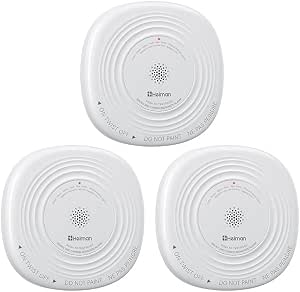 | Best for Certified, Straightforward Installation | Power source: Battery powered | Battery life: 10 years | Alarm sound level: 85 dB | VIEW ON AMAZON | See Our Full Breakdown |
| X-Sense Interconnected Smoke and CO Detector, SC07-W, 6-Pack |  | Best for Whole-Home Wireless Coverage | Model: SC07-W | Pack size: 6 detectors | Power source: Battery powered | VIEW ON AMAZON | See Our Full Breakdown |
| X-Sense Smoke and Carbon Monoxide Detector Combo, SC07, 5-Pack |  | Best for Standalone Multi-Room Coverage | Model: SC07 | Pack size: 5 detectors | Power source: 10-year sealed battery | VIEW ON AMAZON | See Our Full Breakdown |
| Heiman 2-in-1 Smoke and Carbon Monoxide Detector with 10-Year Sealed Battery |  | Best for Diagnostic Alerts and Long-Term Ownership | Sensor type: Dual-beam photoelectric | Battery life: 10 years | Alarm volume: 85 dB | VIEW ON AMAZON | See Our Full Breakdown |
| smoke and carbon monoxide detector combo set | Power source | Detection | Dimensions | Pack size |
|---|---|---|---|---|
| First Alert Battery Combinatio | Battery powered | Smoke and carbon monoxide | 2.5 in D x 5.75 in W x 5.75 in H | — |
| Kidde Hardwired Smoke & Carbon | 120V AC with 2-AA battery backup | Smoke and carbon monoxide | — | — |
| Kidde Smoke & CO Detector | 120V AC with AA battery backup | — | — | — |
| First Alert Hardwired Combinat | Corded electric with battery backup | — | 5.6 x 5.6 x 1.9 in | — |
| Heiman Smoke and Carbon Monoxi | — | Smoke and carbon monoxide | — | — |
| X-Sense Smoke and Carbon Monox | 10-year sealed lithium metal battery | Smoke and carbon monoxide | 5.7 × 5.7 × 2 inches | 5 detectors |
| X-Sense Smoke & Carbon Monoxid | Built-in 10-year lithium metal batteries | Smoke and carbon monoxide | 5.7 × 5.7 × 2 inches | 5 alarms |
| Kidde Smoke & Carbon Monoxide | Two AA batteries per detector, included | Smoke and carbon monoxide | — | 3 detectors |
| X-Sense Smoke and Carbon Monox | Sealed lithium metal battery | Smoke and carbon monoxide | — | 3 detectors |
| First Alert Battery-Operated C | 9V alkaline battery | Smoke and carbon monoxide | 21.5 × 7.5 × 3.5 inches | 3 alarms |
| X-Sense Wireless Combination S | 10-year sealed battery | — | — | 3 detectors |
| Heiman Smoke and Carbon Monoxi | Battery powered | — | 4.9 inches diameter | — |
| X-Sense Interconnected Smoke a | Battery powered | — | 5.7 × 5.7 × 2 inches | 6 detectors |
| X-Sense Smoke and Carbon Monox | 10-year sealed battery | — | 5.7 × 5.7 × 2 inches | 5 detectors |
| Heiman 2-in-1 Smoke and Carbon | — | — | — | — |
More Details on Our Top Picks
First Alert Battery Combination Smoke & Carbon Monoxide Alarm
This battery-powered First Alert combines smoke and carbon monoxide detection in one unit, making it a straightforward choice when hardwiring is unavailable or a single alarm needs replacing. Its test/silence button gives routine checks and nuisance-alarm silencing a simple control. Compared with the Kidde Hardwired Smoke & Carbon Monoxide Detector, 4 Pack, this model is easier to place without electrical work, but it does not offer that model’s hardwired power, battery backup, or whole-home interconnection. The product description cites advanced sensing intended to reduce nuisance alarms, though the listed sensor type is photoelectric and no interconnect feature is specified. The tradeoff is ongoing battery maintenance and no wired-power option, so I’d choose it for a focused replacement rather than building a linked system across a larger home.
Pros:- Combines smoke and carbon monoxide detection in one unit
- Battery operation allows placement without hardwiring
- Test/silence button supports straightforward maintenance
- Photoelectric sensor type is specified
Cons:- Batteries need periodic replacement
- No wired connection option
- No interconnection feature is specified
Best for: Renters or homeowners replacing one alarm in a room without a hardwired connection
Not ideal for: Buyers outfitting several rooms who want alarms that interconnect or run on household wiring
- Power source:Battery powered
- Detection:Smoke and carbon monoxide
- Sensor type:Photoelectric
- Controls:Test/silence button
- Color:White
- Dimensions:2.5 in D x 5.75 in W x 5.75 in H
- Weight:1.6 lb
Our verdict“Choose this First Alert for a simple battery-operated replacement, but choose a hardwired interconnected set for coordinated coverage across multiple rooms.”
Kidde Hardwired Smoke & Carbon Monoxide Detector, 4 Pack
For a home that already has compatible wiring, this four-detector Kidde set offers the strongest stated coverage in this group: the units are interconnectable, so an alarm can alert occupants beyond the room where smoke or CO is detected. Voice alerts identify the hazard type, adding useful context beyond a tone, while 120V AC power and AA backup batteries provide two power sources. Compared with the Kidde Smoke & CO Detector, Hardwired with Battery Backup, 3 Pack, this set includes one more detector and likewise lists voice alerts, interconnection, and backup power. The tradeoff is installation: hardwiring may call for a qualified installer, and the loud 85-decibel alarm and voice announcements may not suit every household. I’d rank it above standalone battery models for buyers who want coordinated coverage, not for those seeking a quick no-wiring replacement.
Pros:- Four combination detectors support coverage across multiple areas
- Interconnectability can alert occupants beyond the initiating alarm’s room
- Voice alerts announce the type of hazard
- 120V AC power includes 2-AA battery backup
Cons:- Hardwiring may require professional installation
- The 85-decibel alarm and voice alerts may be too loud for some households
- Interconnection compatibility is limited to select models
Best for: Homeowners with compatible 120V wiring who want four interconnected combination alarms across multiple rooms
Not ideal for: Renters or buyers who need a battery-only alarm they can install without electrical work
- Package quantity:4 detectors
- Detection:Smoke and carbon monoxide
- Power source:120V AC with 2-AA battery backup
- Sensor technology:Photoelectric and electrochemical
- Connectivity:Whole-home interconnectable
- Alarm sound level:85 dB
- Alerts:Voice alerts and LED indicators
- Warranty:10 years
Our verdict“Pick this four-pack for wired homes needing linked alarms and hazard-specific voice alerts; skip it if you need easy battery-only installation.”
Kidde Smoke & CO Detector, Hardwired with Battery Backup, 3 Pack
This three-pack of Kidde 30CUAR alarms suits buyers who want wired power and linked alerts but need fewer units than the four-detector Kidde set. Each alarm runs on 120V AC with AA battery backup, and interconnection can extend an alert beyond the room where a hazard starts. Visual LED indicators work alongside an 85-decibel audible alarm, giving occupants both visible and audible warning. Compared with the Kidde Hardwired Smoke & Carbon Monoxide Detector, 4 Pack, this set provides one fewer detector; the supplied details also do not list voice alerts, so buyers who want spoken hazard identification may prefer the four-pack. Both choices require hardwiring, which can complicate installation. I’d favor this model when three alarm locations match the home’s needs, rather than paying for an extra unit that may not be useful.
Pros:- Three detectors provide a coordinated set for multiple locations
- 120V AC power is backed up by AA batteries
- Interconnect capability can extend alerts through the home
- LED indicators complement the audible alarm
Cons:- Hardwiring may require professional installation
- AA backup batteries require periodic replacement
- Interconnect setup may be complex, and voice alerts are not listed
Best for: Homeowners with three planned alarm locations who want interconnected hardwired smoke and CO protection
Not ideal for: Buyers needing four or more detectors, voice hazard announcements, or a no-wiring installation
- Model number:30CUAR
- Package quantity:3 detectors
- Alarm type:Combination smoke and carbon monoxide detector
- Power source:120V AC with AA battery backup
- Connectivity:Interconnect capable
- Alarm volume:85 dB
- Alerts:Visual LED indicators and audible alarm
- Warranty:10-year limited warranty
Our verdict“Choose this three-pack when three wired alarm locations are enough; the four-pack Kidde is the better fit when you need broader coverage or listed voice alerts.”
First Alert Hardwired Combination Smoke & Carbon Monoxide Alarm
This hardwired First Alert combination alarm is a single-unit option for buyers replacing an existing wired detector or adding to a compatible interconnect setup. Its battery backup keeps the unit powered through an outage, while the mounting bracket is described as supporting easier installation. Unlike the First Alert Battery Combination Smoke & Carbon Monoxide Alarm, this model connects to household power and can interconnect with other alarms, making it a better match for an existing wired system. It is not as simple to place in a home without compatible wiring, though, and the listed ionization sensor differs from the photoelectric sensor specified for the battery model. The supplied information does not give an interconnect compatibility list, so I’d verify system fit before buying. Its relatively bulky listed dimensions may also affect placement.
Pros:- Hardwired power suits homes with existing alarm wiring
- Battery backup provides power during outages
- Can interconnect with other alarms
- Mounting bracket is described as supporting installation
Cons:- Hardwiring may require professional installation
- Interconnect compatibility details are not specified
- Listed dimensions may make it bulky for some placements
Best for: Homeowners replacing a single hardwired alarm or expanding a compatible interconnected alarm system
Not ideal for: Renters, buyers without compatible wiring, or shoppers seeking a multi-unit set with clearly specified compatibility
- Power source:Corded electric with battery backup
- Alarm type:Combination smoke and carbon monoxide
- Sensor type:Ionization
- Interconnection:Can interconnect with other alarms
- Color:White
- Dimensions:5.6 x 5.6 x 1.9 in
- Weight:3.3 lb
- Operating humidity:10–95% RH
Our verdict“Choose this First Alert when you need one wired, backup-powered alarm for a compatible system, not when you want a portable battery-only set.”
Heiman Smoke and Carbon Monoxide Detector 10-Year Sealed Battery, 3-Pack
The Heiman three-pack stands out for buyers who want multiple combination alarms without routine battery swaps: each detector has a 10-year sealed battery. Its dual-beam photoelectric sensor specification, 85-decibel alarm, and stated UL standards provide more detail about the detection and alert package than the single-unit First Alert battery model. Compared with the Kidde Hardwired Smoke & Carbon Monoxide Detector, 4 Pack, Heiman avoids hardwiring and includes sealed batteries, but the supplied information does not list whole-home interconnection or voice alerts. Smart diagnostics are mentioned, yet app connectivity is not specified, so I would not buy it expecting phone-based monitoring. The set’s main appeal is reduced battery upkeep across three locations; its tradeoff is less clarity about network features and mounting options than the wired Kidde set.
Pros:- Three detectors provide coverage for multiple locations
- 10-year sealed batteries avoid routine battery replacement
- Dual-beam photoelectric sensor type is specified
- 85 dB alarm and listed UL standards provide useful product detail
Cons:- Interconnection and app connectivity are not specified
- Mounting details beyond ceiling or wall installation are limited
- A sealed battery cannot be replaced during its service life
Best for: Homeowners or property managers fitting three locations who want battery-powered alarms with long-term sealed batteries
Not ideal for: Buyers who need interconnected alarms, app alerts, or detailed confirmation of mounting and networking options
- Package quantity:3 detectors
- Detection:Smoke and carbon monoxide
- Sensor type:Dual-beam photoelectric
- Battery life:10 years, sealed battery
- Alarm sound:85 dB
- Standards:UL 217 10th Edition; UL 2034 5th Edition
- Housing material:UL94 V-0 fire-retardant ABS+PC
- Certification:CSFM approved
Our verdict“Choose this Heiman set for three battery-powered alarms with minimal battery upkeep, but choose the wired Kidde set if interconnected alerts are your priority.”
X-Sense Smoke and Carbon Monoxide Detector, SC01, 5-Pack
For buyers who want several rooms covered without routine battery changes, the X-Sense SC01 5-pack is a practical standalone set: each unit combines smoke and CO sensing with a 10-year sealed battery and an LCD that shows status information. That display gives it an advantage over the X-Sense SC06, which has the same long-life battery approach but no LCD listed in its supplied details. Installation does not require wiring, making the SC01 a fit for homes where adding hardwired alarms is inconvenient. The tradeoff is that these alarms work independently: they do not offer wireless interconnection, Wi-Fi, or remote alerts. I would choose this set for broad basic coverage, not for a household that needs an alarm in one room to notify people elsewhere.
Pros:- Five combination alarms can cover multiple rooms.
- Sealed 10-year battery avoids routine battery replacement.
- LCD provides real-time status information.
- No wiring is needed for installation.
Cons:- No wireless interconnection, Wi-Fi, or remote alerts.
- An alarm sounding in one unit will not notify other rooms through a linked system.
Best for: Homeowners or renters who need several battery-powered smoke and CO alarms with long service life and at-a-glance status information.
Not ideal for: Households seeking interconnected alarms, smartphone notifications, or remote monitoring; each SC01 is a standalone unit.
- Pack size:5 detectors
- Detection:Smoke and carbon monoxide
- Sensor types:Photoelectric and electrochemical
- Power source:10-year sealed lithium metal battery
- Alarm level:85 dB
- Display:Real-time LCD
- Dimensions:5.7 × 5.7 × 2 inches
- Material:Heat-resistant PC
Our verdict“Choose the SC01 5-pack for multi-room standalone coverage with an LCD and sealed 10-year batteries, but skip it if you need linked alarms or remote alerts.”
X-Sense Smoke & Carbon Monoxide Alarm, SC06, 5-Pack
The X-Sense SC06 5-pack suits buyers who want straightforward smoke and CO detection in several locations and do not need an on-device readout. Like the X-Sense SC01, it uses sealed batteries rated for 10 years and installs without wiring; unlike that model, the SC06 does not list an LCD, so it gives up at-a-glance CO readings in favor of a simpler setup. Ceiling or wall mounting adds flexibility when matching alarms to room layouts. The supplied specifications also identify UL 217 and UL 2034 certification. Its main limitation is the standalone design: there is no Wi-Fi or wireless interconnection, so alarms do not form a linked alert network. I would pick it over the SC01 only when a display is not a priority and a basic five-unit set is the goal.
Pros:- Five standalone alarms provide broad room coverage.
- Built-in 10-year lithium metal batteries reduce replacement tasks.
- Supports ceiling or wall mounting without wiring.
- Listed as meeting UL 217 and UL 2034 standards.
Cons:- No LCD for viewing CO levels or device status.
- No wireless interconnection or Wi-Fi features.
- Standalone alarms may not suit larger homes needing linked alerts.
Best for: Renters or homeowners furnishing several rooms who want sealed-battery combination alarms and do not need an LCD or connected features.
Not ideal for: Buyers who want to check CO readings on a screen or have alarms communicate across rooms.
- Pack size:5 alarms
- Detection:Smoke and carbon monoxide
- Alarm type:Photoelectric and electrochemical
- Power source:Built-in 10-year lithium metal batteries
- Mounting:Ceiling or wall
- Style:Standalone
- Certifications:UL 217 and UL 2034
- Dimensions:5.7 × 5.7 × 2 inches
Our verdict“Choose the SC06 when a five-unit, sealed-battery set matters more than an LCD or connected alarm features.”
Kidde Smoke & Carbon Monoxide Detector, AA Battery-Powered, 30CUDR, 3 Pack
The Kidde 30CUDR 3-pack takes a different maintenance approach from the sealed-battery X-Sense SC07 3-pack: it runs on two replaceable AA batteries per alarm rather than relying on a built-in 10-year battery. That can appeal to buyers who prefer batteries they can change, though it does mean adding replacements to the upkeep routine. Kidde lists an 85-decibel alarm, LED status lights, advanced sensing intended to reduce nuisance alarms from cooking or steam, and a 10-year limited warranty. Its three-unit count is smaller than the five-alarm X-Sense SC01 set, so it may suit a smaller home or a targeted replacement job better than whole-house coverage. The supplied information does not specify an LCD or smart features, so buyers wanting visible CO readings or app alerts should look elsewhere.
Pros:- Detects both smoke and carbon monoxide.
- Uses two included AA batteries per alarm.
- Advanced sensing is designed to reduce nuisance alarms from cooking or steam.
- Includes LED status lights and a 10-year limited warranty.
Cons:- Replaceable batteries require periodic upkeep.
- Three units may not cover as many rooms as the five-pack X-Sense options.
- No LCD or smart-home connectivity is specified.
Best for: Households that prefer replaceable AA batteries, want three combination alarms, and value sensing designed to reduce cooking- or steam-related nuisance alarms.
Not ideal for: Buyers who want maintenance-free sealed batteries, a five-unit set, or a listed LCD and remote alert features.
- Pack size:3 detectors
- Model:30CUDR
- Detection:Smoke and carbon monoxide
- Power source:Two AA batteries per detector, included
- Alarm level:85 dB
- Status indicators:LED lights
- Warranty:10-year limited warranty
- Standards:UL 217 10th Edition, UL 2034 5th Edition, FCC
Our verdict“Pick the Kidde 30CUDR if replaceable AA power and nuisance-alarm reduction matter more than a sealed battery or a larger pack.”
X-Sense Smoke and Carbon Monoxide Detector Combo, SC07, 3-Pack
The X-Sense SC07 3-pack is the clearest fit for buyers who want fewer alarms than the five-unit SC01 or SC06 sets but still want an on-device CO reading. Its LCD displays real-time CO levels, adding useful context that the simpler SC06 does not provide, while photoelectric and electrochemical sensors cover smoke and carbon monoxide in one unit. Sealed lithium batteries are rated for 10 years, and installation does not require rewiring. That combination keeps routine upkeep low, but the SC07 remains a standalone battery-powered alarm: it has no hardwired option or smart-home integration listed. The smaller pack also means less room coverage than the SC01. I would favor it for a modest home or for adding alarms to key locations where checking CO readings matters more than linked alerts.
Pros:- LCD shows real-time CO levels and device status.
- Sealed 10-year lithium battery limits routine maintenance.
- Combines photoelectric smoke sensing and electrochemical CO sensing.
- Installs without rewiring.
Cons:- Three alarms cover fewer rooms than the SC01 and SC06 five-packs.
- No hardwired option or smart-home integration is listed.
- Standalone units do not provide linked alerts across the home.
Best for: People furnishing a smaller home or key rooms who want sealed batteries and a screen showing real-time CO levels.
Not ideal for: Buyers needing five alarms, hardwired power, wireless interconnection, or smartphone notifications.
- Pack size:3 detectors
- Model:SC07
- Detection:Smoke and carbon monoxide
- Sensor types:Photoelectric and electrochemical
- Power source:Sealed lithium metal battery
- Battery life:10 years
- Alarm level:85 dB
- Display:LCD with real-time CO readings
Our verdict“Choose the SC07 3-pack for compact coverage with real-time CO readings, provided standalone alarms meet your needs.”
First Alert Battery-Operated Combination Smoke & Carbon Monoxide Alarm
The First Alert SMICO100 3-pack prioritizes familiar controls and maintenance reminders over the long-life sealed-battery approach of the X-Sense SC07. Its 9V alkaline power means batteries need periodic replacement, but a test/silence button and end-of-life warning make routine checks and replacement cues more direct. First Alert’s Precision Detection technology is described as reducing nuisance alarms from cooking, which may matter in kitchens or nearby hallways where unwanted alerts can be disruptive. This set detects smoke and CO and installs without wiring, but the supplied data identifies an ionization smoke sensor rather than the photoelectric sensing listed for the X-Sense SC07. It also lacks listed smart-home connectivity. I would choose it for simple local operation and clear maintenance signals, not for buyers seeking a sealed 10-year battery.
Pros:- Combines smoke and carbon monoxide detection.
- Precision Detection technology is designed to reduce cooking-related nuisance alarms.
- Test/silence button supports straightforward local checks and silencing.
- End-of-life warning gives a replacement cue.
Cons:- 9V alkaline batteries require periodic replacement.
- Ionization smoke sensing differs from the photoelectric sensor listed for the X-Sense SC07.
- No smart-home or remote monitoring features are specified.
Best for: Households that want a familiar battery-powered alarm with a test/silence button, an end-of-life warning, and sensing designed to reduce cooking-related nuisance alarms.
Not ideal for: Buyers who want sealed 10-year batteries, replaceable AA power, an LCD CO readout, or smart-home alerts.
- Pack size:3 alarms
- Model:SMICO100
- Detection:Smoke and carbon monoxide
- Power source:9V alkaline battery
- Smoke sensor:Ionization
- CO sensor:Carbon monoxide sensor
- Controls and alerts:Test/silence button and end-of-life warning
- Dimensions:21.5 × 7.5 × 3.5 inches
Our verdict“Choose the SMICO100 if you value simple controls and maintenance warnings more than a sealed battery or an LCD CO display.”
X-Sense Wireless Combination Smoke and CO Detector, XP0H-WN, 3-Pack
I’d choose the XP0H-WN 3-pack when synchronized alarms matter more than covering every room in a large home. Its RF interconnection means that when one detector sounds, the others can sound too, giving this set an advantage over the standalone X-Sense SC07 5-pack for alerting people farther from the source. The 10-year sealed lithium battery also avoids routine battery swaps, while the large mounting bracket is designed for a tidy installation. The tradeoff is that wireless interconnection is not the same as connected-home monitoring: this model has no Wi-Fi or base station compatibility. Three units may also be too few for buyers outfitting a larger property, and I’d verify bracket dimensions before mounting, particularly if replacing existing alarms.
Pros:- RF interconnection lets linked alarms sound together
- Sealed 10-year lithium battery reduces battery maintenance
- Photoelectric smoke and electrochemical CO sensing in one device
- Large mounting bracket supports a neat installation
Cons:- No Wi-Fi or base station compatibility for remote alerts
- Three detectors may not cover a larger home
- Bracket size should be checked before installation
Best for: Households that need three battery-powered alarms to sound together without adding Wi-Fi or rewiring.
Not ideal for: Owners of larger homes who need more coverage, or buyers who want phone alerts, a compatible base station, or hardwired power.
- Model:XP0H-WN
- Pack size:3 detectors
- Power source:10-year sealed battery
- Battery type:Lithium metal
- Sensor types:Photoelectric smoke and electrochemical CO
- Interconnection:RF wireless
- Enclosure material:Heat-resistant PC
Our verdict“Choose this set for synchronized alarms across a smaller home, but pick a larger pack if you need broader room coverage.”
Heiman Smoke and Carbon Monoxide Detector Combo with 10-Year Battery
The Heiman combo suits buyers who want a single, standards-listed detector with a sealed battery and a simple mounting process. Its photoelectric smoke and electrochemical CO sensors bring both hazards into one unit, while the stated UL 217 10th Edition, UL 2034 5th Edition, and ETL listings give spec-conscious shoppers concrete certification details to check. Compared with the interconnected X-Sense XP0H-WN, this is a more basic choice: it has no wireless linking, so one alarm does not provide the same whole-home synchronized warning. The 85 dB alarm is a clear local alert, but the unit is battery-only and intended for indoor residential use. The supplied product information also notes occasional false alarms, a practical drawback for buyers sensitive to nuisance alerts.
Pros:- Sealed battery is specified for 10 years
- Photoelectric smoke and electrochemical CO sensors share one unit
- UL 217 10th Edition, UL 2034 5th Edition, and ETL listed
- Quick mounting bracket is designed to simplify installation
Cons:- No hardwired power option
- Does not offer wireless interconnection between detectors
- Product information notes occasional false alarms
Best for: Homeowners replacing or adding one indoor alarm who value stated UL and ETL certifications and a sealed battery.
Not ideal for: Buyers needing interconnected alarms, a hardwired installation, or detectors for commercial or outdoor areas.
- Power source:Battery powered
- Battery life:10 years
- Alarm sound level:85 dB
- Sensor types:Photoelectric smoke and electrochemical CO
- Certifications:UL 217 10th Edition, UL 2034 5th Edition, ETL listed
- Housing material:PC
- Dimensions:4.9 inches diameter
Our verdict“Pick this Heiman detector for a straightforward, certified indoor replacement, not for whole-home linked alerts.”
X-Sense Interconnected Smoke and CO Detector, SC07-W, 6-Pack
For buyers outfitting several rooms, I rank the SC07-W 6-pack highest for coverage and coordinated warning. Its RF links let alarms sound together, and six units make that feature more useful across a larger home than the three-detector X-Sense XP0H-WN set. Sealed batteries rated for 10 years and installation without rewiring also make this a practical option where adding hardwired alarms would be difficult. The sensors combine photoelectric smoke detection with electrochemical CO detection, and the listed 85 dB alarm provides a strong local alert. The main compromise is that this is not a smart monitoring system: there is no Wi-Fi or remote phone notification. It is battery-only as well, so buyers seeking hardwired power should compare it with the hardwired Kidde options in the roundup.
Pros:- Six detectors provide broad room coverage
- RF interconnection synchronizes alerts across linked units
- Sealed 10-year lithium battery avoids routine replacement
- Installs without rewiring and includes mounting hardware
Cons:- No Wi-Fi or remote monitoring
- Battery-only design lacks a hardwired option
- 85 dB alarm may be loud for some occupants
Best for: Owners of larger homes who want multiple battery-powered detectors to sound together without running new wiring.
Not ideal for: Buyers who require hardwired alarms, remote smartphone notifications, or a smaller set for limited coverage needs.
- Model:SC07-W
- Pack size:6 detectors
- Power source:Battery powered
- Battery life:10 years
- Alarm volume:85 dB
- Sensor types:Photoelectric smoke and electrochemical CO
- Interconnection:RF wireless
- Dimensions:5.7 × 5.7 × 2 inches
- Enclosure material:Heat-resistant PC plastic
Our verdict“Choose the SC07-W when you need six linked alarms for a larger home and can do without Wi-Fi or hardwired power.”
X-Sense Smoke and Carbon Monoxide Detector Combo, SC07, 5-Pack
The SC07 5-pack is a fit for buyers who want to place several combined smoke and CO alarms but do not need them to communicate with one another. Each unit has a 10-year sealed battery and installs without rewiring, so the set can extend coverage in rooms where hardwired installation is inconvenient. The product description also specifies an LCD display, giving each detector a visible information feature not listed for the wireless SC07-W 6-pack. That comparison points to the central decision: the SC07 provides five standalone alarms, while the SC07-W adds synchronized alerts and one more detector. This model’s tradeoff is clear—no wireless interconnection or Wi-Fi—so an alarm in one room will not prompt the other units to sound.
Pros:- Five units support coverage across several rooms
- Sealed 10-year battery reduces replacement tasks
- Combines photoelectric smoke and electrochemical CO sensing
- Installs without rewiring and includes mounting hardware
Cons:- Standalone units do not synchronize alarms
- No Wi-Fi or remote alerts
- Battery-only power may not suit hardwired-alarm replacements
Best for: Households that need five battery-powered smoke and CO alarms for separate rooms and are comfortable with standalone alerts.
Not ideal for: Buyers who want linked alarms to sound throughout the home, remote monitoring, or hardwired power.
- Model:SC07
- Pack size:5 detectors
- Power source:10-year sealed battery
- Battery type:Lithium metal
- Sensor types:Photoelectric smoke and electrochemical CO
- Product style:Standalone
- Dimensions:5.7 × 5.7 × 2 inches
- Enclosure material:Heat-resistant PC
Our verdict“Choose this five-pack for multiple independent detection points, or step up to the SC07-W if synchronized warnings matter.”
Heiman 2-in-1 Smoke and Carbon Monoxide Detector with 10-Year Sealed Battery
This Heiman model stands out for buyers who want more status information from an individual detector, rather than the multi-room synchronization offered by the X-Sense SC07-W. Its listed smart diagnostics provide low-battery and end-of-life warnings, while visual LED alerts supplement the 85 dB alarm. A 10-year sealed battery and included mounting hardware keep installation and routine upkeep straightforward. The dual-beam photoelectric sensor is specified alongside broad smoke and CO detection claims, but the product data does not name a separate CO sensor type, so buyers comparing sensor specifications should check that detail before choosing. Like the other battery-only Heiman, it has no wired power option; its stated residential and light commercial scope also limits its fit for more demanding commercial sites.
Pros:- 10-year sealed battery reduces routine maintenance
- Smart diagnostics provide low-battery and end-of-life warnings
- 85 dB alarm is paired with visual LED alerts
- Includes mounting hardware and has a stated 10-year warranty
Cons:- No wired power option
- No wireless interconnection or Wi-Fi is specified
- Product data does not identify a separate CO sensor type
Best for: Homeowners and light-commercial users who want sealed-battery operation plus visible diagnostics for battery and end-of-life status.
Not ideal for: Buyers who need hardwired power, interconnected whole-home alarms, or equipment for heavier commercial settings.
- Sensor type:Dual-beam photoelectric
- Battery life:10 years
- Alarm volume:85 dB
- Certifications:UL 217 10th Edition, UL 2034 5th Edition, CSFM approved
- Housing material:UL94 V-0 fire-retardant ABS+PC
- Mounting hardware:Included
- Warranty:10 years
Our verdict“Pick this Heiman for an individually installed detector with diagnostic and LED alerts, but choose an interconnected set for home-wide synchronized warnings.”

How We Picked
I compared each smoke-and-CO combination set on the factors that change its usefulness at home: power source, battery design, interconnection, pack size, installation needs, and everyday upkeep. I gave priority to options whose configuration suits a clear buyer need, rather than treating a larger pack or a longer battery claim as an automatic advantage. Because product names alone do not establish compatibility or exact alarm performance, buyers should confirm the model specifications and follow local code and manufacturer instructions before installation.
The ranking puts adaptable, practical coverage ahead of narrower benefits. The Kidde hardwired 4-pack leads for homes already equipped for hardwired alarms and needing several units; the First Alert battery model earns a place for flexible placement, and X-Sense’s linked options serve buyers who want alarms to communicate. Sealed-battery Heiman and SC07 models rank well for reduced battery-change chores, but they do not suit every power or connectivity need. I also account for tradeoffs: a hardwired unit can complicate installation, while a battery-only model needs a maintenance plan.
Factors to Consider When Choosing Smoke And Carbon Monoxide Detector Combo Set
Before choosing a set, match it to the building and the people who need to hear it. The model with the most units or fewest battery changes may still be a poor fit if it cannot connect to existing wiring or does not provide the alert behavior you need.
Match the power source to the home
Start by checking whether your current alarms are hardwired, battery-powered, or a mix, and note the connector and mounting requirements before ordering replacements. Hardwired sets can be a sensible fit when compatible wiring already exists, but the label does not mean every model will work with every existing base or connector. Battery-powered alarms are easier to place where wiring is absent, though they shift more upkeep to you. Avoid buying a hardwired pack just because the home has electrical wiring nearby; alarm wiring and compatibility are specific. If you are unsure, check the manual or ask a qualified installer rather than forcing a connection. In rentals, get permission before altering fixed wiring.
Choose battery design with the full service life in mind
Replaceable batteries and sealed long-life batteries solve different problems. Replaceable cells give you a familiar way to restore power, while a sealed battery can reduce routine battery changes but usually means replacing the alarm when its service life ends. Neither design removes the need to test the alarm and keep its vents clear. Check the stated service life and replacement instructions for the exact model, since battery life and alarm life are not interchangeable claims. A common mistake is to assume “10-year battery” means the unit needs no attention for a decade. Plan for periodic checks and note the replacement date when each alarm is installed.
Decide whether linked alarms are worth the setup
Interconnected alarms can alert occupants in more than one room when a linked unit detects a hazard, which may help in larger or multi-level homes. But “wireless” and “interconnected” do not automatically mean a device will join an existing system; compatibility can depend on the exact model and network. Read the instructions to learn how pairing works, which units can link, and what happens if one alarm is removed or loses power. Independent alarms can be simpler to install and manage in a small space. Do not pay for linking features if you will not configure and maintain the network. If you choose a linked set, test the system as a group after installation.
Plan coverage by location, not bundle size
A set of five alarms is not automatically better than a set of three if the home needs fewer units or the alarms cannot go where required. Map sleeping areas, floors, and other locations specified by local rules and the alarm manufacturer before selecting a pack. Follow placement guidance for ceilings, walls, kitchens, bathrooms, and fuel-burning appliances; smoke and CO sensing can have different placement instructions. Avoid putting an alarm where routine cooking or steam may trigger nuisance alerts, but do not move it outside required coverage zones to solve that problem. A spare unit can be useful for later expansion, yet unused alarms do not improve current coverage. Check local code, since requirements vary by jurisdiction and building type.
Check alert access and household needs
Consider who must respond to an alarm and whether the sound and controls work for everyone in the home. A loud local alarm may be adequate in a compact layout, while occupants separated by floors or closed doors may benefit from linked units. Look at test and silence controls, indicator behavior, and any accessibility features listed for the specific model. Do not assume every combo alarm offers the same voice alerts, display, or remote notification; compare the product documentation rather than relying on category labels. For people with hearing impairments, evaluate dedicated visual or vibrating alert solutions as part of a broader safety plan. A detector is one layer of protection, not a substitute for an evacuation plan.
Budget for replacement and maintenance, not just installation
Think beyond the day the alarms go up: batteries, testing, cleaning, compatibility, and end-of-life replacement all affect the real effort of ownership. A lower-maintenance sealed-battery model may be appealing if reaching alarms is difficult, while a replaceable-battery unit can suit someone who prefers to maintain each alarm individually. Check the alarm’s expiration or replacement guidance and record the date, especially when installing several units at once. Do not keep a device in service past the manufacturer’s stated life because it still powers on. Factor in the cost and effort of replacing a whole unit when comparing sealed designs with replaceable batteries. Keep instructions accessible so future occupants know how to test, silence, and replace each model.
Frequently Asked Questions
Should I buy a hardwired combo set or a battery-powered one?
Choose hardwired models when the home already has compatible alarm wiring and the product fits that system; they can be a practical replacement path, but installation may require more care. Battery-powered units suit locations without alarm wiring and are often easier to mount, though you must follow the battery and replacement schedule. Check the existing alarm’s connector and the new model’s compatibility before removing anything. If the home has hardwired alarms, do not assume a battery model can simply use the same mounting base. When wiring is unclear, consult the manual or a qualified installer.
Does a sealed 10-year battery mean I can ignore the alarm for 10 years?
No. A sealed battery can cut down on routine battery replacement, but it does not remove the need to test the alarm and keep it clean as its instructions direct. The stated battery duration may not be the same as the unit’s full service life. Check the model’s end-of-life signal and replacement guidance, then record the installation date. Replace the complete alarm when its service life ends, even if it still appears to power on. A sealed unit is best for people who want fewer battery changes, not no maintenance.
Will every alarm in a multi-pack sound when one detects smoke or carbon monoxide?
No. A multi-pack can contain independent alarms, so the number of devices alone does not tell you whether alerts are shared. Look specifically for interconnection and verify whether it is wired or wireless, which models can link, and how pairing is completed. The X-Sense SC07-W and XP0H-WN are the lineup’s linked-alarm options, but buyers still need to confirm the exact system requirements in the product instructions. Test the connected group after setup and after any change to the network. If you need linked alerts, do not substitute a larger independent pack.
How many combo alarms should I buy for a multi-level home?
There is no single pack size that fits every home; the right number depends on its floors, sleeping areas, layout, and local requirements. Map the locations required by your local code and each alarm’s manual, then compare that plan with 3-, 4-, 5-, and 6-unit packs. Do not place units only where installation is easiest if that leaves required areas uncovered. Also check whether a linked set is needed so occupants can hear alerts from other levels. If the home has unusual layouts or existing systems, confirm the plan with the local fire authority or a qualified professional.
Can I replace an existing smoke alarm with a combo alarm without changing its wiring?
Sometimes, but the fact that both devices are hardwired does not guarantee they use compatible connectors, mounting plates, or interconnection protocols. Identify the exact existing alarm and check the replacement’s compatibility information before purchase. A mismatch may require a different connector or installation work, and wired systems should not be modified casually. Battery-only combo alarms avoid wiring changes but may not meet the home’s existing setup or local rules. If you cannot verify compatibility from the manuals, seek qualified help before installing.
Conclusion
For most homes with compatible alarm wiring and several locations to cover, my best overall choice is the Kidde Hardwired Smoke & Carbon Monoxide Detector, 4 Pack. Buyers seeking a straightforward battery option should compare the First Alert Battery Combination Alarm, while the Kidde AA Battery-Powered 3-Pack is a practical value-oriented alternative when replaceable batteries suit the household. For a best premium-style fit focused on linked coverage, consider the X-Sense SC07-W 6-Pack; for beginners who want a simpler battery-powered setup, start with a First Alert battery model and check its placement instructions. If fewer battery changes matter most, look at Heiman’s sealed-battery options or X-Sense SC07 models; if the home already has compatible wiring, compare the Kidde and First Alert hardwired choices. The right set is the one that fits your wiring, covers the locations your home requires, and is practical for your household to test and replace.