

For most households, the AOQEE 2K C1 2-Pack is the best overall starting point, pairing indoor/outdoor flexibility with 2K video and full-color night vision. The Aosu D1 Classic 4-Cam Kit stands out for multi-camera outdoor coverage with solar power, while the Tapo 2K Pan Tilt 2-Pack suits buyers who want to monitor changing indoor views. Choosing among home security cameras with Wi-Fi means weighing power and placement against coverage, image detail, storage, and the limits of your home network. Some kits prioritize easy expansion; others add solar power or sharper video but may bring setup or compatibility tradeoffs. Read on for the full breakdown and guidance on matching a camera system to your home.

Get privacy and security gear delivered free with Prime
- Fast, free delivery on millions of items
- Prime Video, Amazon Music and more included
- Member-only deals all year
Key Takeaways
Flexible coverage shaped the top pick: AOQEE’s 2K C1 2-Pack is listed for indoor or outdoor use, making it a more adaptable starting point than indoor-only options such as the wired Tapo C100.
Solar power matters most where outlets are scarce: The Aosu D1 and SEHMUA kits put solar charging and outdoor placement at the center of their appeal, while wired indoor cameras avoid that power-maintenance question.
More cameras do not automatically mean better coverage: Four-camera kits from GMK, LaView, Anona, and others can cover more rooms or sides of a home, but buyers still need to plan Wi-Fi reach and camera placement.
Pan-and-tilt is an indoor coverage choice: The Tapo 2K Pan Tilt and GNCC 5G models can adjust their view, unlike fixed-view cameras; they suit changing indoor scenes better than a doorway or fixed outdoor approach.
Resolution is only one part of the decision: The Anona 4K indoor models emphasize UHD detail, while several 2K options offer broader placement, solar power, or pan-and-tilt. Pick based on the scene and use, not the highest resolution label alone.





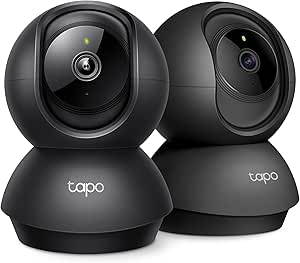


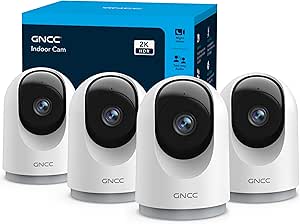
| home security cameras with wifi | Resolution | Storage | Power | Wi-Fi |
|---|---|---|---|---|
| AOQEE 2K Cameras for Home Secu | 2K Ultra HD | SD card up to 128GB or cloud storage | 5V, 5W | — |
| Anona 4K UHD Indoor Security C | 4K UHD, 8MP | microSD up to 512GB or cloud storage | — | Dual-band Wi-Fi 6, 2.4GHz and 5GHz |
| GMK 4 Pack Wireless Outdoor Se | 2K, 3MP | Local SD card or cloud | Rechargeable battery | 2.4GHz only |
| 2K Security Camera System | 2K | MicroSD card or cloud storage | Solar and battery | 2.4GHz and 5GHz |
| SEHMUA 2K Solar Wireless Outdo | 2K | MicroSD up to 128GB or optional cloud storage | Solar-powered, 6000mAh battery | 2.4GHz only |
| LaView Security Cameras 4-Pack | 1080p | Cloud (30-day trial) or microSD up to 128GB | Wired | 2.4GHz |
| Tapo 1080P Indoor Security Cam | 1080p | MicroSD up to 512GB or Tapo Care cloud | Wired | — |
| Blink Outdoor 4 and Wired Door | — | — | — | 2.4GHz 802.11b/g/n |
| Anona 4K UHD Indoor Security C | 4K UHD (8 MP) | MicroSD up to 512GB or cloud storage | 5V, 10W | Dual-band Wi-Fi 6 (2.4GHz/5GHz) |
| Aosu D1 Classic 4-Cam Kit Wire | 3MP (2K) | Built-in 32GB aosuBase | Solar powered | — |
| Tapo 2K Pan Tilt Security Came | 2K HD | — | — | 2.4GHz |
| AOQEE 5G Cameras for Home Secu | 3 MP | Optional cloud or TF card from 8GB to 128GB; card not included | Plug-in | — |
| 2K Security Cameras 4 Pack | 2304 x 1296 | SD card up to 128GB; cloud storage available | Corded electric, 5V | Dual-band 2.4GHz and 5GHz |
| 2026 Enhanced 2K UHD Wireless | 2000 pixels | Cloud and SD card up to 256GB | — | 2.4GHz and 5GHz |
| GNCC 5G Indoor Security Camera | 3 MP | — | 5V, 3W | — |
More Details on Our Top Picks
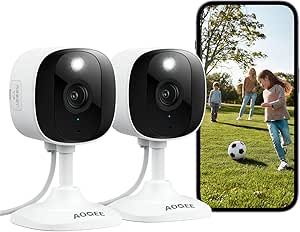
AOQEE 2K Cameras for Home Security, Indoor/Outdoor, Full Color, C1 2-Pack
I’d choose this pair when I want two cameras that can move between indoor and outdoor roles without committing to a battery-based system. Its 2K video, color night vision, and IP65 weather resistance give it broader placement options than the indoor-only Anona 4K UHD Indoor Security Camera. Two-way audio can help with quick conversations, while SD-card or cloud storage lets me choose between local recording and an online option. The tradeoff is that these cameras need a 5V power connection, so installation may take more planning than the wire-free GMK 4 Pack. Wi-Fi is also required for full functionality, and the SD card is not included. I’d favor AOQEE for flexible placement, not for buyers who want a cable-free outdoor setup.
Pros:- 2K resolution and color night vision provide more useful detail after dark than basic night-vision-only coverage.
- IP65 weather resistance supports outdoor placement as well as indoor monitoring.
- Two-way audio supports remote communication through the camera.
- SD-card and cloud storage options allow a choice of recording method.
Cons:- Requires a 5V power connection, limiting placement compared with battery-powered outdoor models.
- SD card is not included and supports up to 128GB.
- Setup may feel complex for buyers who want a simple plug-in camera.
Best for: Households that want one pair of cameras for a mix of indoor rooms and sheltered outdoor areas, with local or cloud recording options.
Not ideal for: Renters or homeowners who need battery-powered, cable-free placement outdoors, or buyers who want the easiest possible setup.
- Resolution:2K Ultra HD
- Night vision range:32 feet
- Storage:SD card up to 128GB or cloud storage
- Power:5V, 5W
- Weather resistance:IP65
- Audio:Two-way audio
- Compatibility:Alexa and Google Assistant
- Mount:Wall or ceiling
Our verdict“Choose this pair if you need versatile 2K cameras for both indoor and outdoor locations and can accommodate wired power.”
Anona 4K UHD Indoor Security Camera (2 Pack)
For close indoor monitoring, I’d put the Anona pair ahead of the AOQEE C1 because it combines 4K video with 8x digital zoom and pan-and-tilt coverage. That detail can help when checking a pet’s behavior or looking across a larger room, while person, pet, and crying detection can make alerts more relevant to families. Dual-band Wi-Fi 6 also offers more network flexibility than the 2.4GHz-only GMK outdoor set. The main limitation is placement: these are indoor cameras, not weather-resistant outdoor units. Their advanced tracking and detection features may also mean a more involved setup, and local recording requires a separately purchased microSD card. I’d pick Anona for active indoor coverage, but not when simple fixed-view monitoring is the priority.
Pros:- 4K video and 8x digital zoom provide fine detail when checking activity around a room.
- 360° pan and 110° tilt expand coverage beyond a fixed camera angle.
- AI detection covers people, pets, and crying to tailor alerts to household needs.
- Dual-band Wi-Fi 6 and local or cloud storage offer flexible connection and recording options.
Cons:- Designed for indoor use, unlike the outdoor-rated AOQEE and GMK options.
- MicroSD card is not included, so local recording requires an additional purchase.
- Advanced tracking and detection features can make setup more involved.
Best for: Parents and pet owners who want detailed, adjustable indoor coverage with automated tracking and alerts for specific activity.
Not ideal for: Buyers who need cameras for outdoor exposure, want a fixed plug-in view, or prefer a simpler setup with fewer features.
- Resolution:4K UHD, 8MP
- Zoom:8x digital
- Pan and tilt:360° pan, 110° tilt
- Wi-Fi:Dual-band Wi-Fi 6, 2.4GHz and 5GHz
- Storage:microSD up to 512GB or cloud storage
- Audio:Two-way audio
- Detection:AI detection for people, pets, and crying
- Compatibility:Smartphone app, Alexa, and Google Assistant
Our verdict“Choose Anona if detailed, moving indoor coverage matters more than weather resistance or a simple fixed view.”
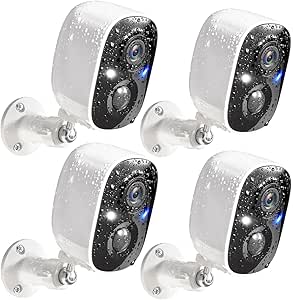
GMK 4 Pack Wireless Outdoor Security Cameras System, 2K Video
The GMK four-camera set is the most straightforward choice here for covering several outdoor angles without running power cables. Battery operation and a listed setup time of about three minutes make it a simpler installation proposition than the solar-powered four-pack, which relies on sun exposure for charging. Each camera offers 2K video, color and infrared night vision, and IP65 weather resistance; sirens and flashing lights add an active deterrent absent from the AOQEE C1 pair. The tradeoff is that the GMK system supports 2.4GHz Wi-Fi only, so it won’t suit a network that depends on 5GHz. Battery life also varies with use, and advanced cloud features require a subscription. I’d choose it for quick multi-point coverage, not for low-maintenance power or 5GHz connectivity.
Pros:- Four battery-powered cameras can cover several outdoor approaches without power cables.
- 2K video with color and infrared night vision supports day and night monitoring.
- AI PIR motion detection, siren, and flashing lights add alert and deterrent functions.
- IP65 weather resistance and a listed setup time of about three minutes suit outdoor installation.
Cons:- Connects only to 2.4GHz Wi-Fi, unlike the dual-band solar system in this roundup.
- Battery life varies with activity, so cameras may need periodic recharging.
- Advanced cloud features require a subscription.
Best for: Homeowners who want to cover multiple outdoor approaches quickly without installing power wiring or relying on solar exposure.
Not ideal for: Households with only 5GHz Wi-Fi coverage, or buyers who want minimal battery upkeep and advanced cloud features without a subscription.
- Quantity:4 cameras
- Resolution:2K, 3MP
- Night vision:Color and infrared
- Power:Rechargeable battery
- Battery life:1–6 months standby
- Wi-Fi:2.4GHz only
- Weather resistance:IP65
- Storage:Local SD card or cloud
- Motion and deterrence:AI PIR detection, siren, and flashing lights
Our verdict“Choose GMK for quick, wire-free outdoor coverage across several locations if your Wi-Fi supports 2.4GHz and battery upkeep is acceptable.”
2K Security Camera System, 5GHz & 2.4GHz WiFi Solar Wireless Cameras for Home Security, Wire-free Installation, AI Detection, Two-way Audio, Mobile Alerts, SD/Cloud Storage, Color Night Vision, 4 Packs
I’d rank this four-camera system above the GMK set for buyers whose outdoor Wi-Fi uses both 2.4GHz and 5GHz and who want solar-assisted power. Its 2K color night vision, AI human detection, and two-way audio combine useful visibility with remote communication, while the solar-and-battery setup can reduce routine charging compared with GMK’s battery-only cameras. SmartThings compatibility may also suit a home already using that platform. This setup is not entirely hands-off: solar charging depends on sunlight, and the microSD card is sold separately; cloud storage is available, but no subscription is included. The stated 328-foot night-vision range is a listed capability, not a reason to overlook placement and lighting needs. I’d choose it over the SEHMUA pair for four-camera coverage and dual-band Wi-Fi.
Pros:- Four cameras provide broader property coverage than the two-camera SEHMUA set.
- Solar and battery power can reduce the need for regular manual charging.
- Dual-band 2.4GHz and 5GHz Wi-Fi supports a wider range of home networks than 2.4GHz-only models.
- AI human detection, two-way audio, and SmartThings compatibility add useful monitoring options.
Cons:- Solar charging works best with adequate sunlight, which can limit placement in shaded areas.
- MicroSD card is not included, and cloud storage does not come with an included subscription.
- The stated 328-foot night-vision range may not match every installation or viewing condition.
Best for: Homeowners who need four outdoor camera locations, have dual-band Wi-Fi, and can place cameras where solar panels receive useful sunlight.
Not ideal for: Buyers with shaded mounting spots, a 2.4GHz-only network, or a preference for included local storage media or cloud service.
- Quantity:4 cameras
- Resolution:2K
- Wi-Fi:2.4GHz and 5GHz
- Power:Solar and battery
- Night vision range:328 feet
- Storage:MicroSD card or cloud storage
- Detection:AI human detection
- Compatibility:SmartThings
Our verdict“Choose this system for four outdoor viewpoints and solar-assisted power if you have dual-band Wi-Fi and sunny mounting locations.”
SEHMUA 2K Solar Wireless Outdoor Security Cameras, 2 Pack, Pan/Tilt, Color Night Vision, Easy Install, PIR Alarm, 2-Way Audio
SEHMUA’s two-camera set stands out when I want solar-powered outdoor cameras that can pan across a broad area. Its 355-degree viewing angle, stated 360-degree field of view, and 4x digital zoom give each unit more flexibility than the fixed bullet-style AOQEE C1, while color night vision and two-way audio support visibility and conversation after dark. The 6000mAh battery and solar power are intended to reduce manual charging, but that benefit depends on getting suitable sunlight at the mounting points. Compared with the four-camera solar system, SEHMUA covers fewer locations and supports only 2.4GHz Wi-Fi; it also accepts microSD cards up to 128GB, rather than the other system’s dual-band connection. I’d pick it for adjustable views, not for 5GHz networks or shaded sites.
Pros:- Pan-and-tilt coverage offers more control over the viewed area than the fixed AOQEE C1 cameras.
- Solar power and a 6000mAh battery can reduce routine charging when the panels receive enough sunlight.
- 2K video, color night vision, and 4x digital zoom support detailed outdoor monitoring.
- IP65 waterproof construction and wall or ceiling mounting suit varied outdoor placements.
Cons:- Supports 2.4GHz Wi-Fi only, unlike the dual-band four-camera solar system.
- Solar charging depends on sunlight and may be less effective in shaded locations.
- MicroSD card is not included, and local storage is limited to 128GB.
Best for: Homeowners who want two solar-powered outdoor cameras with movable views for driveways, yards, or other broad areas.
Not ideal for: Households that rely on 5GHz Wi-Fi, need four camera positions, or have shaded mounting locations that limit solar charging.
- Quantity:2 cameras
- Resolution:2K
- Viewing angle:355 degrees
- Field of view:360 degrees
- Zoom:4x digital
- Storage:MicroSD up to 128GB or optional cloud storage
- Power:Solar-powered, 6000mAh battery
- Wi-Fi:2.4GHz only
- Weather resistance:IP65
Our verdict“Choose SEHMUA for two solar-powered outdoor cameras with adjustable wide-area views, provided your network is 2.4GHz and the panels can get sunlight.”
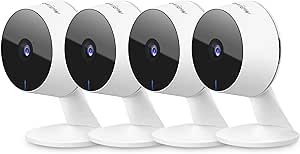
LaView Security Cameras 4-Pack, Indoor 1080P Wi-Fi Security Cameras with Motion Detection, Two-Way Audio, Night Vision, Alexa Compatibility
I’d choose the LaView four-pack when the priority is putting a camera in several rooms without adding outdoor equipment. Each wired unit records 1080p video, supports night vision up to 33 feet, and includes two-way audio, so the set can cover routine indoor checks and let household members speak through the app. Sharing with up to 20 users and viewing multiple streams suit families who want several people to keep an eye on different spaces.
Compared with the Anona 4K UHD Indoor Security Camera four-pack, LaView gives up 4K detail, pan-and-tilt movement, and dual-band Wi-Fi in exchange for a simpler fixed-camera setup. Its 2.4GHz-only Wi-Fi and wired power also limit placement, while cloud storage starts with a trial rather than a lasting included plan. I’d skip it if you need flexible, cable-free positioning or higher-detail footage.
Pros:- Four cameras make it practical to monitor several rooms from one setup.
- 1080p video and night vision up to 33 feet support day and night indoor checks.
- Two-way audio allows remote communication through the cameras.
- Access sharing for up to 20 users can suit larger households.
Cons:- 2.4GHz Wi-Fi only may not fit networks or setups that depend on 5GHz.
- Wired power restricts camera placement and can leave visible cables.
- Cloud storage is trial-based, so ongoing cloud use may require a separate plan.
Best for: Households that want fixed cameras in several indoor rooms and need shared app access for family members or caregivers.
Not ideal for: Buyers who need 5GHz Wi-Fi, cordless placement, or pan-and-tilt coverage; the cameras require wired power and connect over 2.4GHz Wi-Fi.
- Resolution:1080p
- Night vision range:33 ft
- Viewing angle:84 degrees
- Wi-Fi:2.4GHz
- Storage:Cloud (30-day trial) or microSD up to 128GB
- Power:Wired
- Camera count:4
- Mount:Wall mount
Our verdict“Choose the LaView four-pack for shared, fixed indoor coverage across multiple rooms, but skip it if you want wireless placement or higher-resolution video.”
Tapo 1080P Indoor Security Camera, Baby Monitor, Dog Camera, Wired, C100
The Tapo C100 is a straightforward pick for someone who wants one plug-in indoor camera for a nursery, pet area, or entry room. Its 1080p video, two-way audio, and customizable alarms cover everyday monitoring without the multi-camera commitment of the LaView four-pack. Local microSD storage up to 512GB also gives buyers a way to keep footage on-site, while Alexa and Google Assistant support can fit an existing voice-controlled setup.
The supplied information lists full-color night vision up to 30 feet, but does not specify how that mode works in darkness, so I would check the operating details before relying on color footage at night. The IP65 rating is unusual for an indoor-focused camera and does not make this a cordless outdoor model: it remains wired. Compared with the Anona 4K four-pack, the C100 is less feature-heavy and lower resolution, but its single-camera role is easier to manage.
Pros:- 1080p video, two-way audio, and customizable alarms cover core indoor monitoring needs.
- Supports microSD cards up to 512GB as well as Tapo Care cloud storage.
- Works with Amazon Alexa and Google Assistant.
- IP65 weather-resistance rating provides added protection for varied environments.
Cons:- Wired power limits placement away from outlets.
- The product details do not explain battery life or clarify the full-color night vision conditions.
- A single fixed camera offers less broad coverage than the LaView or Anona multi-camera packs.
Best for: People who need one wired camera for a nursery, pet room, or other indoor space, especially if they want local microSD recording and voice-assistant support.
Not ideal for: Buyers seeking multi-room coverage, a battery-powered camera, or advanced pan-and-tilt tracking; this is a single wired camera.
- Resolution:1080p
- Night vision:Full-color, up to 30 ft
- Storage:MicroSD up to 512GB or Tapo Care cloud
- Power:Wired
- Connectivity:Wi-Fi
- Weather resistance:IP65
- Voice assistants:Amazon Alexa and Google Assistant
- Audio:Two-way audio
Our verdict“Pick the Tapo C100 for uncomplicated, one-room monitoring with local storage, not for a multi-camera or cordless security setup.”
Blink Outdoor 4 and Wired Doorbell 2K+ (Newest Model) — 2K HD Cameras and Hardwired Doorbell with Sync Module Core (Black)
This Blink bundle suits buyers who want to cover both the yard and the front door without relying on one camera’s view. It combines three Outdoor 4 cameras with a wired doorbell, giving the system a broader perimeter role than the indoor-focused LaView and Tapo options. Outdoor cameras run on two AA lithium batteries, while the doorbell connects to existing low-voltage wiring; Alexa compatibility and smart detection add convenient ways to check activity.
The listing’s resolution details distinguish the Outdoor 4’s 1080p camera resolution from the doorbell’s 2K video, so I would not assume every view in the bundle captures 2K. 2.4GHz Wi-Fi is required, and cloud video storage or some features need a separate Blink plan. Compared with the Aosu D1 kit, Blink combines cameras with a doorbell but does not list solar charging or included local storage, making ongoing power and storage arrangements part of the decision.
Pros:- Three outdoor cameras and a wired doorbell cover more locations than an indoor-only kit.
- Outdoor cameras use two AA lithium batteries rather than requiring a nearby power outlet.
- Doorbell supports 2K video, with a listed 140-degree horizontal and vertical field of view.
- Alexa compatibility and smart detection support app-based monitoring.
Cons:- The Outdoor 4 camera resolution is listed as 1080p, while 2K video applies to the doorbell.
- Cloud video storage and some features require a separate Blink plan.
- Outdoor cameras need battery replacement, and Wi-Fi is limited to 2.4GHz.
Best for: Homeowners who want multiple outdoor viewpoints plus a wired doorbell, and already have compatible Wi-Fi and doorbell wiring.
Not ideal for: Buyers who want a solar-powered system, included local video storage, or a bundle where all cameras clearly record at 2K.
- Bundle:Three Outdoor 4 cameras and one wired doorbell
- Camera resolution:1080p HD (Outdoor 4)
- Doorbell video resolution:2K (1920 x 1920)
- Field of view:143° diagonal (Outdoor 4); 140° horizontal/vertical (doorbell)
- Wi-Fi:2.4GHz 802.11b/g/n
- Outdoor camera power:Two AA lithium batteries per camera
- Doorbell power:12–24V AC or 24V DC
- Operating temperature:-4°F to 113°F (-20°C to 45°C)
Our verdict“Choose Blink when a combined outdoor-camera and wired-doorbell bundle matters more than solar power or included local recording.”
Anona 4K UHD Indoor Security Camera (4 Pack)
The Anona four-pack is the most feature-rich indoor choice here for buyers who want to follow movement rather than watch a fixed frame. Its 4K UHD image, 8x digital zoom, and 360-degree pan can help inspect a room from one camera position, while AI detection for people, pets, and crying is geared to homes with varied monitoring needs. Dual-band Wi-Fi 6 supports both 2.4GHz and 5GHz networks, unlike the LaView four-pack’s 2.4GHz-only connection.
That added flexibility comes with a more involved setup and a 15 fps frame rate, which is worth weighing if smooth motion matters more than pixel detail. The cameras are freestanding and need 5V, 10W power, so they are not a cordless outdoor solution. Compared with the simpler Tapo C100, Anona offers more coverage and detection features, but may feel excessive for monitoring just one room. A microSD card is not included.
Pros:- 4K UHD resolution and 8x digital zoom provide more detail for reviewing indoor activity.
- 360-degree pan, 110-degree tilt, and auto-tracking help cover more of a room.
- AI detection includes people, pets, and crying.
- Dual-band Wi-Fi 6 supports 2.4GHz and 5GHz connections.
Cons:- The 15 fps frame rate may look less smooth than higher-frame-rate video.
- A microSD card is not included, and cloud storage is a separate option.
- The broad feature set and Wi-Fi setup may take more effort than the Tapo C100.
Best for: Households monitoring several indoor rooms that want high-resolution footage, moving-camera coverage, and person, pet, or crying detection.
Not ideal for: Buyers who want a plug-and-play basic camera, smooth high-frame-rate video, or outdoor, battery-powered coverage.
- Resolution:4K UHD (8 MP)
- Digital zoom:8x
- Pan and tilt:360° pan, 110° tilt
- Wi-Fi:Dual-band Wi-Fi 6 (2.4GHz/5GHz)
- Storage:MicroSD up to 512GB or cloud storage
- Frame rate:15 fps
- Power:5V, 10W
- Camera count:4
Our verdict“Choose Anona if indoor detail and active tracking matter across several rooms, but opt for the Tapo C100 for simpler single-room monitoring.”
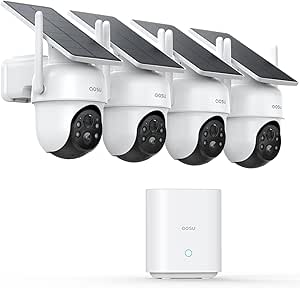
Aosu D1 Classic 4-Cam Kit Wireless Outdoor Security Cameras with Solar Power
The Aosu D1 is the strongest fit in this group for buyers who want outdoor coverage without routine battery swaps or a required cloud plan. Four cameras pair solar power with 32GB of encrypted local storage, and the listed 360-degree coverage with auto-tracking can follow movement rather than leaving activity at the edge of a fixed frame. Full-color night vision and two-way audio add useful context when checking footage after dark.
Unlike the Blink bundle, Aosu does not include a doorbell, and the system’s solar charging depends on getting sufficient sunlight at the installation points. It is also an outdoor-only, wall-mounted kit, so it is not a substitute for the indoor coverage offered by the LaView or Anona packs. The 2K resolution is below Anona’s 4K, but the Aosu’s solar power and included local storage make it a better match for buyers prioritizing ongoing independence over maximum image detail.
Pros:- Solar power reduces routine battery changes when installation spots receive sufficient sunlight.
- Built-in 32GB storage records locally without a required subscription.
- 360-degree coverage and auto motion tracking can follow activity across a wider area.
- Full-color night vision and two-way audio support after-dark monitoring.
Cons:- Solar charging depends on sunlight at each camera location.
- The IP65-rated kit is intended for outdoor use, not indoor room monitoring.
- The 2K resolution offers less image detail than the Anona 4K indoor cameras.
Best for: Homeowners who need several outdoor camera views, have suitable sun exposure, and prefer solar power with local recording instead of a required subscription.
Not ideal for: People with shaded camera locations, renters unable to screw cameras into walls, or households needing indoor cameras or a doorbell.
- Camera count:4
- Resolution:3MP (2K)
- Storage:Built-in 32GB aosuBase
- Power:Solar powered
- Connectivity:Wi-Fi
- Night vision:Full-color
- Coverage:360° field of view; 105° viewing angle
- Audio and tracking:Two-way audio; auto tracking and PTZ
Our verdict“Pick the Aosu D1 for solar-powered outdoor monitoring with local storage, provided the mounting locations get enough sun.”
Tapo 2K Pan Tilt Security Camera for Baby Monitor, Dog Camera (2-Pack)
The Tapo C211 makes the most sense when one fixed camera would leave too many blind spots. Its 360° horizontal pan and 114° tilt let you check different parts of a room from the app, while 2K video, night vision, and person detection help distinguish everyday movement from activity worth checking. Unlike the AOQEE 5G two-pack, its listed Wi-Fi support is limited to 2.4GHz, so it may be a less convenient fit for homes that rely on 5GHz coverage. The Tapo counters with RTSP/ONVIF support alongside Alexa and Google Assistant compatibility, giving it more connection options for some setups. Local microSD recording avoids relying only on cloud storage, but the card is not included and some features may require Tapo Care. This is an indoor-only, plug-in style pick, not a choice for outdoor coverage.
Pros:- 360° horizontal pan and 114° vertical tilt help cover more of a room than a fixed-view camera
- 2K video and night vision support clear monitoring in daylight and darkness
- Supports microSD storage up to 512GB as well as cloud storage
- Alexa, Google Assistant, and RTSP/ONVIF compatibility offer several integration paths
Cons:- Works with 2.4GHz Wi-Fi only, unlike the dual-band AOQEE indoor cameras
- MicroSD card is not included, and some features may require a Tapo Care subscription
- Designed for indoor use only
Best for: Households that want to monitor a pet, nursery, or shared room with remotely steerable coverage and the option of local recording
Not ideal for: Buyers who need outdoor protection, 5GHz Wi-Fi support, or a camera that records locally without buying a microSD card
- Resolution:2K HD
- Pan and tilt:360° horizontal, 114° vertical
- Wi-Fi:2.4GHz
- Local storage:MicroSD up to 512GB; card not included
- Night vision:Yes
- Audio:Two-way audio
- Compatibility:Alexa, Google Assistant, RTSP/ONVIF
- Alarm:Built-in siren and light
Our verdict“Choose the Tapo two-pack for adjustable indoor coverage and broad integration options, provided 2.4GHz Wi-Fi and a separate storage card suit your setup.”
AOQEE 5G Cameras for Home Security Indoor, Pet Monitor 2-Pack
The AOQEE two-pack is a good match for indoor monitoring where dual-band Wi-Fi matters as much as camera movement. It supports both 2.4GHz and 5GHz networks, plus Bluetooth, and offers 360° pan-tilt auto-tracking to follow activity around a room. That makes it more appealing than the 2.4GHz-only Tapo C211 for homes set up around 5GHz Wi-Fi, though Tapo lists RTSP/ONVIF compatibility that the AOQEE specs do not. Its 3 MP video, night vision, and Alexa support cover common pet and family monitoring needs, with cloud or TF-card storage available. The TF card is not included, cloud is optional, and some functions depend on the app or Alexa integration. As an indoor plug-in camera, it cannot replace the weatherproof four-camera option in this roundup.
Pros:- Dual-band 2.4GHz and 5GHz Wi-Fi plus Bluetooth provide flexible setup connectivity
- 360° pan-tilt auto-tracking follows movement around the monitored area
- 3 MP resolution and night vision suit day-and-night indoor monitoring
- Offers optional cloud and TF-card storage with Alexa compatibility
Cons:- TF card is not included, and cloud storage is optional
- Indoor-only design does not cover exposed outdoor areas
- Some functions rely on the app or Alexa integration
Best for: Households with 5GHz Wi-Fi that want app-based indoor pet or baby monitoring with automatic camera tracking
Not ideal for: Buyers seeking outdoor cameras, included local storage, or the RTSP/ONVIF options listed for the Tapo C211
- Resolution:3 MP
- Viewing angle:99 degrees
- Wi-Fi and Bluetooth:2.4GHz and 5GHz Wi-Fi; Bluetooth
- Power:Plug-in
- Mounting:Self-standing, wall mount, or ceiling mount
- Storage:Optional cloud or TF card from 8GB to 128GB; card not included
- Dimensions:2.83 x 2.83 x 4.49 inches
- Weight:6.4 ounces
Our verdict“Pick the AOQEE pair if you want dual-band Wi-Fi and tracking for indoor monitoring, but look elsewhere for outdoor coverage or included storage.”
2K Security Cameras 4 Pack, Indoor/Outdoor Home Cameras for Baby and Pets
This four-camera set is the most versatile choice here for buyers who want to cover both rooms and exposed areas. Its IP65 water resistance gives it an outdoor role that the indoor-only Tapo and AOQEE pairs cannot fill, while dual-band Wi-Fi supports both 2.4GHz and 5GHz networks. The 2304 x 1296 resolution, color night vision, and stated 33-foot night-vision range help with monitoring after dark; motion notifications and two-way talk add practical ways to respond remotely. Compared with the battery-powered 2026 Enhanced outdoor camera, this set requires continuous 5V power, so placement depends on access to an outlet or power arrangement. Local SD recording is supported up to 128GB, but the card is not included, and some features may require cloud service. Choose it for powered, multi-area coverage rather than wire-free installation.
Pros:- IP65 water resistance makes the cameras suitable for indoor and outdoor placement
- Dual-band Wi-Fi supports 2.4GHz and 5GHz networks
- Color night vision and a stated 33-foot range support after-dark monitoring
- Motion notifications, two-way talk, and several mounting options broaden placement choices
Cons:- Continuous 5V power limits placement compared with the battery-powered 2026 Enhanced outdoor camera
- SD card is not included, and local capacity is limited to 128GB
- Some features may require cloud service
Best for: Homeowners who want one camera set for indoor rooms and weather-exposed entryways, with access to continuous power
Not ideal for: Renters or property owners who need battery-powered placement away from outlets, or buyers wanting local storage included
- Resolution:2304 x 1296
- Wi-Fi:Dual-band 2.4GHz and 5GHz
- Weather resistance:IP65
- Night vision:Color night vision with white LEDs; stated range 33 feet
- Storage:SD card up to 128GB; cloud storage available
- Power:Corded electric, 5V
- Connectivity:Wi-Fi and Bluetooth
- Mounting:Ceiling, wall, tabletop, or tree
Our verdict“Choose this four-pack for mixed indoor and outdoor coverage if you can provide continuous power at each camera location.”
2026 Enhanced 2K UHD Wireless Outdoor Security Camera with Full-Color Night Vision
For outdoor locations where running a power cable is inconvenient, this camera’s battery rated for up to six months is its main distinction. It pairs that flexible placement with a wall mount, waterproof construction, dual-band Wi-Fi, two-way audio, and motion alerts. Full-color night vision can make nighttime footage easier to interpret than a basic monochrome view, while the stated 30 fps recording supports smooth-looking video. Compared with the four-camera 2K set, this is a more flexible single-camera option because it does not require continuous power; the tradeoff is that battery life varies with activity, and the product data does not specify a multi-camera bundle. Storage can use cloud or an SD card up to 256GB, but the camera still depends on Wi-Fi and the card is not included. Its listed 1x optical zoom also offers no magnification advantage.
Pros:- Battery life is rated for up to six months, allowing placement without a power cable
- Full-color night vision supports more descriptive nighttime footage
- Dual-band Wi-Fi works with 2.4GHz and 5GHz networks
- Cloud and SD-card storage options are listed, with SD support up to 256GB
Cons:- Actual battery life varies with motion activity
- Wi-Fi is required for operation, so it is not an offline camera
- SD card is not included, and 1x optical zoom provides no magnification
Best for: Homeowners who need a single outdoor camera mounted away from outlets and can recharge or maintain its battery as needed
Not ideal for: Buyers needing continuous wired recording, a multi-camera set, or an outdoor camera that can operate without Wi-Fi
- Resolution:2000 pixels
- Night vision:Full-color
- Battery life:Up to 6 months
- Wi-Fi:2.4GHz and 5GHz
- Storage:Cloud and SD card up to 256GB
- Water resistance:Waterproof
- Frame rate:30 fps
- Mounting and focus:Wall mount; autofocus; 1x optical zoom
Our verdict“Choose this camera for flexible outdoor placement without a power cable, but not for wired continuous recording or multi-camera coverage.”
GNCC 5G Indoor Security Cameras (4 Pack) with Phone App, 2K Night Vision, Pan/Tilt, Two-Way Audio, Cloud & SD Storage
The GNCC set is aimed at buyers who want to monitor several indoor spaces without assembling a system one camera at a time. Its four-camera bundle, 3 MP video, night vision, and two-way audio cover common room-by-room needs; each camera can pan horizontally through 355° and tilt vertically through 90°, giving it broader steerable coverage than a fixed camera. Compared with the Tapo C211 two-pack, GNCC supplies more cameras, while Tapo lists a wider 360° horizontal pan, greater vertical tilt, and RTSP/ONVIF compatibility. GNCC works with Alexa and Google Assistant, but the supplied specs say only “Wi-Fi,” without confirming whether 5GHz is supported despite “5G” in the product title. Setup also has a stated Wi-Fi proximity requirement of within 3 feet. SD cards are not included, and cloud storage may add a subscription cost.
Pros:- Four cameras provide room-by-room indoor coverage in one set
- 355° horizontal and 90° vertical pan-tilt movement help redirect the view
- 3 MP resolution, night vision, and two-way audio support day-to-day monitoring
- Alexa and Google Assistant compatibility enable voice control
Cons:- Product specs list Wi-Fi without confirming 5GHz support
- Setup requires Wi-Fi within 3 feet, which may complicate installation
- SD cards are not included, and cloud storage may incur additional costs
Best for: Households that want four steerable indoor cameras for multiple rooms and use Alexa or Google Assistant
Not ideal for: Buyers who need outdoor protection, confirmed 5GHz connectivity, included SD cards, or camera setup without close Wi-Fi access
- Number of cameras:4
- Resolution:3 MP
- Pan and tilt:355° horizontal, 90° vertical
- Connectivity:Wi-Fi; band support not specified in supplied specs
- Power:5V, 3W
- Mount type:Tabletop
- Dimensions:2.95 x 2.95 x 5.87 inches
- Weight:0.66 kg
Our verdict“Choose the GNCC four-pack when indoor camera quantity matters more than confirmed 5GHz support or the Tapo’s broader listed integration options.”

How We Picked
I compared these 15 listings by the decisions buyers face when adding Wi-Fi cameras at home: indoor versus outdoor placement, stated resolution, power method, coverage style, and available storage or detection features. I gave more weight to products whose listed features suit a clearly defined need, such as solar outdoor coverage, adjustable indoor viewing, or a multi-camera setup, rather than treating a higher camera count or resolution as an automatic advantage.
The order reflects versatility and usefulness across common household setups, then narrows toward more specialized choices. Models with meaningful tradeoffs still have a place: wired cameras can simplify indoor power but restrict placement; solar kits can reach more outdoor locations but require suitable exposure; and multi-camera packs can broaden coverage while placing more demands on Wi-Fi and setup. Product names and supplied details do not establish every compatibility, subscription, or network requirement, so I avoid assuming unlisted capabilities and recommend checking current specifications before purchase.
Factors to Consider When Choosing Home Security Cameras With Wifi
Before choosing a camera, I would map what needs watching and how each device will connect and receive power. These broader checks help prevent a common mismatch: buying a feature-rich kit that cannot reliably reach the intended spot.
Map Wi-Fi Coverage Before Choosing Camera Count
A multi-camera pack can simplify a whole-home setup, but every camera still depends on a usable connection at its installation point. Check the signal near exterior walls, garages, and outbuildings rather than relying on the strength beside your router. Some listed products specify 5GHz and 2.4GHz support, while others mention 5G in their product names; those labels are not interchangeable, so confirm the camera’s actual Wi-Fi band requirements. A camera connected to a weak signal may be less useful than a lower-resolution model placed within reliable coverage. If a location is out of range, consider improving your network before buying several cameras. Plan around where the router or access points can serve the cameras, not just how many units come in the box.
Match Power to the Mounting Location
Power affects where a camera can go and how much upkeep it may need. Wired indoor models, such as the listed Tapo C100, suit rooms with convenient outlets but can leave a cable visible or restrict the angle. Solar outdoor models reduce the need for a nearby outlet, though their panels need suitable placement and light; a shaded spot may complicate the plan. Before buying, check what the listing says about batteries, charging, panel placement, and included mounting hardware. A wire-free camera is not automatically maintenance-free, and a wired camera is not automatically easier if the nearest outlet is far away. Choose the power setup for the actual mounting point rather than relying on the broad “wireless” label.
Choose Resolution for the Scene, Not the Label
Resolution can help show more detail, but it does not alone determine whether footage will answer your questions. Think about how far the subject will be from the lens, the scene’s lighting, and whether the camera stays fixed or can pan and tilt. The Anona 4K listings emphasize UHD indoor video, while many other products in this roundup list 2K; that distinction may matter more for a wide room or a detail-focused view than for a small room watched at close range. Night-vision mode and camera placement also affect what the image reveals after dark. Avoid paying attention to resolution in isolation when the intended view is poorly lit or outside the camera’s useful framing. Check example footage and field-of-view details when available.
Decide How You Want to Store and Review Video
Storage determines how you retrieve footage after an alert, and it can shape ongoing costs or dependence on an internet connection. The product names in this roundup mention combinations of SD-card and cloud storage, but they do not establish the full terms, included capacity, subscription needs, or recording limits. Read the current listing and manufacturer documentation to confirm whether a card is included and which features require a paid plan. Think about how long you may need to keep clips and whether you want continuous recording or event-based footage. Local storage may suit buyers who prefer to manage recordings at home, while cloud access may fit those who want remote retrieval; each approach has its own setup and privacy tradeoffs. Make this decision before installing cameras so your chosen recording mode matches your expectations.
Plan Coverage Around Views, Not Just Rooms
Camera count is a poor substitute for a coverage plan. A fixed camera can suit a doorway or a view across a compact room, while a pan-and-tilt model can adjust its angle when the scene changes. Outdoor cameras may need different positions to watch entrances, paths, or vulnerable sides of a property, and a single wide view can leave blind spots near walls or obstructions. Sketch the views you need and note obstacles such as trees, rooflines, windows, and reflective surfaces before settling on a pack size. For indoor monitoring, decide whether you need a fixed view or the ability to reposition the lens remotely. Buying fewer cameras with well-chosen angles can be more useful than placing every camera in a poor location.
Check Alerts, Privacy, and App Expectations
Motion alerts are only helpful when they are timely and relevant enough to act on. Product listings may describe AI or PIR detection, but the precise detection categories, sensitivity controls, notification delays, and plan requirements can vary. Check whether the app supports the phones and accounts in your household and whether family members can share access. For indoor cameras, think about when recording should pause and what controls the manufacturer provides for privacy. Also confirm compatibility claims, including smart-home support, against the devices and services you already use; a product name or a brief listing phrase may not tell the full story. A little setup research can prevent unwanted alerts or a camera that does not fit the way your household manages access.
Frequently Asked Questions
Can I mix 2.4GHz and 5GHz Wi-Fi cameras on the same home network?
Often a home router can provide both bands, but each camera only connects to the band and network setup its manufacturer supports. The listed products include references to 2.4GHz, 5GHz, and “5G,” so do not infer compatibility from the name alone. Check each model’s setup requirements, including whether your router must show separate network names during installation. If your router combines bands automatically, confirm whether the camera app supports that arrangement. For a multi-brand setup, verify each camera’s requirements before mounting the units.
Is a solar Wi-Fi camera a good choice for a shaded porch or north-facing wall?
It may not be the easiest fit if the solar panel receives limited direct light. Solar power can make outdoor placement more flexible, but the panel still needs a suitable location and the camera may need another charging plan depending on its design and conditions. Check whether the panel can be mounted apart from the camera and how its cable affects placement. Compare that arrangement with a wired model or a camera you can access for charging. Do not assume a solar label means the camera will never need attention.
Should I choose a four-camera kit or buy two cameras first?
Start with the views you genuinely need and the Wi-Fi coverage at each location. A four-camera bundle can make sense when you have several distinct areas to watch, but unused cameras do not improve security and may add setup work. Buying two first can help you learn how alerts, storage, and app access fit your routine before expanding. Check whether additional cameras can be added to the same system and whether they need a hub or a particular account setup. For a large property, test network reach at the farthest planned location before committing to a full kit.
Is 4K worth choosing over 2K for an indoor camera?
It depends on the area being monitored and how you expect to use the footage. A wider room or a view where fine detail matters may benefit from a higher-resolution camera, but lighting, lens framing, and distance still shape what you can see. A 2K pan-and-tilt camera may cover a changing indoor scene more usefully than a fixed 4K camera aimed at only one part of it. Check storage needs and network demands as well, since higher-resolution video can affect both. Choose 4K for a specific detail need rather than treating the label as a guarantee of clearer evidence in every situation.
Do I need a cloud subscription to use these cameras?
That depends on the model and which recording or alert features you want. Some product names mention SD-card storage, cloud storage, or both, but those phrases do not confirm whether a card is included or whether cloud functions require a subscription. Review the manufacturer’s current terms for recording history, playback, notifications, and any plan limits. If you prefer local recording, confirm that the camera supports it and learn how footage is retrieved. Make the storage choice part of your comparison rather than assuming every advertised feature works without an ongoing plan.
Conclusion
For a broadly useful starting point, I’d choose the AOQEE 2K C1 2-Pack as best overall because its listed indoor/outdoor flexibility and full-color night vision suit more than one placement plan. Buyers seeking best value through wider coverage should compare the GMK four-pack and other multi-camera bundles against their actual Wi-Fi reach and storage needs, rather than choosing by camera count alone. For a premium-detail priority, the Anona 4K indoor packs are the resolution-led picks, though they are less suited to buyers who need outdoor cameras. Beginners should start with a straightforward indoor setup such as the Tapo C100; it is wired, so it makes the most sense near an outlet. For specific needs, I’d look to the Aosu D1 for solar outdoor coverage or the Tapo 2K Pan Tilt 2-Pack for adjustable indoor views. The right choice is the one whose power, network, and storage setup fit the locations you actually need to monitor.


