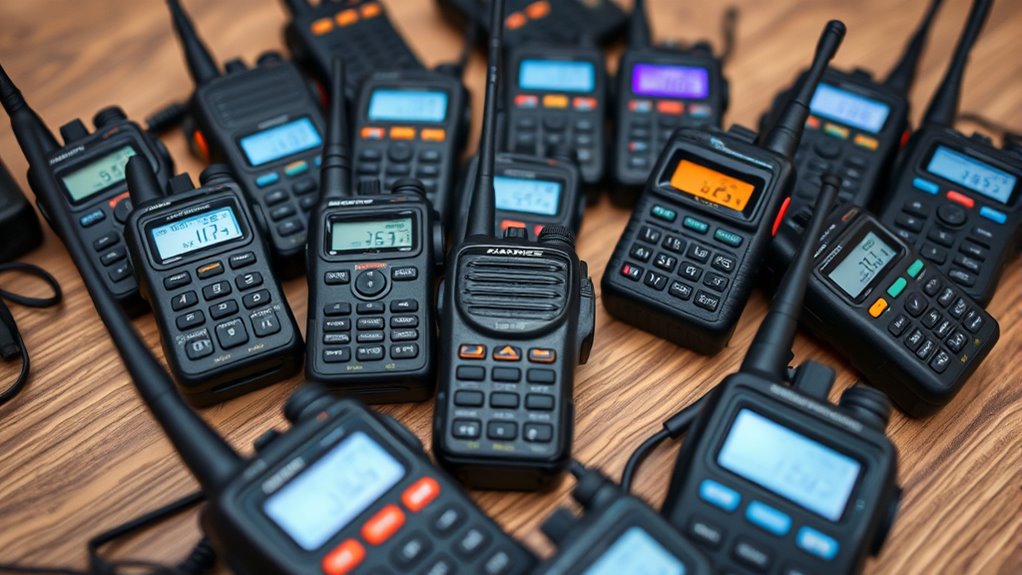

For a ham radio handheld for beginners and emergency use, I’d start with the Retevis Ailunce HA1UV for its IP67 water protection, then compare it with the Tenway TP-900 Pro for GPS and APRS features and the BAOFENG 5RM for USB-C charging. The right choice depends on whether you value weather resistance, easier charging, navigation features, or a lower-cost two-radio setup. More transmit power alone does not guarantee longer range; terrain, antenna placement, battery condition, and local repeater access matter too. Ham radio transmission generally requires an amateur license, so a handheld is not automatically a license-free emergency communicator. Continue reading for the full breakdown, including what each model offers and the tradeoffs that matter before you buy.

Get privacy and security gear delivered free with Prime
- Fast, free delivery on millions of items
- Prime Video, Amazon Music and more included
- Member-only deals all year
Key Takeaways
The Ailunce HA1UV stands apart for wet-weather readiness: its stated IP67 protection gives it a clearer case for rain, dust, and rough outdoor conditions than the basic UV-5R-style radios.
The Tenway TP-900 Pro is the feature-led choice: GPS and APRS can support location sharing, but those tools add setup and learning demands that a first-time radio buyer should be ready to handle.
USB-C charging is a practical emergency advantage: the BAOFENG 5RM’s charging approach may fit a modern backup-power kit more easily than radios that rely on dedicated charging equipment.
Two-pack listings favor coordinated buyers: the Baofeng UV-5RM and AR-5RM bundles make most sense when two people need radios, while a solo buyer may prefer spending attention on durability, charging, and setup.
These radios are not interchangeable with license-free walkie-talkies: buyers should check licensing, permitted frequencies, and local repeater coverage before relying on any ham handheld for emergency communication.
| Baofeng UV-5RM Dual-Band Handheld Ham Radio, 2-Pack |  | Best Overall Two-Radio Starter Set | Pack size: 2 radios | Channels: 999 | Receiving frequency: 108–136 MHz, 136–174 MHz, 220–260 MHz, 350–390 MHz, 400–520 MHz | VIEW ON AMAZON | See Our Full Breakdown |
| Baofeng Radio UV-5RM Ham Radio Handheld UV5R Walkie Talkies Long Range |  | Best for Simple Two-Radio Setup | Pack size: 2 radios | Channels: 999 | Receiving frequency: 108–136 MHz, 136–174 MHz, 220–260 MHz, 350–390 MHz, 400–520 MHz | VIEW ON AMAZON | See Our Full Breakdown |
| Baofeng UV-5RM Dual-Band Handheld Ham Radio, 2-Pack |  | Best for Shared NOAA Monitoring | Package quantity: 2 radios | Channels: 999 | Receiving frequency: 108–136 MHz, 136–174 MHz, 220–260 MHz, 350–390 MHz, 400–520 MHz | VIEW ON AMAZON | See Our Full Breakdown |
| Retevis Ailunce HA1UV Ham Radio, IP67 Waterproof Two Way Radio for Emergency |  | Best for Harsh Weather Emergencies | Channels: 256 | Water and dust protection: IP67 | Battery: 2800 mAh lithium-ion, 7.4 V | VIEW ON AMAZON | See Our Full Breakdown |
| Tenway TP-900 Pro 10W Handheld Ham Radio Kit |  | Best Feature-Rich Preparedness Kit | Transmit power: 10 W | Channels: 960 | Transmit frequency: 144–148 MHz / 420–450 MHz | VIEW ON AMAZON | See Our Full Breakdown |
| Baofeng Radio Ham Radio Handheld UV-5R Upgrade Long Range Rechargeable AR-5RM 10W NOAA Weather Emergency Tactical Two Way Radio with Programming Cable for Survival Gear Hunting Camping, 2 Pack |  | Best Two-Radio Emergency Kit | Transmitting frequencies: 144–148 MHz and 420–450 MHz | Receiving frequencies: 108–136, 136–174, 220–260, 350–390, and 400–520 MHz | Channels: Up to 999 | VIEW ON AMAZON | See Our Full Breakdown |
| BAOFENG BF-F8HP PRO Tri-Band Ham Radio |  | Best for Organized Channel Management | Channel memories: 1,000 | Named zones: 10 | Frequency coverage: 1.25 m, VHF, and UHF; receive-only aviation AM, FM broadcast, and NOAA weather | VIEW ON AMAZON | See Our Full Breakdown |
| Baofeng UV-5R Dual-Band Handheld Two-Way Radio |  | Best Basic Starter Radio | Model: UV-5R | Transmit frequency ranges: VHF 144–148 MHz and UHF 420–450 MHz | Channels: 128 | VIEW ON AMAZON | See Our Full Breakdown |
| Retevis RA89 Dual-Band Handheld Ham Radio with Speaker Microphone |  | Best for Wet and Rough Conditions | Frequency ranges: 144–148 MHz and 420–450 MHz | Channels: 200 | Battery capacity: 2500 mAh lithium-ion | VIEW ON AMAZON | See Our Full Breakdown |
| Retevis RA79 Dual-Band Ham Radio |  | Best for Weather Monitoring | Model: RA79 | Transmit and receive bands: 2 m and 70 cm | Additional receive bands: 1.25 m, aviation AM, FM, and NOAA | VIEW ON AMAZON | See Our Full Breakdown |
| BAOFENG 5RM 10W Handheld Two-Way Radio with USB-C Charging and 2500mAh Battery |  | Best for Straightforward Emergency Readiness | Power output: 10W | Frequency range: 144–174 MHz; 420–470 MHz | Memory channels: 999 | VIEW ON AMAZON | See Our Full Breakdown |
| Tenway TP-900 Pro 10W Handheld Ham Radio with GPS, APRS, and NOAA |  | Best for GPS and APRS Features | Model: TP-900 Pro | Output power: Up to 10W | Frequency range: 144–148 MHz; 420–450 MHz | VIEW ON AMAZON | See Our Full Breakdown |
| Ham Radio Handheld HF SSB CW Shortwave Receive AM/FM/SW/MW/LW |  | Best for Broad-Band Listening | Memory channels: 960 | VHF frequency range: 136–174 MHz | UHF frequency range: 400–470 MHz | VIEW ON AMAZON | See Our Full Breakdown |
| ham radio handheld for beginners emergency use | Water resistance | Channels | Battery | Charging |
|---|---|---|---|---|
| Baofeng UV-5RM Dual-Band Handh | Not water resistant | 999 | 2504 mAh, 7.4 V | — |
| Baofeng Radio UV-5RM Ham Radio | Not water resistant | 999 | 2500 mAh, 7.4 V | USB-C cable and desktop charging base listed |
| Baofeng UV-5RM Dual-Band Handh | Not water resistant | 999 | 2500 mAh, 7.4 V | USB-C and desktop charging base |
| Retevis Ailunce HA1UV Ham Radi | — | 256 | 2800 mAh lithium-ion, 7.4 V | USB-C cable and charging base |
| Tenway TP-900 Pro 10W Handheld | Water resistant; specific rating not provided | 960 | — | — |
| Baofeng Radio Ham Radio Handhe | Not water resistant | Up to 999 | Two included 7.4 V, 2500 mAh lithium-ion batteries | USB-C cable and US base charger per radio |
| BAOFENG BF-F8HP PRO Tri-Band H | IP54 | — | Included 7.4 V lithium-ion | — |
| Baofeng UV-5R Dual-Band Handhe | Not water resistant | 128 | 7.4 V, 1800 mAh lithium-ion | — |
| Retevis RA89 Dual-Band Handhel | IP68 | 200 | — | USB-C or desktop charger |
| Retevis RA79 Dual-Band Ham Rad | Not water resistant | 200 | — | USB-C |
| BAOFENG 5RM 10W Handheld Two-W | — | — | — | USB-C; charging base included |
| Tenway TP-900 Pro 10W Handheld | — | — | — | — |
| Ham Radio Handheld HF SSB CW S | Not water resistant | — | — | — |
More Details on Our Top Picks
Baofeng UV-5RM Dual-Band Handheld Ham Radio, 2-Pack
For a beginner preparing a household or small group, this two-radio UV-5RM kit gives each person a handheld plus a speaker microphone, charging base, and USB-C cable. Its NOAA weather receiver and emergency alarm add useful alerting features, while 999 memory channels and CHIRP compatibility give a learner room to organize frequencies as skills grow. Compared with the Retevis Ailunce HA1UV, it is less suited to wet or dusty conditions because this Baofeng is not water resistant; the Retevis is the stronger choice for exposed emergency work. The UV-5RM instead offers broader listed receive coverage and more memory channels. Its 8 km maximum talking range is a stated figure, not a guarantee—terrain, antennas, and operating conditions affect real communication. Transmission is limited to licensed amateur bands, so users need the appropriate license for routine transmitting.
Pros:- Two radios support communication between two people without buying a matching second handheld.
- NOAA weather receiver and emergency alarm add alerting functions for preparedness use.
- USB-C charging, desktop base, and speaker microphone are included.
- 999 memory channels and CHIRP compatibility support organized setup as users gain experience.
Cons:- Not water resistant, unlike the Retevis Ailunce HA1UV.
- Transmitting is restricted to the listed amateur bands and requires appropriate licensing.
- The stated 8 km maximum range should not be treated as a dependable real-world distance.
Best for: Newly licensed family members or preparedness partners who want two radios, weather reception, and USB-C charging in one kit.
Not ideal for: People who expect to operate in heavy rain, flooding, or dusty conditions, or anyone seeking a radio they can transmit on without meeting amateur-radio licensing requirements.
- Pack size:2 radios
- Channels:999
- Receiving frequency:108–136 MHz, 136–174 MHz, 220–260 MHz, 350–390 MHz, 400–520 MHz
- Transmitting frequency:144–148 MHz, 420–450 MHz
- Battery:2504 mAh, 7.4 V
- Display:1.77-inch color display
- Maximum talking range:8 km listed
- Water resistance:Not water resistant
- Included accessories:USB-C cable, desktop charging base, speaker microphone
Our verdict“Choose this kit for two beginners who want broad reception and useful alert features, but pick the Retevis Ailunce HA1UV for wet-weather durability.”
Baofeng Radio UV-5RM Ham Radio Handheld UV5R Walkie Talkies Long Range
This UV-5RM package is aimed at beginners who want two matching radios and a quick way to copy settings between compatible units. Its one-touch frequency copy can reduce setup friction for a pair, while CHIRP compatibility gives more control when users are ready to program channels with a computer. NOAA weather reception, a speaker microphone, and USB-C charging make the kit useful for planned outings and basic emergency preparation. Compared with the Baofeng UV-5RM 2-Pack, ASIN B0G6Z18ZPQ, the core radio specifications are very similar; the listing here describes a programming cable and earpiece, while the other listing specifies a charging base and speaker microphone. Check the exact included accessories before choosing. Neither option is water resistant, and neither is a substitute for a weatherproof radio such as the Retevis Ailunce HA1UV.
Pros:- Two-radio package is suitable for a pair or small household team.
- One-touch frequency copying can simplify matching compatible radios.
- NOAA weather receiver, emergency alarm, and flashlight provide useful preparedness features.
- USB-C charging and CHIRP compatibility offer flexible charging and programming options.
Cons:- Not water resistant, making it a weaker choice for severe weather than the Retevis Ailunce HA1UV.
- Transmitting is limited to listed amateur bands and requires appropriate licensing.
- The product listing gives conflicting accessory details, so buyers should verify what is included.
Best for: Beginner pairs who want matching handhelds, NOAA reception, and a frequency-copy function to simplify shared setup.
Not ideal for: Users who need dependable operation in rain or flooding, or buyers who expect a clearly specified accessory bundle without checking the package contents.
- Pack size:2 radios
- Channels:999
- Receiving frequency:108–136 MHz, 136–174 MHz, 220–260 MHz, 350–390 MHz, 400–520 MHz
- Transmitting frequency:144–148 MHz, 420–450 MHz
- Battery:2500 mAh, 7.4 V
- Maximum talking range:8 km listed
- Display:1.77-inch color display
- Water resistance:Not water resistant
- Charging:USB-C cable and desktop charging base listed
Our verdict“This is a practical paired-radio option for beginners who value frequency copying, provided they verify the accessory bundle and can keep the radios dry.”
Baofeng UV-5RM Dual-Band Handheld Ham Radio, 2-Pack
This version of the UV-5RM two-pack suits beginners who want matching radios for a household and value straightforward emergency features over rugged construction. NOAA weather reception, USB-C charging, frequency copying, and a speaker microphone cover common preparedness tasks, while the 999-channel capacity gives users room to save programmed frequencies. Compared with the similarly named Baofeng UV-5RM, ASIN B0G6Z18ZPQ, the listed specifications are nearly the same; this package states 2500 mAh batteries and explicitly includes a desktop charging base. The more significant comparison is with the Retevis Ailunce HA1UV: the Baofeng pair provides two radios and broader listed receive ranges, but the Retevis offers IP67 protection and a more compelling fit for harsh conditions. This Baofeng is not water resistant, and its transmission bands are limited to licensed amateur operation.
Pros:- Two radios allow a pair to communicate without purchasing a second unit separately.
- NOAA weather reception and frequency copying support basic emergency readiness.
- USB-C charging and a desktop charging base are listed for the kit.
- 999 channels and broad listed receive coverage offer flexibility for programmed listening.
Cons:- Not water resistant, unlike the IP67-rated Retevis Ailunce HA1UV.
- Transmission is limited to the listed amateur bands and requires appropriate licensing.
- A two-radio set requires both units to be programmed and maintained for reliable team use.
Best for: Preparedness-minded households who want two matching radios for NOAA listening and licensed ham communication in dry settings.
Not ideal for: Outdoor users who need dustproof or waterproof protection, or buyers looking for a single radio with more emergency-specific ruggedness.
- Package quantity:2 radios
- Channels:999
- Receiving frequency:108–136 MHz, 136–174 MHz, 220–260 MHz, 350–390 MHz, 400–520 MHz
- Transmitting frequency:144–148 MHz, 420–450 MHz
- Battery:2500 mAh, 7.4 V
- Maximum talking range:8 km listed
- Display:1.77-inch color display
- Charging:USB-C and desktop charging base
- Water resistance:Not water resistant
Our verdict“Pick this two-pack for dry-location household communications and weather listening; choose the Retevis Ailunce HA1UV if exposure protection matters more than having two radios.”
Retevis Ailunce HA1UV Ham Radio, IP67 Waterproof Two Way Radio for Emergency
For emergency use where rain, dust, or accidental drops are plausible, the IP67-rated HA1UV is the clearest choice in this group. Its sealed protection addresses a practical weakness of the Baofeng UV-5RM two-packs, which are explicitly not water resistant. The 12 NOAA channels, weather alert, one-touch SOS alarm, and bright signal light give beginners direct-access alert and signaling tools; the 2800 mAh battery and USB-C charging also suit power-bank-based preparedness. Setup is not entirely effortless: there are 256 memory channels rather than the Baofeng’s 999, and users may need CHIRP or manual VFO entry to get their preferred channels ready. The listed maximum range is 5 miles, but terrain and antenna conditions affect actual coverage. This is a single radio, so it does not provide a ready-made communication pair.
Pros:- IP67 protection offers a meaningful durability advantage over the non-water-resistant Baofeng UV-5RM models.
- NOAA weather alerts, a one-touch SOS alarm, and signal light support emergency signaling.
- 2800 mAh battery, USB-C charging, and a listed 17–20-hour operating period suit extended use.
- CHIRP compatibility, manual VFO entry, and frequency copying provide several setup routes.
Cons:- 256 memory channels are fewer than the 999 offered by the Baofeng UV-5RM radios.
- Sold as one radio, so a second unit is needed for direct handheld-to-handheld communication.
- Programming channels ahead of an emergency still takes preparation.
Best for: New ham operators building an emergency kit for storm-prone areas, outdoor response, or work where dust and water exposure are likely.
Not ideal for: Households that need two radios in one purchase, or beginners who want a large memory bank and minimal programming before use.
- Channels:256
- Water and dust protection:IP67
- Battery:2800 mAh lithium-ion, 7.4 V
- Charging:USB-C cable and charging base
- Weather receiver:12 NOAA channels with weather alert
- Maximum talking range:5 miles listed
- Display:1.77-inch adjustable-brightness color display
- Operating time:17–20 hours listed
- Programming:CHIRP compatible; VFO manual entry; frequency copy supported
Our verdict“Choose the HA1UV when weather protection and emergency signaling outweigh the convenience of a two-radio bundle or a larger channel bank.”
Tenway TP-900 Pro 10W Handheld Ham Radio Kit
The TP-900 Pro is the feature-heavy pick for beginners who want more than a basic dual-band handheld: GPS/APRS, NOAA reception, Bluetooth programming, and a spectrum analyzer are paired with two batteries, antennas, a MOLLE bag, and a programming cable. Those tools can help an organized operator prepare channels and coordinate location information, but they also create a steeper learning curve than the simpler Baofeng UV-5RM sets. Its listed 10W transmit power and 960 channels look substantial on paper, yet power alone does not guarantee longer reliable contact; the stated maximum range is 6 miles and real coverage depends on conditions. Compared with the Retevis Ailunce HA1UV, Tenway lists more advanced positioning and signal tools, while Retevis gives a specific IP67 rating. Tenway’s water resistance is unspecified, so I would not choose it for flooding or sustained rain.
Pros:- GPS and APRS add location and reporting tools beyond the basic UV-5RM feature set.
- NOAA reception, Bluetooth programming, and a spectrum analyzer provide varied preparedness and setup functions.
- Two batteries, multiple antennas, a MOLLE bag, and a programming cable are included.
- 960 channels provide substantial capacity for a programmed channel plan.
Cons:- The range of features may make initial setup more involved than on the Baofeng UV-5RM radios.
- Water resistance is listed without a specific protection rating, unlike the Retevis Ailunce HA1UV’s IP67 rating.
- The stated 6-mile range is not a dependable promise across terrain or operating conditions.
Best for: Technically curious licensed operators who want GPS/APRS, multiple included accessories, and time to program and learn a more complex handheld.
Not ideal for: First-time users seeking a simple emergency radio, or anyone who needs a clearly rated waterproof handheld for severe weather.
- Transmit power:10 W
- Channels:960
- Transmit frequency:144–148 MHz / 420–450 MHz
- Maximum talking range:6 miles listed
- Battery voltage:7.4 V
- Water resistance:Water resistant; specific rating not provided
- Connectivity:Bluetooth
- Features:GPS, APRS, NOAA, spectrum analyzer, wireless frequency copy, full-color display
- Included items:Two batteries, 27 MHz CB antenna, gooseneck gain antenna, MOLLE bag, emergency frequency guidance card, PC programming cable
Our verdict“Choose the TP-900 Pro if you want GPS/APRS and a bundled accessory kit and are prepared to learn its extra features, but favor the Retevis for clearly rated water protection.”
Baofeng Radio Ham Radio Handheld UV-5R Upgrade Long Range Rechargeable AR-5RM 10W NOAA Weather Emergency Tactical Two Way Radio with Programming Cable for Survival Gear Hunting Camping, 2 Pack
For a beginner preparing with a partner, this two-radio bundle offers more immediate utility than the single-radio Retevis RA79: both users get a radio, battery, charging options, antenna, and speaker mic. USB-C charging gives you ways to top up from a power bank or vehicle, while the NOAA weather receiver adds useful local updates when cell service is unavailable. The large color screen and frequency-copy function may reduce setup friction, though programming still takes some learning. The listed 10W claim does not guarantee greater real-world range, which depends on terrain, antenna, and operating conditions. I would choose the RA89 instead for its stated IP68 protection; this Baofeng is not water resistant, and its listed battery life is only six hours. Ham transmission also requires the appropriate license.
Pros:- Includes two radios and two batteries, making it practical for communication between two people.
- USB-C cables and base chargers provide multiple ways to recharge.
- NOAA weather reception and a frequency-copy function add emergency and setup utility.
- Includes speaker mics, earpieces, and other accessories for different carrying preferences.
Cons:- Not water resistant, leaving the radios vulnerable to rain and wet conditions.
- Listed average battery life is six hours, shorter than the BF-F8HP PRO’s stated ten hours.
- The many listed receive ranges and features may make setup confusing for first-time operators.
Best for: Two licensed family members or outdoor partners who want a matched pair, flexible charging, and weather reception in one kit.
Not ideal for: People expecting a weatherproof emergency radio, long battery endurance, or a ready-to-use setup without learning frequency programming.
- Transmitting frequencies:144–148 MHz and 420–450 MHz
- Receiving frequencies:108–136, 136–174, 220–260, 350–390, and 400–520 MHz
- Channels:Up to 999
- Battery:Two included 7.4 V, 2500 mAh lithium-ion batteries
- Charging:USB-C cable and US base charger per radio
- Average battery life:6 hours
- Maximum stated talking range:5 miles
- Water resistance:Not water resistant
- Included programming accessory:Programming cable
Our verdict“Choose this bundle if two beginners need matching radios and charging options, but skip it if weatherproofing or longer battery life matters more.”
BAOFENG BF-F8HP PRO Tri-Band Ham Radio
The BF-F8HP PRO is the most organized choice here for a beginner who expects to store and sort many local or emergency frequencies. Its 1,000 memories and 10 named zones make it easier to group channels than the 128-channel Baofeng UV-5R, while clear English menus support routine changes directly on the radio. USB-C charging, NOAA reception, and IP54 protection suit a practical go-bag better than the non-water-resistant RA79, though IP54 is not the same as full waterproofing. It also receives aviation and FM broadcasts, but those are receive-only features, not extra transmitting options. Computer programming and firmware updates need separately sold equipment, and it does not handle digital or trunked systems. Location sharing is limited to compatible radios and is not a substitute for APRS or continuous tracking.
Pros:- Stores up to 1,000 memories in 10 named zones for orderly channel groups.
- Clear English menus and keypad access make common adjustments less dependent on software.
- USB-C charging and NOAA weather reception are useful for emergency preparation.
- IP54 protection offers more environmental resistance than the non-water-resistant UV-5R and RA79.
Cons:- Programming cable and equipment for firmware updates are sold separately.
- Does not decode digital or trunked systems.
- IP54 is not full waterproof protection, and location sharing is limited rather than continuous tracking.
Best for: Beginners who want to organize many analog channels into named groups and make basic radio changes without relying on a computer.
Not ideal for: Buyers who need waterproofing, digital or trunked radio support, or computer programming equipment included in the box.
- Channel memories:1,000
- Named zones:10
- Frequency coverage:1.25 m, VHF, and UHF; receive-only aviation AM, FM broadcast, and NOAA weather
- Maximum stated talking range:5 miles
- Battery:Included 7.4 V lithium-ion
- Average battery life:10 hours
- Water resistance:IP54
- Dimensions:1.54 × 2.4 × 5.31 inches
- Weight:11 ounces
Our verdict“Pick the BF-F8HP PRO if organized analog channels and accessible menus matter most, but look elsewhere for waterproofing or digital-system support.”
Baofeng UV-5R Dual-Band Handheld Two-Way Radio
The UV-5R keeps the essential proposition simple: VHF/UHF operation, 128 channels, and familiar programming support in a conventional handheld package. For a new ham who wants to learn channel setup and basic radio operation without managing the BF-F8HP PRO’s larger 1,000-memory system, that smaller capacity can be a reasonable starting point. It includes a rechargeable battery, desktop charger, headset, and belt clip, though it lacks the USB-C charging and NOAA reception listed for the RA79. The CHIRP compatibility can help with computer-based setup, but this is not a ready-made emergency communications plan; users still need correctly programmed frequencies and the required license to transmit. Its main limitation for emergency carry is the lack of water resistance, making the more rugged RA89 a better pick for wet outdoor use.
Pros:- Dual-band VHF/UHF support covers common amateur handheld use.
- 128 channels provide room for a beginner’s local repeater and simplex channels.
- PC and CHIRP programming support offers a route to organized setup.
- Includes a rechargeable battery, desktop charger, headset, belt clip, and hand strap.
Cons:- Not water resistant, unlike the IP68-rated Retevis RA89.
- No NOAA weather reception is listed, unlike the RA79 and BF-F8HP PRO.
- Transmit capability is limited to the specified VHF and UHF ranges.
Best for: Newly licensed operators who want a straightforward dual-band radio for learning basic programming and local amateur communication.
Not ideal for: Emergency-kit buyers who need water resistance, NOAA weather reception, or USB-C charging from common power banks.
- Model:UV-5R
- Transmit frequency ranges:VHF 144–148 MHz and UHF 420–450 MHz
- Channels:128
- Battery:7.4 V, 1800 mAh lithium-ion
- Maximum stated talking range:5 km
- Water resistance:Not water resistant
- Programming:PC and CHIRP compatible
- Additional features:Dual standby, keypad lock, VOX, LED flashlight, and busy channel lock-out
- Included accessories:Antenna, headset, belt clip, hand strap, adapter, and desktop charger
Our verdict“Choose the UV-5R as a basic learning radio if you can protect it from moisture and do not need built-in weather reception.”
Retevis RA89 Dual-Band Handheld Ham Radio with Speaker Microphone
If an emergency radio may be carried in rain or around wet gear, the RA89 has the clearest advantage in this group: its IP68-rated construction is a stronger fit for exposed outdoor use than the non-water-resistant UV-5R or RA79. Its 2500 mAh battery, USB-C charging, and dual-frequency monitoring also suit a user who wants to keep watch on two frequencies without switching back and forth. Compared with the BF-F8HP PRO, it has far fewer channel memories—200 rather than 1,000—and the supplied data does not list named zones or English-menu advantages. NOAA reception is also not specified, so weather-alert seekers may prefer the RA79 or BF-F8HP PRO. The stated range is not a field guarantee, and amateur transmission requires a license.
Pros:- IP68 rating offers substantially stronger dust and water protection than the UV-5R or RA79.
- Monitors two frequencies simultaneously.
- 2500 mAh battery supports USB-C or desktop charging.
- CHIRP programming, FM radio, flashlight, and emergency alarm provide useful general features.
Cons:- At 200 channels, it has less memory capacity than the BF-F8HP PRO.
- NOAA weather reception is not listed, unlike the RA79 and BF-F8HP PRO.
- The stated 5 km range can vary with terrain, antenna, and other operating conditions.
Best for: Licensed hikers, campers, and emergency-preparedness users who need a handheld radio with strong dust and water protection.
Not ideal for: Beginners who want NOAA weather reception, a large organized channel library, or a verified weather-alert feature set.
- Frequency ranges:144–148 MHz and 420–450 MHz
- Channels:200
- Battery capacity:2500 mAh lithium-ion
- Charging:USB-C or desktop charger
- Maximum stated talking range:5 km
- Water resistance:IP68
- Dimensions:1.69 × 2.44 × 4.96 inches
- Weight:295 g
- Additional features:Dual-frequency monitoring, noise reduction, FM radio, flashlight, and emergency alarm
Our verdict“Choose the RA89 when water and dust protection take priority over weather reception or a large channel library.”
Retevis RA79 Dual-Band Ham Radio
The RA79 is a good match for an emergency kit where listening for weather and broadcast information matters alongside amateur-radio communication. It transmits and receives on 2 m and 70 cm, while its additional 1.25 m, aviation AM, FM, and NOAA coverage is receive-only. That gives it a broader listening role than the basic UV-5R, and the NOAA weather alerts, SOS alarm, and flashlight are useful in a power or communications disruption. USB-C charging is handy with a power bank, though its 1400 mAh battery is smaller than the RA89’s 2500 mAh battery. It is also not water resistant, so the RA89 is the better fit for wet or dusty trips. With 200 channels and CHIRP/VFO support, setup is flexible but still calls for programming knowledge.
Pros:- NOAA weather alerts and additional aviation, FM, and 1.25 m reception expand listening options.
- SOS alarm and flashlight add practical emergency functions.
- USB-C charging can use a compatible power bank.
- CHIRP and VFO support allow flexible channel setup.
Cons:- Not water resistant, unlike the IP68-rated Retevis RA89.
- The 1400 mAh battery has less capacity than the RA89’s 2500 mAh battery.
- Programming and licensed operation require some preparation before emergency use.
Best for: Emergency-preparedness users who want a compact dual-band transmitter plus NOAA, aviation, and broadcast listening.
Not ideal for: People who expect to use the radio in heavy rain, need a higher-capacity battery, or want a paired two-radio bundle.
- Model:RA79
- Transmit and receive bands:2 m and 70 cm
- Additional receive bands:1.25 m, aviation AM, FM, and NOAA
- Channels:200
- Battery capacity:1400 mAh
- Charging:USB-C
- Maximum stated talking range:5 miles
- Water resistance:Not water resistant
- Dimensions and weight:1.48 × 2.36 × 4.53 inches; 225 g
Our verdict“Pick the RA79 if weather and broadcast monitoring are priorities, but choose the RA89 for wet conditions or a larger battery.”
BAOFENG 5RM 10W Handheld Two-Way Radio with USB-C Charging and 2500mAh Battery
I’d choose the BAOFENG 5RM for a beginner who wants an emergency handheld with practical listening features and a simple charging routine. Its USB-C charging can work with common USB power sources, while the included charging base offers another way to top up at home. NOAA weather reception adds a useful source of alerts, and the AM/FM and aviation-band reception broaden what you can monitor. Compared with the Tenway TP-900 Pro, this model gives up GPS and APRS, but its listed 2500mAh battery and two included antennas make the emergency kit easier to plan around. The claimed 10 km range is not a dependable expectation across obstructed terrain, and the water-resistance description lacks an IP rating. I’d also verify permitted frequencies and licensing before transmitting.
Pros:- USB-C charging can use compatible power banks and other USB power sources.
- NOAA weather, AM/FM, and aviation-band reception offer several listening options during an emergency.
- Includes a 2500mAh battery, charging base, and two antennas.
- 999 memory channels and frequency-copy functionality support organizing and sharing channel setups.
Cons:- The stated 10 km maximum range depends heavily on terrain, antenna placement, and conditions.
- Water resistance is listed without an IP rating or a clear protection level.
- Unlike the Tenway TP-900 Pro, it does not list GPS or APRS support.
Best for: New radio owners assembling a basic emergency kit who value USB-C charging, weather reception, and included antenna options over GPS or APRS.
Not ideal for: Buyers who need documented waterproofing, built-in GPS/APRS location features, or a guaranteed communication distance in difficult terrain.
- Power output:10W
- Frequency range:144–174 MHz; 420–470 MHz
- Memory channels:999
- Battery capacity:2500mAh
- Charging:USB-C; charging base included
- Display:1.77-inch TFT color screen
- Reception:NOAA weather, AM/FM, and aviation band
- Included antennas:6.1-inch antenna and 15.12-inch 771 antenna
Our verdict“Choose the 5RM if you want a practical USB-C-charged emergency handheld with broad reception, but not GPS features or verified waterproof protection.”
Tenway TP-900 Pro 10W Handheld Ham Radio with GPS, APRS, and NOAA
The Tenway TP-900 Pro is the feature-led choice here for buyers who specifically want GPS and APRS support alongside NOAA weather reception. Bluetooth programming and a built-in spectrum analyzer add tools for setting up and checking frequencies, though those features may ask more of a first-time operator than a basic handheld does. Compared with the BAOFENG 5RM, the TP-900 Pro adds location-oriented functionality and broader shortwave and broadcast-band reception, but its listed talking range is only up to 6 miles, rather than the BAOFENG’s stated 10 km. Those manufacturer range figures aren’t directly comparable promises of real-world coverage. The product information also lists a “1 C battery,” which is unusual for a rechargeable handheld and leaves the power arrangement unclear; I’d confirm battery and charging details before relying on it for an emergency. Its water resistance is not accompanied by an IP rating.
Pros:- GPS and APRS support provide location-oriented features absent from the BAOFENG 5RM.
- NOAA weather reception can provide access to weather broadcasts.
- Bluetooth programming may reduce dependence on a wired programming setup.
- Wideband AM, FM, SW, MW, and LW reception supports listening beyond ham bands.
Cons:- The listed maximum talking range is 6 miles and will vary with terrain and conditions.
- The product data describes the battery as one C battery, leaving the power and charging arrangement unclear.
- Water resistance is stated without an IP rating or a defined protection level.
Best for: Radio hobbyists and prepared hikers who want GPS/APRS capabilities, NOAA reception, and broad-band listening, and are willing to check setup and battery details before relying on the radio.
Not ideal for: First-time buyers seeking a simple, clearly documented emergency radio or anyone who needs a confirmed battery and charging setup or rated waterproofing.
- Model:TP-900 Pro
- Output power:Up to 10W
- Frequency range:144–148 MHz; 420–450 MHz
- Memory channels:960
- Location features:GPS and APRS support
- Reception bands:AM, FM, SW, MW, and LW; NOAA weather reception
- Connectivity:Bluetooth
- Listed talking range:Maximum 6 miles
Our verdict“Pick the TP-900 Pro if GPS/APRS and broad reception matter more to you than a simple, clearly specified emergency power setup.”
Ham Radio Handheld HF SSB CW Shortwave Receive AM/FM/SW/MW/LW
This handheld stands out for wideband listening, not for the clearest emergency-use specification sheet. The listed reception spans shortwave, AM, FM, medium wave, long wave, and airband, with NOAA reception also advertised; that breadth can make it useful for monitoring broadcasts when local ham communication is not the only priority. It also lists app programming, a spectrum analyzer, frequency copying, USB-C charging, and dual PTT. Compared with the BAOFENG 5RM, it claims more reception-band variety but has conflicting power details: the listing mentions USB-C charging while also specifying one 9V battery, and it describes the radio as not water resistant. The stated maximum 8-mile talking range is not a coverage guarantee. I’d treat this as a listening-focused option and verify the battery and operating details before making it a primary emergency radio.
Pros:- Reception listings cover shortwave, AM, FM, MW, LW, and airband, in addition to NOAA weather reception.
- App programming and frequency-copy tools may simplify channel setup and coordination.
- USB-C charging is listed, offering a potential way to charge from common USB sources.
- A built-in spectrum analyzer and dual PTT add monitoring and operating options.
Cons:- The listing conflicts on power: it mentions USB-C charging but specifies one 9V battery.
- It is explicitly listed as not water resistant, limiting confidence in wet outdoor conditions.
- The claimed maximum 8-mile range depends on terrain and conditions and is not a reliable coverage promise.
Best for: Prepared listeners who want a handheld for monitoring shortwave, broadcast, airband, and NOAA alongside VHF/UHF functions, and who can verify its power setup before use.
Not ideal for: Buyers who need a water-resistant field radio, an unambiguous battery configuration, or a straightforward first handheld for dependable emergency communications.
- Memory channels:960
- VHF frequency range:136–174 MHz
- UHF frequency range:400–470 MHz
- Additional reception:AM LW 153–279 kHz; AM MW 520–1710 kHz; AM SW 2.3–30 MHz; FM 64–108 MHz; AM airband 108–137 MHz
- Listed talking range:Maximum 8 miles
- Programming and monitoring:App programming; spectrum analyzer; frequency copy
- Charging and battery information:USB-C charging listed; product details also specify one 9V battery
- Water resistance:Not water resistant
Our verdict“Consider this model for its unusually broad listening-band list, but verify its battery arrangement and skip it if water resistance is required.”

How We Picked
I ranked these radios around the needs of a beginner building an emergency communications kit: clear intended use, manageable charging and setup, useful weather or location features, durability claims, and the practical value of included accessories or a second radio. A feature only counted as an advantage when it could change the buyer’s experience; for example, USB-C can simplify charging from common power banks, while GPS and APRS can help with location reporting only when the user knows how to configure and operate them.
The Ailunce HA1UV leads for its stated water and dust protection, while the Tenway TP-900 Pro models rank as feature-rich alternatives rather than automatic beginner choices. The 5RM and UV-5RM options offer accessible entry points, especially for buyers who need paired radios, but basic handhelds still depend on programming knowledge and local radio infrastructure. I treat duplicated UV-5RM listings as separate entries because the supplied names describe different bundle or listing configurations, not proven differences in radio performance. The shortwave-receive handheld is a specialist option, not a substitute for a conventional two-way ham radio.
| ham radio handheld for beginners emergency use | Water resistance |
|---|---|
| Baofeng UV-5RM Dual-Band Handh | Not water resistant |
| Baofeng Radio UV-5RM Ham Radio | Not water resistant |
| Baofeng UV-5RM Dual-Band Handh | Not water resistant |
| Retevis Ailunce HA1UV Ham Radi | — |
| Tenway TP-900 Pro 10W Handheld | Water resistant; specific rating not provided |
| Baofeng Radio Ham Radio Handhe | Not water resistant |
| BAOFENG BF-F8HP PRO Tri-Band H | IP54 |
| Baofeng UV-5R Dual-Band Handhe | Not water resistant |
| Retevis RA89 Dual-Band Handhel | IP68 |
| Retevis RA79 Dual-Band Ham Rad | Not water resistant |
| BAOFENG 5RM 10W Handheld Two-W | — |
| Tenway TP-900 Pro 10W Handheld | — |
| Ham Radio Handheld HF SSB CW S | Not water resistant |
Factors to Consider When Choosing Ham Radio Handheld For Beginners Emergency Use
Choosing an emergency handheld is less about chasing the biggest wattage number and more about building a radio setup you can operate when conditions are stressful. I’d weigh the following factors before deciding which features deserve space in your kit.
Start With the Communication You Actually Need
Decide who you need to contact and how far away they are before choosing a radio. A handheld may reach a nearby station directly, but a repeater can extend communication only if one is accessible, operating, and within range. Emergency plans work better when you identify local repeaters and practice reaching the people or groups you expect to contact. A higher advertised power rating cannot overcome every hill, building, or dead zone. If you need dependable contact with family who have no amateur license or radio training, a ham handheld may not be the right sole communication plan. Keep a separate legal, familiar backup method for those contacts.
Treat Licensing and Programming as Part of the Purchase
Most amateur handhelds require an appropriate license to transmit on amateur frequencies, and radio rules vary by country. Receiving a broadcast or weather channel does not grant permission to transmit there. Before an emergency, learn how to set frequencies, tones, channel names, and repeater offsets rather than assuming a radio will arrive ready for your area. Programming software or a cable can save time, but it does not replace understanding what has been entered. Keep a written channel plan with the radio and a copy of the settings outside your phone. If you want a ready-to-use device for unlicensed family communication, compare legal license-free radios instead.
Plan for Power Beyond the Included Battery
Battery runtime depends on transmit time, power settings, temperature, battery age, and how often the radio scans or receives. A larger capacity figure is useful, but it does not tell you how long the radio will last in your particular routine. Check whether charging works with power sources you can realistically keep available, such as a vehicle adapter, power bank, or solar setup. USB-C can reduce dependence on a dedicated charger, though the included cable and charging method still need checking. Store spare batteries charged and rotate them, instead of leaving an emergency radio unused for years. Practice changing power-saving settings without making the radio harder to operate under pressure.
Match Durability Claims to Your Environment
Water and dust protection can matter more than extra features for camping, storms, or field work. Check the exact ingress-protection rating and the conditions it covers; a water-resistant claim is not the same as a rating for immersion. Seals can wear, and battery or accessory covers must be fitted correctly for protection to apply. A rugged radio can still be damaged by impact, heat, or poor storage. If your kit will stay in a vehicle or pack, use a protective case and keep connectors clean. For mostly indoor use, paying for protection you will not need may be less useful than investing in a spare battery or a better antenna.
Choose Features You Will Learn to Use
NOAA weather reception, GPS, and APRS can add useful information, but feature lists do not guarantee that a function is simple or available where you live. APRS requires compatible configuration and an appropriate operating plan; GPS coordinates are only helpful if you know how to share and interpret them. A beginner may get more practical value from clear controls, a readable display, and a channel list prepared in advance. Confirm which functions are built into the exact model and which rely on accessories or software. Avoid buying several advanced features before learning basic receive, transmit, and battery routines. A simpler radio used confidently can be a better emergency tool than a more capable one left unprogrammed.
Look Beyond the Handheld to the Complete Kit
The radio is one part of a working setup: antenna, charger, spare power, programming access, weather protection, and a tested channel plan all affect readiness. A two-pack is useful when two people will train together, but it is less compelling if the second unit will sit unused. Accessories can change how a radio handles in the field, so check connector compatibility before buying antennas or speaker microphones. Keep a printed quick-start card and local contact or repeater information with the kit. Practice a short check-in from the locations where you may need the radio. That preparation often improves real-world usefulness more than moving to a higher advertised power tier.
Frequently Asked Questions
Can I transmit with a ham handheld in an emergency if I do not have a license?
In the United States, amateur radio operation normally requires an appropriate license, and ordinary emergency preparedness is not a blanket permission to transmit without one. Rules can differ by country, so check the regulations where you live before transmitting. Emergency provisions are generally limited to situations involving immediate safety-of-life needs and should not be treated as a substitute for licensing or practice. You can prepare by learning the radio, programming permitted channels, and arranging licensed household or community operators. If you need a radio that family members can use without an amateur license, look at legal license-free services for your location.
Will a 10-watt handheld reach farther than a lower-power model?
Not reliably in every situation. More transmit power may help under some conditions, but range also depends on terrain, antenna efficiency, radio placement, interference, and whether a repeater is available. A handheld held low inside a building can perform worse than a lower-power radio with a clear path and a well-positioned antenna. Higher power can also use battery capacity faster and may produce more heat. Compare power alongside antenna options, battery planning, and local coverage instead of treating wattage as a range guarantee.
Are GPS and APRS worth learning for a beginner emergency kit?
They can be useful if your group has a plan for sharing location reports and compatible equipment or services. GPS can provide coordinates, while APRS can transmit location and other short data through a configured radio network. Neither feature automatically sends a distress call to responders or guarantees coverage. A new operator may be better served by first learning voice operation, local repeaters, and basic channel programming. Add GPS or APRS when you can practice the full process and know who will receive the information.
Should I choose a two-pack or one more rugged handheld?
Choose a two-pack when two people will train together and both need radios during the same event. A paired set can make practice and local coordination easier, but it does not add weather protection or make either operator more skilled. One rugged model, such as the Ailunce HA1UV, may be a better fit when rain, dust, or outdoor handling is the larger concern. You can also pair a primary handheld with a separate backup power source or spare battery. Base the decision on the likely users and conditions, not just the number of radios in the box.
Is a shortwave-receive handheld a substitute for a two-way ham radio?
No. The listed shortwave model is described as a receiver for several broadcast bands and modes, while a two-way ham handheld is intended for amateur-radio communication. Receiving broadcasts can provide news or information, but it does not let you reply to another station. Its listed HF, SSB, and CW reception also makes it a more specialized choice than the dual-band handhelds in this roundup. Check the exact transmit capabilities and applicable rules before buying any radio for two-way use. For an emergency communications plan, choose equipment that matches the communication method you intend to practice.
Conclusion
For most buyers focused on emergency readiness, I’d choose the Retevis Ailunce HA1UV as best overall when water and dust protection are the priority. The BAOFENG 5RM is my best value-style pick for buyers who want USB-C charging in a familiar handheld format, while the Tenway TP-900 Pro with GPS and APRS is the best premium-feature choice for operators willing to learn its added functions. Beginners who want a straightforward entry point can compare the UV-5R and UV-5RM options, especially if a two-radio bundle suits their plan; they should still budget time for programming and practice. For specific needs, choose the HA1UV for rough weather, a TP-900 Pro for location-oriented features, or the shortwave receiver only if broadcast listening is the goal. Whatever you select, build a channel plan, verify local rules, and practice with the people you expect to contact.