
Choosing the right hardware security keys for two factor authentication requires balancing port compatibility, certification levels, and ecosystem support. My top recommendation is the Yubico YubiKey 5C NFC because it offers universal connectivity and robust FIDO2 certification, making it the safest bet for most users. For those prioritizing budget, the Thetis FIDO2 Security Key 2-Pack provides a reliable backup at a fraction of the cost, though it lacks the advanced PIN protection found in premium models. The main tradeoff you will face is between connectivity versatility (USB-A, USB-C, NFC) and specialized features like built-in password managers or enterprise-grade management. Continue reading to see how these options stack up against each other in real-world scenarios.

Get privacy and security gear delivered free — and shop member deals
- Fast, free delivery on millions of items
- Access to Prime Big Deal Days deals on October 6–7
- Prime Video, Amazon Music and more included
Key Takeaways
- Universal connectivity (USB-A + USB-C + NFC) is the primary differentiator for high-end keys, eliminating the need for adapters that break security chains.
- FIDO2 certification is non-negotiable for modern phishing resistance; older U2F-only keys are vulnerable to newer attack vectors and should be avoided.
- Enterprise-grade management capabilities often require specific vendor ecosystems, locking users into proprietary portals rather than standard protocols.
- Physical durability varies widely, with metal-cased keys offering significantly better resistance to daily wear than plastic-bodied budget alternatives.
- Backup keys are just as important as primary keys; buying a single unit creates a single point of failure for account recovery.
| Thetis Nano-A FIDO2 USB-A Security Key |  | Best Compact USB-A Pick | Interface: USB-A | Standards: FIDO and FIDO2 | Passkey slots: 200 | VIEW LATEST PRICE | See Our Full Breakdown |
| Thetis Pro for Business FIDO2 Security Key with USB-A, USB-C, and NFC |  | Best Multi-Device Connectivity | Authentication: FIDO2, passkeys, TOTP/HOTP | Certification: FIDO2 Level 1 | Connectivity: USB-A, USB-C, NFC | VIEW LATEST PRICE | See Our Full Breakdown |
| Thetis Nano-C FIDO2 USB-C Security Key |  | Best Compact USB-C Pick | Interface: USB Type-C | Standards: FIDO, FIDO2 | Authentication: WebAuthn, CTAP2, OATH-TOTP | VIEW LATEST PRICE | See Our Full Breakdown |
| Thetis Pro-C FIDO2 Level 2 Security Key with USB-C and NFC |  | Best Certified USB-C and NFC Option | Authentication: FIDO2 Level 2, TOTP/HOTP | Connections: USB-C, NFC | OATH slots: 50 | VIEW LATEST PRICE | See Our Full Breakdown |
| Yubico YubiKey 5C USB-C Security Key |  | Best for Broad Protocol Support | Connection: USB-C | Authentication protocols: FIDO2/WebAuthn, FIDO U2F, Yubico OTP, OATH-TOTP/HOTP, PIV, OpenPGP | Supported operating systems: Windows, macOS, ChromeOS, Linux | VIEW LATEST PRICE | See Our Full Breakdown |
| Yubico YubiKey 5C NFC Security Key |  | Best for Broad Protocol Support | Brand and model: Yubico YubiKey 5C NFC | Connectivity: USB-C, NFC | Supported protocols: FIDO2/WebAuthn, FIDO U2F, Yubico OTP, OATH-TOTP/HOTP, PIV, OpenPGP | VIEW LATEST PRICE | See Our Full Breakdown |
| OnlyKey FIDO2/U2F Security Key and Hardware Password Manager | 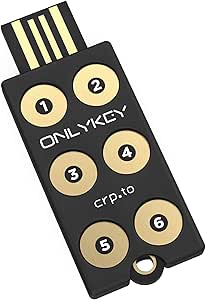 | Best for PIN-Protected Credential Storage | Hardware interface: USB Type-A | Authentication methods: FIDO2/U2F, Yubico OTP, TOTP, challenge-response | PIN protection: Data is securely erased after 10 failed unlock attempts | VIEW LATEST PRICE | See Our Full Breakdown |
| Thetis FIDO2 Security Key, USB-A, 2-Pack |  | Best Value for Keeping a Spare | Brand and model: Thetis MB000516 | Quantity: 2 keys | Connector: USB Type-A | VIEW LATEST PRICE | See Our Full Breakdown |
| Thetis Pro FIDO2 Security Key with USB-A, USB-C, and NFC |  | Best for Mixed Devices | Brand and model: Thetis PRO FIDO2 Key (flip-x) | Connectors: USB-A, USB-C | NFC: Supported for compatible mobile authentication | VIEW LATEST PRICE | See Our Full Breakdown |
| Yubico Security Key NFC, USB-A and NFC, FIDO2 Certified |  | Best for Straightforward FIDO Authentication | Connectivity: USB-A, NFC | Protocols: FIDO2/WebAuthn, FIDO U2F | Passkey slots: 100 | VIEW LATEST PRICE | See Our Full Breakdown |
| Thetis FIDO2 USB-A Security Key with Folding Cover |  | Best USB-A Pick with Connector Protection | Authentication: FIDO2, U2F, HOTP | Interface: USB Type-A | Compatibility: Windows, macOS, Linux, Chrome OS | VIEW LATEST PRICE | See Our Full Breakdown |
| Thetis Pro FIDO2 Security Key with PinPlex | 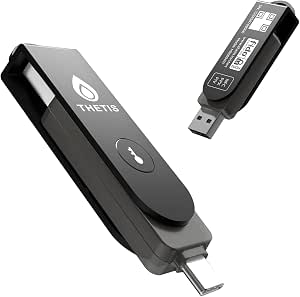 | Best for Mixed Devices and Authentication Methods | Connectors: USB-A, USB-C | Wireless connectivity: NFC | Authentication standards: FIDO2, FIDO U2F, WebAuthn, CTAP2 | VIEW LATEST PRICE | See Our Full Breakdown |
| HyperFIDO Pro Mini U2F/FIDO2/HOTP Security Key |  | Best Compact Key-Chain Pick | Authentication support: FIDO U2F, FIDO2, OATH HOTP | Connection: USB | Dimensions: 0.59 × 0.39 × 0.2 in | VIEW LATEST PRICE | See Our Full Breakdown |
| SecuX PUFido USB-C FIDO2 Security Key |  | Best USB-C Pick for Hardware-Rooted Security | Model: PUFido Clife Key | Interface: USB Type-C | Certification: FIDO2/U2F | VIEW LATEST PRICE | See Our Full Breakdown |
| Thales SafeNet eToken FIDO2 Security Key, USB-A, 1-Pack |  | Best for Managed FIDO2 Deployments | Connection: USB-A | Authentication standards: FIDO2, U2F | PIN: 4-digit | VIEW LATEST PRICE | See Our Full Breakdown |
| hardware security keys for two factor authentication | Dimensions |
|---|---|
| Thetis Nano-A FIDO2 USB-A Secu | 0.75 × 0.74 × 0.25 in |
| Thetis Pro for Business FIDO2 | 2.9 × 0.72 × 0.5 in |
| Thetis Nano-C FIDO2 USB-C Secu | 0.73 × 0.60 × 0.30 in |
| Thetis Pro-C FIDO2 Level 2 Sec | 0.63 × 3.3 × 0.4 in |
| Yubico YubiKey 5C USB-C Securi | 0.49 × 1.16 × 0.2 in |
| Yubico YubiKey 5C NFC Security | 0.15 × 0.7 × 1.77 in |
| OnlyKey FIDO2/U2F Security Key | — |
| Thetis FIDO2 Security Key | — |
| Thetis Pro FIDO2 Security Key | 2.9 × 0.72 × 0.5 in |
| Yubico Security Key NFC | 3.94 × 3.94 × 3.94 in |
| Thetis FIDO2 USB-A Security Ke | 0.39 × 0.59 × 1.73 in |
| Thetis Pro FIDO2 Security Key | 2.8 × 0.7 × 0.5 in |
| HyperFIDO Pro Mini U2F/FIDO2/H | 0.59 × 0.39 × 0.2 in |
| SecuX PUFido USB-C FIDO2 Secur | — |
| Thales SafeNet eToken FIDO2 Se | — |
More Details on Our Top Picks
Thetis Nano-A FIDO2 USB-A Security Key
The Thetis Nano-A is a small, straightforward choice for buyers who still use computers with USB-A ports and want both passkey sign-in and a second authentication option. Its 200 FIDO2 passkey slots and 50 OATH-TOTP slots give it more flexibility than a key limited to security-key protocols alone. Compared with the USB-C-only Thetis Nano-C, this model better fits older laptops and desktops, but it is less convenient for newer devices without an adapter. Its compact, keychain-ready size makes it easy to carry, though the small form factor also means it can be easier to misplace than a larger key with a protective cover. Passkeys work only on services that support them, so buyers should check their account compatibility before relying on it.
Pros:- Compact size is easy to carry on a keychain
- Supports FIDO2 passkey sign-ins on compatible services
- Includes 200 passkey slots and 50 OATH-TOTP slots
- Works with PCs, Macs, Android, and compatible services
Cons:- Requires a USB-A port or an adapter
- Passkey use depends on website and service support
- Small body can be easier to misplace than a covered key
Best for: People who use USB-A computers and want a pocketable key with both FIDO2 passkeys and OATH-TOTP support
Not ideal for: Owners of USB-C-only laptops or phones who want direct plug-in access without an adapter
- Interface:USB-A
- Standards:FIDO and FIDO2
- Passkey slots:200
- OATH-TOTP slots:50
- Dimensions:0.75 × 0.74 × 0.25 in
- Compatibility:PC, Mac, Android, and compatible websites and services
Our verdict“Choose the Nano-A if your devices have USB-A ports and you want a compact key that also stores OATH-TOTP credentials.”
Thetis Pro for Business FIDO2 Security Key with USB-A, USB-C, and NFC
The Thetis Pro for Business is the most adaptable pick here for people switching between older computers, USB-C devices, and mobile phones. USB-A, USB-C, and NFC mean one key can serve a wider mix of hardware than the USB-C-only Thetis Nano-C or YubiKey 5C. It also handles FIDO2 passkeys and TOTP/HOTP, while its rotating metal cover adds protection against water, crushing, and tampering. That broader connection mix comes with compatibility limits: NFC is for mobile devices, not macOS or Windows authentication, and Windows Hello requires a compatible Windows Enterprise edition. Compared with the Pro-C, this model adds USB-A for older computers, but buyers who need USB-C and NFC only may prefer a more compact option.
Pros:- USB-A, USB-C, and mobile NFC cover a broad mix of devices
- Supports FIDO2 passkeys and TOTP/HOTP
- Rotating metal cover is designed to resist water, crushing, and tampering
- Battery-free operation needs no network connection
Cons:- NFC authentication is not supported for macOS or Windows
- Windows Hello requires a compatible Windows Enterprise edition
- Does not support ID Austria
Best for: People who need one hardware key for USB-A and USB-C computers as well as NFC authentication on iPhones or Android devices
Not ideal for: Mac or Windows users who expect NFC computer authentication, or Windows Hello users without a compatible Enterprise edition
- Authentication:FIDO2, passkeys, TOTP/HOTP
- Certification:FIDO2 Level 1
- Connectivity:USB-A, USB-C, NFC
- Compatible devices:Computers, iPhones, Android devices
- Dimensions:2.9 × 0.72 × 0.5 in
- Power:No batteries required
- Additional feature:Rotating metal cover designed to resist water, crushing, and tampering
Our verdict“Pick this model if your authentication routine spans older computers, USB-C devices, and mobile NFC, and its platform limits fit your setup.”
Thetis Nano-C FIDO2 USB-C Security Key
The Thetis Nano-C suits buyers who want a tiny, direct-plug key for USB-C devices rather than the broader connections offered by the Thetis Pro for Business. It supports FIDO2 passkeys and 50 OATH-TOTP slots, so it can cover passwordless sign-in and another common form of two-factor authentication in a single compact device. Its stated compatibility spans Windows, macOS, iOS, Android, Linux, and ChromeOS, making it a flexible choice across operating systems when the service supports hardware keys. The tradeoff is physical connectivity: unlike the Pro for Business, it has no USB-A or NFC option. Passkey availability also varies by service, and Windows Hello login requires Enterprise edition with Entra ID, limiting its fit for some personal Windows setups.
Pros:- Compact USB-C design is easy to carry
- Supports FIDO2 passwordless sign-in on compatible services
- Provides 200 FIDO2 passkey slots and 50 OATH-TOTP slots
- Lists compatibility with Windows, macOS, iOS, Android, Linux, and ChromeOS
Cons:- USB-C only, unlike the Thetis Pro for Business with USB-A and NFC
- Passkey support varies by website and service
- Windows Hello requires Enterprise edition with Entra ID
Best for: USB-C laptop and mobile-device owners who want a keychain-sized FIDO2 key with OATH-TOTP support
Not ideal for: People who use USB-A computers, need NFC authentication, or want Windows Hello without Enterprise edition and Entra ID
- Interface:USB Type-C
- Standards:FIDO, FIDO2
- Authentication:WebAuthn, CTAP2, OATH-TOTP
- FIDO2 passkey slots:200
- OATH-TOTP slots:50
- Dimensions:0.73 × 0.60 × 0.30 in
- Compatible operating systems:Windows, macOS, iOS, Android, Linux, ChromeOS
Our verdict“Choose the Nano-C if you want a compact USB-C key with passkey and OATH-TOTP support and do not need USB-A or NFC.”
Thetis Pro-C FIDO2 Level 2 Security Key with USB-C and NFC
The Thetis Pro-C pairs USB-C with NFC, giving compatible computer and mobile users two ways to authenticate without carrying a USB-A adapter. Its listing specifies FIDO2 Level 2, 200 passkey slots, and 50 OATH slots for TOTP/HOTP, while the companion authenticator app handles the one-time-password functions. Compared with the smaller USB-C-only Thetis Nano-C, the Pro-C adds NFC and a rotating metal cover, which better suits mobile-first use and a keyring. The extra versatility does not make every service compatible: hardware-key support must be enabled by each service, and TOTP/HOTP depends on the companion app. Buyers who need USB-A should look instead at the Thetis Pro for Business, which offers that connection alongside USB-C and NFC.
Pros:- USB-C and NFC support compatible computers and mobile devices
- FIDO2 Level 2 with 200 passkey slots
- Supports 50 TOTP/HOTP OATH slots through a companion app
- Battery-free design includes a rotating metal cover and keyring hole
Cons:- No USB-A connection, unlike the Thetis Pro for Business
- TOTP/HOTP requires the companion authenticator app
- Hardware-key support depends on each service
Best for: USB-C and NFC users who want a covered, keyring-ready security key with FIDO2 Level 2 and one-time-password support
Not ideal for: People who need USB-A connectivity or prefer to manage TOTP/HOTP without a companion app
- Authentication:FIDO2 Level 2, TOTP/HOTP
- Connections:USB-C, NFC
- OATH slots:50
- FIDO2 passkey slots:200
- Dimensions:0.63 × 3.3 × 0.4 in
- Power:Battery-free
- Features:Rotating metal cover, keyring hole
Our verdict“Choose the Pro-C if you want USB-C and mobile NFC in a covered FIDO2 key and are comfortable using its app for TOTP/HOTP.”
Yubico YubiKey 5C USB-C Security Key
The YubiKey 5C is the lineup’s broadest protocol choice, going beyond FIDO2/WebAuthn and FIDO U2F to include Yubico OTP, OATH-TOTP/HOTP, PIV smart card, and OpenPGP. That range makes it a stronger fit than the Thetis Nano-C for buyers whose work or security setup relies on more than passkey-based two-factor authentication. It connects through USB-C, works across several desktop operating systems, and has waterproof, crush-resistant construction for daily carry. The tradeoff is that its feature breadth may be unnecessary for someone who only needs a hardware key for compatible online accounts; the simpler Thetis Nano-C also provides passkey and OATH-TOTP slots. This YubiKey has no NFC, and a spare key is sensible so losing the only one does not disrupt account access.
Pros:- Supports FIDO2/WebAuthn and FIDO U2F for hardware-key sign-in
- Adds Yubico OTP, OATH-TOTP/HOTP, PIV, and OpenPGP
- Waterproof and crush-resistant construction
- Works with Windows, macOS, ChromeOS, and Linux without batteries or an internet connection
Cons:- USB-C only, with no NFC option
- Broad protocol support may be unnecessary for basic account sign-ins
- A spare key is recommended to reduce disruption if the key is lost
Best for: Security-conscious USB-C users who need FIDO2 plus smart-card, OpenPGP, or multiple OTP protocols
Not ideal for: People who need NFC or want a simple passkey-only key without the additional protocol set
- Connection:USB-C
- Authentication protocols:FIDO2/WebAuthn, FIDO U2F, Yubico OTP, OATH-TOTP/HOTP, PIV, OpenPGP
- Supported operating systems:Windows, macOS, ChromeOS, Linux
- Weight:0.2 oz
- Dimensions:0.49 × 1.16 × 0.2 in
- Waterproof:Yes
- Crush-resistant:Yes
Our verdict“Choose the YubiKey 5C if you need USB-C FIDO2 authentication alongside smart-card, OpenPGP, and OTP protocols.”
Yubico YubiKey 5C NFC Security Key
The YubiKey 5C NFC is the most flexible choice here for buyers who want more than FIDO-based sign-ins. Alongside FIDO2/WebAuthn and U2F, it supports OTP, OATH, PIV smart card, and OpenPGP, giving it uses across a wider range of services and setups than the FIDO-focused Yubico Security Key NFC. USB-C suits newer computers, while NFC offers a way to authenticate with compatible phones without plugging in.
That range comes with a setup tradeoff: many two-factor buyers will never need its additional protocols. The key also cannot help if it is lost and no backup is enrolled, so I’d pair it with a spare. Its water- and crush-resistant, battery-free design makes it a strong fit for someone seeking one capable physical key, rather than the simpler USB-A option.
Pros:- USB-C and NFC cover compatible computers and mobile devices
- Supports FIDO2/WebAuthn, U2F, OTP, OATH, PIV, and OpenPGP
- Works without batteries or an internet connection
- Water-resistant and crush-resistant construction
Cons:- A spare key is advisable to reduce the risk of account lockout
- Its additional protocols may be unnecessary for buyers seeking basic FIDO authentication
Best for: People who want one USB-C and NFC key for passkeys, two-factor sign-ins, and services that use protocols such as OTP or PIV.
Not ideal for: Buyers who only need FIDO2/U2F and prefer a simpler USB-A key, or anyone unwilling to enroll and store a spare.
- Brand and model:Yubico YubiKey 5C NFC
- Connectivity:USB-C, NFC
- Supported protocols:FIDO2/WebAuthn, FIDO U2F, Yubico OTP, OATH-TOTP/HOTP, PIV, OpenPGP
- Passkey slots:100
- Dimensions:0.15 × 0.7 × 1.77 in
- Durability:Water-resistant, crush-resistant
- Color:Black
Our verdict“Choose the YubiKey 5C NFC if you want broad protocol support and both USB-C and mobile NFC authentication in one key.”
OnlyKey FIDO2/U2F Security Key and Hardware Password Manager
OnlyKey suits buyers who want a security key that also stores credentials and supports several authentication methods. Its direct-on-device PIN entry keeps the PIN away from the computer keyboard, while FIDO2/U2F, OTP, TOTP, and challenge-response give it more functions than the FIDO-only The YubiKey Security Key NFC. It also works with Windows, macOS, Linux, and Chromebook, which helps in mixed-device households or work setups.
The added storage and controls make this less straightforward than a basic plug-in key. Most importantly, ten failed PIN attempts erase stored data; that is a meaningful security safeguard, but mistakes or a forgotten PIN can have serious consequences. Its USB Type-A connector also limits direct use with devices that only have USB-C, unlike the YubiKey 5C NFC or Thetis Pro.
Pros:- Combines FIDO2/U2F with OTP, TOTP, and challenge-response
- PIN is entered directly on the device
- Can function as a hardware password manager
- Waterproof and tamper-resistant design
Cons:- Stored data is erased after ten failed PIN attempts
- USB Type-A connection may require an adapter for newer devices
- More functions and PIN management add setup complexity compared with simpler FIDO keys
Best for: Security-conscious users who want FIDO authentication plus on-device PIN entry and password-manager functions, and who have USB-A access.
Not ideal for: People who want a simple passkey key, use USB-C-only devices, or may struggle to remember a PIN without risking stored data.
- Hardware interface:USB Type-A
- Authentication methods:FIDO2/U2F, Yubico OTP, TOTP, challenge-response
- PIN protection:Data is securely erased after 10 failed unlock attempts
- Compatible systems:Windows, Mac OS, Linux, Chromebook
- Weight:17.01 g
- Memory:NAND flash
- Design:Waterproof and tamper resistant
Our verdict“Pick OnlyKey if you want device-entered PIN protection and credential storage alongside two-factor authentication, and can manage its reset risk.”
Thetis FIDO2 Security Key, USB-A, 2-Pack
This two-pack makes backup planning easier: one key can stay with you while the other is stored separately for account recovery. That’s a practical advantage over buying a single Yubico Security Key NFC, particularly for people who rely on hardware keys for multiple accounts. Each USB-A key supports FIDO2 passkeys, has 200 passkey slots, and needs neither a battery nor a network connection.
The tradeoff is a narrower connection choice. Unlike the Thetis Pro FIDO2 Security Key, this set has no USB-C connector or NFC, so phone sign-in and newer USB-C-only devices may require another route or an adapter. It is best for buyers whose compatible services and computers already work with USB-A. The rotating metal cover helps protect the connector, but this remains a FIDO-focused option rather than a broad-protocol key.
Pros:- Two keys make it easier to keep a separate backup
- Supports FIDO2 passkeys with 200 passkey slots per key
- Rotating metal cover and keychain-friendly design
- Water-, crush-, and tamper-resistant; no battery required
Cons:- No NFC support for tap-based mobile authentication
- USB-A connector may not fit newer devices without an adapter
- Windows Hello requires a supported Windows Enterprise edition with Entra ID
Best for: USB-A users who want a dedicated everyday key and a separately stored backup for passkey and FIDO2 accounts.
Not ideal for: People who need NFC phone authentication, USB-C connectivity, or OTP and other non-FIDO protocols.
- Brand and model:Thetis MB000516
- Quantity:2 keys
- Connector:USB Type-A
- FIDO2 passkey slots:200
- OATH slots:50
- NFC:Not supported
- Compatibility:Windows, Google Workspace, Apple ID, Coinbase, Salesforce
- Durability:Water-, crush-, and tamper-resistant
Our verdict“Choose this set if you use USB-A devices and want a ready-made backup pair, but skip it if mobile NFC or USB-C is part of your routine.”
Thetis Pro FIDO2 Security Key with USB-A, USB-C, and NFC
The Thetis Pro is the most connector-flexible pick in this group: it combines USB-A, USB-C, and NFC, so one key can cover older computers, newer laptops, and compatible phones. That makes it a more adaptable travel companion than the USB-A-only Thetis FIDO2 Security Key 2-Pack. The rotating cover and water-, crush-, and tamper-resistant build add practical protection, and it needs no battery or internet connection.
Its mobile convenience has a boundary: NFC is for compatible mobile authentication, not macOS or Windows sign-in. Windows Hello also requires a compatible Enterprise edition, and the key does not support ID Austria. Compared with the YubiKey 5C NFC, it offers USB-A as well as USB-C, but the listed authentication support is centered on FIDO2 and NFC rather than the Yubico model’s broader protocol set.
Pros:- USB-A, USB-C, and NFC support multiple compatible device types
- Portable design with a rotating metal cover and keychain attachment
- Water-, crush-, and tamper-resistant construction
- No battery or network connection required
Cons:- NFC does not support authentication on macOS or Windows
- Windows Hello requires a compatible Windows Enterprise edition
- ID Austria is not supported
Best for: People who move between USB-A and USB-C computers and want NFC for compatible mobile sign-ins without carrying separate keys.
Not ideal for: Buyers who need NFC authentication on macOS or Windows, Windows Hello on standard editions, or broad OTP and smart-card protocol support.
- Brand and model:Thetis PRO FIDO2 Key (flip-x)
- Connectors:USB-A, USB-C
- NFC:Supported for compatible mobile authentication
- Authentication:FIDO2, NFC
- Compatible operating systems:Windows, macOS, Linux, Chrome OS
- Dimensions:2.9 × 0.72 × 0.5 in
- Weight:1 oz
- Battery required:No
Our verdict“Choose the Thetis Pro for one FIDO2 key that spans USB-A, USB-C, and compatible NFC phones, not for desktop NFC or broad protocol coverage.”
Yubico Security Key NFC, USB-A and NFC, FIDO2 Certified
This Yubico key keeps the job focused: it handles FIDO2/WebAuthn and U2F over USB-A or NFC, with no battery or internet connection needed. That makes it a simpler fit for passkey and phishing-resistant two-factor sign-ins than the more protocol-rich YubiKey 5C NFC. NFC also gives compatible phones a tap-based sign-in option, while USB-A covers computers with that port.
The simplicity has limits. It does not support one-time passwords or the Yubico Authenticator app, so it is a poor match for buyers whose accounts depend on those methods. Its USB-A connector also differs from the YubiKey 5C NFC’s USB-C plug, which may matter on newer laptops. For buyers who only need FIDO authentication, though, the narrower protocol set avoids paying attention to features they may never use.
Pros:- USB-A and NFC support compatible computers and mobile devices
- FIDO2/WebAuthn and U2F provide phishing-resistant authentication
- Works without batteries or an internet connection
- Water-resistant and crush-resistant construction
Cons:- Does not support one-time passwords
- Not compatible with the Yubico Authenticator app
- USB-A may require an adapter for USB-C-only computers
Best for: People seeking a simple USB-A and NFC key for FIDO2 passkeys and U2F sign-ins across compatible computers and mobile devices.
Not ideal for: Users who need OTP codes, the Yubico Authenticator app, USB-C connectivity, or protocols such as PIV and OpenPGP.
- Connectivity:USB-A, NFC
- Protocols:FIDO2/WebAuthn, FIDO U2F
- Passkey slots:100
- Compatibility:Desktop, laptop, mobile, and tablet; NFC-enabled devices
- Durability:Water-resistant, crush-resistant
- Color:Black
- Dimensions:3.94 × 3.94 × 3.94 in
Our verdict“Pick this key if you want dependable FIDO2/U2F sign-ins over USB-A or NFC and do not need OTP or broader protocols.”
Thetis FIDO2 USB-A Security Key with Folding Cover
The Thetis FIDO2 USB-A Security Key suits buyers who want passwordless sign-in and a physical shield for a connector that may spend time loose in a bag. Its rotating aluminum cover protects the USB-A plug, while FIDO2 and U2F cover compatible passwordless and two-factor sign-ins. Built-in HOTP adds an option beyond the FIDO standards, though it is not a substitute for checking whether each service supports the method you plan to use. Compared with the HyperFIDO Pro Mini, this Thetis gives up the tiny key-chain footprint in favor of a protective cover and stated support for multiple operating systems. The limits matter: FIDO2 does not provide Mac login here, and Windows Hello login is restricted to qualifying Azure Active Directory enterprise users. Choose it for compatible web accounts, not as a universal computer-login key.
Pros:- FIDO2 and U2F support passwordless and two-factor sign-in on compatible services.
- Built-in HOTP adds another authentication method.
- Rotating aluminum cover shields the USB-A connector when stored.
- Listed compatibility includes Windows, macOS, Linux, and Chrome OS.
Cons:- FIDO2 does not support Mac login.
- Windows Hello use is limited to qualifying Azure Active Directory enterprise users.
Best for: USB-A laptop owners who want FIDO2/U2F for compatible accounts and a cover to protect the connector in everyday carry.
Not ideal for: Mac users seeking FIDO2 computer login or Windows users who need Windows Hello without a qualifying Azure Active Directory enterprise account.
- Authentication:FIDO2, U2F, HOTP
- Interface:USB Type-A
- Compatibility:Windows, macOS, Linux, Chrome OS
- Cover:Rotating aluminum alloy
- Color:Black
- Dimensions:0.39 × 0.59 × 1.73 in
Our verdict“Choose this Thetis if you need a covered USB-A key for compatible FIDO2/U2F accounts and do not expect it to provide Mac login.”
Thetis Pro FIDO2 Security Key with PinPlex
For someone who switches between older computers, newer USB-C devices, and phones, the Thetis Pro offers the broadest connection mix in this group: USB-A, USB-C, and NFC. Its FIDO2, U2F, and passkey support addresses common phishing-resistant sign-in needs, while PIV, TOTP, HOTP, and PinPlex add options for users with more specialized account or organizational requirements. That makes it more versatile than the USB-A-only Thales SafeNet eToken, but the extra methods are useful only when the target service or platform supports them. The tradeoff is added complexity: buyers should verify their exact compatibility needs before purchasing. Windows Hello also has a specific restriction, requiring Enterprise edition with Entra ID, and the key does not support ID Austria. It is a strong fit for a varied device setup, not the simplest choice for someone who only needs one standard connector.
Pros:- USB-A, USB-C, and NFC support a range of computers and mobile devices.
- FIDO2, U2F, WebAuthn, and passkeys cover common secure sign-in workflows.
- PIV, TOTP, and HOTP provide additional authentication options.
- Listed compatibility spans Windows, macOS, Linux, Chrome OS, Android, and iPhone.
Cons:- Compatibility should be checked against the exact service, device, and authentication method.
- Windows Hello requires Enterprise edition with Entra ID.
- Does not support ID Austria.
Best for: People who authenticate across USB-A and USB-C computers and NFC-capable phones, especially those who need FIDO plus PIV or OTP methods.
Not ideal for: Buyers who want a simple single-connector key or need ID Austria or Windows Hello outside the stated Enterprise-and-Entra-ID setup.
- Connectors:USB-A, USB-C
- Wireless connectivity:NFC
- Authentication standards:FIDO2, FIDO U2F, WebAuthn, CTAP2
- Additional authentication:PIV, TOTP, HOTP
- Compatible operating systems:Windows, macOS, Linux, Chrome OS
- Compatible phones:Android, iPhone
- Dimensions:2.8 × 0.7 × 0.5 in
Our verdict“Pick the Thetis Pro if your authentication routine spans USB-A, USB-C, and NFC and you can confirm support for its extra methods.”
HyperFIDO Pro Mini U2F/FIDO2/HOTP Security Key
The HyperFIDO Pro Mini is the most space-conscious choice here, with a 0.59 × 0.39 × 0.2-inch body that can ride on a key chain without the bulk of the Thetis FIDO2 USB-A Security Key with Folding Cover. For routine account protection, it supports FIDO U2F and FIDO2, and the listing names services such as Google Accounts, Dropbox, and Microsoft Account. Standard use requires no additional software, keeping the basic setup straightforward. Its extra OATH HOTP support is less plug-and-play: programming HOTP requires additional software, so buyers who want that feature should be ready to configure it separately. The provided specs identify only a USB connection, so check that your device has a compatible port. This is a focused portable key, not the better fit for people seeking NFC or multiple connector types.
Pros:- Compact body is suited to key-chain carry.
- Supports FIDO U2F and FIDO2 for compatible services.
- Works with listed services including Google Accounts, Dropbox, and Microsoft Account.
- Standard use does not require additional software.
Cons:- HOTP programming requires additional software.
- The listed connection is USB, with no USB-C or NFC support specified.
Best for: People who want a very small USB key for compatible account sign-ins and plan to carry it on a key chain.
Not ideal for: Phone-first users who need NFC, or buyers who want USB-C connectivity and do not have a compatible USB port.
- Authentication support:FIDO U2F, FIDO2, OATH HOTP
- Connection:USB
- Dimensions:0.59 × 0.39 × 0.2 in
- Weight:0.16 oz
- Model number:HYF-HYPERFIDO-K8-PRO
- Brand:Hypersecu
Our verdict“Choose the HyperFIDO Pro Mini if low-bulk key-chain carry matters more than NFC or connector flexibility.”
SecuX PUFido USB-C FIDO2 Security Key
The SecuX PUFido is a focused option for buyers whose devices already use USB-C and who want a straightforward FIDO2/U2F key rather than a menu of extra authentication methods. Its PUF security technology provides hardware-rooted protection, while FIDO2 certification supports phishing-resistant sign-in on compatible services. The listing spans Windows, macOS, Linux, iOS, and Android, giving it broader stated platform reach than the USB-A-only Thales SafeNet eToken. That reach does not remove the connector constraint: devices need a compatible USB-C port or connection. Unlike the multi-method Thetis Pro, the PUFido does not list NFC, PIV, TOTP, or HOTP, so it is less suited to varied enterprise workflows. A backup key is recommended; a single lost key can otherwise complicate account recovery. Its best case is a modern USB-C setup with compatible FIDO services.
Pros:- PUF technology provides hardware-rooted security.
- FIDO2/U2F certification supports phishing-resistant sign-in on compatible services.
- Compact USB-C format suits portable setups.
- Listed compatibility includes Windows, macOS, Linux, iOS, and Android.
Cons:- Requires a compatible USB-C port or connection.
- A backup key is recommended in case the primary key is lost.
- No NFC or additional PIV/TOTP/HOTP methods are listed.
Best for: USB-C device owners seeking a compact FIDO2/U2F key with hardware-rooted PUF security for compatible services.
Not ideal for: People whose devices lack USB-C access, or users who need NFC, PIV, TOTP, or HOTP from one key.
- Model:PUFido Clife Key
- Interface:USB Type-C
- Certification:FIDO2/U2F
- Security technology:PUF
- Compatible devices:Windows, macOS, Linux, iOS, Android
- Color:Black
- Warranty:1 year
Our verdict“Choose the PUFido if your devices use USB-C and you want a focused FIDO2/U2F key with PUF security rather than broader authentication features.”
Thales SafeNet eToken FIDO2 Security Key, USB-A, 1-Pack
The Thales SafeNet eToken is a pared-back USB-A key for buyers whose main requirement is FIDO2/U2F sign-in within compatible apps, identity providers, or credential-management systems. Its presence detection adds a physical user-presence check, while a 4-digit PIN is used with compatible apps and Windows sessions. Compared with the feature-rich Thetis Pro FIDO2 Security Key with PinPlex, the SafeNet lists fewer authentication methods and connectors; that simplicity may suit a standardized USB-A environment, but it leaves less flexibility for phone use or mixed USB-C devices. Compatibility depends on FIDO2 support, so it is not a universal login solution. It is also limited to USB-A, and the provided compatibility list names Windows and Linux rather than macOS or mobile platforms. This is best viewed as a focused key for compatible managed workflows, not a general-purpose cross-device pick.
Pros:- FIDO2 and U2F support compatible secure sign-in workflows.
- Presence detection adds a user-presence check.
- PIN support is available for compatible apps and Windows sessions.
- Works with compatible apps, identity providers, and credential-management systems.
Cons:- USB-A connection limits use on devices without a compatible port.
- Compatibility depends on FIDO2 support from the service or identity provider.
- The listed compatibility covers Windows and Linux, with no macOS or mobile support specified.
Best for: Organizations or individual users with USB-A equipment who need a straightforward FIDO2/U2F key for compatible apps and identity providers.
Not ideal for: USB-C-only or mobile-first users, and anyone needing explicitly listed macOS or NFC support.
- Connection:USB-A
- Authentication standards:FIDO2, U2F
- PIN:4-digit
- Compatibility:Windows, Linux, USB-A devices
- Pack size:1
- Presence detection:Supported
Our verdict“Choose the SafeNet eToken for a compatible USB-A workflow where FIDO2/U2F and presence detection matter more than broader device support.”

How We Picked
I evaluated these devices based on three core pillars: protocol support, connectivity, and build quality. First, I filtered for keys that fully support the FIDO2/WebAuthn standard, ensuring they provide phishing-resistant authentication rather than just second-factor convenience. Next, I prioritized models with multi-interface support (USB-C and NFC) because modern laptops and smartphones rarely include legacy USB-A ports, forcing users to rely on dongles that can be lost or tampered with.
I also assessed the physical form factor and durability. A security key is meant to survive in a pocket or keychain, so I looked for robust casing and reliable connectors. Finally, I considered ecosystem compatibility. Some keys excel with Apple or Android, while others offer better integration with Windows Hello or enterprise SSO providers. This ranking reflects which keys offer the best balance of universal compatibility and security features for the average consumer and small business user in 2027.
Factors to Consider When Choosing Hardware Security Keys For Two Factor Authentication
Selecting a hardware key is not just about picking the most expensive option; it is about matching the technology to your daily workflow and threat model. Here are the critical factors that should drive your decision beyond the basic spec sheet.
Protocol Support: FIDO2 vs. U2F
The most common mistake buyers make is purchasing a key that only supports U2F (Universal 2nd Factor). While U2F was the standard for years, it is now considered legacy because it does not support passwordless login or strong PIN protection. You must look for FIDO2 certification, which enables passwordless authentication and protects against man-in-the-middle attacks by binding the key to a specific domain. If a product description vaguely mentions ‘two-factor’ without explicitly stating FIDO2 or WebAuthn, skip it. The future of authentication is passwordless, and older keys will eventually lose support from major providers like Google and Microsoft, leaving you with a dead weight on your keychain.
Port Compatibility and Connectivity
Check the ports on your primary devices before buying. If you use a modern MacBook or high-end Windows laptop, you likely only have USB-C ports. A USB-A key will require an adapter, which is a friction point that often leads to users abandoning hardware keys altogether. USB-C and NFC support are the most versatile combinations today. NFC allows you to authenticate with Android phones and some newer iPhones, while USB-C works with nearly all modern computers and tablets. If you still rely on older desktops with USB-A, a dual-interface key is the safest investment to future-proof your setup.
Physical Durability and Form Factor
These devices live on your keychain, meaning they face constant abrasion, drops, and exposure to moisture. Plastic-bodied keys may crack over time, exposing internal components or breaking the USB connector. I recommend metal-cased keys for daily carry, as they withstand physical abuse far better. Also, consider the size. Some keys are so large they block adjacent ports on laptops or feel cumbersome on a keyring. Low-profile nano keys are excellent for devices you rarely unplug (like a desktop PC), but they are too small to find easily in a bag, making them poor choices for mobile use.
Ecosystem Integration and Management
If you are buying for a business, management features matter more than individual price. Keys from vendors like Yubico or Thales often come with enterprise management tools that allow IT admins to enroll, revoke, and audit keys centrally. Consumer-focused keys might lack this granularity. For individual users, check if the key supports multiple protocols like OpenPGP or PIV, which can be used for email encryption or SSH login. This versatility adds value if you plan to use the key for more than just logging into social media or email, turning it into a universal identity device.
The Importance of Redundancy
Never buy just one hardware key. If you lose it, break it, or leave it at home, you risk locking yourself out of your accounts. Most major providers allow you to register multiple security keys. I strongly advise purchasing a two-pack or buying a second, cheaper key as a backup. Keep the backup in a secure location, such as a home safe or office drawer. This redundancy ensures that a lost key does not become a catastrophic account recovery nightmare, a scenario that is far more common than actual security breaches via phishing.
Frequently Asked Questions
Do hardware security keys work with all websites?
No, they do not work universally. While major platforms like Google, Microsoft, GitHub, and Facebook fully support FIDO2 keys, many smaller websites still rely on SMS or app-based TOTP codes. You should check a website’s security settings to see if it lists ‘Security Key’ or ‘Hardware Key’ as a login option. If a site does not support hardware keys, you will still need a traditional authenticator app as a secondary method. Hardware keys are a layer of defense, not a replacement for all other authentication methods across the entire web.
What happens if I lose my hardware security key?
If you have registered a backup key, you can simply use the backup to log in and then remove the lost key from your account settings. If you do not have a backup, you will need to go through the account provider’s recovery process, which can be lengthy and require identity verification. This is why I always recommend owning at least two keys. Some providers also allow you to set up a ‘recovery phrase’ or trusted contact, but these methods are generally less secure than a second physical key. Treat your primary key like a house key; losing it should be an inconvenience, not a crisis.
Is NFC support necessary for an iPhone user?
Yes, NFC support is highly recommended for iPhone users. While newer iPhones support NFC, the implementation can be finicky depending on the iOS version and the specific key’s firmware. USB-C keys work with iPhone 15 and newer models, but older iPhones require Lightning adapters or NFC. Since NFC allows you to tap the key against the phone without plugging anything in, it offers the smoothest user experience. If you have an older iPhone, ensure the key you choose has verified compatibility with iOS NFC authentication to avoid frustration during login attempts.
Can I use one hardware key for both personal and business accounts?
Technically, yes, you can register the same physical key with multiple services, including personal and work accounts. However, this is generally discouraged for privacy and management reasons. If your employer requires you to use a company-issued key, mixing it with personal accounts could expose your private data to corporate monitoring policies. Furthermore, if you leave your job and the company revokes the key, you lose access to your personal accounts too. It is cleaner and safer to keep personal and professional identity devices separate to maintain clear boundaries.
Do I need a key with a PIN or biometric scan?
A PIN is strongly recommended because it adds a layer of local protection. If someone steals your keychain, they cannot use the key without knowing your PIN. Biometric keys (fingerprint or face) offer even stronger protection because they bind the key to your physical presence, but they are more expensive and can have higher failure rates with wet or dirty fingers. For most users, a FIDO2 key with PIN support strikes the best balance between security and usability. Avoid keys that do not support PIN protection unless you are using them in a highly controlled physical environment.
Conclusion
Choosing the right hardware security keys for two factor authentication depends on your specific device ecosystem and security needs. For most users, the Yubico YubiKey 5C NFC remains the best overall choice due to its unmatched compatibility and reliability. If you are looking for the best value, the Thetis FIDO2 Security Key 2-Pack offers essential FIDO2 protection at a lower entry point, making it ideal for beginners who need a primary and backup key without breaking the bank. For those who require advanced features like built-in password management, the OnlyKey FIDO2/U2F Security Key is a unique premium option, though it has a steeper learning curve. Business users should lean toward Thetis Pro or Thales SafeNet models for their enterprise management capabilities. Whichever you choose, remember to buy two keys to ensure you are never locked out.
Halloween Picks
halloween
As an affiliate, we earn on qualifying purchases.