
Personal data encryption software protects your files, folders, and drives by scrambling them so only you can read them, and choosing the right tool depends on what you are actually protecting. My best overall pick is Folder Lock, because it combines file encryption, folder locking, and secure deletion in one package — the closest match to what most people mean when they search for this category. For buyers who need encryption on the move, the Integral Secure 360 USB flash drive stands out with hardware-level 256-bit AES encryption built into the drive itself. The main tradeoff in this category is between dedicated encryption tools and adjacent security software like VPNs, backup tools, and drive erasers, which protect data in different ways but are not true encryption products. Budget and ease of use also pull in opposite directions: the strongest protection tends to demand more setup and steeper learning curves. Keep reading for the full breakdown of all 11 options and which one fits your situation.
Key Takeaways
- Folder Lock earned the top spot because it is the only product in the lineup that encrypts files, locks folders, shreds data, and stores encrypted backups in a single tool — everything else covers just one slice of personal data security.
- Only two products in this roundup encrypt data directly (Folder Lock and the Integral Secure 360 drive); the rest protect data indirectly through VPNs, backups, recovery, or destruction, so buyers must first decide which layer of protection they actually need.
- Hardware encryption (the Integral drive) beat software encryption for portability and tamper resistance, but it caps your capacity and only protects what you physically copy onto it.
- The three data-destruction tools (Secure Data Wipe, DESTRUCT PRO, Beamo) serve a surprisingly different buyer: someone disposing of or reselling hardware, where deletion without wiping leaves data recoverable.
- Subscription pricing dominates this category — six of the eleven products are annual licenses — so total cost over three years varied more than tenfold between picks, which factored heavily into the value rankings.
| Getbehind.me User-Friendly, Ultra-Fast VPN Software for Internet Security, 1-Year Subscription |  | Best for Multi-Device Privacy | Device Compatibility: Windows, MacOS, Linux, iOS, Android | Number of Devices: Up to 5 devices | Subscription Duration: 1 year | VIEW LATEST PRICE | See Our Full Breakdown |
| Folder Lock – Data Security & Encryption | 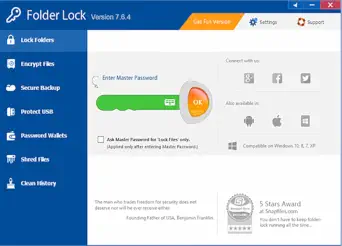 | Best Overall File Encryption | Encryption: Military-grade (AES) file encryption | File Types Supported: All file types (documents, images, videos) | Portable Lockers: Self-executable on USB, CD, DVD, and email | VIEW LATEST PRICE | See Our Full Breakdown |
| Integral Secure 360-C 16GB Software Encrypted USB Flash Drive – USB-C Connector – 256-bit AES Encryption |  | Best Portable Encrypted Storage | Storage Capacity: 16GB | Encryption: 256-bit AES (software) | Connector Type: USB-C (reversible) | VIEW LATEST PRICE | See Our Full Breakdown |
| Stellar Data Recovery for Windows Software | 1 PC, 1 Year Subscription |  | Best for Encrypted-Volume Recovery | Platform: Windows | License: 1 PC, 1 Year | Delivery: Keycard | VIEW LATEST PRICE | See Our Full Breakdown |
| AOMEI Backupper PRO – Backup and Recovery Software for Windows 11 & 10 |  | Best Value for Long-Term Data Protection | Compatibility: Windows 11 and 10 | License: Lifetime for 2 PCs | Core Features: Backup, recovery, file synchronization, disk cloning | VIEW LATEST PRICE | See Our Full Breakdown |
| Secure Data Wipe USB – Hard Drive Erase Tool for PC, Laptop, HDD & SSD |  | Best for IT Professionals | Type: Bootable USB drive | Compatibility: Windows, Linux, BIOS, UEFI | Primary Use: Data sanitization, hard drive erasure | VIEW LATEST PRICE | See Our Full Breakdown |
| TunnelBear VPN Software, 1-Year Subscription, Unlimited Data and Devices |  | Best for Encryption in Transit | Subscription Duration: 1 year | Devices Supported: Unlimited | Server Locations: 47 countries | VIEW LATEST PRICE | See Our Full Breakdown |
| Lovell DESTRUCT PRO – USB Hard Drive Eraser & Data Destruction Tool |  | Best Plug-and-Play Destruction | Type: USB data destruction tool | Wipe Method: 3-phase cryptographic wipe | Drive Compatibility: HDD, SSD, external hard drives | VIEW LATEST PRICE | See Our Full Breakdown |
| Nero Burning ROM 2026 – Pro CD DVD Burning Software for Music and Data |  | Best for Encrypted Disc Archives | Platform Compatibility: Windows 11/10/8/7 | License: Lifetime license for 1 PC | Encryption: 256-bit SecurDisc encryption | VIEW LATEST PRICE | See Our Full Breakdown |
| Stellar Data Recovery Professional for Windows Software |  | Best for Encrypted-Drive Recovery | Platform: Windows | License: 1 year, 1 PC subscription | Encryption Support: BitLocker | VIEW LATEST PRICE | See Our Full Breakdown |
| Beamo Bootable Drive Eraser USB – Data Wipe Utility for PCs and Storage Devices |  | Best Budget Reusable Wipe Tool | Compatibility: x64 PCs, HDDs, SSDs, USB flash drives, SD cards | Operation: Boot from USB, no software installation required | Subscription: None — one-time purchase, reusable tool | VIEW LATEST PRICE | See Our Full Breakdown |
More Details on Our Top Picks
Getbehind.me User-Friendly, Ultra-Fast VPN Software for Internet Security, 1-Year Subscription
Where most entries in this roundup encrypt files sitting on your drive, Getbehind.me tackles a different layer of the problem: data in transit. This pick stands out for covering up to five devices across Windows, macOS, Linux, iOS, and Android under a single subscription, which is broader platform support than the Windows-only focus of AOMEI Backupper PRO. Installation is simple enough that non-technical users can be protected within minutes, and the high-level encryption of your internet connection matters most on public Wi-Fi, where file-level tools like Folder Lock offer no help at all.
The tradeoff is fundamental: a VPN does nothing for the files already on your laptop or a lost USB stick. Compared with the Integral Secure 360-C drive, which encrypts data you physically carry, Getbehind.me protects the pipeline rather than the payload — and the annual renewal plus the five-device ceiling add friction for larger households.
Pros:- Covers up to 5 devices across five operating systems with one subscription
- Exceptionally easy setup for non-technical users
- Strong encryption of internet traffic protects against interception on public networks
- Cross-platform support rivals more expensive VPN competitors like TunnelBear
Cons:- Annual subscription means recurring cost and renewal hassle
- Hard cap of 5 devices limits larger families or multi-device power users
- Does not encrypt files stored locally — leaves a gap other tools in this roundup fill
Best for: Remote workers and frequent travelers who need encrypted connections across a mixed fleet of phones and laptops
Not ideal for: Anyone whose main concern is protecting stored files on a hard drive or removable media — a VPN doesn’t encrypt data at rest
- Device Compatibility:Windows, MacOS, Linux, iOS, Android
- Number of Devices:Up to 5 devices
- Subscription Duration:1 year
- Protection Type:Internet connection encryption (VPN)
- Installation:Software download, user-friendly setup
- License Model:Annual renewable subscription
Our verdict“Choose this if your biggest risk is exposed network traffic rather than stolen files, and skip it if you need at-rest encryption.”
Folder Lock – Data Security & Encryption
For the core promise of this roundup — actually encrypting personal files — Folder Lock is the most direct answer. Its military-grade encryption works on every file type, and the ability to hide private images, documents, and videos means sensitive material is invisible even to someone browsing your machine. What separates it from the Integral Secure 360-C flash drive is portability of a different kind: Folder Lock creates self-executing encrypted lockers you can carry on USB drives, CDs, DVDs, or send by email, without needing the full application installed on the receiving machine.
The compromise is that this is purely software. There’s no hardware token, so if the machine itself is compromised, your protection lives and dies with your password discipline. Compared with Stellar Data Recovery, which recovers files after loss, Folder Lock prevents the exposure in the first place — but it won’t rescue anything you’ve already deleted.
Pros:- Military-grade encryption applies to every file type
- Portable lockers run on USB drives, CDs, DVDs, and email attachments without full installation
- Hiding feature keeps private files invisible, not just locked
- More flexible than hardware options like the Integral drive since capacity isn’t capped
Cons:- Requires download and installation — no standalone hardware component
- Security depends entirely on password strength and user discipline
- No native recovery path if the locker password is forgotten
Best for: Professionals with sensitive documents, photos, and videos on their computer who need flexible, file-level encryption
Not ideal for: Users who want a physical security layer or hardware-based encryption — this is software-only protection
- Encryption:Military-grade (AES) file encryption
- File Types Supported:All file types (documents, images, videos)
- Portable Lockers:Self-executable on USB, CD, DVD, and email
- Additional Features:File hiding for private media
- Installation:Software download and installation required
- Platform Focus:Desktop (Windows)
Our verdict“This is the strongest pick for encrypting the files themselves, especially if you need to move protected data between machines.”
Integral Secure 360-C 16GB Software Encrypted USB Flash Drive – USB-C Connector – 256-bit AES Encryption
Sometimes the safest file is the one that never lives on your hard drive at all, and that’s the niche the Integral Secure 360-C fills. With 256-bit AES encryption built into the drive’s software and a USB-C connector that works across Mac, MacBook, PC, and laptops, it’s the physical counterpart to Folder Lock’s software approach — you get encrypted storage you can pocket, and losing the drive doesn’t mean losing your privacy. Compared with Getbehind.me, which secures your connection but not your files, this puts the encryption exactly where the data physically travels.
The limitations are real, though. Sixteen gigabytes fills up fast if you’re protecting video archives, and the encryption requires compatible software on the host machine, which can be a hurdle on locked-down corporate laptops. For larger encrypted archives, Folder Lock on a full-size drive makes more sense.
Pros:- 256-bit AES encryption protects data even if the drive is lost or stolen
- USB-C connector works across Mac, MacBook, PC, and laptops
- Reversible connector is convenient and future-proof
- Self-contained solution — no subscription or software license to maintain
Cons:- 16GB capacity is limiting for large or growing file collections
- Encryption requires compatible software on the host computer
- No published transfer-speed specification
Best for: Students and consultants who carry sensitive files between machines and want encryption baked into the physical media
Not ideal for: Anyone with large media libraries — 16GB is tight for video or photo archives
- Storage Capacity:16GB
- Encryption:256-bit AES (software)
- Connector Type:USB-C (reversible)
- Compatibility:Mac, MacBook, PC, Laptop
- Form Factor:Portable USB flash drive
- License Model:None — one-time hardware purchase
Our verdict“A solid choice for small, sensitive files on the move — just don’t expect it to hold an archive.”
Stellar Data Recovery for Windows Software | 1 PC, 1 Year Subscription
Encryption creates a peculiar risk: a corrupted encrypted volume can be unrecoverable by ordinary tools, and that’s precisely where Stellar Data Recovery for Windows earns its place. It handles recovery from encrypted volumes, 4K hard drives, and corrupt drives — capabilities Folder Lock and the Integral drive can’t touch, since they protect data rather than retrieve it. The dual quick and deep scan modes translate into a practical outcome: fast triage when you know what you lost, exhaustive searching when you don’t.
The DIY interface makes it approachable for non-technical users, though deep scans on large drives can run for hours, so patience is part of the purchase. Compared with the Professional version of Stellar elsewhere in this roundup, this one-year, one-PC license is the lighter commitment — fine for a single incident, less sensible for ongoing needs. And it’s Windows-only, so Mac users are out of luck entirely.
Pros:- Recovers data from encrypted volumes, 4K drives, and corrupt disks
- Quick and deep scan modes cover both urgent and exhaustive recovery scenarios
- DIY interface is genuinely usable by non-technical people
- Handles documents, emails, photos, videos, and audio across storage media
Cons:- Subscription model means full features require ongoing payment
- Deep scans can take considerable time on large drives
- Windows-only, single-PC license
Best for: Windows users who need to rescue files from a corrupted or encrypted drive after accidental deletion or disk failure
Not ideal for: Mac and Linux users, or anyone wanting ongoing protection — this is recovery, not prevention
- Platform:Windows
- License:1 PC, 1 Year
- Delivery:Keycard
- Recovery Targets:Documents, emails, photos, videos, audio
- Advanced Support:4K hard drives, encrypted volumes, corrupt drives
- Scan Modes:Quick scan and deep scan
Our verdict“Worth buying when encryption or corruption has made your files unreachable — as a safety net rather than a daily tool.”
AOMEI Backupper PRO – Backup and Recovery Software for Windows 11 & 10
AOMEI Backupper PRO approaches data security from the resilience angle: ransomware and malware protection paired with backup, recovery, file sync, and disk cloning in one package. Its standout economic feature is the lifetime license for 2 PCs — while Getbehind.me and Stellar both charge annually, AOMEI is a one-time purchase, which changes the math if you plan to keep the software for years. Where Folder Lock encrypts files against theft, AOMEI guarantees you can restore them after an attack, and the combination of the two is stronger than either alone.
The tradeoffs are structural. Two PCs is a tight ceiling for households with several machines, and the toolset is defensive rather than privacy-oriented — it won’t hide or encrypt individual files the way Folder Lock does. Windows 10 and 11 exclusivity also rules out the cross-platform flexibility that Getbehind.me offers. This model makes the most sense for owners of one or two Windows PCs who value never paying a renewal.
Pros:- Lifetime license for 2 PCs avoids subscription costs entirely
- Full toolkit: backup, recovery, file sync, and disk cloning
- Explicit protection against malware, viruses, and ransomware
- Covers the data-resilience gap that pure encryption tools like Folder Lock leave open
Cons:- Limited to 2 PCs on a single license
- No file-level encryption or hiding — it’s a recovery tool, not a privacy tool
- Lacks advanced features found in enterprise backup solutions
Best for: Owners of one or two Windows PCs who want ransomware-proof backups without recurring fees
Not ideal for: Multi-device households and Mac users — the 2-PC, Windows-only license is restrictive
- Compatibility:Windows 11 and 10
- License:Lifetime for 2 PCs
- Core Features:Backup, recovery, file synchronization, disk cloning
- Threat Protection:Malware, virus, and ransomware defense
- Language:English
- License Model:One-time perpetual purchase
Our verdict“The smart buy if your priority is never losing data to ransomware on a couple of Windows machines, without paying forever for it.”
Secure Data Wipe USB – Hard Drive Erase Tool for PC, Laptop, HDD & SSD
Not every entry in this roundup encrypts data sitting on your drive — some protect you by destroying data beyond recovery before a machine changes hands. This bootable USB takes that job seriously, bundling DBAN, ShredOS (Nwipe), and Secure Erase so a technician can pick the right sanitization standard for each drive rather than relying on a single method. Compared with the Lovell DESTRUCT PRO, which automates everything into a one-shot wipe, this option trades simplicity for control, and that control matters when wiping dozens of mixed HDDs and SSDs. The catch: it expects you to know how to boot from USB and choose between tools, and a wrong pick can be irreversible. For casual users selling one old laptop, it is more power than needed.
Pros:- Bundles three industry-standard sanitization tools (DBAN, ShredOS/Nwipe, Secure Erase)
- No installation required — plug-and-play boot operation
- Broad compatibility across Windows, Linux, BIOS and UEFI systems
- Lets you match the wipe method to the drive type and standard required
Cons:- Booting from USB and selecting tools can be confusing for less technical users
- Single-purpose — no encryption or ongoing protection features at all
- Genuinely destructive if used carelessly, with no undo
Best for: IT technicians and refurbishers who need flexible, standards-based wiping across many mixed drives
Not ideal for: Non-technical users disposing of a single home computer — the boot menu and tool choices invite costly mistakes
- Type:Bootable USB drive
- Compatibility:Windows, Linux, BIOS, UEFI
- Primary Use:Data sanitization, hard drive erasure
- Included Tools:DBAN, ShredOS (Nwipe), Secure Erase
- Recoverability:Data permanently erased, non-recoverable
- Installation:None — plug and play
Our verdict“This is the pick for professionals who wipe drives regularly and want method-level control, not for one-off home users.”
TunnelBear VPN Software, 1-Year Subscription, Unlimited Data and Devices
Encryption isn’t only about locked files on a drive — it’s also about protecting your data while it travels. TunnelBear covers that second layer with strong encryption and a strict no-logs policy, wrapping your traffic so public Wi-Fi and nosy networks can’t read it. Where Folder Lock guards files at rest and the Integral Secure 360-C encrypts a physical drive, TunnelBear addresses the gap neither touches: the connection itself. Its unlimited device count stands out against Getbehind.me’s competing VPN package, and the one-click setup makes it the friendliest security tool in this lineup. The tradeoff is scope — it won’t encrypt a hard drive or hide local files, and streaming performance on a one-year prepaid plan may vary by region. Treat it as a complement to file encryption, not a replacement.
Pros:- Unlimited data and unlimited devices on a single subscription
- High-speed servers across 47 countries for broad geographic access
- Genuinely one-click setup — the easiest onboarding in this roundup
- Strong encryption paired with a strict no-logs policy
Cons:- Only encrypts data in transit, not files stored on your devices
- Locked into a one-year prepaid subscription in this package
Best for: Households and remote workers who want every laptop, phone, and tablet encrypted on public networks under one plan
Not ideal for: Buyers looking to encrypt stored files or wipe drives — this only secures internet traffic, not data at rest
- Subscription Duration:1 year
- Devices Supported:Unlimited
- Server Locations:47 countries
- Encryption:Strong encryption
- No-Logs Policy:Yes
- Platforms:Laptops, smartphones, tablets
Our verdict“The right choice if your privacy risk is the network you’re on rather than the files you store.”
Lovell DESTRUCT PRO – USB Hard Drive Eraser & Data Destruction Tool
Where the Secure Data Wipe USB hands you a toolbox and expects expertise, the DESTRUCT PRO removes the decisions entirely. Its 3-phase cryptographic wipe runs with plug-and-play operation, making permanent destruction approachable for someone who has never opened a boot menu. Coverage is broader than you might expect — HDDs, SSDs, and external drives all work — which puts it ahead of DBAN-based options that struggle with modern SSDs. The tradeoff is rigidity: there is no choosing of wipe standards, no verification reports for compliance paperwork, and the single automated process gives less visibility than the Secure Data Wipe USB provides. There’s also no mention of software updates or ongoing support, so longevity is a gamble. For a one-time computer disposal, that hardly matters; for a business audit trail, it does.
Pros:- Military-grade 3-phase cryptographic wipe that cannot be reversed
- True plug-and-play — no boot-menu knowledge or tool selection needed
- Works across HDDs, SSDs, and external drives, including modern SSDs
- Consistent, repeatable process with no configuration to get wrong
Cons:- No wipe reports or standard selection for compliance documentation
- No stated software updates or vendor support
- Requires the host computer to boot successfully before it can run
Best for: Non-technical users and small offices that need guaranteed, hands-off data destruction before selling or recycling computers
Not ideal for: Organizations needing documented wipe certificates or selectable standards — the automated process offers neither
- Type:USB data destruction tool
- Wipe Method:3-phase cryptographic wipe
- Drive Compatibility:HDD, SSD, external hard drives
- Technology:SMART Technology
- Operation:Plug-and-play
- Data Recoverability:None after wipe
Our verdict“The simplest path to unrecoverable data destruction — ideal for one-off disposals, too opaque for regulated environments.”
Nero Burning ROM 2026 – Pro CD DVD Burning Software for Music and Data
Optical media feels old-school until you realize that an encrypted disc sitting in a drawer is one of the few backup formats no ransomware or cloud breach can touch. Nero’s angle here is 256-bit SecurDisc encryption with password protection layered onto a mature burning engine — a niche no other product in this roundup fills. Compared with the Integral Secure 360-C flash drive, discs are slower and easier to scratch, but they’re also cheap, offline, and effectively immune to remote attack. The lifetime license for one PC beats the subscription model of Stellar Data Recovery Professional if you hate recurring fees, though it locks you to a single machine. And that’s the honest limit: this is archival encryption, not drive-wide protection, and it’s irrelevant if your machines no longer have disc drives.
Pros:- 256-bit SecurDisc encryption plus password protection for burned files
- Offline archival storage that ransomware and cloud breaches cannot reach
- Lifetime one-PC license with no recurring subscription fees
- Handles music, data backup, and disc artwork in one established package
Cons:- Limited to a single PC under the lifetime license
- Optical media is slow and physically fragile compared with encrypted flash drives
- Encrypted discs need compatible drives and software to read later
Best for: Archivists and cautious backup-makers who want encrypted, offline copies of family records or financial files on physical media
Not ideal for: Laptop-only households without optical drives, or anyone wanting full-disk or cloud encryption
- Platform Compatibility:Windows 11/10/8/7
- License:Lifetime license for 1 PC
- Encryption:256-bit SecurDisc encryption
- Audio Formats:MP3, AAC, FLAC
- Primary Use:Music, data backup, and disc archiving
- Extras:Disc artwork customization tools
Our verdict“A smart, low-cost pick if your encryption strategy includes cold offline backups on disc.”
Stellar Data Recovery Professional for Windows Software
Encryption has an uncomfortable flip side: the same protections praised throughout this roundup can make lost files nearly impossible to get back. Stellar Professional is the safety net, with explicit BitLocker support that lets it recover data from encrypted drives most rescue tools can’t even read. It also builds bootable recovery media, so a crashed system that won’t start isn’t a dead end — a capability none of the wipe tools here offer, since they do the opposite job. Coverage spans HDDs, SSDs, USB sticks, and even Blu-ray discs, and it handles lost partitions and formatting mishaps. The tradeoffs are real: it’s Windows-only, the best features sit behind the paid tier, and the 1-year, 1-PC subscription means recovery isn’t a one-time purchase. Pair it with AOMEI Backupper and you may never need it — which is exactly the point.
Pros:- Recovers files from BitLocker-encrypted drives, not just plain volumes
- Bootable recovery media rescues data from systems that won’t start
- Handles HDD, SSD, USB, CD/DVD, HD DVD, and Blu-ray media
- Recovers from lost partitions, formatting, corruption, and crashes
Cons:- Windows-only — no macOS or Linux support
- Full recovery capability requires the paid tier
- 1-year, 1-PC subscription adds recurring cost
Best for: Windows users with BitLocker-encrypted drives or unbootable PCs who need to claw back lost files
Not ideal for: Mac and Linux users, or anyone wanting a permanent license rather than a yearly subscription
- Platform:Windows
- License:1 year, 1 PC subscription
- Encryption Support:BitLocker
- Storage Devices:HDD, SSD, USB, CD/DVD, HD DVD, Blu-ray
- File Formats:Word, Excel, PowerPoint, PDF, and more
- Recovery Scenarios:Corruption, missing partitions, formatting, system crashes
- Extras:Bootable recovery media
Our verdict“The insurance policy of this roundup — buy it when encrypted or crashed drives have already eaten your files.”
Beamo Bootable Drive Eraser USB – Data Wipe Utility for PCs and Storage Devices
Beamo earns its spot as the budget-friendly, reusable option in this roundup, occupying a different niche than encryption-focused picks like Folder Lock or the Integral Secure 360-C encrypted flash drive. Instead of scrambling your data, Beamo destroys it — a smart final step before selling, donating, or recycling a drive. Compared with the Secure Data Wipe USB, Beamo covers a broader device range, handling HDDs, SSDs, USB flash drives, and SD cards under one tool with no subscription attached. The plug-and-play boot process means nothing gets installed on the machine being wiped, which keeps the target drive untouched before erasure. The tradeoff is polish: there’s no wipe report or verification certificate, so anyone needing auditable proof of destruction — businesses handling regulated data, for instance — should look at Lovell DESTRUCT PRO instead. And since it’s destructive rather than protective, it complements rather than replaces encryption software.
Pros:- Permanent erasure of HDDs, SSDs, USB flash drives, and SD cards from a single tool
- Truly plug-and-play: boots from USB with no software installation on the target machine
- Reusable with no subscription or recurring fees, so one purchase covers multiple devices over the years
- Broader device compatibility than single-purpose wipe sticks like Secure Data Wipe USB
Cons:- Booting from USB may confuse less technical users despite the simple interface
- No detailed reporting or verification of the wipe, so you can’t prove data was destroyed
- Destruction-only tool — it wipes data rather than encrypting it, so it’s not a substitute for ongoing data protection
Best for: Home users and casual upgraders who want a one-time-purchase tool to permanently clear old laptops, drives, and SD cards before selling or recycling them
Not ideal for: Businesses or anyone handling regulated client data who needs certificates of destruction and detailed wipe verification reports
- Compatibility:x64 PCs, HDDs, SSDs, USB flash drives, SD cards
- Operation:Boot from USB, no software installation required
- Subscription:None — one-time purchase, reusable tool
- Function:Permanent data wipe / drive erasure
- Device Types Wiped:Internal and external drives, flash media
- Verification Reporting:Not included
Our verdict“A cheap, reusable way to make old storage unrecoverable before it leaves your hands — buy it for end-of-life drives, not for day-to-day data security.”
How We Picked
My ranking logic starts with one question: how directly does this product encrypt or protect personal data? Products that encrypt data at rest or in transit scored highest, followed by tools that protect data through backup, recovery, or destruction. I then weighed encryption strength and certification — 256-bit AES and independently verified implementations scored far above proprietary or unspecified methods. Ease of setup mattered too, because encryption software that is too complicated gets abandoned, and abandoned encryption protects nothing.
Beyond those fundamentals, I evaluated pricing model and long-term value, since recurring subscriptions add up quickly, and versatility — whether a tool handles one narrow job or covers multiple data-protection scenarios. Finally, I considered platform compatibility, customer support reputation, and how each product compares to its closest rival in the lineup. The result is an ordered list where each pick has a distinct role, and the reasoning behind every placement is explained in the buying guide below.
Factors to Consider When Choosing Personal Data Encryption Software
Encryption software varies more than most buyers expect, and several products in this category are marketed as data protection tools without encrypting anything. Before spending money, work through these factors to match the tool to the actual threat you are trying to counter.Know Which Layer of Protection You Actually Need
The single most common mistake in this category is buying the wrong layer of protection. Encryption protects data at rest — files on your drive that someone could steal or access. A VPN protects data in transit — information traveling over networks. Backup software protects against loss, and wipe tools protect data at disposal. These are four different problems, and no single product in this roundup solves all four, though Folder Lock comes closest. Buyers who rush in after a scare often buy a VPN when what they needed was folder encryption, or vice versa. My advice is to write down the specific scenario you fear — a stolen laptop, a hacked cloud account, a resold PC — and buy for that scenario alone. A tool that perfectly solves one problem beats a suite that half-solves four.
Encryption Strength and Standards Matter
Any product worth buying should use 256-bit AES encryption or an equivalent well-studied standard, and should say so plainly on the product page. Vague claims like “military-grade” or “advanced encryption” without a named algorithm are a red flag, because reputable vendors are transparent about their methods. Hardware-encrypted drives like the Integral Secure 360 add another layer of confidence: the encryption happens inside the drive’s controller, so the key never touches your computer’s memory where malware could read it. That said, encryption is only as good as its implementation — a strong algorithm with a sloppy key management system still fails. Look for products that have been independently audited or that publish their security architecture. If a vendor will not explain how their encryption works, treat that as a reason to buy elsewhere.
Subscription vs. One-Time Purchase
Pricing models in this category split between annual subscriptions and perpetual licenses, and the difference compounds fast. A $50-per-year subscription costs $150 over three years, while a $70 one-time license costs $70 forever — yet subscription products often feel cheaper on the day you buy. The tradeoff is that subscriptions usually include updates and ongoing support, which matters for security software because older versions can develop vulnerabilities that never get patched. One-time licenses sometimes strand you on an aging version when a new OS release breaks compatibility. My rule of thumb: pay a subscription for anything protecting active, changing data (VPN, backup, recovery), and consider perpetual licenses for static needs like a wipe tool you will use twice. Always calculate the three-year cost before deciding which option is cheaper.
Ease of Use Determines Whether Protection Actually Happens
Encryption software has a dirty secret: the most powerful tools often go unused because they are too complicated for daily life. If decrypting a folder takes six steps, you will eventually stop encrypting things, and at that point the purchase was wasted. Beginner-friendly options like TunnelBear succeed largely because they strip complexity away, even if that means fewer advanced settings. Folder Lock balances this better than most, hiding strong encryption behind simple drag-and-drop actions. Before buying, watch a demo video or read setup instructions — if the onboarding looks like a chore, look at alternatives. The best encryption software is the kind you will still be using in six months, not the one with the longest feature list on launch day.
Hardware vs. Software Encryption
Choosing between an encrypted USB drive and software that encrypts your existing storage comes down to portability versus coverage. Hardware like the Integral Secure 360 carries its own encryption, works on any machine without installing anything, and cannot have its key stolen by software running on your PC — but it only protects files you manually copy to it. Software encryption covers entire folders or disks automatically, yet it depends on your machine, your OS version, and the vendor’s ongoing support. Frequent travelers and people who share files between computers tend to prefer hardware; people protecting a large local archive prefer software. Some buyers end up with both, which is legitimate but should be a deliberate choice rather than an accident of overlapping purchases.
Do not Overlook Data Destruction
A frequently ignored part of data security is the end of a device’s life. Deleting files or reformatting a drive does not erase them — recovery tools like the two Stellar products in this roundup can often bring “deleted” data back, which is exactly what you do not want when selling or recycling a computer. Dedicated wipe tools such as DESTRUCT PRO or Beamo overwrite data to standards that make recovery impossible. This matters legally as well as personally, since handing over a “wiped” drive with recoverable tax documents or medical records can expose you to identity theft. If you replace hardware every few years, budget for a proper erasure tool alongside your encryption software. Encryption protects data while you own it; destruction protects it after you are done with it.
Frequently Asked Questions
Do I need a VPN if I already have encryption software?
These two protect different things, and most people benefit from both eventually. Encryption software like Folder Lock protects files sitting on your hard drive — if someone steals your laptop, they cannot read the encrypted folders. A VPN like Getbehind.me or TunnelBear protects data moving across networks, such as when you browse on public Wi-Fi, by hiding your traffic from anyone monitoring the connection. Encrypted files uploaded over an unsecured network can still reveal metadata about where you are and what you are doing, which is where the VPN fills the gap. If budget forces a choice, start with encryption if your main worry is a lost or stolen device, and start with the VPN if your main worry is network snooping.
Is a hardware-encrypted USB drive safer than software encryption?
For portable data, hardware encryption is generally more secure, and the Integral Secure 360 illustrates why. The encryption key lives inside the drive’s controller and never touches your computer’s memory, so keylogging malware on your PC cannot capture it. Software encryption, by contrast, must decrypt files in your machine’s memory to be useful, which creates a small attack window. The tradeoff is capacity and convenience: hardware drives cap out at fixed sizes (16GB in this case) and only protect what you copy onto them, while software encrypts everything on your disk automatically. Someone protecting a handful of sensitive documents for transport is better served by hardware; someone protecting an entire digital life should lean on software.
Why is a data wipe tool included in an encryption roundup?
Because encryption and destruction are the two ends of the data lifecycle, and both prevent unauthorized access. A tool like Beamo or DESTRUCT PRO uses overwriting standards that make data unrecoverable, which matters most when a device leaves your ownership. The uncomfortable truth is that the recovery products in this same roundup — the Stellar tools — demonstrate how easily “deleted” files can be brought back from a formatted drive. If you sell, donate, or recycle a computer without a proper wipe, you are effectively handing over your documents to whoever buys it next. Buyers planning to dispose of old hardware should treat a wipe tool as a required companion to their encryption software, not an optional extra.
Are the annual subscriptions worth it compared to free alternatives?
Free tools exist for nearly every category here, but paid subscriptions buy three things free versions usually lack: reliability, support, and updates. With security software specifically, updates matter more than in any other software category, because newly discovered vulnerabilities in an abandoned free tool leave you exposed with no patch coming. Paid products like Folder Lock or Getbehind.me also tend to offer actual customer support when something goes wrong mid-decryption, which is when you least want to be troubleshooting alone. That said, if your needs are narrow and occasional — wiping one old laptop, recovering one deleted file — a one-time purchase or single-year subscription beats an ongoing commitment. Calculate what you actually need before committing to renewals, because the cheapest first year is rarely the cheapest three years.
What happens to my encrypted files if I stop paying for the subscription?
This is one of the most important questions to ask before buying, and vendors answer it differently. In most cases your encrypted files remain encrypted — the data on disk does not change when a license lapses — but you may lose access to the software features needed to conveniently decrypt or manage them, forcing you to renew just to get your own files back in a friendly workflow. Some vendors keep a read-only or decryption mode available for lapsed licenses, while others lock everything behind an active subscription. Check the vendor’s policy on this before purchasing, because being locked out of your own archive is a real and avoidable risk. A sensible safeguard is maintaining an unencrypted backup of anything non-sensitive on separate media, so a billing dispute never turns into a data hostage situation.
Conclusion
The right pick depends entirely on which threat you are defending against. For best overall, Folder Lock is the clear choice — it is the only tool here that encrypts, locks, shreds, and backs up personal files in one package. For best value, the Integral Secure 360 drive bundles hardware encryption into a one-time purchase with no renewals, ideal for protecting a core set of sensitive documents. For beginners, TunnelBear is the gentlest entry point into personal data security, with an interface that removes nearly all friction, while Getbehind.me suits buyers who want that same simplicity with a focus on speed. For specific needs: DESTRUCT PRO or Beamo if you are disposing of hardware, Stellar Data Recovery Professional if you have lost files rather than want to protect them, and AOMEI Backupper PRO if your real concern is losing data rather than having it stolen. Match the tool to the scenario, and you will not overspend on protection you never use.