To detect drones legally, understand your local laws and respect privacy rights. Use visual cues like shadow tracking or blinking lights, and listen for distinctive sounds with approved equipment. Monitoring RF frequencies within permitted ranges can also help, provided you avoid interference. Opt for certified detection devices that follow ethical guidelines. Keeping informed about regulations ensures you stay compliant while protecting your privacy—continue exploring to find out how to implement these legal detection methods effectively.
Key Takeaways
- Use legal visual observation methods, such as tracking shadows and unusual movements, without interfering with the drone.
- Employ authorized sound detection equipment to identify drone noises while respecting privacy laws.
- Monitor RF frequencies with compliant spectrum analyzers to detect drone signals without infringing on privacy or legal boundaries.
- Install physical privacy barriers and signage to minimize drone visibility and reduce the need for active detection.
- Stay informed of local drone laws and report suspicious activity to authorities, avoiding unauthorized interference or countermeasures.
Understand Your Legal Rights for Drone Detection

Before attempting to detect drones, it’s vital to understand your legal rights. Your privacy rights protect you from unauthorized surveillance or intrusion, so knowing where drone regulations draw the line is essential. Many jurisdictions have laws restricting how and when drones can operate near private property, and these laws also specify what actions you can take if you suspect a drone is violating your privacy. While you’re entitled to defend your privacy, it’s important to stay within legal boundaries and avoid actions that could be considered harassment or interference. Familiarize yourself with local drone regulations to guarantee you’re acting lawfully. Understanding the legal boundaries of drone detection can help you identify appropriate responses and avoid potential legal consequences. Respecting these laws helps you detect drones responsibly without risking legal repercussions. Additionally, understanding the Gold IRA Markets can offer insights into secure investment options if you’re concerned about protecting your assets from unauthorized surveillance. Being aware of privacy rights and how they intersect with drone laws can further enhance your ability to respond effectively and lawfully in drone detection situations. Knowing the ethnicity of individuals involved in drone activities can also provide useful context when assessing drone encounters.
Learn How to Detect Drones With Visual Observation
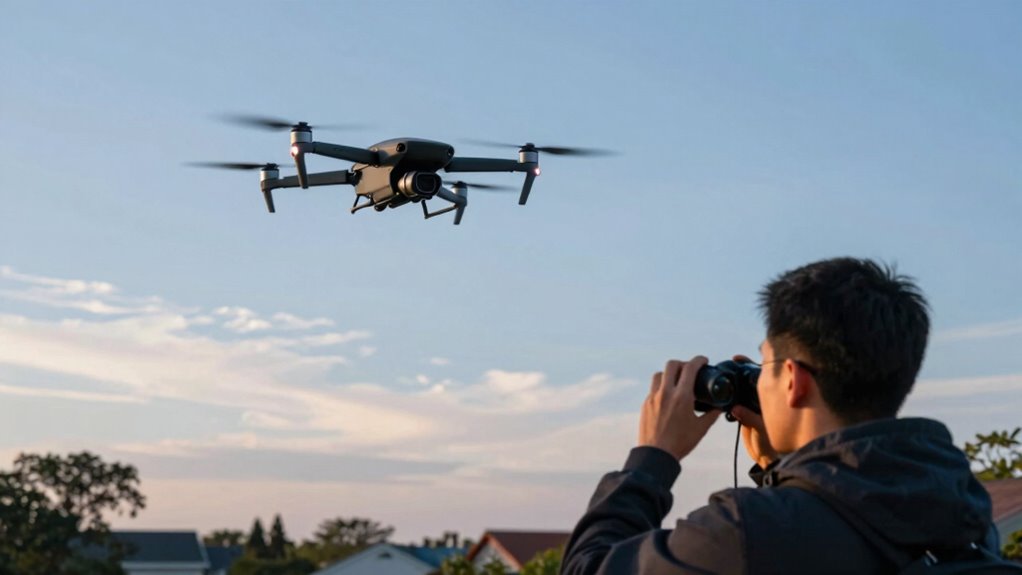
Detecting drones through visual observation is one of the most straightforward methods available. Start by looking for visual cues such as small, fast-moving objects in the sky, especially in areas with little cloud cover. Drones often appear as tiny, consistent shapes that contrast with the background. Shadow tracking is also effective; watch for moving shadows that don’t match the movement of nearby objects like trees or birds. Drones’ shadows tend to be sharp and move smoothly across surfaces. Pay attention to blinking lights or unusual outlines, especially during dusk or dawn. Additionally, changes in odor or scent are irrelevant to drone detection but are useful in other contexts. By sharpening your focus on these visual cues and practicing shadow tracking, you can identify drones early and stay aware of their presence without the need for specialized equipment. Incorporating visual detection techniques and understanding aerial object movement patterns can further enhance your ability to spot drones effectively. Developing an understanding of drone flight behaviors can also improve detection accuracy and help differentiate drones from other objects in the sky.
Use Sound to Legally Spot Drones Nearby
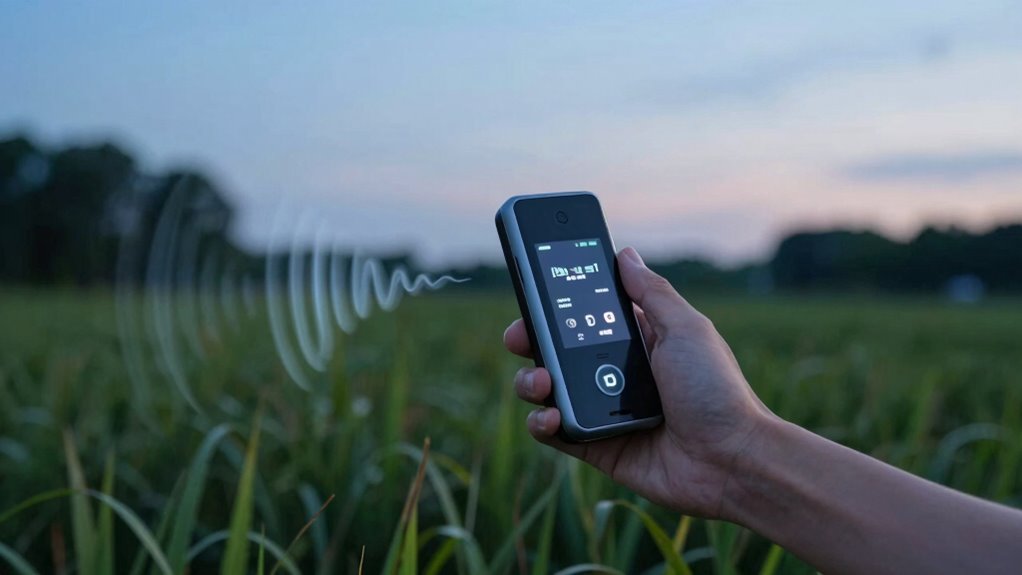
Using sound to spot drones is a legal and effective method that relies on detecting the distinct noises they produce. You need to contemplate legal factors when monitoring sounds, ensuring you stay within privacy laws and regulations. Investing in the right sound detection equipment helps you identify nearby drones accurately without infringing on anyone’s rights. Additionally, understanding audio detection techniques can improve your ability to recognize drone sounds more reliably. For example, knowledge about electric dirt bike noise levels can aid in distinguishing drone sounds from other sources. Being aware of technological advancements in acoustic sensors can further enhance detection accuracy in various environments. Recognizing the signatures of narcissistic behavior can also help in understanding manipulative tactics that might be employed in deceptive situations.
How Sound Detects Drones
Sound detection offers a legal and effective way to identify nearby drones without infringing on privacy or property rights. By focusing on audio cues, you can detect the distinct sounds drones produce, such as propeller noise or motor hum. Sound wave analysis helps differentiate these signals from background noise. To understand how it works:
- Microphones pick up ambient sounds and transmit them for analysis.
- Advanced algorithms identify characteristic drone audio patterns.
- Sound wave analysis isolates drone signals from other environmental sounds.
- Real-time monitoring allows quick detection without infringing on privacy laws.
- Professional services can assist in implementing sound detection systems tailored to your needs.
- Utilizing sound analysis technology enhances detection accuracy and responsiveness.
- Incorporating environmental noise filtering improves the reliability of drone detection in various settings.
- By leveraging aerial noise signatures, detection systems can better distinguish drones from other flying objects or environmental sounds.
- Continuous advancements in audio recognition systems contribute to more reliable drone detection capabilities.
This method ensures you can spot drones legally, relying solely on sound, making it a practical and compliant solution.
Legal Considerations in Sound Monitoring
Because sound monitoring relies solely on audio cues, it generally falls within legal boundaries when detecting drones, provided you adhere to privacy concerns and property laws. You should avoid recording conversations or capturing audio beyond your property to prevent infringing on others’ privacy. Ethical considerations also come into play, so it’s best to use sound detection as a non-invasive method that respects individuals’ rights. Make sure you’re aware of local regulations regarding audio surveillance, as laws differ by jurisdiction. Understanding audio surveillance laws can help you stay compliant with regional regulations. By focusing on detecting drone sounds without intercepting private communications or overstepping property boundaries, you can monitor effectively while staying within legal limits. Maintaining transparency and respecting privacy rights helps you avoid legal issues and promotes responsible drone detection practices. Additionally, understanding privacy laws ensures your monitoring activities remain lawful and respectful of others’ rights. It’s also advisable to familiarize yourself with sound detection technology to ensure your methods are both effective and compliant. Being aware of local jurisdiction regulations can further guide you in implementing lawful sound monitoring practices.
Effective Sound Detection Equipment
To effectively detect drones with sound equipment while respecting legal boundaries, choosing the right tools is essential. Advanced auditory analysis devices leverage sound wave propagation to identify drone noises without intrusion. These systems analyze specific sound signatures, distinguishing drone propellers from other noise sources. Consider these options:
- Directional microphones to focus on specific sound sources.
- Digital signal processors that enhance drone-specific audio patterns.
- Sound level meters calibrated for low-frequency propeller noise.
- Software algorithms that analyze sound wave propagation for drone identification. Additionally, privacy considerations are crucial when deploying sound detection systems in public or private spaces to ensure compliance with laws and ethical standards.
Smart home technology can be integrated with sound detection systems to automate alerts and responses, enhancing overall security and situational awareness.
Scan RF Frequencies for Drone Detection Legally

You can legally monitor RF frequencies to detect drones if you stick to specific methods and regulations. Knowing how to identify drone-specific signals helps you stay within the law while keeping your airspace safe. Let’s look at which RF monitoring techniques are permitted and how to recognize the right frequencies.
Legal RF Monitoring Methods
Legal RF monitoring involves scanning radio frequency (RF) bands to detect drone activity without violating laws or privacy rights. To do this ethically, you should:
- Use authorized equipment designed for legal spectrum monitoring.
- Limit scans to specific frequencies relevant to drones, avoiding broad sweeps.
- Make certain your monitoring complies with local privacy concerns and regulations.
- Maintain transparency and avoid intercepting private communications to respect ethical considerations.
Identifying Drone Frequencies
Identifying drone frequencies requires focusing your RF scans on the specific bands used by most consumer and commercial drones, typically in the 2.4 GHz and 5.8 GHz ranges. By monitoring these frequencies, you can detect RF interference caused by nearby drones. Effective drone signal analysis involves observing fluctuations or unusual activity in these bands, which may indicate a drone’s presence. Use a spectrum analyzer or SDR (Software Defined Radio) to scan for signals, paying attention to consistent patterns or rapidly changing signals that align with drone communications. Remember, your goal is to identify potential drone activity without disrupting legitimate RF use. Properly analyzing these signals helps ensure your detection methods stay within legal bounds while providing reliable drone identification.
Choose Commercial Drone Detection Devices That Comply With Law
Selecting commercial drone detection devices that comply with the law requires understanding the legal boundaries governing their use. You must guarantee the device adheres to counter drone legislation specific to your location, preventing legal issues. When choosing, consider these factors:
- Verify the device’s capability to detect drones without infringing on privacy or property rights.
- Ensure it employs ethical detection techniques that avoid interference with legitimate communications.
- Confirm the device’s operation aligns with local laws governing surveillance and data collection.
- Opt for systems that provide clear, authorized alerts rather than intrusive countermeasures.
Monitor Drone Flight Paths Responsibly and Legally
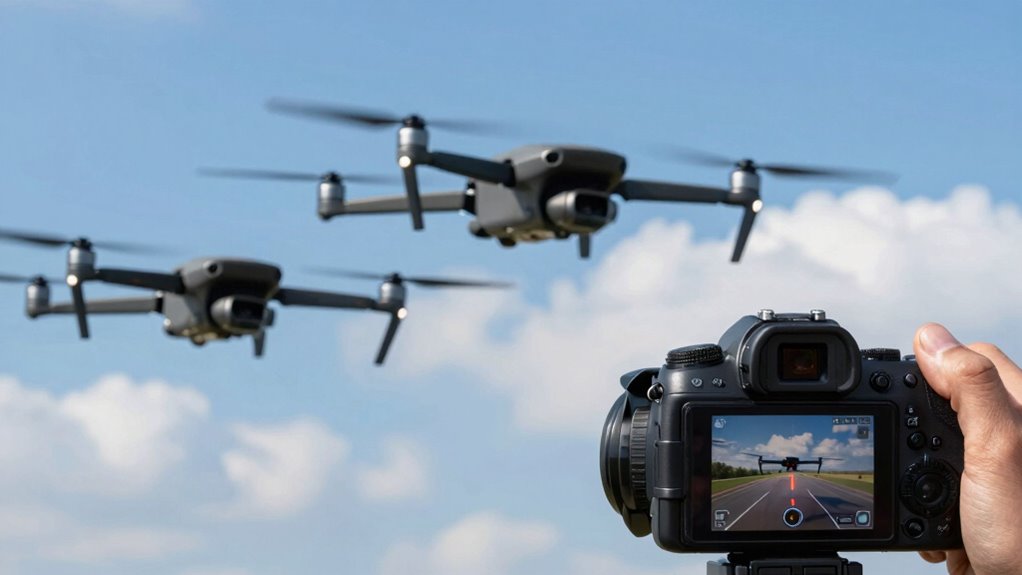
Monitoring drone flight paths responsibly and legally requires you to stay within established guidelines to respect privacy and property rights. You should avoid invading others’ privacy or overstepping legal boundaries, which can lead to privacy concerns and potential legal issues. Always use approved detection methods and adhere to local regulations when tracking drone movements. Ethical considerations are vital; you must guarantee your actions do not cause unwarranted surveillance or harassment. Respect property lines and avoid intercepting or interfering with drones unless legally justified. By maintaining transparency and following legal standards, you help foster trust and prevent misunderstandings. Responsible monitoring balances security needs with individual rights, ensuring you stay within the law while effectively managing drone activity.
Protect Your Privacy With Legal Security Measures
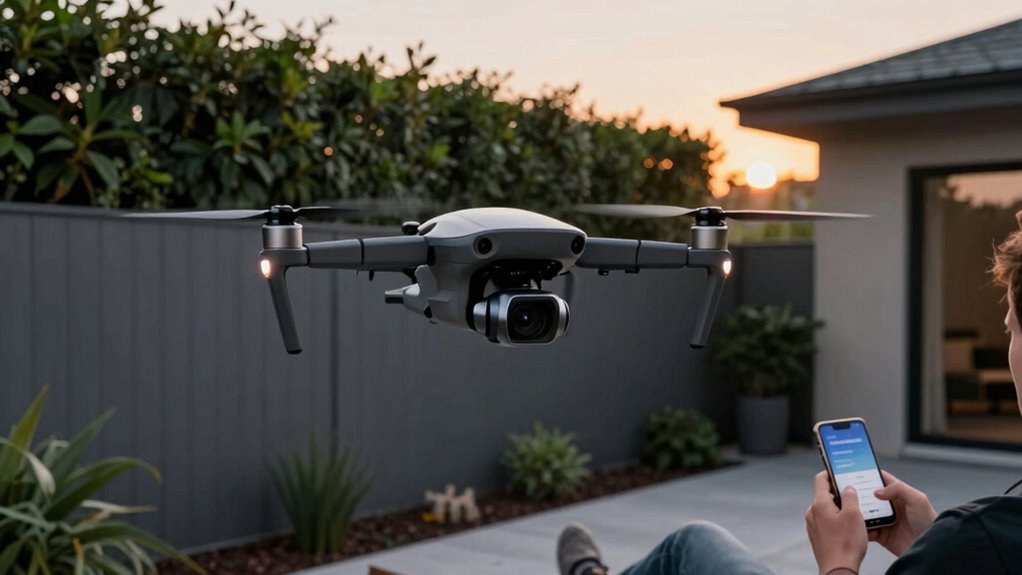
To safeguard your privacy effectively, implementing legal security measures is essential. Addressing privacy concerns involves adopting strategies that respect ethical considerations while defending your personal space. Consider these measures:
Protect your privacy legally by installing barriers, using signage, reporting suspicious activity, and seeking legal advice.
- Install privacy fences or physical barriers to limit drone visibility.
- Use signage to inform others about your privacy boundaries.
- Record and report suspicious drone activity to authorities, ensuring compliance with local laws.
- Seek legal advice to understand your rights and the boundaries of lawful drone interference.
Stay Updated on Local Drone Detection Laws
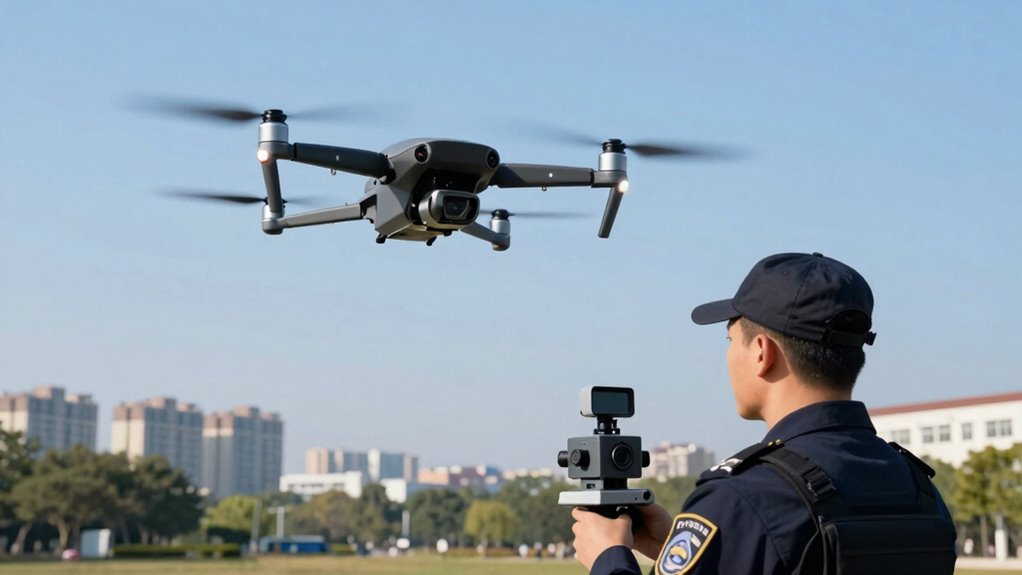
Staying informed about local drone detection laws is essential because regulations can vary considerably between areas. You need to understand how privacy rights are protected and what actions are legal when monitoring or detecting drones. Some regions may restrict the use of certain detection methods to avoid infringing on individual privacy or violating laws. Staying updated helps you avoid accidental legal violations that could jeopardize your efforts or lead to fines. Additionally, awareness of public safety regulations ensures you focus on detecting drones responsibly without causing alarm or interference. Check local government websites, consult legal experts if needed, and stay current with any changes. Being knowledgeable about these laws helps you balance effective drone detection with respect for privacy rights and the safety of others.
When Should You Seek Professional Drone Monitoring Help?
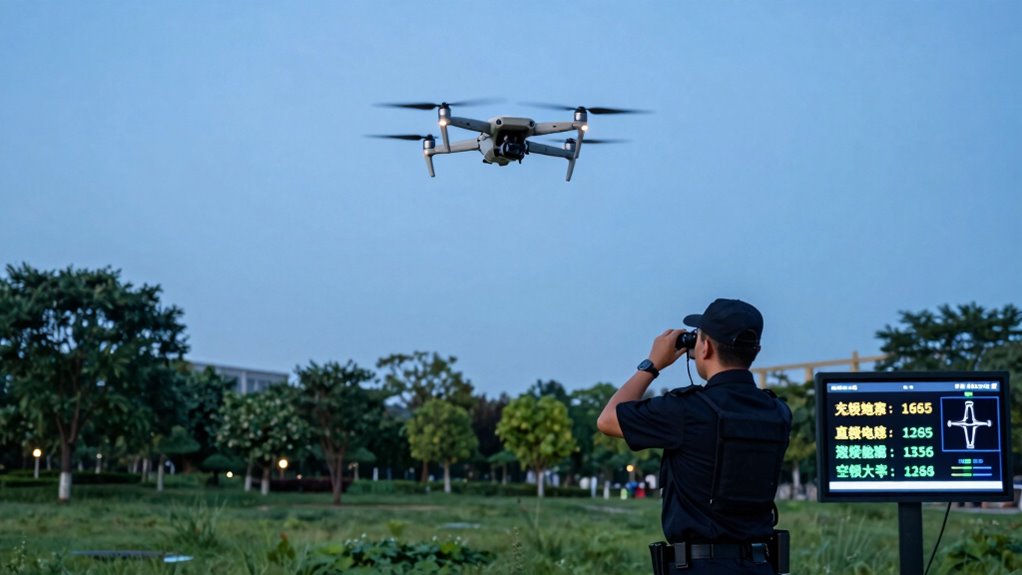
Ever wondered if it’s time to bring in professional drone monitoring services? You should consider it when privacy concerns or ethical considerations arise. Here are signs it’s needed:
- Unidentified drones hover near your private property repeatedly.
- You notice potential violations of local laws or regulations.
- You suspect malicious intent, such as spying or data theft.
- Your attempts to monitor drones yourself are ineffective or confusing.
Professional help ensures accurate detection while respecting legal boundaries. It also reduces risks of misidentification and legal complications. If unauthorized drones threaten your privacy or raise ethical questions, consulting experts can provide peace of mind. They follow strict protocols, helping you address concerns without breaking any laws. Knowing when to seek professional assistance safeguards your rights and maintains ethical standards effectively.
Frequently Asked Questions
Can I Legally Disable or Intercept a Drone I Detect Nearby?
You generally can’t legally disable or intercept a nearby drone, as doing so can raise serious privacy concerns and enforcement challenges. Interfering with a drone might violate federal or local laws, especially if it risks safety or privacy. Instead, report suspicious activity to authorities. You should focus on staying within legal boundaries while addressing privacy concerns, as unauthorized interference could lead to legal trouble and complicate enforcement efforts.
Are There Specific Licenses Required to Operate Drone Detection Equipment?
You need specific licensing requirements to operate drone detection equipment, depending on your location and the type of system. Privacy considerations are vital; make certain your detection methods respect privacy laws and avoid unlawful surveillance. Check with local authorities or aviation agencies to understand licensing requirements and privacy rules. By doing so, you stay compliant and avoid legal issues while effectively monitoring drones in your area.
How Do Privacy Laws Affect Monitoring Drone Activity on Private Property?
Like a modern-day Sherlock, you must navigate privacy laws carefully when monitoring drone activity on private property. Privacy invasion concerns and surveillance restrictions limit your ability to track drones without consent. Laws vary by location, so you can’t just rely on tech or intuition. You’re responsible for respecting individuals’ privacy rights, ensuring your monitoring doesn’t cross legal boundaries. Stay informed about local regulations to avoid unintended legal trouble.
Can Using Certain Detection Methods Lead to Civil or Criminal Charges?
Using certain detection methods can lead to civil or criminal charges if they cross legal boundaries or violate privacy concerns. For instance, employing invasive techniques like jamming signals or hacking into drone systems may break laws, resulting in serious consequences. You need to guarantee your methods respect privacy laws and legal limits, avoiding actions that could be interpreted as unauthorized surveillance or interference, which could expose you to liability.
What Are the Best Practices for Documenting Drone Activity Legally?
To document drone activity legally, you should keep detailed records of incidents, including dates, times, locations, and descriptions. Be aware of privacy concerns and avoid capturing private property or personal data without permission. Stay transparent with public awareness, informing relevant authorities if needed. Use non-invasive methods like visual logs or screenshots, and always follow local laws to protect yourself from potential legal issues while maintaining a clear record.
Conclusion
By understanding and following the legal guidelines, you can effectively detect drones without breaking any laws. Remember, over 80% of drone incidents involve privacy concerns, so staying informed and using compliant methods protects your rights. Whether you’re monitoring your property or securing your privacy, legal drone detection keeps you safe and responsible. Stay updated on local laws and consider professional help when needed—it’s the best way to stay protected and law-abiding.