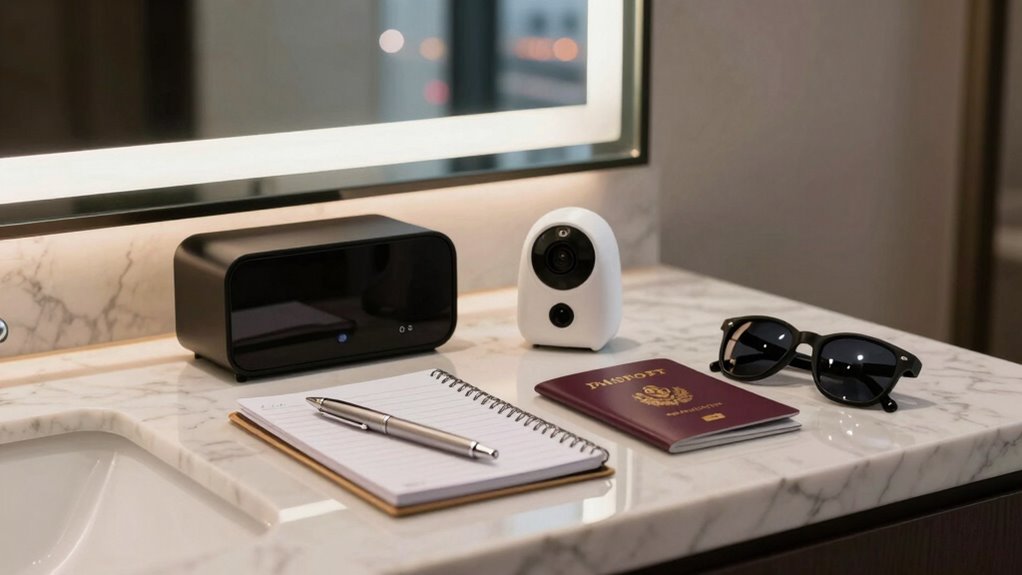

To keep your hotel stay private, start by visually inspecting the room for hidden cameras, microphones, and suspicious objects near outlets, vents, or picture frames. Use your phone’s flashlight and detection apps to spot tiny lenses or electronic signals. Cover peepholes, verify locks, and check for unusual wiring or tampering signs. Regularly reassess the environment, and if you find something suspicious, know how to respond. Keep going to learn essential tips on detection and protection techniques.
Key Takeaways
- Inspect common hiding spots like smoke detectors, picture frames, outlets, and vents for unusual objects or tiny camera lenses.
- Use flashlight and detection apps to identify reflective lenses and electronic signals near suspicious devices.
- Secure your devices with encryption, strong passwords, and VPNs; disable Bluetooth and NFC when not in use.
- Regularly reassess the room after cleaning or room service for new or moved surveillance devices.
- Report suspicious devices to hotel staff or authorities, documenting with photos without disturbing the setup.

Hidden Camera Detectors, Anti Spy Bug Camera Finder & GPS Tracker Detector, Anti-Theft Alarm, 6-Level Sensitivity, 168H Battery, Privacy Pen Hidden Device Detector for Travel, Hotel, Home, Car, Office
4-in-1 Spy Camera Detection: Engineered to expose even the tiniest hidden cameras, this privacy pen camera detector uses…
As an affiliate, we earn on qualifying purchases.
As an affiliate, we earn on qualifying purchases.
What Is Hotel Room Counter-Surveillance and Why Should You Care?
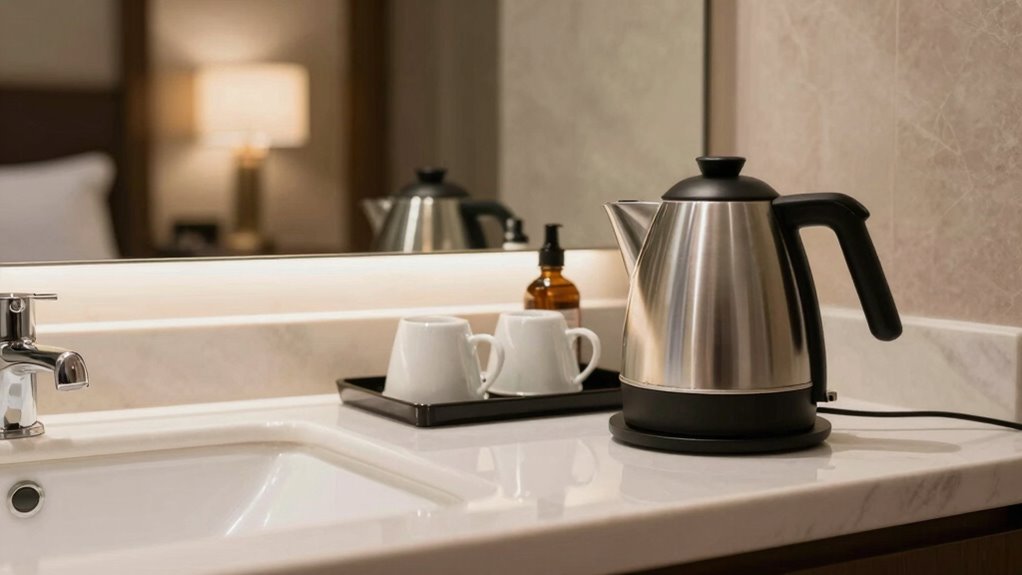
Hotel room counter-surveillance involves detecting and preventing hidden cameras or recording devices that could be secretly monitoring your activities. You should care because privacy invasion is a real threat, especially with hotel espionage on the rise. Hidden cameras can be discreetly placed in rooms, compromising your privacy without your knowledge. This invasion can lead to emotional distress, identity theft, or blackmail. By understanding the basics of counter-surveillance, you can take proactive steps to safeguard yourself. Checking for suspicious objects, unusual wires, or reflective surfaces helps you identify potential threats. Staying vigilant ensures your personal space remains private, allowing you to relax without fear of being secretly recorded. Protecting your privacy isn’t just about comfort; it’s about safeguarding your security. Our trusted business listings can help you find professional services that specialize in surveillance detection and privacy protection, including the latest counter-surveillance tools and techniques.

Upgraded Hidden Camera Detector – AI-Powered Anti-Spy Device, GPS Tracker & Bug Detector, Portable RF Signal Scanner for Hotels, Travel, Home & Office (Black)
Upgraded AI-Powered Detection: Military-grade technology detects hidden cameras, listening devices, and GPS trackers with precision. Enjoy peace of…
As an affiliate, we earn on qualifying purchases.
As an affiliate, we earn on qualifying purchases.
How to Spot Physical Signs of Hidden Cameras in Hotel Rooms
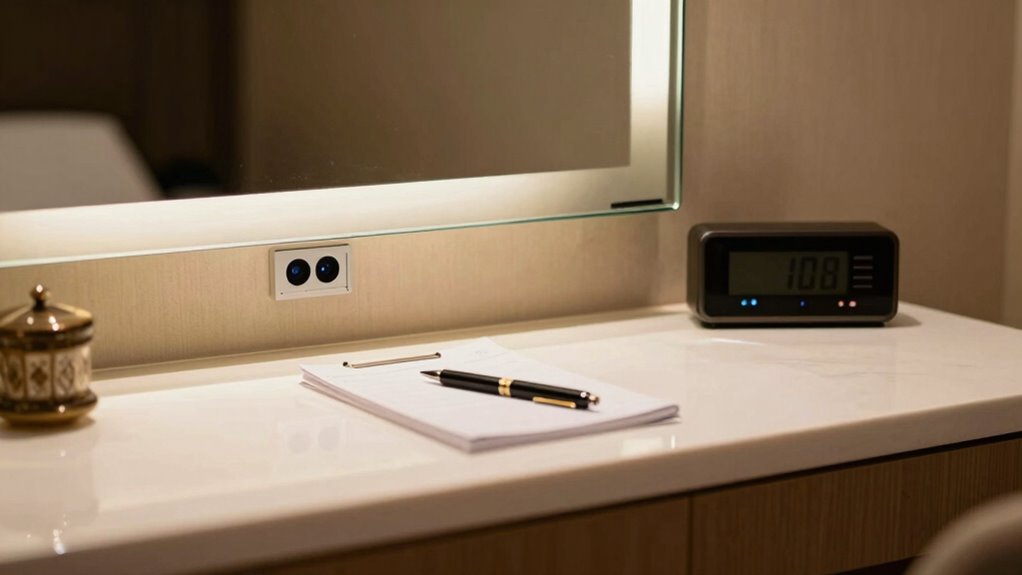
Look carefully around your room for unusual objects or wires that seem out of place, as these could hide hidden cameras. Pay attention to anything that appears unnatural, like camera lenses that look like tiny holes or reflective surfaces. Spotting these signs early can help you identify and avoid potential privacy violations. Additionally, be aware of high-quality projectors, which could be used creatively to conceal surveillance devices in a room. Familiarizing yourself with common surveillance techniques can further improve your ability to detect hidden cameras effectively. Understanding Gold IRA markets can also help you recognize the importance of privacy and security in your personal investments and transactions. Be mindful of Free Floating security vulnerabilities that might be exploited in hotel room setups to stay vigilant against covert surveillance.
Unusual Objects or Wires
Hidden cameras often leave behind subtle physical signs that can reveal their presence. Look carefully for unusual objects that seem out of place or don’t belong in the room, such as small devices or decorative items with hidden compartments. Pay close attention to wires—if you notice any that don’t connect to obvious devices or run behind furniture, they could be part of a hidden camera setup. Unusual objects or wires might be tucked behind picture frames, inside alarm clocks, or near smoke detectors. Don’t ignore odd shapes or loose wires that seem out of context; these signs can indicate the presence of a hidden camera. Always stay vigilant, and if something feels off, investigate further or alert hotel management. Recognizing physical signs of hidden cameras is an essential part of maintaining your privacy while traveling, especially considering how privacy policies inform data collection and device placement in accommodations. Being aware of electric power generation methods, such as hidden wiring, can help you spot irregularities that might be related to covert surveillance devices. Additionally, understanding how smart home technology integrates discreet monitoring devices can aid in identifying suspicious equipment.
Unnatural Camera Lenses
Unnatural camera lenses can often be spotted by their unusual appearance or placement. These lenses may look out of place, with unusual shapes, sizes, or reflections that don’t match standard fixtures. Hidden cameras using spy gear often have tiny, wide-angle lenses designed to capture broad areas discreetly. Check areas like smoke detectors, picture frames, or vents where such lenses might be concealed. Look for any unusual reflections or tiny glass circles that seem out of place. Keep in mind that some spy gear uses lens covers that can appear as small smudges or dark spots. If you notice anything suspicious, gently inspect the area or use a flashlight to identify reflective surfaces. Being vigilant about unnatural camera lenses can help you spot hidden cameras before they record your privacy.

Dokhbem 365nm UV Flashlight Rechargeable, Black Light Flashlight with LCD Display, Powerful Ultraviolet Lights for Pet Urine Detection, Resin Curing, Rockhounding, Scorpion, Uranium Glass, A/C Leak
【ADVANCED UV IDENTIFICATION TECHNOLOGY】UV blacklight flashlight identification light is outfitted with 365nm UV light and an upgraded lamp…
As an affiliate, we earn on qualifying purchases.
As an affiliate, we earn on qualifying purchases.
Conducting a Quick Security Check Before Settling In
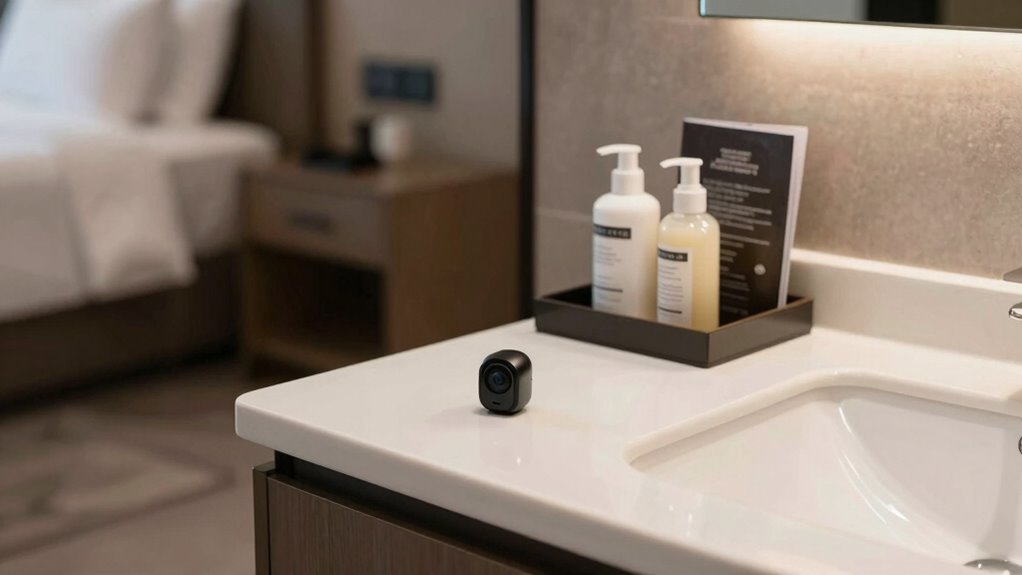
Before you settle in, quickly inspect your room for hidden cameras and microphones to guarantee your privacy. Check that all doors and windows are secure and functioning properly to prevent unauthorized access. Taking these simple steps helps you confirm your safety and maintain control of your environment. Additionally, consider smart appliances that could be used to monitor your activities without your knowledge. Be aware of digital security measures to protect your personal information from potential cyber threats during your stay. Always remain cautious of surveillance devices that may be discreetly installed in hotel rooms. Familiarizing yourself with high-tech security features can further help you identify potential vulnerabilities and ensure you are well-informed about the craftsmanship involved in modern security systems.
Camera and Microphone Check
To make certain your privacy, start by quickly inspecting the room’s cameras and microphones. Use your phone’s flashlight or a camera detection app to spot hidden cameras, paying close attention to smoke detectors, clocks, and electrical outlets. Look for any unusual or out-of-place objects that might conceal a camera lens. For audio surveillance awareness, listen carefully for any strange sounds or static that could indicate a microphone nearby. Conduct a visual sweep of the room, checking behind curtains, vents, or picture frames. Be cautious of devices that seem out of place or don’t match the room’s decor. Remember, hidden camera detection isn’t foolproof, so trust your instincts and stay alert to any suspicious activity. Understanding pool terminology can also help you recognize unfamiliar or suspicious devices that might be used for surveillance.
Door and Window Security
After inspecting the room for hidden cameras and listening for suspicious sounds, it’s wise to examine the doors and windows to guarantee your safety. Check that all locks function properly and consider using the additional security latch or a portable doorstop. Confirm windows close tightly and lock securely; if they have locks or latches, test them. If possible, cover the peephole with tape or a sticker to protect your guest privacy. Verify that no one can access the room through unlocked doors or windows, especially if you notice signs of tampering. These quick checks enhance hotel security and help prevent unauthorized entry. Additionally, consider the security system features of your accommodation to understand what safety measures are in place. Taking these simple precautions gives you peace of mind, letting you settle in comfortably while safeguarding your privacy during your stay. For added assurance, familiarize yourself with hotel security protocols upon check-in. Being aware of security vulnerabilities can further help you identify potential risks and ensure a safe stay. Regularly reviewing the window and door locks can also help maintain security throughout your stay. Moreover, understanding Rhythm Failure can provide insights into how to create a comforting atmosphere during your stay.

DUHPLL 2K Security Cameras – Indoor Camer – Spy Cameras -Nanny Camera – WiFi Wireless Cam – HD Surveillance Cam – Home Camer for Pet/Baby – with Night Vision – -Motion Detection Surveillance Cameras
High resolution picture – Equipped with a 2K HD lens, the Security camera can capture clear and detailed…
As an affiliate, we earn on qualifying purchases.
As an affiliate, we earn on qualifying purchases.
Easy Techniques to Detect Hidden Cameras and Devices
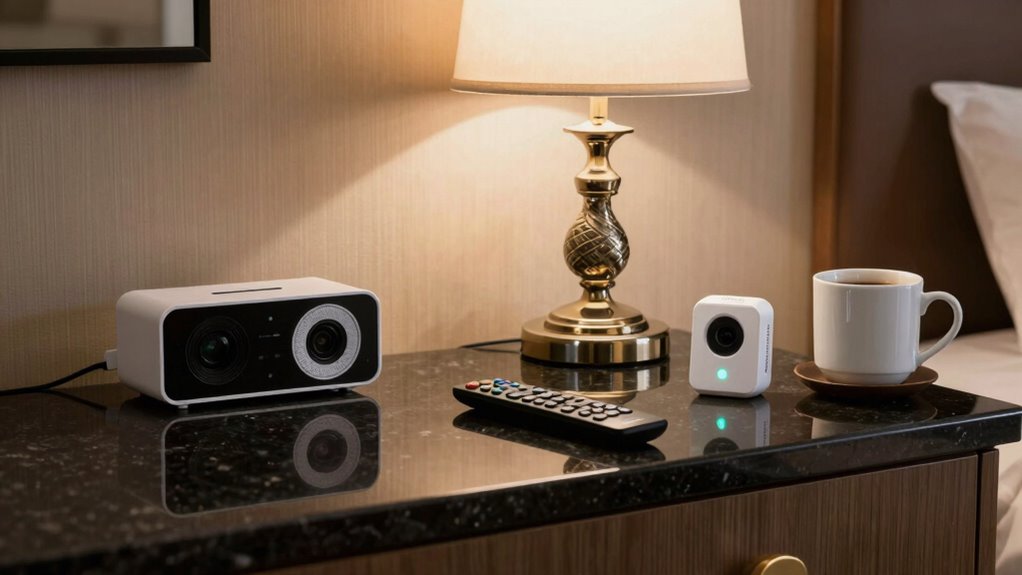
Detecting hidden cameras and devices in a hotel room doesn’t have to be complicated. Start with simple hidden camera detection methods, such as thoroughly inspecting common concealment spots like smoke detectors, picture frames, electrical outlets, and vents. Use your phone’s flashlight to scan for tiny camera lenses that might reflect light. Keep an eye out for unusual objects or wires that seem out of place. When it comes to device concealment techniques, check for small holes or unusual devices in furniture, decor, or fixtures. Use a camera detector app or a small RF scanner if available, which can pick up wireless signals from hidden cameras. Employing these detection tools can significantly improve your chances of identifying surveillance devices. Combining these techniques helps you quickly identify potential surveillance devices and maintain your privacy during your stay. Effective detection methods are essential for safeguarding your privacy in unfamiliar environments.
How to Secure Your Devices and Keep Your Privacy Safe
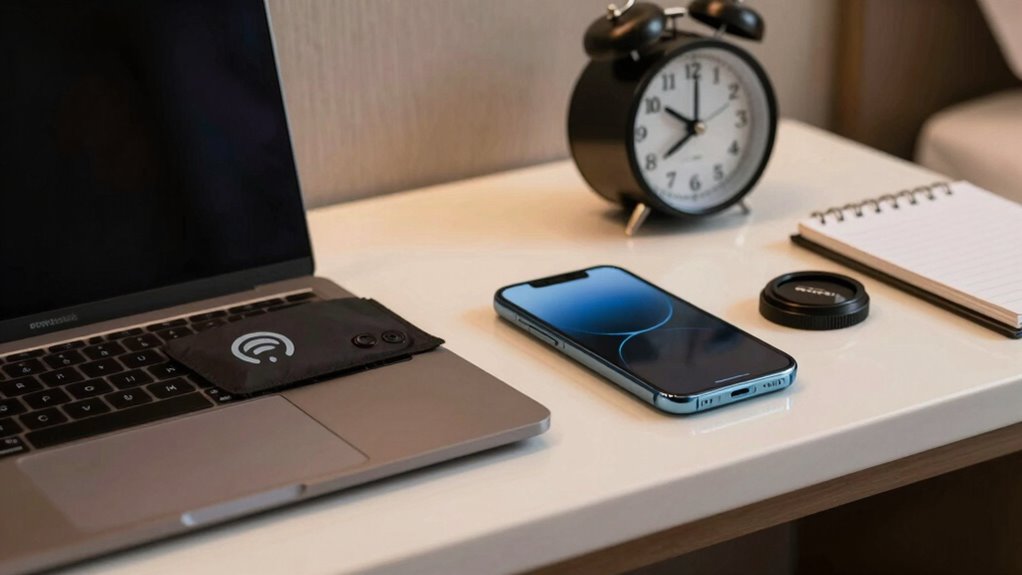
Ensuring your devices stay secure and your privacy remains intact requires proactive measures. Start by enabling device encryption on all your gadgets to protect sensitive data. Use strong, unique passwords and avoid public Wi-Fi or connect through a trusted VPN to improve Wi-Fi security. Regularly update your device software to patch vulnerabilities. Disable Bluetooth and NFC when not in use to prevent unauthorized access. Here’s a quick comparison:
| Tip | Why it matters |
|---|---|
| Device encryption | Protects your data if devices are lost or stolen |
| Use VPN on Wi-Fi | Secures your connection from eavesdroppers |
| Strong passwords | Prevents unauthorized access |
| Keep software updated | Fixes security flaws |
| Disable unused features | Minimizes attack vectors |
Taking these steps keeps your devices safe and your privacy protected.
Recognizing Suspicious Items Left Behind by Others
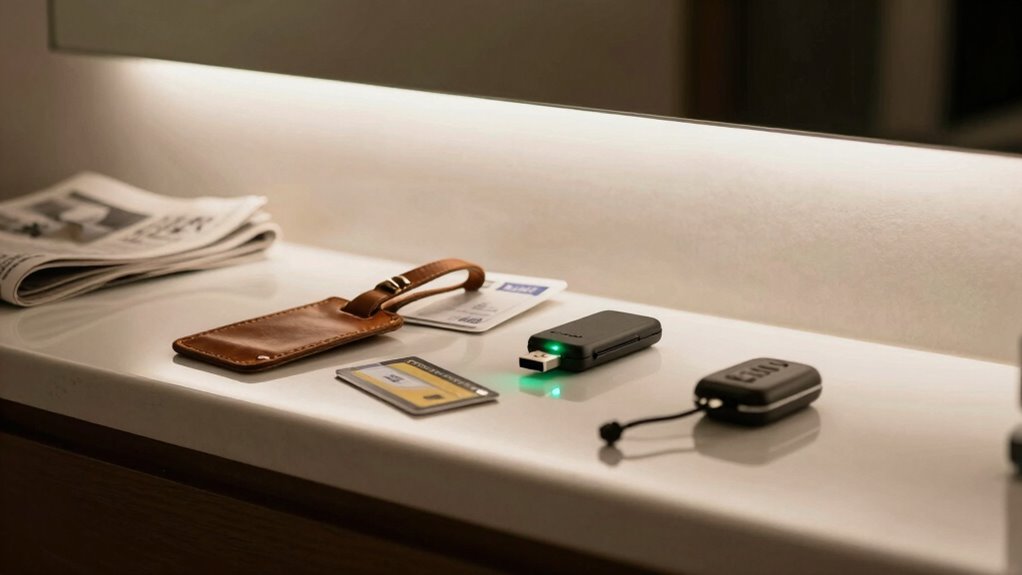
Keep an eye out for unfamiliar items in your room that don’t belong to you. Look for signs of tampering, like scratches or loose fittings, which may indicate someone has accessed your space. Recognizing these clues helps you stay alert and respond quickly if something seems off.
Unfamiliar Items in Room
When you enter a hotel room, it’s important to stay alert for unfamiliar items that may have been left behind by others. These items can range from odd pieces of hotel decor to clutter from room service. Recognizing suspicious objects helps ensure your safety and privacy. Look for items that seem out of place, such as unsealed packaging, strange electronic devices, or unusual markings. Pay attention to objects that don’t match the room’s typical decor, like misplaced furniture or unfamiliar accessories. Use this table to identify common suspicious items:
| Item Type | Red Flag |
|---|---|
| Unfamiliar electronic devices | May be used for covert surveillance or monitoring |
| Leftover room service items | Could contain hidden tools or transmitters |
| Odd hotel decor elements | Might be planted to gather information |
| Unusual cables or wiring | May indicate tampering or hidden recording devices |
Signs of Tampering
Signs of tampering can often be subtle but are crucial to spot. Suspicious items left behind by others may indicate potential threats like electronic eavesdropping or physical tampering. To stay alert, look for:
- Unusual wires or devices hidden near outlets or furniture, suggesting electronic eavesdropping equipment.
- Damaged or resealed packaging on items like remote controls, toiletries, or luggage, hinting at physical tampering.
- Odd scratches, loose panels, or misaligned furniture, which could conceal surveillance devices.
- Markings or fingerprints on surfaces or objects that seem out of place, indicating someone has handled or disturbed the area.
Being aware of these signs helps you identify potential risks and protect your privacy during your stay.
Using Technology to Protect Your Privacy in Hotels
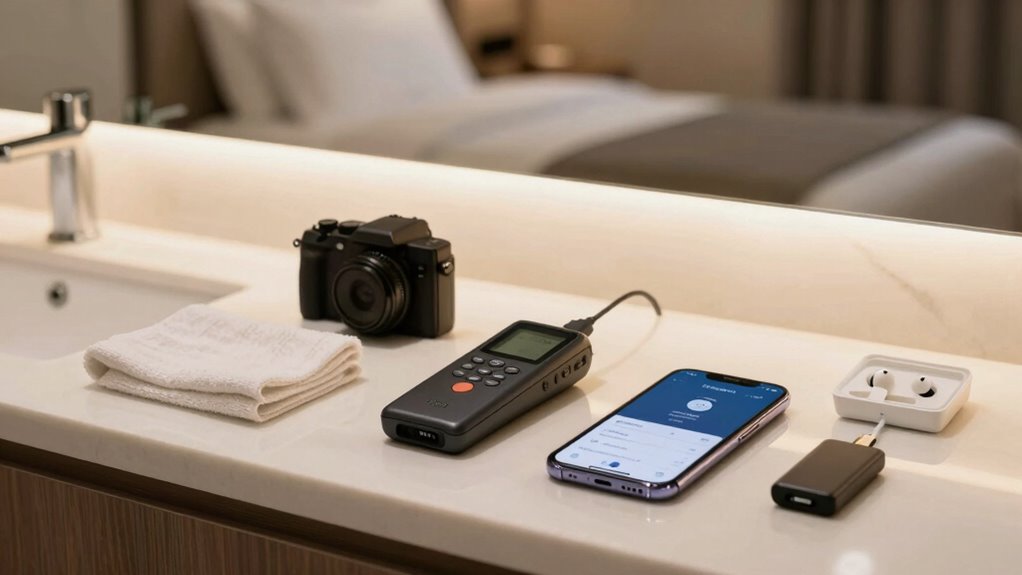
To safeguard your privacy in hotels, leveraging the right technology can make a significant difference. Privacy apps help you secure your communications by encrypting messages, calls, and emails, preventing eavesdroppers from accessing sensitive information. Encryption tools are essential for protecting your data on devices and online activities, ensuring that even if someone intercepts your connection, your information remains unreadable. Consider using VPNs to mask your IP address and encrypt your internet traffic, adding an extra layer of security. Always update your devices regularly to patch vulnerabilities. Additionally, utilize security features on your smartphone and laptop, such as biometric locks and two-factor authentication. These technologies collectively help shield your personal information from prying eyes during your hotel stay.
What to Do If You Find a Hidden Camera or Device?
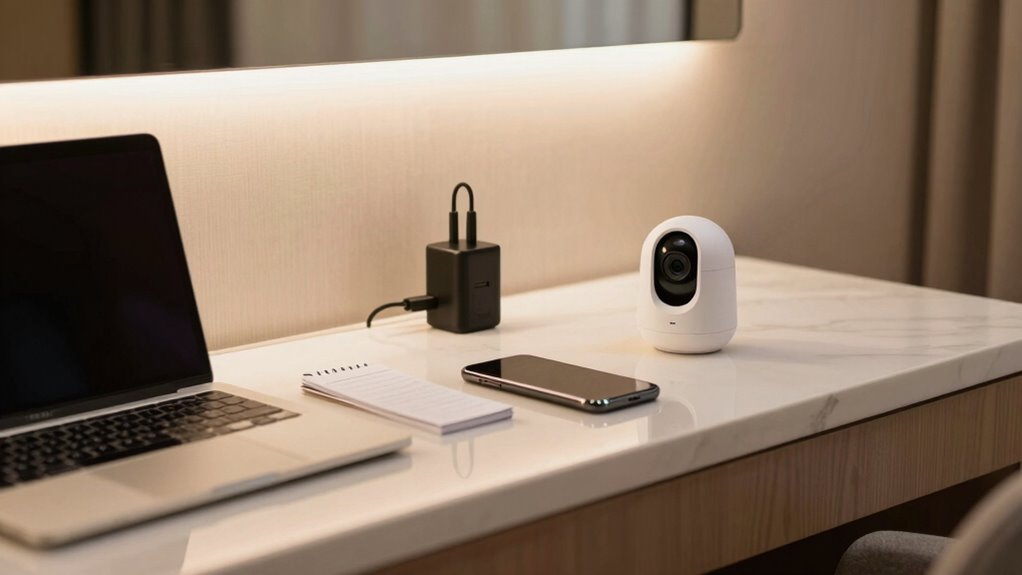
Discovering a hidden camera or device in your hotel room can be alarming, but acting quickly is essential. Your first step is to remain calm and protect your privacy rights. Consider these actions:
- Document the device with photos and notes for evidence.
- Avoid touching or moving it, to prevent tampering or damaging potential legal considerations.
- Check local laws to understand your rights and options regarding privacy violations.
- Decide whether to remove the device yourself or call authorities, based on your assessment and safety.
Reporting Suspicious Devices to Hotel Staff or Authorities
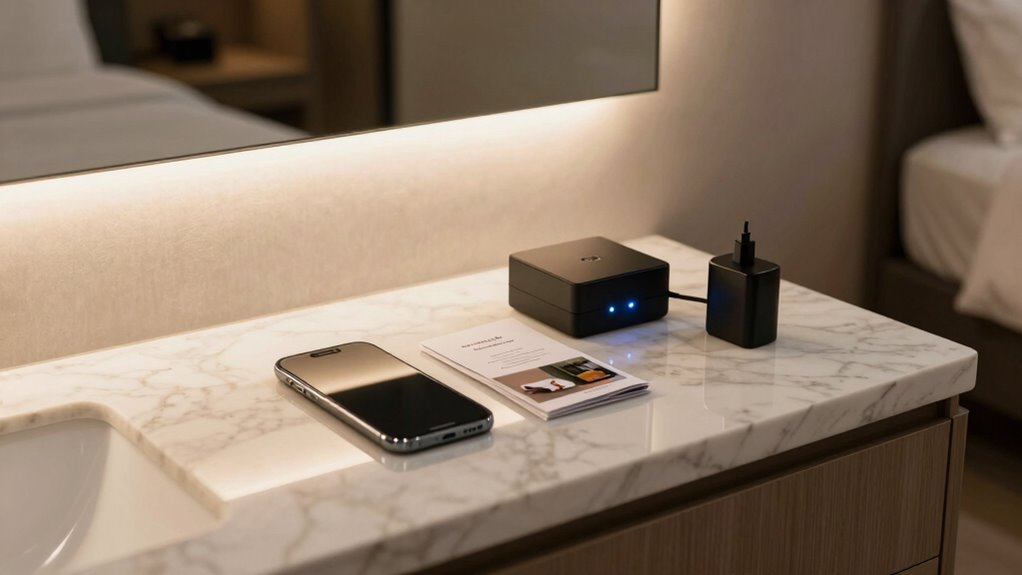
What should you do if you spot a suspicious device in your hotel room? First, don’t touch or move it. Instead, document its location with photos or videos for evidence. Then, immediately report the device to hotel staff or local authorities. They’re trained in device detection and can handle the situation properly, preserving hotel privacy and your safety. When reporting, provide details about what you found and where. To help visualize, here’s a quick comparison:
| Suspicious Device | Hotel Staff Response |
|---|---|
| Evidence collection | Confirm the device’s nature |
| Location details | Secure the area |
| Follow-up instructions | Ensure safety and privacy |
Prompt reporting helps prevent privacy breaches and ensures proper handling of the situation.
Creating a Routine for Privacy Checks on Future Trips
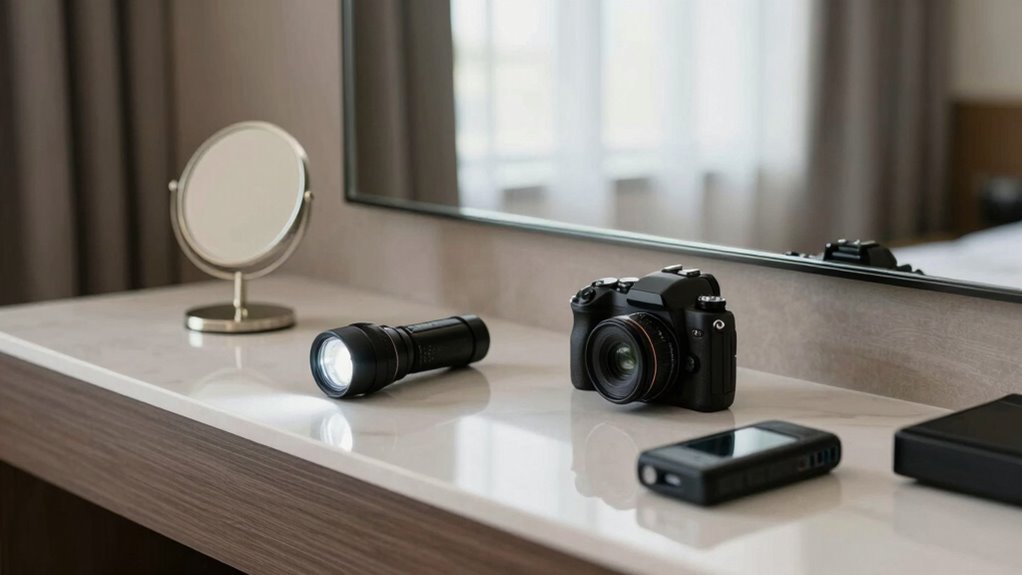
Establishing a routine for privacy checks before and during your hotel stays can substantially reduce the risk of overlooking suspicious devices or other security threats. Many privacy myths suggest hotel rooms are inherently secure, but it’s essential to verify hotel security measures yourself. To stay vigilant, consider these steps:
Routine privacy checks during hotel stays help prevent security threats and ensure peace of mind.
- Conduct a thorough visual inspection of the room’s perimeter, outlets, and electronics.
- Use a portable scanner or camera to detect hidden cameras or microphones.
- Check for unusual wiring or unfamiliar devices connected to power sources.
- Reassess your environment regularly, especially after cleaning or room service visits.
Frequently Asked Questions
Are There Legal Risks Involved in Conducting Room Surveillance Checks?
Yes, there are legal risks involved in conducting room surveillance checks. You could violate privacy laws if you record or spy on others without consent, which can lead to legal consequences. Always be aware of local laws and regulations to avoid infringing on privacy rights. If you’re unsure, it’s best to seek legal advice or avoid surveillance altogether to prevent potential legal risks.
What Are the Best Tools to Carry for Detecting Hidden Cameras?
Imagine holding a sleek, compact device in your hand, its screen flickering as it detects subtle signals. For detecting hidden microphones and cameras, bring portable camera detectors and RF scanners. These tools help you scan the room’s corners, vents, and electronics, revealing any covert devices. With sharp detection tools, you gain peace of mind, ensuring your privacy isn’t compromised by unseen eyes or ears in your hotel room.
How Often Should Travelers Perform Privacy Checks During Their Stay?
You should perform privacy maintenance checks at least twice a day during your stay. Regular security routines help you spot any unexpected devices or suspicious activity early. Each time you check, use your tools to scan for hidden cameras or microphones, focusing on areas like the bathroom, behind mirrors, and near power outlets. Staying vigilant guarantees your privacy remains protected, giving you peace of mind throughout your trip.
Can Regular Hotel Housekeeping Compromise My Privacy?
Hotel staff, including housekeeping, can sometimes raise privacy concerns if they access your room without proper authorization or at inappropriate times. While most staff respect your privacy, it’s wise to place a “do not disturb” sign when you’re inside or request specific cleaning times. You should also keep valuables secured. Being cautious helps safeguard your privacy and ensures your stay remains comfortable and secure.
What Are the Signs of Sophisticated, Covert Surveillance Devices?
You might overlook the signs of sophisticated covert surveillance devices, but they’re more obvious than they seem. Look for hidden camera indicators like tiny, unusual holes or misplaced objects, and watch for covert device signatures—abnormal electrical flickers or strange reflections. These signs often point to high-tech spy gear cleverly concealed in plain sight. Stay vigilant, inspect your surroundings carefully, and trust your instincts to spot these hidden threats before they compromise your privacy.
Conclusion
By staying vigilant and using these simple counter-surveillance tips, you’ll keep your privacy safer than Fort Knox. Remember, a quick check can save you from a privacy nightmare, turning you into a stealthy traveler who’s always one step ahead. Don’t let hidden cameras turn your trip into a spying circus — with a little awareness, you’ll protect your space and keep your secrets safer than a treasure chest. Stay alert and travel smart!