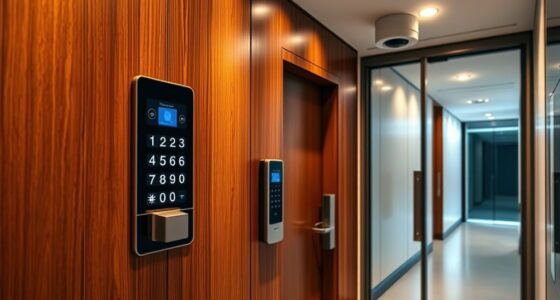

To think about security in high-rise buildings, you should develop layered plans that cover emergency response, access control, and technology integration. Regularly rehearse evacuation procedures and keep routes clear. Use advanced security tech like CCTV and biometric access, while coordinating efforts among security teams and emergency responders. Stay vigilant and update measures regularly to adapt to new threats. If you keep exploring, you’ll discover how to create a safer, more resilient environment for everyone inside.

Get privacy and security gear delivered free with Prime
- Fast, free delivery on millions of items
- Prime Video, Amazon Music and more included
- Member-only deals all year
Key Takeaways
- Develop comprehensive emergency response plans with regular drills and clearly marked evacuation routes.
- Implement layered access control measures like biometric scanners and security personnel to regulate entry.
- Integrate advanced security technology such as CCTV, alarm systems, and visitor management for real-time monitoring.
- Coordinate security efforts among staff, responders, and occupants for swift, organized evacuation and incident response.
- Continuously review and update security protocols to adapt to evolving threats and technological advancements.
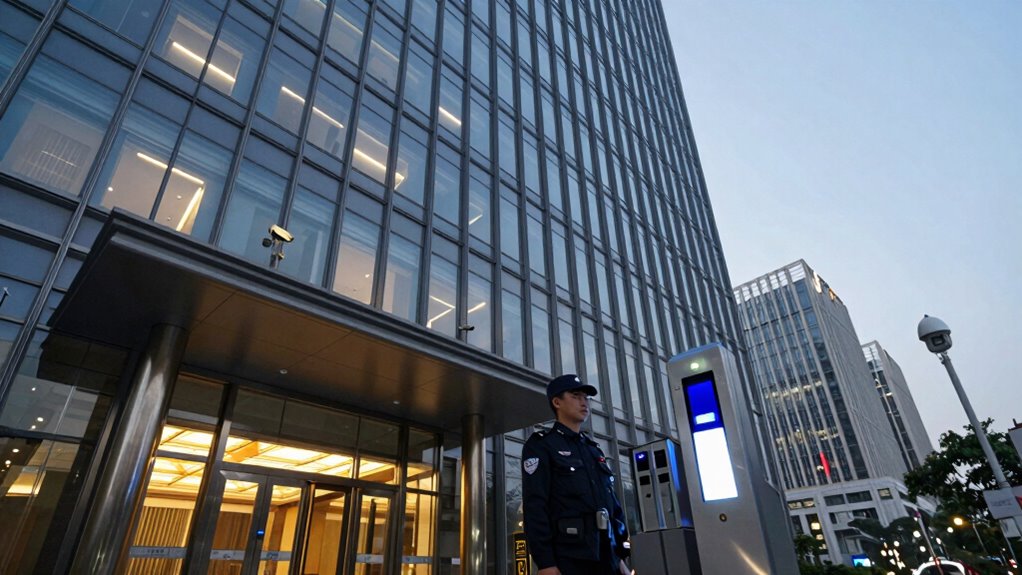
High-rise buildings present unique security challenges that demand proactive and sophisticated measures. When you manage or work in such structures, you must prioritize a thorough security strategy that addresses both immediate threats and ongoing safety concerns. One of the core elements is establishing a clear and effective emergency response plan. In a high-rise environment, evacuations can be complex due to the number of floors and the need for coordinated efforts among security personnel, building staff, and emergency responders. You should guarantee that emergency response protocols are well-documented, regularly rehearsed, and easily accessible to everyone. This includes clearly marked evacuation routes, designated assembly points, and communication systems that can quickly alert occupants to any danger. When emergencies arise, a swift, organized response can save lives and minimize damage, so your preparedness is critical. Regularly reviewing security procedures ensures your plan remains effective against evolving threats.
Effective emergency plans with clear routes and communication save lives in high-rise buildings.
Access control is another fundamental aspect of high-rise security that you cannot overlook. It involves regulating who can enter the building and specific areas within it, helping prevent unauthorized access and potential threats. You need to implement multi-layered access control systems, such as key cards, biometric scanners, and security personnel at entry points. These measures not only deter intruders but also allow you to track movements within the building, which is invaluable during investigations or incidents. The goal is to strike a balance between security and convenience, ensuring that authorized occupants can move freely while keeping outsiders at bay. You should also regularly review and update access permissions, especially when employees leave or change roles, to prevent security gaps. Additionally, integrating access control systems with other security measures can create a more cohesive and responsive security environment. Incorporating security technology that adapts to new threats enhances the robustness of your security measures.
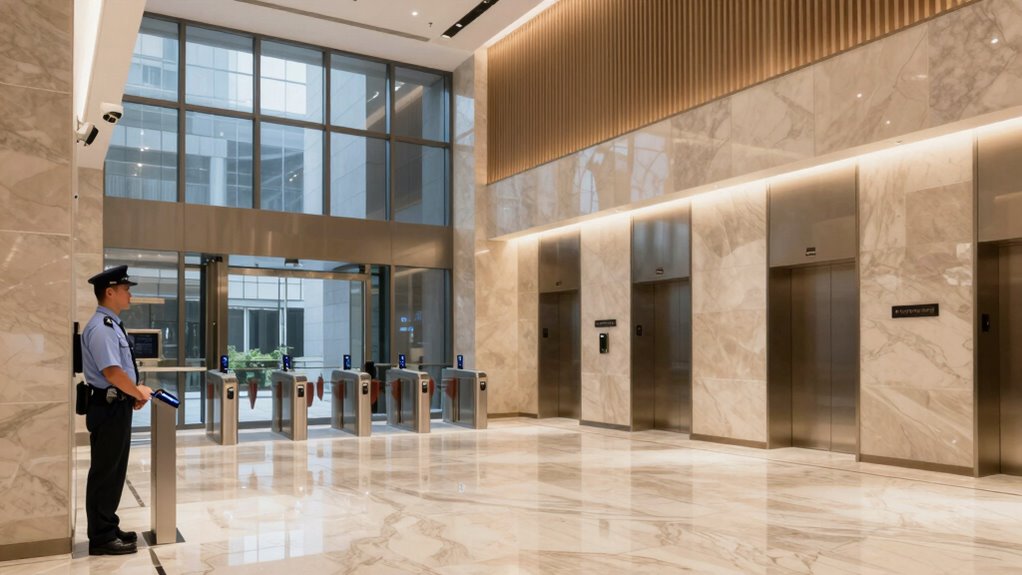
Furthermore, integrating access control with surveillance systems enhances your ability to monitor activity in real time. High-quality CCTV cameras, combined with analytics and alarm systems, create a layered defense that alerts you to any suspicious behavior. You can also incorporate visitor management systems to log and screen visitors, adding another layer of security. These systems should be complemented by physical security features like turnstiles and security desks, which serve as checkpoints for verifying identities.
In essence, managing security in high-rise buildings requires constant vigilance and a layered approach. Prioritize emergency response planning to handle crises effectively, and implement stringent access control measures to restrict unauthorized entry. By doing so, you create a safer environment for occupants, visitors, and staff—protecting lives, property, and your reputation. Remember, security isn’t a one-time setup but an ongoing process that adapts to evolving threats and technologies.
high-rise building CCTV security system
As an affiliate, we earn on qualifying purchases.
As an affiliate, we earn on qualifying purchases.
Frequently Asked Questions
How Do Security Protocols Differ Between Residential and Commercial High-Rises?
You’ll notice security protocols differ because residential buildings prioritize access control and visitor management to protect residents’ privacy. Commercial high-rises often implement stricter access control, biometric systems, and thorough visitor management to safeguard sensitive information and assets. In both, you should guarantee secure entry points, monitor visitors, and control access areas. Tailoring protocols to the building’s purpose helps you effectively manage security risks and maintain a safe environment.
What Technology Is Most Effective for High-Rise Building Security?
Sure, because nothing says “secure” like a crystal ball, right? In reality, the most effective technology for high-rise security involves robust access control and surveillance systems. Access control guarantees only authorized folks get in, while surveillance keeps a watchful eye on everything. Combine the two, and you’ve got a digital fortress that’s harder to breach than your neighbor’s secret barbecue recipe. Security tech today is all about smart, integrated solutions.
How Are Emergency Evacuation Plans Integrated Into Security Strategies?
You integrate emergency evacuation plans into security strategies by conducting regular evacuation drills, ensuring residents and staff know their roles. You also prioritize emergency communication systems, like alarms and alerts, to quickly inform everyone during an emergency. By practicing drills and maintaining clear communication channels, you create a safer environment, enabling swift evacuation and minimizing chaos during actual emergencies. This proactive approach enhances overall security and preparedness in high-rise buildings.
What Are the Legal Responsibilities of Building Managers for Security?
You’re responsible for maintaining a safe environment, which means adhering to legal obligations like implementing tenant screening and access control measures. You must guarantee security protocols protect residents while respecting privacy laws. By proactively managing these responsibilities, you create a secure atmosphere, preventing potential issues before they arise. Staying updated on legal requirements and best practices helps you fulfill your duties, fostering trust and safety within your high-rise community.
How Is Security Personnel Training Tailored for High-Rise Environments?
You tailor security personnel training for high-rise environments by emphasizing access control procedures and surveillance systems operation. You guarantee they understand how to monitor entry points, verify identities, and respond swiftly to security breaches. You also train staff to interpret surveillance footage, recognize suspicious activities, and coordinate with emergency responders. This specialized training helps maintain safety, manage complex building layouts, and handle high-stakes situations effectively.
biometric access control scanner
As an affiliate, we earn on qualifying purchases.
As an affiliate, we earn on qualifying purchases.
Conclusion
Remember, securing a high-rise is like tending a delicate garden—you must stay vigilant and adapt to new threats. By integrating technology, training staff, and designing with safety in mind, you create a fortress that’s both resilient and welcoming. Keep your security measures as fluid as a river, flowing with the changing landscape of risks. When you do, you build a skyscraper of safety that stands tall and strong against any storm.
As an affiliate, we earn on qualifying purchases.
visitor management system for buildings
As an affiliate, we earn on qualifying purchases.
As an affiliate, we earn on qualifying purchases.
Fall Picks
fall essentials
As an affiliate, we earn on qualifying purchases.