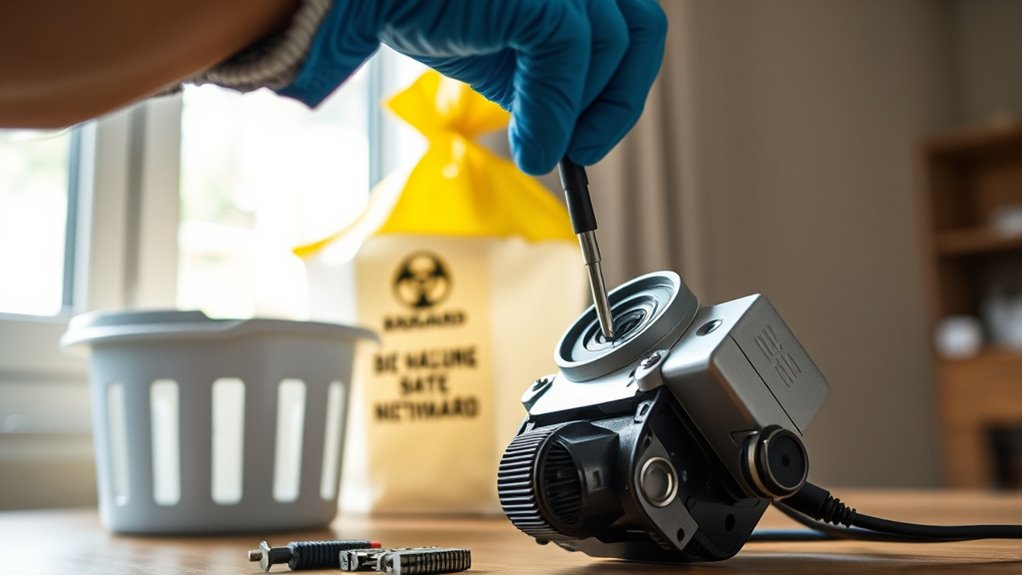

To safely dispose of old security hardware, first assess each device for damage and residual data. Use certified data wiping tools or encryption to securely erase sensitive information. For added security, physically destroy the devices through shredding or crushing, ensuring data can’t be recovered. Proper documentation and verification confirm the process is complete. Then, partner with certified recyclers for responsible disposal. If you want to guarantee complete data security, learn effective strategies for secure hardware decommissioning.
Key Takeaways
- Assess hardware for residual data and confirm it requires secure erasure before disposal.
- Use certified data wiping tools or encryption to thoroughly destroy sensitive information.
- Physically destroy devices through shredding, drilling, or crushing to prevent data recovery.
- Document and verify data removal with detailed records for compliance and accountability.
- Partner with certified e-waste recyclers to ensure environmentally responsible disposal without data leaks.
Assessing the Security Hardware Before Disposal
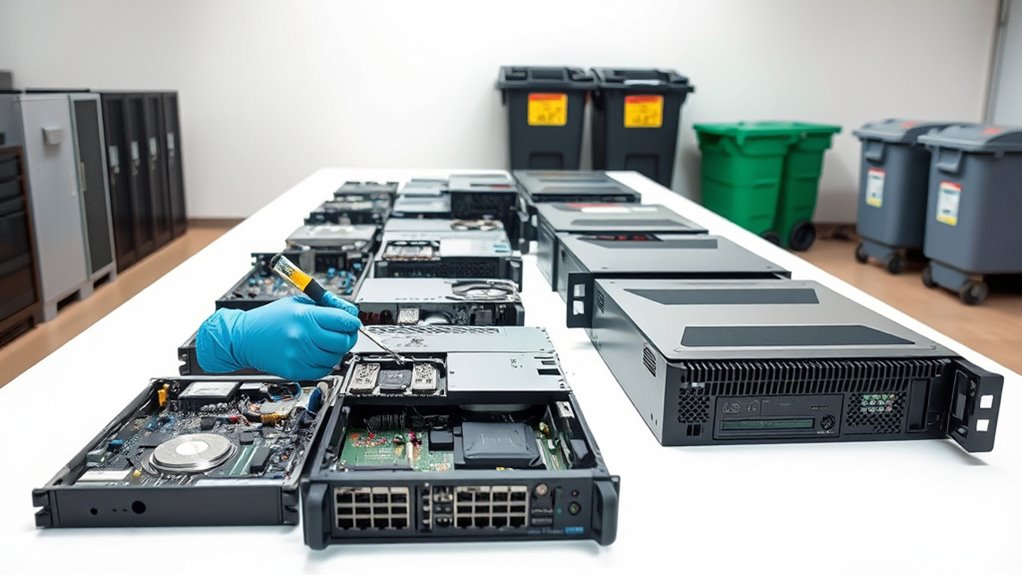
Before disposing of security hardware, you need to thoroughly assess its current state and data security. Start by checking hardware compatibility to ensure the device can be properly decommissioned without risking data leaks or operational issues. Consider environmental considerations, such as proper handling of hazardous materials like batteries or circuit boards, which may require special disposal procedures. Inspect the hardware for signs of damage or wear that could compromise data security, like broken enclosures or exposed components. Confirm whether the hardware has any residual data that needs to be securely erased. This assessment helps determine the appropriate disposal method, ensuring safety, compliance, and the protection of sensitive information. Conducting a vetted evaluation ensures all security and environmental protocols are properly followed. Taking these steps minimizes risks and lays a solid foundation for secure disposal.
Choosing the Right Data Wiping Method
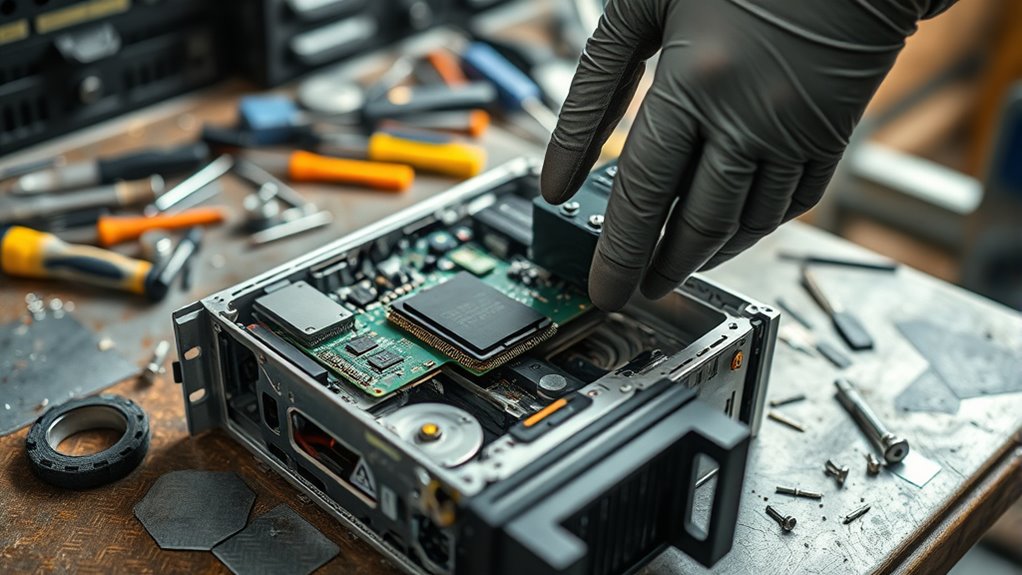
Selecting the appropriate data wiping method is essential to guarantee that all sensitive information is permanently destroyed and cannot be recovered. Start by evaluating the data’s sensitivity; highly confidential info requires stronger methods like encryption methods combined with overwriting. Encryption transforms data into unreadable code, so securely deleting encryption keys effectively renders data inaccessible. Data masking, on the other hand, replaces sensitive data with fictitious but realistic values, useful for protecting privacy during disposal. For hardware with critical information, consider using certified software that performs multiple passes of data overwriting. Simple deletion or formatting may not suffice, as residual data can often be recovered. Additionally, understanding cheating behaviors can help organizations develop better security protocols to prevent data breaches related to insider threats. Choosing the right method ensures your data is irrecoverable, safeguarding your organization from potential breaches.
Physical Destruction Techniques for Secure Disposal
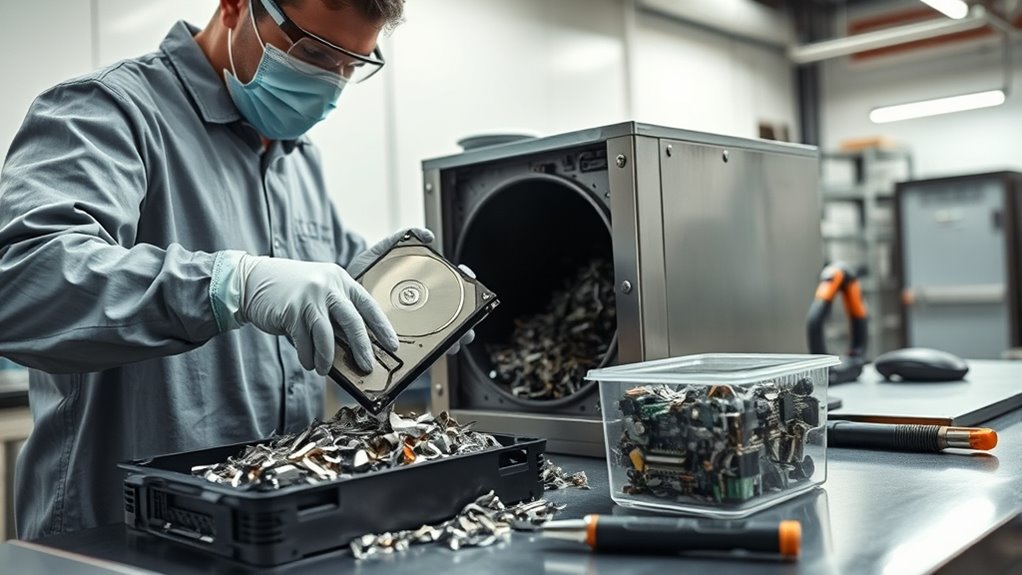
You need to physically destroy old security hardware to guarantee data can’t be recovered. Shredding offers a quick, secure option by turning devices into small pieces, while drilling and crushing damage the internal components directly. Choosing the right method depends on your security needs and available equipment. Additionally, understanding physical destruction techniques can help ensure complete data eradication.
Shredding for Security
Shredding is a highly effective method for guaranteeing the secure disposal of old security hardware, as it physically destroys data storage devices beyond recovery. When you choose shredding, you eliminate the risk of data leaks, even if the hardware has hardware encryption. Shredding machines break down drives into tiny pieces, making data reconstruction impossible. It’s essential to follow disposal regulations, which often mandate physical destruction for sensitive equipment. These regulations ensure you handle hardware responsibly and avoid legal issues. High-security shredders are designed to meet these standards, providing a quick and reliable way to dispose of devices securely. By shredding, you guarantee that confidential data remains inaccessible, protecting your organization from potential breaches or compliance violations.
Drilling and Crushing
Drilling and crushing are effective physical destruction methods that guarantee data stored on security hardware can’t be recovered. These techniques are essential during the hardware lifecycle when devices are decommissioned and must comply with disposal regulations. Drilling penetrates the storage media, physically damaging the internal components, while crushing applies force to shatter the device beyond repair. Both methods ensure sensitive data is irretrievable and meet legal requirements for secure disposal. By using drills or industrial crushers, you eliminate the risk of data leaks and uphold data security standards. These procedures are especially useful for equipment that contains highly confidential information. Incorporating drilling and crushing into your disposal process not only protects your organization but also ensures compliance with relevant disposal regulations. Understanding how industry trends influence secure disposal practices can help optimize your data destruction methods.
Utilizing Certified Data Erasure Tools
You should always use verified erasure software to guarantee your data is properly removed. Certified tools meet industry standards, giving you confidence that your information is securely erased. Choosing compliant software helps you avoid legal and security risks during disposal. Additionally, employing proper storage methods for data before disposal reduces the risk of accidental leaks or unauthorized access.
Verified Erasure Software
To guarantee data is thoroughly and securely erased, leveraging certified data erasure tools is essential. Verified erasure software has been tested and approved to meet strict standards, ensuring sensitive information is unrecoverable. These tools often incorporate advanced algorithms that overwrite data multiple times, effectively eliminating traces. When dealing with cloud storage, certified software ensures that data stored remotely is also securely erased, preventing leaks. Additionally, it complements encryption practices by erasing encryption keys, rendering remaining data useless. Using verified software reduces human error and provides documented proof of data destruction, which is crucial for compliance. Relying on certified tools gives you confidence that your old security hardware won’t expose any residual data, safeguarding your organization from potential breaches. Certified data erasure solutions are designed to handle various hardware formats and storage types, further enhancing security.
Compliance With Standards
Using certified data erasure tools not only guarantees thorough data removal but also helps your organization stay aligned with industry standards and legal requirements. To achieve compliance, you should focus on:
- Implementing strict access control to ensure only authorized personnel operate erasure tools, reducing the risk of data leaks.
- Providing extensive user training so staff understand proper procedures and the importance of standards adherence.
- Regularly auditing erasure processes to verify compliance and maintain documentation for legal and regulatory purposes.
- Incorporate proper documentation practices to ensure traceability and accountability throughout the data disposal process.
Documenting and Verifying Data Removal
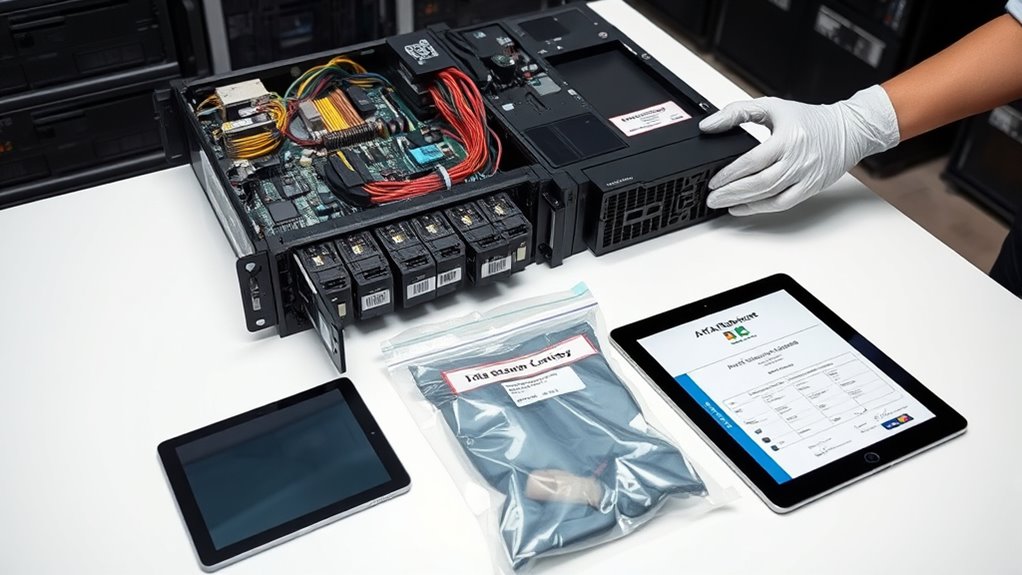
Accurately documenting and verifying data removal is essential to guarantee that all sensitive information has been securely erased from decommissioned security hardware. You should start by updating your hardware inventory to reflect which devices have undergone data sanitization. Following your disposal protocols, record details such as the method used, date of removal, and personnel involved. Use verification tools—like audit logs or certification reports—to confirm complete data eradication. This documentation provides a clear trail for compliance audits and future reference. Regularly review and store these records securely, ensuring they’re accessible if needed. Proper documentation not only confirms your data removal efforts but also safeguards your organization against potential security breaches or legal issues. Additionally, understanding privacy policies helps ensure your data destruction procedures comply with relevant data protection regulations.
Responsible Recycling and Disposal Options
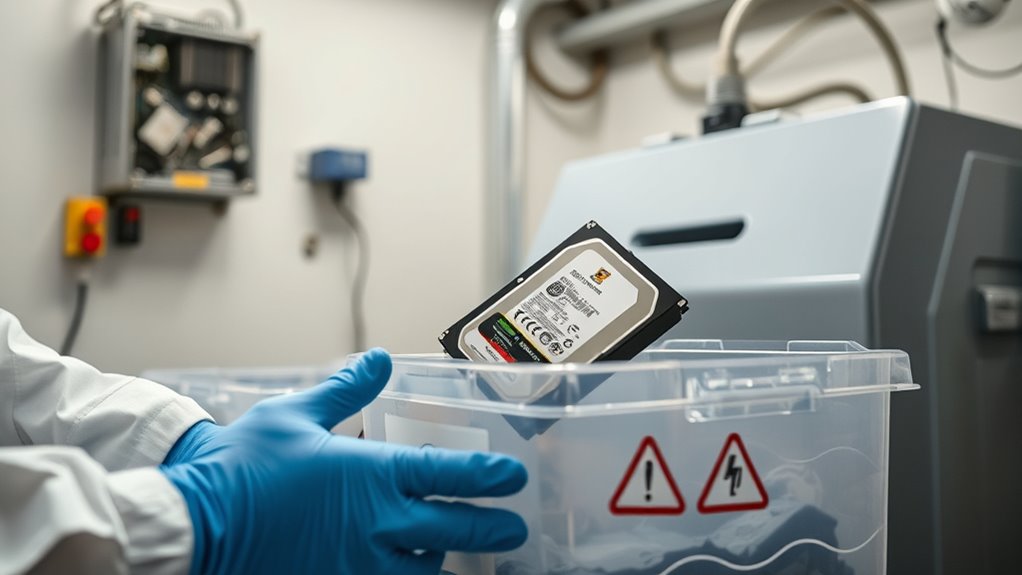
Once you’ve documented and verified that all sensitive data has been securely removed, it’s essential to choose proper recycling and disposal methods for your old security hardware. Following recycling regulations helps ensure compliance and minimizes environmental impact. Consider these options:
- Partner with certified e-waste recyclers who follow environmentally responsible practices, preventing hazardous materials from polluting the environment.
- Donate usable equipment to organizations or programs that refurbish and reuse hardware, extending its life cycle.
- Properly dismantle and recycle components like circuit boards and batteries, reducing landfill waste and conserving resources.
- Ensure that your disposal methods align with privacy and data security guidelines to prevent data leaks during the recycling process.
Implementing Policies for Ongoing Hardware Management
To guarantee your security hardware remains effectively managed over time, it’s essential to establish clear policies that guide ongoing maintenance, updates, and disposal. This ensures proper policy enforcement and prolongs the hardware lifecycle. Create a structured plan that defines roles, schedules, and procedures. Visualize your hardware management like this:
| Hardware Stage | Policy Enforcement Action | Responsible Party |
|---|---|---|
| Installation & Setup | Verify security configurations | IT Department |
| Routine Maintenance | Schedule updates and checks | Security Team |
| Decommissioning | Secure data wiping and disposal | Disposal Vendor |
This table helps you understand each stage, ensuring policies are consistently applied. Clear policies keep your hardware lifecycle intact and prevent security gaps over time. Emphasizing attention during each phase enhances the effectiveness of your policies and minimizes risks.
Frequently Asked Questions
How Long Does Data Typically Remain Recoverable After Physical Destruction?
When considering how long data remains recoverable after physical destruction, understand that the data recovery window depends on the destruction method’s effectiveness. If you use effective physical destruction techniques like shredding or crushing, data becomes unrecoverable immediately. However, if the hardware is only partially damaged, remnants could be recoverable for days or weeks. To guarantee data can’t be recovered, always verify the physical destruction effectiveness before disposal.
Are There Specific Regulations for Disposing of Security Hardware in Different Industries?
Think of industry-specific compliance as your security guard, guiding how you dispose of hardware. You must follow regulations tailored to your industry, like HIPAA for healthcare or GDPR for data protection. Disposal certification requirements guarantee your hardware is properly handled, preventing data leaks. Ignoring these rules risks hefty fines and reputation damage. Stay vigilant by understanding and adhering to these regulations, turning responsible disposal into your strongest defense.
Can Data Be Recovered From Hardware That Appears Physically Destroyed?
You might wonder if data can still be recovered from hardware that looks physically destroyed. While physical destruction methods like shredding or crushing make data recovery difficult, advanced data recovery techniques can sometimes retrieve information from damaged drives. To minimize risks, combine multiple physical destruction methods and consider professional data destruction services. Remember, no method guarantees complete data removal, so always follow industry best practices to ensure data security.
What Are the Costs Associated With Professional Data Destruction Services?
When you consider professional data destruction services, the costs vary based on factors like device type and volume, but a good cost comparison helps you find affordable options. You should also evaluate the service reputation to guarantee your data’s safety and compliance. Remember, investing in reputable services might be more costly upfront but offers peace of mind, knowing your sensitive security hardware is securely and permanently destroyed without risking data leaks.
How Often Should Organizations Review Their Hardware Disposal Policies?
You should review your hardware disposal policies regularly, ideally after each hardware refresh or significant change in security standards. This guarantees your policies stay current with evolving threats and compliance requirements. By updating your policies consistently, you minimize data leaks and security risks. Make it a routine to assess and improve your disposal procedures, keeping your organization protected and aligned with industry best practices.
Conclusion
By treating your old security hardware like fragile treasures, you guarantee sensitive data stays locked away, never slipping through cracks. With careful assessment, thorough wiping, and responsible disposal, you’re the guardian of your digital kingdom. Think of each step as tightening the fortress walls, making sure no intruder can breach your defenses. When you follow these practices, you turn potential vulnerabilities into impenetrable shields, safeguarding your data’s legacy for years to come.