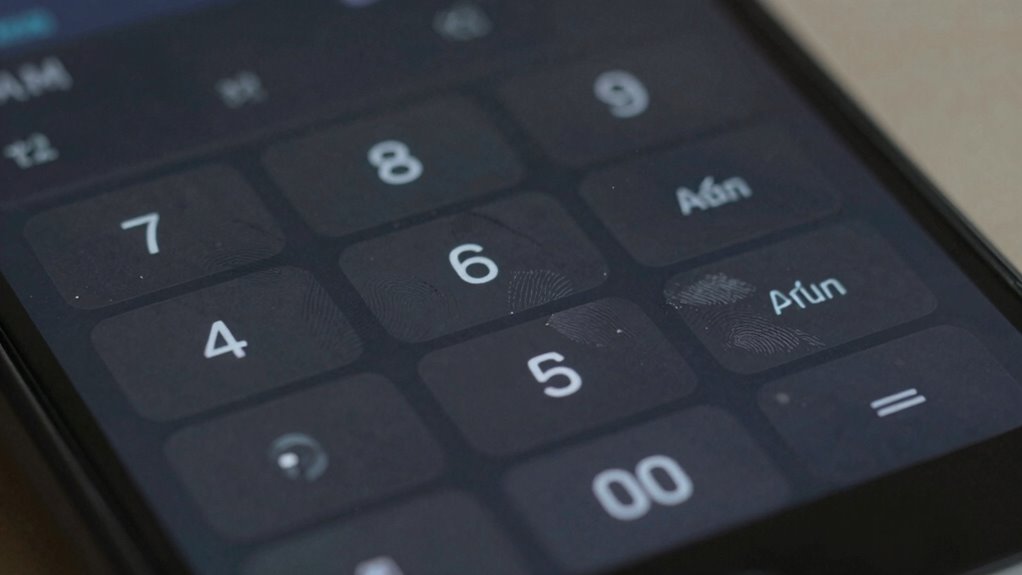

Smudge attacks work by analyzing fingerprint residues left on keypads or screens, revealing patterns of where and how often you press buttons. Thumbnails or fingers deposit oils and sweat that linger, especially on glossy or worn surfaces, making it easier for attackers to guess your PIN or pattern. Devices with smooth, high-touch surfaces or predictable input habits are most vulnerable. To protect yourself, learn how cleaning techniques, alternative authentication methods, and smudge-resistant devices can keep your codes private.
Key Takeaways
- Smudge attacks detect fingerprint residue on keypads to reveal frequently pressed buttons, aiding in code reconstruction.
- Residual oils and sweat create visible patterns under UV or digital imaging, exposing PIN or pattern entry sequences.
- High-touch, glossy surfaces and worn keypads are most vulnerable to fingerprint smudge analysis.
- Regular cleaning and unpredictable input patterns help mitigate the risk of smudge-based code theft.
- Using biometric authentication or smudge-resistant surfaces enhances security against fingerprint-based smudge attacks.
What Is a Smudge Attack, and How Does It Work?
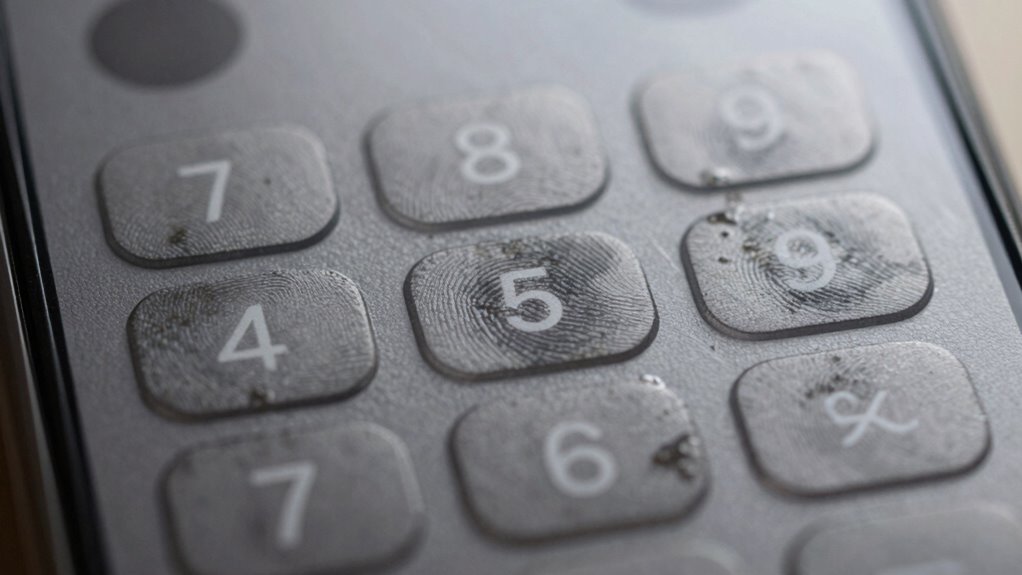
Have you ever wondered how someone might gain access to your device without a password? That’s where a smudge attack comes in. It relies on fingerprint analysis, specifically examining residual patterns left on screens or keypads. When you press buttons or swipe your finger, oils and sweat create visible smudges. An attacker can use tools like UV light or digital imaging to detect these residual patterns, revealing where you’ve pressed most frequently. By analyzing these fingerprints, they can often determine your PIN or passcode. The process is simple but effective, exploiting the natural oils you leave behind. This attack doesn’t require hacking or guessing; it’s a matter of observing the subtle traces you unwittingly leave on your device’s surface. Additionally, understanding the concept of Free Floating can help explain how residual oils can spread and linger on surfaces, making smudge attacks even more effective. Residual oil spread occurs when oils from your fingertips move across surfaces, increasing the chances of leaving detectable traces even after multiple touches. Experts in security assessment can perform tests to identify vulnerabilities related to smudge patterns and help implement countermeasures. Recognizing the spread pattern can also assist in understanding how these fingerprints might become less distinct over time or with cleaning.
Why Fingerprints on Keypads Make Your PINs Vulnerable

Your fingerprints on a keypad leave behind residue that reveals your pressing patterns. Someone observing this residue can often piece together your PIN with ease. This vulnerability can be mitigated by regular cleaning of the keypad or using cover protection when entering your code. Additionally, residue transfer depends on factors such as moisture and pressure, which can influence how easily fingerprints are left behind and detected. Culinary techniques can also be applied to understand how residues are transferred and preserved, helping you better protect your privacy. Understanding the material properties of the keypad surface can further inform strategies to reduce residue buildup and enhance security. Recognizing how surface texture impacts residue retention allows for selecting more secure keypad designs. Moreover, employing hydrophobic coatings on the keypad surface can help repel moisture and reduce fingerprint residue accumulation.
Residue Reveals Patterns
Did you know that fingerprint residue left on keypads can reveal the pattern of your PIN? When you press buttons, oils and sweat create fingerprint patterns that remain on the surface. With residue analysis, someone can examine these patterns to identify which keys you touched most frequently. This analysis helps them piece together your PIN, especially if you pressed certain digits multiple times or in a specific sequence. The more consistent your use, the clearer the residue’s pattern becomes. Even faint smudges can provide valuable clues, making it easier for an attacker to reconstruct your code. By understanding how fingerprint patterns persist after use, you realize how vulnerable your PIN can be, simply based on the residue you leave behind. Additionally, smart home devices with interconnected security features could inadvertently facilitate such breaches if not properly secured. Employing security protocols and understanding residue persistence can help mitigate these risks and protect your personal information from being compromised.
Easy Code Reconstruction
Since fingerprint residues remain on keypads after use, attackers can easily analyze these patterns to reconstruct your PIN. They often create a heat map or smudge pattern, revealing which keys you pressed. This vulnerability emphasizes the importance of security practices like regularly cleaning keypads and avoiding predictable input behaviors. Regularly updating your PINs and avoiding common combinations can further reduce risks associated with digital security. To counteract this, consider biometric alternatives like fingerprint or facial recognition, which don’t leave residue traces. Additionally, strong encryption methods can protect your PIN data during transmission and storage, reducing the risk of interception. Be mindful of smudge patterns and avoid predictable PINs. Using randomized or longer codes also complicates reconstruction efforts. The combination of security practices and advanced encryption methods considerably lowers your risk of falling victim to easy code reconstruction via fingerprint analysis. Moreover, understanding how smudge patterns can be exploited highlights the importance of regularly cleaning keypads and adopting unpredictable input behaviors to enhance security. Incorporating plausible deniability techniques can further obscure your input patterns, making fingerprint-based reconstruction even more difficult.
Which Devices Are Most Susceptible to Smudge Attacks?

Your smartphone screen and ATM keypads are prime targets for smudge attacks because they often show visible fingerprints. These devices are frequently touched, leaving behind residue that hackers can analyze. Understanding their vulnerabilities helps you take better precautions against potential data theft. Using lint rollers or cleaning wipes can also reduce fingerprint residue and minimize the risk of smudge-based spying. Regularly cleaning these surfaces with appropriate screen-safe products can further diminish the likelihood of fingerprint analysis revealing your codes. Employing privacy screen protectors can help obscure fingerprint patterns from prying eyes. Additionally, applying antimicrobial wipes regularly can help remove oils and residues that contribute to fingerprint visibility. Incorporating anti-fingerprint coatings can further reduce the appearance of smudges and make fingerprint analysis more difficult.
Smartphone Screen Vulnerabilities
Smartphone screens with glossy, touchscreen surfaces are especially vulnerable to smudge attacks because they easily reveal fingerprint marks and oil residues. Devices with smooth, shiny screen coatings tend to show smudges more prominently, making it easier for someone to analyze fingerprint patterns. High-end smartphones often feature fingerprint sensors integrated into the display or on the back, increasing the risk of smudge traces revealing sensitive information. The presence of screen coatings designed to enhance durability or clarity can also trap oils, making fingerprint residues more persistent. If you frequently access your device with a PIN or pattern, these smudges could be exploited. Additionally, navigation and mapping features in some devices can increase the chances of smudges being left in predictable locations. Consequently, understanding which screens are most susceptible helps you take necessary precautions to protect your privacy from smudge-based attacks.
ATM Keypad Risks
ATM keypads with smooth, matte surfaces are particularly vulnerable to smudge attacks because they easily reveal fingerprints and oil residues. If you don’t practice good fingerprint hygiene, your fingerprints can stay visible longer, making it easier for someone to analyze your code. Devices with worn or poorly maintained keypads are even more susceptible, as residue buildup can obscure your fingerprint patterns. Regular keypad cleaning minimizes smudges and reduces the risk of exposing your PIN. Be mindful of how often you touch the keypad and consider using protective covers or disinfectant wipes. Additionally, art care principles can be applied to keypad maintenance to ensure longevity and cleanliness. Maintaining proper cleaning routines can significantly reduce residue buildup, further protecting your PIN from smudge attacks. By maintaining clean keypads and practicing fingerprint hygiene, you can protect yourself from smudge attacks and keep your PINs more secure.
Real-World Cases of Smudge Attacks Breaking Security
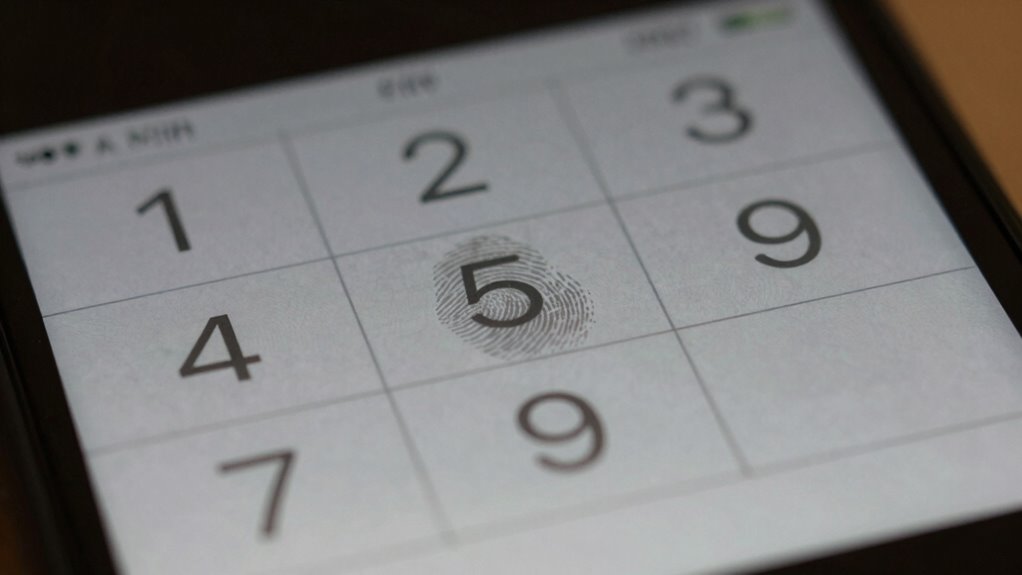
Despite the theoretical nature of smudge attacks, real-world cases have demonstrated their potential to breach security. Authorities have successfully used smudge forensic analysis and fingerprint residue detection to uncover PINs and passcodes. For example, in a bank heist, investigators recovered smudged PINs from an ATM keypad, leading to the arrest of the suspect. Security experts have documented cases where attackers used smudge patterns to predict unlock codes on smartphones or security panels. These incidents highlight how simple fingerprint residue detection can turn a device’s surface into a vulnerability.
- Law enforcement tracing smudge patterns to identify suspects
- Using forensic analysis to reconstruct keypad sequences
- Smudge residue revealing recent input patterns
- Detecting multiple users on shared devices
- Confirmed breaches through fingerprint residue detection
How to Reduce Smudge Evidence and Protect Your Privacy

To protect your privacy from smudge analysis, it’s essential to minimize the fingerprint residues left on touchscreens and keypads. One effective method is texture modification, such as using screen protectors with matte or textured finishes that reduce smudge visibility. Regularly cleaning surfaces with appropriate cleaners also helps remove lingering oils and fingerprints. Additionally, consider adopting alternative authentication methods like biometric scans or pattern unlocks, which don’t rely on keypad presses. These options eliminate the need to leave smudges that could reveal your PIN or password. Combining texture modification with alternative authentication considerably lowers the risk of smudge-based surveillance, helping you maintain your privacy and prevent attackers from analyzing fingerprint residue to uncover your sensitive information.
Best Practices for Securing Your PINs Against Smudge Attacks

Protecting your PINs from smudge attacks requires more than just cleaning your surfaces; it involves strategic practices to prevent fingerprint traces from revealing your code. To enhance security, consider using biometric alternatives like fingerprint or facial recognition instead of PINs. When entering your code, vary your input patterns to avoid consistent smudge patterns. Regularly change your PINs, especially if you suspect exposure. Implement encryption techniques to secure stored PIN data, making it useless if compromised. Be mindful of the device used for input—prefer physical keys over touchscreens when possible. Finally, combine multiple security layers for robust protection.
- Use biometric alternatives like fingerprint or facial recognition
- Vary your PIN entry patterns regularly
- Change your PINs periodically
- Encrypt stored PIN information
- Use physical keypads instead of touchscreens
Are There Smudge-Resistant Keypads That Can Help?

If you’re concerned about smudge attacks, investing in smudge-resistant keypads can be a smart move. Many modern keypads now feature antimicrobial coatings that inhibit bacteria and reduce smudges, making fingerprints less visible and harder to analyze. Additionally, fingerprint resistant surfaces are designed specifically to minimize fingerprint marks and smudges, ensuring the keypad stays cleaner longer. These advanced materials help prevent attackers from easily detecting fingerprint patterns that could reveal your code. While no solution is entirely foolproof, using smudge-resistant keypads considerably decreases the risk of fingerprint residue revealing your PIN. Combining these keypads with other security measures offers a stronger defense against smudge-based attacks, protecting your privacy and securing your access points more effectively.
Frequently Asked Questions
Can Smudge Attacks Be Detected by Visual Inspection?
Yes, smudge attacks can often be detected through visual inspection. By performing smudge analysis and residue detection, you may notice fingerprints or oily residues on the keypad’s surface. These traces can reveal the most frequently pressed areas, helping you identify potential codes or PINs. Regular cleaning and inspection can minimize these clues, but visual cues from residue detection still offer a straightforward way to spot possible smudge-based security risks.
Do Different Materials Affect Smudge Residue Visibility?
Yes, different materials affect smudge residue visibility because of material contrast. If the keypad’s surface is dark and your fingerprints are lighter, residue becomes more noticeable. Conversely, on lighter surfaces, smudges may be less visible. Variations in texture and finish also influence residue visibility, making some materials better at hiding fingerprints. So, choosing a surface with good contrast can make smudges more detectable, which is essential for security assessments.
How Effective Are Cleaning Techniques Against Smudge-Based Hacking?
Cleaning techniques can considerably combat smudge-based hacking, creating a cleaner, clearer code concealment. You can improve cleaning efficacy by using alcohol-based wipes or gentle solvents, which effectively remove residue and reduce fingerprint marks. Regularly wiping down keypads diminishes residue build-up, making it harder for hackers to trace fingerprints. Consistent cleaning clears away covert clues, keeping your keypad secure and your codes confidential, so you stay safer from smudge-sensitive security threats.
Are Biometric Methods Safer Than PINS Regarding Smudge Risks?
Biometric methods are generally safer than pins regarding smudge risks, but they aren’t foolproof. Your fingerprint security can be compromised through biometric vulnerabilities like fingerprint replay attacks or residue smudges revealing patterns. While fingerprints are convenient, they can leave traces that hackers might exploit. To enhance security, combine biometric authentication with other methods, and regularly clean devices to reduce the risk of smudge-based vulnerabilities.
What Future Technologies Might Prevent Smudge Attacks Entirely?
Imagine a world where smudge attacks become a thing of the past. Future tech like screen fingerprinting and residue analysis could make this reality happen. Instead of relying on physical keys, you’ll use biometric data that’s harder to trace, blending convenience with security. These innovations will detect your unique touch patterns or residue, preventing attackers from deciphering your codes, and keeping your privacy safe in an increasingly digital world.
Conclusion
You never realize how a simple fingerprint can betray you until a smudge attack reveals your secrets. It’s ironic how the very act of entering a code leaves behind clues that can undo your security, almost like a silent witness. By staying aware of these vulnerabilities and taking precautions, you can outsmart these subtle threats. After all, in a world where fingerprints are both your identity and your weakness, staying vigilant keeps your privacy intact.