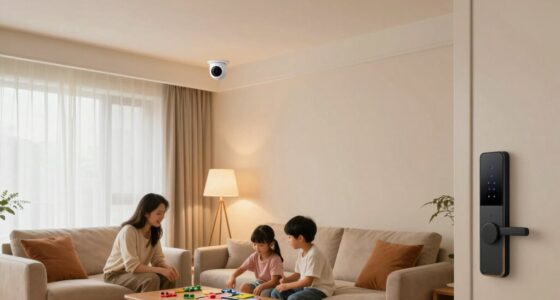
To sync your smart lighting with your security goals, start by strategically placing sensors at key points like entrances and dark areas to maximize coverage. Automate lights to turn on instantly when motion is detected, and adjust brightness and scheduling for energy efficiency and deterrence. Make certain your devices are compatible to create a seamless system that responds dynamically to activity patterns. Keep fine-tuning these settings to fit your needs, and you’ll discover more ways to boost your security effectively.

Get privacy and security gear delivered free with Prime
- Fast, free delivery on millions of items
- Prime Video, Amazon Music and more included
- Member-only deals all year
Key Takeaways
- Integrate motion sensors with smart lighting to automatically activate lights based on movement detection.
- Strategically place sensors at key points to maximize coverage and prevent blind spots.
- Use scheduling and dimming features to maintain consistent security lighting and conserve energy.
- Automate lighting responses based on activity patterns and time to enhance security effectiveness.
- Ensure device compatibility for seamless automation and optimize security settings accordingly.
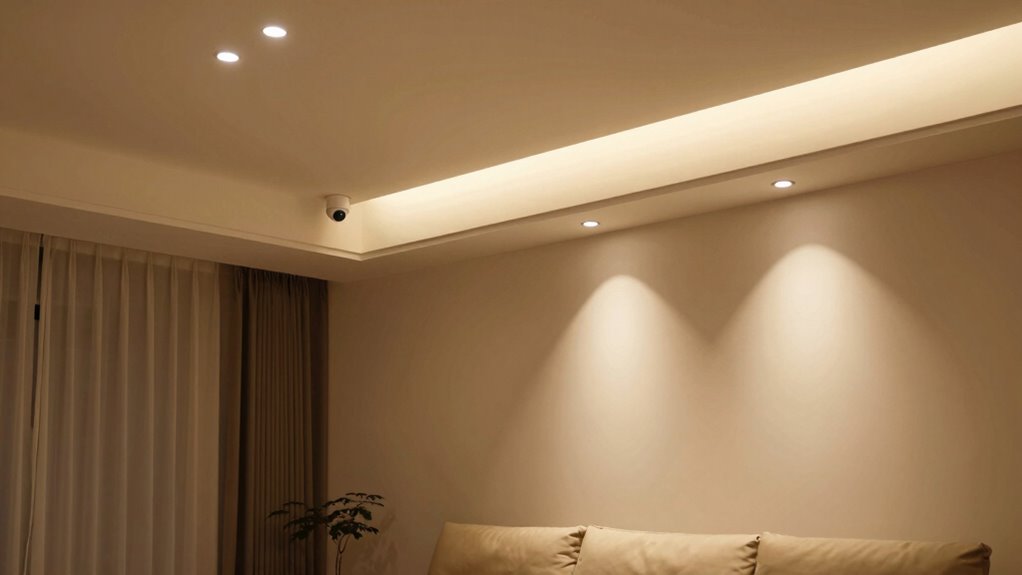
Smart lighting can do more than just set the mood; when properly synchronized with your security goals, it becomes a powerful tool to enhance safety around your home or business. One of the most effective ways to achieve this is by integrating motion sensors with your outdoor illumination system. Motion sensors detect movement, allowing you to automatically turn lights on when someone approaches, which not only deters intruders but also provides clear visibility for anyone on your property. This setup ensures that your outdoor lighting is active precisely when needed, reducing energy waste and increasing security.
Smart lighting with motion sensors enhances security, deters intruders, and improves visibility around your home or business.
To start, focus on placing motion sensors strategically around key entry points—front and back doors, garages, windows, and dark alleyways. Position them at height and angle them correctly to cover the most ground without triggering false alarms from passing cars or animals. When these sensors detect motion, they should trigger outdoor illumination to turn on immediately, illuminating potential hiding spots or pathways. This instant response makes it less likely for intruders to linger unseen, and it helps you and your family feel safer when approaching your property at night. Additionally, understanding the security benefits of smart lighting can help you optimize your system for maximum protection.
Syncing your smart lighting with security goals also involves setting schedules and adjusting brightness levels. For example, you might configure your outdoor lights to stay on longer during late-night hours or to dim after a certain time to conserve energy. Bright, sudden lighting when motion is detected is a strong deterrent, but you should balance this with softer, continuous lighting along walkways or driveways to ensure safe navigation without creating harsh glare. Many smart lighting systems allow you to customize these settings easily, giving you control over the ambiance and security. Moreover, proper placement of these lights and sensors is crucial for maximizing their effectiveness and avoiding unnecessary energy consumption. Incorporating advanced automation features can further enhance your security by enabling your system to adapt based on time or activity patterns. Additionally, understanding the importance of smart device compatibility can help you build a more integrated and reliable security setup.
smart outdoor motion sensor lights
As an affiliate, we earn on qualifying purchases.
As an affiliate, we earn on qualifying purchases.
Frequently Asked Questions
Can Smart Lighting Deter All Types of Intruders Effectively?
Smart lighting can deter many intruders, but it isn’t foolproof for all types. Intruder profiling helps you understand which areas need more lighting or automation, making your system more effective. Lighting automation allows you to create unpredictable lighting patterns, mimicking occupancy. However, determined intruders might bypass smart lighting, so combine it with other security measures for thorough protection. Your goal should be to make intrusion as risky and inconvenient as possible.
How Often Should I Update My Smart Lighting Security Settings?
You should update your smart lighting security settings at least once every three months. Did you know that 60% of smart devices face security vulnerabilities due to outdated firmware? Regularly review your lighting schedules and install firmware updates promptly to patch security flaws. This proactive approach keeps your smart lighting system resilient against cyber threats, ensuring your home stays secure while maintaining peak lighting performance.
Are There Privacy Concerns With Smart Lighting Security Integrations?
Yes, there are privacy concerns with smart lighting security integrations. You should be aware that data encryption helps protect your information from unauthorized access, but vulnerabilities can still exist. Always review privacy policies and make certain your device settings prioritize user privacy. Regularly updating firmware and using strong, unique passwords can further safeguard your smart lighting system, giving you peace of mind while enjoying the convenience of automation.
What Are the Cost Implications of Upgrading to Security-Focused Smart Lighting?
Upgrading to security-focused smart lighting might seem like a small step, but it can revolutionize your home security and savings! Yes, there are upfront installation costs, yet the energy savings are colossal, often paying for themselves over time. You’ll invest in robust features like motion detection and remote control, making your home safer and more efficient. While initial costs are higher, the long-term benefits make it a smart, cost-effective move.
How Does Smart Lighting Compare to Traditional Security Measures?
Smart lighting offers superior security compared to traditional measures by enabling lighting automation that activates lights when needed, deterring intruders. It’s energy efficient, reducing electricity costs while increasing safety. Unlike static security systems, smart lighting adapts to your routines and emergencies. You get real-time control via apps, making it more flexible and responsive. Overall, smart lighting enhances security and energy efficiency, making it a smarter, more effective security measure than conventional lighting.
wireless smart security lighting system
As an affiliate, we earn on qualifying purchases.
As an affiliate, we earn on qualifying purchases.
Conclusion
By syncing your smart lighting with genuine security goals, you turn your home into a vigilant guardian rather than just a flickering illusion. Think of it as casting a protective spell that’s both smart and subtle, keeping unwanted guests at bay while providing peace of mind. When your lights work in harmony with your security strategy, you’re not just illuminating your space—you’re making it smarter, safer, and more welcoming. After all, isn’t peace of mind worth a little extra glow?
smart lighting with motion detection
As an affiliate, we earn on qualifying purchases.
As an affiliate, we earn on qualifying purchases.
programmable outdoor security lights
As an affiliate, we earn on qualifying purchases.
As an affiliate, we earn on qualifying purchases.
Columbus Day / Indigenous Peoples' Day Picks
long weekend sales
As an affiliate, we earn on qualifying purchases.