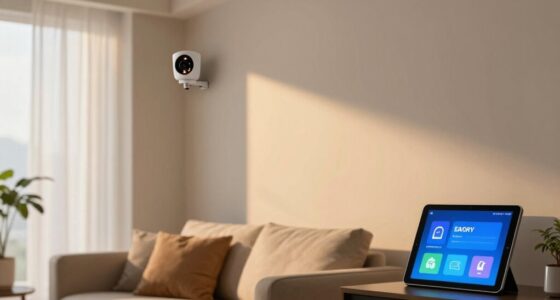
Over-automating security decisions can lead you to trust automated systems too much, creating hidden vulnerabilities. While automation speeds up responses and reduces workload, it often relies on predefined rules and past data, which can miss new or complex threats. This overconfidence can cause you to overlook important anomalies and ignore your intuition. If you’re curious about how to balance automation with human judgment and avoid these pitfalls, keep exploring further.

Get privacy and security gear delivered free — and shop member deals
- Fast, free delivery on millions of items
- Access to Prime Big Deal Days deals on October 6–7
- Prime Video, Amazon Music and more included
Key Takeaways
- Over-automation can lead to missed novel threats due to reliance on predefined rules and historical data.
- Excessive dependence on automation fosters automation bias, causing overlooked alerts and false confidence.
- Human intuition and contextual judgment diminish, reducing the ability to recognize subtle or evolving security threats.
- Automated systems may reinforce existing biases, leading to false positives or dismissals of critical alerts.
- Relying solely on automation risks complacency, undermining a comprehensive and adaptive security posture.

While automation can streamline security operations and reduce response times, over-relying on it introduces significant risks that are often overlooked. When you depend too heavily on automated systems, you may fall prey to behavioral biases that cloud your judgment. One common pitfall is automation bias, where you tend to trust automated decisions more than necessary, assuming the system is infallible. This overconfidence can cause you to overlook signs of anomalies or threats that the system might miss or misjudge. Automated tools are powerful, but they’re not perfect; they operate based on predefined rules and historical data, which means they can miss new or sophisticated attack patterns. Relying solely on automation can lead you to ignore human intuition and contextual understanding that are vital in complex security scenarios.
Over-relying on automation risks blind trust, missing threats, and ignoring vital human judgment in security.
Your instinct might be to think that automation reduces errors, but it can actually reinforce existing biases if you’re not careful. For example, if an automated alert system flags a potential breach, you might accept that alert at face value, even if additional context suggests otherwise. This is a classic case of automation bias—where the system’s output unduly influences your decision-making. Over time, this can cause you to overlook false positives or dismiss alerts that need further investigation. The danger is that automation bias can create a false sense of security, leading to complacency — you might assume that no further analysis is necessary because the system has already done the work for you. Additionally, over-reliance on automation may diminish your awareness of evolving threats, making it harder to recognize new attack vectors that fall outside existing automated parameters. Recognizing the importance of human oversight**** is key to maintaining a balanced security approach.
Furthermore, behavioral bias can also influence how you interpret automated recommendations. If you’re overly confident in the technology’s accuracy, you might dismiss the need for human oversight altogether. This can be problematic, especially when new threats emerge that automated systems aren’t equipped to handle yet. You might also develop a tendency to ignore alerts that don’t fit the automated system’s typical patterns, missing subtle signs of an attack. In summary, automation bias and behavioral bias can cause you to trust the system blindly, potentially overlooking critical vulnerabilities.
To mitigate these risks, you need to strike a balance. Automation should serve as a tool to assist your judgment, not replace it. Maintain a healthy skepticism and validate automated alerts with human analysis. Regularly review and update your automated systems to adapt to evolving threats. Cultivating awareness of your biases helps you stay alert and makes sure you’re making well-informed decisions. Remember, the goal isn’t to eliminate automation but to integrate it thoughtfully, so it enhances your security posture without diminishing your critical thinking or situational awareness. Recognizing the limitations of automated systems is essential in maintaining a resilient security strategy. Being mindful of automation bias can help you avoid overconfidence and ensure that your security measures remain robust and adaptable.
automated security monitoring tools
As an affiliate, we earn on qualifying purchases.
As an affiliate, we earn on qualifying purchases.
Frequently Asked Questions
How Can Organizations Balance Automation and Human Oversight Effectively?
You can balance automation and human oversight by conducting thorough risk assessments to identify vital points needing human intervention. Automate routine tasks to improve efficiency, but guarantee your team reviews high-risk decisions. Regularly update systems based on evolving threats, and foster collaboration between automation tools and security experts. This approach minimizes risks, maintains control, and leverages automation’s strengths while keeping humans in the loop for essential judgment calls.
What Are the Signs of Over-Automating Security Processes?
You notice manual intervention becomes a rare occurrence, yet false positives spike unexpectedly, signaling trouble. Over-automating security processes hides risks like missed threats and reduced human judgment. When alerts flood your team with false positives, and critical decisions rely solely on automation, you’re likely over-automating. These signs indicate it’s time to reintroduce oversight, balancing automated tools with human expertise to catch what machines might overlook or misjudge.
How Does Over-Automation Impact Incident Response Times?
Over-automation can slow your incident response times because false positives increase, causing you to waste time investigating non-issues. Automation fatigue sets in when you depend too heavily on automated systems, leading to missed or delayed responses. You might overlook critical alerts or become desensitized to alerts, which hampers your ability to react swiftly. Striking a balance between automated processes and manual oversight ensures quicker, more accurate responses without overwhelming your team.
Can Automation Lead to Complacency Among Security Teams?
Ironically, automation can make you complacent, leading to security fatigue among your team. As machines handle more tasks, oversight challenges grow, and you might overlook subtle threats or changes. This false sense of security can cause you to trust automation blindly, reducing vigilance. Over time, your team may become less engaged, missing critical signs of breaches. Automation’s comfort can turn into a trap, undermining your overall security posture.
What Are the Best Practices to Prevent Automation Vulnerabilities?
To prevent automation vulnerabilities, you should combine manual review with regular risk assessments, ensuring automated systems don’t overlook critical issues. Continuously monitor and update your security protocols, and implement layered defenses. Train your team to recognize automation gaps and maintain oversight. By balancing automation with human judgment, you reduce vulnerabilities and improve overall security resilience, avoiding over-reliance on automated decisions that may hide underlying risks.
security threat detection software
As an affiliate, we earn on qualifying purchases.
As an affiliate, we earn on qualifying purchases.
Conclusion
Imagine your security system as a vigilant guard dog. Over-automating can turn it into a robot that might bark at the wrong shadows, ignoring real threats. While automation helps, relying too much risks missing the nuanced scent of genuine danger. Balance is key—trust your instincts, not just the algorithms. Keep a watchful eye, and don’t let automation turn your security into a blind, barking machine. Stay alert; true safety needs a human touch.
As an affiliate, we earn on qualifying purchases.
cybersecurity alert management system
As an affiliate, we earn on qualifying purchases.
As an affiliate, we earn on qualifying purchases.
Fall Picks
fall essentials
As an affiliate, we earn on qualifying purchases.