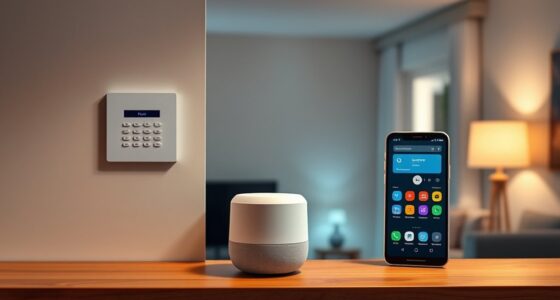
Integrating smart locks with your alarm system lets you instantly arm or disarm your home security with just a tap or voice command. You can control locks remotely, receive real-time alerts, and automate routines like locking doors when you arm your system. This seamless connection reduces your reliance on physical keys and improves home security. To maximize these benefits and learn more about setting up an integrated system, keep exploring how these technologies work together.
Key Takeaways
- Sync smart lock status with alarm system to automatically arm or disarm based on lock/unlock events.
- Use automation routines to trigger alarm arming when smart locks are secured.
- Enable real-time alerts for lock/unlock activities that influence alarm system status.
- Integrate voice commands for instant lock control and alarm system management.
- Manage user permissions to ensure only authorized access triggers system arming/disarming.

Integrating smart locks with alarm systems offers a seamless way to enhance your home’s security and convenience. With this setup, you can control access remotely, allowing you to lock or unbolt doors from anywhere using your smartphone or tablet. This means you no longer need to be physically present to grant entry to guests, service providers, or family members. Remote access provides peace of mind, as you can monitor and manage your locks on the go, ensuring your home remains secure even when you’re away. Additionally, many systems allow you to receive real-time alerts whenever someone enters or exits, so you stay informed about activity at all hours.
User management becomes a vital feature when integrating smart locks with alarm systems. You can assign unique access codes or digital keys to different users, customizing permissions based on their needs. For example, you might give your housekeeper or dog walker limited access during specific times, while granting full access to trusted family members. Managing these users is straightforward through centralized apps, enabling you to add, remove, or modify permissions instantly. This level of control minimizes the risk of unauthorized entry and simplifies managing multiple users without the need for physical keys or multiple lock changes.
Beyond remote control and user management, integration streamlines your daily routines. You can set your alarm system to arm automatically when you lock the doors, or disarm when you unlock them, creating a cohesive security ecosystem. This synchronization reduces the chances of leaving your home unarmed or forgetting to lock doors, which are common vulnerabilities. You can also program your system to arm or disarm based on your location, using security system automation**** technology. When your phone detects that you’re leaving or returning home, the system adjusts accordingly, saving you time and effort.
Furthermore, these integrated systems often come with voice command capabilities, allowing you to control locks and alarms using smart speakers. Just say the word, and your doors lock or your alarm disarms, adding another layer of convenience. This feature is especially useful when your hands are full or if you’re in a rush. The combination of remote access, user management, automation, and voice control creates a smart, responsive environment that adapts to your lifestyle.
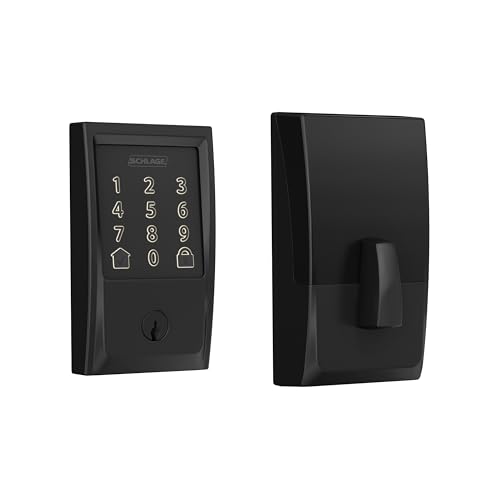
Schlage Encode Smart Wi-Fi Deadbolt Lock with Touchscreen Keypad, Keyless Front Door Entry, App Control, Alexa, Google Home and Airbnb Compatible, Matte Black, BE489WB CEN 622
ANYWHERE ACCESS: With built-in WiFi compatibility, you can easily and securely connect your Schlage Encode Deadbolt to your…
As an affiliate, we earn on qualifying purchases.
As an affiliate, we earn on qualifying purchases.
Frequently Asked Questions
Can Smart Locks Be Hacked Remotely?
Yes, smart locks can be hacked remotely if security isn’t tight. Hackers may exploit vulnerabilities like weak passwords or outdated firmware, risking remote hacking. Strong encryption protocols and regular updates are vital to protect your smart lock. You should always use complex passwords, enable two-factor authentication, and keep your device’s software current to minimize the risk of remote hacking and keep your home secure.
Do Smart Locks Work During Power Outages?
During a power outage, your smart lock may still work if it has backup power. For example, a smart lock with a battery backup can continue functioning, allowing you to open your door even when the main power is out. Without backup power, however, the lock might become inaccessible. To guarantee reliability, consider installing smart locks with integrated backup power sources, so your access isn’t compromised during outages.
Is There a Delay When Arming/Disarming?
You might notice a slight delay when arming or disarming, depending on your lock compatibility and system setup. Modern smart locks typically sync quickly, but user privacy settings and Wi-Fi stability can affect speed. To guarantee instant response, choose compatible locks and secure your network. Keep in mind that some systems prioritize security over speed, so a small delay isn’t unusual, but it shouldn’t compromise your overall safety.
Are Smart Lock Codes Shared Across Platforms?
Imagine your smart lock code as a key that travels across bridges of shared code protocols, connecting different islands of technology. Yes, these codes often share cross-platform compatibility, allowing you to control access seamlessly. However, some systems may restrict code sharing for security reasons, so always check if your smart lock supports shared code protocols across platforms. This way, your digital keys stay synchronized and secure everywhere you go.
How Secure Is the Wireless Communication?
Wireless communication between smart locks and alarm systems is generally secure thanks to strong encryption protocols like AES or WPA2, which safeguard your data from hacking. However, you should be aware of potential signal interference from other wireless devices, which can weaken the connection or cause delays. To maintain security, verify your devices use updated firmware and operate on a dedicated, interference-free network.

Veise VE012W Built-in WiFi Fingerprint Smart Lock, App Remote Control, Compatible with Alexa & Google Assistant, Keyless Entry for Front Door, Digital Keypad Deadbolt, Auto Lock, Satin Nickel
6-in-1 Keyless Entry: Unlock via the app, fingerprint (stores 20), unlimited one-time codes, 100 custom PINs, 2 physical…
As an affiliate, we earn on qualifying purchases.
As an affiliate, we earn on qualifying purchases.
Conclusion
By integrating smart locks with alarm systems, you create a seamless, secure home that responds instantly to your needs. Imagine waking up in the morning, hearing the chime of your alarm as you open the door with a tap—no more fumbling with keys or manual disarming. It’s like having an invisible but reliable “bat-signal” that keeps your home safe and your life simpler. Embrace this tech combo and step into the future of home security.

Veise G2 Gateway, Smart Deadbolt Wi-Fi Gateway, Remote Control, Compatible with DD Lock APP and TT Lock APP Remote Control
Compatibility: Veise G2 Wi-Fi gateway is compatible with smart locks using DD Lock App or TT Lock App….
As an affiliate, we earn on qualifying purchases.
As an affiliate, we earn on qualifying purchases.

Ring Alarm 14-Piece Kit (newest model), Wireless smart home or business security system, expandable, easy setup, Mobile App Control, 24/7 Professional Monitoring, Alexa Compatible
A great fit for 2-4 bedroom homes, this Alarm Kit includes one Base Station, two Keypads, eight Contact…
As an affiliate, we earn on qualifying purchases.
As an affiliate, we earn on qualifying purchases.