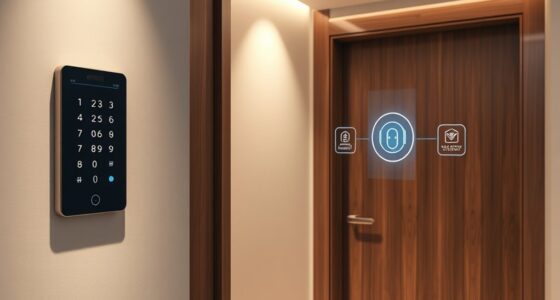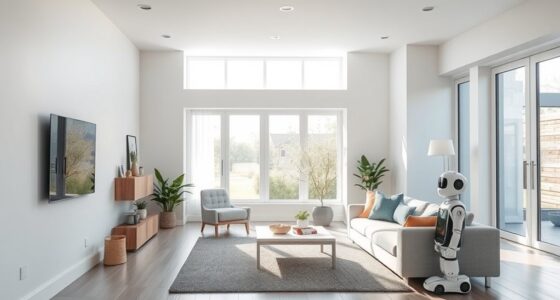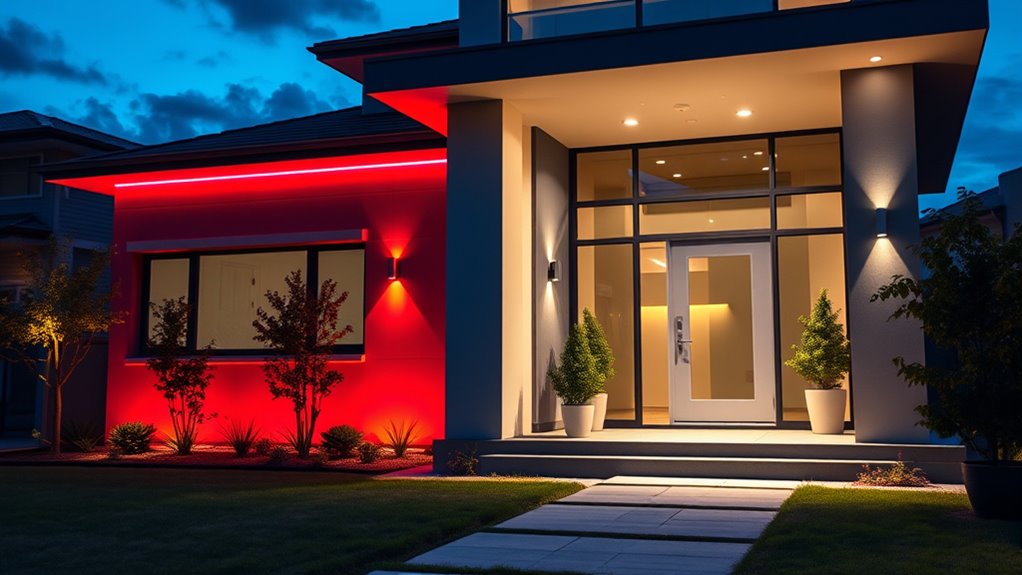

Integrating smart lighting with security modes boosts your home’s deterrence by creating the illusion that someone’s home, even when you’re away. You can set lights to turn on automatically when motion is detected, making intruders think the house is occupied. Incorporate scheduling routines that mimic daily activity or randomize lighting patterns to confuse potential intruders further. By combining these features, your home feels safer and more secure—discover how these tools work together effectively.
Key Takeaways
- Combine motion detection with scheduled lighting to create unpredictable, simulated occupancy, deterring intruders effectively.
- Automate lighting to activate during security modes like ‘away’ or ‘night’ for consistent deterrence.
- Use smart lighting to enhance visibility at entry points, reinforcing security protocols during all modes.
- Program random or adaptive lighting routines that respond to security status, making the home appear actively occupied.
- Integrate smart lighting with security systems for seamless, real-time response to detected threats or movements.
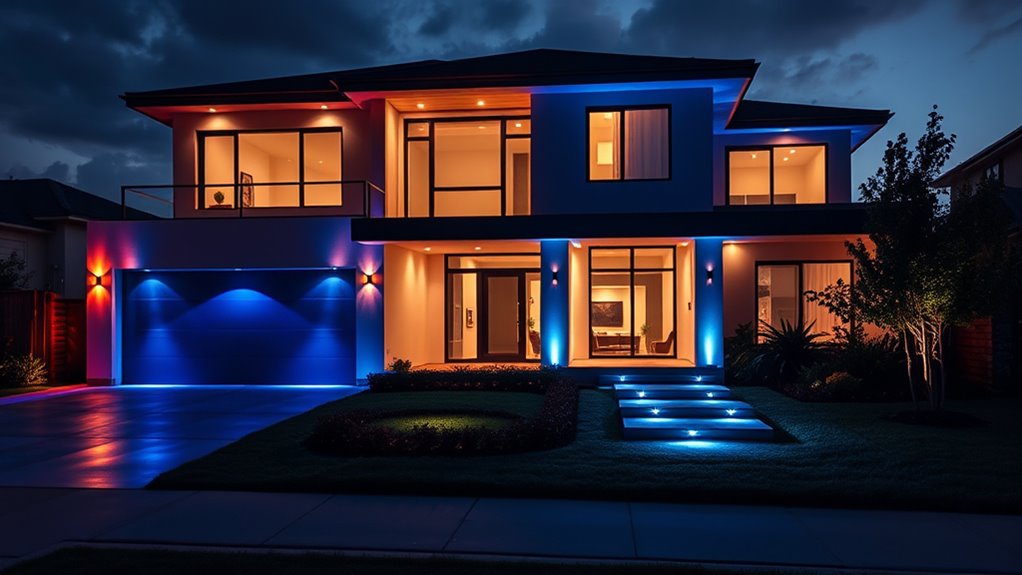
Smart lighting has become an essential part of modern home automation, allowing you to control and customize your environment with ease. When you integrate your smart lighting with security modes, you create a powerful deterrent against intruders while enhancing your home’s safety. One of the key features that make this integration effective is motion detection. By setting your smart lights to respond to movement, you can make your home appear occupied even when you’re away. For example, when motion sensors detect someone approaching your property, your lights can turn on automatically, illuminating pathways and entrance points. This sudden brightness not only surprises potential intruders but also signals activity, discouraging any unwanted visitors.
Along with motion detection, automation scheduling plays a vital role in strengthening your security. You can program your smart lights to follow specific schedules that mimic your daily routine. For instance, during the night or when you’re on vacation, you can set your lights to turn on at random intervals or at certain times, creating the illusion that someone is home. This unpredictability keeps intruders guessing and reduces the risk of break-ins. When combined with security modes, such as ‘away’ or ‘night,’ automation scheduling ensures your lights operate seamlessly without manual intervention. You can even program your system to adjust the lighting based on time of day or activity patterns, maintaining a consistent, secure appearance at all times.
The synergy between motion detection and automation scheduling in smart lighting enhances your home’s security by making it more dynamic and less predictable. When someone approaches your property, motion-activated lighting kicks in immediately, providing instant illumination that can startle or deter them. Simultaneously, your scheduled lighting routines reinforce the impression that your home is inhabited, even if you’re away. This layered approach creates a holistic security system that’s both smart and responsive. You don’t need to worry about remembering to turn lights on or off; your automation handles everything based on your preferences and security needs. Incorporating emotional intelligence into your security strategy can further improve your ability to recognize and respond to potential threats effectively.

MCGOR 10inch Under Cabinet Lighting, 2 Pack Rechargeable Motion Sensor Light Indoor, 5 Levels Dimmable Magnetic Closet Lights, Wireless Under Counter Lights for Kitchen, Stairs
Upgraded Motion Sensor Under Cabinet Lights: Setting the under cabinet lights on motion sensor mode, they auto-on when…
As an affiliate, we earn on qualifying purchases.
As an affiliate, we earn on qualifying purchases.
Frequently Asked Questions
How Does Smart Lighting Affect Energy Consumption?
Smart lighting can reduce your energy consumption by using automation schedules to turn lights off when not needed. You’ll see energy savings because lights only operate when necessary, avoiding waste. With smart controls, you can customize lighting patterns based on your routines, ensuring efficiency. This way, you’re not only saving energy but also extending bulb life, making your home more eco-friendly and cost-effective without sacrificing comfort or security.
Can Smart Lighting Be Controlled Remotely During a Power Outage?
During a power outage, you can’t control smart lighting remotely unless you have backup solutions in place. To guarantee remote control remains active, consider using battery backups or uninterruptible power supplies (UPS) that provide remote power access. These backup solutions keep your smart lighting connected and manageable even when the main power is out, giving you peace of mind and continuous control over your security and lighting systems.
What Are the Privacy Concerns With Integrated Lighting and Security?
You might worry about privacy breaches and data collection with integrated lighting and security systems. These devices often track your activity, location, and habits, which could be accessed or misused if security isn’t tight. Always check your system’s privacy policies, guarantee strong passwords, and use encryption to protect your data. Being aware of these risks helps you maintain control and prevent unauthorized access to your personal information.
How Does Smart Lighting Coordinate With Existing Home Security Systems?
You might think smart lighting just adds convenience, but it actually coordinates seamlessly with your home security system through automation scheduling and user customization. When you set security modes, your lights automatically turn on, off, or change brightness to deter intruders. This integration guarantees your home looks occupied, enhancing safety without manual effort, and gives you control to tailor lighting behaviors to fit your lifestyle and security needs perfectly.
Are There Specific Smart Lighting Brands Better for Security Integration?
Some smart lighting brands are better for security integration because of their compatibility with security systems and robust security features. Brands like Philips Hue, LIFX, and Ring offer excellent compatibility with various security devices and apps, making it easier to coordinate lighting with your security modes. Look for brands that support automation, remote control, and real-time alerts to maximize deterrence and security effectiveness.
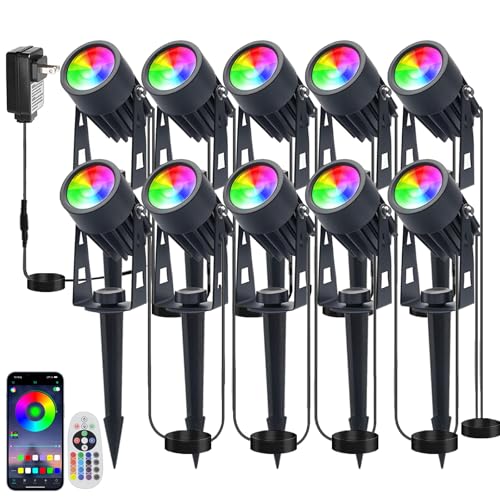
Sathem Smart RGB Low Voltage LED Spotlights, APP & Remote Control,Synchronous Dimming Lighting System, IP65 Waterproof,16 Million Colors for Outdoor Landscape,Yard,Garden,Holiday Decoration (10 Pack)
【APP & Remote Control Intelligent Control】: Easily adjust 16 million colors, brightness, dynamic mode through smart phone (Works…
As an affiliate, we earn on qualifying purchases.
As an affiliate, we earn on qualifying purchases.
Conclusion
As you activate your smart lighting, imagine the house flickering to life like a welcoming beacon in the night. Shadows retreat as bright beams sweep across windows, signaling that you’re home and alert to any unwelcome visitors. With your security modes seamlessly integrated, the glow becomes a vigilant guardian, turning your home into a well-lit fortress. Every flash and fade of light works to deter intrusion, giving you peace of mind with a simple, powerful visual shield.
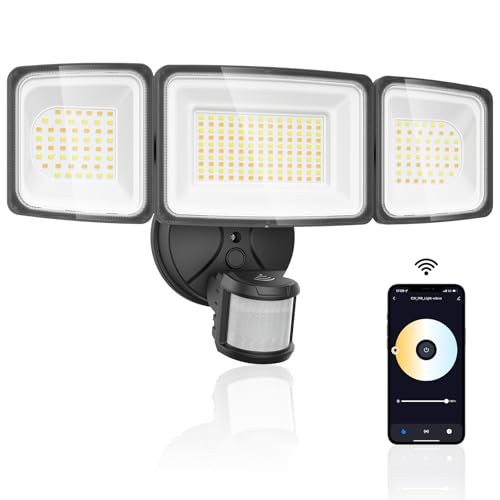
Onforu 100W 9000LM Smart LED Security Lights Motion Sensor Outdoor, WiFi Alexa Flood Light APP Control, 2500K-6500K, Motion Detector with Adjustable 3 Head, IP65 Wall Light for Yard (Black)
Smart Voice & APP Control: Paring with 2.4Ghz WiFi, Voice Activated the smart flood light outdoor (NO SOLAR!!)…
As an affiliate, we earn on qualifying purchases.
As an affiliate, we earn on qualifying purchases.
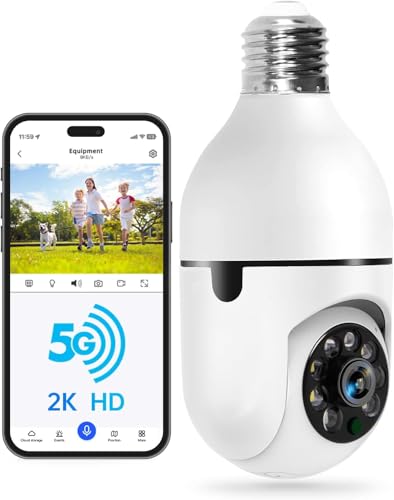
WESECUU Light Bulb Security Camera -5G& 2.4GHz WiFi 2K Security Cameras Wireless Outdoor Motion Detection and Alarm,Two-Way Talk,Color Night Vision,Human Detection, Bulb Camera Compatible with Alexa
【5G & 2.4G Dual Band】The latest 5G & 2.4G dual-band light bulb camera have stronger signal reception, higher…
As an affiliate, we earn on qualifying purchases.
As an affiliate, we earn on qualifying purchases.