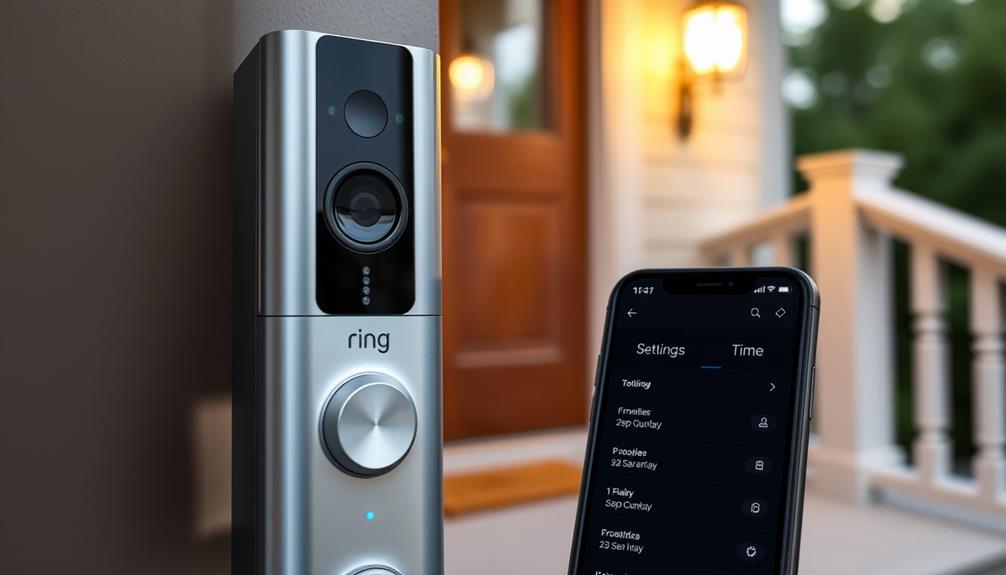
Choosing the right router settings for your Ring Doorbell can significantly impact its performance and your home security. In 2026, the top options include the Ring Alarm Pro (Newest Model) 8-Piece Kit, which offers a built-in eero Wi-Fi 6 router for enhanced home networking, and the Ring Alarm Pro (Newest Model) 14-Piece Kit, which adds comprehensive sensors for larger coverage. Both models deliver reliable Wi-Fi and security, but the main tradeoff lies in their coverage, expandability, and subscription requirements.

Get privacy and security gear delivered free — and shop member deals
- Fast, free delivery on millions of items
- Access to Prime Big Deal Days deals on October 6–7
- Prime Video, Amazon Music and more included
Key Takeaways
- Both models incorporate Wi-Fi 6 routers, improving network stability for Ring doorbell feeds.
- The 14-piece kit provides broader coverage and more sensors, ideal for larger homes.
- Subscriptions are needed for advanced features and professional monitoring in both options.
- Additional sensors and extenders are sold separately, which could increase overall costs.
- Choosing between these depends on your home size, security needs, and budget.
| Ring Alarm Pro (Newest Model), 8-Piece Kit with Built-in eero Wi-Fi 6 Router and 30-Day Free Ring Protect Home Subscription |  | Best All-in-One Security and Wi-Fi Solution | Router Type: Built-in eero Wi-Fi 6 | Wi-Fi Speed: Up to 900 Mbps | Coverage: Up to 1,500 sq. ft. | VIEW ON AMAZON | See Our Full Breakdown |
| Ring Alarm Pro (Newest Model), 14-Piece Kit with Built-in eero Wi-Fi 6 Router and 30-Day Free Ring Home Subscription |  | Best for Larger Homes & Expanded Security | Includes: Alarm Pro Base Station, 2 Keypads, 8 Contact Sensors, 2 Motion Detectors, 1 Range Extender | Wi-Fi Speed: Up to 900 Mbps | Coverage Area: Up to 1,500 sq. ft. | VIEW ON AMAZON | See Our Full Breakdown |
| router settings for ring doorbell | Wi-Fi Speed | Router Type | Coverage | Power |
|---|---|---|---|---|
| Ring Alarm Pro | Up to 900 Mbps | Built-in eero Wi-Fi 6 | Up to 1,500 sq. ft. | 100-240V AC Adapter |
| Ring Alarm Pro | Up to 900 Mbps | — | — | — |
More Details on Our Top Picks
Ring Alarm Pro (Newest Model), 8-Piece Kit with Built-in eero Wi-Fi 6 Router and 30-Day Free Ring Protect Home Subscription
This option stands out for combining an 8-piece security kit with a built-in eero Wi-Fi 6 router, making it ideal for those who want integrated home security and reliable internet. Its coverage up to 1,500 sq. ft. is suitable for smaller to medium homes. Compared with larger kits, it’s less expandable but offers a straightforward setup and user-friendly app. However, it requires a subscription for professional monitoring and some sensors and extenders are sold separately, which can increase costs if you need more coverage.
Pros:- Built-in eero Wi-Fi 6 enhances both internet speed and security
- Includes essential sensors and a keypad for comprehensive protection
- Easy to install with a simple app interface
Cons:- Limited coverage without additional eero extenders
- Requires subscription for professional monitoring
- Additional sensors sold separately
Best for: Homeowners seeking a compact, all-in-one security and Wi-Fi setup for small to medium homes.
Not ideal for: Large properties requiring extensive coverage or those unwilling to pay for ongoing subscriptions.
- Router Type:Built-in eero Wi-Fi 6
- Wi-Fi Speed:Up to 900 Mbps
- Coverage:Up to 1,500 sq. ft.
- Power:100-240V AC Adapter
- Battery Life:Rechargeable 24-hour backup
- Connectivity:Ethernet, Wi-Fi, Z-Wave, Bluetooth, Cellular Backup
Our verdict“A reliable choice for smaller homes needing integrated security and Wi-Fi, though expansion costs can add up.”
Ring Alarm Pro (Newest Model), 14-Piece Kit with Built-in eero Wi-Fi 6 Router and 30-Day Free Ring Home Subscription
This 14-piece kit offers a significant upgrade in coverage and sensors, making it better suited for larger properties. The built-in eero Wi-Fi 6 router provides stable, fast internet, supporting multiple Ring devices simultaneously. The included sensors, motion detectors, and range extender allow for comprehensive protection across extensive areas. Compared with smaller kits, it’s more expensive but provides the scalability needed for bigger homes. The main tradeoff is the need for a subscription to unlock full remote and professional monitoring features, which can add ongoing costs.
Pros:- Enhanced coverage with included sensors and range extender
- Strong Wi-Fi 6 router supports multiple devices
- Supports professional monitoring and smart home automation
Cons:- Higher initial cost
- Requires a subscription for full feature access
- Additional sensors and extenders are sold separately
Best for: Larger homes needing extensive security coverage and reliable Wi-Fi for multiple Ring devices.
Not ideal for: Small apartments or users who want a simple, budget-friendly security setup without extra sensors.
- Includes:Alarm Pro Base Station, 2 Keypads, 8 Contact Sensors, 2 Motion Detectors, 1 Range Extender
- Wi-Fi Speed:Up to 900 Mbps
- Coverage Area:Up to 1,500 sq. ft.
- Subscription:30-day free Ring Home subscription
- Compatibility:Works with Ring Protect Plan, Alexa
Our verdict“Ideal for larger homes seeking extensive security coverage and reliable Wi-Fi, despite higher costs and subscription needs.”

How We Picked
Our selection focused on models that combine reliable Wi-Fi with robust home security features suitable for Ring Doorbell integration. We prioritized the latest models with built-in eero Wi-Fi 6 routers, considering coverage, ease of setup, expandability, and subscription requirements. Comparing different kit sizes helped identify options for both small and large homes, ensuring a balance of performance and value.
Factors to Consider When Choosing Router Settings For Ring Doorbell
Choosing the right router settings for your Ring Doorbell involves considering coverage, network stability, and how your security system integrates with your Wi-Fi. These models with built-in eero Wi-Fi 6 routers provide a streamlined way to improve both internet performance and security, but differences in kit size, expandability, and subscription requirements can make a big impact depending on your needs.
Why a Built-in Wi-Fi Router Matters for Ring Doorbell
Having a dedicated router integrated with your security system simplifies setup and helps ensure your Ring Doorbell maintains a strong connection, especially in busy households with multiple connected devices. Wi-Fi 6 further enhances performance, reducing lag and buffering during live view or motion alerts, which is critical for timely security responses.
Coverage and Expandability
Smaller kits like the 8-piece model are sufficient for compact spaces but may need extenders for larger homes. The 14-piece kit provides broader coverage and additional sensors, making it suitable for sprawling properties. Consider your home’s size and whether future expansion is likely, as additional sensors and extenders are sold separately and can influence total cost.
Subscription and Cost Considerations
Both models require a Ring Protect subscription for full remote control and professional monitoring. The initial hardware cost varies, with larger kits costing more upfront. Think about ongoing costs, especially if you plan to expand your security system or rely heavily on remote features.
Frequently Asked Questions
Do I need a special router for my Ring Doorbell?
No special router is required, but a stable, high-speed Wi-Fi connection improves performance. A built-in Wi-Fi 6 router, like those in the Ring Alarm Pro models, can provide better coverage and reduce lag, especially in busy households with multiple devices.
Can I use my existing router with these Ring Alarm Pro kits?
Yes, you can connect these kits to your existing Wi-Fi network, but the built-in eero Wi-Fi 6 router offers a dedicated, optimized connection for your Ring devices and home security. This setup simplifies network management and enhances security by segmenting your security traffic from other devices.
Will these systems support multiple Ring devices?
Absolutely, both models support multiple Ring devices thanks to their robust Wi-Fi 6 routers. The 14-piece kit, in particular, is designed to handle extensive device networks, making it ideal for larger homes with several cameras, doorbells, and smart locks.
Are there any downsides to these built-in router systems?
One main drawback is the additional cost if you need to expand coverage or sensors, as these are sold separately. Also, the full feature set requires a subscription, which adds ongoing expenses. If you prefer a simple, low-cost setup, these might be more than you need.
How do I optimize router settings for my Ring Doorbell?
To optimize settings, ensure your router is using the 2.4 GHz band for better range and penetration, and prioritize your Ring devices via Quality of Service (QoS) settings. Keeping firmware updated and minimizing interference from other wireless devices will also help maintain a stable connection.
Conclusion
For those with small to medium homes seeking an all-in-one security and networking solution, the Ring Alarm Pro 8-Piece Kit offers simplicity and reliable performance. Larger households or users who want extensive coverage and sensor options should consider the 14-Piece Kit, despite its higher cost and subscription requirements. Budget-conscious buyers might prefer sticking to traditional routers, but for integrated security and Wi-Fi, these models provide a compelling package.
Fall Picks
fall essentials
As an affiliate, we earn on qualifying purchases.