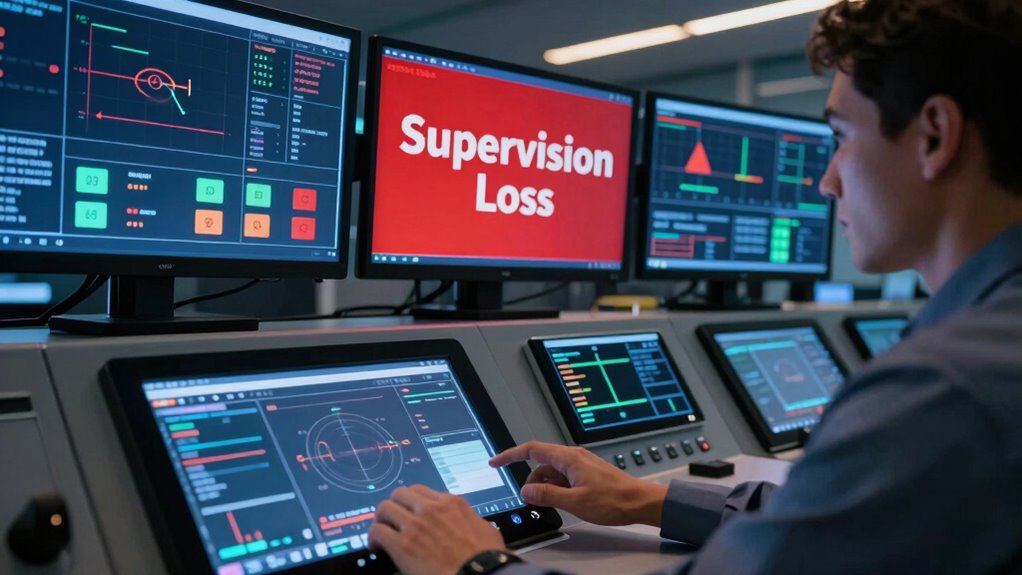
When you see a “Supervision Loss” alert, it means your device’s management and security controls have been unexpectedly disrupted, which could expose your data to risks. Ignoring it may leave your device vulnerable, reduce your control, or cause system issues. Recognizing these signs early helps prevent security breaches. If you want to understand what causes supervision loss and how to fix it, continue exploring how to keep your device protected.
Key Takeaways
- Supervision loss indicates the device is no longer managed, reducing security controls and increasing vulnerability.
- It may signal configuration errors, network issues, or intentional removal of management profiles requiring prompt attention.
- Ignoring alerts can lead to compromised device security, data breaches, and limited remote management capabilities.
- Recognizing supervision loss helps identify potential security breaches or system errors needing immediate troubleshooting.
- Promptly addressing supervision loss maintains device safety, preserves management functions, and prevents security or stability risks.
How Can You Tell If Your Device Is Supervised or Not?

Wondering if your device is supervised? You can easily check its supervision status through device management settings. On an iPhone or iPad, go to Settings, then tap General, followed by Device Management or Profiles & Device Management. If you see a profile indicating supervision, your device is managed and supervised. If no such profile exists, it’s likely not supervised. Another way to tell is by connecting your device to a computer and opening Finder or iTunes; a supervised device often displays specific management details. Knowing your device’s supervision status is essential for understanding its management level. Supervised devices usually have stricter control, making it easier for administrators to enforce policies. Checking device management settings provides a quick way to determine if your device is under supervision. Additionally, device management protocols are used to enforce security policies and restrictions on supervised devices. Recognizing supervision status is also crucial for ensuring compliance with enterprise security standards and safeguarding your data. Regularly reviewing your device’s management status helps maintain security and ensures proper device functioning.
What Does Supervision Loss Mean for Your Device’s Security?

When your device loses supervision, its security can be substantially compromised. Without supervision, features like device encryption may weaken, making your data more vulnerable. Additionally, remote management capabilities become limited or disabled, reducing your ability to control or wipe the device if needed. This loss can lead to increased risks of unauthorized access, data breaches, or malware infiltration. Here’s how supervision loss impacts your device:
| Aspect | Impact | Action Needed |
|---|---|---|
| Device Encryption | May be disabled or less effective | Verify encryption is active |
| Remote Management | Limited or disabled, reducing control | Re-establish supervision |
| Data Security | Increased vulnerability to attacks | Regular monitoring and updates |
| Access Control | Weakened, risking unauthorized use | Reinforce security settings |
| Device Integrity | Compromised, risking data loss or theft | Re-supervise device promptly |
Why Do Devices Lose Supervision, and What Causes It?
Devices can lose supervision for various reasons, often due to changes in their configuration, network disruptions, or intentional actions. A device misconfiguration, such as incorrect settings or outdated firmware, can cause it to disconnect from management systems, leading to supervision loss. Network disruptions, including outages or unstable connections, disrupt communication between your device and control servers, resulting in supervision alerts. Sometimes, manual interventions or policy changes can remove supervision intentionally. Understanding these causes helps you identify why supervision might be lost and prevents unnecessary alarm triggers. By monitoring for configuration changes and network stability, you can reduce supervision loss incidents and ensure your device remains properly supervised and secure. Additionally, understanding the mechanics of device management can help you troubleshoot and prevent supervision issues more effectively. Being aware of network stability and how it impacts device supervision can further improve your management strategies. Regularly reviewing device logs can also provide insights into the specific events that lead to supervision loss, allowing for more targeted troubleshooting. Recognizing the role of software updates and their timing can also be crucial in maintaining continuous supervision. Furthermore, staying informed about security policies helps in understanding how policy adjustments may influence supervision status.
How to Fix Supervision Loss and Re-Establish Control

To fix supervision loss and regain control of your device, start by verifying its current configuration and guaranteeing all settings are correct. Proper device management and security protocols are essential to prevent future issues.
- Review device profiles to confirm supervision status and correct any misconfigurations.
- Reapply or update management profiles to restore supervision and enforce security protocols.
- Restart the device to refresh its connection with management servers.
- Check for any recent software updates or restrictions that might have disrupted supervision.
Following these steps helps re-establish control, ensures your device complies with security protocols, and minimizes supervision loss risks. Regularly monitoring device management settings keeps your device secure and functioning smoothly.
Prevent Supervision Loss: Best Practices to Keep Your Device Secure
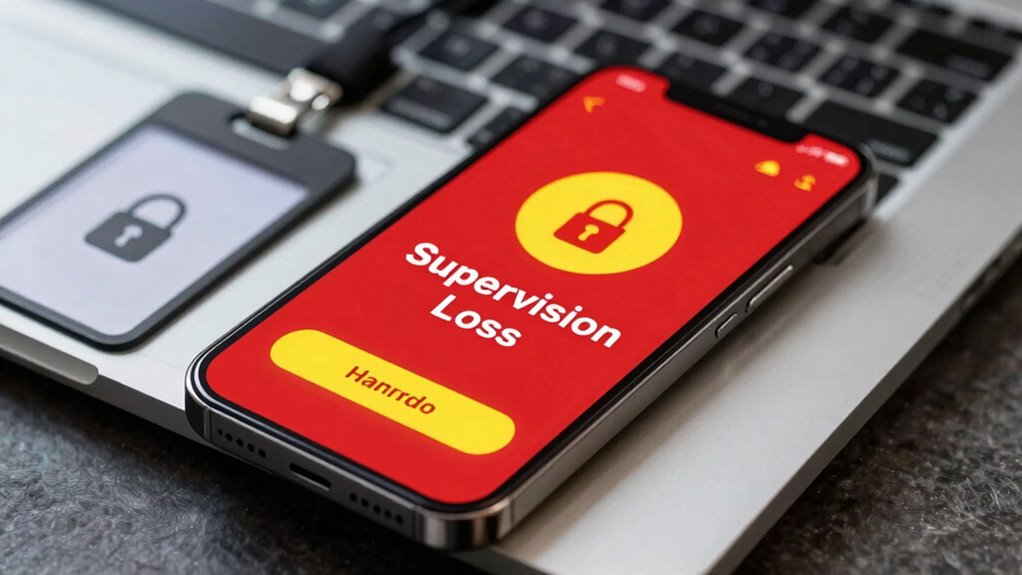
Implementing proactive security measures is essential to prevent supervision loss and keep your device secure. Start by enabling device encryption to protect sensitive information from unauthorized access. Regularly update your device’s software and security patches to close vulnerabilities that could compromise supervision status. Manage user permissions carefully, granting only necessary access to prevent accidental or malicious changes that could lead to supervision loss. Use strong, unique passwords and enable two-factor authentication wherever possible. Consistently review permissions and security settings to guarantee your device remains properly supervised. Additionally, understanding Free Floating concepts can help you better adapt your security strategy to evolving situations. Being aware of device management principles allows you to implement more effective controls and respond swiftly to potential risks. Maintaining a clear understanding of supervision status can also help you detect issues early and act promptly. By maintaining strict control over user permissions and keeping encryption active, you reduce the risk of supervision loss, ensuring your device stays compliant and secure at all times.
Signs Your Device Is No Longer Supervised : What to Look For
When supervision is lost, certain indicators become apparent that can alert you to the change. First, you might notice your device no longer enforces restrictions due to altered user permissions. Second, device compatibility issues can arise, causing apps or features to behave unexpectedly or become inaccessible. Third, you may see a lack of control over settings that were previously managed remotely, indicating supervision is gone. Fourth, notifications or alerts about supervision loss could appear, signaling the device’s supervision status has changed. Additionally, the performance of electric bikes, such as speed and acceleration, may be affected if supervision controls are removed. Pay close attention to these signs, as they directly relate to user permissions and device compatibility. If any of these signs appear, it’s a clear indication that your device is no longer supervised and may require further action. Monitoring local automation and device behavior can help identify supervision status changes early.
When to Get Help From Support or Experts
You should seek help from support or experts when you notice serious signs that your supervision system isn’t functioning properly. Knowing when to ask for assistance can prevent further issues and keep your device secure. It’s also important to find reliable support resources to guide you through the process. Regularly inspecting your sauna heater and control systems can help identify potential problems early and ensure safe operation. Additionally, understanding transfer switch operations can help you recognize issues more effectively. Being familiar with art care practices can also assist in maintaining the longevity and safety of your devices. Monitoring vetted dog names can also provide insight into popular and trusted choices for pet identification and care.
Recognize Serious Signs
Recognizing serious signs of supervision loss is essential because they often indicate that you or someone else needs immediate support. If device configuration or security protocols seem compromised, it’s a red flag. Watch for these signs:
- Unexpected changes in device settings or access permissions.
- Alerts indicating possible security breaches or unauthorized activity.
- Persistent system errors or crashes that disrupt normal functions.
- Unusual network activity or data transfers.
These issues suggest supervision loss is affecting system safety or stability. Address them promptly by seeking support. Ignoring these signs could jeopardize sensitive information or compromise security. When such signals appear, it’s time to act and get help from support or experts to restore proper device configuration and reinforce security protocols.
When to Seek Experts
Knowing the right moments to seek help from support or experts is essential to maintaining your device’s security and stability. If you notice persistent supervision loss alerts despite performing regular software updates, it’s time to consult professionals. Issues with device authentication can compromise your device’s security, especially if updates haven’t resolved the problem. Don’t delay seeking expert assistance if alerts keep appearing or if you’re unsure whether your device is properly authenticated. Support teams can help verify your device’s configuration, ensure your software is current, and troubleshoot underlying issues. Acting promptly prevents potential security breaches or data loss. Remember, experts have the tools and knowledge to diagnose complex problems that might be beyond your reach, so don’t hesitate to reach out when needed. Additionally, understanding wave and wind conditions can help you optimize device performance and prevent avoidable issues. Being aware of environmental factors can further enhance your device’s stability and longevity, reducing the likelihood of recurring problems.
Finding Support Resources
Ever wonder when it’s time to seek support or contact experts for device issues? Recognizing the right moment can save you frustration. Consider these signs:
- When device management becomes confusing or overwhelming.
- If troubleshooting steps don’t resolve supervision loss or other alerts.
- When you notice persistent technical support needs or errors.
- If your efforts to fix issues stall, risking security or functionality.
- Remember that preventive measures like regular updates and backups can also support device health.
- Being aware of unexplained anomalies can help you determine when professional assistance is necessary.
- Understanding the implications of Rhythm Failure alerts or similar issues can guide you in deciding when to seek expert help.
Additionally, understanding the nuances of financial security measures can help you better evaluate when professional assistance is necessary. At this point, reaching out to technical support or experts is essential. They can provide specialized assistance and ensure your device operates correctly. Don’t wait until problems escalate—timely support keeps your device secure and efficient. Knowing when to find support resources helps you manage your device effectively and prevents small issues from becoming major headaches.
Frequently Asked Questions
Can Supervision Loss Affect My Device’s Performance?
Supervision loss can definitely affect your device’s performance. When this alert appears, it signals potential issues with device functionality and system stability. Ignoring it might lead to unexpected crashes, slower operation, or even hardware malfunctions. You should address supervision loss promptly to guarantee your device runs smoothly and remains stable, preventing further problems and maintaining peak performance. Regular checks can help catch issues early and keep your device functioning properly.
Is Supervision Loss the Same as Device Theft?
Supervision loss isn’t the same as device theft, but it’s a vital part of device security and theft prevention. When you see a supervision loss alert, it means your device has lost connection to its management system, which could signal tampering or unauthorized access. Addressing this promptly helps protect your device from theft or misuse, ensuring your data stays secure and your device remains under your control.
Are There Risks in Attempting to Fix Supervision Loss Myself?
Treading into DIY risks when fixing supervision loss is like walking a tightrope without a safety net. Without the necessary technical expertise, you might inadvertently cause more damage or void warranties. Attempting repairs yourself can lead to data loss or hardware issues. It’s safer to consult a professional who understands the intricacies of device management, ensuring your device’s security and functionality stay intact.
How Often Do Devices Typically Experience Supervision Loss?
Devices typically experience supervision loss occasionally, often due to device lifespan or minor troubleshooting steps needed. How frequently it occurs depends on usage patterns and device quality. You might see it happen more often as devices age or after updates. Regularly monitoring alerts helps catch issues early. If supervision loss happens frequently, it’s wise to check device health and perform troubleshooting steps to prevent further disruptions or potential failures.
Does Supervision Loss Impact Data Privacy or Confidentiality?
Supervision loss can impact data security and raise privacy concerns because it may indicate unauthorized access or device tampering. When supervision is lost, your device’s controls weaken, increasing vulnerabilities. You should act quickly to investigate, as this situation could expose sensitive information or compromise confidentiality. Always guarantee your devices have proper supervision and security measures in place to protect your data from potential breaches or privacy issues.
Conclusion
Ignoring supervision loss alerts might seem harmless, but it’s like leaving your house unsecured — tempting trouble. While your device may still seem fine, the risk of security gaps grows. Don’t wait until it’s too late; staying vigilant keeps your data safe. Recognize the signs early, fix issues swiftly, and don’t hesitate to seek expert help. After all, a supervised device isn’t just easier to manage — it’s your best defense against unseen threats.