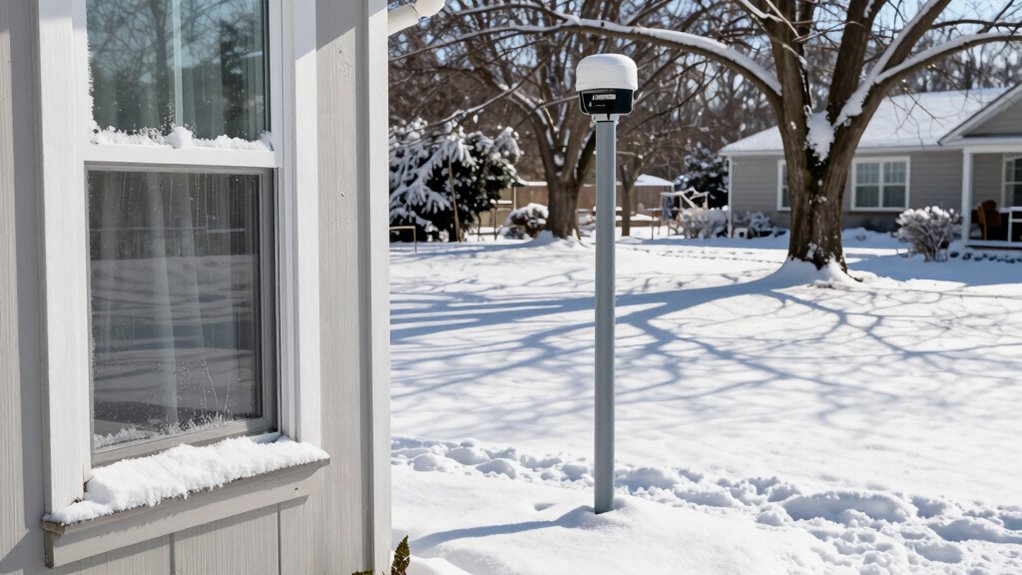

In winter, snow, ice, and freezing temperatures can cause your perimeter sensors to malfunction, leading to false alarms or missed detections. To secure your property, make certain sensors are properly protected with weatherproof enclosures, heated covers, and regular maintenance. Position sensors carefully to avoid snow buildup and check calibration frequently. Using durable, cold-rated equipment can greatly improve reliability. Want to learn how to keep your sensors functioning and your property safe all winter long? Keep exploring for essential tips.
Key Takeaways
- Use weatherproof, sealed enclosures to protect sensors from snow, ice, and moisture accumulation.
- Install sensors in sheltered locations to minimize exposure to snow buildup and temperature extremes.
- Incorporate heated covers or de-icing features to prevent ice formation on detection zones.
- Regularly clear snow and debris from sensors and mounts to maintain unobstructed detection paths.
- Calibrate sensors after snow removal or weather events to ensure accuracy and reliability.

Driveway Alarm Wireless Outside, 1 BY ONE Motion Sensor Alarm 1000ft/300m Range Extra Loud Chimes Security Alarm System with 1 Receiver 2 Weatherproof Infrared Sensors Protect Indoor/Outdoor Property
Wireless Motion Sensor Alarm: A Motion detector is essential in a home security system; It can detect movement…
As an affiliate, we earn on qualifying purchases.
As an affiliate, we earn on qualifying purchases.
How Winter Weather Disrupts Your Outdoor Sensors
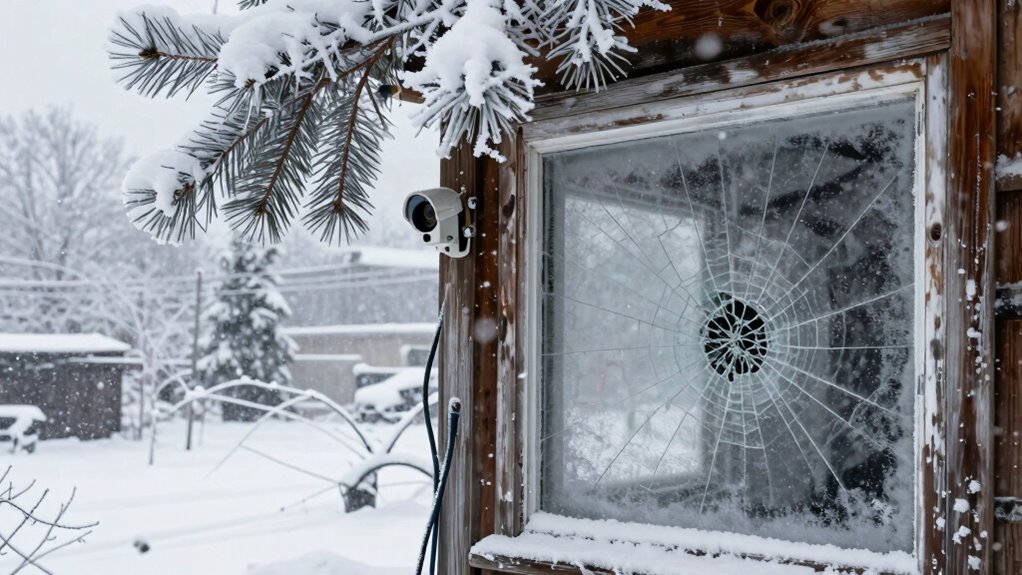
Winter weather can considerably disrupt your outdoor sensors, causing them to malfunction or stop working altogether. Cold temperatures can affect sensor calibration, making sensors less accurate or unresponsive. When sensors aren’t properly calibrated for winter conditions, they might send false alarms or fail to detect intrusions. Additionally, harsh weather can weaken the power supply, especially if the battery isn’t designed for low temperatures. Freezing conditions can drain batteries faster or cause power fluctuations, leading to sensor downtime. Snow and ice accumulation can also interfere with sensor signals, compounding the problem. To minimize these issues, regularly check and recalibrate your sensors before winter arrives, and ensure your power supply is rated for cold weather to keep your outdoor sensors functioning reliably all season. Proper sensor maintenance can help prevent many winter-related malfunctions and ensure your security system remains effective. Regularly inspecting and protecting your sensors from weather-related damage is vital for consistent security coverage during winter months. Additionally, using weather-resistant sensors can significantly improve performance during harsh conditions. Incorporating temperature compensation features into your sensors can further enhance their reliability in cold environments. Investing in high-quality batteries can also improve sensor performance and longevity during the winter.

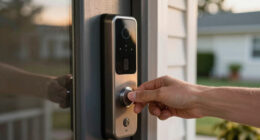
Weatherproof Rain Covers for Outside Door Locks – Plastic Water Shield for Access Control Keypad
【Product material and design】: this rain cover is made of high quality PC particles, processed through several procedures,…
As an affiliate, we earn on qualifying purchases.
As an affiliate, we earn on qualifying purchases.
Common Challenges Facing Perimeter Sensors in Cold Conditions
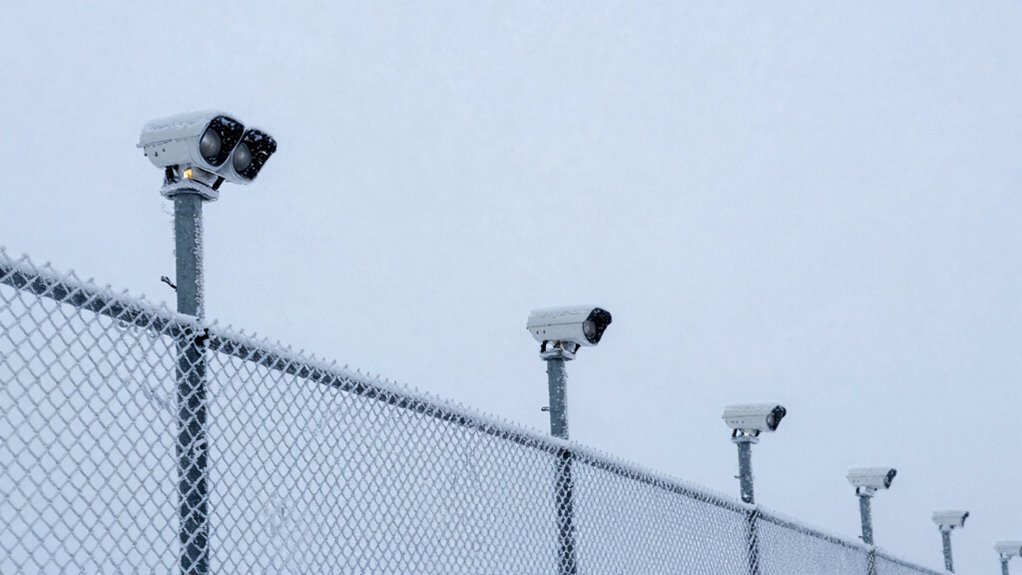
You’ll notice that freezing sensor components can cause malfunctions, making your system less reliable. Snow buildup may block detection zones, leading to gaps in coverage. Additionally, cold temperatures can interfere with signal transmission, reducing sensor effectiveness in winter conditions. Proper maintenance and understanding of sensor limitations can help ensure your perimeter security remains effective year-round. Being aware of free floating phenomena can also inform your troubleshooting efforts during unpredictable winter weather. Regularly inspecting hardware for ice accumulation can prevent unexpected failures and maintain system performance. Recognizing temperature fluctuations is vital, as sudden changes can impact sensor reliability and trigger false alarms. Incorporating environmental factors into your maintenance routine can further enhance sensor durability and performance.
Freezing Sensor Components
Freezing temperatures can cause sensor components to seize or malfunction, making it difficult for perimeter security systems to operate reliably. Cold conditions may interfere with sensor calibration, leading to false alarms or missed detections. When sensors freeze, their internal parts can stick or become unresponsive, reducing accuracy. Additionally, low temperatures impact battery performance, causing power dips that can disable sensors altogether. You might find that batteries drain faster or struggle to hold a charge, risking sensor downtime during critical moments. To combat this, ensure sensors are properly insulated and use batteries designed for cold climates. Monitoring sensor performance regularly can help identify issues early and prevent failures. Regularly check calibration and battery health, especially during prolonged cold spells, so your perimeter sensors remain dependable and responsive when you need them most. Implementing energy-efficient cloud solutions can also help monitor sensor performance remotely and optimize power management strategies. Incorporating temperature-resistant hardware can further enhance sensor durability in harsh winter conditions.
Snow Obstructing Detection
Have you ever noticed how falling snow can block sensors and hinder their ability to detect intruders? Snow accumulation on sensors can cause false alarms or missed detections. To combat this, you need to regularly perform sensor calibration, ensuring the devices accurately interpret signals despite snow buildup. Implementing proper installation practices and positioning sensors to minimize snow exposure can also help maintain their effectiveness. Use effective snow removal techniques, such as brushing off snow or using heated sensor housings, to keep detection paths clear. Maintaining clear sensors minimizes blind spots and improves reliability. It’s also essential to check calibration after snow removal to ensure the sensors aren’t misaligned. By proactively managing snow obstruction, you preserve your perimeter security system’s effectiveness during winter storms. Regular maintenance and proper snow removal are key to preventing detection failures caused by snow obstructing sensors.
Cold-Related Signal Interference
Cold temperatures can substantially disrupt sensor signals, causing false alarms or missed detections. When the temperature drops, you’ll notice signal attenuation, which weakens the sensor’s ability to detect movement or intrusion accurately. This interference often stems from improper sensor calibration for winter conditions, leading to unreliable readings. To combat this, you need to regularly calibrate your sensors, ensuring they’re adjusted for cold environments. Proper calibration minimizes the impact of signal attenuation, maintaining reliable detection. Additionally, insulating cables and using sensors designed for low temperatures can help reduce interference. Recognizing how cold affects signal integrity allows you to implement proactive measures, ensuring your perimeter sensors remain effective even during the harshest winter conditions.
cold weather rated perimeter sensors
As an affiliate, we earn on qualifying purchases.
As an affiliate, we earn on qualifying purchases.
Protecting Sensors From Snow, Ice, and Cold: Practical Tips
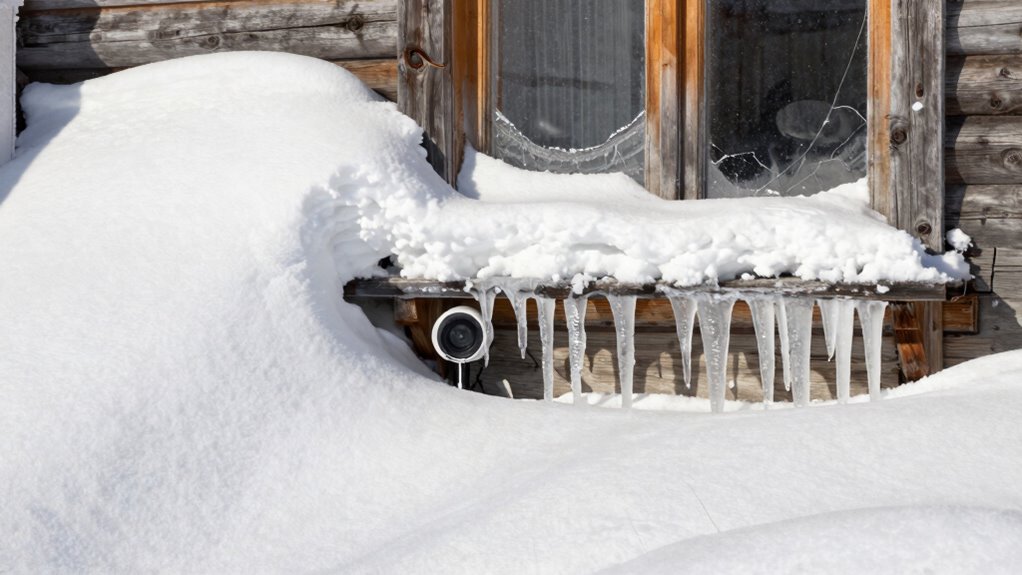
To keep sensors functioning reliably during winter, you need to take proactive steps to shield them from snow, ice, and low temperatures. Proper sensor placement is vital; position sensors where they are less exposed to snow accumulation and direct ice formation. Regularly calibrate sensors to account for temperature-induced drift, ensuring accurate readings despite cold conditions. Protect sensors with weatherproof enclosures or shelters that prevent snow buildup and ice formation while allowing for adequate airflow. Clear ice and snow buildup promptly to prevent signal interference. Use heated covers or de-icing elements if necessary, and verify calibration after storms. Consider the environment carefully to avoid placement that exposes sensors to harsh elements, which can compromise both function and calibration accuracy. weatherproof enclosures are essential for shielding sensors from winter elements and maintaining their longevity.
sensor enclosures for winter security
As an affiliate, we earn on qualifying purchases.
As an affiliate, we earn on qualifying purchases.
Choosing the Best Weather-Resistant Sensors for Winter
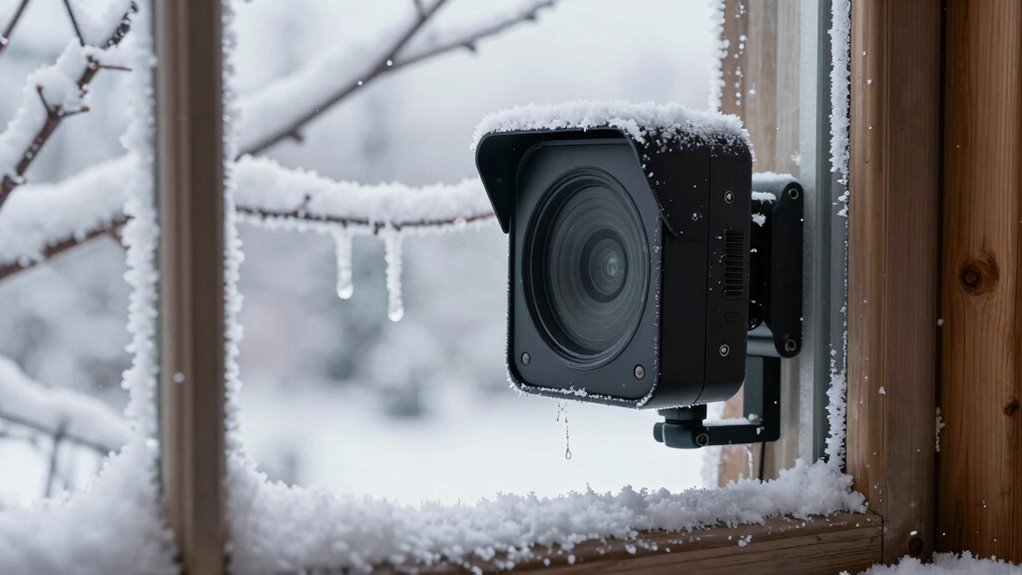
When selecting sensors for winter, you need equipment that can withstand harsh weather conditions. Focus on sensors with high durability against snow, ice, and moisture, so they keep functioning reliably. Also, verify their temperature tolerance levels to ensure they operate accurately in freezing temperatures. Additionally, choosing sensors with weather-resistant features can help prolong their lifespan and maintain performance during winter months. Incorporating sensors with robust design principles can further enhance their resilience against environmental stressors. To ensure long-term reliability, consider sensors that incorporate weatherproof coatings to protect against corrosion and water ingress. Recognizing the importance of environmental resilience can make a significant difference in sensor longevity and performance during the winter season. Moreover, selecting sensors with high-quality materials can significantly improve their ability to withstand extreme weather conditions over time.
Durability Against Elements
Choosing sensors that can withstand harsh winter conditions requires careful consideration of their durability against the elements. You need sensors built from robust sensor material and housed in protective enclosures to guarantee longevity and reliable performance. Look for materials like stainless steel or reinforced plastics that resist corrosion and ice buildup. Protective enclosures should be sealed tightly to prevent moisture ingress, snow, and debris from damaging internal components. Additionally, consider sensors with UV-resistant coatings to withstand sun exposure and temperature fluctuations. Properly selected sensors maintain functionality despite freezing temperatures, wind, and snow. Ensuring that sensors are designed with corrosion resistance and proper sealing techniques is essential for long-term durability. Selecting sensors with weatherproof coatings can further enhance their resilience against winter weather. Incorporating advanced sealing technologies can provide additional protection against harsh conditions, ensuring consistent operation. It’s also beneficial to choose sensors with thermal stability to prevent performance issues caused by extreme cold. Keep these factors in mind to prevent sensor failure and ensure consistent security coverage throughout winter’s challenges.
Temperature Tolerance Levels
Selecting sensors with appropriate temperature tolerance levels guarantees they remain operational throughout winter’s extremes. To make certain accuracy, you need sensors that can handle low temperatures without losing calibration. Proper sensor calibration is essential so readings stay reliable despite cold conditions. Look for sensors with built-in thermal insulation or those that can be externally insulated to protect against rapid temperature drops. These features help prevent sensor malfunction caused by thermal stress. Additionally, verify the sensor’s specified operating temperature range to match your environment’s winter lows. Choosing weather-resistant sensors with broad temperature tolerance minimizes false alarms and maintenance needs. By prioritizing thermal insulation and calibration stability, you’ll ensure your perimeter sensors perform consistently, even during harsh winter conditions. Regularly reviewing sensor specifications for temperature tolerance levels can further enhance reliability during winter’s coldest days.
Maintaining Your Outdoor Security Sensors During Cold Months
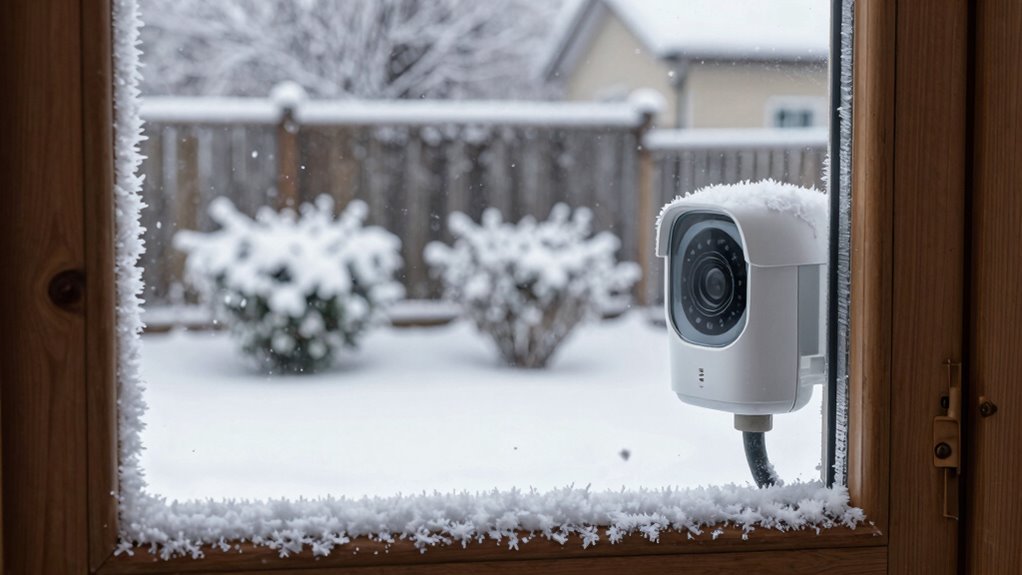
During the cold winter months, outdoor security sensors face increased challenges from low temperatures and snow, which can hinder their performance. To keep them functioning properly, prioritize regular sensor calibration to guarantee accuracy despite environmental changes. Proper power management is also vital; consider installing energy-efficient power sources or backup batteries to prevent downtime during storms. Additionally, clear snow and debris from sensor lenses and mounts to maintain unobstructed detection. Use protective enclosures to shield against moisture and freezing conditions. Lastly, verify connections and wiring periodically to prevent cold-related damage that could compromise sensor reliability. By attending to calibration, power management, and physical upkeep, you’ll help ensure your sensors operate effectively throughout the winter season.
Troubleshooting Sensor Problems in Freezing Temperatures
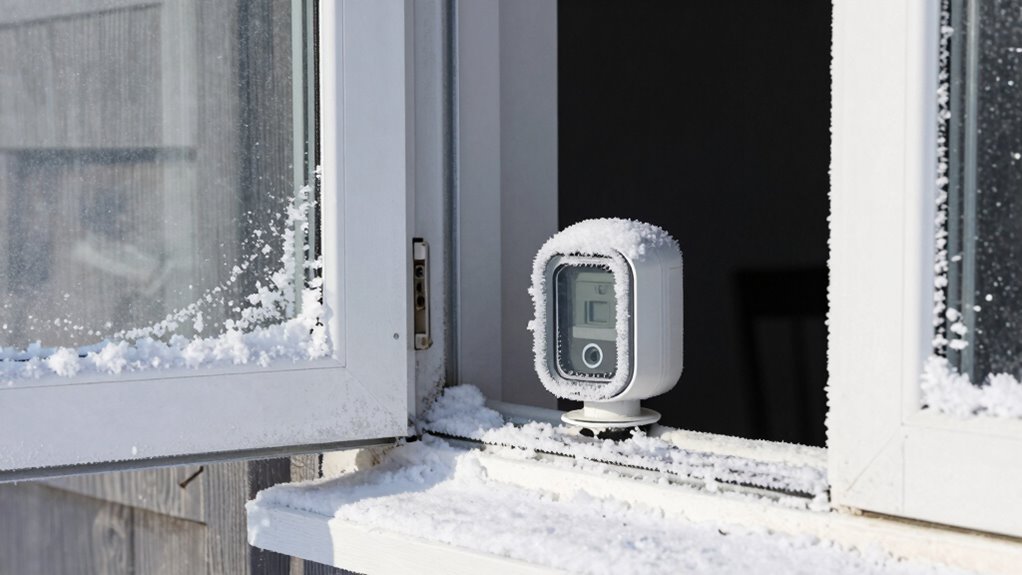
When sensors stop responding or give false readings in freezing temperatures, troubleshooting becomes essential to restore their proper function. First, check the power supply to verify it’s stable and not affected by cold-induced voltage drops. If the power source is reliable, evaluate the sensor calibration; cold weather can throw off sensor accuracy. Recalibrate the sensor if necessary, following the manufacturer’s instructions. Inspect any wiring for ice buildup or damage that could disrupt signal transmission. Ensure that sensors are properly insulated and protected from moisture. Sometimes, simply resetting the sensor or replacing batteries can resolve issues caused by low power. Regular maintenance, including calibration checks before winter, can prevent these problems and keep your sensors functioning reliably in cold conditions.
Frequently Asked Questions
How Can I Prevent Sensors From Freezing Internally?
To prevent sensors from freezing internally, you should use sensor insulation to safeguard them from cold temperatures. Additionally, integrating a small heater can keep the sensors warm and operational. Regularly check and maintain these systems to ensure they function correctly during winter. Proper insulation combined with heater integration helps prevent freezing, ensuring your sensors stay clear and reliable, even in harsh winter conditions.
What Long-Term Solutions Improve Sensor Durability in Winter?
Imagine your sensors as brave explorers facing winter’s icy grip. To strengthen their armor, choose sensor materials like rugged plastics or metals that resist cold. Guarantee a reliable power supply, perhaps with backup batteries or energy-efficient designs, so they stay alert through storms. These long-term solutions build resilience, allowing your sensors to endure winter’s harshest trials, maintaining security and peace of mind year-round.
Are There Specific Sensor Placements That Resist Winter Weather Better?
Yes, you should place weather-resistant sensors in sheltered locations, such as under eaves or overhangs, to resist winter weather. Avoid exposed areas prone to snow, ice, or wind, as these can impair sensor performance. Position sensors where they’re less likely to collect ice or snow, ensuring a clear detection path. Proper sensor placement combined with weather-resistant sensors helps maintain reliable perimeter security during winter conditions.
How Does Snow Accumulation Affect Sensor Detection Accuracy?
Snow accumulation can decrease sensor detection accuracy by up to 30% if you don’t properly calibrate them. As snow drifts build up, they can block or distort signals, making sensors less reliable. To combat this, you should regularly calibrate your sensors for winter conditions and clear snow drift around critical areas. This way, you ensure your perimeter sensors stay effective even during heavy snowfall.
Can Seasonal Changes Impact Sensor Calibration and Performance?
Yes, seasonal changes can impact sensor calibration and performance. As temperatures fluctuate, sensor sensitivity may decrease or increase, leading to false alarms or missed detections. To maintain ideal performance, you should adjust calibration frequency seasonally, especially in winter when snow and cold can interfere with sensor signals. Regularly checking and recalibrating your sensors ensures they stay accurate despite environmental variations, helping you secure your perimeter effectively year-round.
Conclusion
As winter’s chill wraps around your sensors like a thick blanket of snow, remember that proper care keeps your security system resilient. Think of your sensors as vigilant guardians standing firm against the storm—when you safeguard and maintain them, they won’t fall prey to the “open window” problem. With proactive steps, you ensure your perimeter stays secure, even in the coldest months. Stay vigilant, and let your sensors shine bright through winter’s frost.