
Most backup systems fail during overnight outages because they are not properly sized or maintained to handle extended power needs. Often, batteries lack the capacity to last through a full night, or systems haven’t been regularly tested and monitored. Poor installation, outdated equipment, and neglecting routine maintenance also contribute to failures. To guarantee your backup power works when it matters most, you need to understand the common pitfalls and effective solutions—more insights await if you keep exploring.
Key Takeaways
- Many systems fail overnight backup due to underestimated power loads and inadequate battery capacity planning.
- Poor maintenance and neglect of regular testing lead to undetected battery aging and capacity loss.
- Improper system installation, placement, or configuration can cause early backup failure during outages.
- Lack of real-time monitoring prevents timely detection of system issues, risking complete power depletion overnight.
- Insufficient sizing and absence of redundancy increase vulnerability to unexpected failures in backup systems.

REOLINK Smart 5MP 8CH Home Security Camera System, 4pcs Wired PoE IP Cameras Outdoor with Person/Pet/Vehicle Detection, 4K 8CH NVR with 2TB HDD for 24-7 Recording, RLK8-520D4-5MP
CAPTURE CRIME FROM DETAILS: Discover potential crime has never been so easier with superior 5MP HD. With advanced...
As an affiliate, we earn on qualifying purchases.
Why Overnight Backup Power Is Critical for Business Continuity

Without reliable overnight backup power, your business risks significant downtime when outages occur outside regular hours. A well-maintained generator is crucial to ensure continuous operations and prevent costly interruptions. Regular generator maintenance keeps your backup power system functioning properly, reducing the risk of failures during outages. Power surges, common during storms or grid issues, can damage equipment if your backup system isn’t prepared. Investing in proper maintenance and surge protection safeguards your critical infrastructure, maintaining productivity and customer trust. Proper backup power planning is essential to minimize disruptions and ensure your operations can withstand unexpected outages. Additionally, understanding the modern backup technology available can help you choose the most reliable solutions. A comprehensive understanding of power management systems can further enhance your backup strategy. Without a reliable backup, your business faces not only immediate operational halts but also potential long-term damage to equipment and reputation. Ensuring your backup power system is ready for overnight emergencies is essential for uninterrupted business continuity. Developing a comprehensive backup strategy can further enhance your preparedness and resilience, especially as energy-efficient European cloud servers continue to evolve in supporting sustainable infrastructure.

4CH 1080P Wired Security Camera System, AIWIXEN CCTV DVR with 512GB Hard Drive, 4 x Home Surveillance IP68 Waterproof Security Cameras with Human Vehicle Detection, Remote Access, 24-7 Recording
Pre-installed 512GB HDD: 24/7 recording provides protection for the places you value. Each camera can be configured with...
As an affiliate, we earn on qualifying purchases.
How to Check If Your Backup Power Will Last All Night

To guarantee your backup power lasts all night, you need to assess its battery capacity and understand your power needs. Conduct a thorough power consumption analysis to identify how much energy your devices require during downtime. Additionally, understanding energy storage capacity is essential to ensure your backup system can meet your overnight demands. Knowing your power load helps in selecting the right backup system size, preventing underperformance. Finally, perform backup time testing to see if your system can truly hold up through the entire night without failure.
Battery Capacity Assessment
Wondering if your backup power will last through the night? You need to evaluate your energy storage capacity to guarantee it can handle overnight demands. Start by checking your battery’s rated capacity, usually measured in amp-hours (Ah) or watt-hours (Wh). This tells you how much energy your backup system can store. To perform an accurate capacity assessment, consider your system’s current energy storage levels and how much power you consume during typical operation. Capacity planning is essential—know your backup’s limits before relying on it. If your storage is insufficient, you risk losing power before morning. Regularly testing and monitoring your battery’s capacity helps identify potential shortfalls early, ensuring your backup system provides reliable, all-night coverage when you need it most.
Power Consumption Analysis
Knowing whether your backup power can last through the night requires analyzing your energy consumption. You need to assess your devices’ power load and energy efficiency. Start by listing all critical equipment and their wattage, then estimate total consumption. Visualize this with a simple table:
| Device | Power Load (W) | Usage Duration (hrs) |
|---|---|---|
| Server | 200 | 8 |
| Router | 50 | 8 |
| Workstation | 150 | 8 |
| Network Switch | 30 | 8 |
| External Storage | 60 | 8 |
Calculate total watt-hours to determine if your backup can sustain your setup overnight. Additionally, consider energy-efficient devices to extend backup duration and ensure your system stays operational until power returns. Being aware of your power consumption patterns can help optimize your backup capacity and prevent unexpected outages. Incorporating load balancing strategies can further improve backup performance and efficiency.
Backup Time Testing
Before relying on your backup power during an outage, it’s vital to test whether it can sustain your critical devices overnight. Start by measuring your energy storage capacity and estimating your devices’ power draw. Run a test cycle, unplugging from the grid, to see how long your backup system can power everything without external support. This process helps you identify if your backup system can handle sustained use and highlights any shortcomings. Remember, backup time depends on your energy storage and your system’s efficiency. If your backup depends heavily on grid dependency, make sure your storage can compensate for grid outages. Regular testing ensures your backup power will last through the night, providing peace of mind and preventing surprises during emergencies. Additionally, understanding your backup system’s capacity allows for better maintenance and system upgrades when necessary. Being aware of the efficiency of your system can also help optimize its performance and extend backup duration. Incorporating smart monitoring tools can give real-time insights into your system’s status, enhancing reliability and preparedness. Conducting these tests periodically keeps your system ready for emergencies, and understanding energy consumption patterns can help you plan more effectively for longer outages.

REOLINK 8CH 5MP Home Security Camera System, 6pcs Wired Outdoor PoE IP Cameras with Person/Vehicle/Pet Detection, 4K/8MP 8CH NVR with 2TB HDD for 24-7 Recording, RLK8-410B6-5MP
5MP SUPER HD & STUNNING NIGHT VISION: Capture crystal clear videos day & night with 5MP super HD...
As an affiliate, we earn on qualifying purchases.
Common Reasons Backup Systems Fail During Power Outages
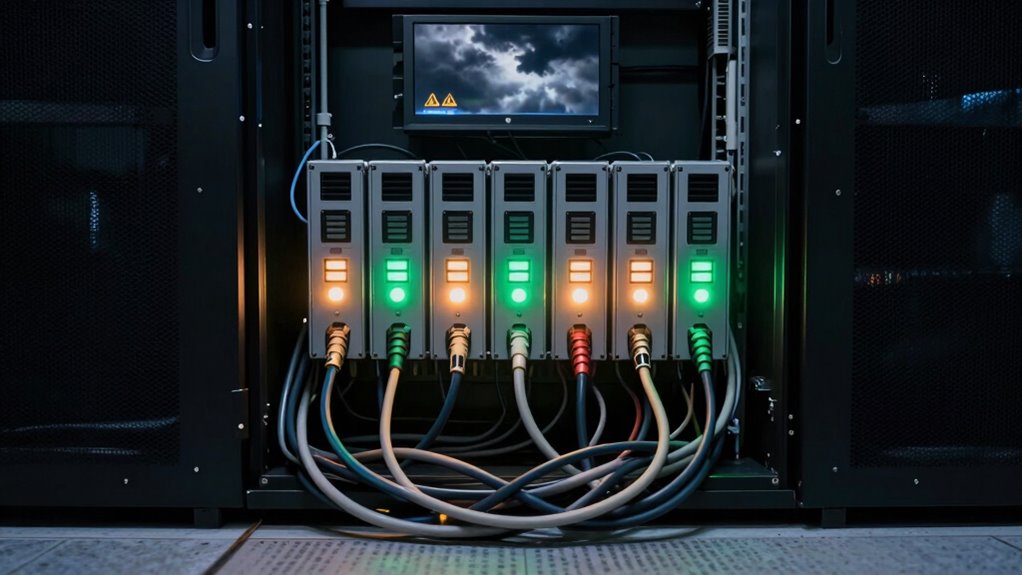
One common reason backup systems fail during power outages is battery capacity limitations, which can cause them to run out of power sooner than expected. Inadequate maintenance practices also play a big role, as failing to check or replace batteries can leave your system vulnerable. Regularly testing system performance and monitoring battery health can help identify potential issues before they become critical, ensuring your backup system stays reliable when you need it most. Additionally, understanding energy storage capacity can help you choose the right system size for your needs. Proper system installation and placement are also crucial to prevent performance issues during outages. Furthermore, system configuration plays a vital role in ensuring backup reliability during unexpected outages. Incorporating preventative maintenance routines can further extend the lifespan and dependability of your backup power systems.
Battery Capacity Limitations
Battery capacity limitations are a common reason backup systems fail during power outages. Over time, the battery’s lifespan diminishes, leading to capacity degradation. This means your backup system may not hold enough charge to sustain critical operations when the power goes out. Even if your system was reliable initially, aging batteries can lose significant capacity, reducing their runtime unexpectedly. You might not notice this gradual decline until an emergency occurs, leaving you unprepared. Regularly testing your backup batteries and understanding their age can help you anticipate failures. Additionally, battery technology plays a role in overall performance and longevity, making the choice of batteries crucial. If capacity degradation becomes severe, replacing the batteries is essential to guarantee your backup system performs when needed most. Ignoring these limitations risks losing power during critical moments, compromising safety and operations. Furthermore, using proper battery technology can help extend overall lifespan and reliability. Implementing battery management systems can also aid in monitoring health and preventing unexpected failures. Proper maintenance and monitoring of battery health are crucial for ensuring backup readiness, especially as battery capacity naturally declines over time.
Inadequate Maintenance Practices
Inadequate maintenance practices are a leading cause of backup system failures during power outages. If you neglect routine inspections, small issues like loose connections or worn components can go unnoticed, risking system failure when you need it most. Regular checks verify batteries, generators, and transfer switches operate properly and are ready to activate instantly. Staff training is equally crucial; untrained personnel may not recognize signs of deterioration or know how to perform basic maintenance, leading to overlooked problems. By establishing a consistent maintenance schedule and investing in staff education, you considerably reduce the risk of backup system failure. Preventative care keeps your backup power dependable, ensuring it will perform seamlessly during critical moments, rather than failing unexpectedly due to neglect or lack of preparedness.
REOLINK 4K Security Camera System, RLK16-800B8 8pcs H.265 PoE Wired with Person Vehicle Detection, 8MP/4K 16CH NVR with 4TB HDD for 24-7 Recording
4K Ultra HD – Reolink 4K Ultra HD (8MP) PoE camera delivers almost 4 times the clarity of...
As an affiliate, we earn on qualifying purchases.
Best Practices for Designing Reliable Overnight Backup Power

Designing reliable overnight backup power requires careful planning and strategic choices to guarantee continuous operation during outages. Start by selecting robust energy storage solutions that can handle your system’s load for the entire duration. Properly sizing batteries or other storage devices ensures they won’t deplete prematurely. Focus on optimizing power distribution so that energy flows efficiently and reliably to critical components. Implement redundant pathways and fail-safes to prevent single points of failure. Regularly test and maintain your energy storage units and distribution systems to catch issues early. Keep wiring organized and protected from environmental factors. By integrating these best practices, you improve your system’s resilience and assure uninterrupted backup power through even the longest outages.
Top Technologies for 12+ Hour Backup Power

When it comes to ensuring your backup power system lasts beyond 12 hours, selecting the right technologies is essential. Renewable sources, like solar and wind, can provide sustainable energy for extended outages, especially when paired with energy storage solutions such as large-scale batteries. These sources reduce reliance on fossil fuels and can be scaled to meet your specific needs. Smart grids further enhance backup capabilities by optimizing energy distribution, integrating diverse power sources, and managing loads efficiently. They enable real-time monitoring and automated adjustments, ensuring continuous power flow during prolonged outages. Combining renewable sources with smart grid technology creates a resilient, eco-friendly backup system capable of lasting 12 hours or more, minimizing downtime and maintaining critical operations without interruption.
Troubleshooting Backup Power Failures During Blackouts

Even with advanced renewable sources and smart grid integrations, backup power systems can still face failures during blackouts. Troubleshooting these failures requires careful attention. First, check the battery lifespan; aging batteries lose capacity and may fail when needed most. Second, assess inverter efficiency; a less efficient inverter can cause power fluctuations or cutouts. Third, verify connections and switches to ensure no loose wiring or faulty relays disrupt power flow. Fourth, evaluate if backup sources are fully charged and ready before a blackout occurs. Addressing these issues can prevent unexpected failures. Regular maintenance, timely replacement of batteries, and optimizing inverter performance are essential to keep your backup system reliable during outages.
Steps to Improve Your Backup Power Readiness Today
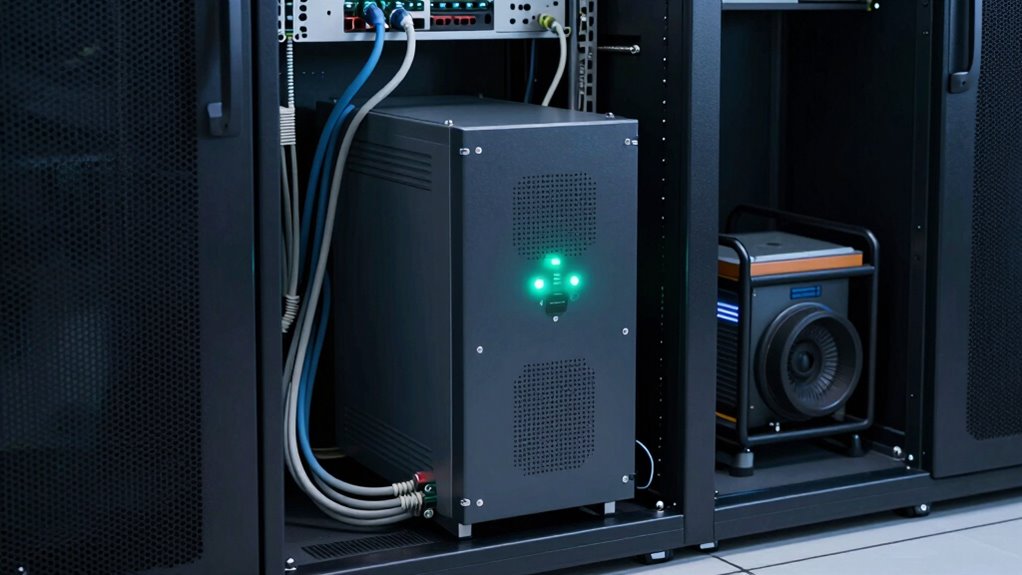
To guarantee your backup power system is ready when you need it most, start by conducting a thorough inspection of all components. Check your batteries for signs of wear, corrosion, or swelling, as these can reduce battery longevity and compromise reliability. Ensure all connections are secure and free of debris. Test your inverter and transfer switch to confirm they operate smoothly. Improving power quality is essential; consider installing surge protectors or power conditioners to filter out voltage fluctuations. Schedule regular maintenance and battery replacements based on manufacturer recommendations. Additionally, keep your backup system clean and dry to prevent deterioration. By proactively maintaining your system, you extend battery life and ensure consistent power delivery, minimizing the risk of failure during an outage.
Frequently Asked Questions
What Are the Initial Costs Associated With Implementing Reliable Backup Power Systems?
You’ll need to conduct a thorough cost analysis and include initial expenses in your budget planning. Expect to spend on backup power equipment like generators or UPS systems, installation costs, and potential upgrades to your electrical infrastructure. While these upfront costs can be substantial, they’re vital for ensuring reliable backup power. Proper planning helps you balance affordability with effective protection, minimizing risk during outages and safeguarding your operations.
How Often Should Backup Power Systems Be Tested for Reliability?
You should test your backup power systems at least quarterly to guarantee power outage preparedness. Regular backup system maintenance helps identify potential issues before a real outage occurs, keeping your system reliable. Conducting these tests consistently allows you to verify that your backup system will activate properly when needed. Don’t wait until a blackout to find out your backup system isn’t functioning; proactive testing is key to resilience.
Are There Environmentally Friendly Backup Power Options Available?
Yes, eco-friendly backup power options exist. You can choose eco-friendly batteries made from sustainable materials or opt for solar-powered generators that harness renewable energy. These solutions not only reduce your environmental impact but also guarantee reliable power during outages. Imagine never worrying about harmful emissions or battery waste—taking a step toward sustainability while keeping your systems running smoothly. Isn’t it time you considered greener alternatives for backup power?
How Does Backup Power Impact Overall Energy Consumption?
Backup power can increase your overall energy consumption by requiring additional energy for operation during outages. However, if you prioritize energy efficiency and use renewable or efficient backup systems, you can minimize this impact. Your reliance on backup power affects the power grid by adding demand during outages, potentially straining resources. Choosing eco-friendly backup options helps balance energy needs while reducing environmental impact and maintaining grid stability.
What Legal Regulations Govern Backup Power Requirements for Businesses?
You must guarantee legal compliance by following regulatory standards that mandate backup power requirements for businesses. These laws vary by location but generally require reliable backup systems to prevent data loss and service disruptions. You’re responsible for adhering to regulations set by agencies like OSHA, NFPA, or local authorities, which often specify power capacity, testing protocols, and maintenance schedules. Staying updated on these standards helps you avoid penalties and ensures system reliability.
Conclusion
Did you know that over 60% of data center outages are caused by backup power failures? Ensuring your systems can run through the night is essential for business continuity. Regularly test and upgrade your backup solutions, follow best practices, and stay informed on the latest technologies. By doing so, you minimize downtime and protect your operations during unexpected outages. Don’t leave your overnight backup power to chance—prepare today for peace of mind tomorrow.