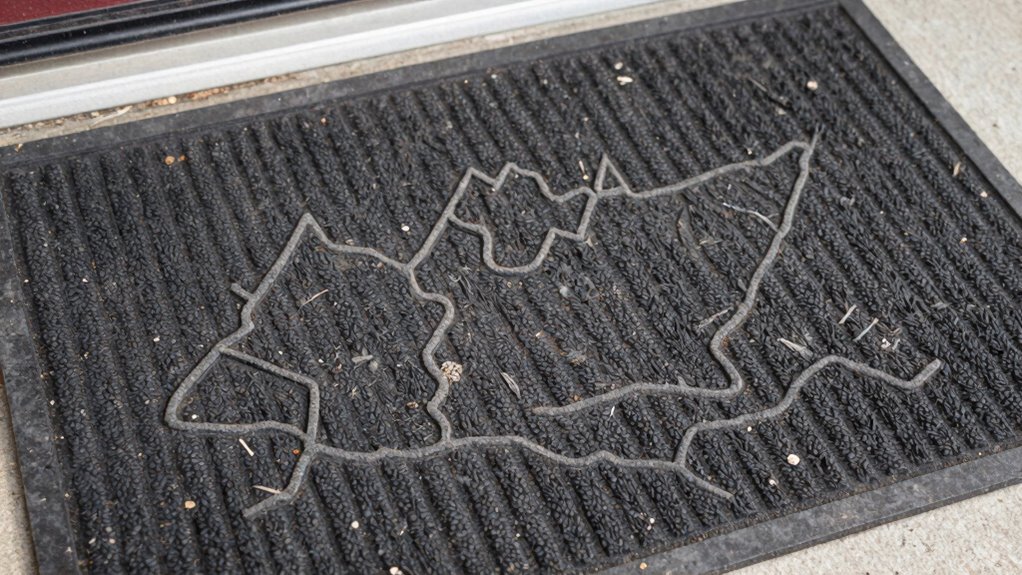

Your welcome mat and outdoor cues can reveal your home’s occupancy patterns to burglars. They notice if your mat is always clean or missing, if outdoor lighting is consistent, or if decorations suggest someone’s always home. Even mailbox signals or garden ornaments can give clues about your routines. By understanding these signs, you can make smarter choices to keep your home safer. Keep exploring to discover how subtle tweaks can hide your routines effectively.
Key Takeaways
- Worn or missing mats indicate frequent absences, signaling potential vulnerability to intruders.
- Brightly colored or clean mats suggest someone is home, attracting burglars.
- Mats placed in visible or predictable spots help burglars map out routine entry points.
- Seasonal or unusual decor on mats can reveal homeowner habits or travel plans.
- Maintaining discreet, consistent outdoor cues can help prevent burglars from using mats as maps.

LEPOWER LED Security Light Motion Sensor Outdoor Lights, Bright 38W 4200LM
- High Brightness and Energy Efficiency: 4200 lumens at 38W, saves over 80% energy
- Wide Motion Detection Range: Detects motion up to 72 feet at 180°
- Adjustable Light Heads: Customize angles of lights and sensor
As an affiliate, we earn on qualifying purchases.
As an affiliate, we earn on qualifying purchases.
How Your Welcome Mat Might Be Revealing When You’re Away

Your welcome mat might seem harmless, but it can actually give burglars clues about when you’re away. A carefully placed welcome mat can become part of a burglar map, revealing your routines. If your mat is always in the same spot, it suggests you’re regularly home, deterring intruders. Conversely, if the mat is missing or shows signs of wear, it might indicate you’re gone frequently or for extended periods. Some burglars watch for these subtle cues to plan their break-in. Brightly colored or unusually clean welcome mats could also signal that someone is home, while a worn or absent mat might suggest an empty house. Recognizing how your welcome mat can betray your schedule helps you avoid making it an easy clue for burglars. Additionally, maintaining a well-organized backyard can help create a more secure environment and reduce the chances of attracting unwanted attention. Being aware of security-related cues, such as your welcome mat, can improve your overall home safety strategy. Incorporating smart security devices can further monitor activity around your home and provide peace of mind. Understanding that yard maintenance can influence home security emphasizes the importance of keeping your outdoor spaces tidy and vigilant. Knowing about home security best practices can help you implement effective measures to protect your property.
discreet welcome mats for home security
As an affiliate, we earn on qualifying purchases.
As an affiliate, we earn on qualifying purchases.
Common Outdoor Signs That Show Your Home Is Occupied

Many outdoor signs can indicate that a home is occupied, subtly signaling to neighbors and passersby that someone is inside. You might notice:
- Garden statues placed in welcoming or protective stances, suggesting someone’s home.
- Mailbox signals, like flags or additional markings, indicating regular mail delivery.
- Visible footprints or well-trodden paths leading to the door.
- Consistent placement of outdoor furniture or decorations that hint at daily routines.
- The use of security lighting or timed outdoor lights that make the home appear active during evening hours.
- The presence of precious metal investments like gold or silver stored visibly in secure outdoor safes or display cases, which might inadvertently reveal financial stability or wealth.
Being mindful of home security vulnerabilities like these outdoor signs can help you stay a step ahead of potential intruders, especially when considering outdoor security measures such as surveillance cameras or motion detectors to mitigate risks. Recognizing subtle cues can also prevent unintentional signals, which might be overlooked but are equally important in home security.

aosu D1 Classic 4-Cam Kit, Security Cameras Wireless Outdoor, Solar Powered
- No Subscription Needed: Encrypted storage with 32GB local memory
- Long Video Loop Recording: Up to 4 months of footage
- Instant Notifications & Live Streaming: Real-time alerts and stable streams
As an affiliate, we earn on qualifying purchases.
As an affiliate, we earn on qualifying purchases.
How Porch Lighting and Decorations Can Tip Off Burglars

Porch lighting and decorations can unintentionally reveal when a home is unoccupied. Bright lights left on all night or motion sensors that activate at odd hours signal vacancy. Garden ornaments, like empty birdbaths or toppled statues, can also suggest no one’s home. Mailbox signals, such as overflowing mail or flagged mailboxes, indicate absence. Even seasonal decorations left up too long can act as clues. Burglars recognize these signs as cues that your house is an easy target. To avoid tipping them off, use timers for porch lights, rotate decorations regularly, and keep mailbox signals tidy. Additionally, incorporating visual cues into home routines, such as natural, culturally inspired practices, can promote a sense of safety and community awareness, further deterring intruders. Understanding home security indicators enables homeowners to better mitigate these risks. By minimizing these visual cues, you make it harder for intruders to identify when your home is empty.
weatherproof outdoor security signs
As an affiliate, we earn on qualifying purchases.
As an affiliate, we earn on qualifying purchases.
Why Showing Off Security Cameras and Alarm Signs Could Be Risky

While displaying security cameras and alarm signs can deter burglars, showing them off publicly can actually give intruders valuable information about your home’s defenses. When you post photos or mention your security setup on social media or in neighborhood gossip, you risk revealing key details. Burglars may learn:
- Exactly where your cameras are located
- Which areas are covered and protected
- When you’re likely to be away
- How your security system responds to intrusions
- The security system’s design and how it might be bypassed or disabled
This insider knowledge can help them plan the perfect break-in. Instead of advertising your defenses, keep your security measures discreet. Stay off social media with details about your alarm system, and be cautious about what neighbors or online followers might see. It’s better to surprise intruders than give them a roadmap. Additionally, utilizing connected home security devices can enhance your security without broadcasting your setup publicly. Being aware of security vulnerabilities can help you identify potential weaknesses before intruders do. Moreover, understanding how publicly shared information can be exploited is crucial for maintaining effective home security.
Easy Ways to Make Your Porch Feel Inviting Without Giving Away Your Routine

You can make your porch welcoming by choosing warm lighting that feels inviting but doesn’t highlight your routines. Adding personal yet neutral decor, like a cozy doormat or a simple plant, helps create a friendly vibe without revealing too much. These small touches make your space inviting while keeping your daily patterns private. Considering security measures such as strategic lighting and unobtrusive decor can further deter unwanted visitors. Incorporating architectural solutions like subtle landscape design can also enhance security while maintaining curb appeal. Additionally, selecting energy-efficient lighting options ensures your porch remains inviting without unnecessary energy consumption. Implementing creative storytelling through your decor choices can subtly communicate your personality while maintaining privacy. Using visual privacy techniques like plants or screens can also help conceal your entryway from prying eyes without sacrificing style.
Use Warm Lighting Choices
Warm lighting is one of the simplest ways to create an inviting porch without revealing your daily routine. It offers an ambient glow that feels welcoming and cozy illumination that sets a relaxed tone. To maximize its effect, consider these tips:
- Use yellow or soft white bulbs instead of harsh white or blue-toned lights.
- Install dimmer switches to control brightness levels, creating a subtle glow.
- Incorporate string lights or lanterns for a warm, inviting atmosphere.
- Place lights at different heights to add depth and avoid uniform, revealing lighting.
These choices help your porch feel friendly and inviting, while also maintaining privacy. Warm lighting creates a cozy ambiance that encourages visitors without giving away when you’re home or away.
Add Personal but Neutral Decor
Adding personal but neutral decor is a simple way to make your porch welcoming without revealing your routine. Choose items that reflect your style subtly, like a decorative wreath or a stylish potted plant, but avoid anything overly personalized or obvious. Neutral accents, such as muted colors or classic planters, create a warm atmosphere without signaling when you’re home or away. Keep decorations consistent and simple to prevent burglars from deciphering your schedule. A well-placed, tasteful sign or a uniform set of cushions can add charm without giving away too much. The goal is to strike a balance—making your porch inviting while maintaining an air of mystery for potential intruders. This way, your home feels friendly without becoming an open book.
Tips to Hide Signs You’re Out of Town or Home Alone

To keep burglars guessing, it’s best not to share your travel plans on social media or with neighbors. Maintaining the appearance that someone is home by using timers or asking a neighbor to collect mail can make your house less attractive to intruders. Small actions like these help hide the signs that you’re away or home alone. Additionally, securing your truck bed with proper storage solutions can prevent tempting thefts when you’re away.
Avoid Sharing Vacation Plans
Sharing your vacation plans on social media or with neighbors can inadvertently signal that your home is empty, making it a prime target for burglars. To keep your plans private and reduce risk, consider these tips:
- Limit social media sharing to friends or close family, and avoid posting details about your trip.
- Use privacy settings to restrict who can see your posts.
- Inform only trusted neighbors through a quick, personal conversation, rather than broad notifications.
- Wait until you return home to share vacation updates, rather than broadcasting your absence beforehand.
Keep Home Occupied Visual
When you’re away from home, it’s essential to create the illusion that someone is still there. A well-placed timer on your lights or TV can make your home look occupied, deterring burglars. Keep window blinds or curtains partially open, but avoid leaving valuables in plain sight. Inform your neighborhood watch of your travel plans so neighbors can keep an eye out and report anything suspicious. Regular lawn maintenance or using outdoor timers adds to the appearance of activity. Home security cameras can also serve as a visual deterrent, showing that your property is monitored. These small steps help hide signs you’re away or alone, reducing the risk of break-ins and making your home less attractive to burglars.
Safe Distraction Techniques to Deter Intruders Without Warning

Instead of alerting intruders with loud alarms or obvious security measures, you can employ subtle distraction techniques that make them think someone is home or that the property is more secure than it actually is. Focus on enhancing doorway security and managing porch clutter to create this illusion. Here are some simple strategies:
- Place a pair of shoes or slippers near the door—suggests someone is inside.
- Keep porch clutter minimal but intentional—like a watering can or a potted plant—so it looks maintained.
- Use timers on lights to mimic occupancy during different times.
- Install a fake security camera or mirror to give the impression of surveillance.
These small steps can effectively distract and deter intruders without making your security obvious.
Simple Curb Appeal Hacks That Keep Your Home Safe From Burglar Maps

Ever wonder how simple curb appeal tweaks can double as security measures? Small changes can prevent your home from revealing too much to potential burglars. For example, trimming back overgrown bushes and keeping your porch clear reduces hiding spots and reveals porch secrets that intruders might exploit. Avoid security pitfalls like leaving valuables in plain sight or installing flashy, attention-grabbing decorations that signal wealth. Instead, choose neutral lighting and modest plants to maintain an inviting yet discreet appearance. Using strategic placement of outdoor furniture and avoiding clutter can make your home less inviting to burglars. These simple curb appeal hacks not only boost your home’s aesthetic but also act as an invisible barrier, keeping your home safer from burglar maps and prying eyes.
Frequently Asked Questions
How Can I Discreetly Mark My Home as Unoccupied?
You can discreetly mark your home as unoccupied by using hidden markings or covert signals that only trusted people understand. For example, leave subtle cues like a specific pattern on your porch light or a unique arrangement of objects near your door. Avoid obvious signs like notes or visible marks, and instead, use inconspicuous signals that blend into your environment, ensuring your home remains protected while staying discreet.
What Are Subtle Signs That Might Attract Burglars?
Think of your home as a book with subtle clues. Burglars notice signs like overgrown lawns, piled-up mail, or accessible doors, which signal vacancy. A neighborhood watch can spot these cues, while strategic security lighting highlights your property’s secure areas. Avoid leaving tools or valuables visible, and keep everything tidy. These small, intentional signs help protect your home by reducing the chances of attracting unwelcome attention.
How Does Landscaping Influence Home Security Perceptions?
Landscaping cues greatly influence how secure your home appears. Well-maintained bushes, clear sightlines, and strategic lighting enhance visual security by eliminating hiding spots and making your property less inviting for intruders. Conversely, overgrown plants or cluttered yards can signal neglect, encouraging burglars to target your home. By thoughtfully designing your landscaping, you send a subtle message that your home is monitored and protected, deterring potential criminals.
Are There Safe Ways to Display Security System Signs?
Smartly showcase security system signs by balancing visibility with discretion. You want your signs to deter burglars without revealing too much; place them where neighbors and passersby can see, but not so prominently that they tell intruders exactly what tech you have. Incorporate neighborhood watch programs into your security strategy, encouraging community cooperation. Subtle signage, combined with neighborhood vigilance, creates a secure, synchronized shield that safeguards your space without inviting unwanted attention.
How Can I Improve Curb Appeal Without Revealing My Routines?
To boost curb appeal without revealing your routines, focus on strategic security camera placement and outdoor lighting strategies. Place cameras discreetly around your property’s perimeter, avoiding obvious spots that indicate your routine. Use motion-activated outdoor lights to illuminate dark areas, deterring intruders without making your schedule obvious. Keep landscaping tidy and inviting, and consider adding decorative elements that enhance your home’s appearance while maintaining security.
Conclusion
Remember, your porch is like a siren’s call to burglars if it reveals too much. Keep your routines discreet, hide signs of your absence, and avoid giving away your security measures. Think of it as protecting your castle—no need for a moat, just smart tricks. With these simple steps, you’ll keep your home safe without turning it into a blinking beacon. Stay vigilant, and don’t let your welcome mat turn into a burglar’s treasure map.