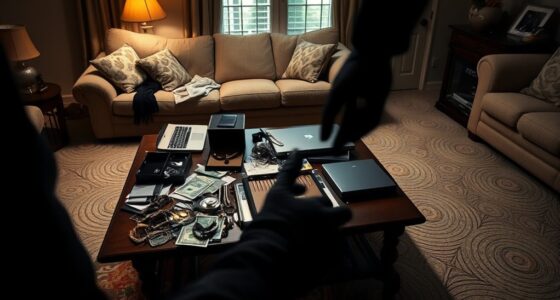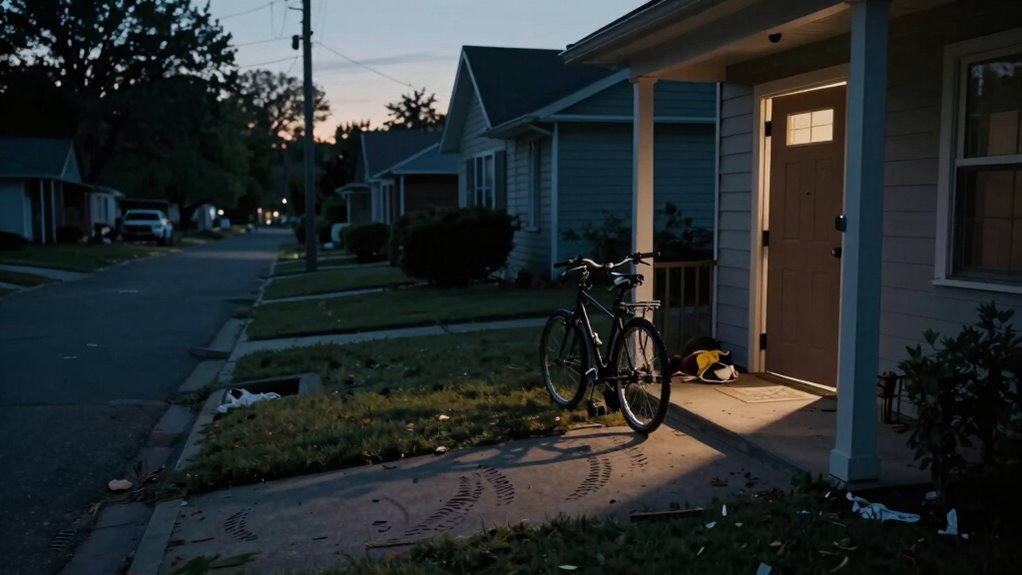
During quiet hours, burglars exploit low activity and darkness to slip unnoticed into homes, often blending into shadows and avoiding noisy entry methods. They target late at night when neighbors are less alert, relying on reduced ambient noise and fewer witnesses. Many neighbors miss subtle signs like damaged locks or suspicious activity because they’re unaware of how stealthy these break-ins can be. Stay vigilant—if you notice these tactics and signs, you can better protect your home and learn more if you keep exploring.
Key Takeaways
- Thieves exploit low activity and silence during midnight to blend into shadows and avoid detection.
- Quiet neighborhoods create a false sense of security, reducing resident vigilance during late hours.
- Criminals target homes with minimal security, taking advantage of reduced noise and fewer witnesses.
- Signs of forced entry, tampered security signage, or damaged entry points often go unnoticed during quiet hours.
- Effective prevention includes enhanced exterior lighting, security cameras, neighborhood patrols, and community vigilance.
What Makes ‘Quiet Hours’ Break-In a Hidden Neighborhood Threat?

Although quiet hours might seem like the safest time for neighbors to relax and enjoy their homes, burglars see them differently. They use urban camouflage to blend into the quiet surroundings, making their movements less noticeable. During these hours, they often employ silent entry tactics, avoiding noise to evade detection. Quiet neighborhoods lull residents into a false sense of security, allowing burglars to move discreetly through shadows and alleys. They may time their break-ins when activity is minimal, taking advantage of the calm. This stealth approach makes it difficult for neighbors to spot or respond to an intruder. Additionally, understanding home security best practices can significantly enhance your defenses against these hidden threats. Being aware of visual surveillance options and maintaining a visible presence around your home can further deter these covert intrusions. Implementing neighborhood watch programs can also help create a collective alertness that discourages such hidden break-ins. Recognizing intruder tactics used during quiet hours can further improve neighborhood safety measures. Incorporating innovative security technologies such as smart cameras and sensors can also help detect suspicious activity during these covert times.
Why Do Thieves Prefer Midnight to Early Morning for Break-Ins?
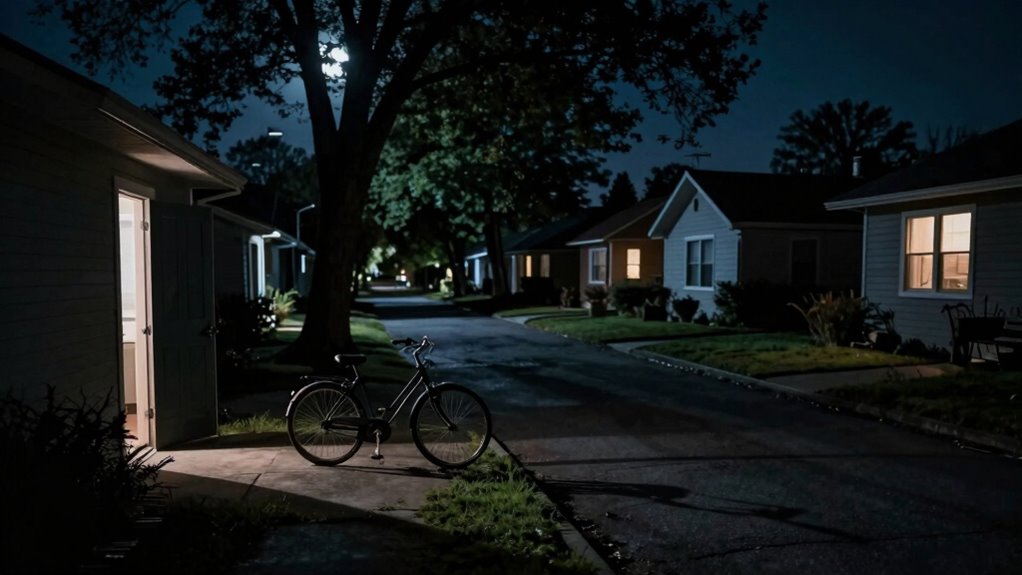
Thieves often choose midnight for break-ins because noise levels are lower, making it easier to avoid detection. With fewer people around, they have a better chance of slipping in and out unnoticed. Understanding these patterns can help you stay one step ahead of potential intruders. Additionally, awareness of best vacuums for dust removal can help maintain a clean and less inviting environment, discouraging criminal activity. Maintaining a well-kept property reduces the likelihood of attracting unwanted visitors by environmental considerations, which emphasize the importance of keeping the area tidy and secure. Proper lighting and property maintenance are also crucial in deterring break-ins during these quiet hours. Moreover, being aware of electric bike speed capabilities can inform residents about potential noise and activity levels that might attract or deter intruders during these hours. Incorporating security system features can further enhance safety during late-night hours and help alert you to any unusual activity.
Reduced Noise Levels
Since noise levels tend to drop considerably around midnight, thieves find it easier to carry out break-ins without attracting attention. Reduced noise pollution means fewer sounds that could alert neighbors or passersby. When your neighborhood quiets down, it becomes harder for anyone to notice suspicious activity. Thieves often rely on this lull in ambient noise to move undetected, knowing that muffled sounds make it harder for neighbors to hear or identify unusual behavior. Neighbor cooperation plays a crucial role here—if residents remain vigilant during these quiet hours, they can better spot and report suspicious activity. The quietness works in the thief’s favor, making it a strategic window for break-ins. Being aware of how noise levels impact security helps you stay alert and protect your home. Additionally, understanding neighborhood noise patterns can also help residents develop effective security strategies. Recognizing the importance of security awareness during these hours can further enhance neighborhood safety efforts. It’s also beneficial to consider community vigilance as a key factor in deterring potential intruders.
Lower Presence of People
Midnight hours see the fewest people on the streets, making it an ideal time for burglars to operate undetected. With fewer witnesses around, thieves feel safer targeting homes, especially vacant properties. During daytime activities, homes are more active, which deters break-ins because burglars prefer quiet, undisturbed environments. The table below highlights how activity levels influence burglar choices:
| Time of Day | Presence of People | Suitability for Break-Ins |
|---|---|---|
| Early Morning | Moderate | Less ideal |
| Midday | High | Least likely |
| Late Afternoon | Moderate | Less ideal |
| Evening | Increasing | Moderate |
| Midnight | Very Low | Most suitable |
Knowing this pattern helps you understand why thieves target these quiet hours.
How Can You Recognize the Signs of a Nighttime Break-In?
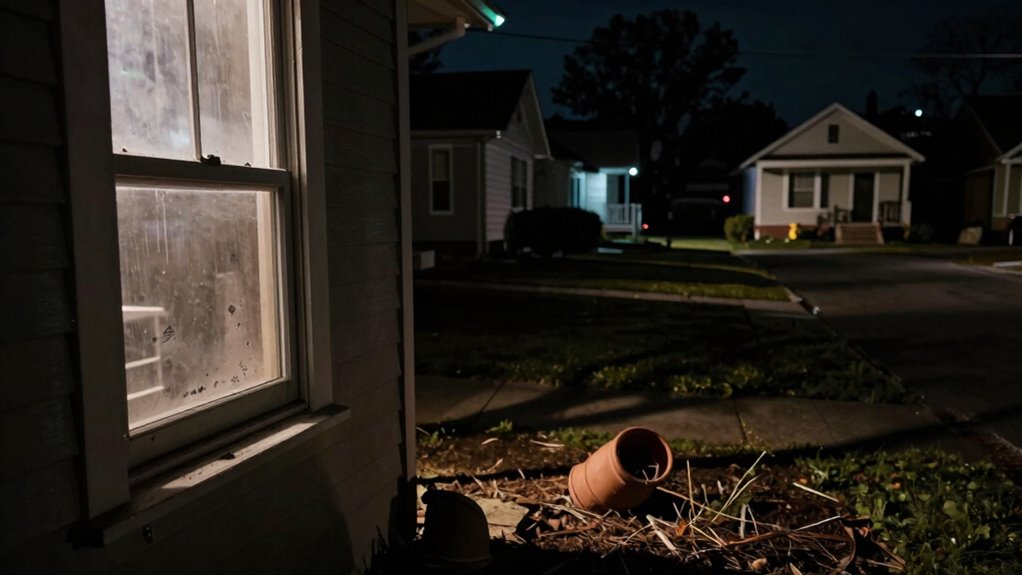
You should stay alert for unusual activity at night, such as unfamiliar people or strange movements around your home. Look for signs of forced entry, like damaged locks or broken windows, which could indicate a break-in. Also, listen for suspicious noises or notice any unfamiliar vehicles nearby—these are often warning signs that something’s amiss. Being aware of Rhythm Failure songs that evoke a sense of alertness can help you stay attentive to your surroundings during quiet hours. Additionally, understanding industry trends in home security can inform you about new alert systems or preventative measures, which may include advanced surveillance options or security protocols designed to deter intruders. Recognizing the importance of early warning systems can significantly improve your chances of preventing a break-in before it occurs. Staying informed about local crime patterns can further enhance your ability to recognize early signs of a break-in.
Unusual Activity at Night
Have you ever noticed strange movements or sounds during the quiet hours when everything else seems still? Unusual activity at night can be a warning sign of a break-in. Pay attention to any unfamiliar vehicles or people lurking around your neighborhood watch area, especially if they appear out of place or overly cautious. Listen for noises like footsteps, tools, or breaking glass when no one should be outside. Security patrols often increase during late hours, but if you see someone avoiding them or acting suspiciously near your home, trust your instincts. Keep an eye out for lights flickering or windows that seem tampered with. Recognizing these signs early can help you alert authorities before a break-in occurs, enhancing your home’s security.
Signs of Forced Entry
When someone forcibly enters your home, they often leave behind telltale signs that can be spotted if you know what to look for. Look for damaged door frames or broken locks, especially near entry points. Bent or scratched windows, shattered glass, or forced-open shutters are clear indicators. Pay attention to security signage—if it’s been tampered with or removed, it could be a sign someone was trying to avoid detection. Also, check if your neighborhood watch signs are missing or moved, which might suggest someone was trying to disable community alerts. If you notice any of these signs, investigate further and notify authorities promptly. Recognizing these physical clues is essential for identifying forced entries and can help you catch a break-in early and prevent future incidents. Being familiar with these break-in patterns increases your chances of quick detection and response. Additionally, understanding common entry point vulnerabilities helps in reinforcing your home’s defenses. Regularly inspecting your home for these signs can make a significant difference in early detection and deterrence.
Suspicious Noise or Vehicles
After spotting signs of forced entry, staying alert during nighttime hours becomes even more important. Suspicious noises or unfamiliar vehicles can be key indicators of a break-in. Pay attention to:
- Unusual sounds such as breaking glass, footsteps, or loud disturbances near your home.
- Vehicles parked in unusual locations or idling in your neighborhood, especially if they’re unfamiliar.
- Any activity that seems out of place, like people lurking around or moving stealthily.
Being aware of behavioral cues that suggest criminal activity can help you respond more effectively to potential threats. Recognizing the importance of outdoor security measures can further enhance your safety. Your neighborhood watch program and security patrols are there to help. Report any suspicious noise or vehicles immediately and stay vigilant. Recognizing these signs early can prevent a break-in or help authorities respond swiftly, protecting your home and neighbors.
What Are the Common Tactics Used During Quiet Hours?
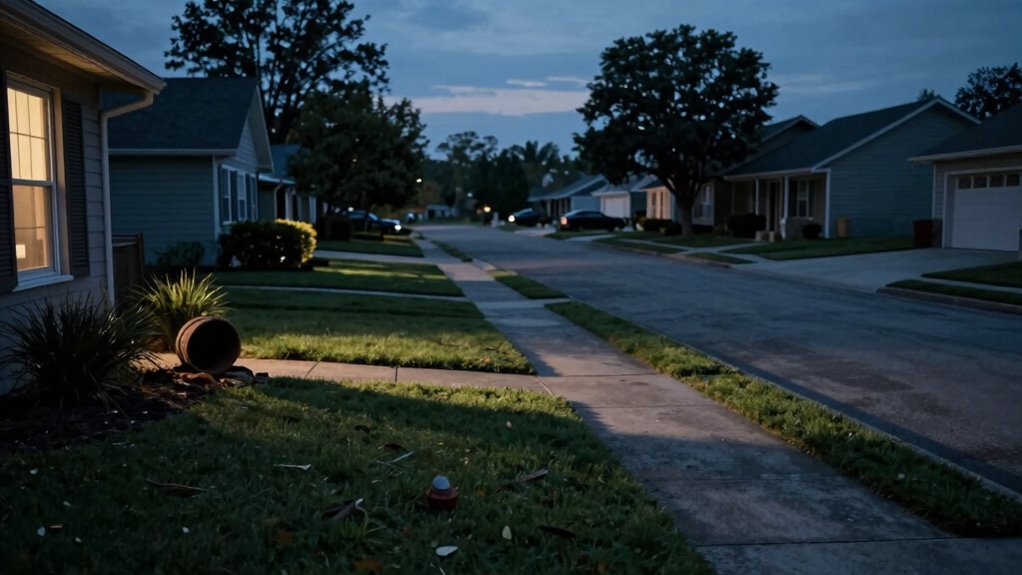
Criminals often take advantage of quiet hours to carry out their tactics unnoticed, knowing that fewer neighbors and law enforcement are actively observing. During these times, they might approach homes quietly, avoiding well-lit areas, and disable security systems to reduce the risk of detection. They often target homes with minimal security, relying on stealth rather than force. If you have a security system, they may attempt to tamper with sensors or cut wiring to prevent alarm response. Some burglars watch for signs of an alarm being triggered and wait for the right moment to strike, confident that law enforcement may take longer to respond at night. Staying vigilant and ensuring your security system is active and well-maintained can help deter these common tactics.
How Neighbors Can Help Spot Stealthy Break-Ins at Night
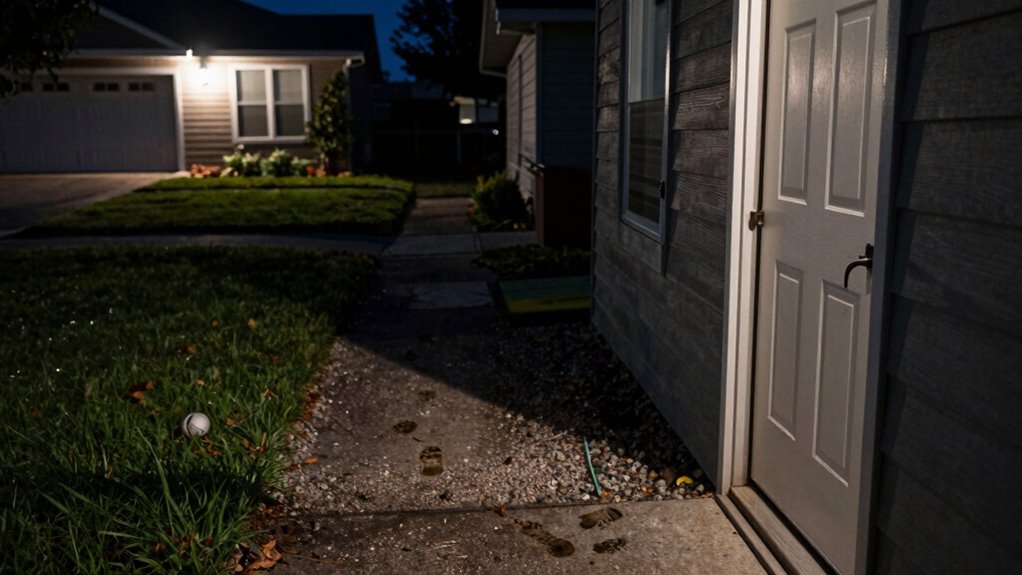
Neighbors play a essential role in spotting stealthy break-ins during the night, especially when criminals rely on silence and cover of darkness. Your vigilance can make a difference in alerting authorities and deterring intruders. Here are ways you can help:
- Observe unusual activity or unfamiliar vehicles around your neighborhood, especially late at night.
- Report suspicious individuals or behaviors, even if they seem harmless.
- Participate in neighborhood watch programs and support regular security patrols, which increase neighborhood visibility.
How to Secure Your Home During the Vulnerable Midnight Hours

To protect your home during the late-night hours, start by improving exterior lighting to eliminate dark spots. Installing security cameras can help you monitor activity and deter intruders, while limiting access points makes it harder for someone to find an entry. Taking these steps can substantially reduce your home’s vulnerability when most break-ins occur.
Enhance Exterior Lighting
Enhancing your exterior lighting is one of the most effective ways to deter break-ins during the quiet midnight hours. Proper lighting makes your home less inviting to intruders and increases visibility for neighbors and neighborhood watch groups. To maximize security, consider these steps:
- Install motion-activated lights around entry points and dark corners to surprise potential intruders.
- Keep your garden maintained, trimming bushes and trees that could serve as hiding spots.
- Coordinate with neighbors to ensure consistent lighting and report any suspicious activity promptly.
A well-lit home discourages unwanted visitors and helps neighbors monitor your property. Consistent outdoor lighting, combined with active neighborhood watch efforts, creates a safer environment during those vulnerable midnight hours.
Install Security Cameras
Installing security cameras is one of the most effective ways to monitor your property during the vulnerable midnight hours. With home automation, you can set cameras to turn on automatically when motion is detected, ensuring constant surveillance. Connecting cameras to a neighborhood watch network allows neighbors to stay informed and alert each other of suspicious activity. Choose cameras with night vision and remote access so you can monitor your property from anywhere. Position cameras at entry points and dark corners to cover blind spots. Regularly review footage and update your security system to stay ahead of potential intruders.
| Idea | Example |
|---|---|
| Automated alerts | Receive notifications when movement is detected |
| Night vision | Clear footage in low-light conditions |
| Remote access | View live feeds via smartphone |
| Strategic placement | Cover entry points and dark areas |
| Neighborhood watch | Share footage and alerts with neighbors |
Limit Access Points
Securing all access points is essential for protecting your home during the vulnerable midnight hours. Limit entry points by first inspecting your property. Consider these steps:
- Reinforce doors and windows, especially back and side entrances.
- Install sturdy garden fencing to deter unauthorized access.
- Coordinate with your neighborhood watch to keep an eye on suspicious activity around less visible exits.
How Can Technology Help Detect Quiet Hours Break-Ins?
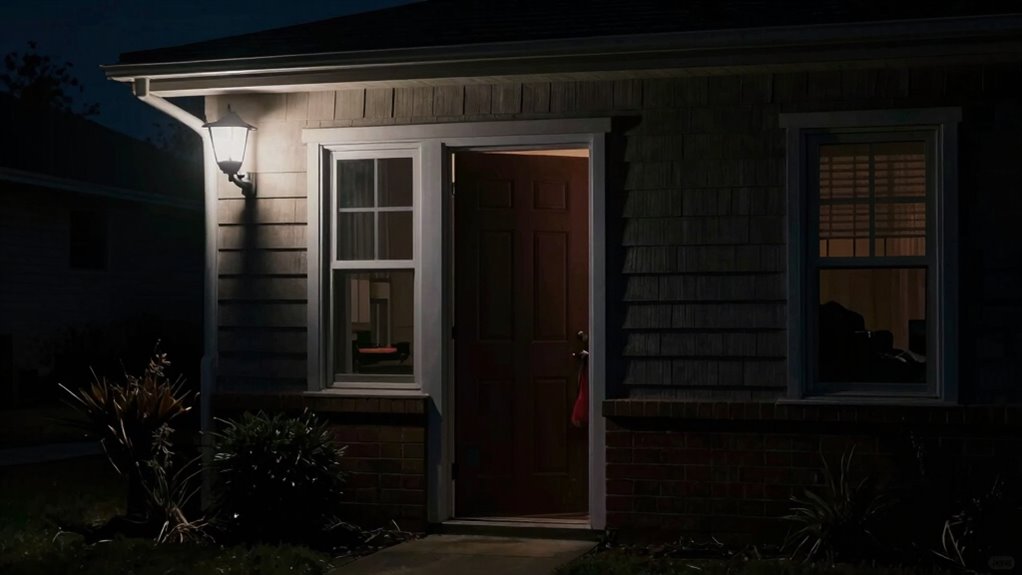
Technology offers powerful tools to detect quiet hours break-ins, even when neighbors aren’t awake or watching. A well-designed nighttime perimeter setup uses motion sensors and cameras to monitor activity around your property’s edges. Silent alarm systems can alert you instantly if a breach occurs, enabling quick response before the intruder has a chance to escape. Smart security cameras can distinguish between normal movement and suspicious activity, reducing false alarms. Integrated systems can automatically activate lights or notify authorities without your intervention. By deploying these technologies, you create a layered defense that detects unauthorized entry during quiet hours, even if no one is nearby to notice. This proactive approach minimizes the risk of undetected break-ins and keeps your home safer around the clock.
What Community Strategies Prevent Nighttime Burglaries?
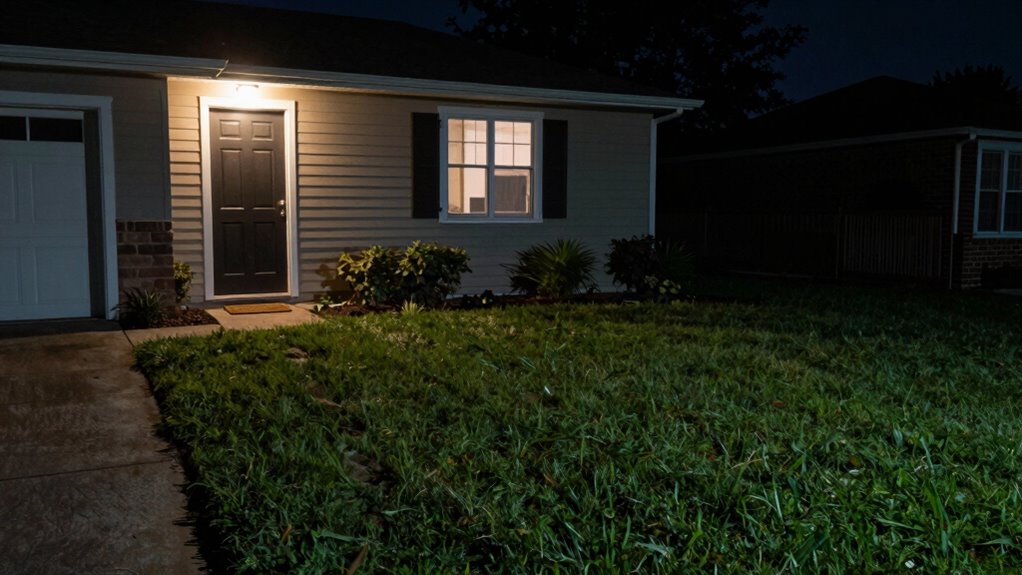
Community efforts can markedly reduce the risk of nighttime burglaries by fostering vigilance and coordinated action among neighbors. A strong neighborhood watch creates a network where everyone stays alert and reports suspicious activity promptly. To enhance home security, consider these strategies:
Community vigilance and neighborhood watch significantly lower nighttime burglary risks.
- Organize regular neighborhood watch meetings to share information and set patrol schedules.
- Encourage residents to install visible security measures like cameras, motion-activated lights, and sturdy locks.
- Promote communication channels, such as group texts or community apps, to quickly alert neighbors about any concerns or incidents.
Real-Life Examples of Quiet Hours Break-Ins and Lessons Learned
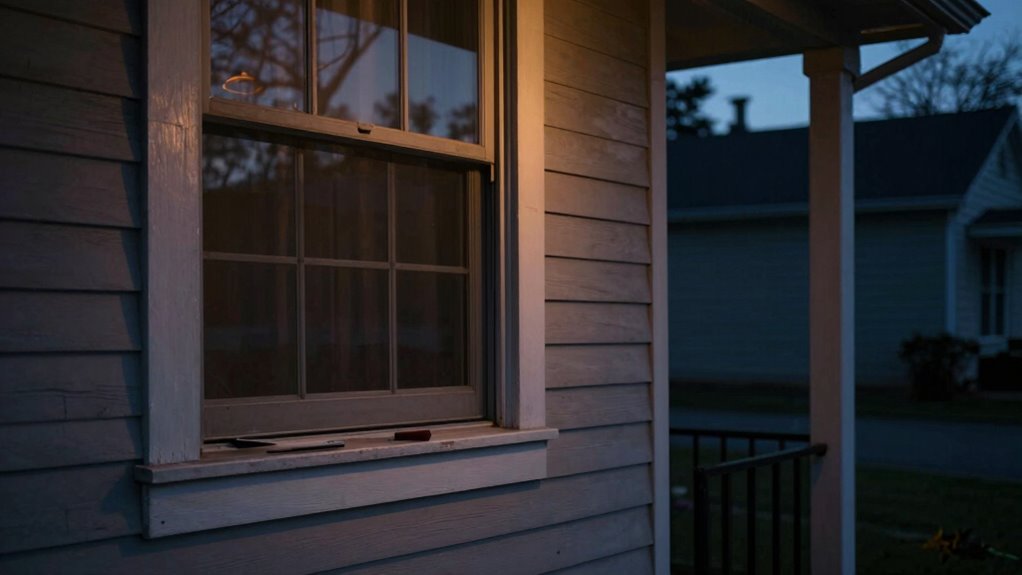
Despite the common belief that quiet hours are less risky for break-ins, real-life examples show thieves often exploit these periods when neighbors are most relaxed. In one case, burglars bypassed a basic alarm system, knowing neighbors weren’t vigilant, thanks to a poorly maintained neighborhood watch. Lessons learned include upgrading alarm systems with cameras and encouraging active neighborhood patrols. Thieves target homes with low visibility and minimal security, assuming they’re less protected during quiet hours. Here’s a quick look:
| Break-In Scenario | Key Lesson |
|---|---|
| Nighttime theft | Strengthen alarm systems |
| Ignored neighborhood watch | Increase community patrols |
| Easy access points | Secure all entry points |
| Unattended homes | Maintain alertness during quiet hours |
What Should You Do If You Suspect a Break-In Occurred at Night?
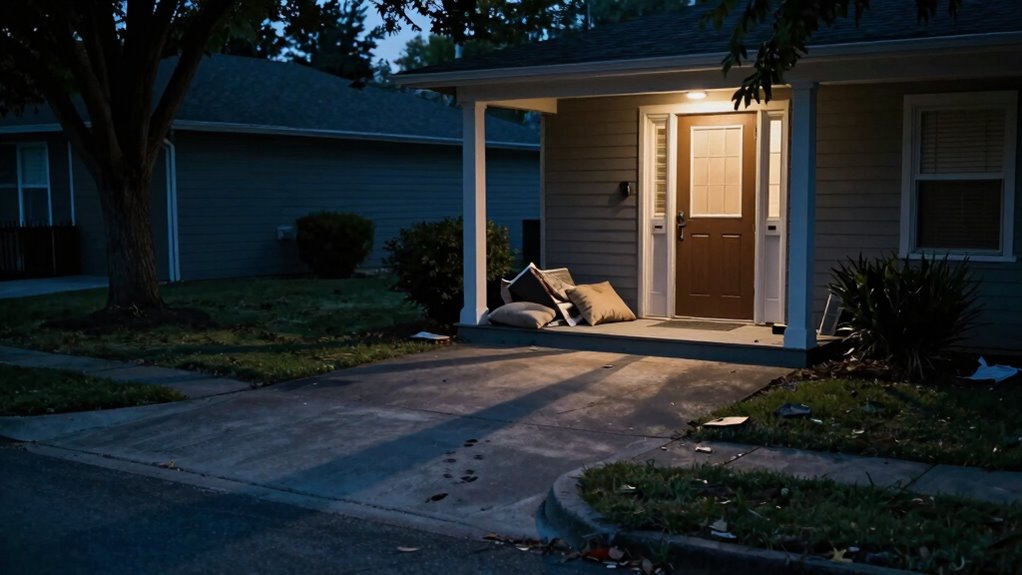
If you suspect a break-in has occurred overnight, act quickly and carefully to guarantee your safety and gather essential information. First, avoid entering your home if you notice signs of forced entry or suspect intruders inside. Instead, step outside and check your vulnerable windows and unlatched doors from a safe distance.
Next, follow these steps:
- Call the police immediately to report your suspicions.
- Do not touch or disturb anything inside your home to preserve evidence.
- Take photos of any visible damage or suspicious clues from outside.
Frequently Asked Questions
How Can I Differentiate Between Legitimate Nighttime Activity and a Break-In?
You can differentiate legitimate nighttime activity from a break-in by paying attention to your security camera placement, ensuring cameras cover entry points and dark spots. Look for unusual movements or unfamiliar faces, especially when neighborhood watch programs alert you. If you notice suspicious activity during quiet hours, report it immediately. Trust your instincts and review footage regularly to spot patterns or anomalies that indicate a break-in rather than normal nighttime activity.
What Specific Sounds or Behaviors Indicate a Stealthy Nighttime Intrusion?
Suspicious footsteps echoing quietly and an unusual silence can signal a stealthy intrusion. You might notice soft, deliberate movements, like cautious footsteps or rustling that seems out of place. Keep an ear out for irregular sounds, such as faint shuffling or the subtle creak of a door. These behaviors often indicate someone trying to avoid detection, so stay alert and trust your instincts when you sense something’s amiss.
Are Certain Neighborhood Layouts More Vulnerable During Quiet Hours?
Yes, certain neighborhood layouts are more vulnerable during quiet hours. If your area has high neighborhood density, intruders can blend in easily among many homes, making detection harder. Poor street lighting further increases risk, as it creates shadows and reduces visibility. Criminals exploit these factors, especially when streets are dimly lit and densely packed, allowing them to move discreetly and avoid detection during quiet hours.
How Effective Are DIY Security Measures Against Quiet Hours Break-Ins?
Did you know that over 60% of break-ins happen during quiet hours? DIY security measures can help, especially if you integrate home automation like smart locks and cameras. They act as visible deterrents and alert you instantly. Joining a neighborhood watch adds extra security, making it harder for intruders to succeed. While DIY solutions are useful, combining them with community efforts offers the best protection during quiet hours.
What Legal Steps Should I Take After Discovering a Quiet Hours Break-In?
If you discover a quiet hours break-in, you should contact the police immediately and document any vandalism or damage for vandalism prevention. Report the incident to your neighborhood watch to alert neighbors and enhance collective security. Consider installing security cameras or alarms to deter future break-ins. Stay vigilant and cooperate with law enforcement to ensure your safety, and work with neighbors to strengthen neighborhood watch efforts.
Conclusion
Nighttime break-ins, especially during quiet hours, often go unnoticed but pose significant risks. Did you know that 65% of burglaries happen between 10 PM and 4 AM? Staying vigilant, using technology, and building a strong community can help protect your neighborhood. By recognizing the signs and acting quickly, you can reduce your chances of falling victim to stealthy thieves. Remember, awareness and preparedness are your best defenses during those silent hours.