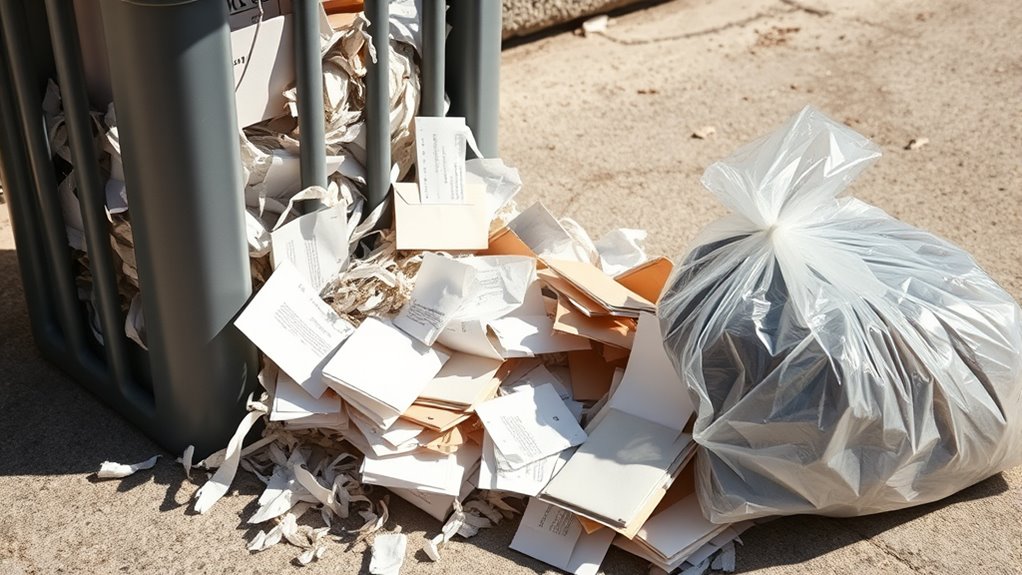

To prevent information leakage through trash and recycling, always segregate sensitive documents from regular waste and securely dispose of them using certified shredders or destruction services. Use locked containers for confidential materials and partner with trusted waste management providers to guarantee proper handling. Train your staff on proper disposal practices and regularly audit your processes. By taking these steps, you’ll better protect your organization’s data. Keep going to discover more ways to secure your trash and recycling.
Key Takeaways
- Segregate confidential documents from regular waste and use secure, clearly labeled disposal containers.
- Partner with certified waste management providers for secure collection and destruction of sensitive materials.
- Implement shredding or secure destruction methods for paper documents before disposal.
- Train staff on proper disposal procedures and the importance of safeguarding sensitive information.
- Regularly audit and monitor waste disposal processes to ensure compliance and prevent accidental leakage.

Have you ever wondered how sensitive information leaks despite your best security measures? It’s a common concern, especially when it comes to managing confidential waste. Even if you’ve invested in firewalls, encryption, and employee training, improper disposal methods can still expose your organization to risks. That’s why secure document disposal is vital. Properly destroying paper documents, digital media, and other sensitive materials prevents unauthorized access and misuse. Confidential waste management isn’t just about tossing items into the trash; it involves a systematic process that guarantees confidentiality at every step. When you handle waste correctly, you eliminate the chances of information falling into the wrong hands.
Proper disposal of sensitive materials is essential to prevent data leaks and protect your organization.
Many organizations overlook the importance of secure document disposal. Instead of shredding or securely disposing of sensitive materials, they might leave confidential documents lying around or place them in regular recycling bins. This careless approach creates opportunities for data breaches, identity theft, or corporate espionage. People with malicious intent can easily sift through trash to find valuable information. That’s why establishing clear policies for confidential waste management is essential. It involves segregating sensitive materials from general waste, using secure containers, and partnering with certified disposal services. When you implement these practices, you’re actively reducing the risk of information leakage through your trash.
Secure document disposal isn’t just about compliance; it’s about safeguarding your organization’s reputation and trust. You need to understand that every piece of paper with client data, financial records, or proprietary information could be a liability if not disposed of properly. Investing in shredders or secure bins ensures that sensitive documents are destroyed beyond recognition. Additionally, working with trusted waste management providers guarantees that the confidential waste is handled according to industry standards and legal requirements. By integrating these practices into your routine, you’re not only protecting your data but also demonstrating your commitment to privacy and security.
Confidential waste management should be a core part of your overall security strategy. It’s a proactive step that complements other measures like digital security protocols. Remember, even the most advanced cybersecurity tools are ineffective if your physical waste isn’t properly managed. Always train your staff on the importance of secure document disposal, and make sure they understand what materials require special handling. Regular audits and monitoring of your waste disposal processes help identify vulnerabilities and improve your protocols. When you treat waste management with the same seriousness as digital security, you greatly reduce the chances of accidental leaks and data breaches. Additionally, understanding the importance of wave and wind can help organizations recognize how environmental factors might affect the security of disposed materials. Ultimately, proper confidential waste management isn’t just about compliance; it’s about protecting your organization’s integrity and trust.
Frequently Asked Questions
How Can I Securely Shred Sensitive Documents Before Disposal?
You can securely shred sensitive documents by using a high-quality document shredder designed for confidential information. Make certain to shred all papers containing personal or financial details to prevent data leaks. After shredding, guarantee secure disposal by placing the shredded material in designated confidential waste bins or trusted recycling services. Regularly review your disposal process to maintain security and prevent unauthorized access to your private information.
Are There Legal Penalties for Improper Disposal of Confidential Information?
Yes, there are legal penalties for improperly disposing of confidential information. You could face legal consequences such as fines or sanctions if you neglect penalty enforcement for violating data protection laws. It’s essential to follow proper disposal procedures to avoid these risks. By ensuring your disposal methods comply with legal standards, you protect yourself and your organization from costly penalties and damage to your reputation.
What Types of Personal Data Are Most at Risk in Trash?
Think of your trash as a vault where secrets can slip out. The most at-risk personal data includes financial statements, medical records, and government IDs, which can be exploited if not properly disposed of. When you handle document disposal, you safeguard data privacy by shredding or securely destroying sensitive papers. Protect your identity by treating your trash like treasure—something valuable that needs careful guarding to prevent data breaches.
How Often Should Businesses Audit Their Trash for Information Leaks?
You should conduct trash audits at least quarterly to stay proactive in data protection. Regular trash audits help you identify and mitigate potential information leaks before sensitive data becomes accessible. By consistently reviewing your waste, you guarantee compliance with data privacy standards and reduce the risk of data breaches. Implementing these audits as part of your routine safeguards your business’s confidential information and maintains your reputation for strong data security.
Can Recycling Processes Compromise Confidential Information?
Recycling processes can compromise confidential information if proper document destruction isn’t followed. You should guarantee sensitive documents are shredded or securely disposed of before recycling. This helps protect data privacy and prevents unauthorized access. Implement strict policies for handling confidential materials, and train staff on secure disposal procedures. By doing so, you minimize the risk of information leaks and maintain your business’s integrity and compliance with privacy standards.
Conclusion
Remember, your trash isn’t just waste—it’s a window into your life. By properly shredding documents and recycling thoughtfully, you guard your privacy like a fortress. Think of your trash as a treasure chest—you hold the key to keeping your information safe. Don’t let careless disposal be the open door for identity thieves. Take control today, because safeguarding your personal data isn’t just smart; it’s essential. Protect your privacy—your future self will thank you.