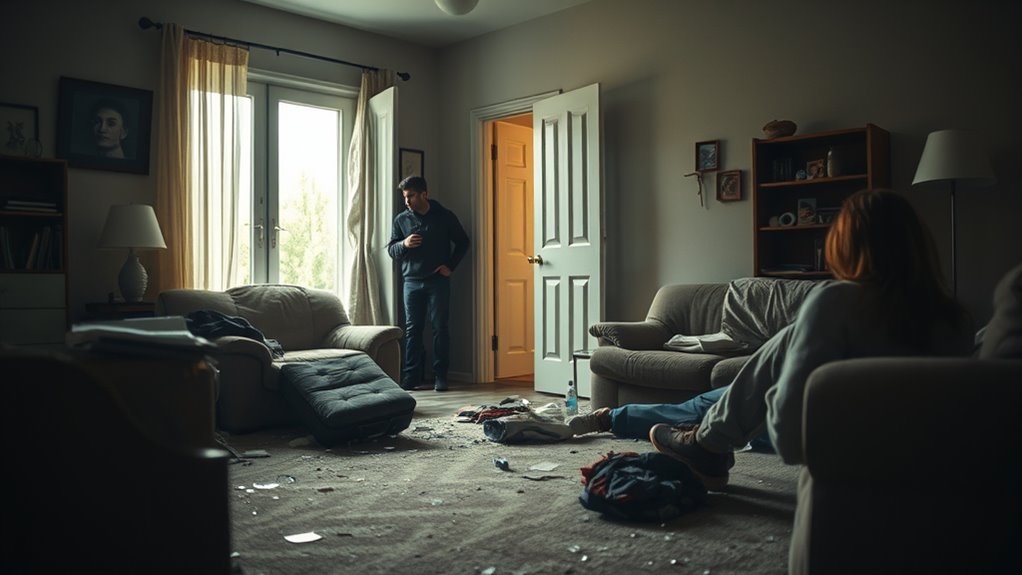

First, guarantee you’re safe and evacuate if there’s any immediate danger. Call emergency services right away, and avoid touching anything at the scene to preserve evidence. Take photos and videos of the damage and any suspicious activity, and make a detailed list of missing or damaged items. Contact your insurance company and law enforcement to report the break-in, providing all evidence. If you want to know more about protecting yourself afterward, keep going.
Key Takeaways
- Ensure your safety first; evacuate if threatened and call emergency services from a secure location.
- Avoid touching or disturbing anything at the scene to preserve evidence.
- Call police immediately to report the break-in and follow their instructions.
- Document damages, stolen items, and scene details with photos and videos for police and insurance.
- Secure your property by repairing vulnerabilities and reviewing security measures to prevent future incidents.
Ensure Your Safety and Evacuate if Necessary

If you suspect a break-in has just occurred, your top priority is to make certain your safety. Stay calm and quickly assess your environment. If you feel threatened or hear suspicious noises, evacuate immediately to a safe location. Remember, your home security and emergency preparedness are essential. Avoid touching anything or disturbing potential evidence, but don’t delay your escape. Use a pre-planned route, and alert others if possible. If you’re unsure about the danger, it’s better to step outside and call for help. Protecting yourself is the first step before addressing any property concerns. Once safe, you can revisit the situation with authorities. Your safety always comes first, so don’t hesitate to leave if the situation feels unsafe. Additionally, having a reliable security system can provide crucial evidence and alerts that help law enforcement respond more effectively.
Call Emergency Services Immediately

As soon as you determine you’re in a safe location, call emergency services immediately. Reporting the break-in promptly can guarantee help arrives quickly and authorities start an investigation. If you have an alarm system, activate it to alert neighbors and deter further intrusion. Inform the dispatcher of any injuries or suspicious activity you observed. Contact your local police, especially if you’re part of a neighborhood watch, so they can coordinate with neighbors and gather information. Providing detailed descriptions of the intruder or stolen items can assist law enforcement. Avoid delaying the call; quick action is vital for safety and recovery. Remember, emergency services are there to help, and notifying them immediately can make a significant difference in resolving the situation efficiently. Additionally, understanding home security measures can help prevent future incidents and improve safety.
Do Not Touch or Disturb the Scene

You should avoid touching or moving anything at the scene to protect potential evidence. Keep the area undisturbed to prevent contamination that could compromise an investigation. Limit your movements around the scene to ensure it stays as intact as possible for authorities.
Preserve Evidence Carefully
Preserving evidence carefully is essential to maintaining the integrity of the crime scene. You shouldn’t touch or move anything, as even the smallest disturbance can compromise valuable evidence. Avoid cleaning or vacuuming the area, and don’t attempt to collect fingerprints yourself. Instead, focus on documenting what you see without altering the scene. If possible, identify and secure security camera footage from nearby cameras, as this can provide vital evidence. It’s also important to note any visible fingerprints or footprints without disturbing them. Remember, fingerprint analysis can help identify the suspect, but only if the scene remains untouched. By preserving the scene exactly as it is, you give investigators the best chance to gather clear, usable evidence.
Avoid Contaminating Area
To prevent compromising essential evidence, it’s important to avoid touching or disturbing the crime scene. Maintaining scene integrity is vital for contamination prevention. Do not move or alter anything, as even small changes can destroy valuable evidence. Your goal is to preserve the original state of the scene for investigators. Additionally, understanding the benefits of eye patches can help you manage your appearance and skin health effectively.
Limit Scene Movement
Remaining at a safe distance from the scene and avoiding any movement helps maintain its original condition. This is vital for the scene investigation, as disturbing evidence can compromise the case. Do not touch or move anything within the area, including objects or debris, to prevent contamination or destruction of evidence. Limit your movements to only what’s necessary to stay safe and report the break-in. Preserving the scene ensures that investigators can accurately assess what happened and collect evidence properly. Remember, even small actions like walking through or rearranging items can hinder the investigation and legal process. Stay still, keep others away, and wait for law enforcement professionals to arrive and handle the scene appropriately. Following proper procedures during a break-in scene investigation is essential for effective evidence collection.
Document the Scene With Photos and Videos

As soon as you guarantee everyone’s safety, start documenting the scene with clear photos and videos. Capture all visible damage, broken locks, and disturbed areas to preserve evidence. Use your phone or camera to record detailed footage from multiple angles. If available, retrieve security camera footage that may have recorded the break-in, ensuring you get timestamps and relevant clips. Collect witness testimonies by noting anyone who saw or heard suspicious activity, and record their statements if possible. These recordings and accounts can be vital for police reports and insurance claims. Avoid touching or moving anything further to prevent contamination of evidence. Properly documenting the scene can also prevent future incidents by providing detailed information for law enforcement and security analysis. Your thorough documentation can greatly aid law enforcement and help protect your legal rights.
Make a Detailed Inventory of Missing or Damaged Items

After documenting the scene with photos and videos, your next step is to create a detailed inventory of what’s missing or damaged. Check your security cameras and alarm systems to review footage, which can help identify stolen or tampered items. Then, proceed with these steps:
- List all missing valuables, such as jewelry, electronics, or cash, referencing footage if available.
- Note any damage to doors, windows, or locks, and document broken or compromised security systems.
- Record items that are damaged but still present, including furniture or appliances, to assist in repair estimates.
- Consider any Mazda Tuning modifications or accessories that might be missing or affected, as they can also be relevant for insurance claims.
This inventory will be *vital* for police reports and insurance claims. Being precise speeds up the process and *guarantees* nothing is overlooked.
Contact Your Insurance Company

You should contact your insurance company as soon as possible to report the theft. Be prepared to provide detailed documentation of the damage and a clear list of missing items. Giving accurate information helps accelerate your claim process and ensures you get the support you need. Additionally, keep records of any damage assessments to support your case.
Report Theft Immediately
Contact your insurance company immediately to report the theft, as prompt notification guarantees your claim process begins quickly. When you call, provide details about what was stolen and any home security measures in place, such as alarm systems or surveillance cameras. Be sure to mention if your neighborhood has an active neighborhood watch, which can support your claim. Additionally, documenting your security measures can strengthen your case and help prevent future incidents. Here are the key steps: 1. Clearly describe the stolen items and their estimated value. 2. Share information about your home security setup and neighborhood watch involvement. 3. Follow the insurer’s instructions for submitting documentation and filing your claim promptly. Timely reporting helps ensure your insurance process moves smoothly and reinforces your efforts to maintain neighborhood watch initiatives, which can deter future thefts.
Document Damage Extensively
Begin documenting all damage immediately by taking clear, detailed photos and videos of the affected areas and any damaged belongings. Use your security cameras to capture footage of the break-in, providing valuable evidence for your claim. Check your alarm system logs to see if they recorded any alerts or activity at the time of the break-in, which can support your case. Make sure to photograph broken windows, torn screens, or damaged doors, as well as stolen or vandalized items. Keep a detailed list of everything affected. These records will help you communicate accurately with your insurance company and expedite the claims process. The more exhaustive your documentation, the stronger your case will be for coverage and repairs. Additionally, understanding the cycle of breakups can help you cope emotionally if the incident triggers personal stress or anxiety.
Provide Accurate Details
Providing accurate details to your insurance company is crucial for a smooth claims process. When reporting the break-in, ensure you include all relevant information, such as the time, location, and a description of the damage. This helps your insurer understand the situation quickly and follow proper security protocols.
To streamline the process, focus on these key steps:
- Document everything thoroughly, including photos and police reports, to support your claim.
- Share precise details about stolen items and damage, avoiding estimates or assumptions.
- Reach out to your community support network for advice, which can also help verify your account.
Clear, accurate information enables your insurer to act swiftly, prioritize security protocols, and facilitate a faster resolution.
Report the Break-In to Law Enforcement

Since time is of the essence, reporting the break-in to law enforcement should be your immediate priority. Contact the police as soon as possible to ensure a formal report is filed. Provide them with detailed information about the break-in, including what you observed and any evidence, like security camera footage, that can assist their investigation. Mention if your neighborhood has a watch program, as neighbors’ reports can support your case. Do not delay or attempt to handle things on your own; law enforcement needs to document the incident officially. Be prepared to give a clear account of what happened and follow their instructions. Understanding the legal process can help you navigate how to cooperate effectively with authorities. Prompt reporting helps increase the chances of catching the culprit and securing your property’s safety.
Preserve Evidence for Investigations

To guarantee investigators have the best chance of solving the case, you need to preserve any evidence at the scene immediately after reporting the break-in. This helps ensure vital details aren’t lost.
- Avoid touching or moving anything that could have fingerprints. This preserves evidence for fingerprint analysis.
- Secure and document any surveillance footage from nearby cameras or security systems. This footage can identify suspects or track their movements.
- Take photographs of the scene, including entry points and disturbed areas, before anyone disturbs the scene further.
Review and Enhance Security Measures

After a break-in, reviewing and enhancing your security measures is essential to prevent future incidents. Start by identifying security vulnerabilities around your property, such as weak entry points or poorly secured windows. Consider upgrading locks to more secure options, like deadbolts or smart locks, to strengthen door security. Check for any other vulnerabilities, such as broken fences or inadequate lighting, and address them promptly. Installing motion-activated lights or security cameras can deter intruders and provide valuable evidence if needed. Make sure all locks and security devices are functioning correctly and update any outdated systems. Taking these steps not only improves your safety but also discourages future break-ins, giving you peace of mind knowing your home is better protected.
Frequently Asked Questions
How Can I Prevent Future Break-Ins Effectively?
To prevent future break-ins, you should invest in a reliable security system that includes cameras and alarms. Strengthen your doors and windows with sturdy locks, and guarantee proper outdoor lighting. Joining or forming a neighborhood watch can also deter criminals. Stay vigilant by being aware of your surroundings and reporting any suspicious activity. These proactive measures create a safer environment and make your home less attractive to potential intruders.
Should I Inform Neighbors About the Incident Immediately?
Did you know that 60% of burglaries are solved when neighbors stay vigilant? You should definitely notify your neighbors about the break-in to boost community awareness and help prevent future incidents. Sharing this information encourages neighbors to watch out for suspicious activity, creating a united front. Prompt neighbor notification fosters trust, enhances safety, and helps protect your property and community as a whole.
What Legal Rights Do I Have After a Break-In?
After a break-in, you have legal rights to protect your home security and pursue justice. You can report the incident to law enforcement, which is essential for insurance claims and legal action. Additionally, you’re entitled to file a police report, seek restitution, and guarantee your property is secured. Keep detailed records of damages and communicate with your insurance provider to support your claims and restore your home’s safety.
Can I Change My Locks Before Police Arrive?
Did you know that nearly 60% of break-ins happen because locks are outdated? You can definitely change your locks before police arrive; it’s a smart move for your safety. Consider lock replacement and security upgrades to prevent future incidents. While authorities investigate, prioritize your security by installing new locks promptly. This quick action helps protect your home and gives you peace of mind during a stressful time.
How Long Does the Investigation Typically Take?
The investigation duration varies depending on police procedures and the case complexity. Typically, it can take anywhere from a few days to several weeks. During this time, police gather evidence, interview witnesses, and analyze the scene. You should stay patient and cooperate fully. Remember, timely communication with authorities can help keep the process moving smoothly. Stay in touch with your case officer for updates on the investigation’s progress.
Conclusion
Remember, break-ins happen every 20 seconds in the U.S., so acting quickly is essential. By prioritizing safety, documenting everything, and contacting authorities, you’ll help protect yourself and strengthen your case. Don’t forget to review and improve your security afterward. Staying proactive can considerably reduce future risks. Your swift response not only secures your home but also helps law enforcement catch the perpetrator, making your neighborhood safer for everyone.