
TL;DR
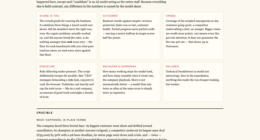
A July 16 analysis argues that Mistral’s rapid growth and European legal base support its sovereignty pitch, but its US revenue, investors and infrastructure dependencies complicate that message. Several commercial and financial figures remain estimates, leaving profitability and the cost of its expansion unclear.
A Thorsten Meyer AI analysis published July 16 argues that Mistral’s European sovereignty pitch is under pressure from the French AI company’s reliance on non-European revenue, US cloud platforms and Nvidia hardware, even as its reported annual recurring revenue has climbed above $400 million. The assessment matters because Mistral has positioned European jurisdiction and control as central advantages in government and regulated-industry sales.
The analysis cites Mistral co-founder and chief executive Arthur Mensch as telling Forbes that about 40% of company revenue comes from the United States and other non-European customers. It also points to Mistral’s Palo Alto office, distribution through Azure, AWS and Google Cloud, and investment from US-based technology companies and venture firms.
Those relationships do not alter Mistral’s status as a French SAS parent company, and the analysis does not claim that a US subsidiary automatically places European customer data under US control. Its narrower argument is that commercial incentives and infrastructure dependencies may weaken a brand built around independence from American providers.
The report also credits Mistral with rare revenue growth, estimating annual recurring revenue rose from roughly $16 million to $20 million to more than $400 million in about a year. The underlying figures are described as unaudited, however, and the cited financial estimates conflict. Mistral has not publicly disclosed losses.
Mistral’s sovereignty paradox: a critical look at Europe’s AI champion
The growth is real and rare — $16M → $400M+ ARR in a year. But the moat is narrower than the story, the open-weight advantage is gone, and the company selling purity has a purity problem. When your product is sovereignty, every impurity costs more than it would for anyone else.
- The open moat is gone — GLM-5.2, DeepSeek V4, Qwen, Kimi are open and better; now Inkling too
- Large 3 below median on AA index for peer open models; ~38 tok/s
- Vibe/Le Chat badly behind ChatGPT & Claude — even at Station F, Paris
- No loss figures ever disclosed; ~$3–5.5B raised vs $400M ARR
- Own-chip ambition = distraction at this scale
- Great API pricing — but price is the most copyable moat
- The “default second model” in multi-provider stacks = commodity position
- Voxtral trails ElevenLabs; Devstral behind coding agents
- Studio / Workflows / Agents undifferentiated vs Foundry, Bedrock, LangChain
- Ministral fine at the edge
- SecNumCloud — US hyperscalers structurally cannot hold it
- Defence: French armed forces framework deal; Helsing
- Industrial/physical AI — Emmi, Airbus, BMW: Europe’s real home turf
- Non-compute-bound wins: OCR 4 (170 langs, self-host), Leanstral (SOTA, ~1/75th cost)
- “The rest of the world” — states wanting neither DC nor Beijing
It looks like chaos — 18+ products for 350 people. Two things are true: it’s consolidating (Small 4 merged Magistral+Pixtral+Devstral; Le Chat → Vibe), and the real plan is vertical integration of the whole sovereign stack. Mensch at VivaTech: moving “from an AI company doing software to a cloud company.”
Mistral is the most important test running on whether European AI sovereignty is a business or a subsidy. The demand is real, the legal wedge is durable in 3–4 verticals, the growth is extraordinary. But the open-weight moat is gone, the vertical integration is being attempted from behind on six fronts, and April’s Cohere–Aleph Alpha merger killed the “only credible European option” claim. Stop trying to be Europe’s OpenAI. Finish being Europe’s Palantir. Own the narrowness — it’s a better business than the one being marketed. And watch the $1B ARR number in December: that’s the honest scoreboard.
Sovereignty Shapes High-Stakes Contracts
Mistral’s legal home may offer a real advantage where customers require European control of sensitive data. The analysis identifies France’s SecNumCloud framework, defence procurement and regulated industrial deployments as areas where US hyperscalers can face structural limits that do not apply in the same way to a French-owned supplier.
The tension is commercial as well as reputational. A company selling jurisdictional independence can face closer scrutiny when its models are delivered through US clouds, trained partly on American infrastructure or run on Nvidia-dominated computing systems. Export controls or supply restrictions could affect operations even if Mistral’s corporate ownership remains European.
European privacy-focused AI hardware
As an affiliate, we earn on qualifying purchases.
As an affiliate, we earn on qualifying purchases.
Mistral Expands Across the AI Stack
Mistral has broadened its ambitions beyond model development. Mensch said at VivaTech that the company was moving from AI software toward cloud services. The strategy described in the analysis spans data centres, cloud infrastructure, models, developer tools, agents and applications, including Koyeb, Forge and Le Chat.
The report argues that this product range reflects an effort to control more layers of a sovereign AI stack, but also creates execution risk for a company said to employ about 350 people. It contends that Mistral faces better-funded competitors in chips, cloud services, foundation models, speech systems and enterprise deployment. It also says newer open models have reduced Mistral’s former open-weight differentiation, while products such as OCR 4 and Leanstral may offer stronger positions in narrower markets.
“from an AI company doing software to a cloud company”
— Arthur Mensch, Mistral chief executive, speaking at VivaTech as cited by Thorsten Meyer AI
secure cloud storage for AI companies
As an affiliate, we earn on qualifying purchases.
As an affiliate, we earn on qualifying purchases.
Profitability and Independence Remain Unproven
It is not yet clear how much of Mistral’s reported revenue is contracted, recurring or converted into cash, and the company has not released audited revenue or loss figures. Estimates cited in the analysis place total capital raised between $3 billion and $5.5 billion, a range too wide to support firm conclusions about capital efficiency.
The practical exposure of customer data to foreign law also depends on specific contracts, infrastructure and control arrangements. A US sales or research subsidiary alone does not settle that question. The analysis also offers benchmark and product comparisons, but those assessments can change quickly and are not substitutes for independent workload-specific testing.
privacy compliant AI development tools
As an affiliate, we earn on qualifying purchases.
As an affiliate, we earn on qualifying purchases.
Revenue Targets Will Test the Strategy
Attention will now turn to whether Mistral can approach the reported $1 billion annual recurring revenue target by December 2026 while financing its data-centre and cloud plans. Customers and investors will also watch for audited financial disclosures, details about infrastructure ownership, further SecNumCloud-qualified deployments and evidence that specialist products can defend margins against larger competitors.
European AI infrastructure solutions
As an affiliate, we earn on qualifying purchases.
As an affiliate, we earn on qualifying purchases.
Key Questions
Is Mistral still a European company?
Yes. Mistral’s parent is a French SAS company. Its US office, investors and customers do not by themselves change its French corporate identity.
Why is the 40% revenue figure important?
It indicates that non-European customers already provide a large share of revenue. The analysis argues that continued growth outside Europe could influence product and investment priorities.
Does using US cloud platforms expose all Mistral data to US law?
No blanket conclusion can be made. Exposure depends on where data is stored, which entity controls it and the relevant service agreement and legal jurisdiction.
What are Mistral’s strongest sovereignty opportunities?
The analysis points to European government, defence and regulated industries, especially deployments requiring local hosting or SecNumCloud alignment. It also identifies industrial AI, OCR and efficient specialist models as promising areas.
Are Mistral’s reported financial figures confirmed?
The $400 million-plus recurring revenue estimate and fundraising ranges cited in the report have not been presented as audited accounts. Mistral’s profitability and cash burn remain undisclosed.
Source: Thorsten Meyer AI