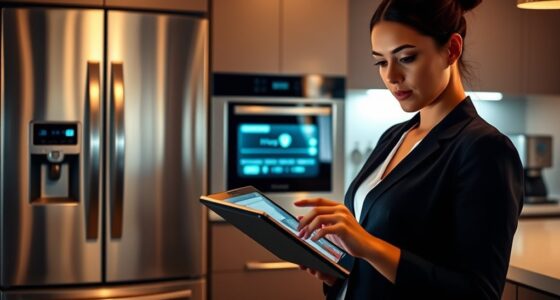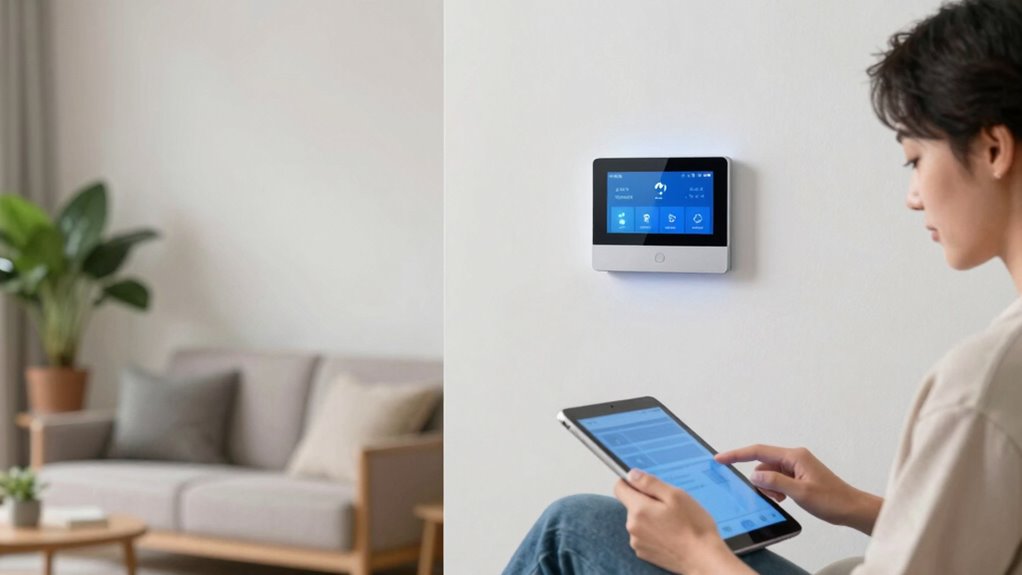
To cut smart home risks quickly, make it a habit to check for firmware and software updates weekly. Set automatic updates when possible and respond promptly to notifications. Regularly updating your devices boosts security by fixing vulnerabilities, improves performance, and guarantees compatibility with new features. This routine helps prevent security breaches and device malfunctions. Staying proactive in this way creates a safer, more reliable smart home environment—you’ll discover key tips that make this even easier as you continue, so keep going.
Key Takeaways
- Schedule weekly automatic updates to ensure devices stay current and protected against vulnerabilities.
- Enable automatic update settings on all smart devices to reduce manual effort and minimize delays.
- Set regular reminders to verify that updates have been successfully installed.
- Stay informed about security threats to prioritize urgent updates promptly.
- Maintain a consistent update routine to prevent device malfunctions and enhance overall security.
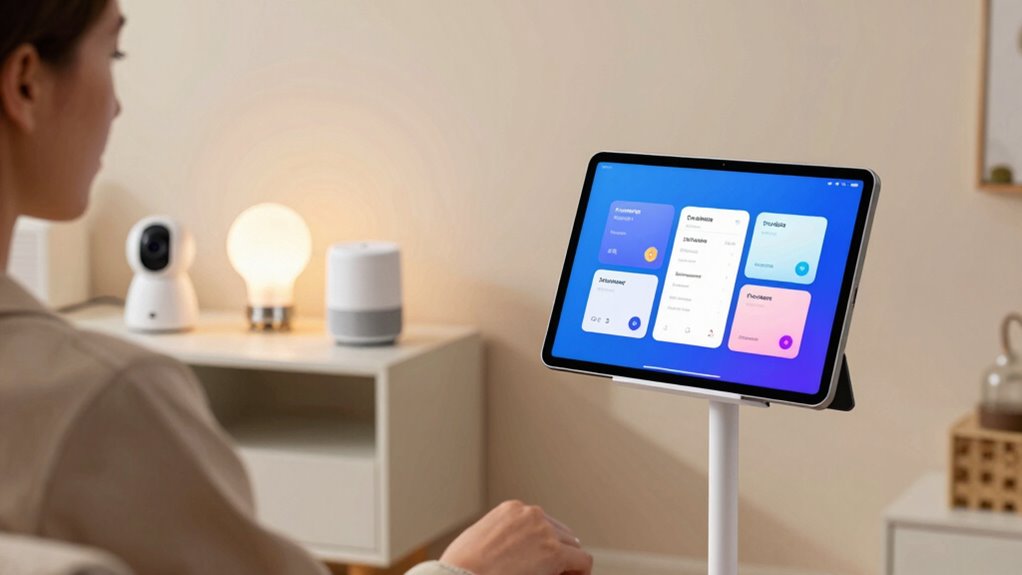
In today’s fast-evolving world, staying updated with your smart home devices is more important than ever. Technology advances rapidly, and if you don’t keep your devices current, you risk vulnerabilities that could compromise your security. Regular updates are your first line of defense, helping prevent potential breaches and ensuring everything runs smoothly. One of the easiest ways to stay on top of these updates is to establish a habit of checking for firmware and software updates weekly. Many smart devices, like thermostats, security cameras, and voice assistants, automatically notify you when updates are available, but it’s your responsibility to act on those alerts promptly. This habit reduces the chance of outdated software being exploited by hackers. Developing this routine also promotes biodiversity and conservation, as secure smart devices can better support eco-friendly automation and energy-saving practices in your home. Additionally, keeping your devices current helps maintain their longevity, saving you money on replacements and repairs over time. Moreover, regularly updating your devices can improve overall device performance and stability, which is crucial for a seamless smart home experience. Implementing voice control as part of your daily routine can also enhance your home’s safety. When your smart devices are updated regularly, voice commands become more reliable, allowing you to control lights, locks, or even the garage door instantly. This not only adds convenience but also minimizes the need to physically interact with devices, which can be risky if you’re distracted or unable to respond in an emergency. Properly maintained voice control systems can help you respond faster to situations such as a fire alarm or an intruder, providing peace of mind. Plus, when your devices are up-to-date, they perform more efficiently, which directly impacts your home’s energy efficiency. You’ll notice that your smart thermostat adjusts more accurately, and your lighting system responds seamlessly to commands, helping you save on energy bills. Making updates a part of your routine also ensures compatibility with new features and integrations. As smart home technology evolves, manufacturers release updates that add functionalities or improve security. If you delay these updates, you might miss out on valuable features that could enhance your home’s comfort and safety. Setting a weekly reminder to check for updates, or automating updates where possible, makes this process effortless. This habit keeps your entire ecosystem synchronized, reducing the risk of devices malfunctioning or becoming obsolete. Staying informed about latest security threats can also help you recognize when urgent updates are needed to protect your smart home environment. Regularly educating yourself about emerging vulnerabilities can empower you to respond swiftly and effectively. Developing a habit of regular device maintenance not only extends the lifespan of your technology but also helps identify potential issues early before they escalate. In addition, understanding security vulnerabilities can guide you in choosing the most robust protection measures for your smart home. In essence, developing the smart home update habit isn’t just about keeping things current; it’s about actively reducing vulnerabilities and optimizing device performance. When you stay proactive, your smart home becomes a safer, more energy-efficient space. You’ll enjoy the convenience of reliable voice control and the confidence that your devices are protected against emerging threats. This simple yet consistent practice transforms your smart home from a passive setup into a resilient, efficient environment that adapts swiftly to technological advances.
smart home device firmware update kit
As an affiliate, we earn on qualifying purchases.
As an affiliate, we earn on qualifying purchases.
Frequently Asked Questions
How Often Should I Update My Smart Home Devices?
You should update your smart home devices at least once a month to guarantee device compatibility and security. Regular updates fix vulnerabilities, enhance performance, and keep everything running smoothly. Some devices may require more frequent updates, especially if security patches are released. Check your device manufacturer’s guidelines for recommended update frequency, and enable automatic updates when possible to stay protected without hassle. Staying vigilant helps cut risks fast.
What Are Common Security Risks With Smart Home Updates?
Ever wonder what could go wrong if your smart home updates aren’t secure? You risk exposing encryption flaws that hackers can exploit, leading to unauthorized access. These vulnerabilities may allow intruders to control your devices or steal personal data. To minimize this, always update firmware promptly, use strong passwords, and enable encryption. Staying vigilant helps protect your smart home from potential security risks and keeps your connected environment safe.
Do Updates Improve Device Performance or Just Security?
Updates improve both device performance and security. Regular updates enhance device compatibility, making certain your smart home devices work smoothly together. They also fix bugs and optimize functionality, which boosts performance. By maintaining an appropriate update frequency, you guarantee your devices stay secure and perform well over time. Skipping updates can lead to slower performance and increased vulnerability, so stay consistent to keep your smart home running efficiently and safely.
Can Outdated Devices Be Integrated Into Current Smart Home Systems?
About 60% of smart home devices become outdated within three years, but you can still integrate them. Legacy integration is possible, but you might face compatibility challenges, especially with newer systems. To minimize issues, check if your devices support common protocols like Zigbee or Z-Wave, and consider using a smart hub. This way, you extend your device lifespan and keep your smart home running smoothly.
What Should I Do if an Update Causes Issues?
If an update causes issues, first consider performing a firmware rollback to restore the device to its previous stable state. Next, check if the update was scheduled properly; reschedule updates during times when troubleshooting is easier. Contact customer support if problems persist. Regularly review update notes before installing, and always back up your settings to prevent data loss, ensuring your smart home stays secure and functional.
automatic smart device update hub
As an affiliate, we earn on qualifying purchases.
As an affiliate, we earn on qualifying purchases.
Conclusion
By making regular updates to your smart home, you’re not just staying ahead of hackers—you’re building an impenetrable fortress around your life. Skipping updates is like leaving your door wide open in a storm; it invites chaos and danger. Embrace the habit of quick updates, and you’ll safeguard your sanctuary with the speed of lightning. Remember, in the digital age, a simple habit can be your ultimate shield—don’t let your smart home become someone else’s playground.
smart home security camera with firmware updates
As an affiliate, we earn on qualifying purchases.
As an affiliate, we earn on qualifying purchases.
voice assistant compatible with smart home updates
As an affiliate, we earn on qualifying purchases.
As an affiliate, we earn on qualifying purchases.