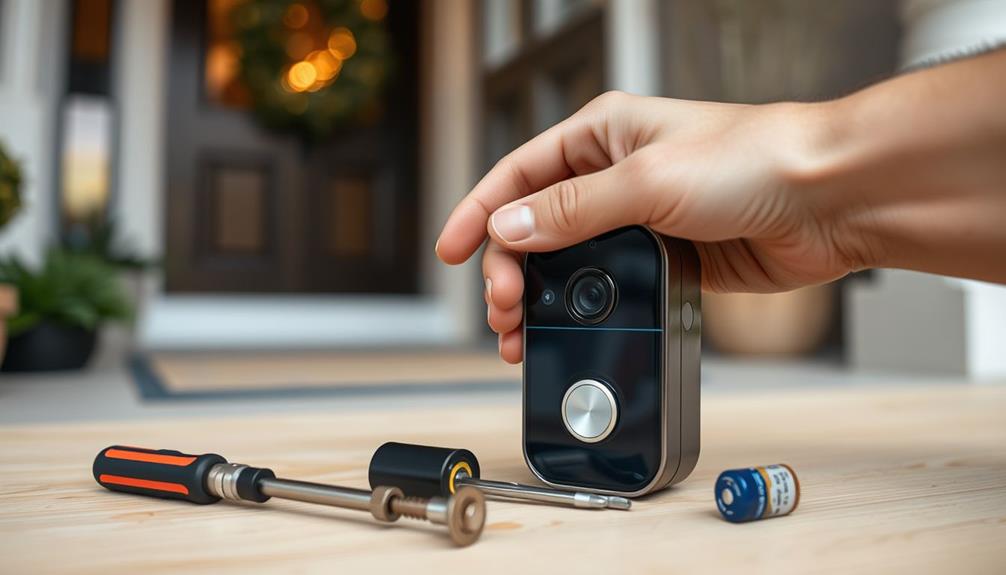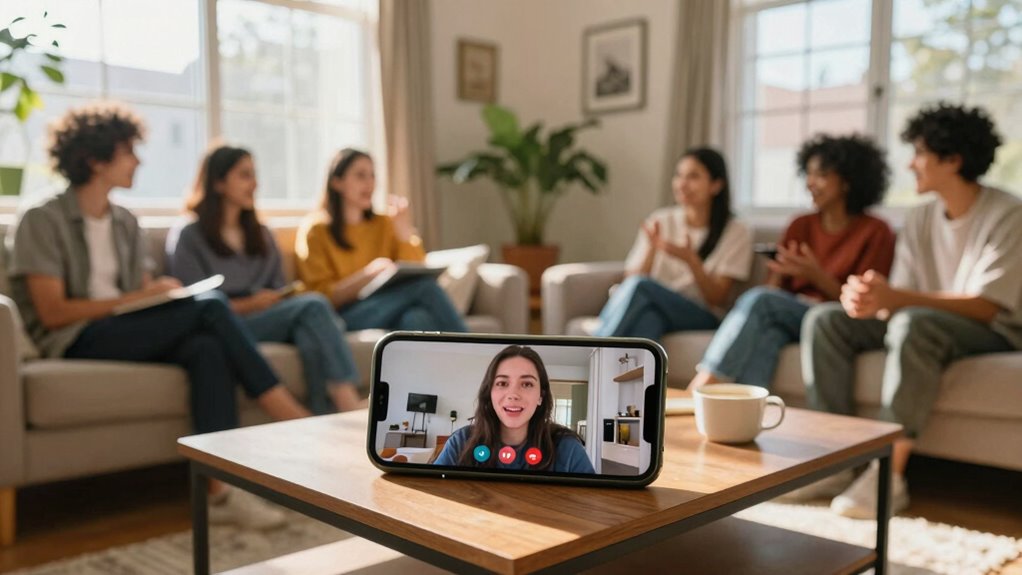
In shared households, clear camera communication helps you avoid misunderstandings, protect everyone’s privacy, and build trust. When you establish rules, everyone knows where cameras are placed and how footage is shared. Open conversations prevent discomfort and conflicts, ensuring all housemates feel respected. Setting these boundaries early keeps your home safe and harmonious. If you want to learn more about creating effective camera rules and maintaining peace, keep exploring the key ways to improve communication.
Key Takeaways
- Clear communication prevents misunderstandings and respects privacy in shared living spaces.
- Establishing rules about camera placement and footage sharing builds trust among housemates.
- Defining privacy boundaries ensures sensitive areas remain camera-free, maintaining comfort.
- Open dialogue helps resolve conflicts early and adapt rules as needed.
- Well-defined protocols promote a respectful, secure, and harmonious household environment.
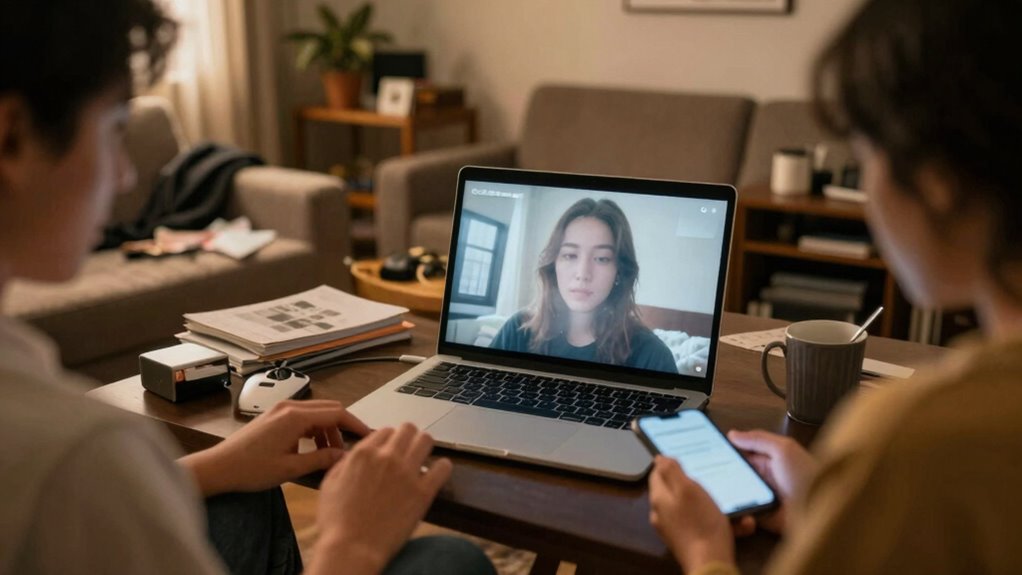
Living in a shared household often means coordinating multiple schedules and respecting each other’s privacy, especially when it comes to using cameras. Cameras can be helpful for security or keeping an eye on shared spaces, but they also pose risks to personal privacy boundaries. Without clear rules, misunderstandings can quickly develop, leading to discomfort or even conflict. That’s why establishing better camera communication rules is essential. You need to openly discuss how and when cameras should be used, so everyone feels safe and respected. Clear communication helps set expectations, prevents accidental privacy violations, and creates a more harmonious living environment.
In shared living situations, privacy boundaries aren’t just personal preferences—they’re fundamental to maintaining trust. When someone feels their private space is invaded, it can cause tension and mistrust. You should agree on which areas can be monitored and which are off-limits. For instance, bedrooms or bathrooms should typically be camera-free zones, unless everyone consents. Respecting these boundaries requires transparency; everyone needs to understand how cameras are used and what footage is stored or shared. This transparency can be supported by implementing security protocols, which can further help manage how footage is accessed and stored, reinforcing trust among housemates.
Furthermore, good camera communication rules support conflict resolution. When disputes arise, clear rules give everyone a framework to address concerns calmly and constructively. If someone feels uneasy about a camera’s placement or use, you can have an open conversation based on previously agreed-upon boundaries. This proactive approach can nip conflicts in the bud before they escalate, avoiding resentment and fostering mutual respect. When everyone understands the purpose and limits of camera use, it becomes easier to find compromises and solutions that work for all housemates.
You should also establish protocols for resolving conflicts related to camera use. If a disagreement occurs, approach it with openness and a willingness to listen. Revisit your shared rules and adjust them if needed. Remember, conflict resolution isn’t about winning; it’s about finding a middle ground that respects everyone’s privacy and security. Regularly check in with housemates about how they feel regarding the cameras. This ongoing dialogue keeps everyone aligned and encourages a cooperative atmosphere. Additionally, understanding privacy boundaries helps everyone feel more secure and respected within the living environment.
In the end, better camera communication rules aren’t just about technology—they’re about creating a living space where privacy is respected and conflicts are managed thoughtfully. When everyone knows what to expect and feels heard, your shared household becomes a more comfortable, trusting environment. Clear boundaries and open discussions empower all housemates to feel safe without feeling surveilled, making your shared home a happier, more respectful place to live.

GNCC 2K Security Cameras 4pcs, Home Security Camera Indoor with 360° Motion Detection for Pets/Baby/Dog, Two-Way Audio, Night Vision, 24/7 SD Card Storage, Cloud Storage, Compatible with Alexa
【2K & Night Vision】: GNCC Security Camera Indoor comes with 2K FHD quality video and images. You can…
As an affiliate, we earn on qualifying purchases.
As an affiliate, we earn on qualifying purchases.
Frequently Asked Questions
How Do Camera Rules Differ Between Cultural Households?
You’ll notice camera rules vary because of cultural norms and privacy expectations. In some households, constant camera use is seen as a sign of trust and openness, while others prioritize respecting personal boundaries. You should always consider these differences and communicate openly about camera use. Respecting each household’s cultural norms helps avoid misunderstandings, ensuring everyone feels comfortable and their privacy is protected. Clear rules foster better communication and harmony.
What Legal Rights Do Roommates Have Over Shared Camera Footage?
You have a say in shared camera footage, especially regarding privacy concerns. Roommates generally possess rights over footage captured in common areas, but these rights hinge on consent requirements. It’s essential to discuss and agree on camera use upfront, ensuring everyone’s comfort. Legally, you can request access or ask for footage to maintain trust, but violating privacy rights or without proper consent can lead to complications. Clear communication fosters mutual respect and legal clarity.
How Can Conflicts Over Camera Use Be Professionally Resolved?
To resolve conflicts over camera use professionally, you should establish clear camera etiquette rules and communicate openly with your housemates. Listen to each other’s concerns and find common ground. Use conflict resolution techniques like mediation to address issues calmly. Setting boundaries and agreed-upon guidelines guarantees everyone feels respected and safe, preventing misunderstandings and fostering a harmonious living environment.
Are There Privacy Laws Specific to Shared Household Cameras?
Imagine a 90s dial-up modem connecting your shared household cameras—privacy concerns are real. Laws vary by location, but many address footage ownership and privacy rights, emphasizing consent and data security. You should verify local regulations, as some regions have specific laws protecting residents from unwarranted surveillance. Being aware of these laws helps you navigate privacy concerns responsibly and ensures everyone understands how footage is used and owned.
How Do Camera Rules Impact Household Trust and Relationships?
Camera rules profoundly influence trust dynamics in shared households. When you set clear privacy boundaries, everyone feels respected, which fosters open communication and strengthens relationships. Conversely, vague or strict rules can create suspicion, eroding trust. By establishing transparent guidelines on camera use, you guarantee household members feel secure and valued, helping maintain a positive environment where privacy is respected, and trust remains intact.

TP-Link Tapo 1080P Indoor Security Camera for Baby Monitor, Dog Camera w/Motion Detection, 2-Way Audio Siren, Night Vision, Cloud & SD Card Storage, Works w/Alexa & Google Home (Tapo C100)
【Motion Detection & Instant Notification】Get instant push notifications when motion, person or baby crying is detected, there is…
As an affiliate, we earn on qualifying purchases.
As an affiliate, we earn on qualifying purchases.
Conclusion
Living in a shared household means trusting your housemates and respecting boundaries. Implementing clear camera communication rules isn’t just about privacy; it promotes trust and harmony. Did you know that 70% of conflicts in shared homes stem from misunderstandings about privacy? By setting fair guidelines, you create a comfortable environment for everyone. Better communication ensures your shared space remains a place of respect, not tension—making your house a true home for all.

Security Cameras Wireless Outdoor, 2K Indoor Cameras for Home Security Battery Powered, AI Motion Detection, Color Night Vision, 2-Way Talk, Spotlight Siren Alarm, Cloud & SD Storage-Jet Black Camera
2K HD Live Video, Picture & Color Night Vision: The security cameras wireless outdoor provide a degree wide…
As an affiliate, we earn on qualifying purchases.
As an affiliate, we earn on qualifying purchases.

Brvlsoc Vinyl Webcam Covers – Restickable Privacy Stickers for Laptop, Smartphone, Tablet, Smart TV & Game Console – Black, Multiple Sizes
Solid Black Privacy Protection: Keep your camera fully covered with these Brvlsoc vinyl webcam covers, designed in a…
As an affiliate, we earn on qualifying purchases.
As an affiliate, we earn on qualifying purchases.