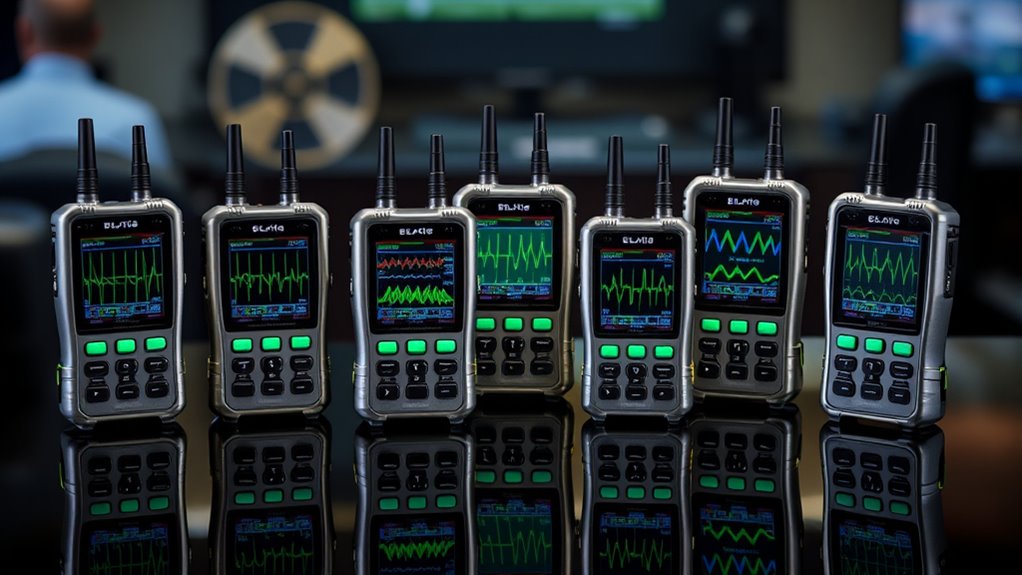

When you search for a wifi spectrum analyzer handheld, you’re likely hunting for a portable tool to identify interference, verify signal strength, or troubleshoot wireless networks on the go. In this roundup, the TinySA Ultra+ ZS407 7.3GHz stands out as my best overall pick because it offers the widest frequency coverage and a responsive touchscreen, making it ideal for both WiFi and broader RF work. The RF Explorer 6G WB Plus earns the premium slot for its rugged build and reliable software, while the AURSINC TinySA Ultra+ ZS406 Bundle delivers the best value by pairing a solid analyzer with a low-noise amplifier. The main tradeoffs you’ll face are frequency range versus cost, touchscreen versus button controls, and whether you need a built-in signal generator. Continue reading for the full breakdown of all ten models and how they compare.

Get privacy and security gear delivered free with Prime
- Fast, free delivery on millions of items
- Prime Video, Amazon Music and more included
- Member-only deals all year
Complete the kit


Key Takeaways
- The TinySA family dominates the budget-to-midrange segment, but frequency range varies dramatically—from 100kHz to 5.4GHz on most models, while the ZS407 pushes to 7.3GHz.
- Touchscreen models like the TinySA Ultra+ ZS407 and SA6 are significantly easier to navigate for field work, but they typically cost more than button-based counterparts.
- RF Explorer analyzers command a premium for their build quality, software ecosystem, and accuracy—worth it for professionals who need repeatable measurements.
- Nearly every handheld in this roundup includes a signal generator, which is a bonus for testing filters and antennas, but the output power and frequency resolution differ widely.
- The biggest mistake buyers make is overpaying for a 6GHz+ analyzer when they only need to inspect 2.4GHz and 5GHz WiFi bands—a cheaper 5.4GHz model often suffices.
| Portable TinySA Spectrum Analyzer with Touch Screen and Signal Generator |  | Best Value for Sub-1GHz Work | Frequency range: 100kHz to 960MHz | Input types: MF/HF/VHF and UHF | Resolution bandwidth filters: 2.6kHz to 640kHz | VIEW ON AMAZON | See Our Full Breakdown |
| RF Explorer 6G WB Plus – Slim Handheld Spectrum Analyzer |  | Best for WiFi-Band Field Scanning | Frequency band: 15MHz–6100MHz | Amplitude resolution: 0.5dBm | Item weight: 6.5 ounces | VIEW ON AMAZON | See Our Full Breakdown |
| AURSINC TinySA Ultra+ ZS406 Spectrum Analyzer with ZK-09 BM LNA Bundle |  | Best for Low-Level Signal Hunting | Frequency range: 100kHz–6GHz; up to 10GHz in Ultra mode | LNA gain: 21dB typical | Battery: 300mAh rechargeable lithium battery | VIEW ON AMAZON | See Our Full Breakdown |
| SA6 6GHz Handheld Spectrum Analyzer and Signal Generator |  | Best for Field and Bench RF Work | Frequency range: 35–6200MHz | Dynamic range: 75dB at 35–3000MHz; 70dB at 3000–4500MHz | Bandwidth: 200kHz | VIEW ON AMAZON | See Our Full Breakdown |
| TinySA Ultra+ ZS407 7.3GHz Handheld Spectrum Analyzer |  | Best for Long Field Sessions | Frequency range: 100kHz to 7.3GHz | Display: 4.0-inch resistive touchscreen, 480 x 320 resolution | Battery: 3.7V 5000mAh lithium polymer; up to 10 hours | VIEW ON AMAZON | See Our Full Breakdown |
| 2026 TinySA Ultra Handheld Spectrum Analyzer 100kHz-5.4GHz with Touchscreen and Signal Generator |  | Best Overall | Frequency range: 100kHz–5.4GHz | Display: 4-inch color touchscreen, 480 × 320 | Battery: 5000mAh rechargeable; up to 3 hours | VIEW ON AMAZON | See Our Full Breakdown |
| SeeSii TinySA Ultra+ ZS406 Spectrum Analyzer, 4.0 Inch 100kHz to 5.4GHz Handheld Frequency Analyzer with 32GB Card and Signal Generator |  | Best for PC-Assisted Work | Frequency range: 100kHz–5.4GHz | Display: 4.0-inch touchscreen | Resolution bandwidth: 200Hz–850kHz | VIEW ON AMAZON | See Our Full Breakdown |
| AURSINC TinySA Ultra+ ZS406 Spectrum Analyzer, 4.0″ Touchscreen, 100kHz-5.4GHz Handheld Frequency Analyzer with 32GB Card, 2-in-1 Signal Generator |  | Best for Extended-Band Flexibility | Frequency range: 100kHz–5.4GHz; up to 6GHz in Ultra mode | Display: 4.0-inch touchscreen | Resolution bandwidth: 200Hz–850kHz | VIEW ON AMAZON | See Our Full Breakdown |
| RF Explorer Spectrum Analyzer 6G Combo Bands Handheld Frequency Analyzer for Ham Radio, Wireless Devices, WiFi Networks, Audio Engineers |  | Best for Portable Field Monitoring | Frequency range: 15MHz–6.1GHz; up to 7.5GHz with optional upgrade | Model: SPA-7G | Weight: 3.52 ounces | VIEW ON AMAZON | See Our Full Breakdown |
| 2.4G 5G WiFi Spectrum Analyzer Handheld Signal Generator |  | Best for Simple Dual-Band Wi-Fi Checks | Wi-Fi bands: 2.4GHz and 5GHz | Display: 2.4-inch TFT color screen | Battery: 750mAh lithium battery | VIEW ON AMAZON | See Our Full Breakdown |
| wifi spectrum analyzer handheld | Frequency range | Battery | Display | Connectivity |
|---|---|---|---|---|
| Portable TinySA Spectrum Analy | 100kHz to 960MHz | — | 2.8-inch color touchscreen | USB for PC control |
| RF Explorer 6G WB Plus | — | One included lithium-ion battery | — | — |
| AURSINC TinySA Ultra+ ZS406 Sp | 100kHz–6GHz; up to 10GHz in Ultra mode | 300mAh rechargeable lithium battery | 4-inch touchscreen | USB-C |
| SA6 6GHz Handheld Spectrum Ana | 35–6200MHz | — | — | — |
| TinySA Ultra+ ZS407 7.3GHz Han | 100kHz to 7.3GHz | 3.7V 5000mAh lithium polymer; up to 10 hours | 4.0-inch resistive touchscreen, 480 x 320 resolution | Type-C USB port |
| 2026 TinySA Ultra Handheld Spe | 100kHz–5.4GHz | 5000mAh rechargeable; up to 3 hours | 4-inch color touchscreen, 480 × 320 | USB for PC control and data transfer |
| SeeSii TinySA Ultra+ ZS406 Spe | 100kHz–5.4GHz | 5000mAh rechargeable | 4.0-inch touchscreen | USB connection to PC |
| AURSINC TinySA Ultra+ ZS406 Sp | 100kHz–5.4GHz; up to 6GHz in Ultra mode | 5000mAh rechargeable | 4.0-inch touchscreen | USB Type-C; PC control via TinySA-APP |
| RF Explorer Spectrum Analyzer | 15MHz–6.1GHz; up to 7.5GHz with optional upgrade | One lithium-ion battery included | — | — |
| 2.4G 5G WiFi Spectrum Analyzer | — | 750mAh lithium battery | 2.4-inch TFT color screen | — |
More Details on Our Top Picks
Portable TinySA Spectrum Analyzer with Touch Screen and Signal Generator
The Portable TinySA makes sense for buyers who mainly need to inspect lower-frequency RF, rather than WiFi bands. Its 100kHz–960MHz range suits many ham-radio and electronics tasks, but it cannot cover the 2.4GHz or 5GHz WiFi bands that the RF Explorer 6G WB Plus and the SA6 can reach. The built-in signal generator adds practical value for basic bench checks, while USB control gives users another way to operate it and update firmware. A color touchscreen and included RF accessories make it a compact starter kit. The tradeoffs are its two-hour minimum battery life, a learning curve for new users, and weaker UHF input performance than its lower-band coverage. I would choose it for budget-conscious, technically curious buyers whose work stays below 1GHz—not for WiFi troubleshooting.
Pros:- Combines spectrum analysis with signal generation for basic RF checks
- Covers 100kHz to 960MHz for many MF, HF, VHF, and lower UHF tasks
- Touchscreen, rechargeable battery, and USB PC control support portable use
- Includes RF cables, SMA connectors, antenna, and touchscreen pen
Cons:- Does not reach the 2.4GHz or 5GHz WiFi bands
- Battery life is at least two hours, limiting longer field sessions
- Operation requires some RF measurement knowledge, and UHF input quality is weaker
Best for: Ham-radio hobbyists and electronics learners who need portable spectrum checks and a signal generator below 1GHz.
Not ideal for: WiFi installers who need to inspect 2.4GHz or 5GHz channels, or field users who need a full day of battery operation.
- Frequency range:100kHz to 960MHz
- Input types:MF/HF/VHF and UHF
- Resolution bandwidth filters:2.6kHz to 640kHz
- Display:2.8-inch color touchscreen
- Battery life:At least 2 hours
- Connectivity:USB for PC control
- Included accessories:RF cables, USB cable, SMA connectors, touchscreen pen, telescopic antenna
Our verdict“Choose this TinySA for affordable, portable sub-1GHz testing, but skip it if WiFi-band coverage is your main requirement.”
RF Explorer 6G WB Plus – Slim Handheld Spectrum Analyzer
For handheld WiFi-related RF scanning, the RF Explorer 6G WB Plus is a more direct fit than the sub-1GHz Portable TinySA: its 15MHz–6100MHz coverage reaches the common 2.4GHz and 5GHz bands. Waterfall visualization can help show how signals change over time, which is useful when interference appears intermittently rather than as a steady peak. At 6.5 ounces, it is also an easy tool to carry between access points or job sites. The tradeoff is that broad frequency coverage does not mean plug-and-play WiFi analysis: the product data says dedicated WiFi analysis requires software, and firmware updates may be needed for full functionality. Compared with the SA6, this model emphasizes slim portability and waterfall viewing, while the SA6 adds a tracking generator and specified scan performance.
Pros:- 15MHz–6100MHz coverage spans common WiFi bands and a broad range of RF signals
- Waterfall visualization helps reveal signals that vary over time
- Light 6.5-ounce handheld design suits mobile field work
- Protective carrying case and firmware upgrade support are included
Cons:- WiFi analysis is not built in and requires software
- Firmware updates may be needed to access full functionality
- Coverage is limited to the analyzer’s specified frequency range and bands
Best for: Network technicians and RF hobbyists who want a lightweight handheld for surveying activity across 2.4GHz and 5GHz bands.
Not ideal for: Buyers seeking built-in WiFi channel reporting, a signal generator, or an analyzer that works fully without setup and software.
- Frequency band:15MHz–6100MHz
- Amplitude resolution:0.5dBm
- Item weight:6.5 ounces
- Package dimensions:7.2 x 6.46 x 2.91 inches
- Battery:One included lithium-ion battery
- Visualization:Waterfall display
- WiFi analysis:Requires software; no built-in WiFi analysis
Our verdict“Pick the RF Explorer for portable 2.4GHz and 5GHz spectrum scans with waterfall viewing, provided you are comfortable using supporting software.”
AURSINC TinySA Ultra+ ZS406 Spectrum Analyzer with ZK-09 BM LNA Bundle
The AURSINC TinySA Ultra+ ZS406 bundle pairs broad frequency coverage with a 21dB typical-gain LNA, making it the standout choice here for users trying to examine weaker RF signals. Its listed range reaches 6GHz, with Ultra mode extending to 10GHz; that is broader than the RF Explorer 6G WB Plus’s 6.1GHz ceiling and the SA6’s 6.2GHz range. For WiFi work, the range reaches both 2.4GHz and 5GHz, while the amplifier may help bring low-level signals into view. The bundle also includes a 4-inch touchscreen and MicroSD logging. Those capabilities come with setup complexity, and the 300mAh battery is a serious limitation for extended field sessions. I would favor it over simpler options for technically experienced users who value sensitivity and frequency reach more than runtime.
Pros:- Covers 100kHz–6GHz, with Ultra mode listed up to 10GHz
- Included LNA provides 21dB typical gain for weak-signal work
- 4-inch touchscreen and MicroSD logging support field inspection and records
- Rechargeable portable design includes USB-C connectivity
Cons:- The listed 300mAh battery capacity may restrict extended field use
- LNA setup and analyzer functions can be challenging for inexperienced users
- A broad measurement range does not by itself provide dedicated WiFi network analysis
Best for: RF technicians and experienced hobbyists investigating weak signals across WiFi and other bands, especially when logging measurements matters.
Not ideal for: Beginners who want a simple WiFi channel scanner or field workers who need long battery life between charges.
- Frequency range:100kHz–6GHz; up to 10GHz in Ultra mode
- LNA gain:21dB typical
- Battery:300mAh rechargeable lithium battery
- Display:4-inch touchscreen
- Connectivity:USB-C
- Logging:MicroSD card logging
- Package includes:Spectrum analyzer, LNA module, USB-C cables, stylus, antenna
Our verdict“Choose this bundle when weak-signal sensitivity and extended frequency reach matter more than simple operation or long field runtime.”
SA6 6GHz Handheld Spectrum Analyzer and Signal Generator
The SA6 earns its place for buyers who need more than a WiFi-band sweep from a handheld analyzer. Its 35–6200MHz range covers 2.4GHz and 5GHz WiFi, and the tracking generator adds a way to test RF components alongside spectrum measurements. Specified scan speeds reach 700 scans per second above 100MHz, giving technicians a quick way to survey changing RF conditions. Compared with the RF Explorer 6G WB Plus, the SA6 includes signal-generation tools and detailed noise-floor and dynamic-range figures; compared with the TinySA Ultra+ ZS407, it has a smaller stated frequency ceiling but a specified three-hour battery life. That runtime and roughly five-hour charging time still call for planning. Its setup can also challenge beginners, and SWR or return-loss measurements need external components.
Pros:- 35–6200MHz range covers common 2.4GHz and 5GHz WiFi bands
- Tracking generator and signal generator functions broaden component-testing use
- Scan speeds reach 700 per second above 100MHz
- Includes cables and connectors for getting started with field or bench work
Cons:- Battery life is up to three hours, with charging taking approximately five hours
- SWR and return-loss measurements require external components
- Setup and operation may be difficult for beginners
Best for: Field technicians and RF maintenance teams who need WiFi-band sweeps plus tracking-generator checks on components.
Not ideal for: New users wanting a straightforward WiFi scanner, or technicians who need all-day operation and self-contained SWR or return-loss testing.
- Frequency range:35–6200MHz
- Dynamic range:75dB at 35–3000MHz; 70dB at 3000–4500MHz
- Bandwidth:200kHz
- Scan speed:Up to 700 scans per second above 100MHz
- Noise floor:<-90dBm below 3000MHz; <-85dBm at 3000–4500MHz; <-80dBm at 4500–6200MHz
- Battery capacity and life:2500mAh; up to 3 hours
- Tracking generator power:-15 to -25dBm
- Dimensions:5.9 x 3 x 0.9 inches
Our verdict“Choose the SA6 if you need a WiFi-capable handheld that also supports tracking-generator work, and can manage its limited runtime and setup demands.”
TinySA Ultra+ ZS407 7.3GHz Handheld Spectrum Analyzer
The TinySA Ultra+ ZS407 is the most appealing option in this group for longer field sessions: its 5000mAh battery is listed for up to 10 hours, well beyond the SA6’s up-to-three-hour runtime and the AURSINC ZS406 bundle’s listed 300mAh capacity. Its 100kHz–7.3GHz measurement range spans 2.4GHz and 5GHz WiFi, while a 4-inch touchscreen and included 32GB microSD card support on-device viewing and storage. The dual-function signal generation adds bench utility, though its output modes are not equivalent across the full range: sine waves are listed through 900MHz and square waves up to 6.3GHz. This is a capable portable RF tool, not a high-precision lab instrument or a dedicated WiFi channel-reporting system. The interface may also take time to learn.
Pros:- 100kHz–7.3GHz range covers common WiFi bands and extends beyond the 6GHz models listed here
- Up to 10 hours of stated battery life supports longer field sessions
- 4-inch touchscreen and included 32GB microSD card aid viewing and data storage
- Combines spectrum analysis with signal-generation functions
Cons:- Not specified as a high-precision laboratory measurement instrument
- The interface may be complex for beginners
- Signal-generation output types have different frequency limits
Best for: Field technicians and advanced hobbyists who need WiFi-band spectrum checks, local storage, and long sessions between charges.
Not ideal for: Lab users requiring high-precision measurements, or beginners who need guided WiFi channel analysis without learning a general-purpose analyzer interface.
- Frequency range:100kHz to 7.3GHz
- Display:4.0-inch resistive touchscreen, 480 x 320 resolution
- Battery:3.7V 5000mAh lithium polymer; up to 10 hours
- Storage:32GB microSD card included
- Signal generation:100kHz–900MHz sine waves; square waves up to 6.3GHz
- Connectivity:Type-C USB port
- Dimensions:6 x 4 x 2 inches
Our verdict“Choose the ZS407 for extended portable WiFi-band scanning and broad RF coverage, but look elsewhere for lab precision or a beginner-focused WiFi analyzer.”
2026 TinySA Ultra Handheld Spectrum Analyzer 100kHz-5.4GHz with Touchscreen and Signal Generator
I’d put this TinySA Ultra+ first for buyers who want one handheld instrument for broad RF checks rather than a Wi-Fi-only channel display. Its 100kHz–5.4GHz range reaches common Wi-Fi bands while also covering many other RF tasks, and the built-in signal generator adds a useful second function for bench work. The 4-inch touchscreen and included microSD card make on-device viewing and saving measurements more practical than a bare-bones analyzer. Compared with the Zopsc 2.4G 5G WiFi Spectrum Analyzer, this model covers far more than Wi-Fi, but it also asks more of the operator and has a shorter stated runtime. I’d skip it if your only goal is a quick, simple view of crowded 2.4GHz and 5GHz channels; the added range and controls may be unnecessary.
Pros:- Broad 100kHz–5.4GHz coverage serves Wi-Fi and wider RF troubleshooting
- 4-inch color touchscreen provides a more usable on-device interface
- Built-in signal generator adds bench-testing capability
- 32GB microSD card supports saving measurement data
Cons:- Approximately three hours of stated battery life can limit long field sessions
- Setup and controls may be challenging for users without RF experience
Best for: RF hobbyists and field technicians who need a handheld analyzer for Wi-Fi plus other signals and value a built-in generator.
Not ideal for: Home users who only want a simple Wi-Fi channel check, or field workers who need more than about three hours of battery operation.
- Frequency range:100kHz–5.4GHz
- Display:4-inch color touchscreen, 480 × 320
- Battery:5000mAh rechargeable; up to 3 hours
- Storage:32GB microSD card included
- Signal generator:Sine wave 100kHz–900MHz; square wave up to 4.4GHz
- Connectivity:USB for PC control and data transfer
- Included accessories:SMA cables, antennas, stylus, and BNC connector
Our verdict“Choose this TinySA if you want a versatile handheld for Wi-Fi and broader RF work, and can accept a technical learning curve and modest runtime.”
SeeSii TinySA Ultra+ ZS406 Spectrum Analyzer, 4.0 Inch 100kHz to 5.4GHz Handheld Frequency Analyzer with 32GB Card and Signal Generator
The SeeSii TinySA Ultra+ ZS406 makes the most sense for users who want a portable analyzer but expect to do some of their work from a computer. It spans 100kHz to 5.4GHz, includes a 32GB card, and supports USB connection for PC control—useful when a larger screen or software-based workflow is preferable to tapping through a handheld interface. Its 200Hz–850kHz resolution bandwidth range gives users flexibility across measurement tasks. Against the similarly broad AURSINC TinySA Ultra+ ZS406, the supplied details here are less specific about extended coverage and other measurement performance, so I’d favor AURSINC when those extra specifications matter. The tradeoff is that this SeeSii’s advanced control depends on a PC, and setup may be a hurdle for newcomers.
Pros:- 100kHz–5.4GHz coverage reaches Wi-Fi and a broad range of RF signals
- 32GB microSD card provides onboard measurement storage
- USB connection supports PC control
- 200Hz–850kHz resolution bandwidth range accommodates varied measurements
Cons:- Advanced control requires a PC connection
- Setup complexity may frustrate first-time RF users
Best for: Technicians and RF hobbyists who want a portable 5.4GHz analyzer and plan to use USB-connected PC control for detailed work.
Not ideal for: Beginners seeking a simple, standalone Wi-Fi scanner or users who do not want to rely on a computer for advanced control.
- Frequency range:100kHz–5.4GHz
- Display:4.0-inch touchscreen
- Resolution bandwidth:200Hz–850kHz
- Storage:32GB microSD card
- Battery:5000mAh rechargeable
- Weight:265g
- Dimensions:6.69 × 4.72 × 2.56 inches
- Connectivity:USB connection to PC
Our verdict“Pick the SeeSii when PC-assisted control and broad RF coverage matter more than a beginner-friendly, Wi-Fi-focused interface.”
AURSINC TinySA Ultra+ ZS406 Spectrum Analyzer, 4.0″ Touchscreen, 100kHz-5.4GHz Handheld Frequency Analyzer with 32GB Card, 2-in-1 Signal Generator
I’d choose the AURSINC TinySA Ultra+ ZS406 when the listed measurement flexibility matters more than a straightforward Wi-Fi-only workflow. Its standard coverage reaches 5.4GHz, with an extended Ultra mode listed up to 6GHz, and the adjustable 200Hz–850kHz resolution bandwidth plus 0–31dB input attenuation offer more control over how signals are examined. It also combines analyzer and signal-generator functions and supports USB Type-C PC control. Compared with the SeeSii TinySA Ultra+ ZS406, AURSINC supplies more detail on attenuation, phase noise, and extended mode, which helps technically experienced buyers compare capabilities. That breadth comes with complexity: the interface may take time to learn, and the roughly three-hour battery life is a constraint for lengthy site visits.
Pros:- Extended Ultra mode is listed up to 6GHz
- Adjustable resolution bandwidth and 0–31dB input attenuation provide measurement control
- Analyzer and signal generator functions are combined in one handheld unit
- USB Type-C supports PC control and a 32GB card stores data
Cons:- Approximately three hours of battery life may not suit extended field work
- The interface and measurement options can be difficult for beginners
Best for: RF technicians and experienced hobbyists who want detailed measurement controls, PC connectivity, and listed coverage beyond 5.4GHz.
Not ideal for: Casual Wi-Fi users who need a simple channel display, or field crews who need all-day operation without recharging.
- Frequency range:100kHz–5.4GHz; up to 6GHz in Ultra mode
- Display:4.0-inch touchscreen
- Resolution bandwidth:200Hz–850kHz
- Input attenuator:0–31dB
- Storage:32GB microSD card
- Battery:5000mAh rechargeable
- Connectivity:USB Type-C; PC control via TinySA-APP
- Weight:13.4 ounces
- Dimensions:4.61 × 2.83 × 0.91 inches
Our verdict“Choose AURSINC for its additional listed measurement controls and extended mode, not for the simplest route to checking Wi-Fi congestion.”
RF Explorer Spectrum Analyzer 6G Combo Bands Handheld Frequency Analyzer for Ham Radio, Wireless Devices, WiFi Networks, Audio Engineers
The RF Explorer 6G Combo Bands is the most compact-feeling choice on paper for users who want to monitor Wi-Fi alongside ham-radio and other wireless signals. Its listed 15MHz–6.1GHz range covers common Wi-Fi bands, and the supplied description points to software features such as a waterfall display—helpful for seeing how interference changes over time rather than relying on a single snapshot. At 3.52 ounces, it is substantially lighter by the listed figure than the 265g SeeSii TinySA Ultra+ ZS406. The tradeoff is thinner specification detail: display, battery runtime, and measurement controls are not provided here, making a direct capability check harder. Coverage up to 7.5GHz also requires an optional upgrade, so I wouldn’t choose it on that basis without confirming the upgrade.
Pros:- 15MHz–6.1GHz coverage includes Wi-Fi and many radio signals
- Waterfall display support helps track changing interference
- Listed weight of 3.52 ounces favors portable field use
- Protective carry case and firmware updates are included
Cons:- Coverage up to 7.5GHz requires an optional upgrade
- The supplied product details omit key information such as display and battery runtime
Best for: Ham-radio operators and wireless technicians who want a lightweight analyzer for field monitoring across Wi-Fi and other RF bands.
Not ideal for: Buyers who need a detailed touchscreen-and-battery specification, or anyone who requires 7.5GHz coverage without an optional upgrade.
- Frequency range:15MHz–6.1GHz; up to 7.5GHz with optional upgrade
- Model:SPA-7G
- Weight:3.52 ounces
- Dimensions:11.14 × 7.48 × 4.02 inches
- Battery:One lithium-ion battery included
- Software features:Advanced software connectivity with waterfall display
- Included accessory:Protective carry case
Our verdict“Pick the RF Explorer for lightweight multi-band field monitoring, but verify its display and runtime details before treating it as a complete Wi-Fi troubleshooting kit.”
2.4G 5G WiFi Spectrum Analyzer Handheld Signal Generator
For someone focused only on household or small-office Wi-Fi, the Zopsc 2.4G 5G WiFi Spectrum Analyzer is the most targeted option in this group. It is described as scanning the 2.4GHz and 5GHz bands and displaying spectrum data on a 2.4-inch TFT screen, so its appeal is quick visibility into channel congestion without the wider RF scope of the TinySA models. Compared with the 2026 TinySA Ultra+, it is lighter at 3.88 ounces by the listed weight, but the provided specifications are far less complete: they do not state a frequency span within each band, measurement resolution, or signal-generator output details. Its 750mAh battery is listed for up to four hours of standby, not continuous scanning, so I’d verify runtime needs before taking it on extended site work.
Pros:- Targets both 2.4GHz and 5GHz Wi-Fi bands
- 2.4-inch color screen presents real-time spectrum data
- Compact listed weight of 3.88 ounces suits portable checks
- Type-C charging is listed, with charging time around 1.5 hours
Cons:- The supplied data does not specify measurement resolution or exact band coverage
- Four hours is stated as standby time, not continuous scanning runtime
- Does not provide the documented broad RF coverage of the TinySA options
Best for: Home-network owners and small-office support staff who want a compact visual check of congestion in the 2.4GHz and 5GHz Wi-Fi bands.
Not ideal for: RF technicians who need measurements outside Wi-Fi bands, detailed instrument specifications, or confirmed long-duration active scanning.
- Wi-Fi bands:2.4GHz and 5GHz
- Display:2.4-inch TFT color screen
- Battery:750mAh lithium battery
- Standby time:Up to 4 hours
- Charging:Type-C; approximately 1.5 hours
- Weight:3.88 ounces
- Package dimensions:4.13 × 4.13 × 1.77 inches
- Manufacturer:Zopsc
Our verdict“Choose this compact unit for focused dual-band Wi-Fi checks, but select a TinySA or RF Explorer if you need broader RF coverage or fuller technical specifications.”

How We Picked
I evaluated these ten handheld spectrum analyzers based on five criteria that matter most to someone searching for a wifi spectrum analyzer handheld: frequency range, display usability, portability, build quality, and extra features like signal generation or preamplifiers. Frequency range was weighted heavily because it determines whether you can see WiFi bands (2.4GHz, 5GHz, and the newer 6GHz) without external downconverters. Display usability separates the models that feel like modern tools from those that feel like lab equipment from a decade ago. I also considered how each unit handles battery life, file storage, and PC connectivity, since these affect real-world field work.
The ranking logic prioritizes value for the intended use case. A professional RF engineer who needs precise measurements will find the RF Explorer models worth the premium, while a ham radio operator or home network tinkerer will be better served by a TinySA variant. I placed the ZS407 at the top because it combines a 7.3GHz span with a touchscreen and signal generator at a price that undercuts the RF Explorer—making it the best balance of capability and cost. The rest of the list follows a similar logic: each model earns its spot based on how well it fulfills a specific buyer profile, not just raw specs.
| wifi spectrum analyzer handheld | Connectivity |
|---|---|
| Portable TinySA Spectrum Analy | USB for PC control |
| RF Explorer 6G WB Plus | — |
| AURSINC TinySA Ultra+ ZS406 Sp | USB-C |
| SA6 6GHz Handheld Spectrum Ana | — |
| TinySA Ultra+ ZS407 7.3GHz Han | Type-C USB port |
| 2026 TinySA Ultra Handheld Spe | USB for PC control and data transfer |
| SeeSii TinySA Ultra+ ZS406 Spe | USB connection to PC |
| AURSINC TinySA Ultra+ ZS406 Sp | USB Type-C; PC control via TinySA-APP |
| RF Explorer Spectrum Analyzer | — |
| 2.4G 5G WiFi Spectrum Analyzer | — |
Factors to Consider When Choosing Wifi Spectrum Analyzer Handheld
Before you commit to a wifi spectrum analyzer handheld, there are a few broader considerations that go beyond the spec sheet. These factors will help you avoid common mistakes and choose a tool that matches your actual workflow.
Frequency Range: Don’t Overbuy or Underbuy
The most common error is buying a 6GHz or 7.3GHz analyzer when you only work with standard WiFi bands. If your goal is to check 2.4GHz and 5GHz networks, a 5.4GHz model like the TinySA Ultra+ ZS406 is plenty—and it will save you money. However, if you’re planning to explore the 6GHz band (WiFi 6E) or do ham radio work on higher frequencies, the extra span of the ZS407 or RF Explorer 6G becomes a necessity. Consider your current projects and likely future ones; frequency range is the hardest feature to upgrade later.
Touchscreen vs. Button Controls
Touchscreens make navigation faster and more intuitive, especially when you’re zooming into a spectrum trace or setting markers. The TinySA Ultra+ ZS407 and SA6 both offer responsive touch displays that feel modern. Button-based models like the classic TinySA or RF Explorer are more reliable in gloves or bright sunlight, and they often have better battery life because they don’t power a large touch panel. If you’re working outdoors in harsh conditions, a button interface might be the smarter choice, even if it takes longer to learn.
Signal Generator: A Hidden Bonus
Many of these handhelds include a signal generator, which lets you output a test tone to verify antennas, filters, or cables. This is a huge value-add for field troubleshooting. But not all generators are equal: some have limited frequency range or low output power. The TinySA models generate up to 5.4GHz or 7.3GHz, which covers most RF needs, while the RF Explorer’s generator is more basic. If you already own a dedicated signal generator, you can save money by choosing a model without one—though most come bundled anyway.
Build Quality and Portability
Handheld analyzers get knocked around. The RF Explorer models have a rugged, machined aluminum case that feels built to last, while the TinySA family uses plastic enclosures that are lighter but less protective. Weight matters if you’re carrying the analyzer on a belt or in a backpack all day. The SeeSii and AURSINC models are similar in weight, but the RF Explorer is noticeably more solid. If you’re a contractor who works on rooftops or in industrial settings, spending extra on durability pays off.
Software and PC Connectivity
Analyzing captured spectrum data on a laptop is often more effective than squinting at a small screen. Most of these models connect via USB and offer PC software, but the quality varies. RF Explorer’s software is polished and widely used, while TinySA relies on third-party tools that work but feel less integrated. Check whether the included software supports real-time streaming, screenshot capture, and CSV export. If you plan to do deep analysis or produce reports, a model with robust PC support is worth the extra cost.
Frequently Asked Questions
Can a handheld spectrum analyzer actually see WiFi signals, or do I need a dedicated WiFi analyzer?
Yes, a handheld spectrum analyzer can detect WiFi signals, but it shows you the RF energy in the frequency domain—not the network names, SSIDs, or encryption details. For that, you still need a dedicated WiFi analyzer app or tool. The spectrum analyzer is useful for finding interference sources, measuring signal strength, and identifying channel congestion, but it won’t tell you which access point is broadcasting. If your goal is to map WiFi coverage or identify rogue access points, you’ll want a tool like NetSpot or a tablet with WiFi scanning software. For pure RF troubleshooting, a handheld is the right choice.
What’s the difference between the TinySA Ultra+ ZS406 and the ZS407?
The ZS407 extends the frequency range to 7.3GHz, while the ZS406 tops out at 5.4GHz. That extra range matters if you’re working with the 6GHz WiFi band or certain ham radio allocations. The ZS407 also tends to have a slightly faster processor and a better touchscreen interface, though both share the same basic form factor. If you only need to inspect 2.4GHz and 5GHz WiFi, the ZS406 is a more budget-friendly choice. But if you want future-proofing for WiFi 6E or other higher-frequency applications, the ZS407 is worth the premium.
Do I need a preamplifier (LNA) for WiFi analysis?
Not usually. WiFi signals are relatively strong, especially when you’re near an access point. A low-noise amplifier (LNA) is more useful for detecting weak signals like those from a distant transmitter or for measuring low-level interference. The AURSINC bundle includes an LNA, which can help you see faint signals that might be buried in the noise floor. However, for standard WiFi troubleshooting—checking signal strength, finding interference from microwaves or Bluetooth—you won’t need an LNA. If you’re working with very low-power IoT devices or doing detailed spectrum analysis, an LNA can be a helpful addition.
Can I use these handheld analyzers to find the best WiFi channel?
Yes, but with a caveat. A spectrum analyzer shows you the RF activity across the 2.4GHz and 5GHz bands, so you can visually identify which channels are congested and which are clear. This is more accurate than using a phone app that only shows network names. However, you’ll need to interpret the spectrum trace yourself—the analyzer won’t automatically recommend a channel. For a quick check, you can sweep the band and look for gaps in the noise floor. For ongoing monitoring, you might prefer a desktop analyzer or a software tool that logs data over time.
Are there any hidden costs or accessories I should budget for?
Most of these analyzers come with a basic antenna, a USB cable, and sometimes a carrying case. But the stock antennas are often limited in frequency range or gain. If you need to measure specific bands accurately, you may want to buy a dedicated WiFi antenna or a directional antenna for locating interference sources. Also, consider a spare battery or a portable charger, since field work can drain the internal battery quickly. Some models use standard micro-USB or USB-C, which is convenient, but others have proprietary connectors. Check the included accessories before you buy to avoid surprises.
Conclusion
After weighing all ten models, the TinySA Ultra+ ZS407 7.3GHz is my best overall pick for most buyers because it offers the widest frequency range, a touchscreen, and a signal generator at a reasonable price. If you’re on a tight budget, the AURSINC TinySA Ultra+ ZS406 Bundle delivers excellent value with its included LNA and 5.4GHz coverage. For professionals who need rugged reliability and precise measurements, the RF Explorer 6G WB Plus is the best premium choice, despite its higher cost. Beginners who want a simple, no-frills tool to learn on will do well with the Portable TinySA Spectrum Analyzer, which covers the basics without overwhelming features. Finally, if your work focuses exclusively on WiFi bands and you want a compact, dedicated unit, the 2.4G 5G WiFi Spectrum Analyzer is a niche pick that’s easy to carry. Match your choice to your specific needs, and you’ll avoid paying for features you’ll never use.
Halloween Picks

12.2 ft Halloween Inflatable Outdoor Decoration – Giant Pumpkin

Spirit Halloween 4 Ft. 6 In. Scary Sitting Scarecrow Animatronic

MGparty 14.5FT Halloween Inflatable Walk-in Pumpkin House with LED Lights
As an affiliate, we earn on qualifying purchases.


