If you’re looking to optimize your home network cabinet, I recommend exploring the 14 best patch panels that support high-speed, reliable connections and offer flexible mounting options. From compact keystone solutions to full-sized rackmount panels, each provides tidy cable management and compatibility with your existing cables. To choose the right one, consider your network speed needs, space, and future growth. Keep going, and you’ll find all the details to make the perfect choice.
Key Takeaways
- Choose patch panels with high data transfer rates (up to 10Gbps) for future-proof, high-speed home networks.
- Opt for rack-mount or wall-mount designs to maximize space and organization in home network cabinets.
- Prioritize models with clear labeling and cable management features for easy installation and maintenance.
- Select durable, shielded panels with quality connectors like gold-plated contacts for reliable connections.
- Ensure compatibility with your existing cabling and keystone jacks (Cat5e, Cat6, HDMI, USB) for seamless integration.
Cable Matters 24 Port Cat6 Network Patch Panel (UL Listed, 1U, Rackmount or Wall Mount)
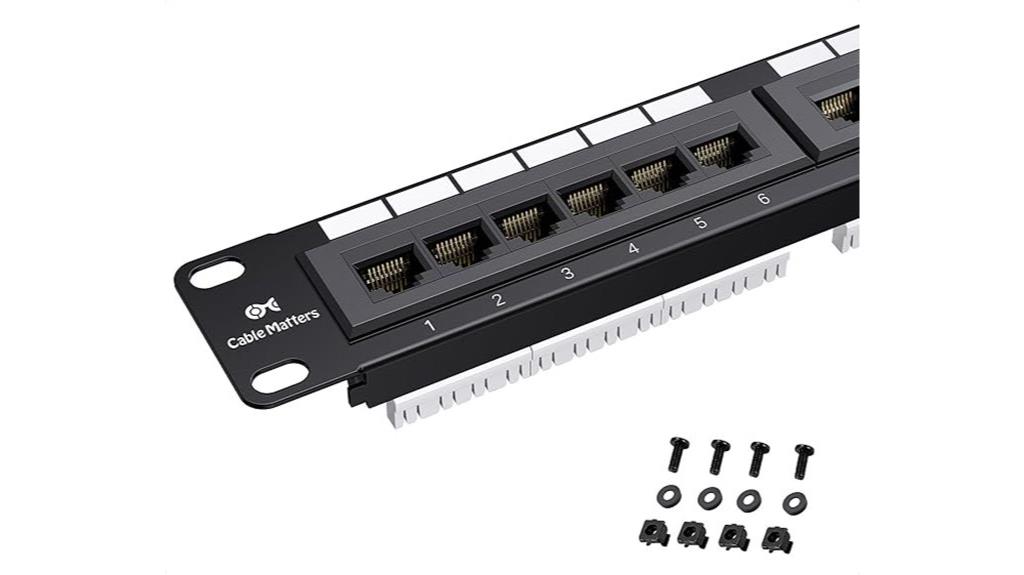
If you’re setting up a home or small office network and need a reliable, high-performance patch panel, the Cable Matters 24 Port Cat6 Network Patch Panel is an excellent choice. It’s UL-listed, supports high-speed Ethernet, and is compatible with Cat5e and Cat5 cables. Designed for 1U rack or wall mounting, it fits easily into racks or wall brackets, saving space. The gold-plated contacts ensure stable, error-free connections, while the clear port numbering and wiring diagrams simplify setup. With included cable management accessories and support for PoE+, it offers a thorough, organized solution for building a robust, future-proof network.
Best For: small businesses, home offices, and networking enthusiasts seeking a reliable, high-performance patch panel for organized and future-proof Ethernet setups.
Pros:
- Supports high-speed Ethernet networks with data transfer rates up to 1,000 Mbps.
- Easy to install with clear labeling, punch-down diagrams, and included mounting hardware.
- Compatible with PoE+ and equipped with gold-plated contacts for stable, error-free connections.
Cons:
- Designed primarily for indoor use, limiting outdoor applications.
- Slightly heavier and larger than minimal patch panels, which may require more rack space.
- Limited to 24 ports, which may not suffice for very large network expansions.
GeeekPi 7 Inch 7-Port CAT6 Network Patch Panel

The GeeekPi 7 Inch 7-Port CAT6 Network Patch Panel is an ideal choice for users managing compact or home network setups in small server racks. Its 0.5U height and 7-inch size make it perfect for tight spaces like the DeskPi RackMate TT. The patch panel features pre-numbered ports, making cable management straightforward and quick. It supports CAT6 Ethernet cables, ensuring reliable high-speed connections, with compatibility notes for CAT6A cables. Designed specifically for the DeskPi RackMate TT, it simplifies installation and maintenance without the need for drilling. Overall, it’s a compact, organized solution tailored for small-scale network setups.
Best For: users with compact or home network setups seeking an organized, easy-to-install patch panel for small server racks like the DeskPi RackMate TT.
Pros:
- Compact 0.5U height and 7-inch size ideal for tight spaces
- Pre-numbered ports for straightforward cable identification
- Supports reliable high-speed CAT6 Ethernet connections
Cons:
- Designed exclusively for the DeskPi RackMate TT, limiting compatibility
- Only supports CAT6 cables; for CAT6A, alternative models are needed
- No drilling required but limited to the specified rack system
Iwillink 12-Port Keystone Patch Panel with Wall Mount Bracket
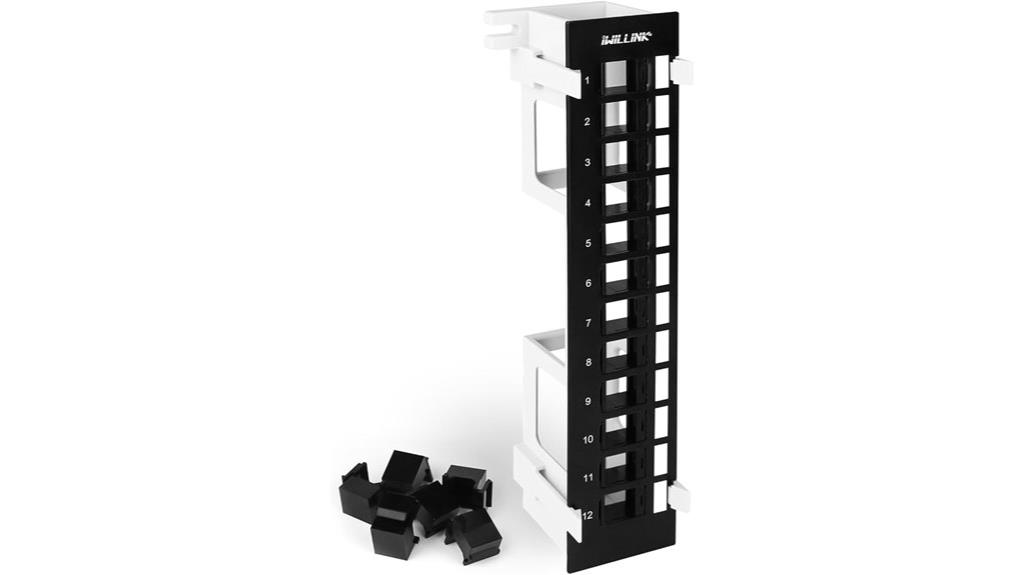
Designed for versatile and professional network setups, the Iwillink 12-Port Keystone Patch Panel with Wall Mount Bracket offers effortless installation and flexible configuration options. It supports a wide range of keystone jacks like HDMI, CAT6, CAT5e, CAT6A, and USB, making it perfect for custom AV, data, and network projects. The snap-in design allows quick setup without disassembling racks, fitting standard 19-inch racks or wall brackets. With a 1U height, it’s easy to mount vertically or horizontally. The panel features numbered ports on a removable writing pad, simplifying cable organization, while six blank keystone inserts help cover unused ports, keeping your setup clean.
Best For: professionals and hobbyists seeking a versatile, organized, and easy-to-install patch panel for custom AV, data, and network setups.
Pros:
- Supports a wide range of keystone jacks including HDMI, CAT6, CAT5e, CAT6A, and USB for versatile compatibility
- Easy snap-in design allows quick installation without disassembling racks or cabinets
- Features numbered ports and blank inserts for organized cable management and port coverage
Cons:
- May require additional keystone jacks or modules for specific applications not included in the kit
- Compatibility limited to standard 19-inch racks and wall brackets, which may not fit non-standard setups
- The 1U height might limit space for larger or more complex configurations
Mini Patch Panel 12 Port Cat6 with Coupler Keystone
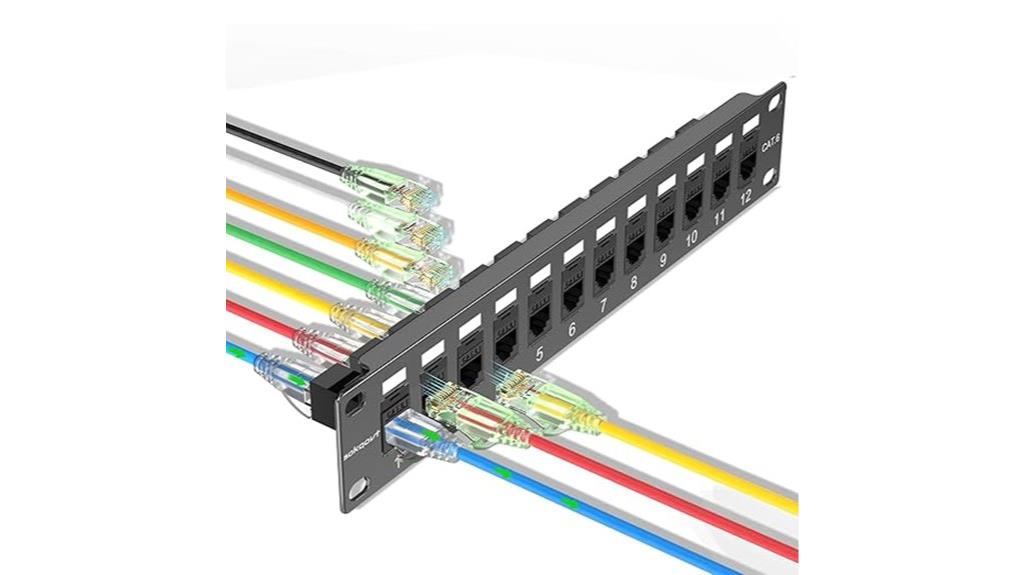
For those seeking a compact, durable patch panel that simplifies network setup, the Mini Patch Panel 12 Port Cat6 with Coupler Keystone is an excellent choice. Its sturdy 1.5 mm steel body guarantees durability and safety, with no sharp edges. The removable back bar helps keep cables organized, while the rackmount design fits easily into tight spaces, measuring just 10 inches tall. Installation is straightforward—connect RJ45 cables directly to keystone couplers without punch down processes, saving time and reducing failure points. Supporting speeds up to 10G and compatible with various keystone modules, this panel offers flexible, reliable performance for both home and office wiring projects.
Best For: home and office users seeking a compact, durable, and easy-to-install patch panel for organized high-speed network connections.
Pros:
- Sturdy 1.5 mm steel body ensures durability and safety with no sharp edges
- No punch down required, simplifying installation and reducing failure points
- Supports high-speed data transfer up to 10G and is compatible with various keystone modules
Cons:
- Limited to 12 ports, which may not suit larger network setups
- Requires compatible keystone jacks for full customization, potentially increasing costs
- May need additional accessories like cable ties for optimal cable management
GeeekPi 12 Port CAT6 Network Patch Panel
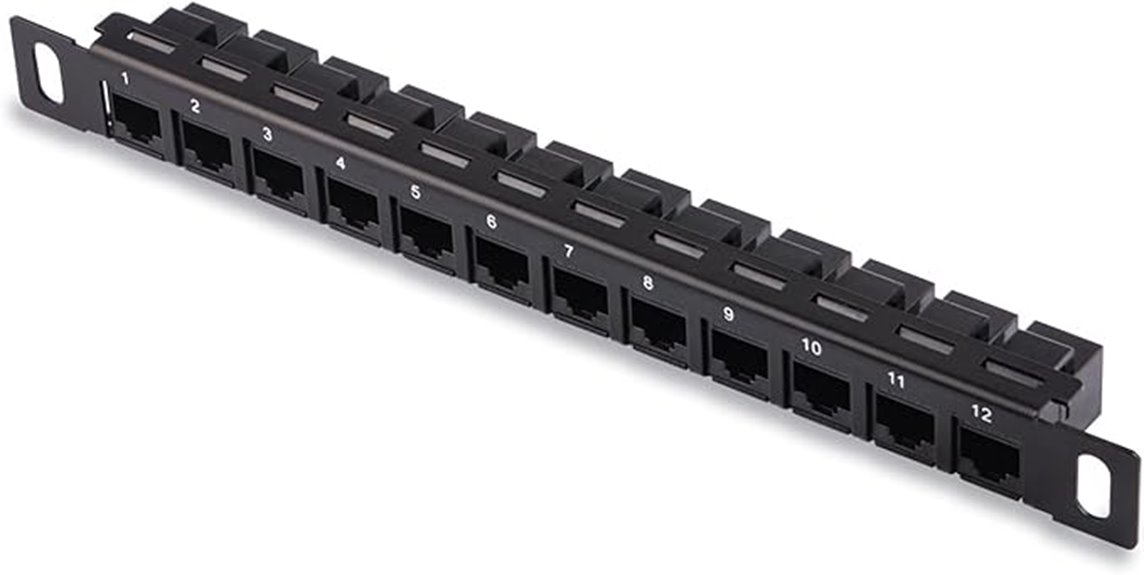
Looking for a compact, reliable patch panel that fits seamlessly into small rack setups? The GeeekPi 12 Port CAT6 Network Patch Panel is an excellent choice. It’s designed for 10-inch rackmounts like the DeskPi RackMate, making it ideal for tight spaces. With 12 pre-numbered ports, organization is straightforward, and it supports PoE applications, perfect for UniFi and Pi-based systems. Made with solid construction, it’s easy to install with included screws and washers. However, compatibility is limited to RJ45 and RJ11 keystones, and some keystone types may not fit due to recessed ports. Overall, it offers a neat, space-saving solution for home and small network setups.
Best For: small home or office network setups requiring a compact, organized patch panel compatible with RackMate and similar 10-inch racks.
Pros:
- Solid build quality with clear labeling for easy identification
- Supports PoE applications, suitable for PoE-powered devices
- Fits well with GeeekPi rack mounts, enhancing space efficiency
Cons:
- Compatibility limited mainly to RJ45 and RJ11 keystones; other types may not fit
- Recessed ports can make installing larger keystones challenging
- Some users wish it included additional features like rear cable management or rack kit options
Rapink 24 Port Cat6 Patch Panel with Keystone & 10G Support
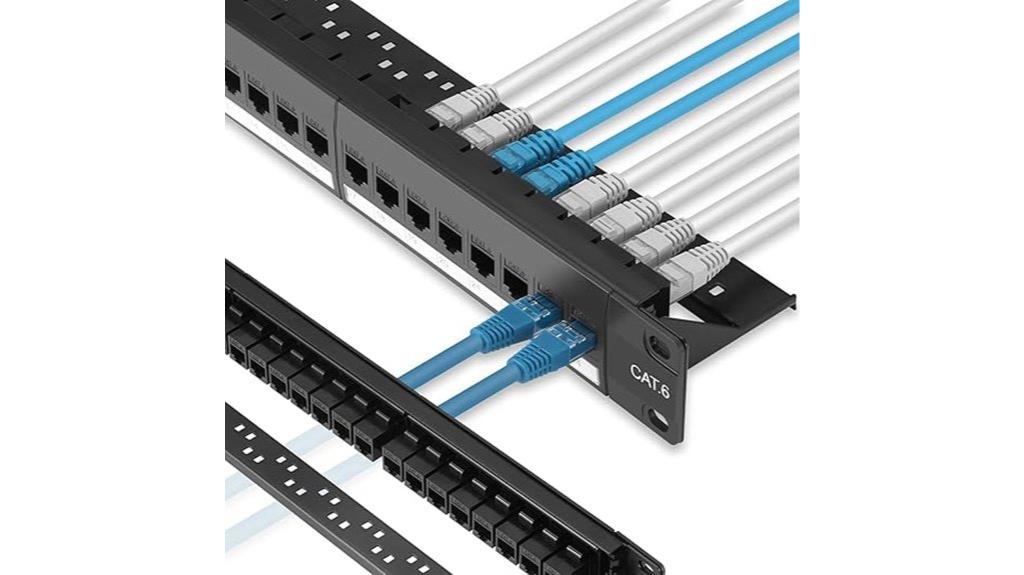
The Rapink 24 Port Cat6 Patch Panel with Keystone & 10G Support stands out as an excellent choice for those seeking a high-performance, easy-to-install network solution. Its support for inline keystone jacks with pass-thru couplers allows tool-free termination, saving time and effort. The gold-plated RJ45 ports support 10G Ethernet, ensuring fast data transfer. The detachable steel back bar enhances cable management and stability, while the labeling and wall-mount design make setup straightforward. Although some users report occasional port issues, overall, the sturdy construction and flexible expansion options make this patch panel a reliable, cost-effective upgrade for home or small office networks.
Best For: small office and home network setups seeking a reliable, easy-to-install patch panel with high-speed 10G support and flexible expansion options.
Pros:
- Supports tool-free termination with pass-thru keystone jacks, saving installation time
- Supports high-speed 10G Ethernet with gold-plated RJ45 ports for reliable data transfer
- Detachable steel back bar and labeling facilitate neat cable management and easy organization
Cons:
- Some users report inconsistent port performance or loose connections
- Plastic construction may feel less premium and could be less durable over time
- Occasional issues with incorrect port labeling or defective ports affecting reliability
Rapink 12-Port Cat6 Network Patch Panel
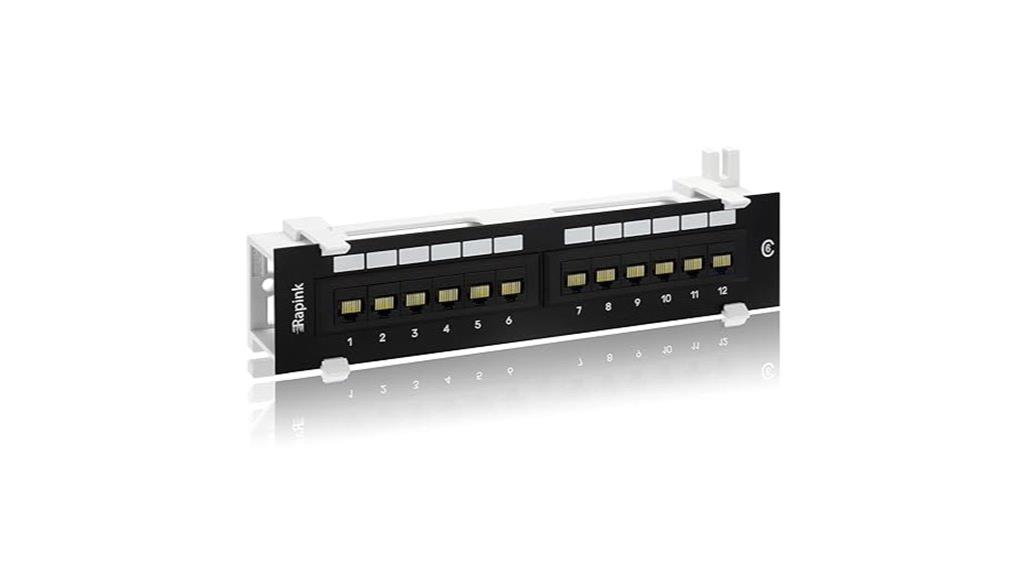
If you need a reliable, high-speed patch panel for your home network, the Rapink 12-Port Cat6 Network Patch Panel is an excellent choice. It supports 10G Ethernet speeds, making it perfect for demanding home setups. Compatible with Cat6, Cat5e, and Cat5 cables, it offers versatile use. Its sturdy construction with gold-plated 8P8C pins guarantees solid connectivity. The panel’s 12 ports are clearly labeled for quick wiring, and it includes cable tie wraps and screws for neat cable management. Designed for easy wall or rack mounting, it’s straightforward to install, providing a space-efficient, reliable solution for your network needs.
Best For: home users and small office setups seeking a reliable, high-speed, and easy-to-install network patch panel for organized cabling.
Pros:
- Supports 10G Ethernet speeds for high-performance network connections
- Compatible with Cat6, Cat5e, and Cat5 cables, offering versatile usage
- Features gold-plated 8P8C pins and clear labeling for strong connectivity and easy wiring
Cons:
- Labels may not align perfectly with punch-downs, requiring careful wiring
- Installation may be challenging for users unfamiliar with Ethernet wiring and punch-down techniques
- Limited to 12 ports, which may not suit larger networking needs
Cable Matters 12-Port Vertical Patch Panel with 10 Gigabit Ethernet
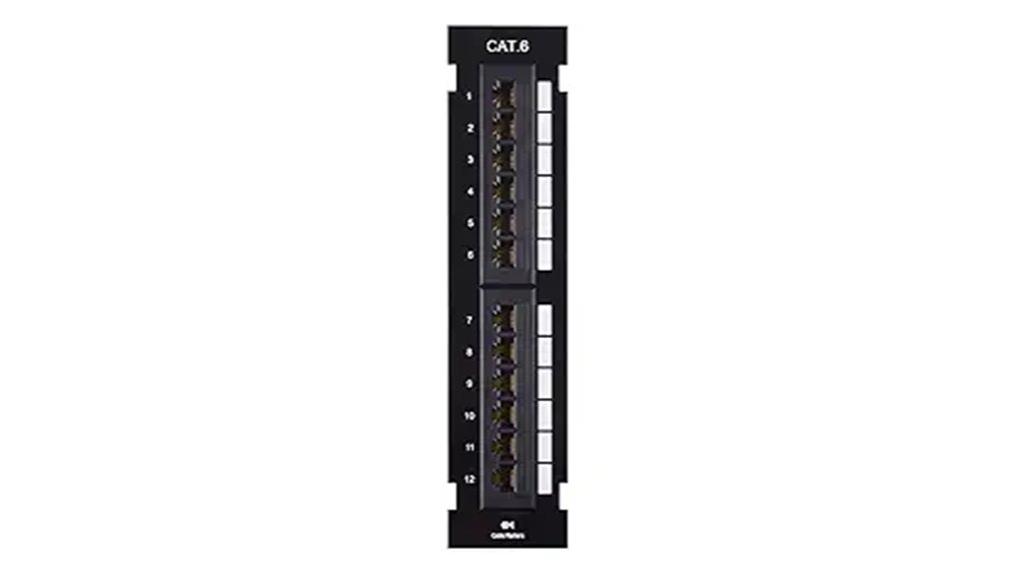
For those seeking a compact yet high-performance patch panel, the Cable Matters 12-Port Vertical Patch Panel with 10 Gigabit Ethernet stands out as an ideal choice. Its slim 10 x 2.25-inch design fits perfectly in tight spaces like network closets or under stairwells. Supporting Cat 5e to Cat 6a cables, it delivers 10Gb Ethernet speeds that meet industry standards. The gold-plated contacts and color-coded IDC blocks ensure reliable connections and easy organization. With front label spaces and cable tie slots, setup remains neat and straightforward. Mounting is simple with included brackets, making it a versatile, durable option for home or small office networks.
Best For: small home and office networks requiring a compact, high-speed patch panel with easy installation and organization.
Pros:
- Supports 10 Gb Ethernet speeds with compatibility for Cat 5e to Cat 6a cables
- Compact 10 x 2.25-inch design ideal for tight spaces like network closets
- Features front label spaces, color-coded IDC blocks, and cable tie slots for organized and neat setups
Cons:
- May require compatible tools like impact punch-down tools for termination
- Limited to 12 ports, which might not be sufficient for larger network setups
- Steel construction, while durable, could be heavier than plastic alternatives
Patch Panel 24 Port Cat6 Network Panel with Coupler
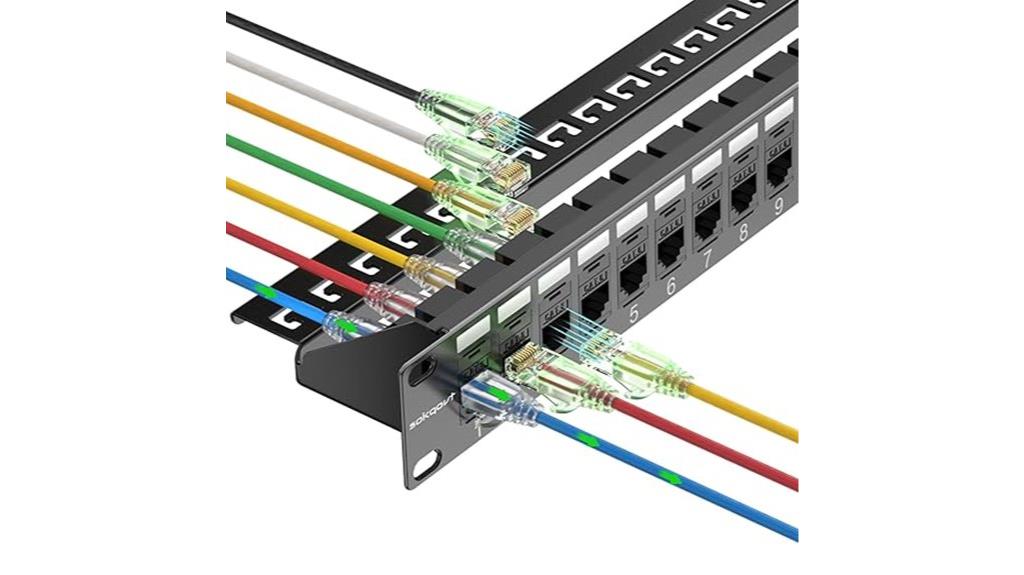
Looking for a patch panel that simplifies installation without sacrificing performance? The 24-port Cat6 network panel with coupler is perfect. It uses keystone jacks, so there’s no need for punchdowns—just connect RJ45 cables directly. This makes setup quicker and easier, especially in tight spaces. It supports up to 10G data transmission, ensuring fast, reliable connections for demanding home or office networks. Its 1U rackmount design keeps things neat, and the removable back bar helps with cable management. Plus, it’s compatible with various keystone modules like Ethernet, USB, and HDMI, offering flexibility and easy expandability.
Best For: Home and small office network installers seeking a quick, reliable, and organized solution for high-speed Ethernet connections.
Pros:
- No punch down required, simplifying installation and reducing setup time.
- Supports up to 10G data transmission for fast, stable network performance.
- Removable back bar and 1U design facilitate neat wiring and easy cable management.
Cons:
- Limited to keystone jacks; may require additional accessories for specialized connections.
- Fixed 24-port capacity; less suitable for very large or expanding networks.
- Steel construction, while sturdy, may be heavier and less flexible for certain mounting options.
Tecmojo 2 Pack Vented 1U Rack Mount Panel
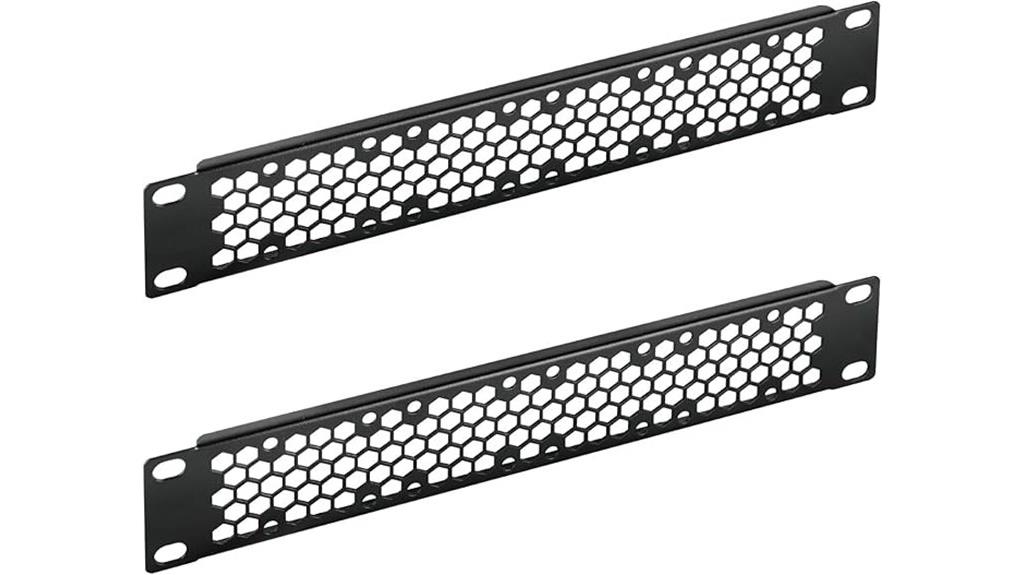
The Tecmojo 2 Pack Vented 1U Rack Mount Panel is an excellent choice for anyone aiming to keep their home network cabinets organized and well-ventilated. Made from durable cold-rolled steel, these black powder-coated panels resist rust and scratches, ensuring long-term use. They fit all standard 10-inch racks and are perfect for IT closets, data centers, or home labs. The vented design improves airflow and helps prevent dust buildup, while the included screws and cage nuts make installation straightforward. With two panels per pack, you can easily cover unused space, enhancing both the aesthetics and functionality of your rack setup.
Best For: individuals or organizations seeking to organize and improve airflow in their server racks, data centers, AV setups, or home labs.
Pros:
- Durable construction with high-quality cold-rolled steel and protective coating
- Vented design enhances airflow and dust prevention
- Easy to install with included screws and cage nuts, ideal for quick customization
Cons:
- Limited to standard 10-inch rack compatibility; may not fit non-standard sizes
- Only available in black, limiting aesthetic options for some setups
- Slightly heavier than plastic alternatives, which could impact overall rack weight distribution
Jadaol 24 Port Patch Panel for Network Cabling

If you’re setting up a home network that demands high-speed, reliable connectivity, the Jadaol 24 Port Patch Panel stands out as an excellent choice. It’s a 19-inch, 1U rackmount or wall-mount panel preloaded with 24 Keystone Cat6 RJ45 couplers and a spare, supporting up to 10Gbps Ethernet speeds. Installation is straightforward—no tools needed—and includes mounting hardware. Its modular design allows easy repairs and future upgrades, while gold-plated contacts guarantee stable, high-speed connections. Built with a durable steel frame and organized cable management features, it’s perfect for maintaining a clean, reliable setup in home or office environments.
Best For: home users, small offices, and data centers seeking high-speed, reliable, and easily maintainable network connections.
Pros:
- Supports up to 10Gbps Ethernet speeds for fast data transfer
- Easy to install without tools, saving setup time
- Modular design allows quick repairs and future upgrades
Cons:
- May be overkill for basic home networking needs
- Steel construction, while durable, can be heavier than plastic panels
- Requires rack or wall space for installation
TRENDnet 12-Port Cat6 Patch Panel
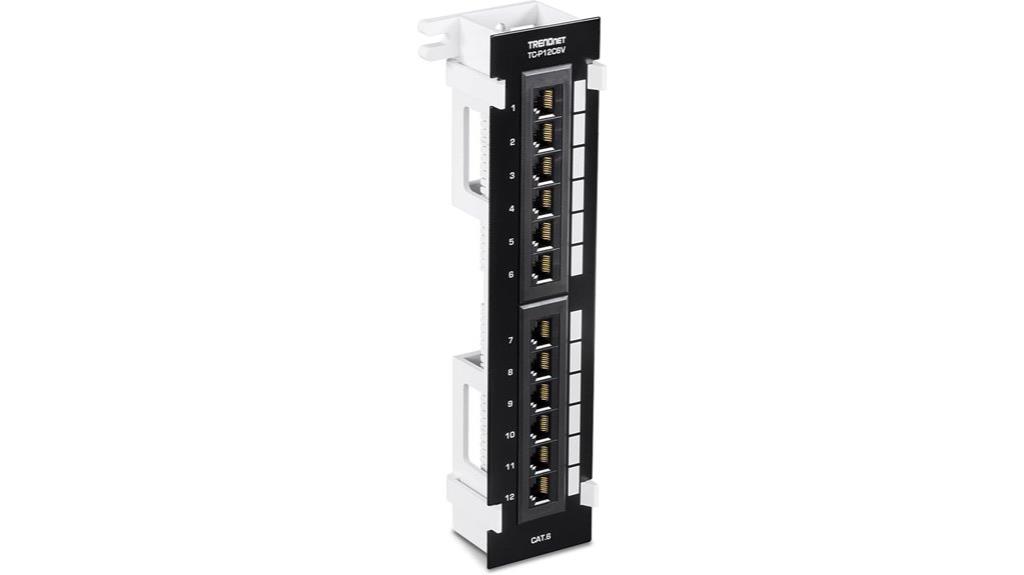
For small home or SMB network setups seeking a reliable, easy-to-install patch panel, the TRENDnet TC-P12C6V stands out with its 12 Cat6 ports and straightforward wall-mount design. It supports Cat5e and Cat6 cables, offering a connection frequency of 250MHz and speeds up to 5Gbps at 100m, or 10Gbps at 55m. Its durable steel outer material and compact 10-inch width make installation simple, with features like snap-in mounting, cable management, and labeling areas for organized wiring. Compatible with various wiring standards and punch down tools, it’s a cost-effective solution for reliable gigabit Ethernet connections.
Best For: small home or SMB network setups seeking a reliable, easy-to-install patch panel for organized high-speed Ethernet connections.
Pros:
- Durable steel outer material and compact design for easy installation and longevity
- Supports both Cat5e and Cat6 cables with high-speed transfer rates up to 10Gbps at shorter distances
- Features cable management, labeling areas, and snap-in mounting for organized and quick setup
Cons:
- Some users report initial port connectivity issues or cables popping out, requiring testing after installation
- Limited to indoor use, not suitable for outdoor or harsh environments
- May require proper wiring standards and bend radius considerations to ensure optimal performance
RIVECO 4U Wall Mount Network Rack
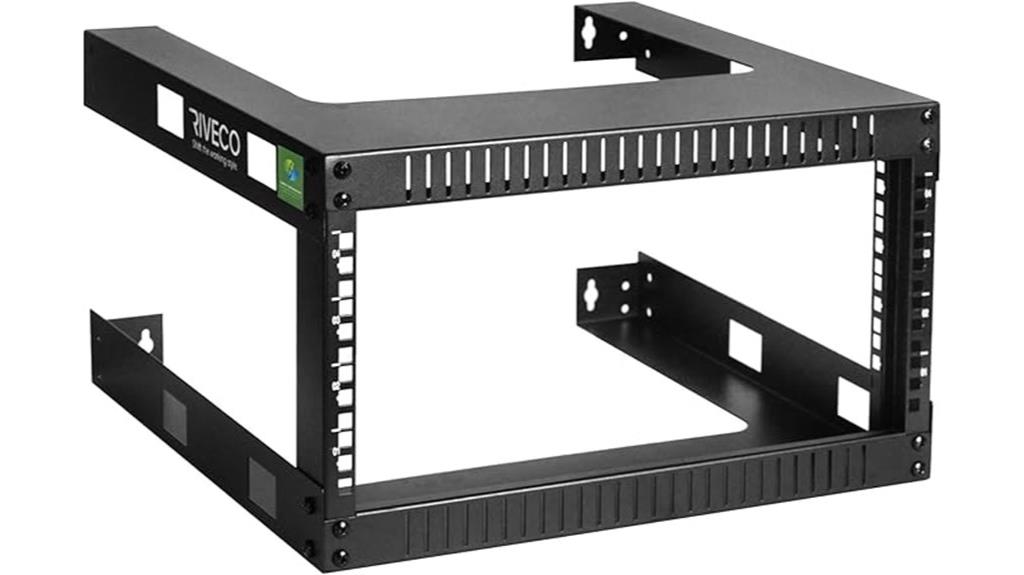
The RIVECO 4U Wall Mount Network Rack stands out for its sturdy construction and versatile design, making it ideal for those organizing home network setups in limited spaces. Made from heavy-duty SPCC cold-rolled steel with a scratch and rust-resistant black finish, it supports up to 180 lbs of equipment. Its open frame promotes excellent heat dissipation, suitable for devices with side-mounted fans. Easy to assemble with included hardware, it’s compatible with standard mounting holes and supports devices up to 17.5 inches long. Weighing around 13 pounds, this rack offers a durable, space-saving solution for routers, switches, and other network gear.
Best For: individuals seeking a durable, space-efficient wall-mounted rack for organizing home or small office network and AV equipment in limited spaces.
Pros:
- Heavy-duty steel construction supports up to 180 lbs of equipment, ensuring durability and stability.
- Open frame design provides excellent heat dissipation, suitable for devices with side-mounted fans.
- Easy to assemble with included hardware, compatible with standard mounting holes, and supports devices up to 17.5 inches long.
Cons:
- Packaging may sometimes arrive damaged or with scratches, requiring careful inspection or additional protective measures.
- Hardware provided may need adjustments, like washers or different bolts, for optimal stability and fit.
- Limited to devices no longer than 17.5 inches, which may not accommodate larger equipment without modifications.
TRENDnet 8-Port Cat6A Shielded Patch Panel
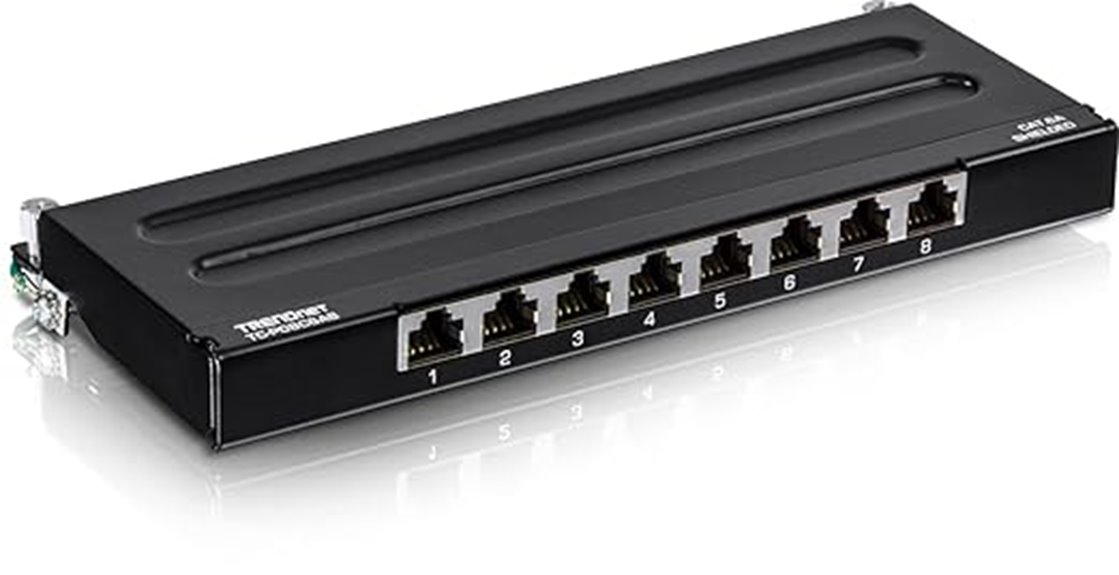
The TRENDnet 8-Port Cat6A Shielded Patch Panel stands out as an excellent choice for those needing high-performance, reliable networking in demanding environments. With 8 RJ-45 ports featuring gold-plated contacts, it guarantees solid connections and durability. Its shielded design effectively reduces electromagnetic interference and crosstalk, maintaining data integrity at 10G speeds. Built with a heavy-duty metal housing, it’s wall-mountable and compatible with Cat5e, Cat6, and Cat6A cables, supporting T568A and T568B wiring standards. Plus, cable management features and color-coded labels make installation straightforward. Backed by a 3-year warranty, it’s a robust solution for professional and home setups alike.
Best For: professionals and home users seeking a high-performance, durable, and EMI-resistant patch panel for demanding networking environments.
Pros:
- Shielded design reduces EMI and crosstalk, ensuring data integrity at 10G speeds
- Compatible with multiple cabling types and wiring standards (Cat5e, Cat6, Cat6A; T568A, T568B)
- Heavy-duty metal housing with wall-mount capability and cable management features
Cons:
- May require professional installation due to technical wiring standards
- Slightly higher cost compared to unshielded patch panels
- Limited to 8 ports, which might not suit larger network setups
Factors to Consider When Choosing a Patch Panel for Home Network Cabinet
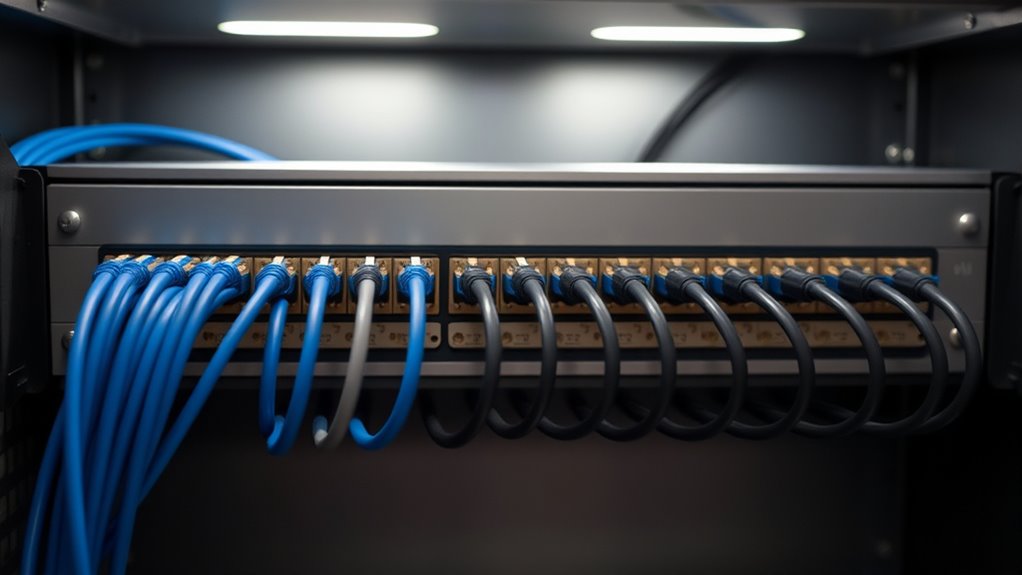
When selecting a patch panel for your home network cabinet, I consider compatibility with your cabling types and the number of ports you need. It’s also important to look at mounting options and cable management features to keep everything organized. Finally, I make sure it supports your network speed requirements for smooth performance.
Compatibility With Cabling Types
Choosing a patch panel that supports your cabling type is essential for ensuring peak network performance. You need to match the patch panel with the category of cabling in your setup, whether it’s Cat5e, Cat6, or Cat6A, to maximize speed and reliability. It’s also important to verify that the patch panel is compatible with both solid and stranded wires, depending on your installation needs. Additionally, check if it supports your current wiring standard, like T568A or T568B, to maintain proper connectivity. Make sure the ports can accommodate your connector type, such as RJ45 or keystone jacks. Ultimately, consider whether the patch panel is future-proofed for higher-category cables, which allows for seamless upgrades as your network demands grow.
Number of Ports Needed
To select the right patch panel for your home network cabinet, you need to determine how many Ethernet devices you’ll connect now and in the future. Start by counting your current devices, like computers, smart TVs, or printers. Then, consider potential growth — adding more devices or expanding your network. Most home setups use 8 to 24 ports, but larger systems may need 48 or more. Choosing a patch panel with extra ports provides flexibility and avoids the hassle of upgrading later. Keep in mind that the number of ports affects the size and space inside your cabinet, so pick one that fits your current needs and allows room for future expansion. Planning ahead guarantees your network remains scalable and organized.
Mounting Options Available
Selecting the right mounting option for your patch panel depends on your space constraints and installation preferences. Rackmount options, conforming to 19-inch standards, are ideal if you have a dedicated server rack or cabinet, with sizes like 1U or multi-U for flexibility. Wall-mount patch panels are perfect for limited spaces, attaching securely to walls or cabinets via brackets or holes. Some panels offer versatile mounting features, such as adjustable brackets, allowing you to switch between rack and wall mounting as needed. Consider how the mounting method affects ease of installation, cable management, airflow, and organization within your setup. Your choice should align with your available space, future expansion plans, and preference for accessibility and aesthetics in your home network environment.
Cable Management Features
When it comes to organizing your home network, cable management features play a vital role in maintaining a tidy and efficient setup. Effective features like cable ties, removable back bars, and designated labeling areas help keep wires secure and well-organized, reducing clutter and improving airflow. Patch panels with integrated cable management channels or slots make routing cables neat and prevent tangles or strain on connections. The ability to bundle cables with ties, clips, or Velcro straps allows for easy adjustments or future upgrades. Clear port labeling and numbering systems speed up installation, troubleshooting, and maintenance, saving time and reducing errors. Additionally, vented or slotted panels enhance airflow around the cables, helping to prevent overheating and ensuring your network runs smoothly.
Network Speed Support
Ensuring your patch panel supports the network speeds you need is vital for maintaining fast and reliable connectivity. You should choose a patch panel that matches your current devices and future expansion plans, whether it’s 1G, 2.5G, 5G, or 10G Ethernet. Make certain it’s rated for at least 10Gbps to avoid bottlenecks during high-performance tasks. Compatibility is essential, so verify that the wiring standard (T568A or T568B) aligns with your existing cabling infrastructure. If you plan to power devices like IP cameras or access points via PoE, make sure the patch panel supports PoE, PoE+, or PoE++. Finally, the quality of connectors, such as gold-plated contacts, can influence signal integrity at higher speeds, so opt for well-made components to maintain peak performance.
Build Quality and Durability
A patch panel’s build quality directly impacts its ability to perform reliably over time, especially in a home environment where equipment may be used daily. I look for panels made from sturdy materials like steel or aluminum, which can withstand regular use and environmental factors. Features like corrosion-resistant finishes and reinforced ports help guarantee long-term performance. Gold-plated contacts and high-quality connectors reduce signal loss, providing stable, error-free connections over time. Proper mounting options, whether wall brackets or rack compatibility, add to the panel’s stability and longevity. Additionally, vented or sealed designs help manage heat dissipation and protect internal components from dust and debris. Overall, a durable patch panel ensures consistent performance and minimizes maintenance needs.
Ease of Installation
Choosing a patch panel that’s easy to install can save you time and frustration during setup. Look for models with straightforward mounting options like snap-in or screw-in designs—these make installation quick and hassle-free. Opt for panels that support tool-free connections, such as keystone jacks or pass-thru ports, which eliminate the need for specialized tools. Clear labeling of ports and included wiring diagrams are essential for quick, accurate wiring. Additionally, select a patch panel that comes with all necessary mounting hardware and cable management accessories to streamline the process. Finally, verify that the panel’s dimensions fit your rack or wall space without requiring modifications. Prioritizing ease of installation helps ensure a smooth setup, saving you effort and reducing potential errors.
Budget and Cost Efficiency
Finding a cost-effective patch panel means balancing price with key features like the number of ports, compatibility, and build quality. Cheaper options might save money upfront but often lack advanced cable management or support for high-speed data, which can lead to higher maintenance costs over time. Investing a bit more in a durable, well-built patch panel can reduce the need for replacements and ensure reliable performance. If you have a larger setup, bulk or multi-pack options can provide better value and simplify your installation. It’s also important to contemplate the total cost of ownership, including installation and future upgrades. Choosing wisely now can save you money and hassle in the long run, making your home network more efficient and reliable.
Frequently Asked Questions
What Is the Maximum Cable Length Supported by Different Patch Panels?
The maximum cable length supported by patch panels varies depending on the type. For Cat5e and Cat6 cables, I recommend sticking to 100 meters (about 328 feet) to guarantee peak performance. Higher-grade cables like Cat6a or Cat7 can also support this length, but I’d suggest testing your setup if you need longer runs. Always consider cable quality and the environment to prevent signal degradation.
How Do I Determine the Right Port Count for My Home Network?
To determine the right port count, I consider the number of devices I plan to connect now and in the future. I add a few extra ports for growth. For most homes, 8 to 16 ports work well, but if you have many devices or plan to expand, opt for a patch panel with more ports. Think about your current needs while leaving room for future upgrades.
Are Shielded Patch Panels Necessary for Home Use?
Did you know that electromagnetic interference can reduce your network speed by up to 20%? Shielded patch panels aren’t always necessary for home use unless you have lots of electrical noise nearby. If your home is quiet and free of interference, unshielded panels work just fine. However, if you notice slow connections or interference, investing in shielded panels can make a noticeable difference in performance.
What Compatibility Issues Should I Consider With Existing Network Equipment?
When choosing a patch panel, I make sure it’s compatible with my existing network gear by checking the connector types, like RJ45, and ensuring it supports my network speed, whether gigabit or 10-gigabit. I also verify that the panel’s port count matches my needs. Compatibility issues can arise if the patch panel doesn’t match my switches or cables, so I double-check these details before buying.
How Do I Properly Install and Maintain a Patch Panel in a Home Environment?
To properly install and maintain a patch panel in my home, I start by choosing the right size and ensuring compatibility with my existing equipment. I mount it securely in my cabinet, label each port clearly, and connect cables carefully to avoid tangles or damage. Regularly, I check for loose connections, clean dust off the panel, and update labels if I make changes, keeping everything organized and functioning smoothly.
Conclusion
Choosing the right patch panel is like finding the perfect puzzle piece—it completes your home network setup with precision and ease. By considering your specific needs and the features of each option, you can craft a reliable and organized system. Remember, a well-chosen patch panel is the backbone of a seamless connection, turning your network from a tangled web into a masterpiece of order. Here’s to a setup that’s as smooth as silk!